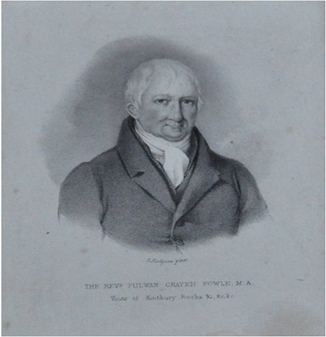
The man who remembered Jane Austen: Kintbury’s Rev Fulwar Craven Fowle

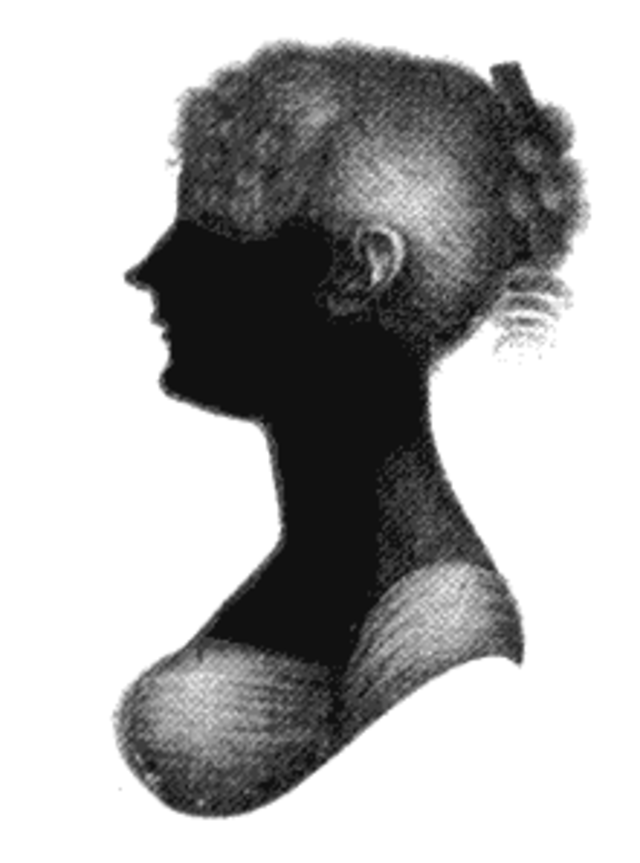
We have, I believe, just one description of Jane Austen’s appearance, recalled by someone who knew her well all her life – someone who had known her since she was a small child of three.

“She was like a doll……certainly pretty – bright and a good deal of colour in her face – like a doll – no, that would not give at all the right idea for she had so much expression – she was like a child – quite a child, very lively and full of humour.”

That person was Kintbury’s vicar, Rev Fulwar Craven Fowle.

Fulwar ( pronounced “Fuller” – it was a family name ) was born in Kintbury on June 12th 1764, the eldest son of Rev Thomas Fowle and his wife, Jane née Craven. These were the days when having connections, either within the family or otherwise, could lead to appointment to a parish; in the case of the Fowles, Fulwar’s grandfather Thomas Fowle I had been appointed vicar of Kintbury in 1741 and his father, Thomas Fowle II, followed him in the post from 1762 to 1806.

At the time, it was not at all uncommon for a priest to hold the position of rector in other parishes. Thomas II was rector of Hamstead Marshall, not far from Kintbury, and also Allington, near Salisbury in Wiltshire. Later, as well as being vicar of Kintbury, Fulwar himself was also rector of Elkstone in Gloucestershire.
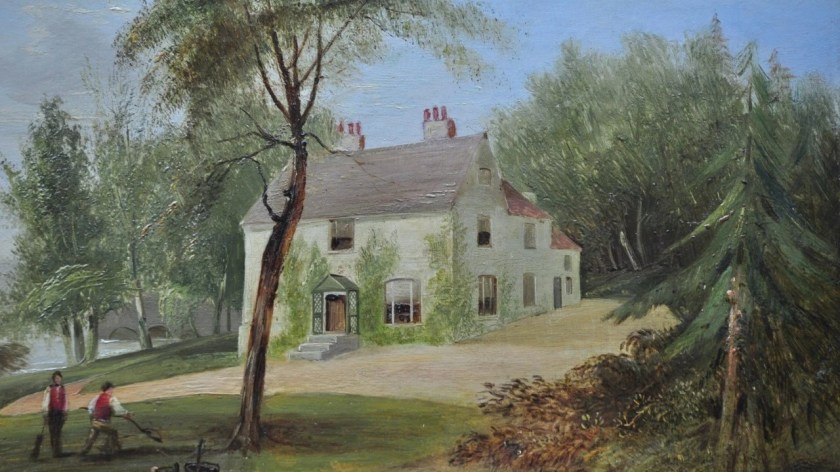
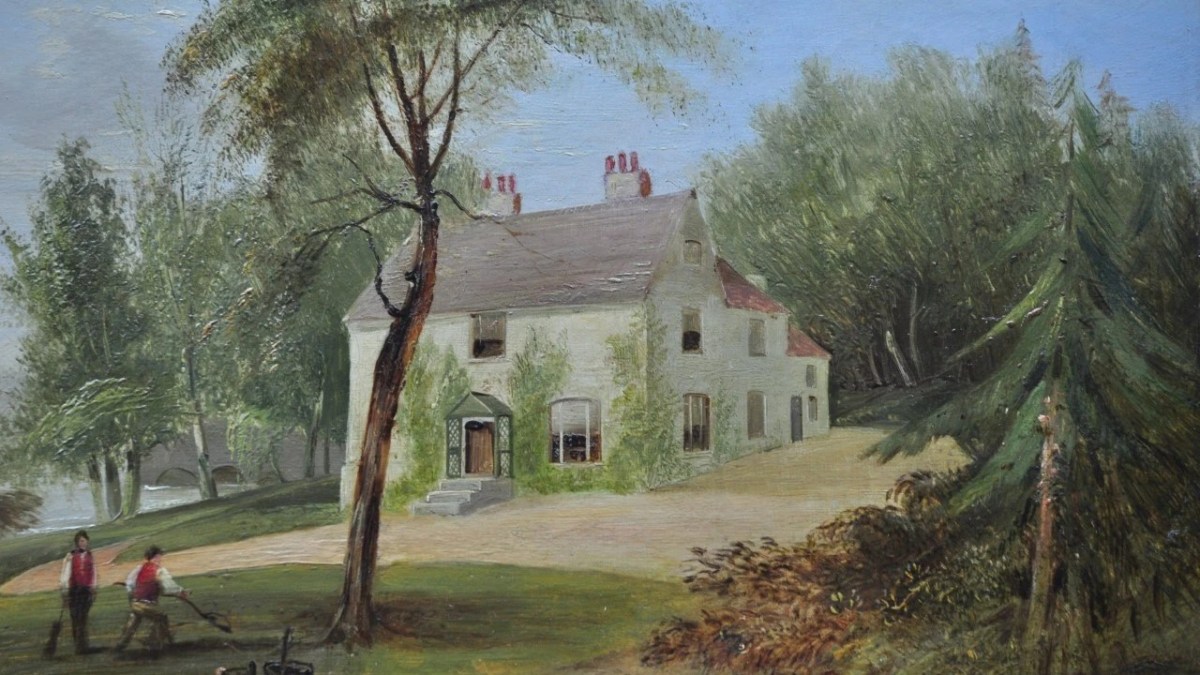
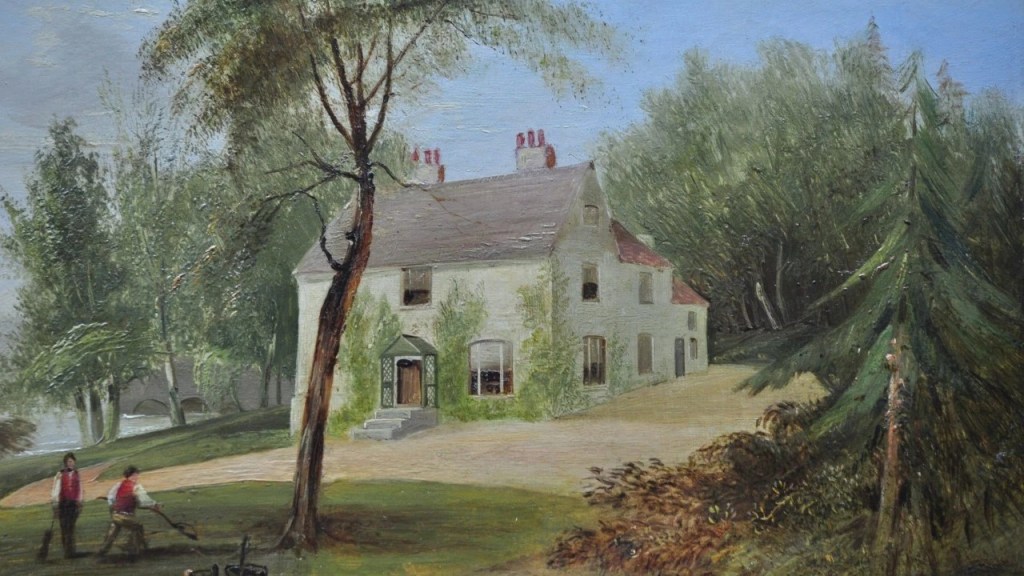
The Old Vicarage in Kintbury

So the Fowles could be said to have been very much a family of the vicarage. This was a time when vicarages, wherever they were, were larger, higher status houses and those who lived in them led relatively comfortable lives supported by servants and other staff. However, a vicarage life was not associated with opulence and none could be described as stately.

By contrast, the Cravens’ seat at Hamstead Marshall, three miles to the east of Kintbury, was far grander.  

Fulwar’s mother Jane Craven was born in 1727, the second daughter of Charles Craven and his wife, Elizabeth Staples of Hamstead Marshall. Charles is better known as “Governor Craven” from his time as being governor of South Carolina in America. The former Elizabeth Staples has a reputation as a socialite with little time for her family.
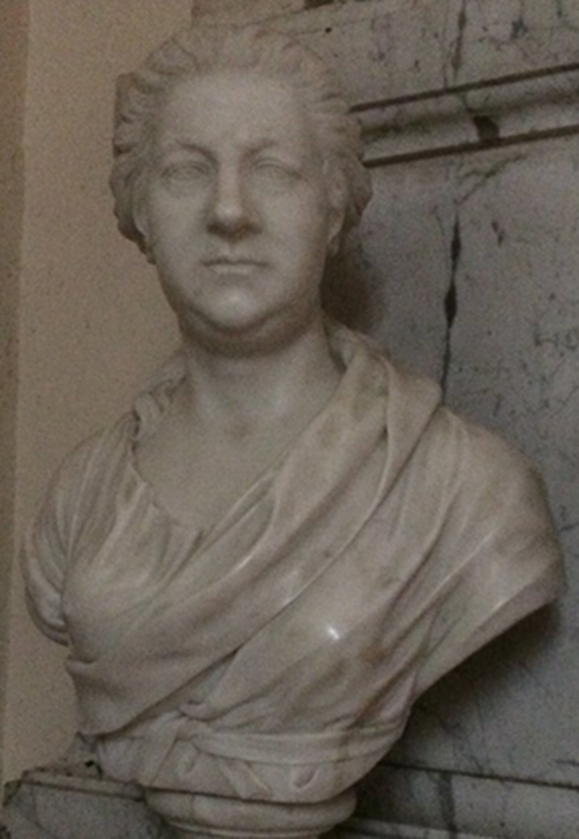
The Former Elizabeth Staples, grandmother of Fulwar Craven Fowle

When Charles Craven had been growing up, the Craven family seat was the elegant baroque mansion in Hamstead Park, designed by the Dutch architect Balthazar Gerbier in the mid C17th. Unfortunately, this building burnt down in 1718 and by the time of Charles Craven’s marriage to Elizabeth Staples in 1720, it is likely that the family home was an extended hunting lodge on the estate.
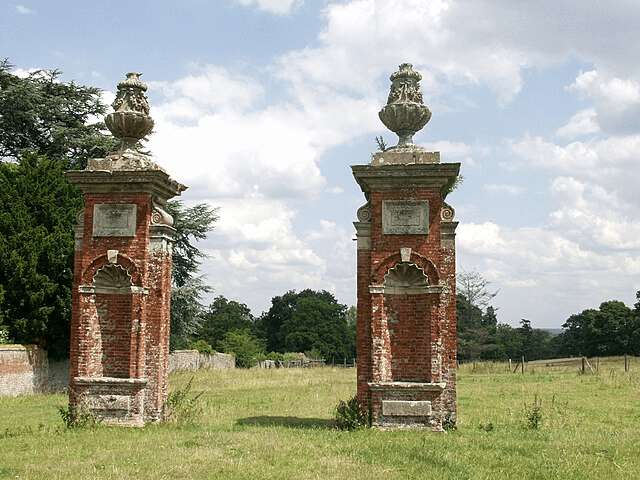
All that remains of the Baroque mansion in Hamstead Park. Photo by Mick Crawley via CreativeCommons

So, even though the Hamstead Marshall Cravens no longer had a “stately” house, they did have a high status home and close family links to the Earls of Craven, such that Jane Craven’s family could be said to occupy a higher rung on the social ladder than that of the Fowles.  

Jane & Thomas were married at Kintbury on July 18th, 1763. Jane was 36 and Thomas was 37. Thomas had been ordained priest the previous year and became vicar of Kintbury following his father’s recent death and the post becoming vacant. Perhaps the comparatively later age at which the couple married could suggest that their marriage was not economically viable until then, despite Jane’s family having been wealthy. We do not know.  

Thomas & Jane had four sons: Fulwar Craven, born 1764, was followed by Thomas, born 1765, then William, born 1767, and finally Charles, born 1770.

Fulwar was a fair-haired, blue-eyed child, slight of stature and never very tall, even in adulthood. The country side would have encroached on the village of Kintbury more so than it does today, enabling the Fowle boys and their friends to roam at will and swim in the Kennet. Like all of the more comfortably off, the boys would have learnt to ride as a matter of course and by adulthood, Fulwar had the reputation of being a very good horseman.

We can assume that, whilst life in the Kintbury vicarage might not have been opulent, it would have been economically secure particularly when compared to the lives of many working people and farm labourers in the cottages of Kintbury.

There was no universal education in late eighteenth century England. In some towns and villages a basic education was offered by religious or charity groups and there were well-established grammar schools in more prosperous towns which prepared young men for the professions or university entry. For the sons of wealthier families there was a choice of “public” schools – a misnomer in that these schools were – and are – expensively fee-paying and elitist.

The novel, “Tom Brown’s School Days”, published in 1857, is a fictionalised account of being a pupil at Rugby, a public school in the south east midlands, in the 1830s. Its author, Thomas Hughes, was the grandson of the vicar at Uffington, then in Berkshire, across the downs around twenty miles to the north of Kintbury.

It might be assumed that, coming from a similar background, the Fowle sons would also have attended a public school, perhaps Eton, close to Windsor in east Berkshire, or Winchester, in Hampshire. Instead, Jane and Thomas chose to send their sons to the school run by Rev George Austen and his wife, at Steventon, near Basingstoke in Hampshire. George Austen’s “school” was actually in the family home – the Steventon vicarage.

Thomas Fowle had known George Austen since their days at Oxford University so perhaps he felt more comfortable entrusting his sons’ education to someone he knew very well. Alternatively the costs of a public school education might have been beyond the budget of a rural parson, we cannot say. The reality might have been a combination of both factors.

We do not know precisely the curriculum Rev Austen would have offered his students although it would very likely have centred on the Classics – Latin and Greek- which would prepare the boys for further study of the same at Oxford University.

Fulwar was fourteen when he first joined the other borders at the Steventon vicarage school. At that time the Austens’ eldest son, James, was nearest to Fulwar in age and became his closest friend. Edward was 11, Henry 7, Cassandra 5 and Francis 4. The baby of the family at that time was Jane, aged 3. Charles was to arrive a year later.  

It goes without saying that the Austens would have had servants; however, even with help with cooking, cleaning and laundry, the household must have been a particularly busy one. One can only assume that George Austen’s wife, Cassandra, must have been a particularly well-organise and relaxed person – laid-back, we might say today – to run such a household.

Fulwar’s brothers later joined him at Steventon: Tom in 1779 and William and Charles sometime in the early 1780s. The young Austens also visited Kintbury, and many years later, in 1812, James Austen wrote a poem in which he recalled staying at the Fowles’ home in Kintbury:

And still in my mind’s eye methinks I see

The village pastor’s cheerful family.

The father grave, but oft with humour dry

Producing the quaint jest or shrewd reply;

The busy bustling mother who like Eve

Would ever and anon the circle leave

Her mind on hospitable thoughts intent

Careful domestic blunders to prevent.

Whilst James Austen was clearly not a second Wordsworth, his words suggest the Fowles were a warm, happy family. Perhaps the “humour dry” and “quaint jest” suggest that the Austens & Fowles shared a common sense of humour or enjoyed the same sort of witticisms. Perhaps both families would a have agreed with Jane Austen’s Mr Bennett when he said,

“For what do we live, but to make sport for our neighbours, and laugh at them in our turn?”

There is certainly evidence that Fulwar had an acerbic sense of humour, which is perhaps not surprising in a close friend of the  Austens.

At Steventon, all the Fowle brothers were successful students. Fulwar went on to enter St John’s College, Oxford in 1871 where he gained a BA in 1785 and an MA in 1788. His brother, Thomas went up to Oxford in 1783 and gained an MA in 1794. William went on to study medicine ( not yet a subject taught in an English university ) as an apprentice to his uncle William Fowle in London. Charles studied law and was called to the bar in 1800, later practising law in Newbury.

Perhaps it was inevitable that Fulwar would follow his father and grandfather into the church; in 1786 he was ordained deacon at Salisbury cathedral and was installed curate of St Mary’s, Hamstead Marshall on the following Christmas Eve. It has to be very likely that he obtained this post due to family patronage, which, at this time, would have seemed perfectly normal and acceptable with no accusation of nepotism.
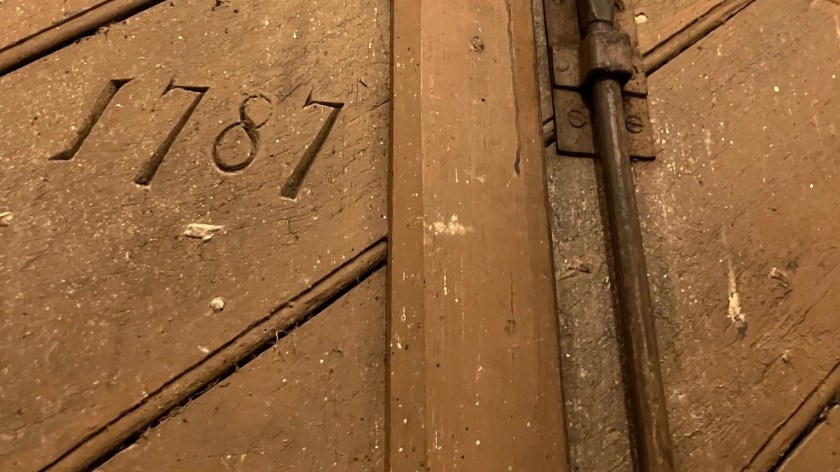
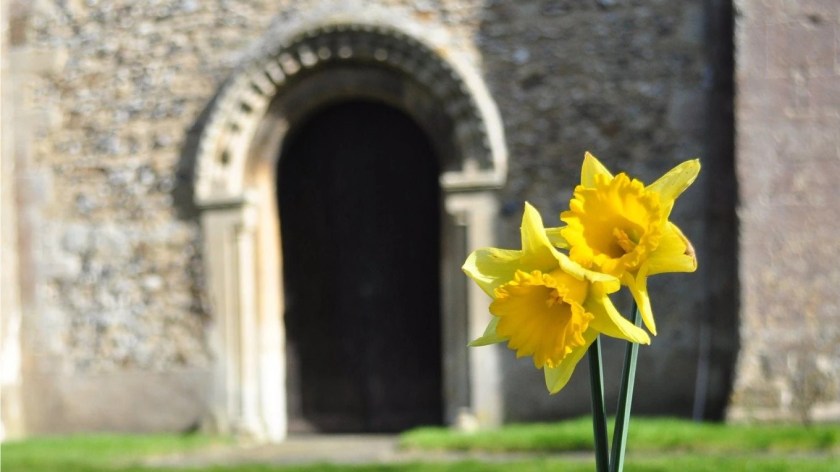
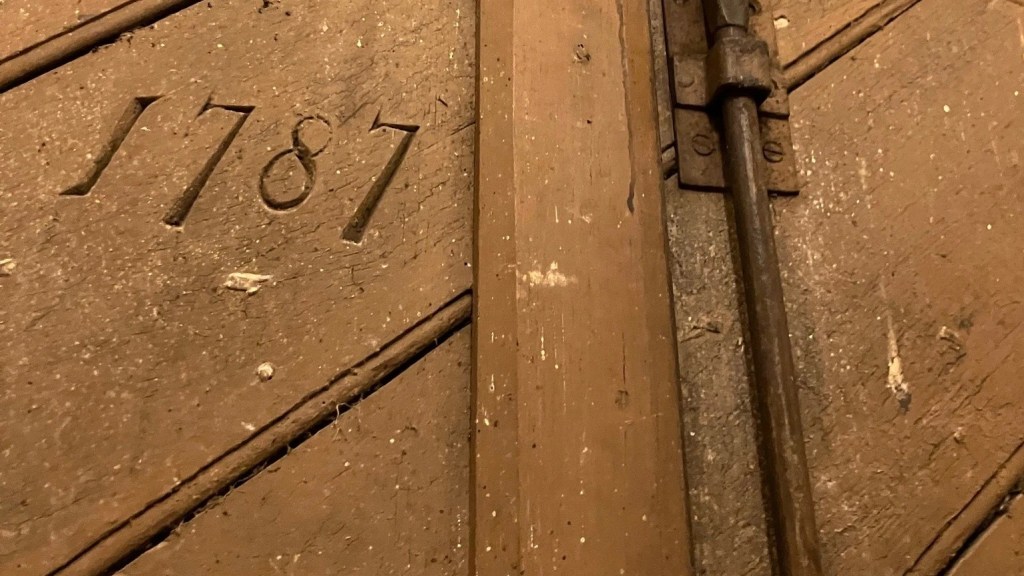
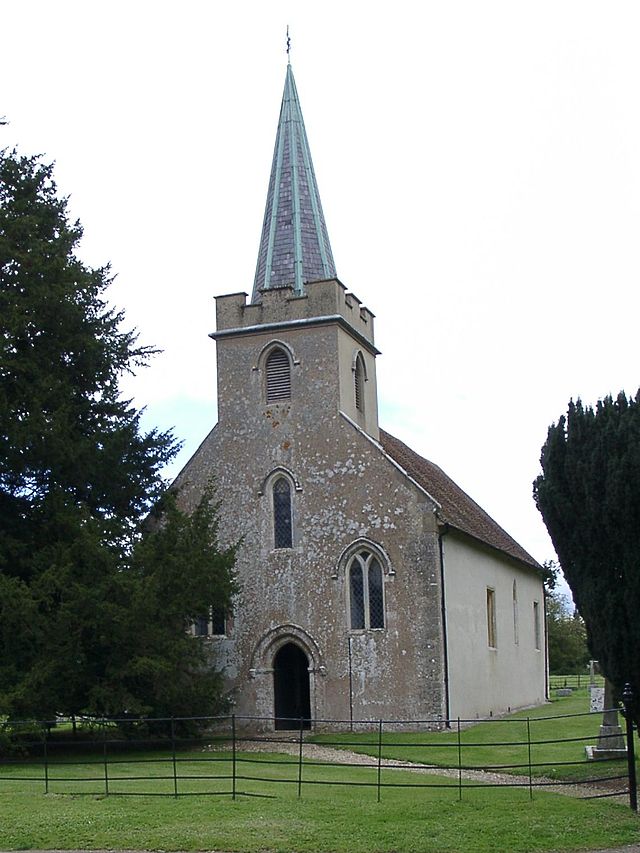
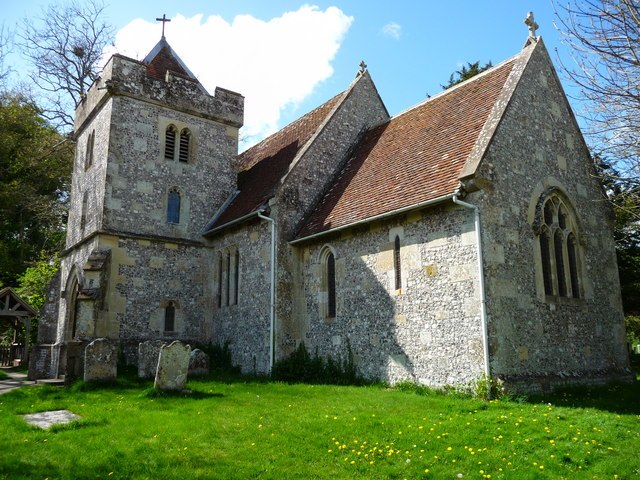
The west door, St Mary’s, Kintbury

Also in the manner of the time, Fulwar became rector of Elkstone in Gloucestershire in 1788 where the manor had belonged to the Craven family since 1623. 0nce again an example of an appointment made as a result of family connections.

1788 was also the year in which Fulwar married his cousin, Elizabeth – known as Eliza – Lloyd. Eliza’s mother was the former Martha Craven, daughter of Governor Craven of Hamstead Marshall. Martha had married the Rev Noyes Lloyd, vicar of Enborne  in 1763 and Eliza, along with her sisters, Martha & Mary, with their brother Charles, had grown up there. Sadly, Charles died in 1775 following an outbreak of smallpox.

In Elkstone, the elegant, three storey rectory built earlier in the century became Eliza & Fulwar’s family home for the first six years of their marriage. Their first child, however, Fulwar William, was born at Deane, near Basingstoke in Hampshire in 1791. It has to be likely that this was because  Eliza’s mother and her sisters Mary & Martha had been living there since having to vacate Enborne vicarage on the death of Rev Nowes Lloyd in 1789. As a first-time mother, Eliza probably wanted her confinement to be somewhere close to her family for support.
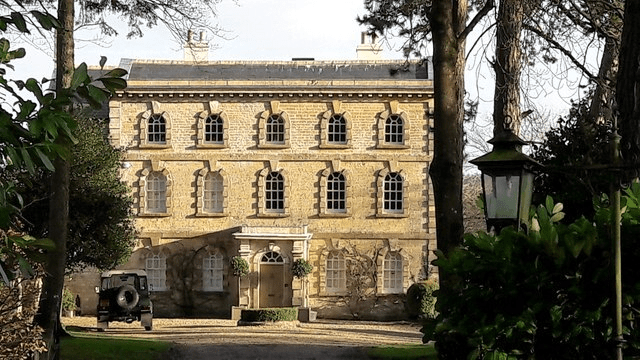
The Old Rectory, Elkstone Phto: Chris Brown, via CreativeCommone

The couple’s second child, Mary Jane, was born at Elkstone in 1792 although the baptism of their third child, Thomas, in 1793, is recorded as being in Hurstbourne Tarrant, near Andover in Hampshire. Although it is a very long way from Elkstone, Eliza’s mother and sisters were now living at Ibstone, a hamlet close to Hurstbourne Tarrant so it would be logical to assume Eliza had once more returned to her family for her confinement.

In 1794 the family returned to Kintbury where Fulwar took over the incumbency. By now there were  two more children: Mary Jane, had been born in Elkstone in 1792 & Thomas in Hurstbourne Tarrant in 1793.
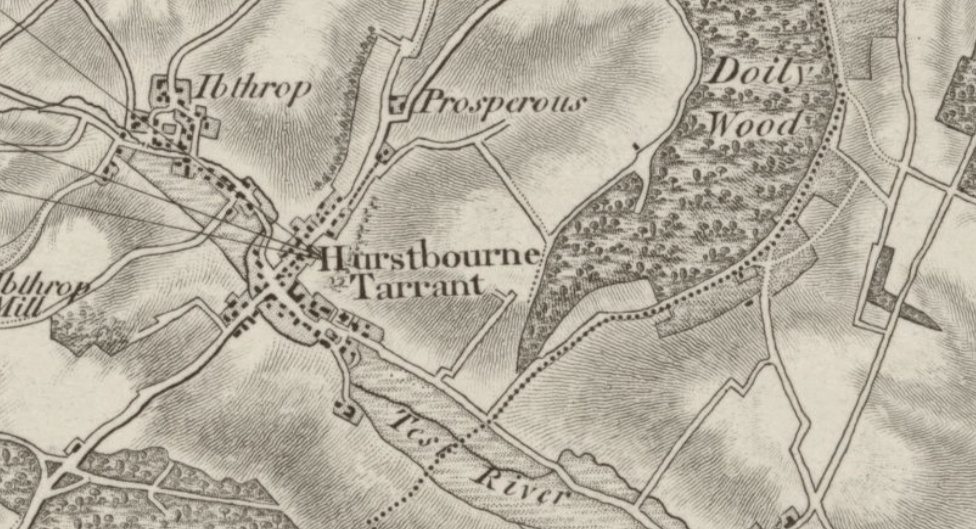
Caroline Elizabeth had been born in December of 1794 but died the following January. Both her baptism and death are recorded as being at Hurstbourne Tarrant.

In January 1797 a happier event occurred at Hurstbourne Tarrant where Eliza’s sisters Mary & Martha were still living with their mother. Mary Lloyd married the widowed James Austen and became step-mother to James’ daughter Anna. In the custom of the time, Eliza Fowle could now speak of James Austen as her brother. Martha Lloyd was to become one of Jane Austen’s closest friends and a life-long companion.

However, tragedy was soon to strike the extended family.

In 1795, Fulwar’s brother Tom Fowle had become engaged in secret to Cassandra Austen prior to joining an expedition to the West Indies as Lord Craven’s chaplain. However, he was never to return and news of his death from yellow fever reached Kintbury in the February of 1797. It was James and Mary who broke the news to Cassandra.

Over the next eight years four more children were born to Fulwar and Eliza in the Kintbury vicarage. In a letter to Cassandra of December 1st, 1798 Jane Austen wrote,

“No news from Kintbury yet – Eliza sports with our impatience.”

It is worth remembering that this was a time when everyone would have known someone who had died in childbirth so Jane Austen’s wry humour would be masking a real concern for Eliza’s welfare. Elizabeth Caroline ( known as Caroline ) arrived five days later on December 6th.  She was christened in Kintbury on January 19th by James Austen.

Isabella followed in 1799, Charles in 1804 and Henry in 1807. 

The Fowles, the Lloyds and the Austens remained friends throughout their lives. The little girl Fulwar had first got to know in the Steventon vicarage had shown a prodigious talent for writing and become a very succesful novelist. In 1815 the Prince Regent even requested that Jane should dedicate her latest novel to him, which she did. As it happens that novel was Emma, the one about which Fulwar famously said he would only read the first and the last chapters as he had heard it wasn’t interesting. I very much doubt that Jane would have been particularly offended by this comment – after all, she knew him almost as well as she knew her older brothers, and for almost as long.

Despite the disparaging comments about Emma, we know that Fulwar did indeed purchase other of Jane’s novels, as copies with his name, written in his handwriting on the title pages, have fairly recently come up for auction. We know from Jane’s letters that Eliza bought a copy of Sense & Sensibility.  

 Throughout this time there are many passing references to Fulwar & Eliza in the letters of Jane Austen. However the most telling reference as regards Fulwar is that January 1801. In her letter to Cassandra, Jane writes:

“We played at vingt-un, which, as Fulwar was unsuccessful, gave him an opportunity of exposing himself as usual.”

Fulwar, it seems , was not good at hiding his bad temper. But by this time Jane had known him for over twenty five years and must have been very well aware of his moods.

As their priest, Fulwar Craven Fowle served the people of Kintbury for the rest of his life. Whilst not all Anglican clergy were in any way wealthy and some seem just to have been scratching a living in their parishes – (indeed it is believed one of the reasons why the ill-fated Rev Thomas Fowle took the post of Chaplain to Lord Craven’s expedition was to raise enough money to marry Cassandra ) – all the evidence suggests that the Fowles’ life in Kintbury was secure and comfortable.

As well as carrying out his duties as parish priest in Kintbury and, from time to time visiting the parish of Elkstone, Fulwar was very much involved in West Berkshire public life.

In 1805 he was appointed Lieutenant Colonel Commandant of the Kintbury Rifle Corps and in the same year led the local Volunteer Brigade to Bulmersh, near Reading where they and other volunteer regiments were inspected by George III. Apparently the King was particularly impressed by the “military perfection” of the Berkshire Volunteers and with Rev Fowle as their officer.

I think it’s worth remembering that at this time there was still the threat of invasion from the French under Napoleon across the channel and the south coast felt particularly vulnerable. Having an efficient volunteer force was important to the nation’s security in the same way as the Home Guard was in the Second World War.

Despite the country being on a war footing and the newspapers continuing to carry reports of Napoleon, daily life continued relatively uninterrupted.

It seems that Rev Fowle moved within what Jane Austen’s Mrs Elton would have described as “the first circle” socially. According to a newspaper report of 1807, for example, he was one of several dignitaries to attend a race meeting at Enborne Heath near Newbury. Others named include the Earl of Craven and Sir Joseph Andrews of Shaw House, Newbury. Very much the local “great and good”.

What is perhaps surprising is the amount of property and land that Fulwar owned in the area. This included 55 acres of farm land, two cottages and other farm buildings at Rooks’ Nest farm just south of Kintbury, and also 350 acres of pasture and arable land with adjoining farm house and other buildings at East Woodhay, just over the border in Hampshire.   

However, Fulwar does seem to have taken an interest in agriculture and was not simply a landowner who cared solely about collecting the rent. In 1808 he was elected Steward of the Berkshire Agricultural Society for that year and in 1820 became a member of the Hampshire Agricultural Society

This was the time of what is now known as the agricultural revolution – the period throughout the late eighteenth century into the nineteenth century  when many landowners and working farmers were developing ways to increase agricultural production. In this area, South Downs and Merinos were the breeds of sheep most commonly kept by farmers but at the Hampshire Agricultural Show of 1820 the Rev Fowle exhibited a pen of Leicesters which, “excited much attention” as they had not been seen there before. Furthermore, the superior weight gain of these sheep, when compared to that of the usual breeds, was due, it was believed, to their having been fed on a diet of “sliced Swedish turnips” rather than corn and cake. Over the next two years, the Leicesters maintained their advantage when reared under controlled conditions.
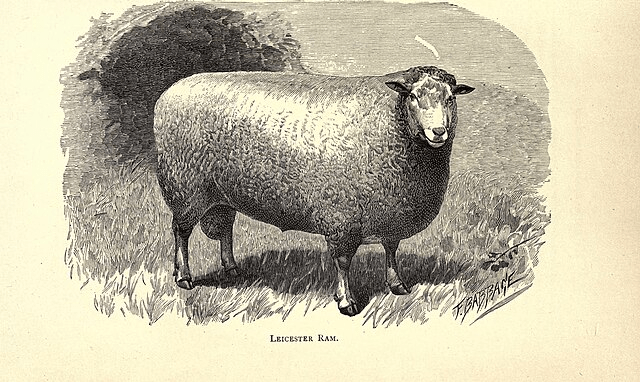
A Leicester Ram Photo: John Wrightson via Creative Commons

Whilst it has to be likely that it was a shepherd in Rev Fowle’s employment who would have undertaken all the husbandry involved in this experiment, Fulwar himself must have approved of its happening and may well have initiated it.

The Agricultural Revolution resulted in a slow and relatively peaceful change throughout the country. The same could not have been said about the French Revolution, observed from across the channel, where social change had included the violent removal of the monarchy and aristocracy. Throughout Fulwar’s life there were campaigns for social and political reform across the country but these were accompanied by fears, on the part of the establishment, of the kind of violence that had been seen in France. I think it is in the light of such fears that we need to assess the response of certain authorities to the unrest that broke out across southern England in 1830, though it does not excuse the more extreme reactions.

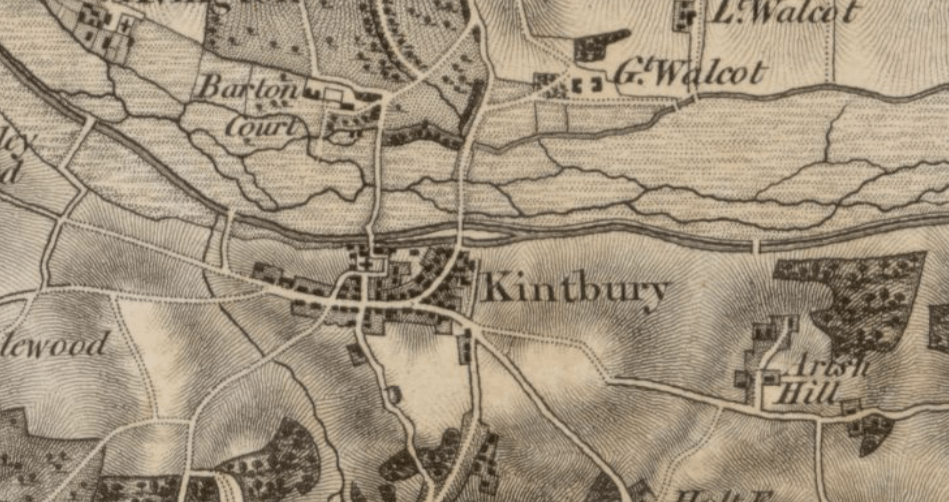
By 1830, Fulwar was 66 and Eliza 65. The couple still lived in the vicarage: the white building  next to the River Kennet where Fulwar had grown up although now its garden formed part of the south bank of the Kennet & Avon canal as it flowed towards Kintbury wharf, bringing coal and other commodities to the village.
Fulwar also served as a magistrate and was, therefore, regarded as a figure of authority and most probably of derision on the part of those who came before the bench. Such is human nature. He seems to have been respected and held in affection by the members of his church; by now, however, Kintbury had both a Methodist church and a Primitive Methodist church so numbers of nonconformists in the village would not have been inconsiderable: Rev Fowle was not everyone’s priest.

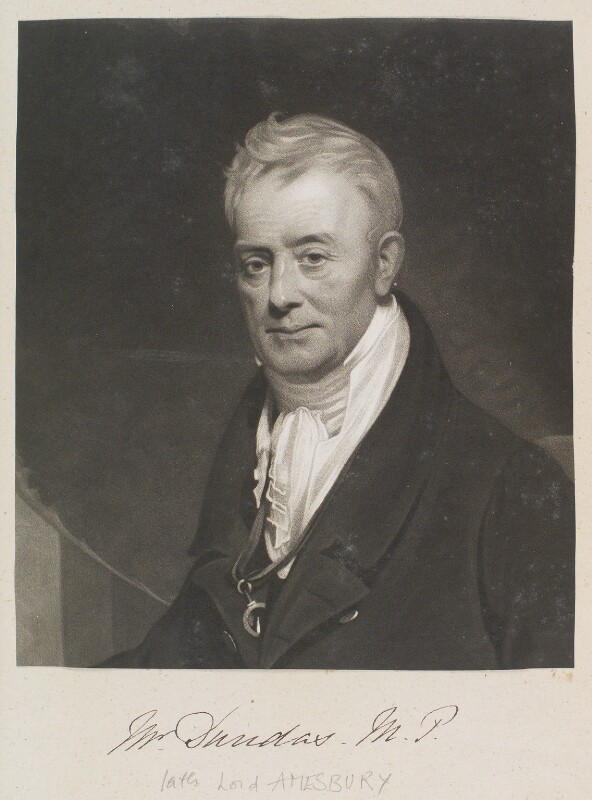
Their neighbour, 79 year old Charles Dundas still had his seat at Barton Court, less than half a mile along the coaching road which led from the Bath Road into the village. Dundas had been Member of Parliament for Berkshire since 1794.


Charles Dundas, MP & Kintbury Resident

We have written quite extensively in this blog about the events which led up to the Swing Riots of 1830. Formore information you might like to look at these articles: The Kintbury Martyr parts 1, 2 and 3.

Following a year of escalating hardships, by the autumn of 1830 the agricultural labourers focussed their attention on threshing machine: the mechanical devices that could do the work of several men at a time rendering them redundant when their casual employment was most crucial if they were to earn enough to feed their families through the upcoming winter. By the night of November 21st of that year, a riotous mob of angry men was roaming through the local villages, demanding money from the farmers and threatening to set fires and smash machinery, in particular the hated threshing machines.

Thanks to a letter held by the National Archives we can read Fulwar’s own account of what happened when the Kintbury mob arrived at the vicarage. Apart from some of his sermons, the letter is the only time we can hear his voice through his writing – writing that is small and neat despite the strain of the night he has just witnessed.  He frequently punctuates by using dashes. Both the neatness, much of the letter formations  and the dashes are reminiscent of Jane Austen’s letter writing, which leads me to wonder if both were influenced by George Austen. It’s a thought. 

The letter opens:

Dear Dundas,

The mob continued their work of breaking machines the whole of the night. They came to me about 4 oC in the morning. Harrison consulted with me and I agreed with him that it would be better to bring your machines to Kintbury and let them break them there than that they should go to BC for that purpose. They were brought up accordingly and taken into the street.

I think it is important to remember that at this time there was no police force and no authority that the Fowles could have called upon easily had they felt threatened. We do not know if anyone else was living at the vicarage besides Fulwar and Eliza – there may well have been one or two domestic servants and we know that Fulwar had a gun licence but all the same the couple would have been aware that they had very little personal protection had the mob turned violently against them.

Fulwar’s tone is resigned with acceptance of the situation rather than anger. He is clearly being kept informed of developments, telling Dundas that the mob has moved on to Titcombe, Hungerford Park and North Hidden, intending to go further. If this is correct, the rioters must have been moving swiftly through the area to have covered the distance. Furthermore, someone – or perhaps several people – must have been following on horseback to be able to report back as to what was happening. In these days of radio or mobile phone communication, it is easy to forget just how difficult it must have been in 1830 to follow what was happening.

The rioters have been demanding money:

I understand that they will have two pounds from each person; I know they had two from me, from Johnson, Captain Dunn and Mr Alderman.

According to the Bank of England online inflation calculator, £2 in 1830 equates to £199.40 today.

Once more I find Fulwar’s tone interesting – he is accepting of the situation and, at this time at least, offers no criticism or disapprobation.

I have not heard that they have committed personal violence on anyone rather than forcing the labourers to join them. Ploughs with cast iron shears appear to me as much the object of their hatred as machines and these they have broken many.

It is obviously important to Fulwar that he points out to Dundas that the rioters have not been personally violent to anyone and that the labourers ( by which I understand those not originally part of the “mob” ) are being forced to join in. Today we might speak of these people as being radicalised by the original protesters.

Further details are being brought to the vicarage as Fulwar writes:

I have just received a message from Mr Willes that the different parties have joined at Hungerford and exceed 1000 men.

One thousand men. That is half the population of modern day Kintbury. Even if that number is an exaggeration, a mob of even 250 angry men would be very frightening.

Fulwar continues to add to his letter as further information is brought to him. The Hungerford and Kintbury men have met with Mr Pearce ( a farmer ) and Mr Willes ( John Willes, JP of Hungerford Park ) and others. The men were demanding:

… twelve shillings a week for a man & wife & three children & the price of a gallon loaf for every child above three – these terms were acceded to by the Gentlemen as far as they could be, they were to be recommended for adoption to the farmers. I hope they will aceede (sic) to them I am in momentary expectation of being sent for by the Kintbury men who are returned or just returning to the village. I cannot of course try to beat them down to a lower price. These loaves to the children are all that men in health are to have from the parish as I understand these Gentlemen

According to the Bank of England, twelve shillings in 1830 equates to £59.82 today. The price of a gallon loaf in Newbury varied between one shilling and seven pence and one shilling and nine pence, so something around £8 today.

Fulwar concludes his letter at this point, then adds a post script:

I have just met the men – they (missing text) the same terms which had been agreed at Hungerford and I told them that as far as was in my power I would endeavour to persuade the farmers to agree to them. The men gave three cheers and expressed themselves perfectly satisfied but they all agreed that there must be no payment in bread but all in money. I could not feel justified in bringing back angry feelings  by refusing to promise to recommend that also. 

Fulwar’s tone in this letter is undoubtedly conciliatory. Whilst he admits that he does not want to bring back angry feelings,  I don’t believe he was merely seeming to be sympathetic to the demands because the men are threatening.

Unfortunately, not everyone was in agreement with the way Fulwar dealt with the mob, believing him to be too much in sympathy with them and encouraging them. Someone complained to Lord Melbourne, the Home Secretary, and as a result, Charles Dundas and over ninety other villagers signed a letter to Melbourne, assuring him that Rev Fowle had done everything he could to quieten the disturbances.

Despite Fulwar’s attempts, the wider disturbances did not end there and then at the Kintbury vicarage, as we have written about elsewhere on this blog. The resulting court case was eventually heard at Reading the following January. Whilst several of the rioters were transported to Australia, just one man was executed: Kintbury’s William Winterbourne.

Winterbourne was hanged in Reading Gaol on January 11th 1831. Fulwar had his body returned to Kintbury where he was buried the next day in St Mary’s churchyard and later a grave stone erected. On the stone, Winterbourne is recorded as “William Smith” , Smith being his mother’s name and, as his parents were not married, it was the custom of the time to regard a child’s official surname to be that of the mother.

I think it is difficult for us today to appreciate how very unusual – indeed, practically unheard of – it was then for a labourer such as Winterbourne to have a grave stone. Such would be completely beyond the budget of poorer people and even skilled craftsmen and women and many who today we might consider to be “lower middle class” would not necessarily have a grave stone but be laid to rest in an unmarked plot. Rev Fowle was responsible for Winterbourne’s burial and grave stone in Kintbury churchyard and it would be interesting to know how the rest of the village reacted to what he did.

William winterbourne/Smith’s grave

There has long been a persistent idea locally that Fulwar did this out of a feeling of guilt. I do not believe this to be so and there is absolutely no evidence, as far as I have been able to find, to suggest that Fulwar had any responsibility for the outcome of the trial or felt any guilt as a result of it. I believe his feelings would have been of extreme sorrow.

 As a parish priest and also as a magistrate he was a figure of authority in a village where, in common with all of England at this time, everyone was expected to know their place in society, and stick within it. So, if he was known amongst many villagers as “Ol’ Fowle”, as some people believe, this does not signify any particular derision than that which would have been afforded to many other figures of authority or those who had agency over the working people.

On May 26th 1839, Eliza Fowle died at the Kintbury vicarage. She was 71. On March 9th of the following year, Fulwar also died. He was 75. His memorial, over the pulpit in the church describes him as: Pastor, Neighbour, Friend.
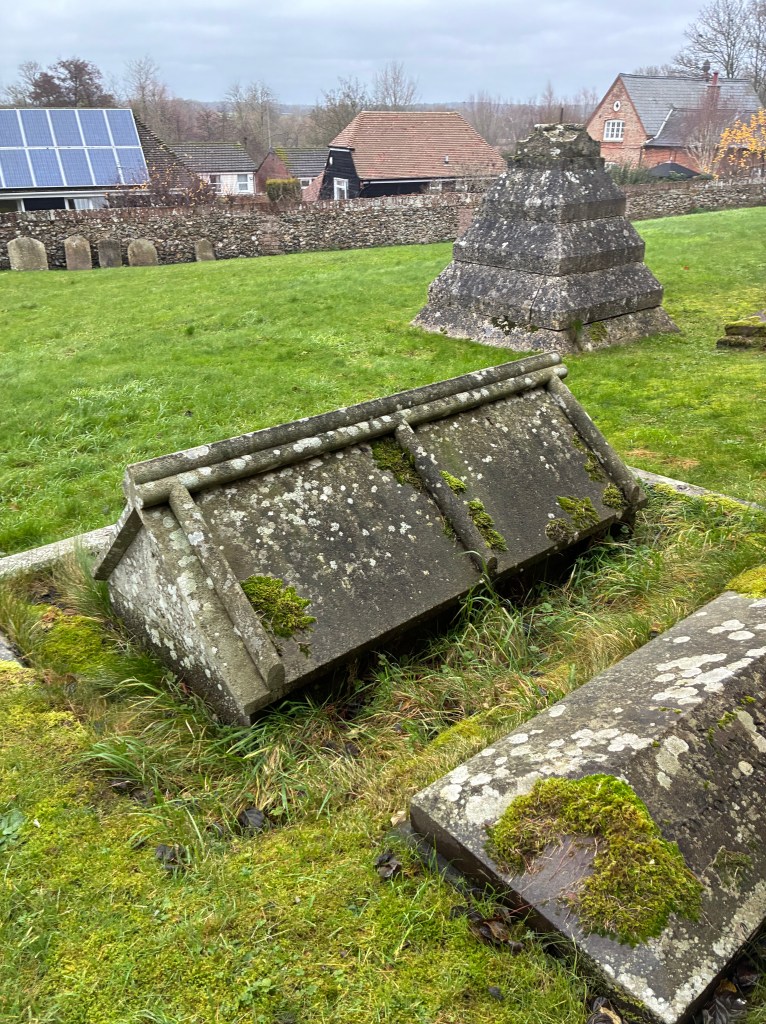
The Fowle family grave, St Mary’s churchyard, Kintbury

Fulwar’s death brought to an end nearly 100 years of the Fowle family as priests in Kintbury. Less than thirty years later, the white vicarage mentioned by James Austen in his poem, had gone, to be replaced by a then very fashionable neo gothic house which is still there today.

Elizabeth Caroline lived in Kintbury all her life. When Cassandra Austen died in 1845, she left £1000 and a shawl which had previously belonged to Mrs Jane Fowle to her. Very sadly, Elizabeth Caroline died in a London asylum in 1860.

Mary Jane Dexter, née Fowle, died in 1883 and Isabella Lidderdale, née Fowle, died in 1884, both in Kintbury.

On January 11th every year, people gather in Kintbury church yard to remember William Winterbourne/Smith, the Kintbury Martyr. But for Fulwar, Winterbourne’s grave would be in Reading, not here in Kintbury.

Throughout the year, Janeites ( as those who love the works of Jane Austen are called ) visit Kintbury because of her connections to the village through the Fowle family. Fulwar Craven Fowle is the link between what are often our very different parties of visitors.

And thanks to him we have this charming recollection of the woman he had known as a friend all her life:

Like a doll……certainly pretty – bright and a good deal of colour in her face – like a doll – no, that would not give at all the right idea for she had so much expression – she was like a child – quite a child, very lively and full of humour.”

Sources:

Jane Austen’s Letters, collected and edited by Deirdre Le Faye, 1996

The National Archives

Ancestry

British Newspaper Archive

Adventuresinarchitecture.co.uk/tag/balthazar-gerbier

Elkstoneparish.gov.uk

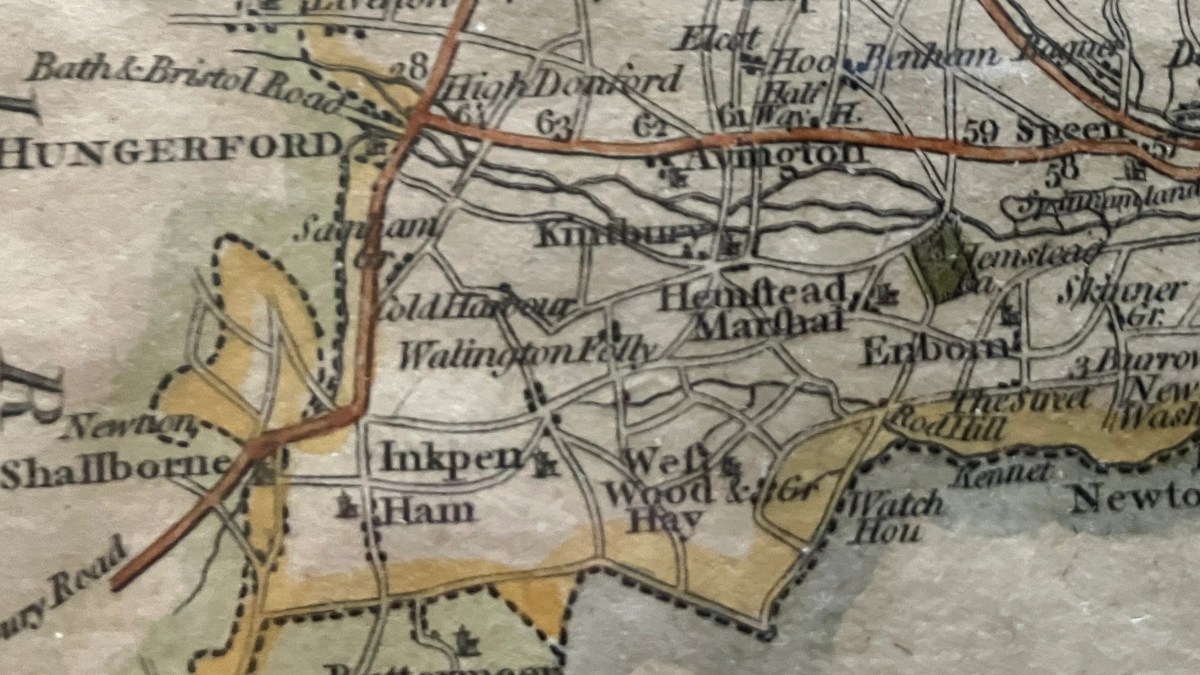
National Library of Scotland OS map collection

Bankofengland.co.uk/monetary-policy/inflation/inflation-calculator

(C) Theresa A. Lock, 2025

Kin & Kintbury

In this article, Ellen Lock Ireland discusses Jane Auten’s close relationship with friends and extended family in Kintbury.

The Old Vicarage in Kintbury

Similarly to the way in which we meet the families in Jane Austen’s novels (the Bennets, Bingleys, Dashwoods, Morlands, Bertrams etc), we can get to know a real life Kintbury family through her letters to her sister. As Jane herself says “the true art of letter writing…is to express on paper exactly what one would say to the same person by word of mouth…”

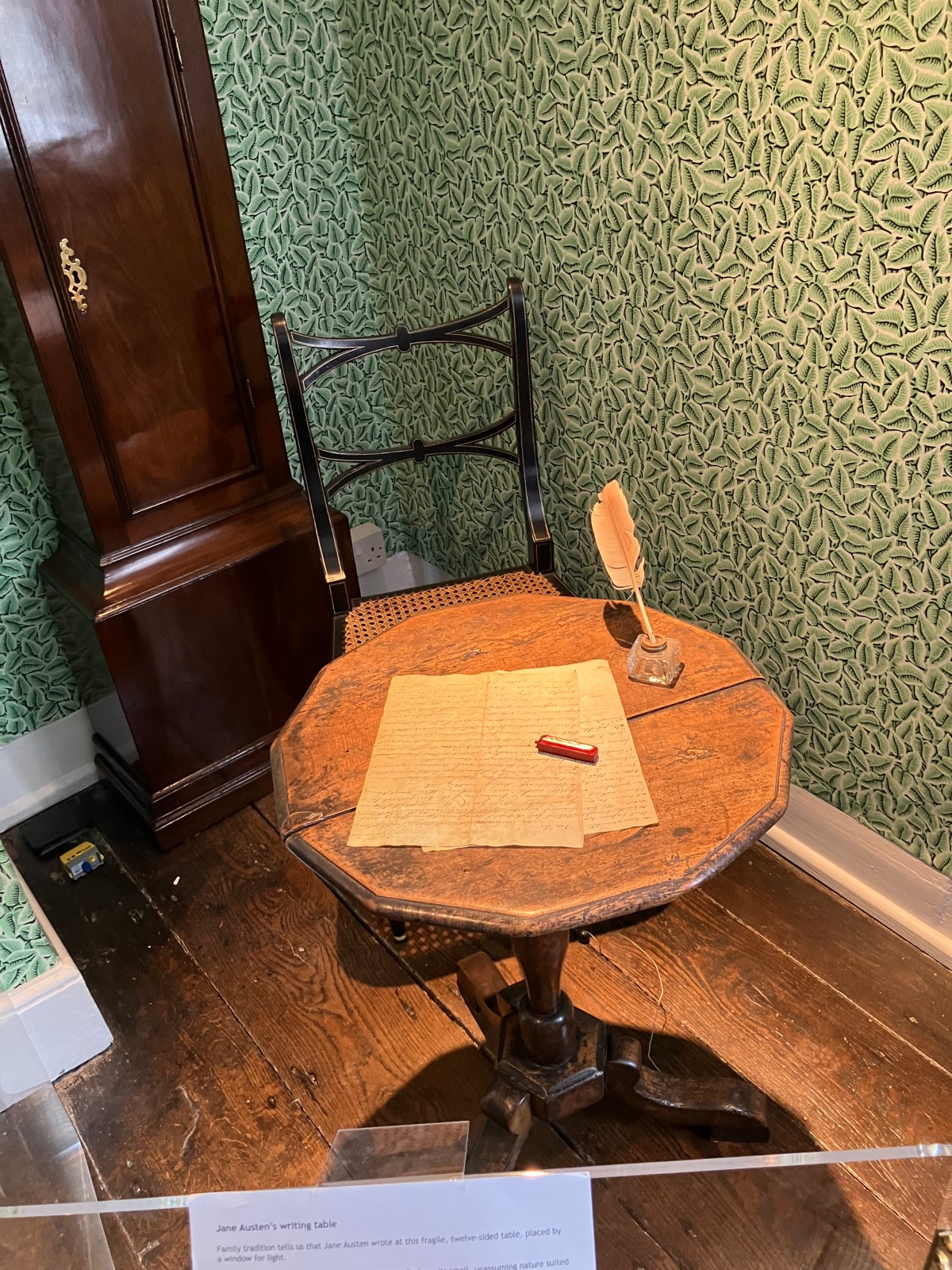
Jane Austen’s writing table

The protagonist family in Kintbury’s particular local story, which we might call “Kin and Kintbury”, are, of course, the Fowles, a dynasty of local vicars. The two families first becoming acquainted when George Austen met Thomas Fowle Senior during their university days at Oxford. The relationship was solidified for the next generation when Thomas Fowle sent his sons Fulwar, Thomas, William and Charles to study with George at the Steventon rectory prior to their going to university. Studying and living in the same house alongside the Austen children inevitably resulted in lifelong friendships.

The closeness of these two families is reflected in the fond memories shared by James Austen in his poem, Lines written at Kintbury- May1812:

“And still in my mind’s eye methinks I see

The village pastor’s cheerful family.

The father grave, yet oft with humour dry

Producing the quaint jest or shrewd reply;

The busy bustling mother who like Eve,

Would ever and anon the circle leave,

Her mind on hospitable thoughts intent;

Careful domestic blunders to prevent.

And ever ready on her guests to pour

The corner beaufet’s rich and savoury store.

While yet a gayer group, 4 manly boys

Heightened the relish of domestic joys

Of future happiness gave promise fair”

James Austen

As we know, Fulwar became Vicar at Kintbury in 1798, taking on the role from his father Thomas. As a fan of Jane’s fictional clergy, it is perhaps gratifying to read her description of Fulwar’s response to a less than successful card game session of 1801, reporting to Cassandra “We played at Vignt-un, which as Fulwar was unsuccessful, gave him an opportunity to expose himself as usual”.  Fortunately, perhaps, for Fulwar’s legacy, the plaque installed in his memory leaves a somewhat more positive impression for posterity, stating that it was commissioned “by the parishioners of Kintbury, in testimony of their respect and affection for him as their pastor, friend and neighbour”.

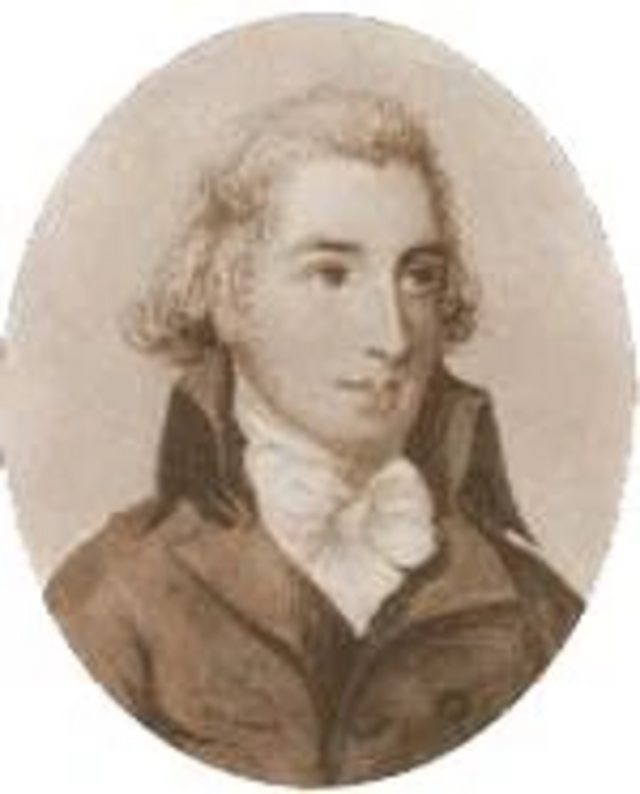
Rev Fulwar Craven Fowle

Fulwar’s wife, Eliza, nee Lloyd, also features in frequent subplots in Austen’s letters, with Jane impatient for news of the familial goings on in her life, for example complaining to Cassandra prior to the birth of one of Eliza and Fulwar’s children in 1798 “No news from Kintbury yet- Eliza sports with our impatience! She was very well last Thursday…”

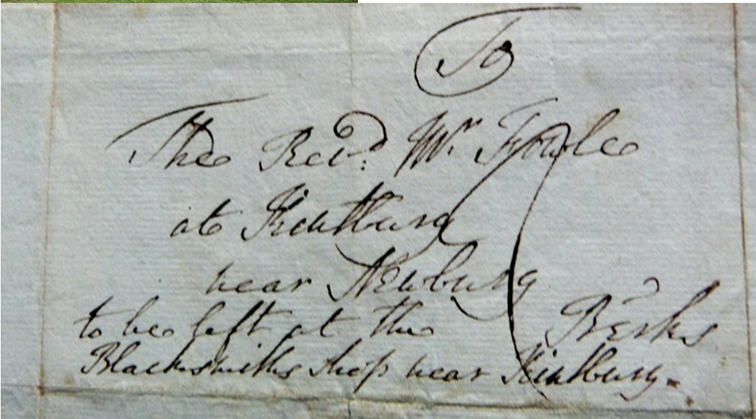
A letter addressed to the vicarage at Kintbury

In a letter of 1801, Jane provides us with a less than flattering impression of Eliza, telling Cassandra “Eliza says she is quite well, but she is thinner than when we saw her last, & not in very good looks. I suppose she has not recovered from the effects of her illness in December.- She cuts her hair too short over her forehead, & and does not wear her cap far enough upon her head- in spite of these many disadvantages however, I can still admire her beauty.”

As well as being the wife of an old family friend, Eliza also had the familial claim, not only as the sister of Jane’s brother James’ wife, but also the sister of her particular friend Martha Lloyd, whom Jane once described as “the friend and sister under every circumstance”. Martha is known to have lived with Jane, Cassandra and their mother in various residences including those in Southampton and Chawton. The close bond is reminiscent of that between sisters, with Jane complaining in jest to Cassandra “I would not let Martha read First Impressions again upon any account…she means to publish it from Memory, & one more perusal must enable her to do it.”  

The close bond between the families is further highlighted at times of personal tragedy. Following the death of Edward Austen-Knight’s wife Elizabeth, in 1808, Jane wrote to Cassandra of Eliza’s correspondence to her, quoting Eliza’s own words “A very kind and feeling letter is arrived today from Kintbury. Mrs. Fowle’s sympathy and solicitude on such an occasion you will be able to do justice to, and express it as she wishes to my bother. Concerning you, she says “Cassandra will, I know, excuse my writing to her; it is not to save myself but her that I omit so doing. Give my best, my kindest love to her, and tell her that I feel for her as I know she would for me on the same occasion, and that I most sincerely hope her health will not suffer”.

West door of St Mary’s, Kintbury

Just as the Fowle and Austen family links survived into a second generation, Jane and her family eagerly concerned themselves with the development and news of Fulwar and Eliza’s growing family. The couple, in total, welcomed 8 children, Fulwar-William, Mary Jane, Thomas, Caroline Elizabeth, who sadly died in her first year, Elizabeth Caroline, Isabella, Charles and Henry.

As with the families in her novels, Jane provides us with a vivid image of various interactions and her opinions of her friends’ children:

Fulwar William, the eldest, is described by Jane as “attentive” and “affectionate”, although Jane seems to have difficulty keeping track of his age, commenting to Cassandra that he “is actually 14, what are we to do?”

During one family gathering, Jane recalls her impressions of various of the Fowle clan, telling Cassandra,

“William & Tom are much as usual; Caroline”  (who we also learn was Christened by James Austen in 1799 , “is improved in her person; I think her now really a pretty Child. She is still very shy, & does not talk much.”

As is a theme in Jane’s novels, another, perhaps more distant, character of interest in Jane’s letters regarding the Fowle family is Fulwar’s distant relative, Lord Craven, the token member of the landed gentry in our story, whose far reaching impact is felt closer to home.

Lawrence, Thomas; Lieutenant-General William Craven (1770-1825), 1st Earl of Craven; National Army Museum; http://www.artuk.org/artworks/lieutenant-general-william-craven-17701825-1st-earl-of-craven-182755


Jane informs Cassandra that “Eliza has seen Lord Craven at Barton, and probably by this time at Kintbury, where he was expected for one day this week.”

Jane eagerly seizes on the opportunity to relish in the gentleman’s foibles, telling Cassandra that Eliza “found his manners very pleasing indeed. The little flaw of having a Mistress now living with him at Ashdown Park, seems to be the only unpleasing circumstance about him.”

Let us not forget, of course, Lord Craven’s most lasting impact on the two families. In a seeming act of generosity, Lord Craven appointed Tom Fowle, Fulwar’s brother and by this time Cassandra Austen’s fiance, to the role of domestic chaplain, a role which would see Tom travel to the West Indies with his kinsman, where he sadly contracted yellow fever and died.

When reading “Mansfield Park” in this context, what is striking is that Jane Austen writes about a Tom, who is sent to The West Indies, during which time there is much fear around the dangers of such a trip, and speculation that he may not return. The marked difference is, of course, that in her fictional world, Jane Austen was able to ensure that her Tom returned home safe and sound, when in reality, sadly, our Tom could not. Movingly, as was the case for Cassandra in real life, Tom in Jane’s fictional world, remains unmarried.

Cassandra Austen

As discovered above, there is much more to the Austen family connection with Kintbury than originally meets the eye and, as a life long Janite local to the village, it is fascinating to continue to explore this. To leave the last word to Miss Jane Austen herself:

  “It is pleasing to be among people who know one’s connections and care about them” (June 1808).

(C) Ellen Lock Ireland 2025

Cassandra Austen & her one true love: Kintbury’s Thomas Fowle

Cassandra Austen had one love in her life: Kintbury’s Thomas Fowle. Following his untimely death, it seems she forsook all others and remained single for the rest of her life.

So who was Thomas Fowle?

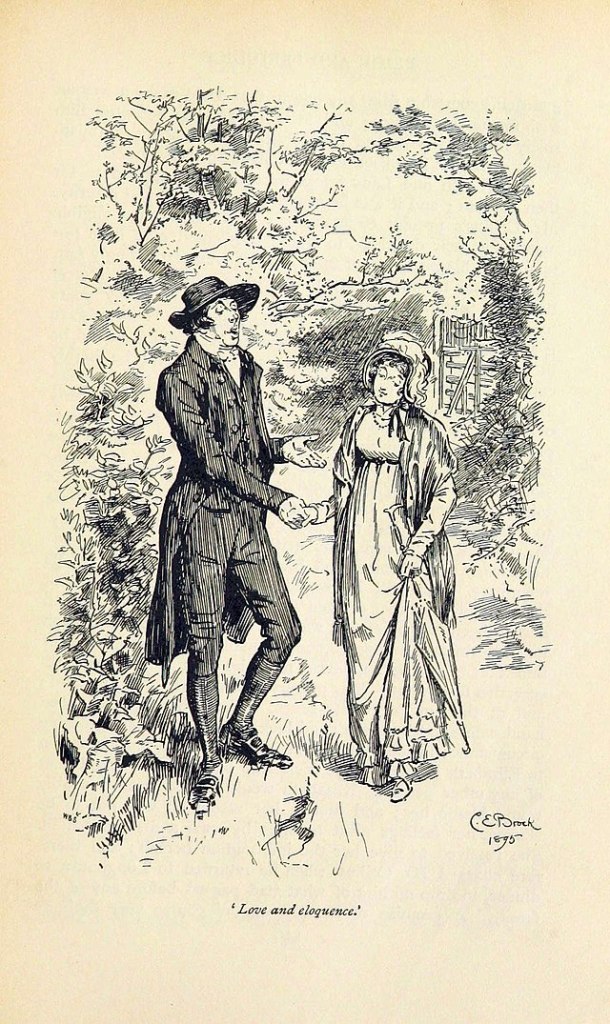
We do not know what he looked like – perhaps we have an image in our minds of the stereotypical late eighteenth century curate – perhaps that image is a sort of caricature.

The stereotypical image of a Regency curate???

 If Tom looked anything like his grandmother, his uncle or indeed his older brother Fulwar, he would have had a long nose and a very defined chin. Fulwar, we know, was not particularly tall.

Tom’s brother, Fulwar

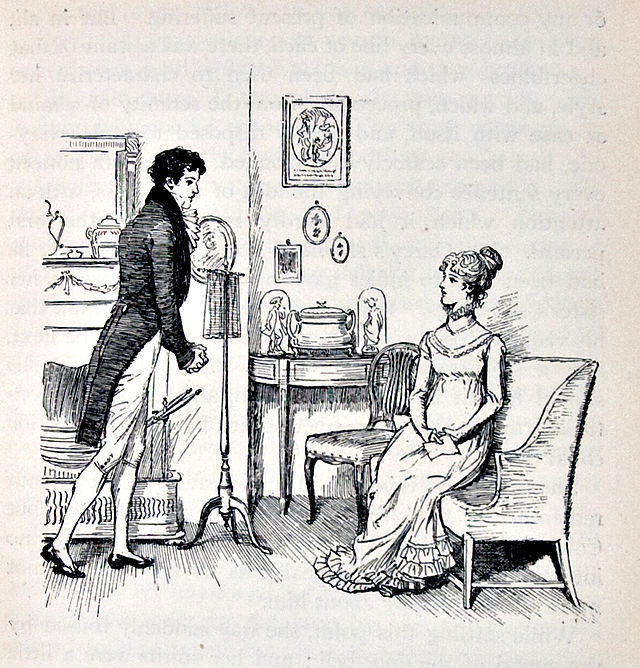
So perhaps Tom did not look like a young Colin Firth as Mr Darcy – or indeed any one else as Mr Darcy. Neither was Tom the heir to a Pemberley, in fact he was heir to very little at all. But Cassandra loved him and she must have loved him for who he was.

Not the classic Mr Darcy?

We know that Tom was born in Kintbury in 1765 and was the second son of the parish priest, also named Thomas.

These were the days of patronage and preferment and holding the living at Kintbury had become something of a family business because Thomas’s grandfather, another Thomas, had become vicar in 1741. So the Fowles were the vicarage family in this quiet backwater – all very rural, and, it is easy to imagine, all very sedate and proper.

Three generations of the Fowle family became vicars of St Mary’s, Kintbury

However, on Thomas’s mother’s side, things had been a little bit different.

Thomas’s maternal grandfather was the Honorable Charles Craven who, between 1712 and 1716, had been the governor of South Carolina. He seems to have been something of a man of action and in 1715 actually led an army of colonists and their native American allies in a war against other native American tribes who, one presumes, saw the colonisation of their country differently.

Charles’s son, Thomas’s cousin John, seems to have been a man of action but in a very different way. He took holy orders and by the 1770s was appointed to the parish of Wolverton in Hampshire although it seems he was living at Barton Court in Kintbury at this time. If there had been a tabloid press back then, John Craven would have been a favourite for supplying sensational copy with an incident involving pistols at a hotel in Wantage and a very lurid divorce case in which maids testified at having heard the sound of beds springs coming from a lady’s room John had recently entered.

Thomas’s grandmother, Elizabeth Craven, was, we believe, something of a socialite. Her bust, now in the north transept at St Mary’s church, Kintbury, is part of the very elaborate and – when it was new – eye-wateringly expensive monument to her second husband, Jemmet Raymond. The representation of Elizabeth, presumably based on a portrait now long lost, shows face with a very stern expression.

Tom Fowle’s grandmother

 Elizabeth Craven is believed to have had a difficult relationship with her daughters. One is said to have eloped with a horse dealer and another, Martha, left home to work as a seemstress under an assumed name to hide her identity. Eventually she married the Rev Noyes Lloyd of Enborne near Kintbury and became the mother of Eliza, Martha and Mary Lloyd. Jane Craven married Thomas Fowle II of Kintbury and became the mother of Thomas and his brothers, Fulwar-Craven, William and Charles.

However, the Craven relation who would have the most devastating influence on Thomas’s life has to be his cousin, William Craven, 1st Earl of Craven of the 2nd creation – to give him his full title – and the son of one of the richest men in England. Other people choose to remember him as the man who kept his mistress Harriet Wilson at Ashdown House.

Lawrence, Thomas; Lieutenant-General William Craven (1770-1825), 1st Earl of Craven; National Army Museum; http://www.artuk.org/artworks/lieutenant-general-william-craven-17701825-1st-earl-of-craven-182755

One wonders what the family at Kintbury would have thought of those Craven relations – what would Thomas and his brothers have told Jane and Cassandra of their grandmother, whose memorial back then would have been to one side of the altar and therefore much more prominent? Perhaps they would have enjoyed the gossip value and agreed with Mr Bennet that we exist to make sport for our neighbours and laugh at them in our turn.   

But nothing sensational or scandalous ever attached itself to the Fowles in their Kintbury vicarage. Being related to members of the extremely wealthy Craven family, was, I suppose, an advantage for both the Fowles at Kintbury and the Lloyds at Enborne since this was still the time when members of the aristocracy and more influential gentry could appoint vicars to parishes within their gift. However, having a grandfather who was an honourable and a cousin who was an earl did not mean the Fowles or the Lloyds moved easily in similar social circles. The Fowles were not wealthy. Thomas Fowle II did not send his sons to a public (expensive fee-paying) school such as those at Winchester, Harrow or Eton. Instead Fulwar, Thomas, William and Charles were sent to the vicarage at Steventon in Hampshire to be educated by their father’s friend from university days, Rev George Austen.

Thomas Fowle was 14 in 1779 when he was sent to study at Steventon, presumably with the intention that George Austen’s teaching would prepare him for a place at Oxford University. Fulwar had taken his place at the vicarage school in the previous year and it is not surprising that the Kintbury boys became close friends with the Austens of the same age, in particular with James. Cassandra was just six when Tom arrived at Steventon and ten when he left to take up his place at St John’s College, Oxford.

Home theatricals were a popular past time at Steventon and in December 1782 the young Austens, along with some of their father’s pupils, staged their own production of a contemporary play, “The tragedy of Matilda” by James Francklin. James Austen wrote a prologue for the play, which was spoken by his brother Edward, and an epilogue which was spoken by Tom Fowle. For the nine year old Cassandra, the Fowle boys must have seemed as familiar as her own brothers and it is easy to imagine how her relationship with Tom grew in the creative atmosphere of the Steventon vicarage.

The following year, 1783, Tom went up to Oxford, where he graduated with a BA from St John’s college in 1787 and then taking Holy Orders. He became curate of East Woodhay – not far from Kintbury – in 1788 and also, in the manner of the time, at another parish, Welford, also not far from Kintbury.

We know that on at least on two occasions, Tom officiated at weddings at George Austen’s church in Steventon, one in 1789 and another in December 1792. On this occasion the marriage was between Mrs Austen’s niece, Jane Cooper and one Thomas Williams Esq. Both of her parents having died, Jane was being married from the home of her aunt and uncle, with George Austen taking the place of her father, I presume, and therefore unable to officiate.  I think it says something of the relationship between the Austens and the Fowles that Tom stands in for Rev Austen to officiate at this wedding rather than a local curate.

The church at Steventon

Although Cassandra was only ten when Thomas left Steventon for Oxford, we know that in later years various members of the Austen family visited their friends at the Kintbury vicarage. In a poem written at Kintbury in 1812, James Austen, who was a particular friend of Tom’s elder brother, Fulwar, recalls his  visit to Kintbury in the early 1780s:

“ Yes, full thirty years have passed away,

Fresh in my memory still appears the day

When first I trod this hospitable ground…”

James recalls with affection, Jane & Thomas Fowle:

“ The father grave; yet oft with humour dry,

Producing the quaint jest or shrewd reply,

The busy bustling mother who like Eve,

Would ever and anon the circle leave

Her mind on hospitable thoughts intent.”

James Austen’s poem creates an image of a warm and welcoming family with a sense of humour, not unlike the impression we get of the Austen family themselves.

The poem has some very sad lines as James recalls Cassandra’s betrothal to Tom:

“Our friendship soon had known a dearer tie

Than friendship self could ever yet supply,

And I had lived with confidence to join

A much loved sister’s trembling hand to thine.”

James Austen

In 1788, Fulwar had married his cousin, Eliza Lloyd, whose sisters, Mary and Martha Lloyd were to become close friends with Jane and Cassandra. In 1797, Mary Lloyd became James Austen’s second wife. They had first met in Kintbury. 

So this was the extended family circle Cassandra anticipated joining when she quietly became engaged to Tom in 1795. By this time she was 22 and he was 29 and for two years had been rector at the church of St John the Baptist in Allington near Salisbury in Wiltshire.

The church of St John the Baptist, Allington, Wiltshire

Family connections had given Tom the post as Allington was one of the parishes in the gift of his cousin, Lord Craven. However, the stripend Tom received from his position here was not enough to support a wife. But Lord Craven had another parish in mind for Tom, however, in Shropshire, and it seems to have been confidently expected that Shropshire was where Tom and Cassandra would be living after their wedding.

But sadly, that wedding never happened.

In 1793, Britain was at war with France. Both countries had interests in the West Indies which resulted in the conflict spreading beyond Europe and across the Atlantic. In 1795, General Sir Ralph Abercrombie was to lead a 19,000 strong expeditionary force to the West Indies. Their number included the Third Regiment of Foot whose colonelcy had recently been bought by Tom’s cousin, Lord Craven.

 It is believed that Craven did not know of Tom’s engagement when he asked his cousin to accompany the troops as Regimental Chaplain, and if he had known, would not have suggested Tom should join the expedition. It is possible that Cassandra herself had forbidden Tom from mentioning it. Tom accepted the post and hurriedly made his will on 10th October. It was not witnessed, which suggests, I think, the haste in which it was completed and also perhaps the secrecy of the engagement.

Was it simply that Tom was hoping to raise enough money for him and Cassandra to live comfortably after their wedding that made this young priest accept the post? Was it that he felt he could not say no to his illustrious cousin? Tom would not be the first member of his family to make the Atlantic crossing – his grandfather had been governor of South Carolina, after all. But the journey to the West Indies was well known as potentially dangerous.

In the late autumn of 1795, Cassandra came to Kintbury to take her leave of Tom. Abercrombie’s expedition was delayed by the lack of men and equipment, but eventually sailed from Portsmouth, Hampshire, in November although bad weather in the channel caused further delays to the fleet. It seems likely that Cassandra was staying with the Fowles throughout this time.

 “What a funny name Tom has got for his vessel”, Jane wrote to Cassandra on January 9th, “But he has no taste in names, as we well know, and I dare say he christened it himself.”

Then on the 15th she wrote,

“I am very glad to find from Mary that Mr & Mrs Fowle are pleased with you. I hope you will continue to give satisfaction.”

This must have been a horrible time for Cassandra ; Jane’s apparently light-hearted humour must be seen as a way of coping with a very stressful situation.

Jane had received a letter from Tom anticipating the fleet’s departure from the Devonshire port of Falmouth, which eventually happened on January 10th 1796. “By this time…they are at Barbadoes, I suppose, ” Jane wrote to Cassandra, though, of course, there would be no way of knowing that for sure.

Sadly, Cassandra would never see her Tom again. He died of yellow fever on 13th February 1797 in San Domingo and was buried at sea. Cassandra and the Fowles were expecting to hear of Tom’s return to England; instead, sometime during April they received the news of his death.

 We can presume that it would have been Tom’s parents, Thomas & Jane, who would receive the news first. But it fell to James Austen and his new wife, Mary Lloyd Austen, to break it to Cassandra that Tom would never return. We can only imagine what shock waves this awful news must have sent through the now extended families of Austens, Fowles and Lloyds. According to Jane, Cassandra behaved with, “a degree of resolution and propriety which no common mind could evince in so trying a situation.”

Because Tom’s will had not been witnessed, his brothers Fulwar and William were required to swear to its veracity, which they did on May 10th 1797. He had left £1,000 to Cassandra, which, whilst not a fortune, was, when carefully invested, a very useful sum.

Tom’s death, however, was not the end of Cassandra’s relationship with the Fowles. As with Persuasion’s Captain Benwick and the family of the deceased Fanny Harville, it seems as if Cassandra’s relationship with the Fowles grew even stronger following Tom’s death and Cassandra continued to visit Kintbury.

As we know, Cassandra never married but shared her life with her sister Jane and their friend Martha Lloyd. Martha, of course, was the sister of Eliza Fowle who continued to live in the vicarage at Kintbury until her death in 1839. We know from Jane’s surviving letters and other sources that the Austens, the Fowles and the Lloyds continued to exchange visits and letters.  

We know that Cassandra accompanied Jane on her last visit to Kintbury in early June of 1816. That was the occasion recalled by Mary Jane Dexter, Fulwar &  Eliza’s daughter, when Jane seemed to be revisiting her old haunts as if she did not expect to see them again.

So was the visit in 1816 Kintbury’s last link with Cassandra? I think not.

Fulwar Craven Fowle’s daughters, Mary Jane, Elizabeth Caroline and Isabella had, as children, all known both Jane and Cassandra. Mary Jane married Lieutenant Christopher Dexter and lived with him some time in India. She was widowed at 31 and returned to Kintbury where she died in 1883. Isabella married a local doctor, John Lidderdale, and also lived in Kintbury until her death in 1884.

That leaves Elizabeth Caroline, the daughter who had been christened by James Austen in 1799 and described by Jane in 1801 as “a really pretty child. She is still very shy & does not talk much.”

Elizabeth Caroline Fowle never married but, like her sisters, continued to live in Kintbury. When Cassandra Austen died in March 1845, she left Elizabeth Caroline £1,000 – exactly the sum left to her by Tom – and a large Indian shawl that had once belonged to Mrs Jane Fowle, Tom’s mother.

Quite why Elizabeth Caroline should be the only member of the Fowle family to be a beneficiary of Cassandra’s will, I have not been able to find out. Perhaps, as the one Fowle sister who never married, Cassandra felt some fellow-feeling for her – maybe Elizabeth Caroline had suffered a disappointment such as Cassandra had when Tom died. Also, there is evidence to suggest that Elizabeth Caroline was not quite so well off as her sisters. Perhaps, as James Austen had baptised Elizabeth Caroline, Cassandra had stood as one of her godparents – I do not know. In 1860, Elizabeth Caroline Fowle died, having spent the last six months of her life, not in Kintbury, but as a private patient at an asylum in London.

In 1860 the old vicarage – the home to three generations of the Fowle family, the place where James Austen first met Mary Lloyd and where Cassandra had said her last goodbye to Tom – was pulled down to be replaced by a house in the very latest Victorian neo-Gothic style.  

To this day, there are houses in Kintbury where, it is sometimes claimed, Jane Austen stayed. I believe that the only house about which we can say for sure, “Jane Austen stayed here” was the original vicarage on the banks of the canal, now long gone and replaced. Cassandra may well have continued to visit Rev Fuller and his wife Eliza there after Jane’s death. However, with regards to the other houses, I believe that it has to be likely that these were the homes of Elizabeth Caroline, Mary or Isabella and that Cassandra would have stayed with with one of them on her later visits to Kintbury. It has to be very likely that, over the years, local folk memory has somehow become confused. So, when Kintbury villagers knowingly talked to their children and grandchildren of the illustrious visitors who once stayed here, the Miss Austen of whom they spoke so respectfully was not Jane, but Cassandra.

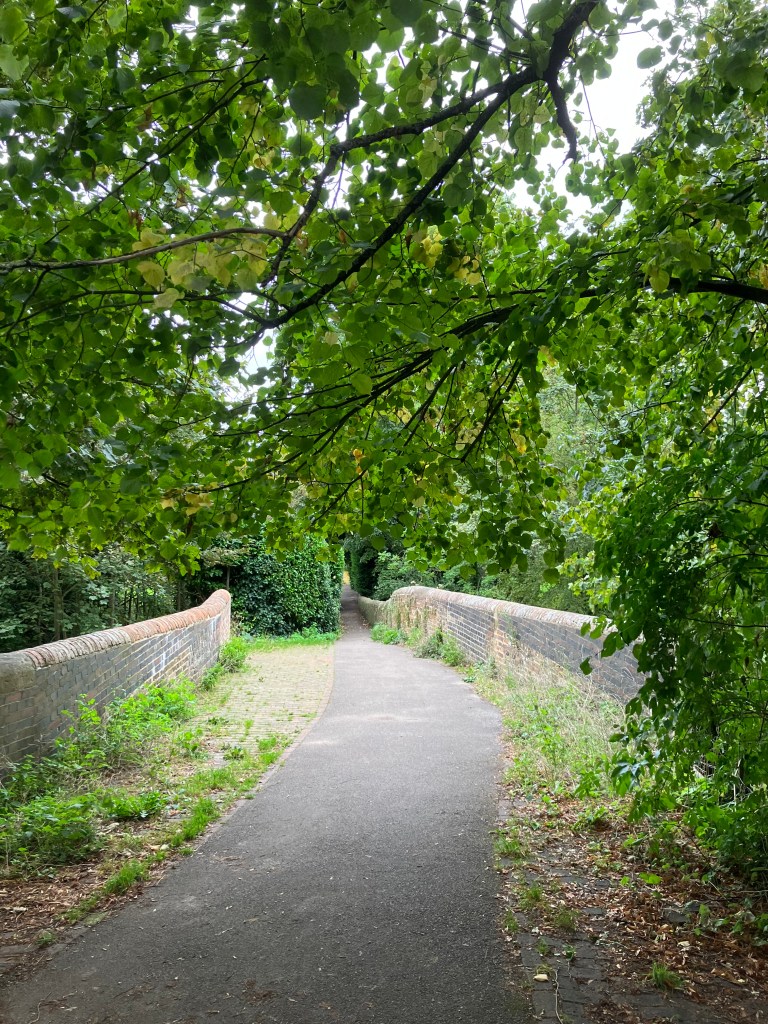
The route of the old coaching road into Kintbury

(C) Theresa Lock 2025

Who’s who: Local people in the letters of Jane Austen

We have just had two hampers of apples from Kintbury, and the floor of our little garret is almost covered

Letter to Cassandra Austen, October 1808

We have just had two hampers of apples from Kintbury, and the floor of our little garret is almost covered

Letter to Cassandra Austen, October 1808

In her letters, Jane Austen frequently referred to Kintbury and to local people, several of whom became members of her extended family or close friends. In this article we discuss who these people were.

.

THE CRAVENS

Lord William Craven 1770 1825

Lord Craven has probably other connections and more intimate ones, in that line, than he now has with the Kintbury family.

Letter to Cassandra, 1799

“Eliza has seen Lord Craven at Barton & probably by this time at Kintbury, where he was expected for one day this week. – She found his manners very pleasing – the little flaw of having a mistress now living with him, at Ashdown Park, seems to be the only unpleasing circumstance about him.”

Letter to Cassandra, January 1801

The Barton Jane refers to in this letter is Barton Court, Kintbury. By 1801, when the letter to Cassandra was written, Barton Court  was the home of Charles Dundas and his wife Anne.

Lord William Craven was a distinguished military gentleman, served in Flanders and was AD to the King and a favourite of Queen Charlotte. A bit of a rake before his marriage, he kept his mistress, Harriet Wilson, at Ashdown House on the Berkshire Downs. After Harriet, having become tired of him, left, he went on to marry the actress, Louisa Brunton. They lived in Hamstead as a close family and the Countess was renowned for her gracious generosity.

Other members of the extended Craven family had power and influence across the West Berkshire area during the eighteenth century.

THE FAMILY OF CHARLES & ELIZABETH CRAVEN

 “Governor” Charles Craven, 1682 – 1754,  of Hamstead Marshall had been Governor of Carolina between 1711 and 1716. His wife, Elizabeth, 1698 – 1771, gained a reputation as a socialite and it is alleged that she treated her children badly.

Charles & Elizabeth had one son, John.

Rev’d John Craven 1732 – 1804

My Uncle is quite surprised at hearing from you so often – but as long as we can keep the frequency of our correspondence from Martha’s uncle, we will not fear our own.

Letter to Cassandra, 1799

The Martha referred to here is Jane’s close friend Martha Lloyd. Martha’s uncle was John Craven son of “Governor” Charles Craven & his wife Elizabeth of Hamstead Marshall.

When his widowed mother, Lady Elizabeth Craven, married the besotted Jemmet Raymond she proceeded to marry John to Jemmet’s sister, Elizabeth. Elizabeth was well off, but judged to be weak in intellect. They married in Kintbury in 1756.

Married for 20 years, John and Elizabeth did not have children so one might presume that the marriage was in name only. When Elizabeth died, Barton Court passed to another branch of the Raymond family.

Jane Fowle, nee Craven 1727 – 1798

I am very glad to find from Mary that Mr & Mrs Fowle are pleased with you.

Letter to Cassandra, January 1796

Jane Craven was the second daughter of Charles & Elizabeth Craven of Hamstead Marshall. In 1763 she married Rev’d Thomas Fowle of Kintbury and the couple had three sons: Fulwar Craven, Thomas, William & Charles.

Martha Lloyd, nee Craven 1729 – 1805

James I dare say has been over to Ibthrop ( sic ) by this time to enquire particularly of Mrs Lloyd’s health.

Letter to Cassandra, May 1801

Martha was Charles & Elizabeth Craven’s third daughter.

In 1763  Martha married the Rev’d Noyes Lloyd and the couple had three daughters: Martha, Eliza & Mary, and one son, Charles.

From 1771 until his death in 1789, Rev’d Lloyd was Rector of St Michael’s, Enborne. Sadly, in 1775 there was an outbreak of smallpox in the village and, whilst the girls survived, their brother Charles, aged 7, died.

Following Noyes’ death, his widow along with daughters Martha and Mary, moved to Ibthorpe (“Ibthrop.”)

THE FAMILY OF MARTHA & NOYES LLOYD

Eliza Lloyd 1768 – 1839

(Mrs Fulwar Craven Fowle)

Eliza says she is quite well but she is thinner than when we last saw her and not in very good looks. She cuts her hair too short over her forehead and does not wear her cap far enough upon her head. In spite of these disadvantages, I can still admire her beauty.

Letter to Cassandra, January 1801

Eliza Lloyd was the eldest daughter of Rev’d Noyes Lloyd and his wife, Martha, of Enborne.

In 1788, Eliza Lloyd married her cousin Fulwar Craven Fowle. They had eight children, one of whom died as a baby.  The last child, Henry, was born when Eliza was 39. Eliza died in 1839 aged 71 and Fulwar the following year aged 76.

Martha Lloyd 1765 – 1843

(Lady Austen)

She is the friend & Sister under every circumstance’.

Letter to Cassandra, 1808

Martha was the eldest daughter of Rev’d Noyes & Martha Lloyd of Enborne.

 Martha had been born in Bishopstone in Wiltshire then moved with her family to Enborne near Kintbury where her father became rector of St Michael’s. On her father’s death, Martha, along with her mother and sister Mary, moved to Ibthorpe where they became frineds with Jane & Cassandra Austen.

Following the death of George Austen in 1805, Martha joined Jane, Cassandra and Mrs Austen at their home in Bath, later moving with them to Southampton and eventually settling in Chawton.

In 1828 Martha married Jane’s brother, Captain Frank Austen RFN. Martha died in 1843 and is buried in Portsdown.

Mary Lloyd 1771 – 1843

(Mrs James Austen)

Mary does not manage matters in such a way as to make me want to lay in myself. She is not tidy enough in her appearance; she has no dressing gown to sit up in; her curtains are all too thin, and things are not in that comfort and style about her which are necessary to make such a situation an enviable one.

Letter to Cassandra, November 1798

Mary was the youngest daughter of the Rev’d Noyes & Martha Lloyd of Enborne.

Unlike Martha, Mary does not seem to have been a great favourite of Jane’s. When James Austen was widowed in 1795 he first turned his attentions to his widowed cousin Eliza. However, she did not return James’ affection and later married his brother Henry. When James married Mary Lloyd in 1797, it is said that she did not forget that she was second choice. Mrs. Austen however, was very pleased with the marriage and said that Mary was the daughter in law that she would have chosen.

 Whether great friends or not Mary helped nurse Jane in her last weeks. In her widowhood she lived at Speen with her daughter Caroline. She died in 1843.

 THE FOWLE FAMILY of KINTBURY

Rev’d Thomas Fowle 1726 – 1806

I am very glad to find from Mary that Mr & Mrs Fowle are pleased with you.

Letter to Cassandra, January 1796

Rev’d Thomas Fowle became vicar of Kintbury in 1762 when he succeeded his father, also called Thomas, and who had become vicar here in 1741.

In 1763 Thomas married Jane Craven of Hamstead Marshall. Thomas & Jane had four sons: Fulwar Craven, Thomas, William & Charles. 

Thomas was succeeded as vicar of Kintbury by his son, Fulwar Craven Fowle in 1789.

THE FAMILY OF JANE (NEE CRAVEN) & REV’D THOMAS FOWLE

Fulwar Craven Fowle 1764 – 1840

“We played at vingt-un, which, as Fulwar was unsuccessful, gave him an opportunity of exposing himself as usual.”

Letter to Cassandra, January 1801

Fulwar Craven Fowle was vicar of Kintbury from 1798 until 1840.

Born in 1764, Fulwar was the eldest son of Thomas & Jane Fowle of Kintbury. He studied at Steventon under Jane Austen’s father, George Austen  then went up to Oxford graduating in 1781. In September, 1788, he  married his cousin, Eliza Lloyd.

Physically he has been described as  rather short and slight with fair hair, very blue eyes and a long nose. In character he was impatient, rather irascible at times and hated losing at games as Jane hinted at in her letters.

When, despite many applications for mercy, Kintbury Swing Rioter William Winterbourne was hanged, Fulwar brought his body back home and had a tomb stone erected to his memory.

Eliza Fowle died in 1839, and the weeks before and after her death appear to be the only times in his long career that Fulwar failed to minister to his flock . On 9th March, 1840, he died in his 76th year. He was, as his memorial testifies, a conscientious and outstanding parish priest in an age when it was not always so.

Tom Fowle 1765 – 1797

“How impertinent you are to write to me about Tom, as if I had no opportunities of hearing from him myself.”

Letter to Cassandra, January 1796.

The second son born to Kintbury’s Thomas & Jane Fowle.

 Tom Fowle had been born in 1765, studied at Steventon under George Austen, graduated from Oxford in 1783 and became ordained into the Church of England in 1790.

Tom was a kinsman of William, Lord Craven,  and served as his chaplain on the military expedition to the West Indies in 1796, probably to earn money to enable him to marry Cassandra Austen, to whom he had become secretly engaged.

Sadly, he  died in the West Indies of a fever, caught after bathing in great heat (according to his family) or possibly of Yellow Fever according to other sources. Yellow Fever was endemic amongst the British troops in the West Indies.

William Fowle 1767 – 1806

“Tell Mary that there were some Carpenters at work in the Inn at Devizes this morning but as I could not be sure of their being Mrs W. Fowle’s relations I did not make myself known to them.”

Letter to Cassandra, May 1799

William Fowle was the third son of Kintbury’s Rev Thomas Fowle & his wife Jane.

Born 1767, he became a physician after being apprenticed to his uncle, Dr. William Fowle. In October, 1791, he graduated in medicine from the University of Leyden.

In 1792 William married Maria Carpenter and went to live in Devizes, her home town.  He was admitted to the College of Physicians 25th June, 1795 and went on to join the army as a physician. He saw considerable service in the West Indies and Egypt, dying there in 1801 aged 35.

William had a particular interest in the treatment of diseases, writing a dissertation on  Erisyphlas which he dedicated to Charles Dundas, a paper, Experiments with Mercury in the Small Pox, translated from the French  in 1793, and A Practical Treatise on the Different Fevers of the West Indies in 1800. This is rather poignant as his brother died there of a fever.

William and Maria had two children, Marriane & Charles, both of whom were baptised in Kintbury. Sadly, Maria and the children were left unprovided for when William died and in 1802 Maria was granted an annual award of £50. This was in consideration of the sufferings of her husband whilst in the Mediterranean and Egypt and his having died in service

Charles Fowle 1770 – 1806

“What a good-for-nothing fellow Charles is to bespeak the stockings – I hope he will be too hot all the rest of his life for it!”

Letter to Cassandra, January 1796

Charles was the youngest son of Kintbury’s Rev Thomas Fowle & his wife Jane.

Born 1770, Charles studied law and in 1800 it was announced that the Honourable Society of Lincolns Inn had been pleased to call Charles Fowle Esq, a Fellow of the Society. In 1799 he married Honoria Townsend in Newbury and later went on to practise law in the town.

During the Napoleonic wars,  Charles Dundas asked  him to form the Hungerford Pioneers, a group, said his family, comprised of worthy ironmongers and bakers.

It is thought that he had a teasing relationship with Jane. They played tricks and called each other names.  Perhaps the silk stockings he  was commissioned to buy her came from the Kintbury silk mill.

THE DUNDAS FAMILY OF BARTON COURT

Mrs Anne Dundas

Martha … is to be in town this spring with Mrs Dundas

Letter to Cassandra, January 1809

The Mrs. Dundas referred to here is Anne Dundas, nee Whitley, wife of Charles Dundas, M.P. Anne was the heiress who inherited Barton Court, Kintbury, when Elizabeth Raymond, formerly Craven, died.

Charles Dundas, Baron Amesbury:

Younger son of Thomas Dundas of Fingask, MP for Orkney and Shetland, Charles was born in 1752 and called to the Bar in 1777. As an M.P., it was said that  he was ’liberal in politics’ and at one time expected to become Speaker.

 Charles came into possession of Barton Court when he married Ann Whitley, member of the Raymond family.

He became a peer on 11th May, 1832 but died two months later of cholera.

Charles Dundas

References & sources:

The letters of Jane Austen Ed Deirdre Le Faye

The Creevy Papers

Greville’s Diary

The Gentleman Magazine

The British Newspaper Archives

The Dundas Papers

(C) Penelope Fletcher 2024

Kintbury in the time of Jane Austen

Jane Austen, the celebrated novelist, lived from 1775 to 1817. Although the Austens were a Hampshire family, there was a close friendship between them and the Fowle family of Kintbury and we know that various Austen family members visited our village.

The village Jane knew was, of course, very different from the village we know now. So, what do we know about Kintbury- and the wider world – in Jane Austen’s time?

For much of Jane’s life, England was at war with the French. When Jane was 5 in 1780, the Gordon Riots took place. In 1788 George III’s  first illness began and the first convicts were sent to Australia. In 1792, the September massacre took place in France and 12,000 political prisoners were murdered. In 1793 Louis XVI and Marie Antoinette were executed and France declared war on Great Britain. Then, in 1797 the French landed in Wales, – the last invasion of Britain!  In 1798 the Battle of the Nile took place.

In 1804 Napoleon had himself crowned Emperor, then 1805 saw the battle of Trafalgar and the death of Nelson. In 1807 the Slave Trade was abolished, 1810 and 11 saw the King’s illness recur and the Regency established. In 1812 Napoleon invaded Russia and America declared war on Great Britain. The war ended in 1814 and 1815 saw the battle of Waterloo and restoration of Louis XVIII to the throne of France.

The 1834 Poor Law Act saw the building of more workhouses throughout the country to house the poor and destitute; one was built in Kintbury.

For cricket fans June, 1814 also saw the first match to be played at Lords.

Jane received letters from her sailor brothers and other relatives and was therefore conversant with European news. In her novels, sailors  and soldiers appear but there is never any specific reference to the situation in Europe or to war. Similarly, life in inland villages such as Kintbury would have been lived with far less reference to the turmoil across the channel and the fear of invasion than that which threatened some coastal areas during the war with France.

The Kintbury Jane knew was much smaller than the modern village we know today; most of the housing was located around the centre and surrounded by fields or open land. Dotted around the village were whiting pits as well as pits from which clay for brick making was extracted.

Irish Hill had its own little clutch of cottages which remained until the 20th century. Despite the legend that it was named “Irish Hill” for the Irish navvies who worked on the canal, the original name, which predated the arrival of the canal, was in fact Ayrish Hill. It was the site of yet another of Kintbury’s whiting manufactories and after the canal came into existence had a jetty where the whiting was loaded onto barges.

The Rev’d Thomas Fowle II was vicar of Kintbury from 1762 to 1798. He had been a close friend of Jane Austen’s father George since their days together as students at Oxford University.

The Old Vicarage in Kintbury

In 1775 an alarming event at the Rev’d Mr Fowle’s vicarage was reported in the local papers: on Wednesday 6th  September, at about nine of the evening, a ball of fire entered the house at one of the garrets which went through the house, melted the bell wires, threw two candlesticks from the table, entered a cupboard and set fire to some papers. The family were much alarmed but no further injury sustained.

Also in June 1775, the paper reported that smallpox had broken out and was likely to increase. It was advisable to inoculate the poor and as the situation was very hazardous people were advised not to visit the area. This is the attack in which the Lloyd family at nearby Enborne suffered.  At this time, Martha – who was later to become Jane’s close friend – was 10, Eliza – later to be Mrs Fulwar Fowle – was 8, and their sister Mary,4. Sadly their brother, Charles, aged 7, died.

In 1779 Jeff Painter, an old parish pauper, was found dead and Mrs Giles, in a despondent state, cast herself into a well. The Jury’s verdict on this last was ‘lunacy’.

One notable Kintbury resident at this time was Samuel Dixon, a barrister at Lincoln’s Inn, who lived with his sister in Wallingtons, (now St Cassian’s Centre), Kintbury. One night in early 1784, when Dixon was staying in London, his butler, a man called Benjamin Griffiths, broke into Wallingtons, stealing several items and setting fire to the house which was burnt to the ground.

At first, Griffiths was not suspected of being the arsonist and, ironically, he was sent to inform Dixon of what had happened. However, his behaviour aroused suspicion. When charged he confessed and cut his throat but recovered, was convicted and hanged.

 Griffiths had previously been a toll gate keeper and was suspected of murdering his partner although never convicted of the crime.  There were, according to Newbury historian Walter Money, three toll gates between Newbury and Marlborough and Dixon was on the board of The Turnpike Trust which might go some way to explain why he later employed Griffith. Dixon tried, unsuccessfully, to get the death sentence commuted. In his will left money to two of Griffiths’ children.

Samuel Dixon died in 1892. His sister Elizabeth had predeceased him in 1786 and he had carried out her wishes in providing the parish with a ‘good fire engine’ which is now in the Newbury museum. 

Arson was not the only crime to be committed by a resident of Georgian Kintbury.

In October 1785, Charles Smart was transported for seven years for stealing wheat from Mr. Barker. Then, in July, 1787, Thomas Page was sentenced to be kept for three months hard labour in the House of Correction for leaving his family chargeable to the parish.

Also in 1785, an advertisement appeared in a local paper for a Kintbury School for Young Gentlemen.  It stated that the young gentlemen were to be carefully instructed in language according to the principles of grammar.  The charges for boarders at this school were:

  • Boys under twelve: 12 guineas
  • Boys 12-13: 14 guineas
  • Over 14: 16 guineas.

If the boys were kept at school over the Christmas and midsummer periods then the charge was 1 guinea.

In January, 1790, Thomas Hillin was committed to the county Bridewell charged on the oath of James Thatcher, surgeon of Hungerford, with attempting to extort money by threatening to charge him with a detestable crime! However, what, exactly, the detestable crime was, we do not know!

A village woollen manufactory was advertised in July 1797 as containing: “scribbling, raising, shearing etc in a high state of perfection, erected in a commodious building with 40 looms, twisting mill and other articles used in making cloth. A Dye House with every fixture for washing and dying and land surrounding the manufactory desirable and situated with ample supply of water and built to command ever benefit of light and air.”

This must have employed a number of people.

 There was also a silk manufactory said to be situated behind the cottages on The Cliffs.  Perhaps this was why local resident and MP Charles Dundas raised the question in the House concerning imports of French silk which were ruining the English silk trade.

1797 saw the completion of the canal from Newbury to Kintbury. A wharf was built opposite the Red Lion and a busy trade soon developed in all sorts of goods but also it aided the increasingly productive Whiting Industry. The inaugural voyage consisted of  a horse drawn barge carrying the band of the 15th Dragoons and several important dignitaries. They were watched by large crowds, reached Kintbury in two hours and dined with the Canal’s Chairman Charles Dundas before setting back to Newbury in the rain.

A crime particularly associated, in the popular imagination, with the Georgian period must surely be highway robbery and it is not surprising that there was at least one example of this crime recorded in Kintbury. In March 1798. John Williams alias Timms and John Davis alias William Emmery held up the Hon Hugh Lindsay and Robert Spottiswood on the highway in the parish of Kintbury.  The gentlemen were relieved of money, banknotes and a gold watch.

Daniel Heath is mentioned as innkeeper for the Blue Ball; He was still there in 1830 when, it was said, Prize Fights took place at the back of the inn. Prize fights were a popular sport in Regency times and mostly took place outside cities and towns and their location kept secret. This was the age of Tom Crib famous for his victory over the American Tom Molyneaux and Gentleman John Jackson, the English Champion, both of whom taught boxing to gentlemen.

A more peaceful pursuit was the annual was the Pink Show which began in 1778. Silver plate was presented as a prize and a dinner was held in the Blue Ball.

The Napoleonic  Wars formed the background of most of Jane’s life and in March 1794 a call had been sent out to the Lords Lieutenants of the counties to form infantry and yeomanry to defend their local areas.

Here in Kintbury, the Kintbury Volunteer Rifles played their part in preparing to defend  England if needed. 

Particular friends of both Jane and Cassandra Austen were the Rev’d Fulwar Craven Fowle and his wife, Eliza. Fulwar was the son of Rev’d Thomas Fowle II and had taken over the living in Kintbury in 1798.

 In 1805,  Fulwar led the local Volunteer Brigade to Bulmersh near Reading where they and the other Berkshire Volunteer Regiments were inspected by none other than King George III himself. According to a contemporary report, the troops were on parade at 10.00am and at 2pm the king and Royal Family arrived and then His Majesty rode down the lines whilst the band played a lively air. Afterwards His Majesty expressly desired the Duke of Cambridge to communicate to the Commanders, the particular gratification he felt at having witnessed the military perfection of his Berkshire Volunteers. The King, according to one source, told Fulwar that he knew he was a good clergyman and a good man, now he knew that he was a good officer. Praise indeed!

Rev’d Fulwar Craven Fowle

As well as having an active interest in the military, Fulwar Craven Fowle also had an interest in the developing science of agriculture, keeping his own prize winning flock of sheep. In 1808 two dogs worried his valuable Leicestershire sheep, eleven of which died. It is to be lamented, said the report, that individuals are not careful in securing their dogs as a disaster of this kind is a very serious injury in this most valuable flock in the county.

Unsurprisingly, theft continued to be a problem in Kintbury. In May 1815,  someone entered the house of Fulwar Craven Fowle and stole the silver cutlery which had a crest of an arm holding a battleaxe surmounted by a ducal coronet. Silversmiths and pawnbrokers were asked to look out for it and £20 reward offered.

Then, in 1817, John Cozens had  a dark bay gelding stolen from the stables opposite the Red Lion and offered £5 reward. Seemingly he could not offer as much as Fowle had following the theft of his silver.

Throughout this period, populations of towns and villages were growing throughout England and Kintbury was no exception. During the years 1761-1815 its population rose from 1,170 to 1,430.

The marriage registers show that, although many people chose local partners i.e. from Inkpen, Kintbury, Hungerford etc  some brides chose their husbands from further afield: Binfield, Basingstoke, Marlborough and even Crewkerne. Similarly, brides appeared from Salisbury, Ramsbury, Chieveley, Farnborough and Hurstbourne. Of the grooms, 42% were able to sign their names and 34% of the brides, which suggests quite a high level of literacy at a time when very few people were able to have received an education.

Between the years 1761 and 1812 the average number of births per year was 42 –with an average of 7.2% being illegitimate.  Some of the mothers appear to have been in long standing relationships such as Ann Palmer who had five children surnamed Mason. Ann Darling had seven children of whom only one had a surname. Sadly Ann later appears in the workhouse records.

When Ann Green had her baby baptised the vicar wrote disapprovingly that, ’her husband had been transported some years’.

When Elizabeth Harrison brought her son James for baptism it was  noted that ‘her husband has been beyond seas for two years’.

Fathers could be summoned to pay for illegitimate children. The father of Elizabeth Watts’ son had to pay £1 towards the ‘lying in’ and one penny a week for the  maintenance and twenty pence weekly as long as the child was chargeable to the parish. Elizabeth had to pay or cause to be paid six pence a week. However, Mark Bird from Welford – the father of Esther Sawyer’s daughter – had to pay 40/- for the lying in and £4 19s 6d for maintenance . Esther had to pay 6d weekly.

Although the first census in England and Wales took place in 1801, its results were recorded numerically and it was not until 1841 that we begin to have a clearer idea of trades and occupations in each town or village. However, a study of the church baptismal records give us some idea of how early nineteenth century Kintburians made a living.

In 1813 the church baptismal records began to record the father’s profession and  from these  we are able to see that the village provided the following:

  • 3 shopkeepers
  • 1 gamekeeper
  • 4 wheelwrights
  • 4 blacksmiths 1 of them at Elcot
  • 3 cordwainers
  • 1 shoemaker
  • 4 sawyers
  • 1 yeoman who was Bailiff to Charles Duindas
  • 4 other yeoman: 1 at Clapton, 1 at Elcot and 1 at Walcot
  • 6 carpenters
  • 1 coachmaker
  • 1 publican
  • 2 bakers
  • 1 miller
  • 1 thatcher
  • 3 farmers
  • 1  pig dealer
  • 1 maltster
  • 1 grinder at mill
  • 1 tanner
  • 2 gentlemen identified as “Esquire”
  • 1 clerk in holy orders at Barton Court.

However, the majority of fathers were listed as labourers and these numbered around 80. Of course, these were only those men who had brought their children for baptism in the years 1813-1817.

Today Kintbury could be regarded as a dormitory village and a great majority of residents are employed outside the village. The Kintbury known to Jane Austen must have been a busy, vibrant place largely supporting its own community.

Penelope Fletcher ©2024

Whiting, bricks and Jane Austen’s stockings

As in many other villages in the nineteenth century, many Kintburians of the time were employed either in agriculture or other associated rural crafts. However, the position of the village between the chalk of the North Wessex downs and the clays of the Kennet valley gave rise to two other industries which have long since disappeared.

Chalk is a naturally occurring commodity hereabouts and it provided the raw material for the whiting industry. Excavated at various locations around the village – nineteenth century maps show several “chalk pits” now mostly filled in and long forgotten – the chalk would be crushed in specially adapted mills and mixed with water to produce whiting. The finished product had a variety of uses including bleaching ships’ sails, mixed with linseed oil to produce builders’ putty and more locally, to whitewash walls.

In 1862 there were five manufactories of whiting in Kintbury, one of which was making 600 tons of whiting per annum. Remains of what is believed to be an edge runner mill used in the preparation of the chalk can still be seen beneath the undergrowth on Irish Hill, just to the east of Kintbury. Another whiting works was situated close to a chalk pit in Laylands Green, just to the south of the village, and a third was situated on land belonging to Barton Court.

By 1905 there was just one whiting manufactory left: the Kintbury Whiting Company, which operated in the village until the 1930s.

Whilst some chalk was extracted using open cast methods and so leaving pits which, at a later date, required in filling, it was also mined. This method left cavernous underground caves as the photo on the Geological Society website shows:

http://www.ukgeohazards.info/pages/eng_geol/subsidence_geohazard/eng_geol_subsidence_chalk.htm

As it is very soft, chalk is not a good building material. There are very few stone walls around Kintbury although there is natural flint in some older buildings. It is not surprising, therefore, that brick making was an important industry in Kintbury until the early years of the twentieth century, utilizing clay extracted from various locations around the village.

The last known brick maker in Kintbury was George Thomas Killick whose brickworks were in Laylands Green. Some examples of Killick’s bricks can still be seen around the village, set into relatively modern walls and placed so that the “GTK KINTBURY” can be displayed. It is thought that these examples might have originally been made for advertising purposes rather than for use in bricklaying.

One lasting legacy of Kintbury’s industrial past is what is now Kintbury Newt Ponds Nature Reserve. The ponds are the result of industrial excavations, long since water-filled and colonised by three types of newt: smooth, palmate and great crested. As the great crested newt has statutory protection the site of their habitat cannot be built on. Today it is a nature reserve under the protection of the Berkshire, Buckinghamshire & Oxfordshire Wildlife Trust.

https://www.bbowt.org.uk/nature-reserves/kintbury-newt-ponds

A very different industry to either making bricks or whiting is the manufacture of silk. A naturally produced fibre obtained from the silk moth, it can be woven into a delicate fabric much more frequently used for a variety of garments and accessories in years gone by. The volume 4 of the Berkshire editions of the Victoria County Histories (London, 1924) says that there was a silk mill in Kintbury in the early nineteenth century. Unfortunately, there is no record of where, exactly, it was situated although it may well have been near to, or on the site of, the former mill ( now converted to apartments ) close to the station.

Very little is known about silk production in Kintbury. The census of 1841 – the first to record names and occupations – lists just one person in Kintbury whose occupation mentions employment in silk manufacture: eighteen year old Luisa Shuttle is listed as being a “silk winder”. By 1851, no one, it seems, was employed at the silk mill. 

Tantalizingly, there is a fleeting reference to silk, with association to Kintbury, in one of Jane Austen’s letters of 1796. Writing to her sister Cassandra who was then staying with the Fowle family at the vicarage, Jane says,

“You say nothing of the silk stockings; I flatter myself, therefore, that Charles has not purchased any, as I can not very well pay for them; all my money is spent in buying white gloves and pink persian.”

It is likely that Jane is sharing something of a joke with Cassandra and we will, of course, never know its full context. However, it seems clear that Charles Fowle, son of Rev Thomas Fowle, with whom Cassandra was staying, had at some point been asked to purchase silk stockings for Jane and that it has to be extremely likely that this was because they would be produced in Kintbury.

Sources:

https://new.millsarchive.org

https://www.heritagegateway.org.uk/gateway

Berkshire Chronicle (online at www.britishnewspaperarchive.co.uk)

“Chalk links in North Wessex Downs” https://www.northwessexdowns.org.uk/wp-content/uploads/2021/11/ChalkLinks_Racing.pdf

Ancestry.co.uk

The Shelley Family & Elcot Park

The house now known as the Retreat Hotel, Elcot Park, was originally built in the 1820s and situated in its own park land. In 1844 the estate was bought by Elizabeth, Lady Shelley, widow of Sir Timothy Shelley the former Whig MP.

Percy Bysshe Shelley by Amelia Curran, oil on canvas, 1819, NPG 1234 © National Portrait Gallery, London

Timothy and Elizabeth had married in 1791 and made their family home at Field Place, Warnham, Sussex. They had six children: Percy, b. 1792, Elizabeth b. 1794, Mary, b. 1797, Helen b. 1799, Margaret, 1801 and John, b. 1806.


It was the two youngest daughters, Helen and Margaret, who were to live for over twenty years at Elcot. They are recorded on the 1851 census where Helen, as head of the household, is described as “Landed Proprietor”, and again in 1861 and 1871. In 1871, Helen and Margaret are described as, “Baronet’s Daughters” – a reminder that this was an age when it was quite usual for an unmarried woman to be defined in terms of who or what her father was.

A perusal of the newspaper archives suggests that Helen and Margaret Shelley led quiet, conventional lives typical of their class at the time. They were present at society weddings, made contributions to charitable causes such as the Patriotic Fund and the Royal Berks Lifeboat Fund and attended, along with many others of the great and good of West Berkshire, the prize giving ceremony to members of the Berkshire Rifles. Their life style, as far as can be seen, was respectful and would have raised few eyebrows amongst those who knew them.

This is in stark contrast to their elder brother, Percy.


Percy was seven when Helen was born. By the time she was four he had become a pupil at Eton, although his time there was not happy as he was bullied. He gained a reputation for having a violent temper and also an interest in gunpowder and blowing things up. Despite this, Percy seems to have been academically successful.

Helen was ten when her big brother went up to  University College, Oxford in 1810. Here he preferred reading and conducting scientific experiments to attending lectures. He also held radical and anti-Christian views and as a consequence would have been regarded as suspicious at the time by those who feared the destabilizing consequences of the revolution in France might spread across the channel. Percy was expelled from Oxford in 1811 as a consequence of publishing a pamphlet called, The Necessity of Atheism which he distributed to members of the church hierarchy and to Oxford tutors. This did not go down well with Sir Timothy and a rift developed between father and son.

In a continuing defiance of convention, Percy, now 19, eloped to Edinburgh with Harriet Westbrook, a friend of his sisters.


For a time Percy and Harriet shared their household with Harriet’s sister, Eliza and another friend in a communal arrangement more like that which we might now associate with alternative living of the 60s and 70s. However, these relationships did not endure and in 1814 Percy fell in love with Mary Godwin, the sixteen year old daughter of philosopher William Godwin and Mary Wollstonecraft, the early feminist and author of A Vindication of the Rights of Women.

Mary Shelley by Richard Rothwell, oil on canvas, circa 1831-1840, NPG 1235
© National Portrait Gallery, London

If Helen and Margaret Shelley could be said to have led a quiet and conventional life at Elcot in the 1850s and 60s, their elder brother’s life and loves during the earlier years of the century was nothing like it. What Helen and Margaret, then in their teens, would have made of Percy’s unconventional and increasingly complex relationships coupled with his radical religious and political views, we can only wonder. Harriet, now estranged from Percy, drowned herself in the Serpentine in 1816. Despite having philosophical objections to marriage as an institution, Percy married Mary although his living arrangements and personal relationships continued to be unconventional and complex.


By this time, Percy was a successfully published poet, something that must have been a source of pride to his sisters and brother. Much of his work was based around his response to political events, such as The Mask of Anarchy, written in response to the Peterloo massacre of 1819, although it was not actually published until 1832 for fear of libel.

Whilst Percy Shelley continues to be a much respected poet whose works are read and studied to this day, it is probably  Mary Shelley’s work that is better known – or at least, the title of her most famous novel is better known, even though most people will not have read the original. In 1818, when she was just eighteen, Mary began working on what was to become one of the most famous gothic horror novels of all time, Frankenstein.

Helen and Mary Shelley were of similar ages and it is interesting to wonder if the sisters-in-law ever met. Mary and Percy travelled extensively through Europe so it is difficult to say if the couple would have ever returned to Field Place. Perhaps Helen and Margaret were proud of their brother the poet whilst at the same time regretting his wayward life style. Would there have been copies of Percy’s poem and Mary’s Frankenstein on the bookshelves at Elcot?  We do not know.


Percy Shelley died as a result of a boating accident off the coast of Italy in 1822 and his ashes are buried in Rome.

By the time of the 1881 census, Helen and Margaret are no longer at Elcot, but have returned to the family home of Field Place. It seems, however, that it was not to be for long. Sometime in the 1880s the sisters downsized in their living accommodation, making their home at Queen’s Gardens, Brighton, in an elegant but modest terrace house they named, Elcot House. When Helen died in 1885 they were living in Godstone, Surrey.

Theresa Lock, August 2023


Acknowledgements:

Images in this article have been reproduced under creative commons licence: http://creativecommons.org/licenses/by-nc-nd/3.0/

Jane Austen : Our Kintbury Connection

This story begins in the second half of the eighteenth century with the families of two West Berkshire priests.

 In 1771, the Reverend Noyes Lloyd became vicar of Enborne, a small village to the west of Newbury in Berkshire. Noyes and his wife Martha had three daughters: Martha, Eliza and Mary, and a son Charles.

A few miles further to the west, in Kintbury, the Reverend Thomas Fowle the younger had been vicar since 1762. His wife, Jane, was the sister of Martha Lloyd over at Enborne. Thomas & Jane Fowle had four sons: Fulwar Craven, Thomas, William & Charles.

When  Jane & Thomas Fowle were considering an education for their boys, they decided to send them to an establishment run by an old friend of Thomas’s from his university days. The friend was one George Austen who had opened up his vicarage home in Steventon as a school for boys.

This might seem to us a very odd thing to do but back in the eighteenth century it was not unusual. And so despite having seven children of their own living at home, the Austens welcomed even more young men to share their vicarage with them. What Mrs Austen thought of this is not recorded but it would seem that she was perfectly happy with the arrangement!

 And so, Fulwar, Thomas, William & Charles Fowle were to spend some of their formative years in the home of the Austens and of course, they got to know the Austen children, including Jane & Cassandra, very well.

Jane herself was still quite little when the first of the Fowle brothers arrived at her home. To her it must have been something like having extra brothers in the house.


At this time, obtaining a degree from Oxford or Cambridge, and becoming ordained as a clergyman was considered a very solid, respectable career path. Fulwar Craven Fowle went on to obtain a degree from Oxford then followed his father into the church and eventually became vicar of Kintbury in 1798. By this time he had married his cousin from Enborne, Eliza Lloyd, daughter of the Rev Noyes Lloyd. Jane Austen’s brother James – a good friend of Fulwar – was at the wedding and this is very likely the first time he would have met the Lloyd family.

However,  Eliza’s sisters were soon to become very close friends with Jane and Cassandra. When the Rev Noyes Lloyd died, his widow and her two unmarried daughter, Martha & Mary, left Enborne rectory to live in the parsonage at Dean, very close to the Austen family home at Steventon. And so began the very close friendship between Jane & Cassandra with Martha & Mary Lloyd.


 We know from Jane’s letters that the Austen family maintained their close friendship with the Fowles at Kintbury. Several Austens – father George, the brothers, Jane & Cassandra themselves – sometimes stayed at the vicarage in Kintbury.

In 1792 Cassandra Austen became engaged to Thomas Fowle,- that is to say, Thomas Fowle III, the second son of Thomas Fowle junior and his wife, Jane. By now, Tom Fowle is an ordained minister himself, although too poor to marry. In 1796 he accepted a position as chaplain on a voyage to the West Indies but tragically died on the voyage. It was months before Cassandra – or indeed the Fowle family -received the news of his death. It must have been a very difficult time for both the Fowle family and the Austens. However, it seems as if the mutual loss only served to strengthen the relationship between Cassandra and the Fowles and she seems to have become almost a member of their extended family staying often at Kintbury.

Then, in 1797, Mary Lloyd – daughter of Noyes Lloyd of Enborne and sister to Eliza in Kintbury – married Jane Austen’s brother, James who had been widowed in 1795. Martha Lloyd continued to live with her mother at Dean but on Mrs Lloyd’s death in 1806, she moved in with the Austens and stayed with them as they moved from Southampton to Bath and finally Chawton.

I think this tells us a lot about the position of women at this time. Martha Lloyd of Enborne could claim aristocratic ancestry – indeed, her grandfather was the Honorable Charles Craven sometime governor of Carolina. Her grandmother, the former Elizabeth Staples was the second wife of Jemmet Raymond and a bust of her likeness can be seen on the very elaborate Scheemakers tomb in Kintbury church – a monument which, when it was new, was extremely expensive and would have said much about the wealth and status of those it commemorated. Yet, on the death of both her parents, Martha – as yet unmarried – does not have her own household. Until 1828 when she became Francis Austen’s second wife, she shared the home of Jane & Cassandra Austen.

If you visit Jane Austen’s house in Chawton today, you will see that Martha Lloyd was her very close friend and companion. Jane’s letters reflect the close and supportive relationship between Martha, her sister & brother-in-law at Kintbury and Cassandra and herself. Although Cassandra Austen destroyed many of her sister’s letters after Jane’s death, many of those existing are written to Cassandra while she is staying at Kintbury. In them we read of visits to Fulwar & Eliza, news of their children, the receipt of a basket of apples in return for one of fish and even a request for Charles Fowle to purchase Jane some silk stockings. Martha’s new maid, we learn, is the niece of someone from Kintbury.

And so it is that Jane’s connections with Kintbury are so much more than Cassandra’s fateful relationship with Tom Fowle. The Fowle family of Kintbury and their cousins the Lloyds of Enborne were all part of the Austens’ extended family circle and emotional support. Kintbury meant something to Jane Austen.

There are just two existing descriptions of Jane, by those who knew her. One is from her nephew James Edward Austen Leigh but the other is from our own Fulwar Craven Fowle. He recalled that she was:

“…certainly pretty – bright and a good deal of colour in her face – like a doll – no, that would not give at all the idea for she had so much expression – she was like a child – quite a child very lively and full of humour.”

We know that Jane’s last visit to Kintbury was in the spring of 1816. Fulwar’s daughter, Mary Jane Dexter, recalled that,

“She went about her old haunts and recalled old recollections with them in a peculiar manner, as if she did not expect to see them again.”

Theresa Lock, June 2023

Fifty miles of good road?

And what is fifty miles of good road? Little more than half a day’s journey. Yes, I call it a very easy distance.

Jane Austen, Pride & Prejudice

That was the opinion of Mr Darcy from Jane Austen’s novel of 1813, Pride & Prejudice. Whether many travellers of the time would have agreed with him it is difficult to say.

Of course, roads in towns and cities would have been very different from roads – where they existed – in rural areas such as ours. The villages of our benefice would have been linked back then, as now, by a network of winding lanes  but then they would have become muddy and impassable in bad weather. Street names sometimes indicate what would have been the most direct or preferred route into larger towns such as Newbury Street in Kintbury, the road which can be followed eastwards through Hamstead Marshall and Enborne to enter Newbury on the south side, or oldest, part of town. This would have been the route used by the carriers’ carts and others for whom life moved at a much slower pace.

In Jane Austen’s day many working people rarely travelled beyond a few miles from their homes – although there were, of course, exceptions, such as the servants who travelled with their more affluent employers. But for many people the local villages furnished all their day to day needs and even somewhere as small as Combe had its own shops and even a post office.   

But for some local people – and it goes without saying these were the upper classes – travel to the world beyond was part of their lives.

For the benefit of these people, with their liveried carriages, many roads had been steadily improving since the early years  of the eighteenth century. This was when turnpike trusts, with responsibility for improving and maintaining important routes, were set up by acts of parliament and toll houses  with their accompanying gates, became a familiar sight. So, whilst the lanes through Kintbury to Inkpen, West Woodhay and the like would have remained dusty or muddy track ways, roads linking important towns were much improved to facilitate coach travel.

At this time, Bath had become a very fashionable venue for the upper classes, many of whom travelled there from London. Consequently, the road we now know as the A4 – the Bath Road – was much repaired and widened. The stretch between Marlborough and Newbury in particular saw much improvement after 1744 when an act of parliament established a turnpike trust responsible for its repair. Milestones erected along the route at this time can still be seen today. One of its trustees was a man local to our area, a Dr Brickenden of Inkpen House, who, one can presume, could see the advantage of faster travel beyond his village.

The first public stage coaches to run between London and Bath had begun in 1657 when there were two regular services a week. By the end of the eighteenth century, however, the service had grown to over 150 a week. The Bear Inn, Cheap Street, Bath even advertised “A day and a half coach to London every Monday, Wednesday and Friday”. This was the express travel of the day.

For those able to afford to travel, mail coaches offered a more comfortable – and speedy -travelling experience. In 1782, John Palmer, a theatre owner from Bath, suggested to the Post Office in London that mail could be transported more quickly using the service he had developed for transporting his actors and stage scenery. An experimental run proved he was correct and his coach travelled along the Bath Road to London in just sixteen hours.

Mail coaches were pulled by teams of four horses, each team replaced every ten miles at one of the many coaching inns which had become well established along the Bath Road.  Journeying more frequently through the night when the road was less busy, the black and maroon coaches with the coat of arms and words, “Royal Mail” emblazoned on the doors would have made a striking sight on a moonlit night as they made their way towards the toll house by the Hoe Benham turning.

There would have been a stop, too, at the Elcot turning; we know this because mail for the local area was deposited with the blacksmith there. We have, at St Mary’s, Kintbury, a letter written by Rev Noyes Lloyd of Enborne regarding his communication with the sculptor Sheermakers regarding the monument to the former Lady Craven, now in the north transept. Presumably written and sent from London, the letter is for the Rev Thomas Fowle of Kintbury but the direction is to the blacksmith’s at Elcot. From here the mail would have been collected and distributed. For those of the letter-writing classes, having relatively easy access to a speedy mail coach route must have been a big advantage.   

But would this much improved turnpike road, along with the availability of fast travel to the bright lights of London or the fashionable resort of Bath, have really made much difference to the working villagers of Combe or Inkpen, West Woodhay or Kintbury? For those for whom travel was either by the carriers’ cart or a stout pair of boots, the answer is most probably no. The road to Newbury would have remained the lane through Enborne and the route to Hungerford was across the common.

For the toilers in the fields to the north of Kintbury, Hamstead Marshall or Enborne, the site and sounds of fashionable coaches rumbling past must have emphasised the great gulf between their lived experiences and those of the better off. So who would have used the new, improved Bath Road?

It goes without saying that the upper classes and members of the wealthier middle classes are most likely to have made the Bath Road their route of choice, particularly those who kept and maintained their own efficient carriage and horses. Dr Brickenden of Inkpen House, an early Commissioner of the Turnpike Trust, was most probably acting out of self interest in his support for the road.

Members of the Craven family of Hamstead Marshall may well have availed themselves of the fashionable amenities and social life to be had at Bath during the season. For the likes of them, a seat with very easy access to the turnpike road was equivalent to one’s country retreat having easy access to the M4 and onwards to Heathrow today.

Another person for whom the improved Bath Road must have been particularly convenient would have been Charles Dundas, member of Parliament for Berkshire from 1794 to 1832. Dundas lived at Barton Court which was – and still is – situated just off the Avenue, Kintbury. Two hundred years ago this route was one of the main roads into the village from the Bath Road, thus making access to the turnpike road particularly convenient for someone who could afford the very best carriage and team of horses. 

Kintbury to Westminster along the Bath Road was – and still is – around 65 miles so just a bit longer than the fifty miles of good road which Mr Darcy thought “ a very easy distance” to travel  in little more than half a day. I think Dundas would have needed the very best horses and several changes to travel to parliament in so short a time. However, if Palmer’s coaches managed nearly twice the distance in sixteen hours, it seems likely that the MP could have reached The House from his house on the same day as he set out, all other things, such as weather conditions, being equal.

Tessa Lock, May 2023