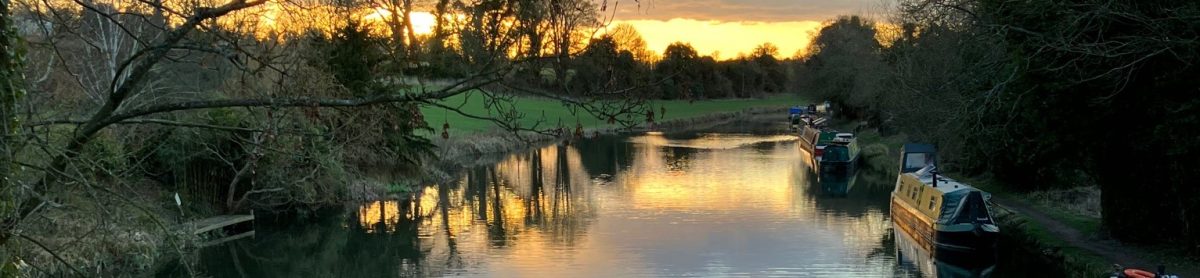
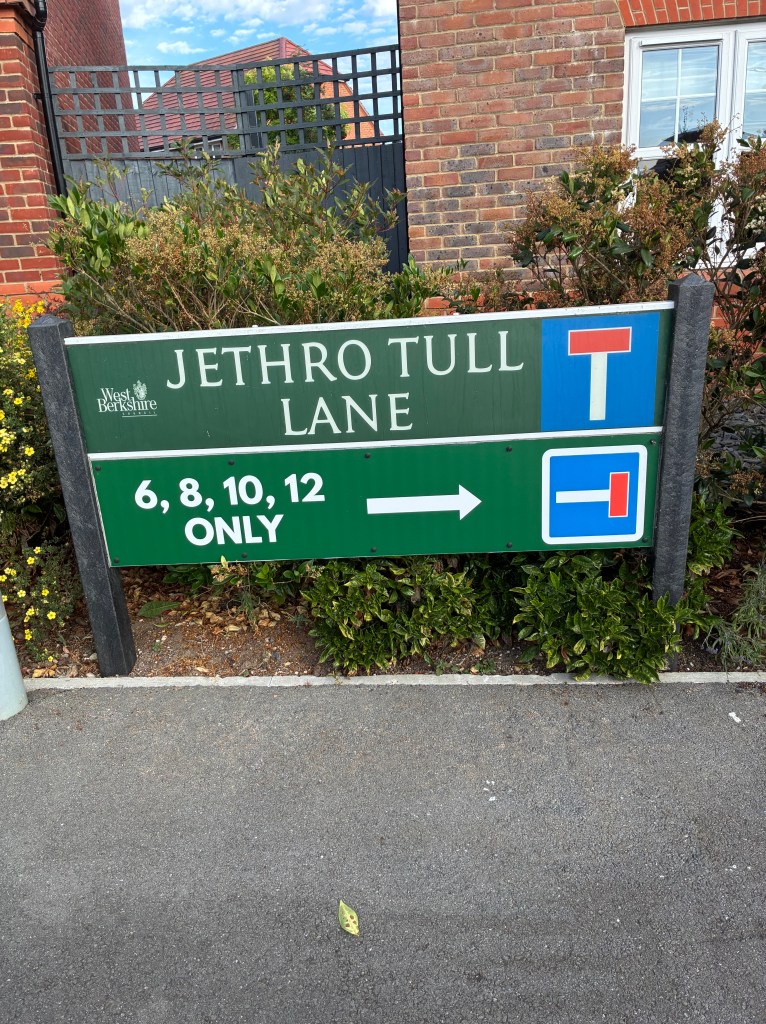
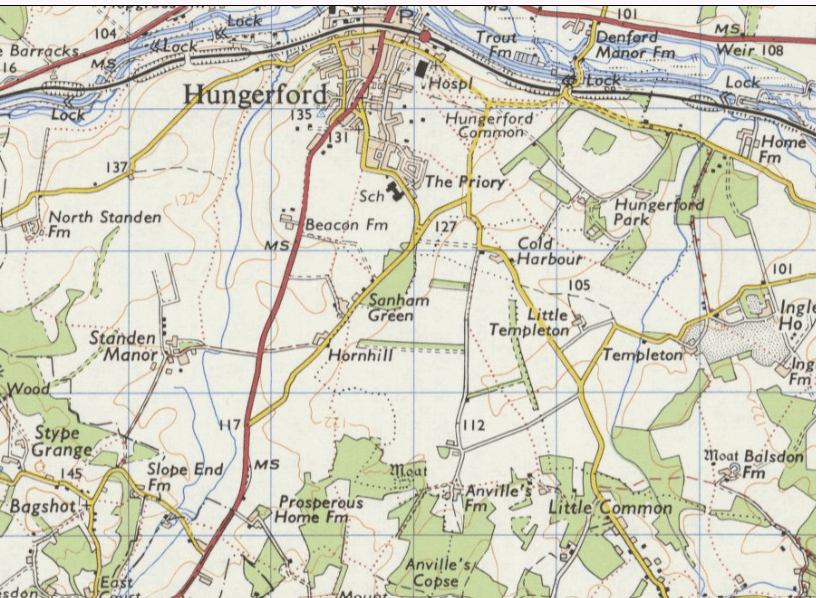
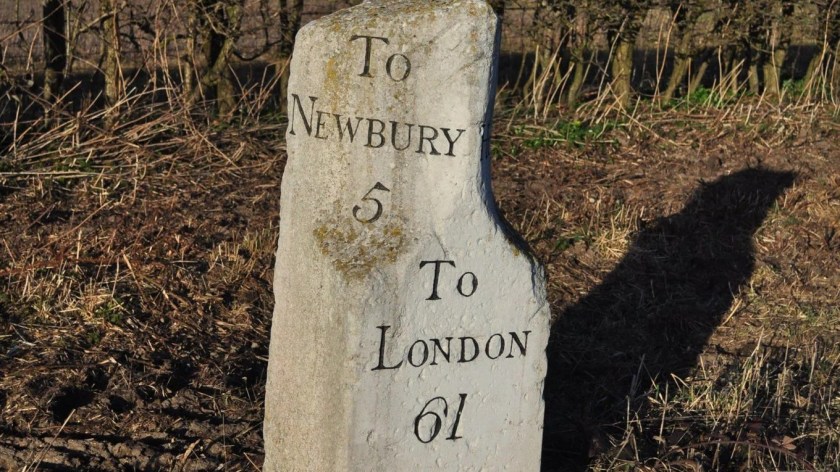
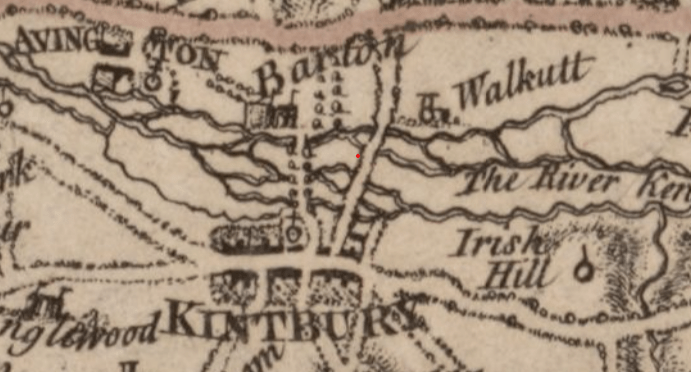
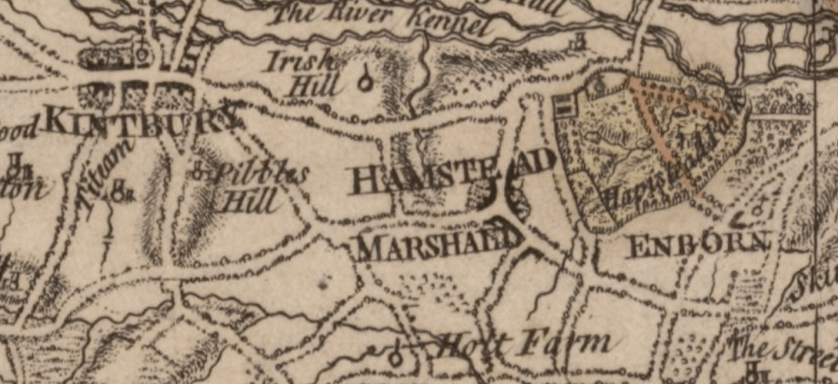
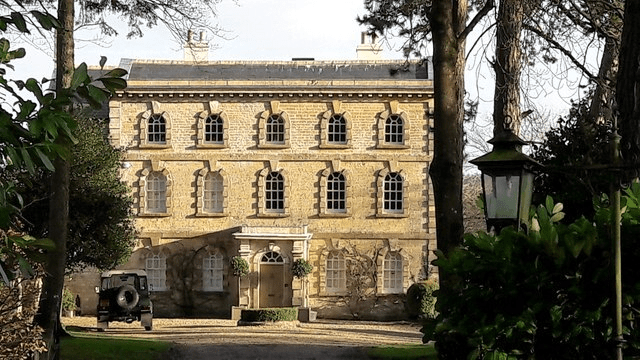
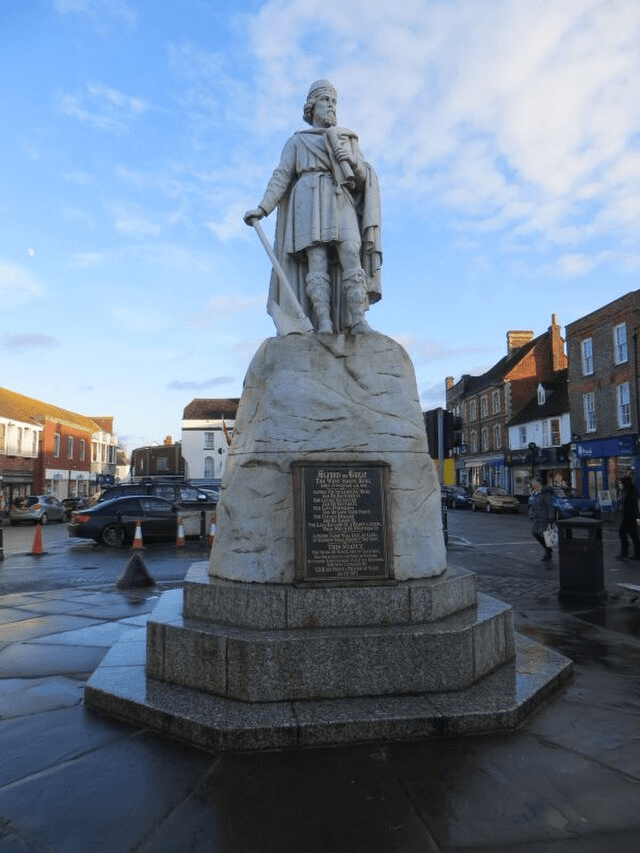
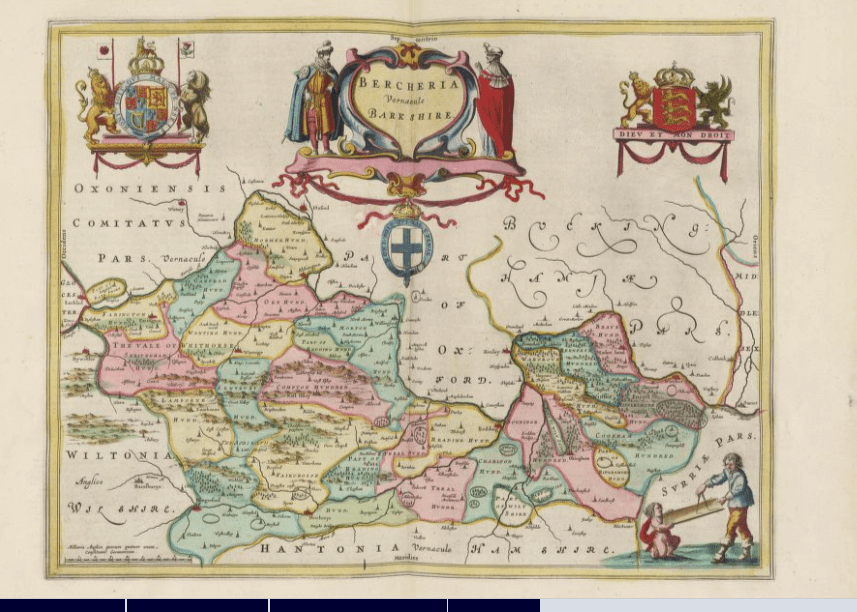
Jethro Tull Lane, Hungerford. A new road very close to Prosperous.
On March 24th 1741, the Kentish Weekly Post printed the following:
“A few Days since died at his Seat at Prosperous near Hungerford in Berkshire, Jethro Tull, Esq; Author of an useful and ingenious Book, entitled, The Horse-Hoing (sic) Husbandry, and has been very well received by the Curious in that Art.”
There is no attempt to elaborate on the subject of Tull’s book and the phrase, “well received by the Curious in that Art” seems to suggest that its appeal might be quite niche. But what the editor of the Kentish Weekly would not have known was that Jethro Tull was one of the gentlemen farmers at the advance guard of a quiet revolution which would eventually change the face of the English countryside.
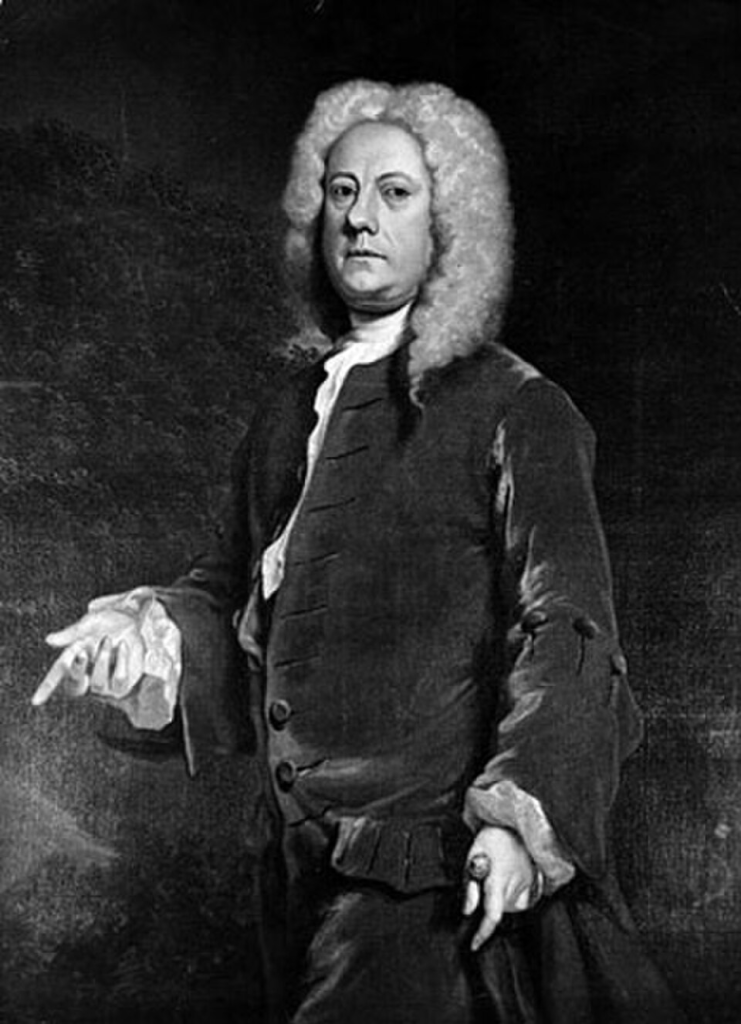
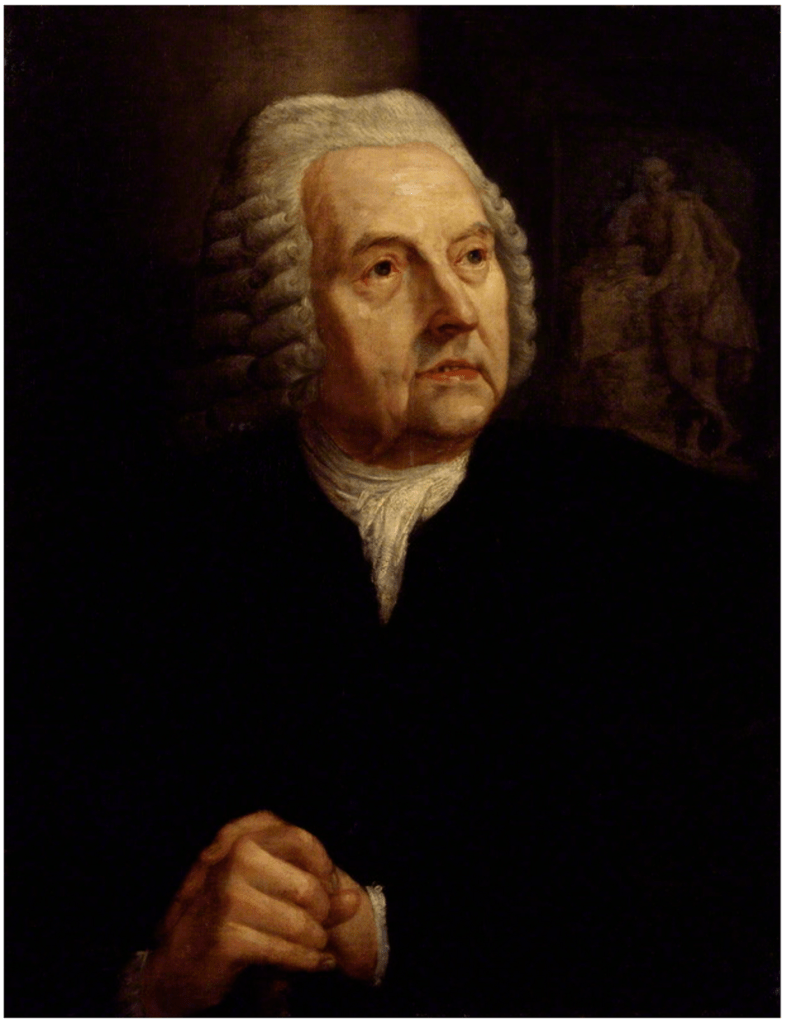
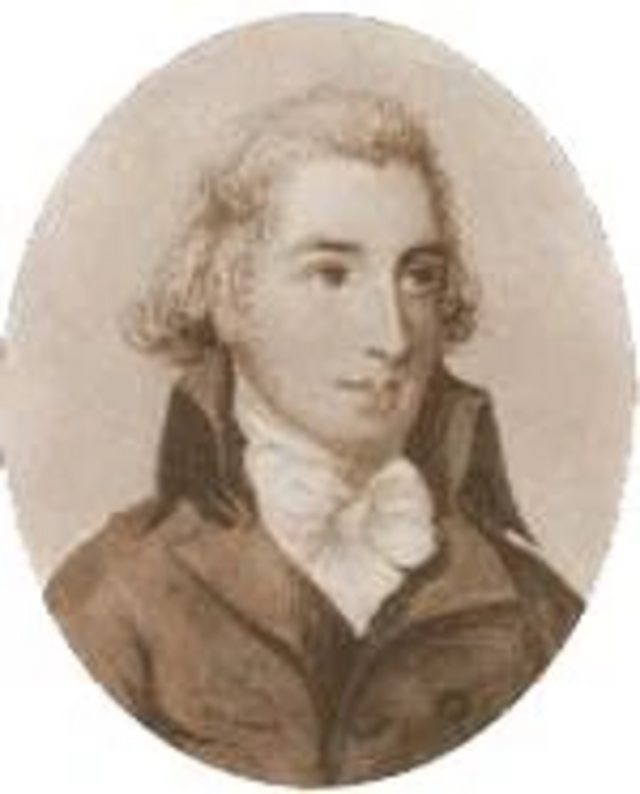
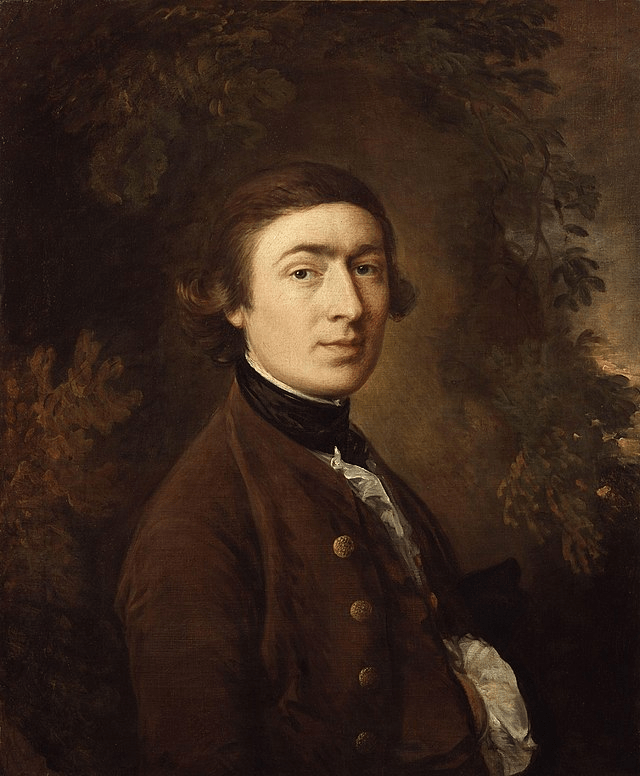
Jethro Tull
Jethro Tull was born in 1674, near Upper Basildon, Berkshire and, having studied at Oxford University, originally embarked on a career in law. However, by 1699 his interest turned to agriculture and it was working on his father’s farm at Crowmarsh Gifford in Oxfordshire that he began his work to develop and improve the machinery employed on the land. By 1701 Tull had perfected a horse-drawn seed drill which proved much more economical than the traditional method of sowing by hand.
In 1709 Jethro Tull bought the farm which has come to be most associated with his name: Prosperous on the Salisbury Road between Hungerford & Shalbourne and it was here that he developed the invention which was to make him famous: the horse-drawn hoe which could be used to control the growth of weeds between the planted rows and also improve the soil structure, thereby increasing the yield of crops. It also enabled the work to be done more rapidly than by hand.
It was this horse-drawn hoe which was to be the subjuct of his book, published in 1829:
Horse-hoeing husbandry: or, An essay on the principles of vegetation and tillage. Designed to introduce a new method of culture; whereby the produce of land will be increased, and the usual expence lessened. Together with accurate descriptions and cuts of the instruments employed in it.
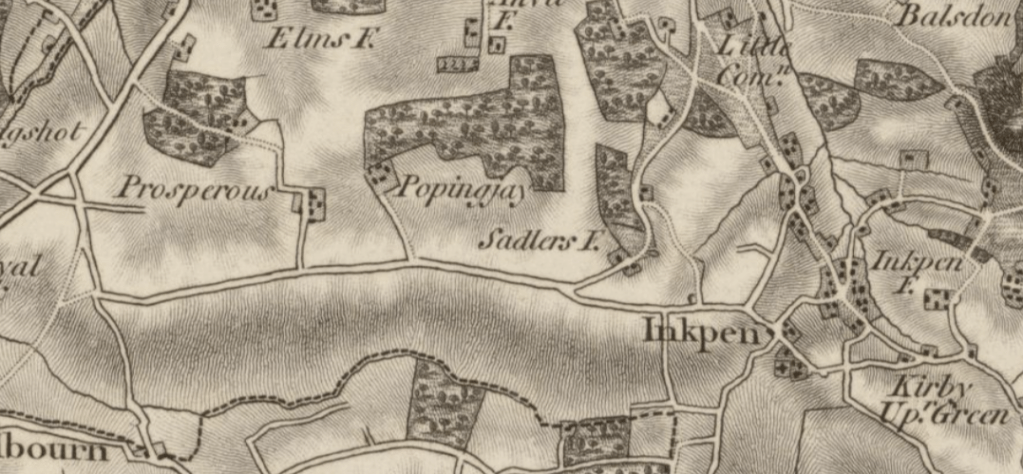
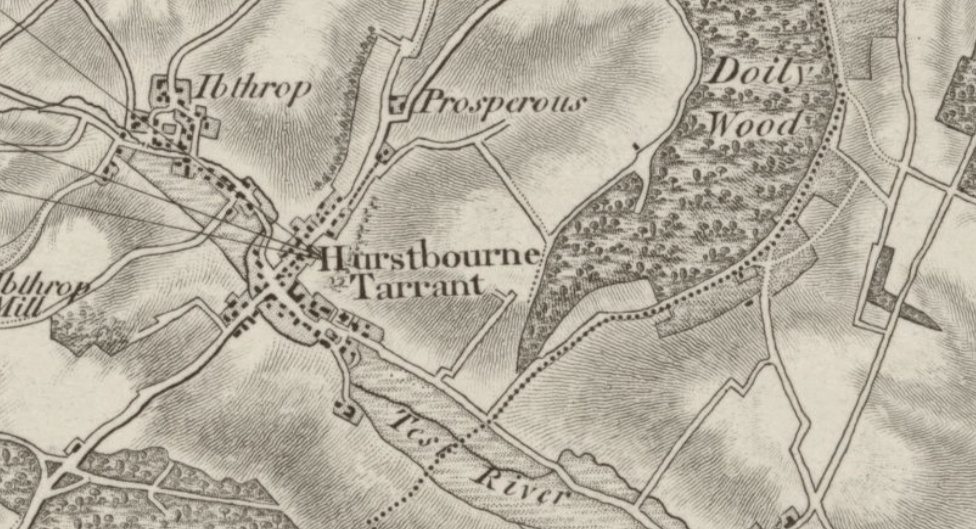
Early C19th OS map showing Prosperous to the west of Inkpen.
Increasing the productivity of land was of particular importance at this time. Many recently industrialised towns, particularly in the north and Midlands, had seen a dramatic rise in population as former rural dwellers migrated to them in search of work. But people in all areas were living longer, too: between 1721 and 1821 the population of Britain rose from around 7 million to around 14 million. It was not surprising, therefore, that land owners looked to improved methods in agriculture to feed all these people and, of course, ways in which they could maximise the profits from their land.
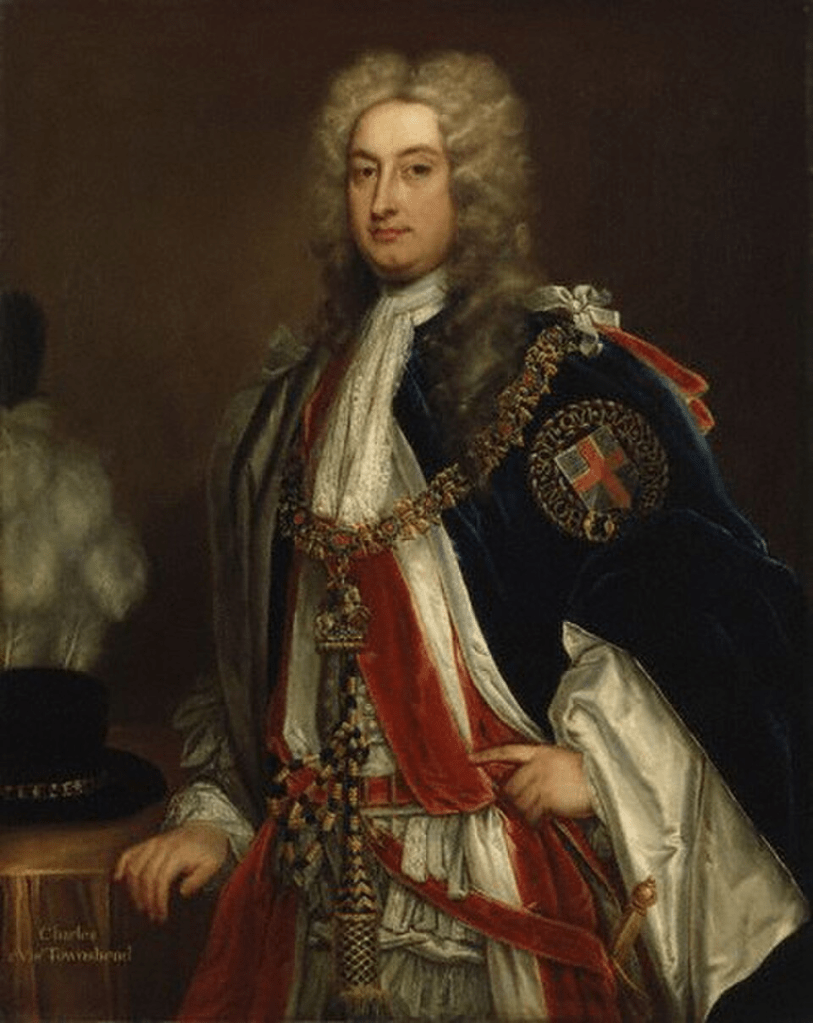
In Norfolk, Charles Townsend, 2nd Viscount Townsend ( 1674 – 1738 ) had already advocated the growing of turnips as part of a crop rotation as he believed they helped improve the soil as well as providing a fodder crop for his animals. This gained him the nickname: Turnip Townsend.
“Turnip” Townsend
Later, Thomas Coke (1754 – 1842) began further experiments with crop rotations on his estate at Holkham, also in Norfolk.
Coke of Holkham
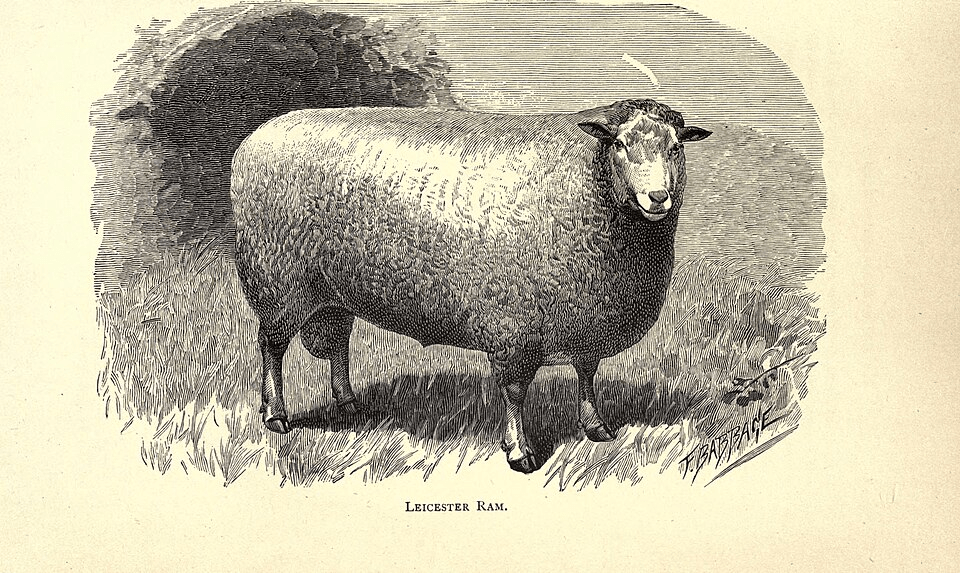
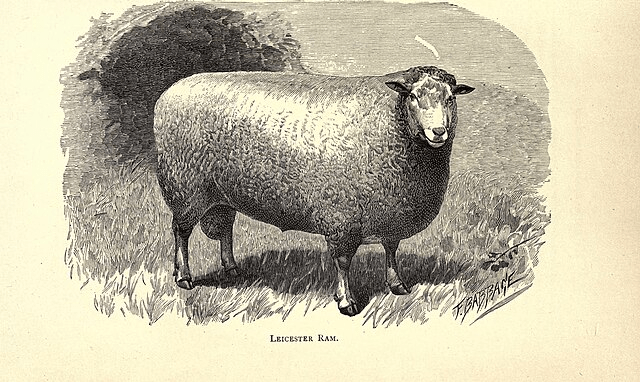
In Leicestershire, Robert Bakewell ( 1725 – 1795 ) had been experimenting with a more scientific approach to sheep breeding and in 1760 had developed a new variation of the traditional Leicester sheep capable of producing higher quality meat.
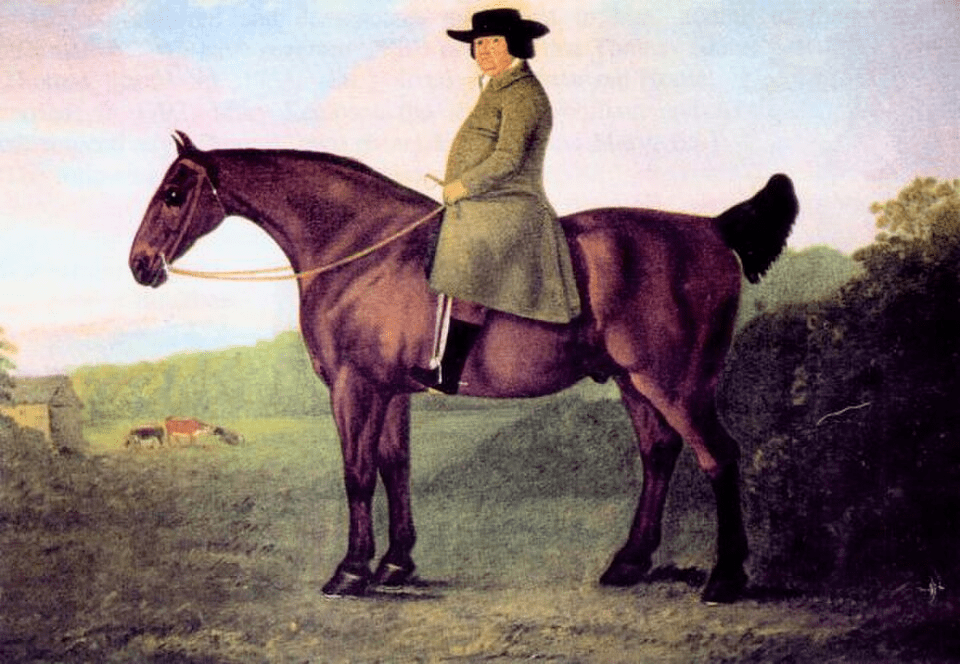
Robert Bakewell
Agricultural Societies began to be set up across the country, one of the earliest being the Odiham Agricultural Society, set up in 1783 as a society for “the encouraging of Agricultural and Industry in their town and neighbourhood’.
In July 1794 a meeting was held in the New Inn, Abingdon ( then the county town of Berkshire ) where it was proposed that a Berkshire Agricultural Society should be established mainly for the dissemination of the latest information regarding developments but also:
“From the above funds, to give annual rewards to labourers who have bred up the largest families without or with the least assistance of their parish, such labourers to produce certificates from a subscriber and two overseers of his parish”.
Reading Mercury, August, 1794
Subscribers included Sir Joseph Andrews of Shaw House and Kintbury’s Charles Dundas of Barton Court. It goes without saying that all subscribers were from the wealthier sections of Berkshire society. I very much doubt any of them had ever put a hand to the plough themselves.
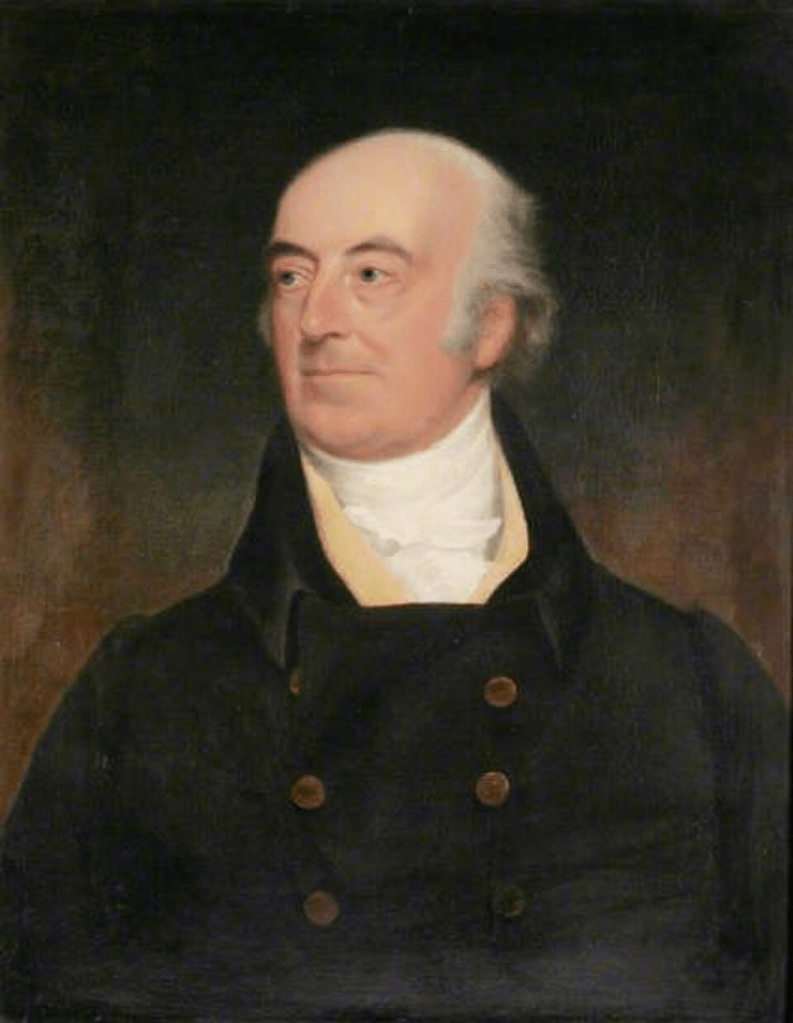
Charles Dundas
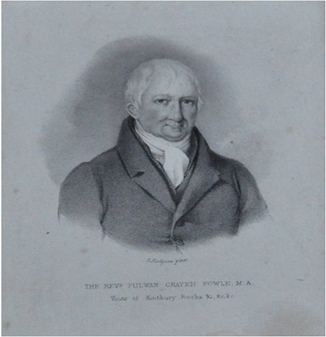
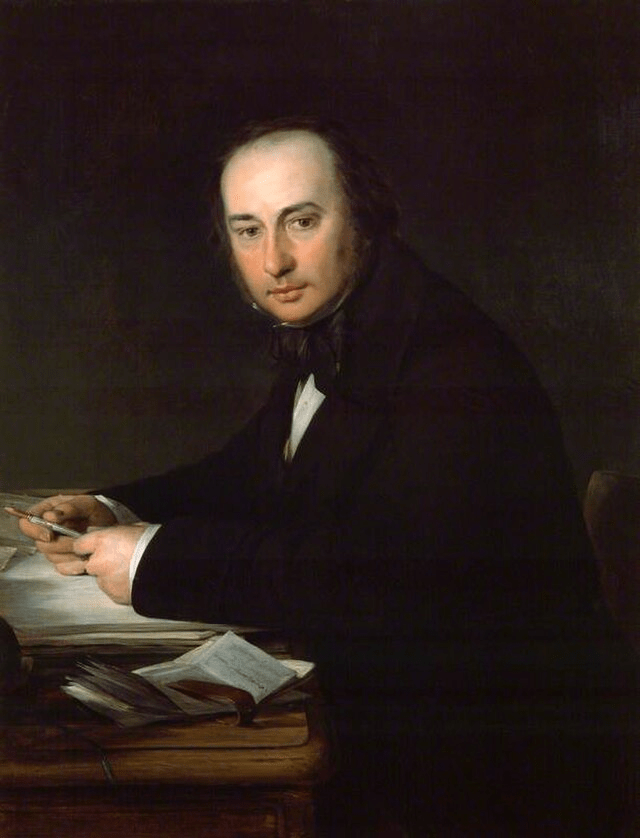
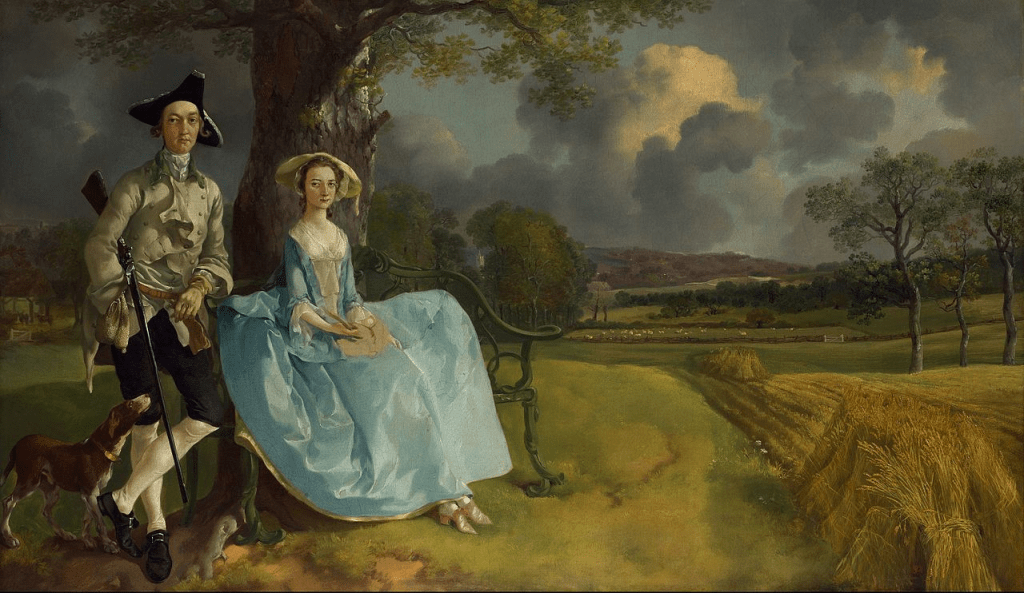
As the illustrations of Townsend, Coke and Tull himself – above – show, these “agriculturalists” were not labouring farmers tilling the soil every day themselves. We cannot say for sure that they never worked the land at all, but if they did they would have returning home to a comparatively luxurious lifestyle at the end of the working day. Only Robert Bakewell looks as if he might have done a day’s work on the farm.
By the early years of the C19th, the Hampshire Agricultural Society was well established and in 1820, vicar of Kintbury, Rev Fulwar Craven Fowle was admitted as a member. It is very likely that Rev Fowle would have paid particular attention to the work of Robert Bakewell in Leicestershire as he kept a flock of the new breed of sheep on his land at East Woodhay. When Fowle exhibited his Leicester sheep at the Hampshire Show in June, 1820, they “excited much attention” from farmers and landowners used to seeing mainly South Down or Marino sheep in the local area. The sheep were admired for their, “weight, symmetry, smallness of bone and lightness of offal” all of which had been achieved without feeding corn or cake but “slicedSwedish turnips” alone.
Fulwar Craven Fowle
It has to be unlikely that Rev Fowle had very much hands on experience as regards looking after his flock of New Leicesters; it has to be likely that he employed a stock man or shepherd to do most of the work. But this would be true of all the great and the good who were members of the various agricultural societies. Although the idealised notion of “Three acres and a cow” was, later in the century, seen as a way to return to a self sufficient and better life on the land, the reality of everyday life for the smallholder in the early years of the nineteenth century must have been far from idyllic.
A Leicester Ram
The medieval system of three open fields, divided into strips and then shared out amongst the villagers to cultivate, still existed in many areas at this time. The labourer scratching a living on a handkerchief of land or on scattered strips is not going to be able to invest in a horse hoe, even if he had a horse to pull it or enough land to till more than a few furrows. Not surprisingly, hundreds of families moved away from villages and into the ever- growing towns whilst the villages they were leaving behind underwent considerable changes.
A series of Parliamentary Enclosure Acts had begun in the C17th and continued throughout the C18th and C19th, by which much common land was enclosed and incorporated into larger farms or estates. This was bad news for thousands of working people who had previously tilled their small plots of land under the “strip” system or whose cow had grazed on the common. It did, however, allow for more efficient and increased crop production by the farmers or estate owners.
Around Kintbury & Hungerford, there had been common grazing on the water meadows close to the Kennet, although most of this area was enclosed by the C18th. By the early C19th most open fields and common land around Hungerford, Kintbury & Elcot had been enclosed.
Unsurprisingly, many poorer people were distressed and angry at the loss of common land, the access to which they had always considered to be their right. When, in 1816, an Act of Parliament was passed for the enclosure of Woodhay Common, numbers of the “labouring poor” attempted to stop the land being fenced off and allocated to local landowners. Fearing a riot, the response of the authorities was to call in the military.
For some people, enclosures offered an opportunity: The Berkshire Chronicle of 1846 advertised the upcoming sale of a “good Brick & Slated FREEHOLD COTTAGE ” in Shinfield. The many advantages of this property included, “unlimited Common-rights and as the Common-land is about to be enclosed under the new Enclosure Act, considerable advantages must thereby accrue to the owner.”
But not everyone regarded the new laws in this light.
In 1848, the Reading Mercury reported on the Silchester Maying, which “presented a gay scene, from the very numerous company which was attracted to the Common, one of the most picturesque in this neighbourhood, and which, together with Wokefield and Mortimer, have as yet escaped the visitation of the Enclosure Act.”
That final phrase, “as yet escaped the visitation of the Enclosure Act” suggests that the journalist who wrote it was well aware of the devestation felt by poorer people when their common land was enclosed and lost to themselves – almost like an Old Testament Plague of Israel.
A proposed bill of 1844, aimed at making the business of enclosure running more smoothly, met with this response in the Wiltshire Independent of April that year:
A bill for the further robbery of the poor, that is to say, for the inclosure of all those commons which now remain and concequently for their appropriation by those who possess all the previously inclosed lands, is before Parliament. It was introduced by Lord Worsley a few weeks ago but due to the indisposition of the noble lord, the second reading has been postponed until the 24th instant. It is hoped that it will never be passed, for it is neither nor more less than, as the Times expresses it, “ a proposition which gives four million acres of land to those who already possess thirty two million”.
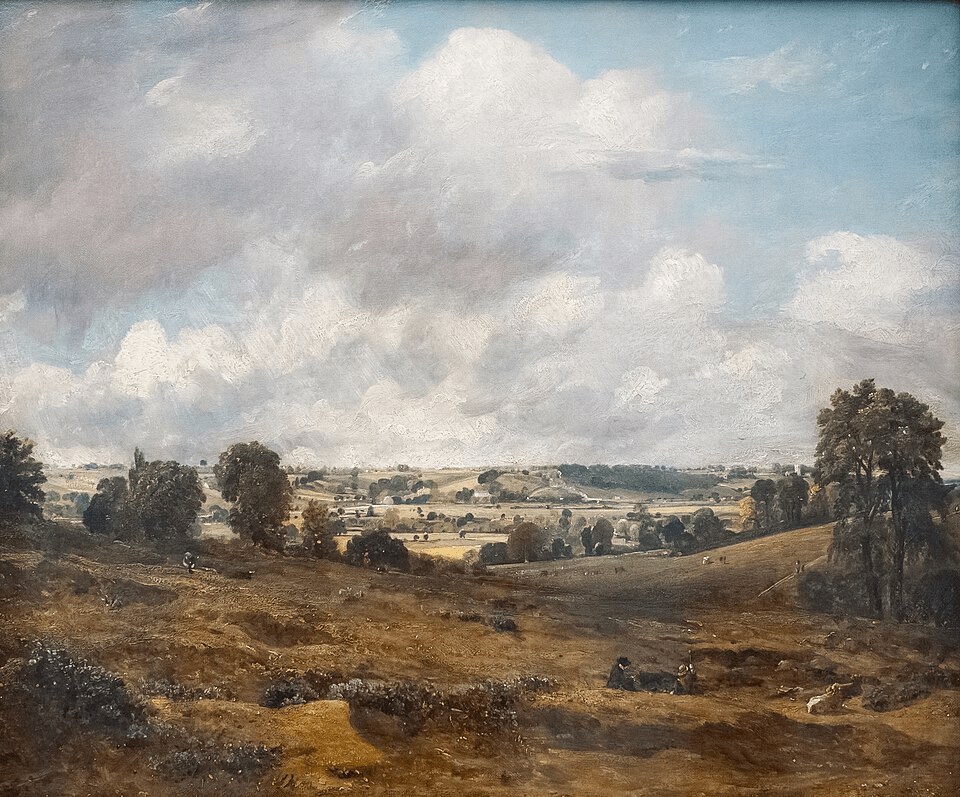
Dedham Vale by John Constable painted in 1815 (Public domain) Note a landscape without the now familiar patchwork of fields
What the Reading Mercury had described, in 1848, as “the visitation of theEnclosure Act” would eventually completely change the look of the English countryside. It is difficult to imagine now that there was ever a time when the landscape throughout southern England was not a patchwork of fields divided by well established hedges. But it was not ever thus. There is a passage in Jane Austen’s Emma, published in 1815, which describes Harriet Smith and her friend Miss Bickerton trying to run away from a group of gypsies. Miss Bickerton, “ran up a steep bank, cleared a slight hedge at the top, and made the best of her way by a short cut back to Highbury.”
It is worth considering that sentence again: Miss Bickerton, ”cleared a slight hedge at the top”.
I grew up in a rural area and whilst I could execute a sort of vault over a five barred field gate, it would have been absolutely impossible to clear – or jump over – any of the field hedges in my area. But in 1815 there would have been hedges, quite newly planted, which were still low enough for someone to clear them, particularly if they feared being chased. In the early years of enclosures, these newly planed field hedges must have been a familiar sight.
Today there is just one village in England where the land is still farmed in the “Open Field” system, in which three fields are divided into strips in the Medieval manner. It is Laxton in Nottinghamshire.
However, according to the Open Spaces Society, there are still 1.3 million acres of common land in England & Wales. We are lucky to have several in West Berkshire; one, Hungerford Common, would have been known well to Jethro Tull, being just a short distance from his land at Prosperous.
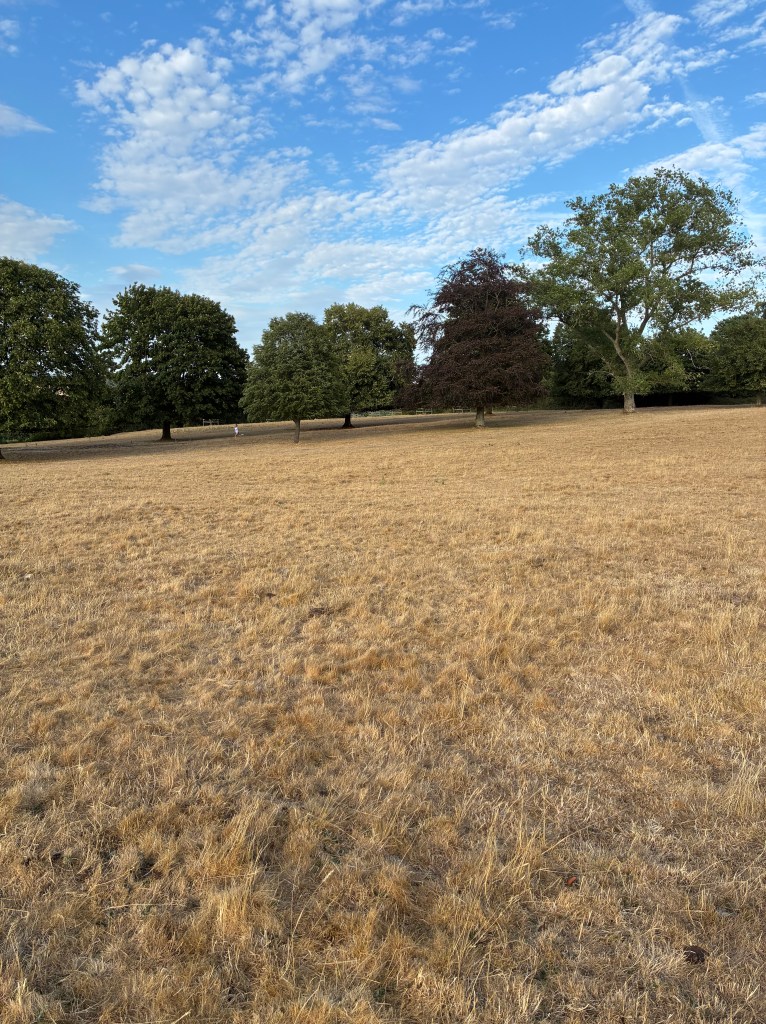
Hungerford Common today.
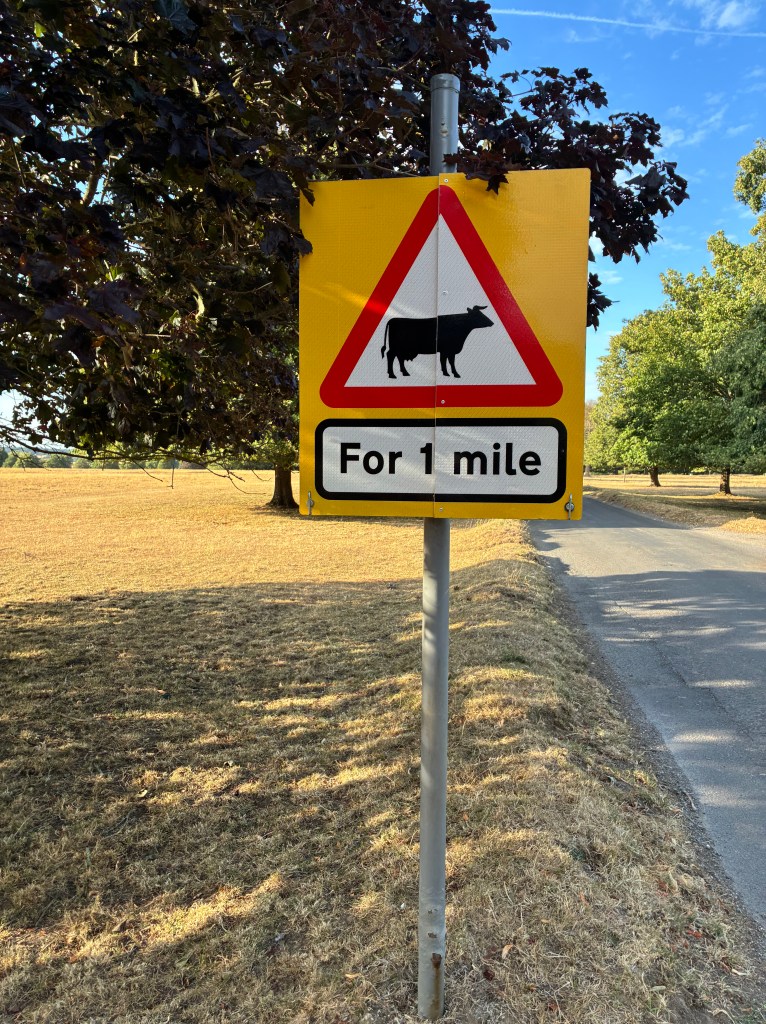
Today, the occupants of certain properties in Hungerford still have “commoners’ rights” just as they have had for hundreds of years. In practice, none of them actually graze stock on the common although this right is rented out to local farmers. So cattle graze on the common throughout the summer and into early autumn.
Motorists crossing Hungerford Common frequently have to stop and wait while cattle cross – often very slowly – in front of them.
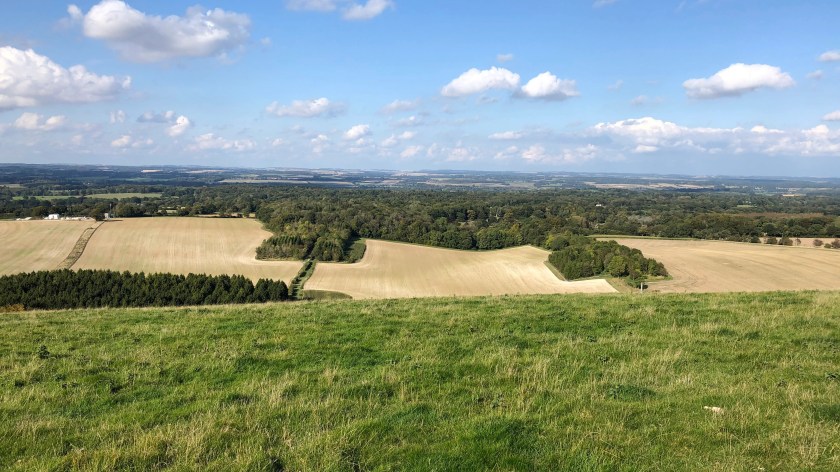
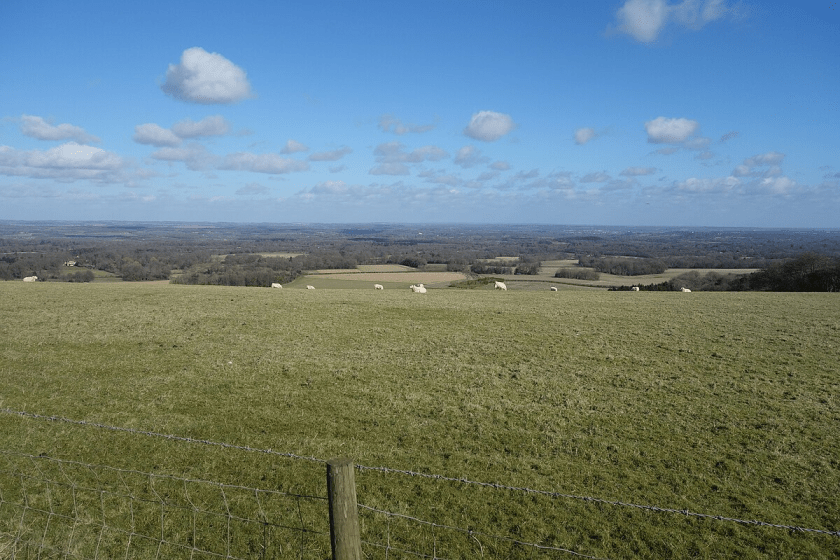
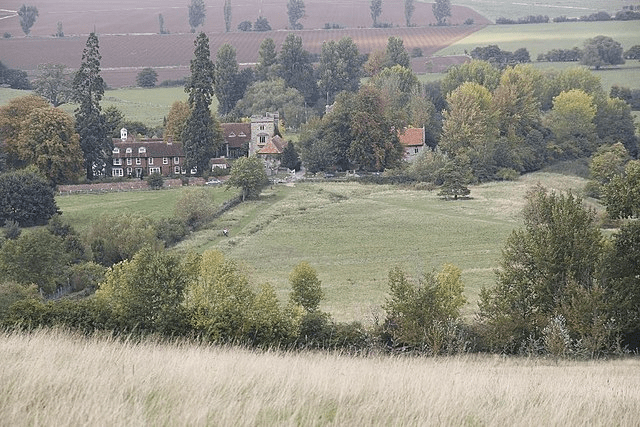
How much Hungerfoed Common has changed since Jethro Tull’s time, it is difficult to say – perhaps this is one open space that is still broadly similar to the common he must have known. But the view from nearby Walbury Hill would look very different: the patchwork quilt of land divided by hedges and the site of large fields devoted to one crop would be entirely different to the countryside Tull would have known.
The view from Walbury Hill today.
Post Script:
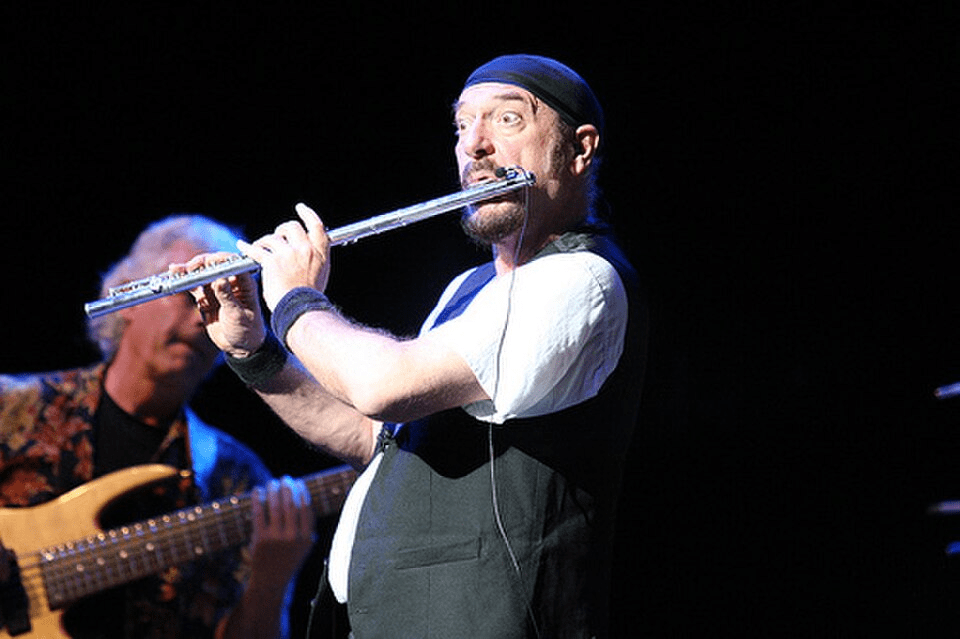
Not a rock band, then.
Ian Anderson fronting the band, Jethro Tull
To anyone, like me, who took O level British Social & Economic History, 1700 – 1939 in the late 60s, the name Jethro Tull will probably resound as someone who featured prominently in the syllabus. However, for rock music fans, Jethro Tull was the name of a progressive/folk rock group fronted by Ian Anderson – the musician who played the flute, sometimes standing on one leg. He was not an agriculturalist – and as far as I know hasn’t had any roads named in his honour.
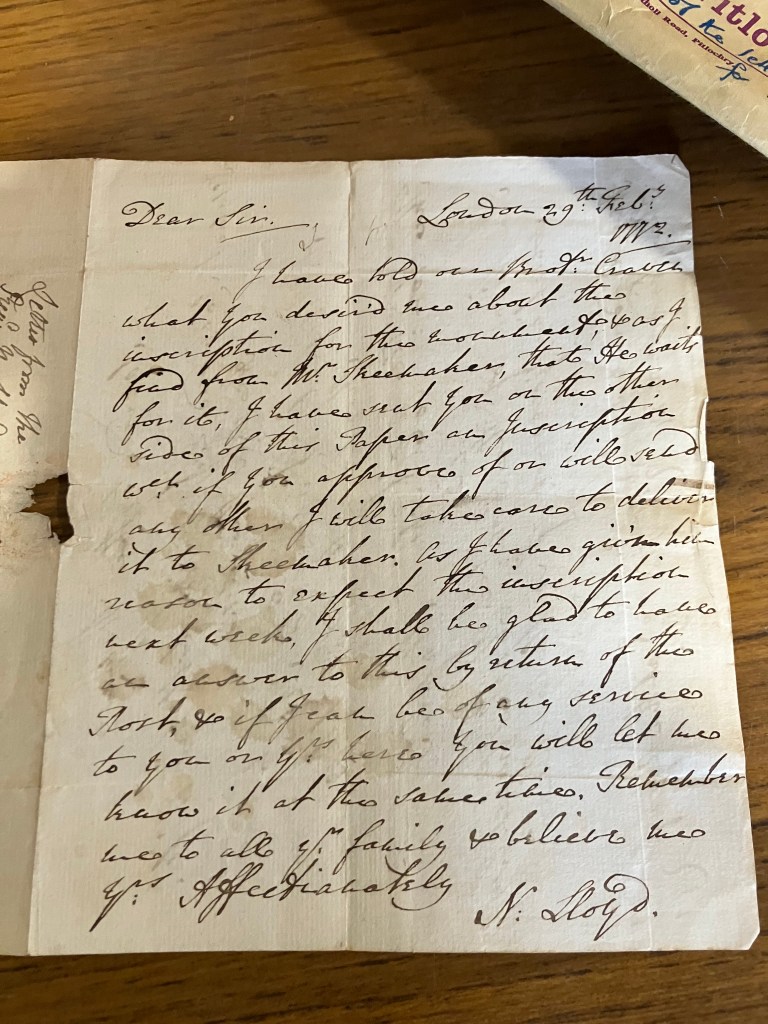
Saturday, 29th February, 1772: the Rev Nowes Lloyd, vicar of Enborne, has travelled the 65 miles from his home in West Berkshire to Vine Street, in London.
His journey is an important one as he has come to discuss a commission for a new monument from the celebrated sculptor, Thomas Scheemakers.
Scheemakers is the youngest member of the family who had already made their reputation with monuments to the great and the good throughout England, including the statue of Shakespeare in Poets’ Corner, Westminster Abbey. Thomas’s uncle, Peter Scheemakers was the sculptor responsible for the elaborate monuments to members of the Jemmett Raymond family in Kintbury church and so this proposed new work – to the memory of Jemmett Raymond II who had died in 1767 – is anticipated to be something equally grand and imposing.
Peter Scheemakers by Andreas Bernardus de Quertenmont, National Portrait Gallery. Creative Commons
A monument by the Scheemakers will come at a price – nothing like the work by local Berkshire masons, so it is important that Rev Lloyd gets the details of the inscription correct. Furthermore, this monument is not just to the memory of a prominent and wealthy parishioner: this monument is also to the memory of Elizabeth, nee Staples, formerly wife of sometime Governor of Carolina, Charles Craven of Hamstead Park and latterly widow of Jemmett Raymond II of Barton Park, Kintbury. Furthermore, Elizabeth was Nowes Lloyd’s mother-in-law.
Nowes Lloyd and Martha Craven had been married in 1763. He must have heard stories of the difficult relationship she and her sisters had with their mother, and how her elder sister eloped with a horse dealer to get away from home. He may even have heard that some people referred to his mother-in-law as “Cruel Mrs Craven”. Nevertheless, the Craven family were influential and could control the appointments of several parish priests at that time; Rev Lloyd had become Domestic Chaplain to William Craven, 5th Baron of Hamstead Park in 1764 and had recently become Rector of Enborne.
In the same year in which Nowes and Martha had married, Martha’s sister, Jane, had married Thomas Fowle, the vicar of Kintbury – another parish in which the Craven family had influence. And it was in Kintbury church – the parish in which Barton Court was situated – that the new Scheemakers monument was to be placed.
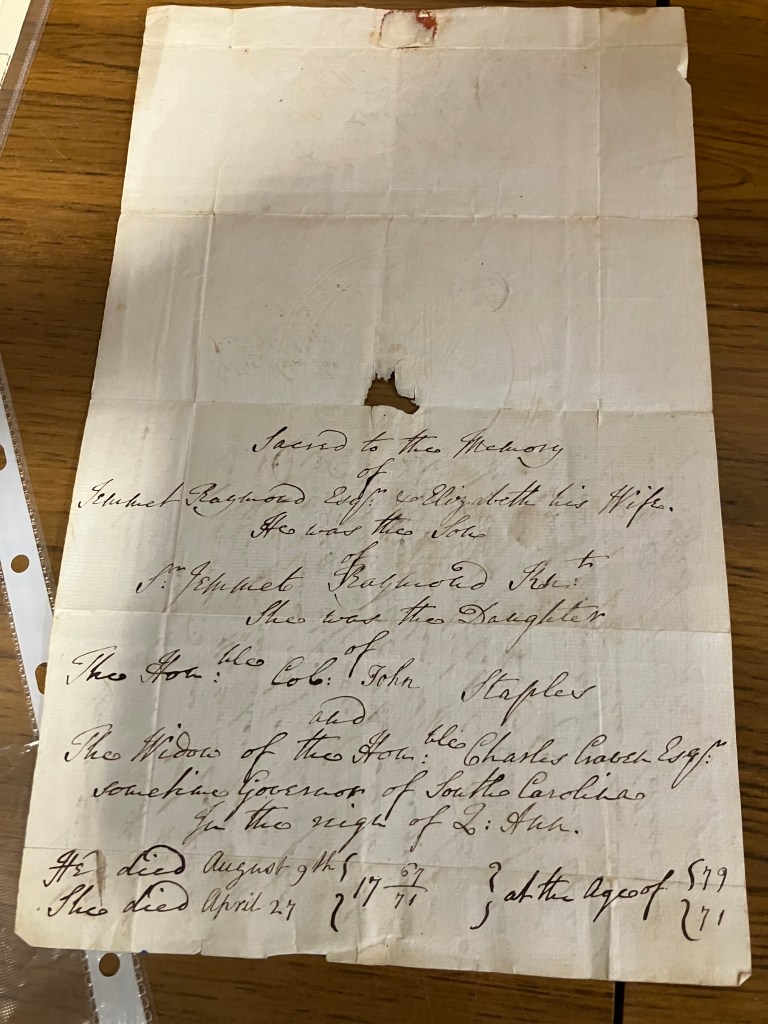
In London, Rev Lloyd takes a sheet of paper – still a fairly expensive commodity at this time – and a pen. The bottle of ink is by his arm on the table. In the formal manner of the time, he begins his letter, “Dear Sir…” although it is directed to Rev Thomas Fowle, vicar of Kintbury, and Lloyd’s brother- in- law.
He writes,
“I have told our Brother Cravenwhat you desire (and ) about the inscription for the monument..”
Despite addressing Thomas Fowle, as “Sir” at the commencement of the letter, it is the custom to refer to one’s spouse’s siblings as “brother” or “sister”. John Craven was the brother of Martha and Jane and so, in writing to Thomas Fowle, Nowes Lloyd refers to him as “our Broth” – “our Brother.”
He continues,
…and as I find from Mr. Scheemakers that He waits for it I have sent you on the other side of this Paper an inscription which if you approve of (??) will send any other I will take care to deliver it to Scheemakers as I have given him reason to expect this inscription next week I shall be glad to have an answer to this by return of Post & if I can be of any service to you or Yrs here you will let me know at the same time. Remember me to all your family and believe me Yrs affectionately, N. Lloyd
Rev Lloyd turns over the page and carefully outlines the inscription which will, after all, soon be set in stone:
Sacred to the Memory
of
Jemmet Raymond Esq & Elizabeth his wife
He was the Son
of
Sir Jemmet Raymond, Bart
She was the Daughter
of
The Hon Col John Staples
and
The Widow of the Hon Charles Craven Esq
Sometime Governor of South Carolina
In the reign of Q Ann
He died August 9th 1767 at the age of 79
She died on April 27th 1771 at the age of 71
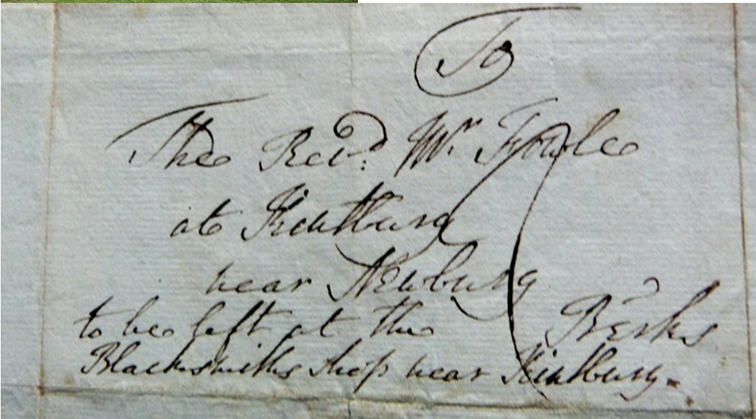
When the ink is dry, Lloyd carefully folds the paper such that the letter’s contents are hidden inside and carefully writes the address on the front. It is not, however, an address as we would recognise one. He writes:
To
The Revd Thms Fowle
at Kintbury
near Newbury
Berks
To be left at the Blacksmiths Shop near Kintbury
Rev Lloyd turns the package over and seals it with sealing wax. The letter is ready to be sent by mail coach from London, along the Bath Road to the west of Newbury where it will eventually be left at the Blacksmith’s shop near Elcot. From here one of Thomas Fowle’s men will collect it and pay for the cost of postage. The journey will take at least a day, and the return of post by which Rev Lloyd requests an answer will add another day at least to his time in London.
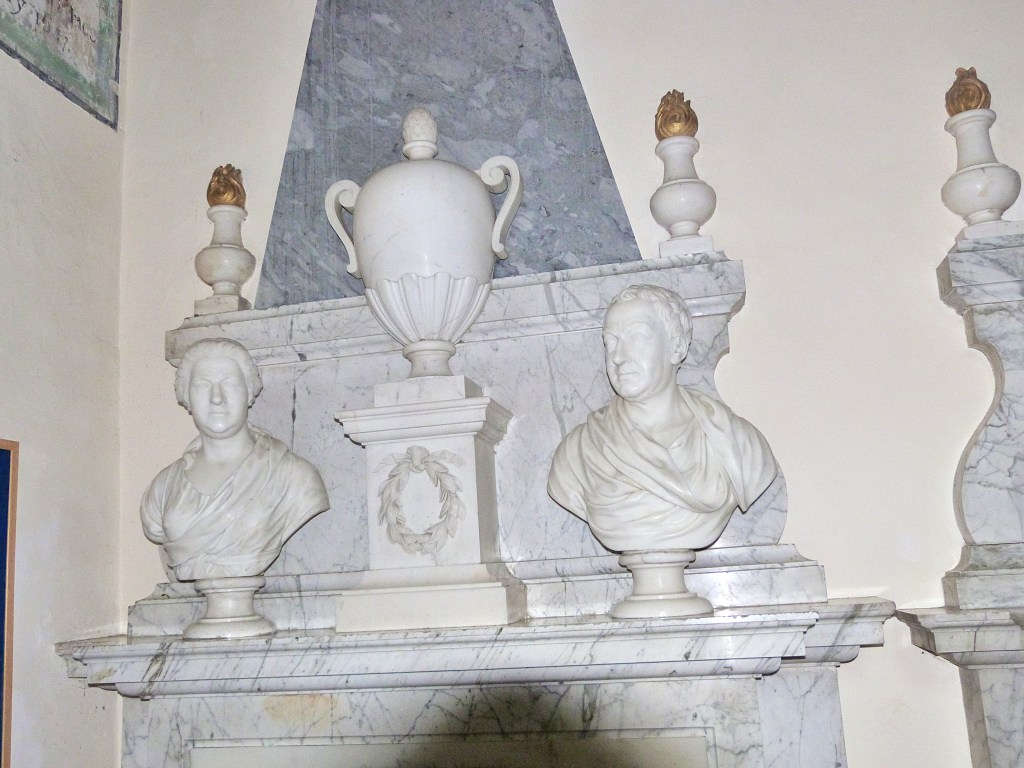
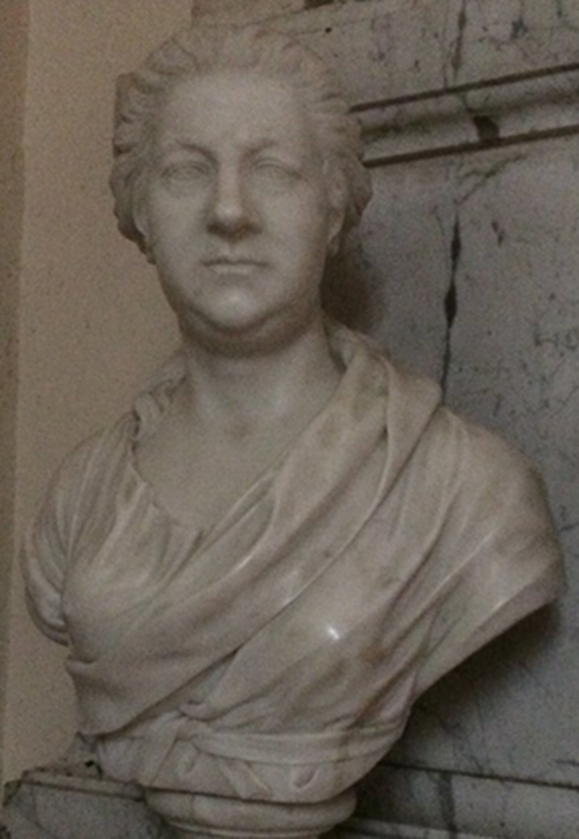
Over two hundred and fifty years later, the monument to the memory of Jemmett Raymond II and his lady, Elizabeth is still in Kintbury church. The inscription is as Rev Lloyd outlined in his letter and there are two busts, one of Elizabeth on the right and Jemmett Raymond on the left, presumably taken from contemporary portraits and – most probably – long lost.
Originally, the Scheemakers monuments were placed either side of the altar; this is where they would have been when Jane & Cassandra Austen visited Kintbury leading me to wonder if their friends, Eliza Fowle or Martha Lloyd ever pointed out to them the face of their grandmother staring sternly down from her marble likeness.
Today, the Scheemakers monuments are in the north transept from where Elizabeth Raymond, formerly Craven, nee Staples – and Rev Lloyd’s mother-in-law – still stares down. .
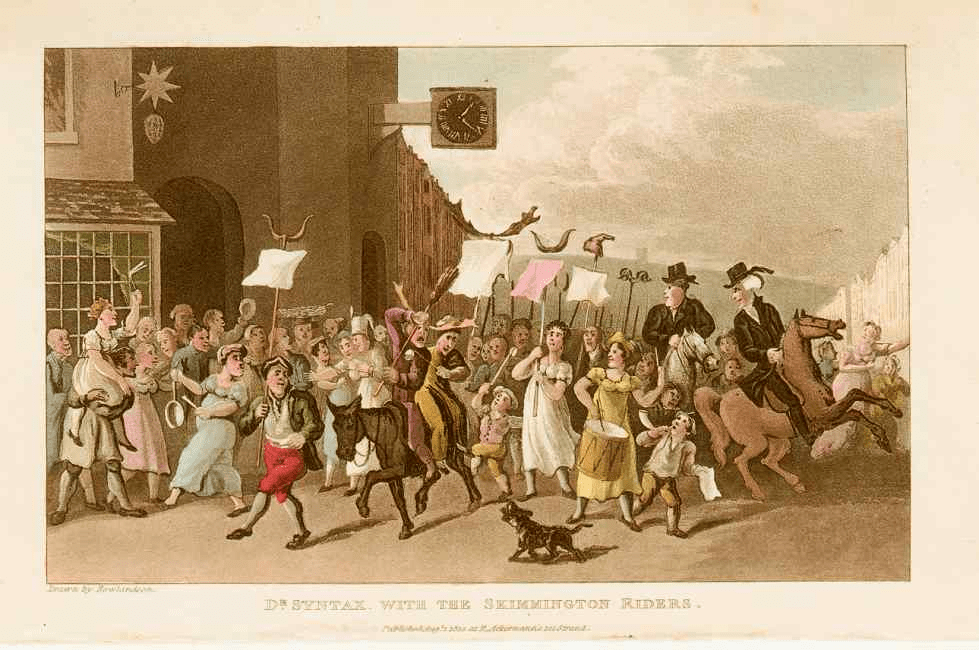
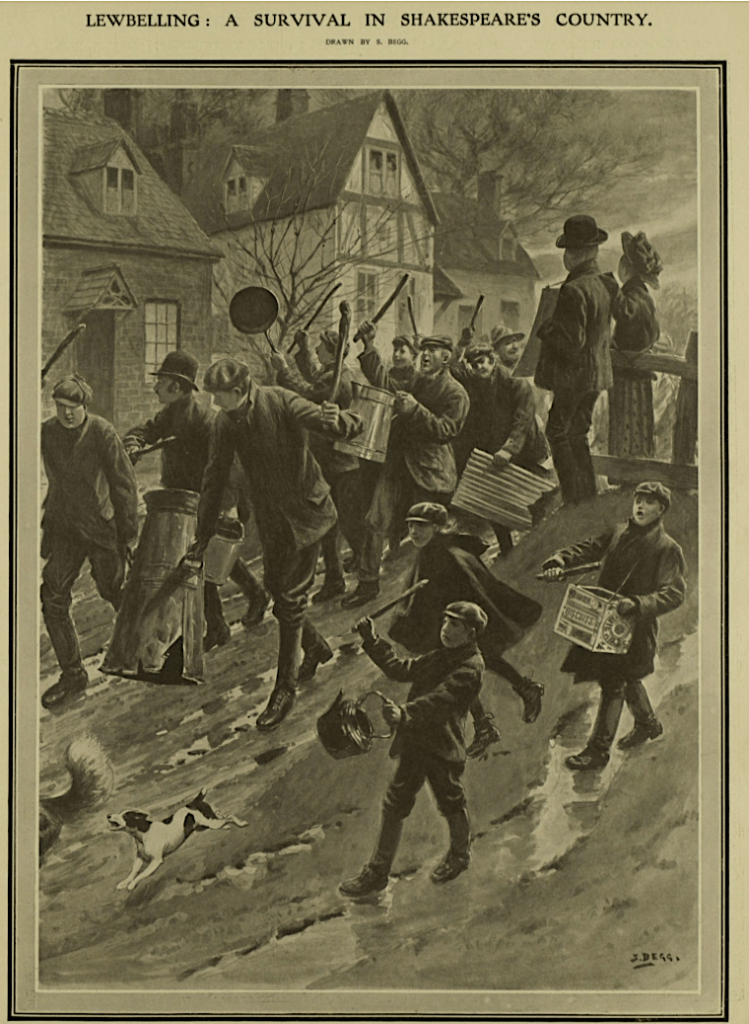
Throughout the nineteenth century, “rough music” was a popular form of protest amongst some sections of society. In parts of the north, these protests were known as “stang riding” and in the midlands, “Lewbelling”. In Dorset the term “skimmington” or “skimmity ride” was used. Thomas Hardy describes one such in his novel of 1886, The Mayor of Casterbridge. Throughout our area, “rough music” seems to have been the accepted expression and a scroll through the local papers on line shows just how frequently these protests occurred.
Dr Syntax & the Skimmington Riders by Thomas Rowlandson
Most newspaper reports seem to assume that their readers, being local, I suppose, would understand what was meant by the term. However, in a libel case of 1862 between the proprietors of the Hampshire Chronicle and a chemist from Alton, Mr Justice Compton, hearing the case in Westminster, had to ask:
“What is rough music?”
“Old tin kettles and the like”
“And that is what you call music?”
So, whilst banging saucepans, kettles or making a noise in any other impromptu way, the protesters would make their way through their town or village, stopping outside the home of whoever it was they considered not to have lived up to the standards expected in the community. Those who might have cheated on their wife or husband were a particular target. In some examples the protestors carried effigies of the supposed guilty parties, as described by Thomas Hardy in The Mayor of Casterbridge.
However, marital infidelity was not the only reason a person was subjected to rough music. In April 1851, the Reading Mercury reported the inhabitants of Brimpton, “manifested their disgust at the conduct of John Henry Stair… for illtreating his son, a child little more than four years of age… by assembling in great numbers, perading (sic) the village with “rough music” and burning the individual in effigy”.
The Reading Mercury of 1858 reported a local variation of the custom from East Ilsley when James Powell, a local Primitive Methodist preacher appeared before the magistrates on a charge of ill treating his pregnant wife.
“In accordance with an old custom in Ilsley, when a man beats his wife, a quantity of chaff was thrown about in front of Powell’s house. It was intended to have given him a little rough music but the police superintendent removed Powell from the place for Newbury before the party could muster to carry out their intentions.”
In 1860, James Lancaster & Thomas Talbot, labourers of Litchfield, Hampshire, “were charged with having on the 13th December, in the parish of Itchingswell, ( sic – presumably a mis- spelling of Ecchinswell ) assaulted P.C.19, R. Clapsan, whilst in the execution of his duty. It appeared from the evidence that the assault arose through the constable interfering to prevent an obstruction in the road, caused by a large number of persons assembled together for the purposes of having what is called, “rough music” the same being produced by the blowing of cows horns, beating of tin cans, sheep bells etc.”
In October of 1865, the more law abiding inhabitants of Kintbury found that their peace was shattered on two successive nights when, if newspaper reports are to be believed, two hundred people paraded through the streets making, “rough music”.
The ring leaders were members of the Butler family: Thomas, Job & Edward. The newspaper report does not give the men’s ages and as there were at that time many and various Butlers living in Kintbury, it is difficult to work out exactly who these three were. It is likely that all were agricultural labourers and I think it is fairly safe to assume that at the time of the protest, Job was a 39 year old agricultural labourer married to Ann and the father of Charlotte, 12, Ellen, 10 and Julia, 7.
Of whom or what the protestors were objecting we have no idea although as the event drew a substantial crowd, I think we can assume it would have been someone well- known and/or in a prominent position in society. In previous reports from across this area, the names of those targeted by the protestors are given in the newspaper. For some reason this was not the case with the Kintbury incident, which leaves me to wonder if the journalist who originally filed this report was at pains not to offend a local dignitary or person of high profile who had upset so many villagers.
Perhaps the protestors felt they had a right to express their feelings in such a public way; after all, it was what people had been doing for years. The fact that many rough music protestors from other villages had ended up before the local magistrates did not seem to deter them.
“Lewbelling” – an example of rough music in Warwickshire in 1909 from the Illustrated London News. Wikki Media Commons
However, that would be without reckoning with William Harfield, Superintendent of Police in the Newbury Division of the Berkshire Constabulary.
Superintendent Harfield features frequently in newspaper reports of this period. He had been born in Hampshire around 1825 and by the 1851 census he was a policeman in the New Forest village of Sopley. At this time the Hampshire Constabulary was less than 12 years old, having been formed, along with constabularies in other counties, in 1839. The Berkshire Constabulary was established in 1856 and career policeman Harfield became the first Superintendent of the Newbury Division.
Responding to complaints, Superintendent Harfield arrived in Kintbury and quietly requested the rough music makers to desist. However, “the crowd set him at open defiance, telling him he had no power to interfere.”
Perhaps this was the first time some of these men had come up against the strong arm of the law, or perhaps they were just chancing their luck. Perhaps they thought that Harfield should just go back to where he’d come from and leave the people of Kintbury alone. As “rough music” protests were not uncommon the men may well have believed that they were doing nothing wrong.
Unfortunately, the outcome of this particular protest was an appearance at Hungerford Petty Sessions where all three men pleaded guilty.
According to the newspaper report, Harfield said he : “ had no wish to press the case further than was sufficient to teach them that they must not do such things with impunity.”
All three men were “bound over in the sum of £10 to keep the peace for three months” and ordered to pay 5 shillings costs each within a week.
These sums of money might not seem much to us today; however, £10 in 1865 would be over £1000 in today’s money. As for 5 shillings to be paid within the week, this could easily have proved very difficult for labourers whose weekly earnings would have been little more than 10 shillings, if that.
I cannot find any other references to rough music in Kintbury after this event, so perhaps the fines given out to the Butlers were enough to deter other villagers from expressing their disapproval in this way.
Job and Ann Butler were still living in Kintbury at the time of the 1871 census but after then I can find no trace of them.
William Harfield continued as Superintendent of Police in Newbury until his death in 1874, aged 56.
As for the practice of rough music as an expression of protest at certain people’s behaviour, this continued sporadically until the early decades of the twentieth century. However, I have not been able to find any other examples from Kintbury.
Back in the nineteenth and early twentieth century, two industries which have long since disappeared from Kintbury were brick making and the production of whiting.
Bricks, of course, made from locally extracted clay, were for use in construction. The use of whiting, however, is perhaps not so obvious.
Made from the naturally occurring chalk, crushed and mixed with water, whiting was a product with many applications including the bleaching of sails for ships and for whitewash.
Both of these industries required their raw materials to be extracted from the land, resulting in many and various pits around the village.
One of these former industrial landscapes lies in the triangle between the Inkpen Road and Laylands Green.
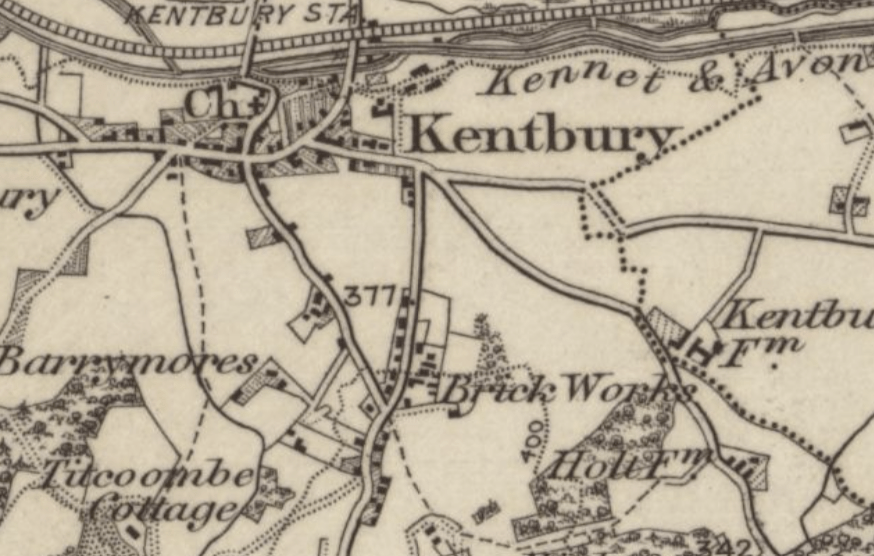
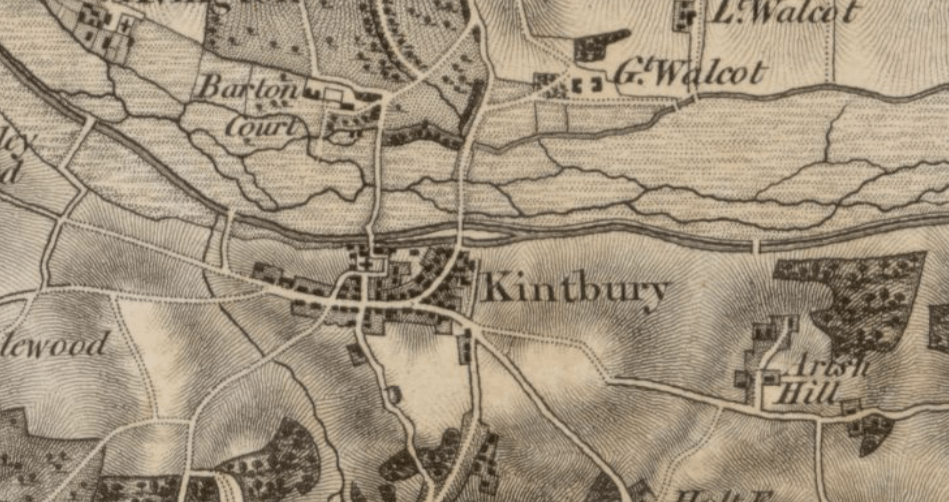
Part of early OS map of Kintbury showing the location of brick works which would have used clay extracted fom pits. Note also the spelling of “Kentbury”
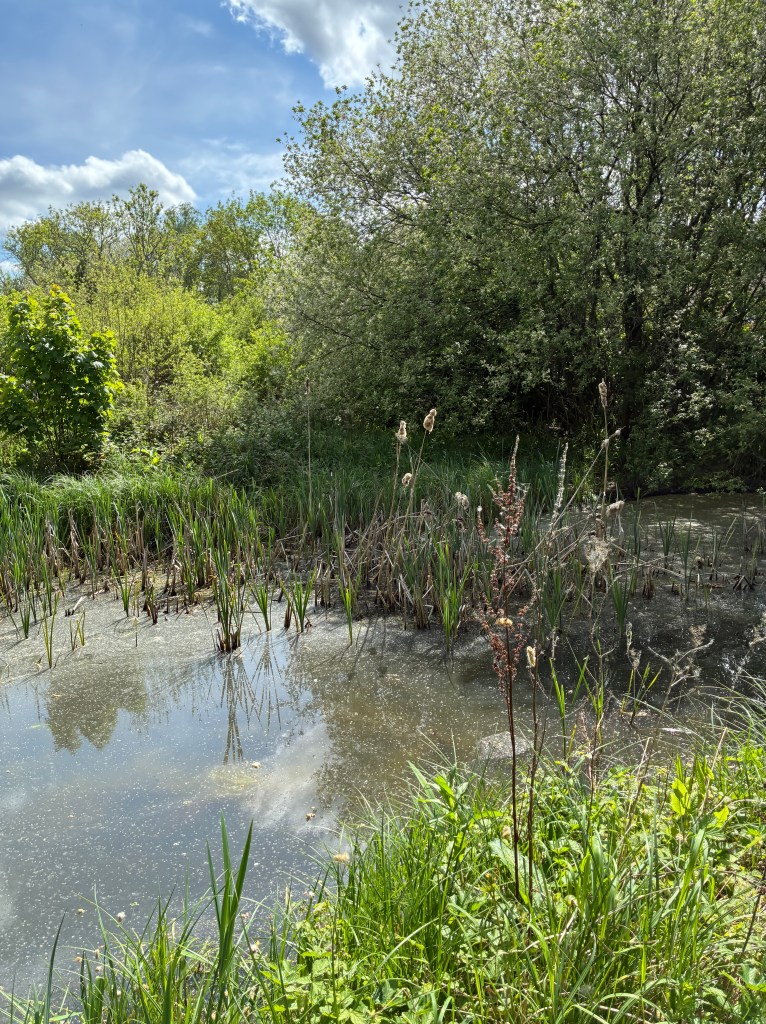
In the 1990s, a construction firm was looking to develop this area for housing. However, the period of inactivity following the decline of the brick making and whiting processing businesses had led to the various pits filling with water. The resulting ponds and the surrounding land had been reclaimed by nature. A diverse selection of plant life had taken over the site and, silently, without anyone noticing, the newts had made it their home.
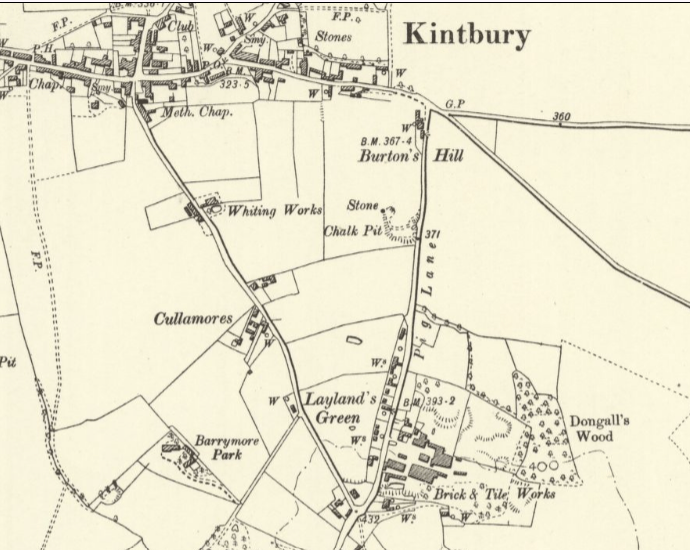
Part of early C20th OS map of Kintbury showing position of a chalk pit and whiting works
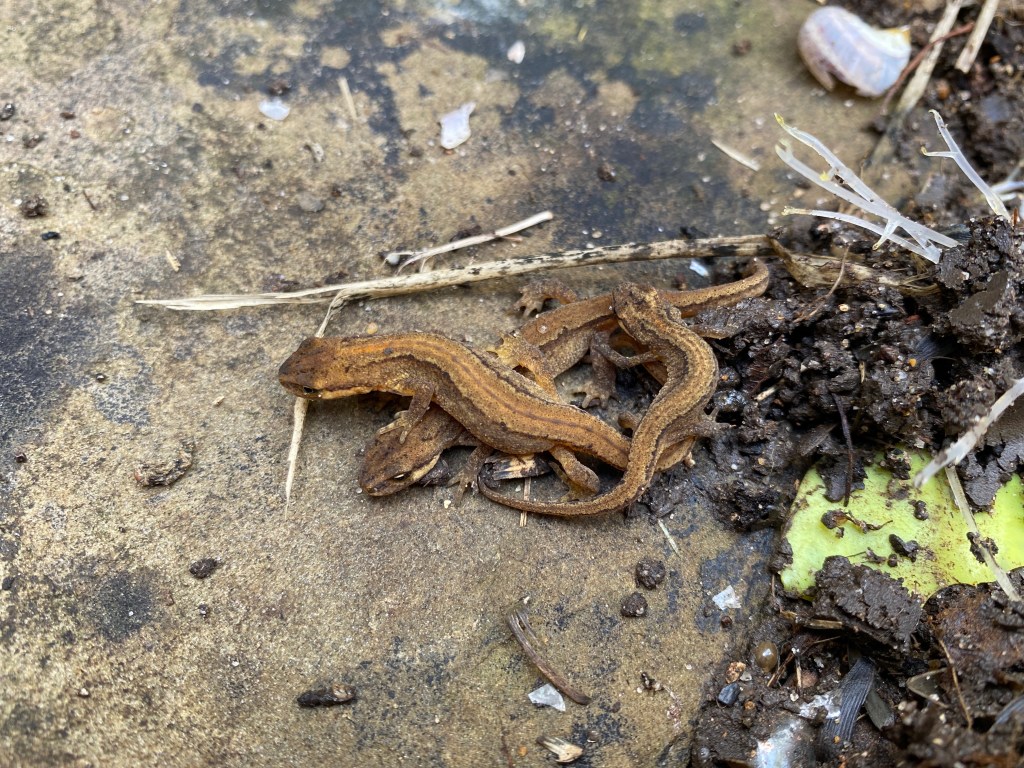
There are in the UK three kinds of newt: smooth, palmate and great crested. The site in Kintbury is home to all three but it is the presence of the great crested newt which makes the site so special.
The great crested newts – or Triturus cristatus to give them their official Latin name – are protected under UK law according to the Wildlife & Countryside Act of 1981. This is because its population has significantly declined and so it is illegal to injure, capture, disturb them or to damage their breeding sites. Once the presence of great crested newts was confirmed on the Kintbury site, any development was prohibited.
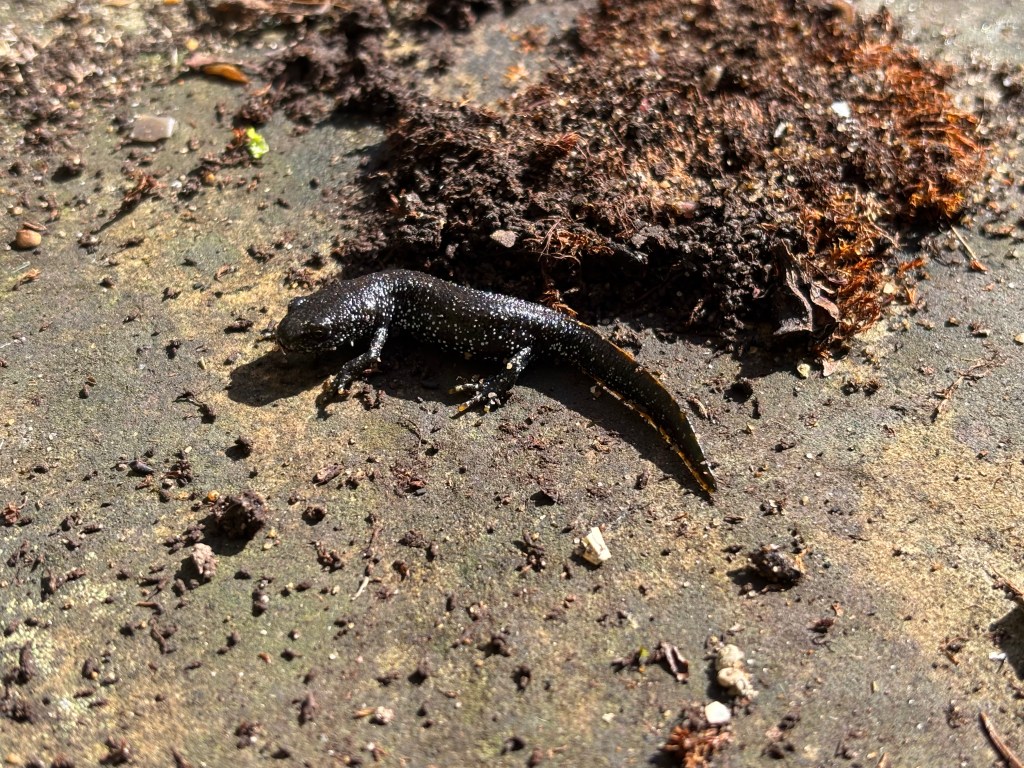
Newts are amphibians and so they breed in the ponds during the spring then feed on invertebrates they find in the surrounding woodland. They hibernate underground amongst the roots of trees. Our garden is next to the nature reserve and we have become used to finding the occasional newt when we turn up old flower pots or clear away weeds.
The great crested newt can grow up to 17cm although I don’t think we have ever found one that long in our garden. They are black in colour with an orange underside. Their skin is described as “warty” and in the breeding season there is a wavy crest along the body.
But why does all this matter? Why should a programme of house building be stopped because of the presence of newts?
According to the RSPB, the latest State of Nature Report has found that Great Britain is in danger of losing 43% of bird species, 31% of amphibians and reptiles, 28% of fungi and lichens and 26% of land mammals.
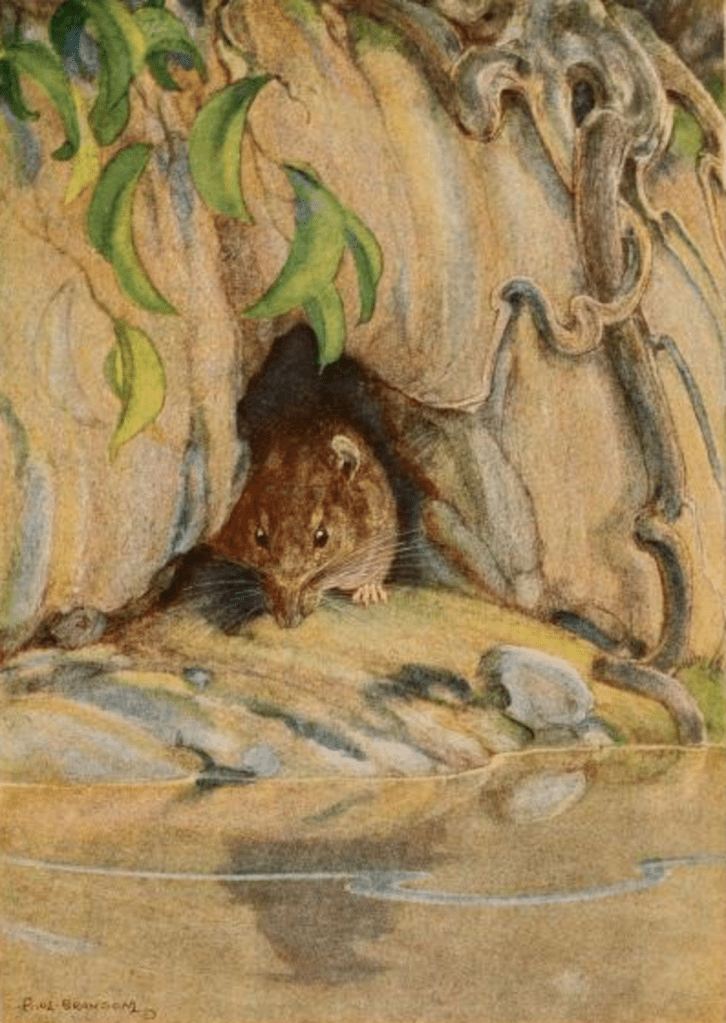
Included in these statistics are popular species such as turtle doves and water voles – “Ratty” from the Wind in the Willows is a water vole.
“Ratty” from Kenneth Graham’s The Wind in the Willows.
So why this dramatic loss? Changes in agricultural practices as well as in the use of land and its management have been big contributary factors. Although there have been some very successful reintroductions of species long absent from most parts of the UK – for example of the Red Kites which we now see over Kintbury every day – this cannot be seen as compensation for losses in other species. For many, once they are gone, they are gone for ever. Like the dodo. I grew up thinking the dodo was an invention of Lewis Carroll’s, not a bird that had once existed.
In my grandparents’ young days, the red squirrel was a familiar site across the south of England, whereas I was in my 30s before I had ever seen one.
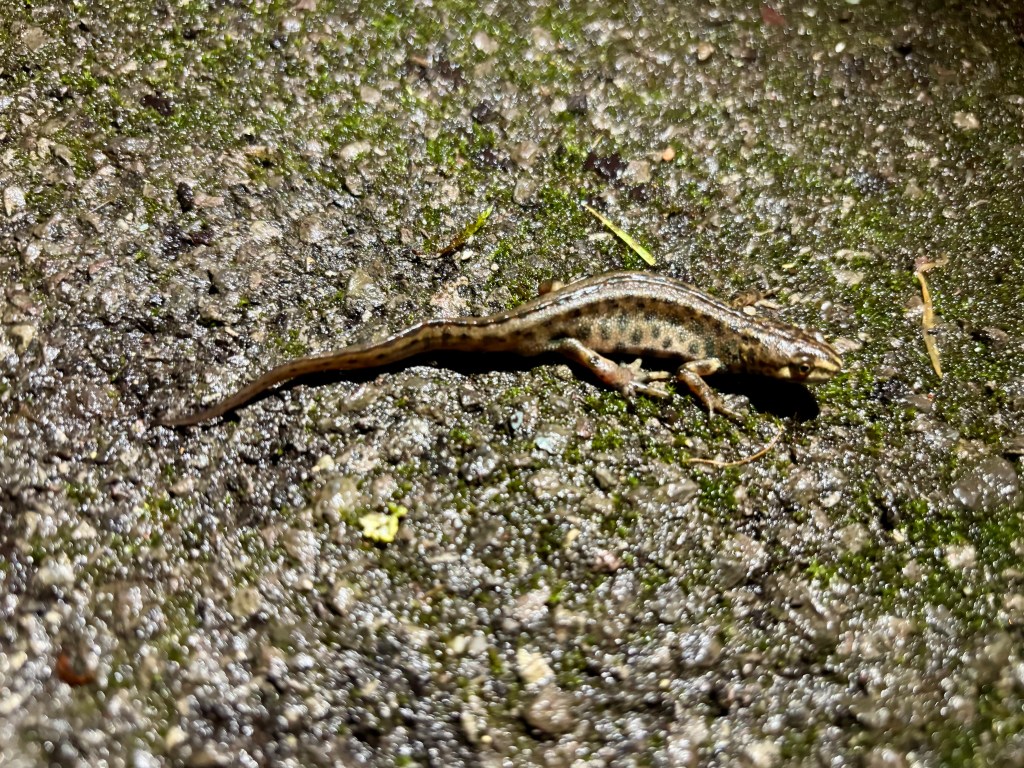
A newt visiting our garden
Today the Kintbury Newt Ponds Nature Reserve is one of 85 nature reserves managed by the Berkshire, Buckinghamshire and Oxfordshire Wildlife Trust. It is always open for anyone to enjoy.
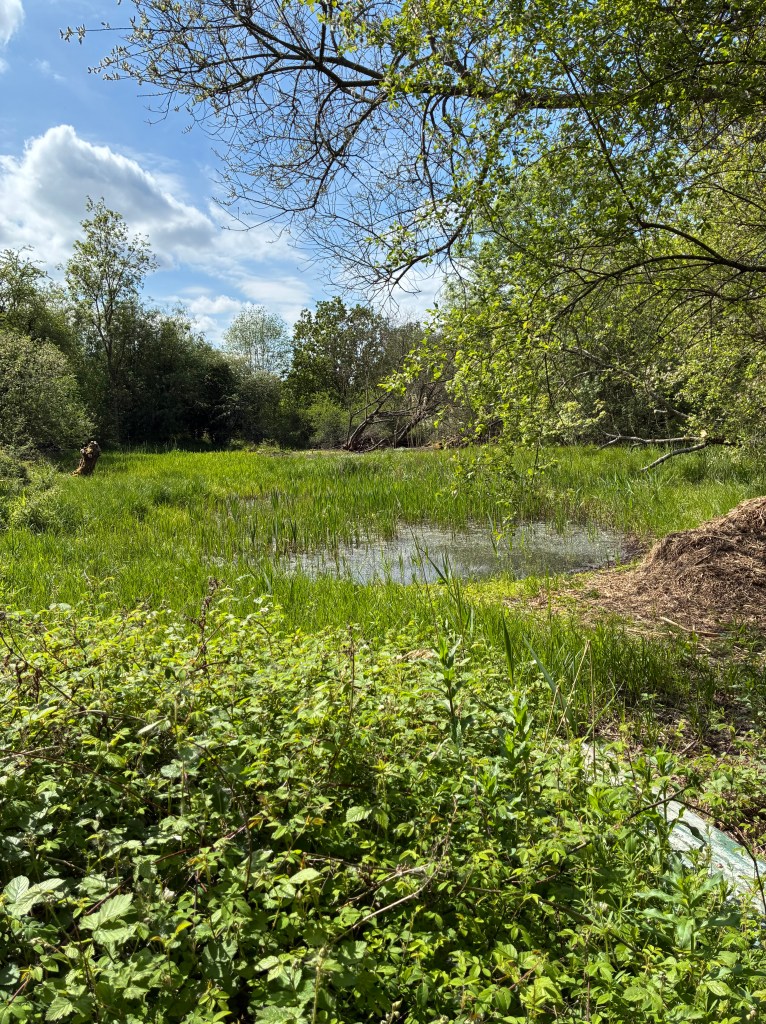
This former clay extraction pit is now an ideal habitat for newts in Kintbury Newt Pond Nature Reserve.
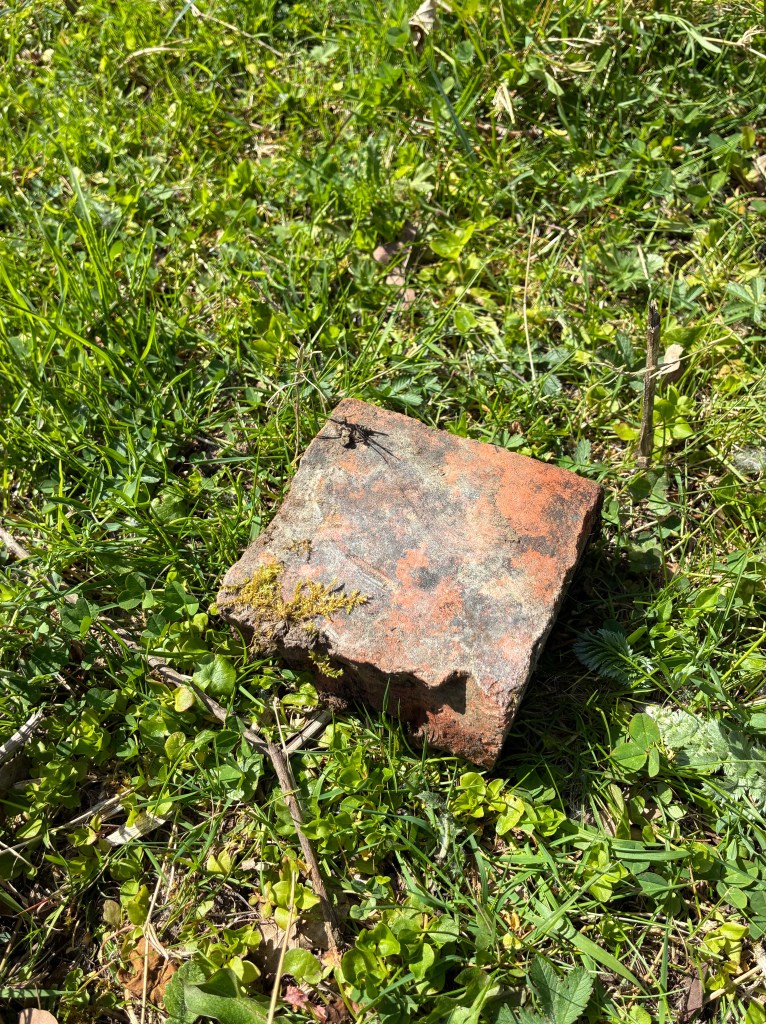
I found this brick partly hidden under the turf. Could it be a relic of the former brick making industry? I think it is very likely.
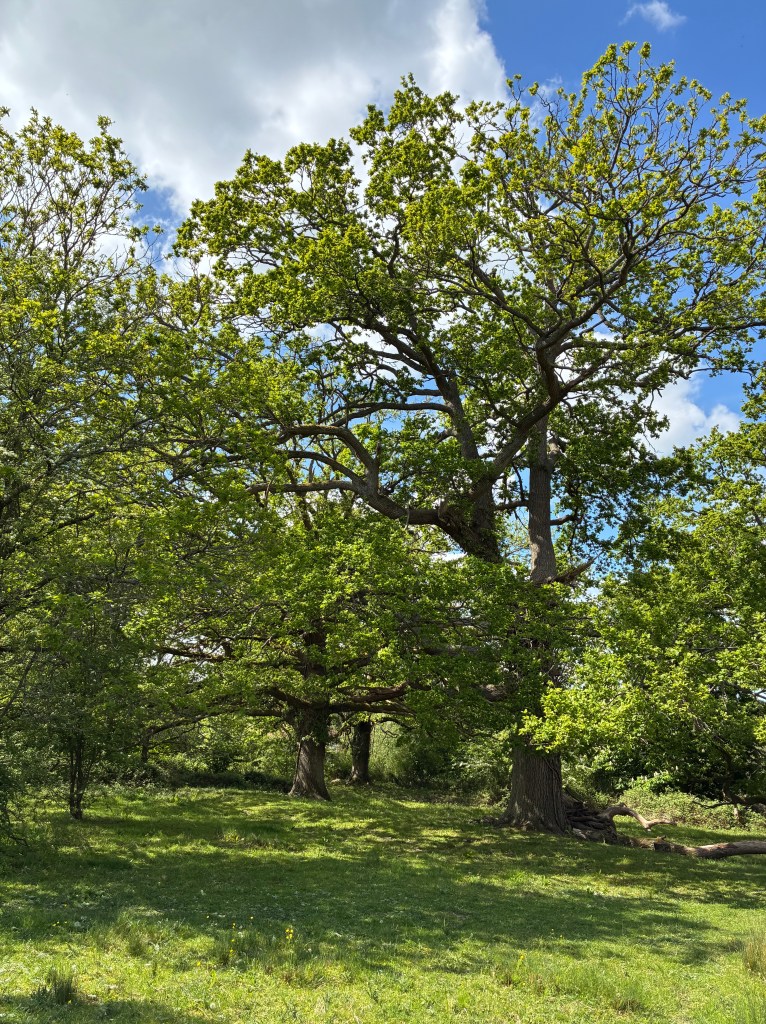
Mature oaks in the southern section of the nature reserve. This part of the reserve is often used for grazing.
The nature reserve is made up of ponds, reed beds, scrub and grassland. This photo shows some of the reeds.
Another newt who had been hiding on our patio
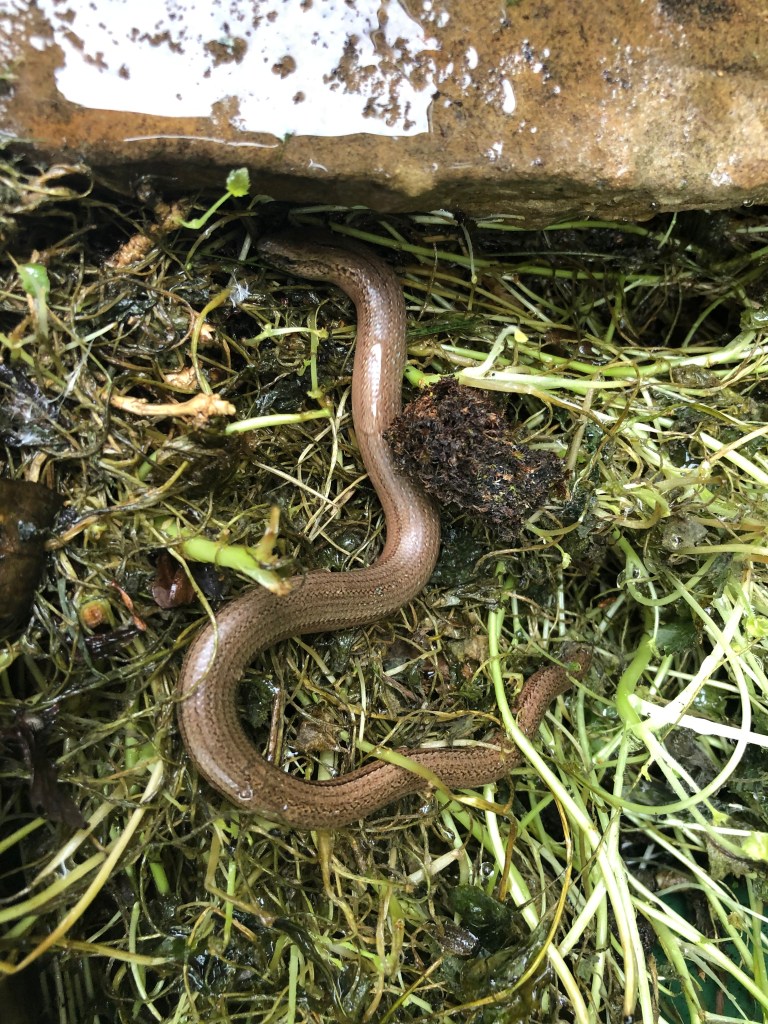
The nature reserve is also home to slow worms which, like the newts, often find their way into our garden.
I sometimes joke that the newts have more protection than we do – obviously that is not really true. But I am pleased they have the protection that they do – and I hope it will continue.
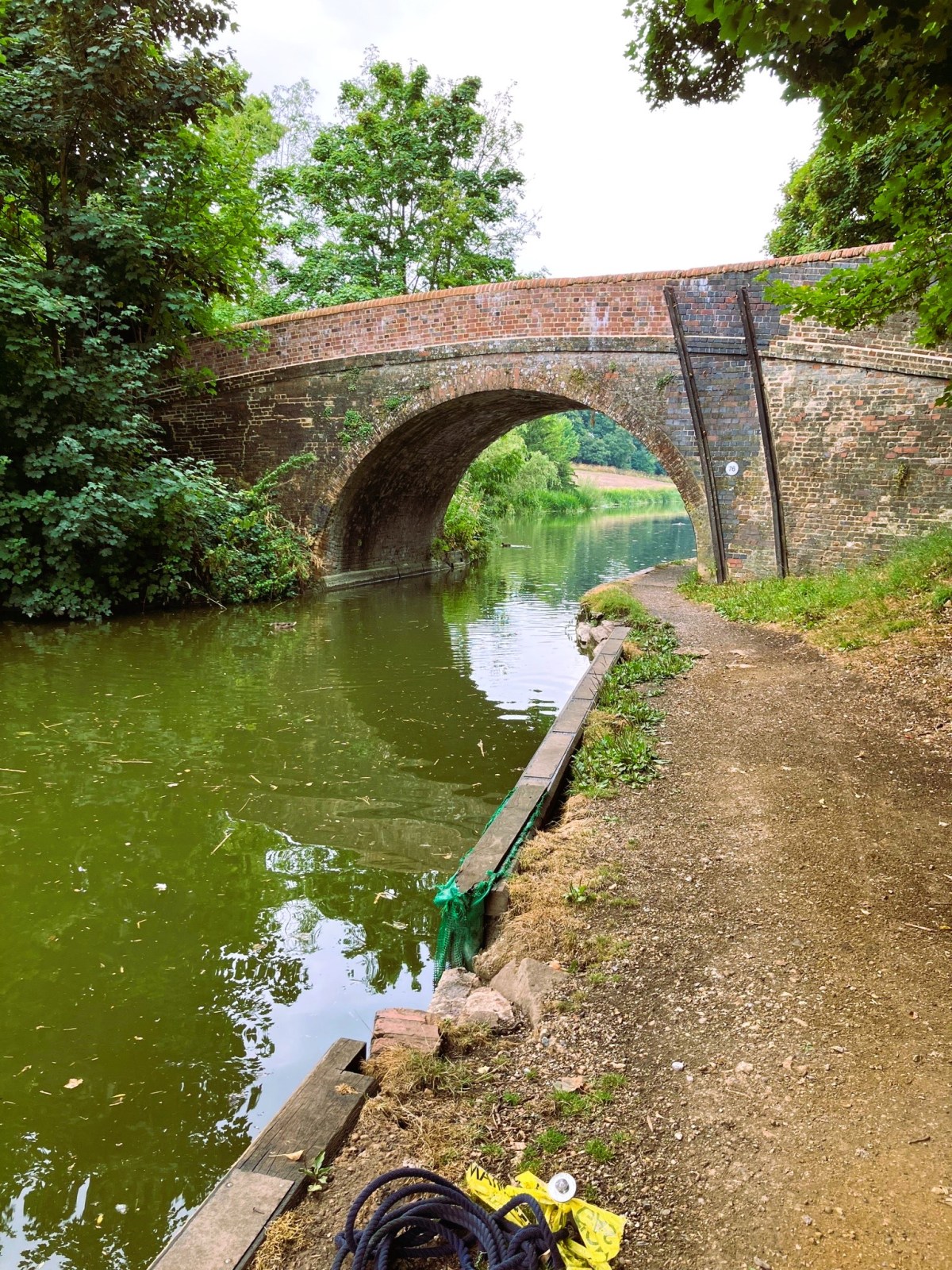
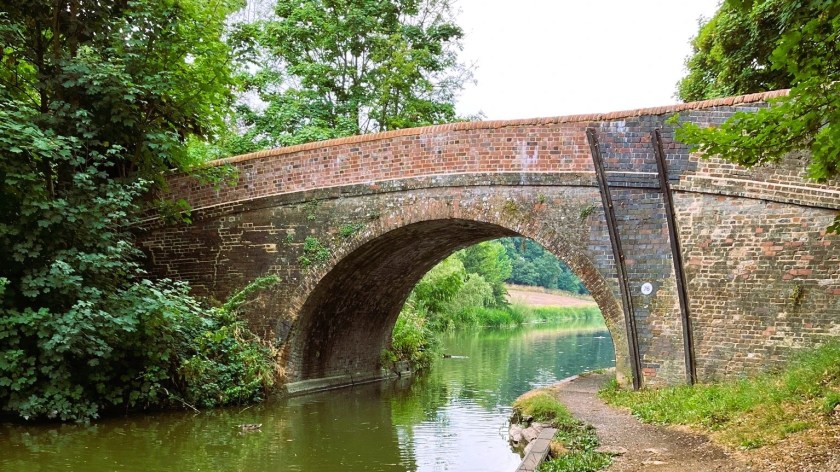
If you walk westwards along the canal tow path out of Kintbury, you pass under Vicarage Bridge. You will notice, as you approach the bridge, a pair of rails attached to the brickwork on the right hand side. You could easily mistake these rails for a pair of butresses but that was not their original purpose.
So what are those rails?
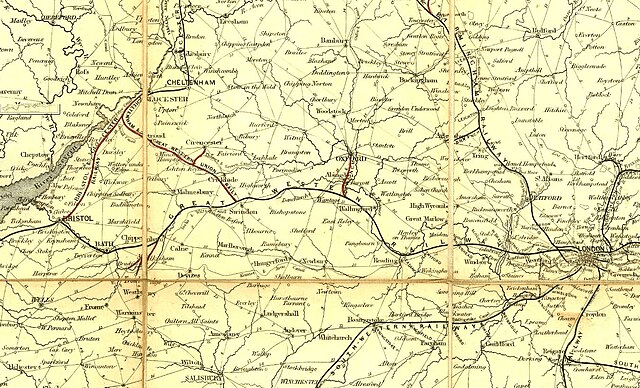
When the celebrated railway engineer, Isambard Kingdom Brunel, designed the Great Western Railway in 1838, he decided that the distance between the rails on which the engines and their carriages should run – the gauge – should be 7 feet 1⁄4 inches or 2,140 mm. This gauge, he believed, was safest for engines travelling at speeds and also offered a more comfortable ride for passengers.
Route of the Great Western Railway, 1850. Public Domaine, via Wikki Commons
By 1841, Brunel’s Great Western Railway had opened between London and Bristol, passing through Reading and the Vale of White Horse on its way. Then, in 1845, an Act of Parliament was passed which enabled the creation of the Berks & Hants Railway Company, a branch line of the Great Western which would leave the main line at Reading, and on through the Kennet valley. On the 21st of December 1847, the line finally opened westwards with stations at Theale, Aldermaston, Woolhampton, Thatcham, Newbury, Kintbury and Hungerford. The line was, of course, what had come to be known as “broad gauge.”
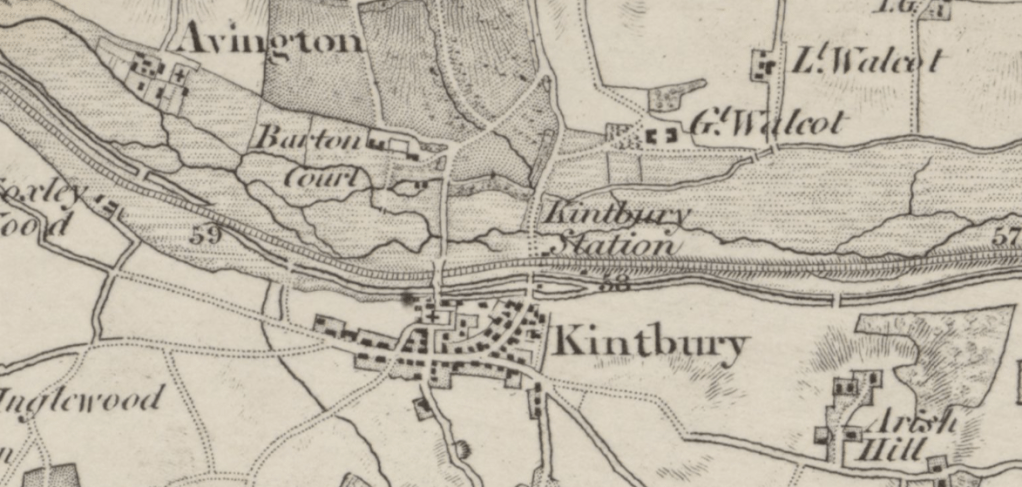
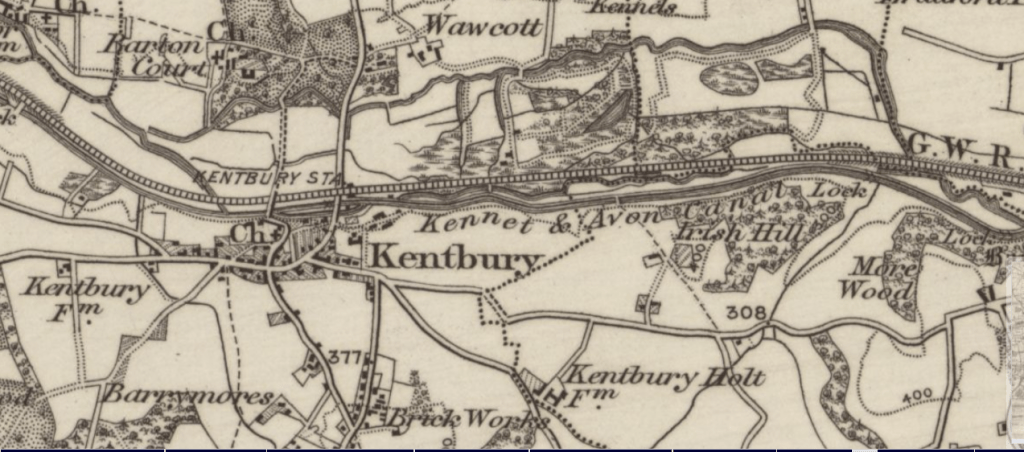
Mid C19th OS map showing Kintbury station . Note the main route into Kintbury from the north runs past Barton Court and down the Avenue.
Kintbury had joined the railway age!
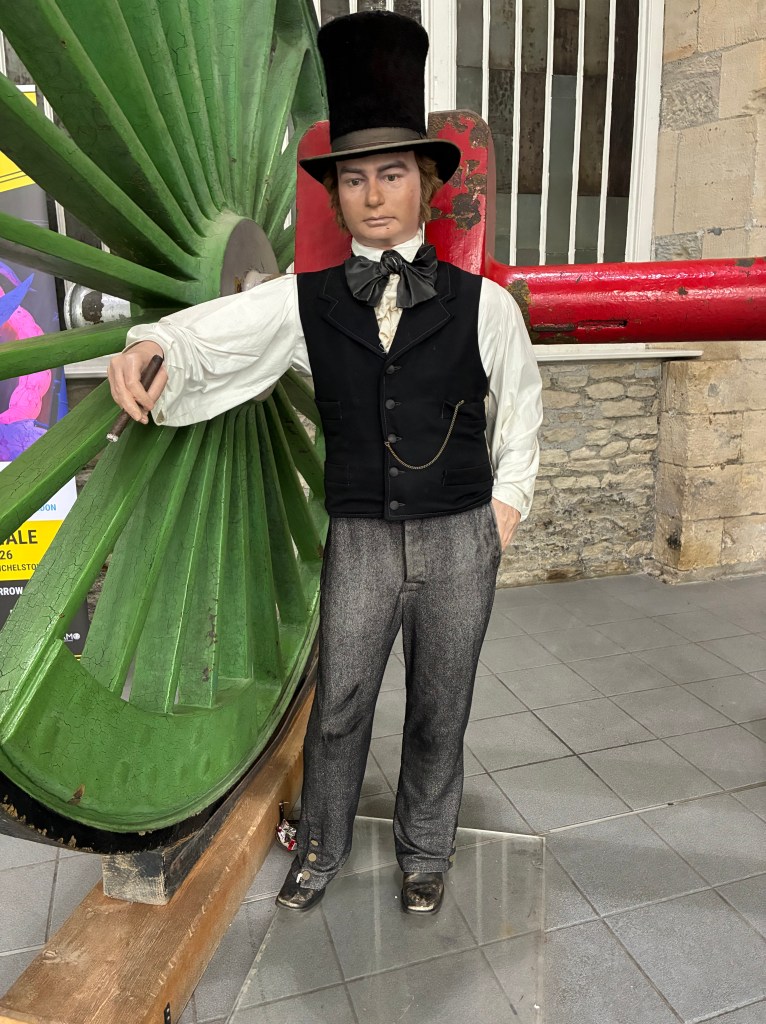
“Isambard Kingdom Brunel” at STEAM: The Museum of the Great Western Railway, Swindon.
By 1855 it had become possible to leave Kintbury station at 7:17 and arrive in Reading at 8:13 – about the length of time it would take to ride into Newbury on a horse. By the 1870s it was possible for Kintburians to travel to Bristol or London with ease, or to enjoy a day out in Weymouth. That is to say, those Kintburians who could afford to do so and who could afford the time off work.
Isambard Kingdom Brunel’s Great Western Railway had proved to be one of the greatest success stories in British engineering. However, Brunel had a rival in the north of England.
I.K.Brunel
Although the railway engineer Robert Stephenson was a friend of Brunel’s, the two disagreed over the choice of gauge for the railways they designed. Robert Stephenson’s father, George, one of the earliest railway engineers, had chosen a gauge of 4ft 8½inches. This was because it was the average distance between cart wheels of those farmers who also used the early railway tracks to transport their goods, running their horsedrawn wagons along the tracks. Robert Stephenson chose to continue with this gauge which, at the time, was referred to as the “narrow” gauge and later the “standard” gauge.
Whilst Brunel’s Great Western continued to be very successful between London, Wales and the West of England, throughout the north and midlands far more lines were being built, all using the narrower or standard gauge. So although Great Western travellers may have indeed experienced a more comfortable ride, those who had to change trains on journeys northwards had the inconvenience not only of leaving one carriage for another, they had to wait while any luggage had to be transferred from one train to another. This was bad enough when it was trunks and suit cases being transferred but a potentially more serious delay when it was freight destined for markets.
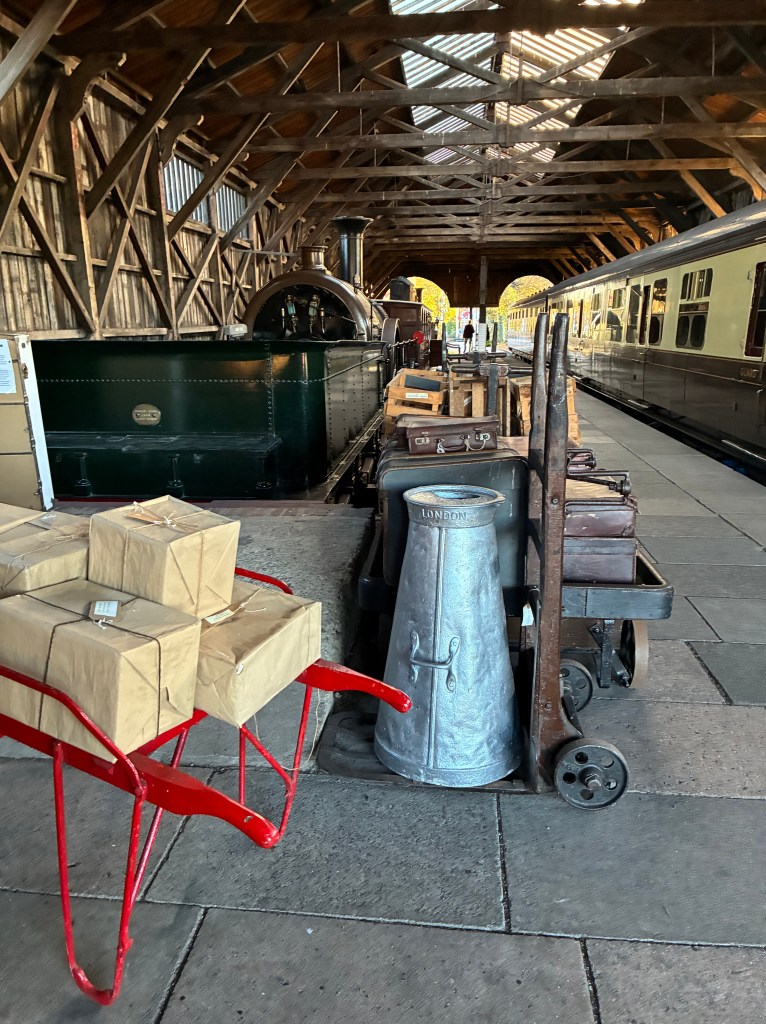
Transferring luggage from broad gauge to standard gauge carriages in the transfer shed. A recreation at the Didcot Railway Centre.
It was not until after Brunel’s death that the Railway Regulation (Gauge ) Act 1846 adopted the narrow or standard gauge for the Great Western, although it was several years before every line was converted.
On June 20th, 1872, the Newbury Weekly News carried a report critical of the Great Western’s perceived delay in converting the local line to the narrow or standard gauge. At that time, most of the coal used in the Newbury area came from the Forest of Dean coal field – an area already converted to narrow gauge by the GWR. However, as the line through Newbury had not yet been converted, the coal had to be transported to Reading for which the GWR charged an extra 3 pence per ton. To make matters even worse, there was an additional charge of 6 pence per ton to transport it to Newbury. Not surprisingly, around 95 traders petitioned the Board of Directors of the GWR and it was eventually decided that the line should be converted.
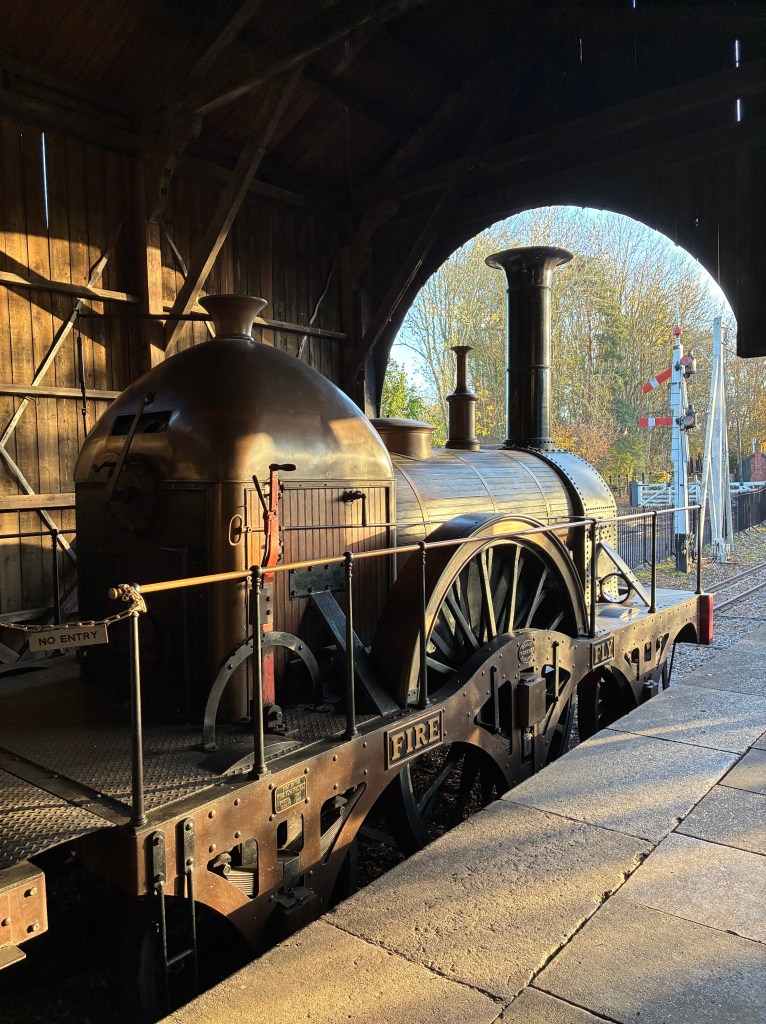
Recreation of a broad gauge engine, Didcot Railway Centre.
On the evening of Tuesday, June 30th 1874, the last train pulling broad gauge carriages left Newbury station at eight o’clock. It was followed half an hour later by the last train of broad gauge trucks and wagons.
According to a report in the Newbury Weekly News, conversion work on the 60 mile stretch between Reading and Holt Junction in Wiltshire began in July 1874. The work was to be undertaken by 600 men, split into gangs of 20 and commencing work on different sections of the line. Each gang had two designated cooks whose job it was to obtain the required provisions, boil water for tea or coffee, and prepare food. The labourers were allowed 1s 3d (about 7 pence) each day for rations and oatmeal was provided for the cooks to prepare into a “wholesome and strengthening beverage, any amount of which they were at liberty to have.”
Apparently, “so nutritious was the beverage that some of the men cared to eat but little solid food during the day.”
I wonder if they were saving their 1s 3d per day to spend in a local pub once the working day was over.
The labourers were accommodated in various station sheds and slept on “an abundance of clean straw”. Smoking was forbidden.
The working day was between seventeen to eighteen hours long and the work, with no mechanised equipment at all, must have been backbreaking.
For the inhabitants of those villages along the line, the arrival of gangs of strange men arriving to work on the rails, must have been daunting and perhaps worrying. But it may be that the villagers of Kintbury could feel assured as a member of the Great Western Railway Police lived in the village. Charles Giles had lived in the Kintbury for over twenty years and his presence must have been reassuring.
“Kentbury” Detail frpm O.S Map. 1889.
The work, however, was completed very quickly and the gangs of men left Kintbury – and the rest of the Kennet valley – in peace.
So what about those iron rails fixed to the side of Vicarage Bridge? Before being placed where they are today, those were broad gauge rails – a relic of that bygone age and of Brunel’s belief that 7 feet 1⁄4 inches was the preferable gauge for comfort and speed.
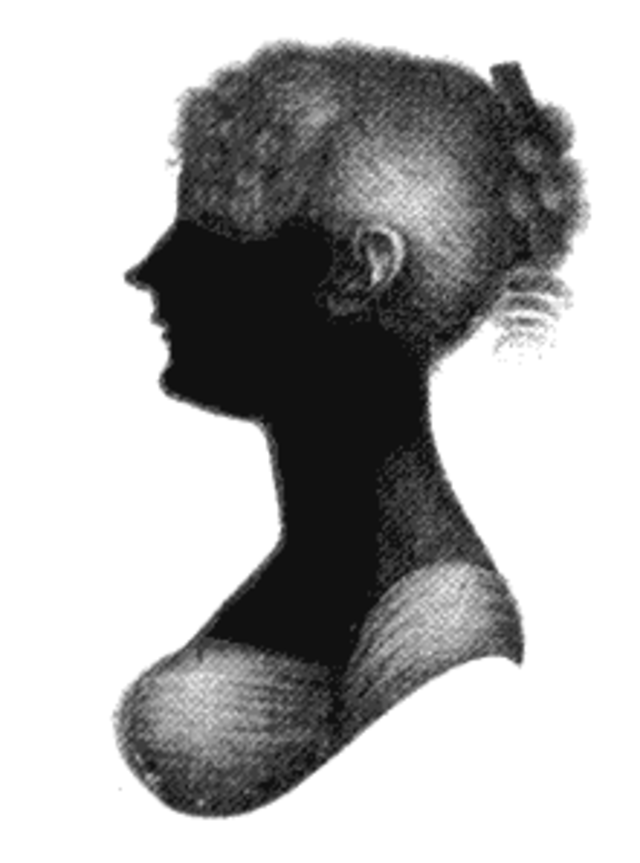
We have, I believe, just one description of Jane Austen’s appearance, recalled by someone who knew her well all her life – someone who had known her since she was a small child of three.
“She was like a doll……certainly pretty – bright and a good deal of colour in her face – like a doll – no, that would not give at all the right idea for she had so much expression – she was like a child – quite a child, very lively and full of humour.”
That person was Kintbury’s vicar, Rev Fulwar Craven Fowle.
Fulwar ( pronounced “Fuller” – it was a family name ) was born in Kintbury on June 12th 1764, the eldest son of Rev Thomas Fowle and his wife, Jane née Craven. These were the days when having connections, either within the family or otherwise, could lead to appointment to a parish; in the case of the Fowles, Fulwar’s grandfather Thomas Fowle I had been appointed vicar of Kintbury in 1741 and his father, Thomas Fowle II, followed him in the post from 1762 to 1806.
At the time, it was not at all uncommon for a priest to hold the position of rector in other parishes. Thomas II was rector of Hamstead Marshall, not far from Kintbury, and also Allington, near Salisbury in Wiltshire. Later, as well as being vicar of Kintbury, Fulwar himself was also rector of Elkstone in Gloucestershire.
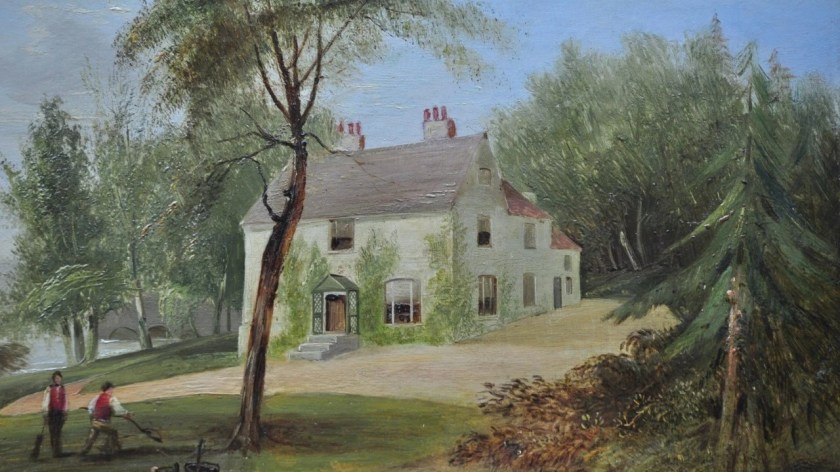
The Old Vicarage in Kintbury
So the Fowles could be said to have been very much a family of the vicarage. This was a time when vicarages, wherever they were, were larger, higher status houses and those who lived in them led relatively comfortable lives supported by servants and other staff. However, a vicarage life was not associated with opulence and none could be described as stately.
By contrast, the Cravens’ seat at Hamstead Marshall, three miles to the east of Kintbury, was far grander.
Fulwar’s mother Jane Craven was born in 1727, the second daughter of Charles Craven and his wife, Elizabeth Staples of Hamstead Marshall. Charles is better known as “Governor Craven” from his time as being governor of South Carolina in America. The former Elizabeth Staples has a reputation as a socialite with little time for her family.
The Former Elizabeth Staples, grandmother of Fulwar Craven Fowle
When Charles Craven had been growing up, the Craven family seat was the elegant baroque mansion in Hamstead Park, designed by the Dutch architect Balthazar Gerbier in the mid C17th. Unfortunately, this building burnt down in 1718 and by the time of Charles Craven’s marriage to Elizabeth Staples in 1720, it is likely that the family home was an extended hunting lodge on the estate.
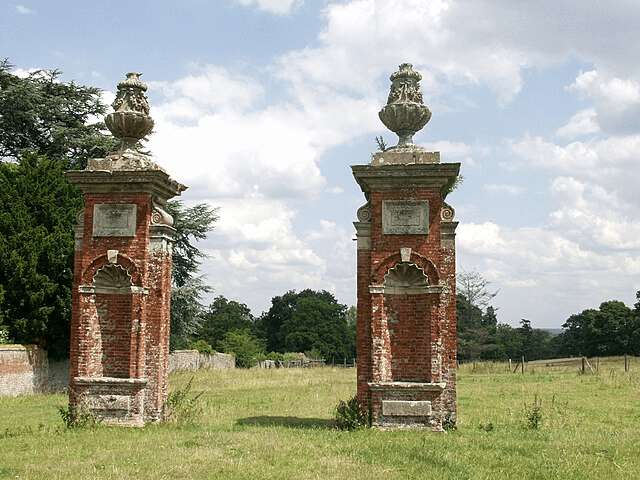
All that remains of the Baroque mansion in Hamstead Park. Photo by Mick Crawley via CreativeCommons
So, even though the Hamstead Marshall Cravens no longer had a “stately” house, they did have a high status home and close family links to the Earls of Craven, such that Jane Craven’s family could be said to occupy a higher rung on the social ladder than that of the Fowles.
Jane & Thomas were married at Kintbury on July 18th, 1763. Jane was 36 and Thomas was 37. Thomas had been ordained priest the previous year and became vicar of Kintbury following his father’s recent death and the post becoming vacant. Perhaps the comparatively later age at which the couple married could suggest that their marriage was not economically viable until then, despite Jane’s family having been wealthy. We do not know.
Thomas & Jane had four sons: Fulwar Craven, born 1764, was followed by Thomas, born 1765, then William, born 1767, and finally Charles, born 1770.
Fulwar was a fair-haired, blue-eyed child, slight of stature and never very tall, even in adulthood. The country side would have encroached on the village of Kintbury more so than it does today, enabling the Fowle boys and their friends to roam at will and swim in the Kennet. Like all of the more comfortably off, the boys would have learnt to ride as a matter of course and by adulthood, Fulwar had the reputation of being a very good horseman.
We can assume that, whilst life in the Kintbury vicarage might not have been opulent, it would have been economically secure particularly when compared to the lives of many working people and farm labourers in the cottages of Kintbury.
There was no universal education in late eighteenth century England. In some towns and villages a basic education was offered by religious or charity groups and there were well-established grammar schools in more prosperous towns which prepared young men for the professions or university entry. For the sons of wealthier families there was a choice of “public” schools – a misnomer in that these schools were – and are – expensively fee-paying and elitist.
The novel, “Tom Brown’s School Days”, published in 1857, is a fictionalised account of being a pupil at Rugby, a public school in the south east midlands, in the 1830s. Its author, Thomas Hughes, was the grandson of the vicar at Uffington, then in Berkshire, across the downs around twenty miles to the north of Kintbury.
It might be assumed that, coming from a similar background, the Fowle sons would also have attended a public school, perhaps Eton, close to Windsor in east Berkshire, or Winchester, in Hampshire. Instead, Jane and Thomas chose to send their sons to the school run by Rev George Austen and his wife, at Steventon, near Basingstoke in Hampshire. George Austen’s “school” was actually in the family home – the Steventon vicarage.
Thomas Fowle had known George Austen since their days at Oxford University so perhaps he felt more comfortable entrusting his sons’ education to someone he knew very well. Alternatively the costs of a public school education might have been beyond the budget of a rural parson, we cannot say. The reality might have been a combination of both factors.
We do not know precisely the curriculum Rev Austen would have offered his students although it would very likely have centred on the Classics – Latin and Greek- which would prepare the boys for further study of the same at Oxford University.
Fulwar was fourteen when he first joined the other borders at the Steventon vicarage school. At that time the Austens’ eldest son, James, was nearest to Fulwar in age and became his closest friend. Edward was 11, Henry 7, Cassandra 5 and Francis 4. The baby of the family at that time was Jane, aged 3. Charles was to arrive a year later.
It goes without saying that the Austens would have had servants; however, even with help with cooking, cleaning and laundry, the household must have been a particularly busy one. One can only assume that George Austen’s wife, Cassandra, must have been a particularly well-organise and relaxed person – laid-back, we might say today – to run such a household.
Fulwar’s brothers later joined him at Steventon: Tom in 1779 and William and Charles sometime in the early 1780s. The young Austens also visited Kintbury, and many years later, in 1812, James Austen wrote a poem in which he recalled staying at the Fowles’ home in Kintbury:
And still in my mind’s eye methinks I see
The village pastor’s cheerful family.
The father grave, but oft with humour dry
Producing the quaint jest or shrewd reply;
The busy bustling mother who like Eve
Would ever and anon the circle leave
Her mind on hospitable thoughts intent
Careful domestic blunders to prevent.
Whilst James Austen was clearly not a second Wordsworth, his words suggest the Fowles were a warm, happy family. Perhaps the “humour dry” and “quaint jest” suggest that the Austens & Fowles shared a common sense of humour or enjoyed the same sort of witticisms. Perhaps both families would a have agreed with Jane Austen’s Mr Bennett when he said,
“For what do we live, but to make sport for our neighbours, and laugh at them in our turn?”
There is certainly evidence that Fulwar had an acerbic sense of humour, which is perhaps not surprising in a close friend of the Austens.
At Steventon, all the Fowle brothers were successful students. Fulwar went on to enter St John’s College, Oxford in 1871 where he gained a BA in 1785 and an MA in 1788. His brother, Thomas went up to Oxford in 1783 and gained an MA in 1794. William went on to study medicine ( not yet a subject taught in an English university ) as an apprentice to his uncle William Fowle in London. Charles studied law and was called to the bar in 1800, later practising law in Newbury.
Perhaps it was inevitable that Fulwar would follow his father and grandfather into the church; in 1786 he was ordained deacon at Salisbury cathedral and was installed curate of St Mary’s, Hamstead Marshall on the following Christmas Eve. It has to be very likely that he obtained this post due to family patronage, which, at this time, would have seemed perfectly normal and acceptable with no accusation of nepotism.
The west door, St Mary’s, Kintbury
Also in the manner of the time, Fulwar became rector of Elkstone in Gloucestershire in 1788 where the manor had belonged to the Craven family since 1623. 0nce again an example of an appointment made as a result of family connections.
1788 was also the year in which Fulwar married his cousin, Elizabeth – known as Eliza – Lloyd. Eliza’s mother was the former Martha Craven, daughter of Governor Craven of Hamstead Marshall. Martha had married the Rev Noyes Lloyd, vicar of Enborne in 1763 and Eliza, along with her sisters, Martha & Mary, with their brother Charles, had grown up there. Sadly, Charles died in 1775 following an outbreak of smallpox.
In Elkstone, the elegant, three storey rectory built earlier in the century became Eliza & Fulwar’s family home for the first six years of their marriage. Their first child, however, Fulwar William, was born at Deane, near Basingstoke in Hampshire in 1791. It has to be likely that this was because Eliza’s mother and her sisters Mary & Martha had been living there since having to vacate Enborne vicarage on the death of Rev Nowes Lloyd in 1789. As a first-time mother, Eliza probably wanted her confinement to be somewhere close to her family for support.
The Old Rectory, Elkstone Phto: Chris Brown, via CreativeCommone
The couple’s second child, Mary Jane, was born at Elkstone in 1792 although the baptism of their third child, Thomas, in 1793, is recorded as being in Hurstbourne Tarrant, near Andover in Hampshire. Although it is a very long way from Elkstone, Eliza’s mother and sisters were now living at Ibstone, a hamlet close to Hurstbourne Tarrant so it would be logical to assume Eliza had once more returned to her family for her confinement.
In 1794 the family returned to Kintbury where Fulwar took over the incumbency. By now there were two more children: Mary Jane, had been born in Elkstone in 1792 & Thomas in Hurstbourne Tarrant in 1793.
Caroline Elizabeth had been born in December of 1794 but died the following January. Both her baptism and death are recorded as being at Hurstbourne Tarrant.
In January 1797 a happier event occurred at Hurstbourne Tarrant where Eliza’s sisters Mary & Martha were still living with their mother. Mary Lloyd married the widowed James Austen and became step-mother to James’ daughter Anna. In the custom of the time, Eliza Fowle could now speak of James Austen as her brother. Martha Lloyd was to become one of Jane Austen’s closest friends and a life-long companion.
However, tragedy was soon to strike the extended family.
In 1795, Fulwar’s brother Tom Fowle had become engaged in secret to Cassandra Austen prior to joining an expedition to the West Indies as Lord Craven’s chaplain. However, he was never to return and news of his death from yellow fever reached Kintbury in the February of 1797. It was James and Mary who broke the news to Cassandra.
Over the next eight years four more children were born to Fulwar and Eliza in the Kintbury vicarage. In a letter to Cassandra of December 1st, 1798 Jane Austen wrote,
“No news from Kintbury yet – Eliza sports with our impatience.”
It is worth remembering that this was a time when everyone would have known someone who had died in childbirth so Jane Austen’s wry humour would be masking a real concern for Eliza’s welfare. Elizabeth Caroline ( known as Caroline ) arrived five days later on December 6th. She was christened in Kintbury on January 19th by James Austen.
Isabella followed in 1799, Charles in 1804 and Henry in 1807.
The Fowles, the Lloyds and the Austens remained friends throughout their lives. The little girl Fulwar had first got to know in the Steventon vicarage had shown a prodigious talent for writing and become a very succesful novelist. In 1815 the Prince Regent even requested that Jane should dedicate her latest novel to him, which she did. As it happens that novel was Emma, the one about which Fulwar famously said he would only read the first and the last chapters as he had heard it wasn’t interesting. I very much doubt that Jane would have been particularly offended by this comment – after all, she knew him almost as well as she knew her older brothers, and for almost as long.
Despite the disparaging comments about Emma, we know that Fulwar did indeed purchase other of Jane’s novels, as copies with his name, written in his handwriting on the title pages, have fairly recently come up for auction. We know from Jane’s letters that Eliza bought a copy of Sense & Sensibility.
Throughout this time there are many passing references to Fulwar & Eliza in the letters of Jane Austen. However the most telling reference as regards Fulwar is that January 1801. In her letter to Cassandra, Jane writes:
“We played at vingt-un, which, as Fulwar was unsuccessful, gave him an opportunity of exposing himself as usual.”
Fulwar, it seems , was not good at hiding his bad temper. But by this time Jane had known him for over twenty five years and must have been very well aware of his moods.
As their priest, Fulwar Craven Fowle served the people of Kintbury for the rest of his life. Whilst not all Anglican clergy were in any way wealthy and some seem just to have been scratching a living in their parishes – (indeed it is believed one of the reasons why the ill-fated Rev Thomas Fowle took the post of Chaplain to Lord Craven’s expedition was to raise enough money to marry Cassandra ) – all the evidence suggests that the Fowles’ life in Kintbury was secure and comfortable.
As well as carrying out his duties as parish priest in Kintbury and, from time to time visiting the parish of Elkstone, Fulwar was very much involved in West Berkshire public life.
In 1805 he was appointed Lieutenant Colonel Commandant of the Kintbury Rifle Corps and in the same year led the local Volunteer Brigade to Bulmersh, near Reading where they and other volunteer regiments were inspected by George III. Apparently the King was particularly impressed by the “military perfection” of the Berkshire Volunteers and with Rev Fowle as their officer.
I think it’s worth remembering that at this time there was still the threat of invasion from the French under Napoleon across the channel and the south coast felt particularly vulnerable. Having an efficient volunteer force was important to the nation’s security in the same way as the Home Guard was in the Second World War.
Despite the country being on a war footing and the newspapers continuing to carry reports of Napoleon, daily life continued relatively uninterrupted.
It seems that Rev Fowle moved within what Jane Austen’s Mrs Elton would have described as “the first circle” socially. According to a newspaper report of 1807, for example, he was one of several dignitaries to attend a race meeting at Enborne Heath near Newbury. Others named include the Earl of Craven and Sir Joseph Andrews of Shaw House, Newbury. Very much the local “great and good”.
What is perhaps surprising is the amount of property and land that Fulwar owned in the area. This included 55 acres of farm land, two cottages and other farm buildings at Rooks’ Nest farm just south of Kintbury, and also 350 acres of pasture and arable land with adjoining farm house and other buildings at East Woodhay, just over the border in Hampshire.
However, Fulwar does seem to have taken an interest in agriculture and was not simply a landowner who cared solely about collecting the rent. In 1808 he was elected Steward of the Berkshire Agricultural Society for that year and in 1820 became a member of the Hampshire Agricultural Society
This was the time of what is now known as the agricultural revolution – the period throughout the late eighteenth century into the nineteenth century when many landowners and working farmers were developing ways to increase agricultural production. In this area, South Downs and Merinos were the breeds of sheep most commonly kept by farmers but at the Hampshire Agricultural Show of 1820 the Rev Fowle exhibited a pen of Leicesters which, “excited much attention” as they had not been seen there before. Furthermore, the superior weight gain of these sheep, when compared to that of the usual breeds, was due, it was believed, to their having been fed on a diet of “sliced Swedish turnips” rather than corn and cake. Over the next two years, the Leicesters maintained their advantage when reared under controlled conditions.
A Leicester Ram Photo: John Wrightson via Creative Commons
Whilst it has to be likely that it was a shepherd in Rev Fowle’s employment who would have undertaken all the husbandry involved in this experiment, Fulwar himself must have approved of its happening and may well have initiated it.
The Agricultural Revolution resulted in a slow and relatively peaceful change throughout the country. The same could not have been said about the French Revolution, observed from across the channel, where social change had included the violent removal of the monarchy and aristocracy. Throughout Fulwar’s life there were campaigns for social and political reform across the country but these were accompanied by fears, on the part of the establishment, of the kind of violence that had been seen in France. I think it is in the light of such fears that we need to assess the response of certain authorities to the unrest that broke out across southern England in 1830, though it does not excuse the more extreme reactions.
By 1830, Fulwar was 66 and Eliza 65. The couple still lived in the vicarage: the white building next to the River Kennet where Fulwar had grown up although now its garden formed part of the south bank of the Kennet & Avon canal as it flowed towards Kintbury wharf, bringing coal and other commodities to the village.
Fulwar also served as a magistrate and was, therefore, regarded as a figure of authority and most probably of derision on the part of those who came before the bench. Such is human nature. He seems to have been respected and held in affection by the members of his church; by now, however, Kintbury had both a Methodist church and a Primitive Methodist church so numbers of nonconformists in the village would not have been inconsiderable: Rev Fowle was not everyone’s priest.
Their neighbour, 79 year old Charles Dundas still had his seat at Barton Court, less than half a mile along the coaching road which led from the Bath Road into the village. Dundas had been Member of Parliament for Berkshire since 1794.
Charles Dundas, MP & Kintbury Resident
We have written quite extensively in this blog about the events which led up to the Swing Riots of 1830. Formore information you might like to look at these articles: The Kintbury Martyr parts 1, 2 and 3.
Following a year of escalating hardships, by the autumn of 1830 the agricultural labourers focussed their attention on threshing machine: the mechanical devices that could do the work of several men at a time rendering them redundant when their casual employment was most crucial if they were to earn enough to feed their families through the upcoming winter. By the night of November 21st of that year, a riotous mob of angry men was roaming through the local villages, demanding money from the farmers and threatening to set fires and smash machinery, in particular the hated threshing machines.
Thanks to a letter held by the National Archives we can read Fulwar’s own account of what happened when the Kintbury mob arrived at the vicarage. Apart from some of his sermons, the letter is the only time we can hear his voice through his writing – writing that is small and neat despite the strain of the night he has just witnessed. He frequently punctuates by using dashes. Both the neatness, much of the letter formations and the dashes are reminiscent of Jane Austen’s letter writing, which leads me to wonder if both were influenced by George Austen. It’s a thought.
The letter opens:
Dear Dundas,
The mob continued their work of breaking machines the whole of the night. They came to me about 4 oC in the morning. Harrison consulted with me and I agreed with him that it would be better to bring your machines to Kintbury and let them break them there than that they should go to BC for that purpose. They were brought up accordingly and taken into the street.
I think it is important to remember that at this time there was no police force and no authority that the Fowles could have called upon easily had they felt threatened. We do not know if anyone else was living at the vicarage besides Fulwar and Eliza – there may well have been one or two domestic servants and we know that Fulwar had a gun licence but all the same the couple would have been aware that they had very little personal protection had the mob turned violently against them.
Fulwar’s tone is resigned with acceptance of the situation rather than anger. He is clearly being kept informed of developments, telling Dundas that the mob has moved on to Titcombe, Hungerford Park and North Hidden, intending to go further. If this is correct, the rioters must have been moving swiftly through the area to have covered the distance. Furthermore, someone – or perhaps several people – must have been following on horseback to be able to report back as to what was happening. In these days of radio or mobile phone communication, it is easy to forget just how difficult it must have been in 1830 to follow what was happening.
The rioters have been demanding money:
I understand that they will have two pounds from each person; I know they had two from me, from Johnson, Captain Dunn and Mr Alderman.
According to the Bank of England online inflation calculator, £2 in 1830 equates to £199.40 today.
Once more I find Fulwar’s tone interesting – he is accepting of the situation and, at this time at least, offers no criticism or disapprobation.
I have not heard that they have committed personal violence on anyone rather than forcing the labourers to join them. Ploughs with cast iron shears appear to me as much the object of their hatred as machines and these they have broken many.
It is obviously important to Fulwar that he points out to Dundas that the rioters have not been personally violent to anyone and that the labourers ( by which I understand those not originally part of the “mob” ) are being forced to join in. Today we might speak of these people as being radicalised by the original protesters.
Further details are being brought to the vicarage as Fulwar writes:
I have just received a message from Mr Willes that the different parties have joined at Hungerford and exceed 1000 men.
One thousand men. That is half the population of modern day Kintbury. Even if that number is an exaggeration, a mob of even 250 angry men would be very frightening.
Fulwar continues to add to his letter as further information is brought to him. The Hungerford and Kintbury men have met with Mr Pearce ( a farmer ) and Mr Willes ( John Willes, JP of Hungerford Park ) and others. The men were demanding:
… twelve shillings a week for a man & wife & three children & the price of a gallon loaf for every child above three – these terms were acceded to by the Gentlemen as far as they could be, they were to be recommended for adoption to the farmers. I hope they will aceede (sic) to them I am in momentary expectation of being sent for by the Kintbury men who are returned or just returning to the village. I cannot of course try to beat them down to a lower price. These loaves to the children are all that men in health are to have from the parish as I understand these Gentlemen
According to the Bank of England, twelve shillings in 1830 equates to £59.82 today. The price of a gallon loaf in Newbury varied between one shilling and seven pence and one shilling and nine pence, so something around £8 today.
Fulwar concludes his letter at this point, then adds a post script:
I have just met the men – they (missing text) the same terms which had been agreed at Hungerford and I told them that as far as was in my power I would endeavour to persuade the farmers to agree to them. The men gave three cheers and expressed themselves perfectly satisfied but they all agreed that there must be no payment in bread but all in money. I could not feel justified in bringing back angry feelings by refusing to promise to recommend that also.
Fulwar’s tone in this letter is undoubtedly conciliatory. Whilst he admits that he does not want to bring back angry feelings, I don’t believe he was merely seeming to be sympathetic to the demands because the men are threatening.
Unfortunately, not everyone was in agreement with the way Fulwar dealt with the mob, believing him to be too much in sympathy with them and encouraging them. Someone complained to Lord Melbourne, the Home Secretary, and as a result, Charles Dundas and over ninety other villagers signed a letter to Melbourne, assuring him that Rev Fowle had done everything he could to quieten the disturbances.
Despite Fulwar’s attempts, the wider disturbances did not end there and then at the Kintbury vicarage, as we have written about elsewhere on this blog. The resulting court case was eventually heard at Reading the following January. Whilst several of the rioters were transported to Australia, just one man was executed: Kintbury’s William Winterbourne.
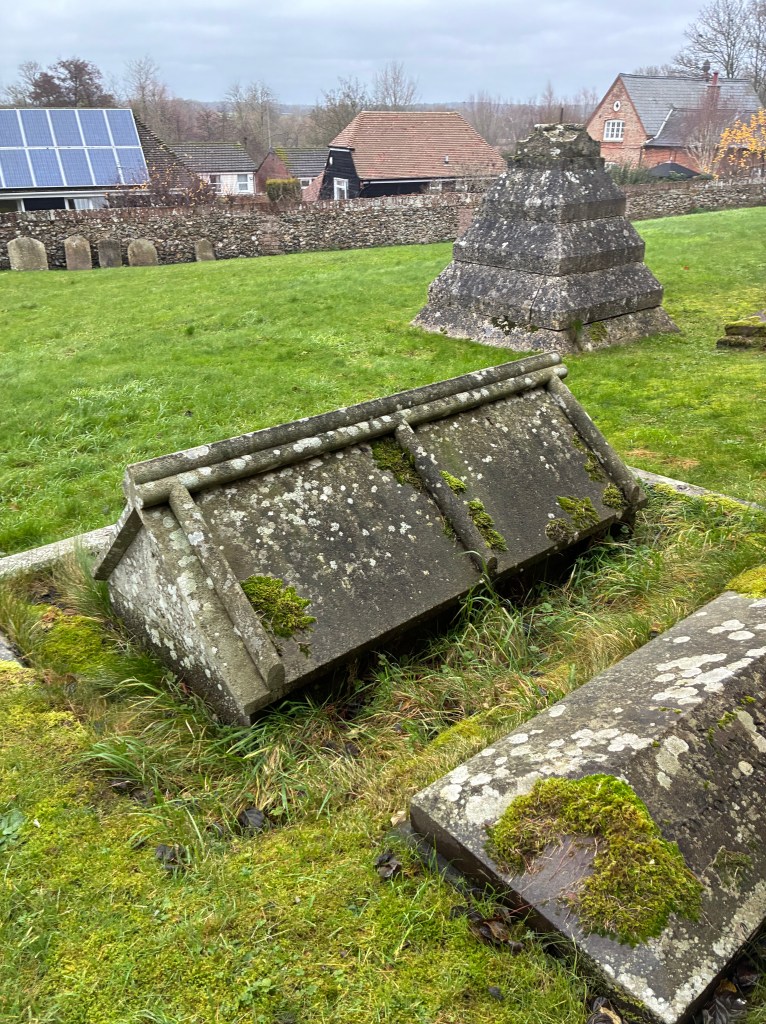
Winterbourne was hanged in Reading Gaol on January 11th 1831. Fulwar had his body returned to Kintbury where he was buried the next day in St Mary’s churchyard and later a grave stone erected. On the stone, Winterbourne is recorded as “William Smith” , Smith being his mother’s name and, as his parents were not married, it was the custom of the time to regard a child’s official surname to be that of the mother.
I think it is difficult for us today to appreciate how very unusual – indeed, practically unheard of – it was then for a labourer such as Winterbourne to have a grave stone. Such would be completely beyond the budget of poorer people and even skilled craftsmen and women and many who today we might consider to be “lower middle class” would not necessarily have a grave stone but be laid to rest in an unmarked plot. Rev Fowle was responsible for Winterbourne’s burial and grave stone in Kintbury churchyard and it would be interesting to know how the rest of the village reacted to what he did.
William winterbourne/Smith’s grave
There has long been a persistent idea locally that Fulwar did this out of a feeling of guilt. I do not believe this to be so and there is absolutely no evidence, as far as I have been able to find, to suggest that Fulwar had any responsibility for the outcome of the trial or felt any guilt as a result of it. I believe his feelings would have been of extreme sorrow.
As a parish priest and also as a magistrate he was a figure of authority in a village where, in common with all of England at this time, everyone was expected to know their place in society, and stick within it. So, if he was known amongst many villagers as “Ol’ Fowle”, as some people believe, this does not signify any particular derision than that which would have been afforded to many other figures of authority or those who had agency over the working people.
On May 26th 1839, Eliza Fowle died at the Kintbury vicarage. She was 71. On March 9th of the following year, Fulwar also died. He was 75. His memorial, over the pulpit in the church describes him as: Pastor, Neighbour, Friend.
The Fowle family grave, St Mary’s churchyard, Kintbury
Fulwar’s death brought to an end nearly 100 years of the Fowle family as priests in Kintbury. Less than thirty years later, the white vicarage mentioned by James Austen in his poem, had gone, to be replaced by a then very fashionable neo gothic house which is still there today.
Elizabeth Caroline lived in Kintbury all her life. When Cassandra Austen died in 1845, she left £1000 and a shawl which had previously belonged to Mrs Jane Fowle to her. Very sadly, Elizabeth Caroline died in a London asylum in 1860.
Mary Jane Dexter, née Fowle, died in 1883 and Isabella Lidderdale, née Fowle, died in 1884, both in Kintbury.
On January 11th every year, people gather in Kintbury church yard to remember William Winterbourne/Smith, the Kintbury Martyr. But for Fulwar, Winterbourne’s grave would be in Reading, not here in Kintbury.
Throughout the year, Janeites ( as those who love the works of Jane Austen are called ) visit Kintbury because of her connections to the village through the Fowle family. Fulwar Craven Fowle is the link between what are often our very different parties of visitors.
And thanks to him we have this charming recollection of the woman he had known as a friend all her life:
” Like a doll……certainly pretty – bright and a good deal of colour in her face – like a doll – no, that would not give at all the right idea for she had so much expression – she was like a child – quite a child, very lively and full of humour.”
Sources:
Jane Austen’s Letters, collected and edited by Deirdre Le Faye, 1996
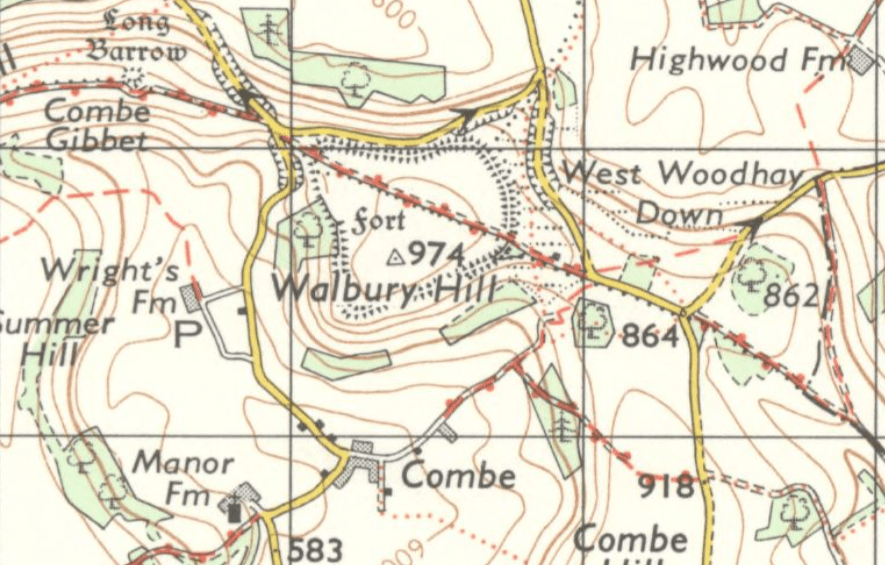
At present I am writing this as I look out at my garden on a particularly hot day. I am in Berkshire, or, if you prefer, Royal Berkshire. Less than three miles from my garden fence is Hampshire and I can look out of my bedroom window at Wiltshire. If I were to stand on my roof, I would see, three miles to the south, Walbury Hill, the highest point on chalk in England.
This wider area is often described as Central Southen England, although I like to think that, in our corner of West Berkshire, we look much more towards the west than towards Reading and the south east.
Berksshire and surrounding counties before 1974
My local authority – the one responsible for emptying our bins, amongst other things – is West Berkshire, based in Newbury. Before 1998, when West Berkshire became a unitary authority, our local authority was Berkshire, based in Reading. The Berkshire, that is, which was considerably smaller than it had been before April 1974, when the Vale of the White Horse in the north of the old shire county was transferred to Oxfordshire, and Berkshire gained Slough, previously in Buckinghamshire.
West Berkshire from 1974 Image:Nilfanion under Commons Licence, accessed from Wikimedia
Some people, with both a sense of history and also an ironic sense of humour, like to call the Vale, “occupied North Berkshire” – a nod to the feeling that Berkshire’s border with Oxfordshire should be along the Thames as it had been for hundreds of years.
The Upper Thames: The Berkshire/Oxfordshire border? Or perhaps the frontier between Wessex & Mercia?
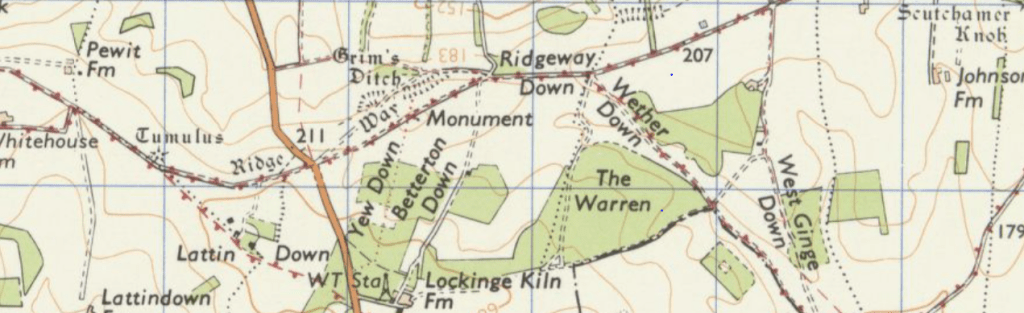
However, very soon our local authority will be changing yet again. It may, although at the time of writing, this has not yet been confirmed, be known as Ridgeway, named for the prehistoric track that runs east to west across the Berkshire Downs. The Berkshire Downs, that is to say, the downs currently partly in Oxfordshire after Vale of White Horse – formerly in north Berkshire – was transferred to Oxfordshire following the local government reorganisation in 1974.
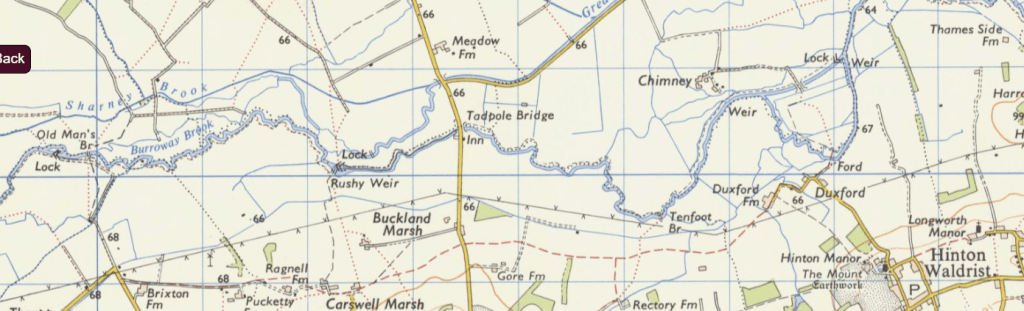
The Ridgeway on the OS map
So, when – and if – we become “Ridgeway”, our devolved local authority will once more include the Vale, although people living there – for example in Uffington – will still be in Oxfordshire as far as their postal address is concerned. Furthermore, the Thames will once more become the border between our local authority and whatever the devolved authorites to the north are finally called.
Confusing? Definitely. But this is definitely not new.
To consider the long view – the very long view – we need to travel back in time over two thousand five hundred years to the Iron Age. The hill fort on Walbury Hill – which I mentioned in my opening paragraph -is home to people known to the Romans as the Atrebates. We will never know how they identified themselves because the Atrebates did not have a written culture but valued committing ideas and stories to memory instead.
If a man or woman from that hill fort were to stand on the highest point of Walbury Hill and look across the Kennet Valley, all the territory below would, perhaps reassuringly, belong to their tribe. In the far distance to the north west, was the territory of the Dobunni, and to the distant south, the Belgae. Of course there was no signage back then; no, “You are entering the territory of the Atrebates” although the locals may well have known that a particular river or ditch marked the boundary between Us and Them. Indeed, the very existance of a hill fort on a prominent ridge would have of itself made a statement visible for miles around.
Emil Reich Map by Emil Reich. Under Commons Licence accessed from Wikimedia
Our area at the time of the Romans. Spinae may be modern day Speen and Cunetio is near modern day Marlborough
The arrival of the Romans in Britain around 55 BC brought some obvious changes. For the people of the Atrebates, their tribal centre at Calleva, ( modern day Silchester ) became an important Roman town. In the valley below Walbury Hill, the construction of the road to Aqua Sulis ( the Roman name for Bath ) would have seen an increase in traffic. Villas appeared in the landscape, as at Kintbury. Trade with the newcomers meant an increased variety of foods and other goods.
We do not know for sure if anyone was still living in the hill fort on Walbury Hill when the Romans arrived. We do not know, for sure, if any Iron Age man or woman, standing on the highest point on chalk in southern Britain, would have felt threatened by the increasing presence of the Romans in the valley below. We do know that it has to be likely that many Iron Age Celts continued to live pretty much as they had done before Caesar landed in Kent and continued to do so long after.
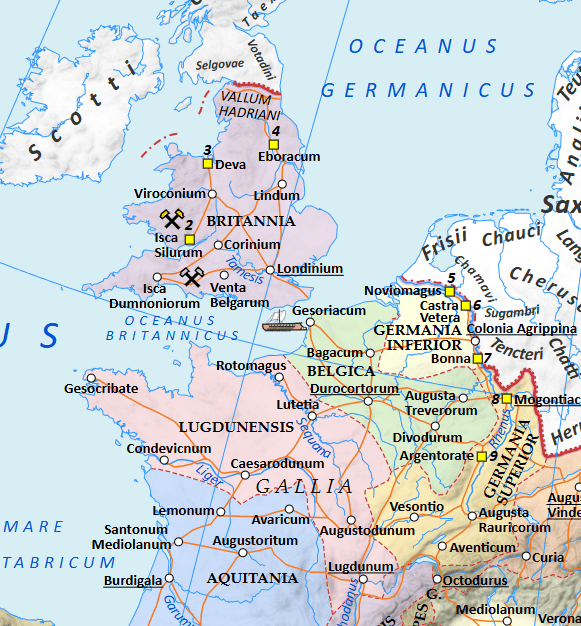
Roman province of Britannia. (Map of the Historical Atlas of Gustav Droysen, 1886) Under Commons Licence accessed from Wikimedia
It may well be that, being impressed by the site of Roman soldiers marching through the valley below, young Iron Age Britons were persuaded to join up. As Roman soldiers and with the promise of Roman citizenship after a long period in military service, they would have identified as Roman. Perhaps they would have served in the north of the country or even abroad and maybe they began to view the world below and beyond Walbury Hill as part of something greater – as part of the Roman Empire. We will never know for sure, but, human nature being as it is, this has to be a possibility.
Part of North West Roman Empire
Fast forward some four or five hundred years. On a clear day it might have been possible to spot some activity in the valley below Walbury just to the west of what is now Inkpen.
Director General of the Ordnance Survey, UK. Under Commons Licence accessed from Wikimedia
To the left – or west – of the map above, “Wodnes Dic” is the earth work we know today as the Wansdyke. The crossed swords symbols at Ellandun, Beranburgh and Bedwyn indicate that this area sawconflictds during this period, known as the “Dark Ages”.
Part of OS map showing Inkpen and the eastern end of the Wansdyke
If you look carefully at modern editions of the OS map for this area, and you will see a track running north to south and just to the east of Lower Spray Farm, Inkpen, at grid reference SU 35170 63746. This is Old Dyke Lane, marked on the map as an earthwork and as a scheduled ancient monument.
Despite the name “dyke”, Old Dyke Lane has nothing to do with drainage, neither is it a scheduled ancient monument just because it is a lane. On some maps, Old Dyke Lane also has the word, “Wansdyke” printed in Old English script, which gives a clue to its historic importance.
The Inkpen section of the Wansdyke is in fact the very eastern end of “Woden’s Dic” – defensive ditch and bank running all the way from Portishead near Bristol, right across Wiltshire and concluding just over the border in what is now Berkshire. In places the bank is at least 4 meters high with the ditch being 2.5 meters deep although when first constructed it is likely to have been both higher and deeper. As the ditch is on the north side of the bank, it is likely that the Wansdyke was built by those living to the south of it for defence against those living to the north.
When first constructed, the bank may have had wooded revetments and a walkway; certainly the chalk of the freshly constructed bank would have been bright white, making a definite statement in the landscape and very likely visible from the hills above.
Constructing such a defensive work as this, at a time when there were only primitive excavation tools available, must have been a colossal feat, so who would have been responsible and whom were they defending themselves against?
There had been suggestions that the Wansdyke was constructed by the Romans but now this idea has been challenged. However, although Roman authority departed Britain around 410 C.E., that did not mean that every last Roman marched to Dover, waved goodbye and got on a boat heading to Italy. By the early fifth century, many who had originally arrived with the Roman army had formed relationships with the indigenous Britons whose culture and way of life had endured despite the occupation. So, by the fifth century, many people could be described as “Romano-British”.
There are, of course, very few written documents from this period of British history and what there are were written by clerics and the religious. Gildas was a monk writing in the 6th century CE and a very early chronicler of British history – although not necessarily a very accurate one.
Gildas believed the Wansdyke was constructed by one Ambrosius Aurelianus, a fifth century Romano-British military leader who fought against the Anglo Saxons as they advancing towards the south west from the north.
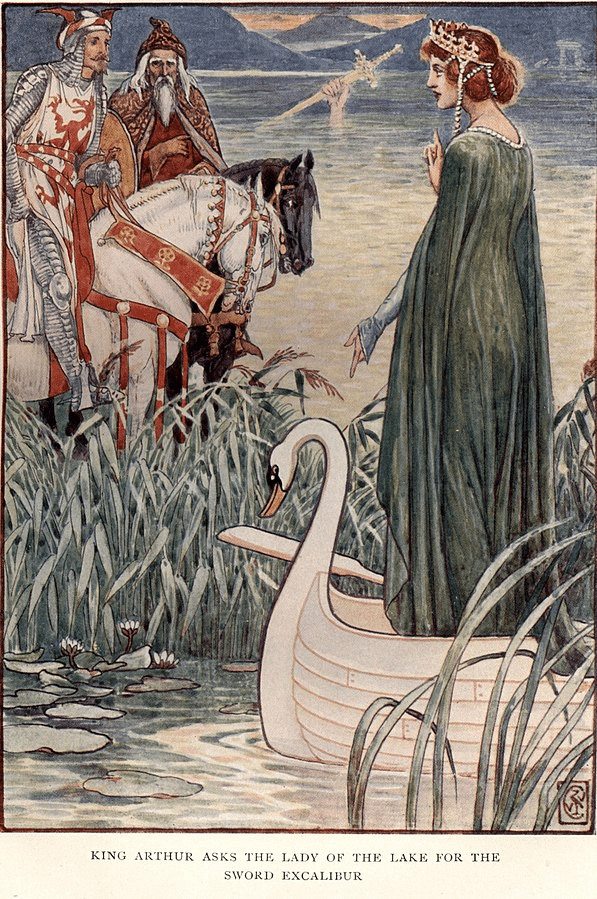
The Welsh cleric, Geoffrey of Monmouth was an eleventh century historian with a particular interest in the Arthurian legend. He elaborated on the story of Ambrosius Aurelianus, describing him as the uncle of King Arthur, no less.
King Arthur Asks the Lady of the Lake for the Sword Excalibur, illustration by Walter Crane. Under Commons Licence, Accessed from Wikimedia
It is, of course, completely fanciful to think of the Wansdyke as having any connection – even remotely – with King Arthur. However, it may well have been constructed in the Dark Ages – the time in which the Arthurian legends are set – by Romano- British people as defence against aggression coming from the north.
Alternatively, some archaeologists believe that the Wansdyke could have been constructed in the 8th century by West Saxons as a defence against the Mercians, attacking from the area of the River Severn and Avon Valley.
We can – almost – be certain that the section of the Wansdyke in this area would have been constructed, at least in part, by local people who would have felt the need to defend themselves. Whether those people would have indentified as Romano-British or West Saxon, we shall popbably never know but we can deduce that they felt the need to construct a defensive border to define and defend their territory.
By the 6th century CE, the Anglo-Saxons – incomers from the European mainland – were the dominant authority in what is now England. In our part of the country, that is to say the south and south west, it was the West Saxons who held sway, and our area came to be known as Wessex. For most of this period, the River Thames was the border between Wessex and the Saxon kingdom of Mercia which stretched up into the Midlands.
Cross-border relationships were tense: leaders on each side wanted hegemony over the other Saxon kingdom, and there were frequent battles. A West Saxon person, standing on Walbury Hill and looking northwards, could have regarded the distant hills as enemy territory, to be defended. However a decisive engagement is believed to have come in 825 when Ecgberht of Wessex defeated Beornwulf of Mercia at the Battle of Ellendun, near what is now Wroughton in modern day Wiltshire.
Although relations between those identifying as West Saxons and the Mercians north of the Thames might have become more peaceful, there was to be another potential threat.
The Vikings had begun to invade and attack towns and villages on the north east coast of what is now England in the late 8th century. The term, “Viking” means pirate or raider and is often used to describe any raiders from what is now regarded as Scandinavia. The raiders from Scandinavia who attacked Wessex in 871 are more accurately referred to as Danes and these are the invaders defeated by (almost) local man, King Alfred at the Battle of Ashdown in 871.
“King Alfred” Photo: Bill Nichols Under Common Licence accessed from Wikimedia
Alfred had been born in Wantage – or Wandesiege as he would have known it – sixteen miles to the north of Kintbury across the downs, in 849. As well as effectively seeing off the Danish threat, King Alfred did much to improve standards of literacy and education in his kingdom and also revised the legal system. He remains the only British monarch to be known as, “the Great.”
By the beginning of the tenth century, a man or woman standing on Walbury Hill would have been looking at Wessex to the north, to the south, to the east and to the west. Now the Kingdom of Wessex was one of the most powerful in what was being called Enga land.
Anglo Saxon Wessex: Informatiion based on Hill, An Atlas of Anglo-Saxon England Under Common Licence accessed from Wikimedia
The Saxons were responsible for dividing up the country into administrative areas we know today as counties. Berkshire exists from sometime in the 9th century.
Berkshire in the 17th century. National Library of Scotland
By the Norman conquest, I think it is safe to say Berkshire was a county of size and shape we could identify at least as looking something like the pre 1974 county. However, the final details were not set in stone.
Detail from map of Berkshire, 1830, by Sidney Hall. Note Shalbourn & Oxenwood shown as being in Berkshire (National Library of Scotland)
The 1894 Local Government Act resulted in some smaller towns and villages moving from one authority to another. (See my earlier post, “Where in the world is Combe?”)
Until 1894, the border between Berkshire and Hampshire ran across Walbury Hill. Combe Gibbet was just inside Hampshire as was the village of Combe. The intention of the Local Government act was to enable the public – by which was meant certain men over 21 – to vote for local and district councillors. Districts were defined by a consideration of certain factors which included not only population but proximity to magistrates courts, banks and poor law unions ( or workhouses.) And so it was decided that for Combe, Hungerford in Berkshire was nearer and more convenient than Kingsclere in Hampshire. The boundary was redrawn therefore, so that Combe and Walbury Hill, along with Combe Gibbet, should be in Berkshire.
But, as far as I am aware, none of these changes were accompanied by violence. In 1894 the good burghers of Charnham Street, Hungerford did not have to defend themselves against Berkshire taking it by force from Wiltshire. And no one in Combe sharpened their pike staffs and marched up Walbury Hill to repel similar forces from Inkpen and Kintbury.
Although the redrawn border between Hampshire and Berkshire was not done for defensive purposes, certain measures taken in 1940 definitely were.
Part of OS map, 1945 showing defences of Britain
After the defeat at Dunkirk in 1940, Britain faced the severe threat of invasion. Plans were made to delay the German forces should they actually invade, to which end a series of defensive constructions were eventually built which included concrete “pill boxes” at locations along the Kennet & Avon – known as “Stop Line Blue” – and also the Thames. They would be manned by Local Defence Volunteers – men unable for whatever reason to join the regular forces but who could contribute to defence.
Thankfully, there was never an invasion during World War II and so the pill boxes were never used to defend a border. But it is a chilling thought that, if an invasion had been succesful, the Kennet & Avon canal, or even the Thames, could have become the border between a free England and the occupied sector.
Interestingly, the name Wessex has endured even though Alfred’s Kingdom has long gone. It is as if many of us still take a kind of atavistic pride in living in what was once a very powerful part of England – and perhaps also a very beautiful one. I believe the novelist Thomas Hardy was in part responsible for the resurgence of Wessex as an idea, if not strictly a geographic location, when he used it as locations in his novels.
Speaking for myself, I quite like the name “Ridgeway” and I hope that is what our authority will be called. Alternatively, I rather like “North Wessex” as Thomas Hardy called this area in his novels. But whether we are Wessex or Ridgeway, West Berkshire or Royal Berkshire, Walbury Hill – our highest point in chalk in England – will still be there, and the White Horse will still be galloping over the downs above the vale
White Horse from the air: Dan Huby Under Commons Licence .accessed from Wikimedia
In this article, Ellen Lock Ireland discusses Jane Auten’s close relationship with friends and extended family in Kintbury.
The Old Vicarage in Kintbury
Similarly to the way in which we meet the families in Jane Austen’s novels (the Bennets, Bingleys, Dashwoods, Morlands, Bertrams etc), we can get to know a real life Kintbury family through her letters to her sister. As Jane herself says “the true art of letter writing…is to express on paper exactly what one would say to the same person by word of mouth…”
Jane Austen’s writing table
The protagonist family in Kintbury’s particular local story, which we might call “Kin and Kintbury”, are, of course, the Fowles, a dynasty of local vicars. The two families first becoming acquainted when George Austen met Thomas Fowle Senior during their university days at Oxford. The relationship was solidified for the next generation when Thomas Fowle sent his sons Fulwar, Thomas, William and Charles to study with George at the Steventon rectory prior to their going to university. Studying and living in the same house alongside the Austen children inevitably resulted in lifelong friendships.
The closeness of these two families is reflected in the fond memories shared by James Austen in his poem, Lines written at Kintbury- May1812:
“And still in my mind’s eye methinks I see
The village pastor’s cheerful family.
The father grave, yet oft with humour dry
Producing the quaint jest or shrewd reply;
The busy bustling mother who like Eve,
Would ever and anon the circle leave,
Her mind on hospitable thoughts intent;
Careful domestic blunders to prevent.
And ever ready on her guests to pour
The corner beaufet’s rich and savoury store.
While yet a gayer group, 4 manly boys
Heightened the relish of domestic joys
Of future happiness gave promise fair”
James Austen
As we know, Fulwar became Vicar at Kintbury in 1798, taking on the role from his father Thomas. As a fan of Jane’s fictional clergy, it is perhaps gratifying to read her description of Fulwar’s response to a less than successful card game session of 1801, reporting to Cassandra “We played at Vignt-un, which as Fulwar was unsuccessful, gave him an opportunity to expose himself as usual”. Fortunately, perhaps, for Fulwar’s legacy, the plaque installed in his memory leaves a somewhat more positive impression for posterity, stating that it was commissioned “by the parishioners of Kintbury, in testimony of their respect and affection for him as their pastor, friend and neighbour”.
Rev Fulwar Craven Fowle
Fulwar’s wife, Eliza, nee Lloyd, also features in frequent subplots in Austen’s letters, with Jane impatient for news of the familial goings on in her life, for example complaining to Cassandra prior to the birth of one of Eliza and Fulwar’s children in 1798 “No news from Kintbury yet- Eliza sports with our impatience! She was very well last Thursday…”
A letter addressed to the vicarage at Kintbury
In a letter of 1801, Jane provides us with a less than flattering impression of Eliza, telling Cassandra “Eliza says she is quite well, but she is thinner than when we saw her last, & not in very good looks. I suppose she has not recovered from the effects of her illness in December.- She cuts her hair too short over her forehead, & and does not wear her cap far enough upon her head- in spite of these many disadvantages however, I can still admire her beauty.”
As well as being the wife of an old family friend, Eliza also had the familial claim, not only as the sister of Jane’s brother James’ wife, but also the sister of her particular friend Martha Lloyd, whom Jane once described as “the friend and sister under every circumstance”. Martha is known to have lived with Jane, Cassandra and their mother in various residences including those in Southampton and Chawton. The close bond is reminiscent of that between sisters, with Jane complaining in jest to Cassandra “I would not let Martha read First Impressions again upon any account…she means to publish it from Memory, & one more perusal must enable her to do it.”
The close bond between the families is further highlighted at times of personal tragedy. Following the death of Edward Austen-Knight’s wife Elizabeth, in 1808, Jane wrote to Cassandra of Eliza’s correspondence to her, quoting Eliza’s own words “A very kind and feeling letter is arrived today from Kintbury. Mrs. Fowle’s sympathy and solicitude on such an occasion you will be able to do justice to, and express it as she wishes to my bother. Concerning you, she says “Cassandra will, I know, excuse my writing to her; it is not to save myself but her that I omit so doing. Give my best, my kindest love to her, and tell her that I feel for her as I know she would for me on the same occasion, and that I most sincerely hope her health will not suffer”.
West door of St Mary’s, Kintbury
Just as the Fowle and Austen family links survived into a second generation, Jane and her family eagerly concerned themselves with the development and news of Fulwar and Eliza’s growing family. The couple, in total, welcomed 8 children, Fulwar-William, Mary Jane, Thomas, Caroline Elizabeth, who sadly died in her first year, Elizabeth Caroline, Isabella, Charles and Henry.
As with the families in her novels, Jane provides us with a vivid image of various interactions and her opinions of her friends’ children:
Fulwar William, the eldest, is described by Jane as “attentive” and “affectionate”, although Jane seems to have difficulty keeping track of his age, commenting to Cassandra that he “is actually 14, what are we to do?”
During one family gathering, Jane recalls her impressions of various of the Fowle clan, telling Cassandra,
“William & Tom are much as usual; Caroline” (who we also learn was Christened by James Austen in 1799 , “is improved in her person; I think her now really a pretty Child. She is still very shy, & does not talk much.”
As is a theme in Jane’s novels, another, perhaps more distant, character of interest in Jane’s letters regarding the Fowle family is Fulwar’s distant relative, Lord Craven, the token member of the landed gentry in our story, whose far reaching impact is felt closer to home.
Jane informs Cassandra that “Eliza has seen Lord Craven at Barton, and probably by this time at Kintbury, where he was expected for one day this week.”
Jane eagerly seizes on the opportunity to relish in the gentleman’s foibles, telling Cassandra that Eliza “found his manners very pleasing indeed. The little flaw of having a Mistress now living with him at Ashdown Park, seems to be the only unpleasing circumstance about him.”
Let us not forget, of course, Lord Craven’s most lasting impact on the two families. In a seeming act of generosity, Lord Craven appointed Tom Fowle, Fulwar’s brother and by this time Cassandra Austen’s fiance, to the role of domestic chaplain, a role which would see Tom travel to the West Indies with his kinsman, where he sadly contracted yellow fever and died.
When reading “Mansfield Park” in this context, what is striking is that Jane Austen writes about a Tom, who is sent to The West Indies, during which time there is much fear around the dangers of such a trip, and speculation that he may not return. The marked difference is, of course, that in her fictional world, Jane Austen was able to ensure that her Tom returned home safe and sound, when in reality, sadly, our Tom could not. Movingly, as was the case for Cassandra in real life, Tom in Jane’s fictional world, remains unmarried.
Cassandra Austen
As discovered above, there is much more to the Austen family connection with Kintbury than originally meets the eye and, as a life long Janite local to the village, it is fascinating to continue to explore this. To leave the last word to Miss Jane Austen herself:
“It is pleasing to be among people who know one’s connections and care about them” (June 1808).
When we are writing about local people, particularly those who lived over a hundred years ago, it is almost impossible to know exactly what they looked like or to find a photo or painting of them. This is not the case with the man responsible for the building of Denford House, William Hallett. Shortly before his marriage in 1785, Hallett and his bride-to-be, Elizabeth Stephens, were painted by the renowned and fashionable portrait painter, Thomas Gainsborough.
So who was William Hallett?
William Hallett III was born in Soho Square, a fashionable area of Westminster, Middlesex, in 1764. His father, William II died when he was three years old so the younger William was brought up by his grandfather, William Hallett I, a successful and highly fashionable cabinet maker. When this William died in 1782, William III inherited the house and estate at Canons, Middlesex, which his grandfather had had built on land he had purchased from the Duke of Chandos. The Halletts clearly moved in the first circle of Georgian society.
At this time, William III was still legally a minor, being under the age of 21. Like many young men of his class and back ground at that time, William next chose to embark on the “Grand Tour”- taking a year or more to travel through France and Italy to learn more about classical art and architecture. Also, presumably, having a good time along the way.
On his return to England, William became betrothed to Elizabeth Stephens, the daughter of a surgeon. Before their marriage in 1785, the couple chose to have their portrait painted by the very fashionable portrait painter Thomas Gainsborough who had arrived on the London scene some ten years earlier.
Thomas Gainsborough
Thomas Gainsborough had previously lived and worked in Bath, where, despite his preference for painting landscapes, he had gained a reputation for his portraits of the elegant upper classes. In his works, in what was known as the “nouvelle style”, Gainsborough’s subjects are always elegantly dressed in a neo-classical style characterised to the modern eye by bewigged gentlemen and flowing silk dresses worn by the ladies. Dogs and occasionally horses feature, as well. Perhaps Gainsborough’s best known painting is his double portrait of “Mr & Mrs Andrews”, a work which provided a show case for the wealthy young couple – the beautiful people of their age.
Mr & Mrs Andrews
A portrait by Gainsborough made a statement of one’s status and wealth. The painting of the Halletts – known as “Mr & Mrs Hallett: The morning walk” cost £126 and includes their dog; Gainsborough charged extra if a horse was to feature in the painting, apparently.
Although £126 might have seemed an absolute fortune to the majority of England’s population in 1785, it was nothing to the Halletts – on her marriage to William, Elizabeth Stephens had a personal fortune of £20,000. It could have been that this was particularly fortuitous for her new husband – William was fond of expensive and risky sports such as racing, betting and gambling which, it was believed, ultimately contributed to his downfall.
Little Wittenham
In 1788, William Hallett bought the manor of Little Wittenham, a village in what was then Old Berkshire, ten miles to the south of Oxford. Two years later, however, after having had much of the original Little Wittenham manor house pulled down and rebuilt, the Halletts moved on. Their next seat was on the edge of Faringdon, a market town twenty miles to the west in what was then north west Berkshire. At the confluence of several coaching roads, Faringdon offered relatively easy access to both London and Bath, something that must have been a consideration for a society couple.
Built around 1780 and so a modern residence at the time, Faringdon House is in the Palladian style and set on a ridge above the Vale of the White Horse with spectacular views to the north over the upper Thames Valley and into the Cotswolds beyond. The Vale of the White Horse is also famed as fox hunting country which must have appealed to Hallett with his love of the sport.
Fox hunting: A popular sport
The Halletts may have felt that their new home confirmed their position within the affluent upper-classes of Georgian England as they continued to live in Faringdon for the next twenty years and four of their children were born there.
There is evidence to suggest, however, that William continued to build what today might be called his property portfolio; he may even have owned, at one time, Avebury Manor, now the property of the National Trust in Wiltshire, as well as other properties across the south.
By 1810, William Hallett had bought Townhill, a manor house in South Stoneham, Hampshire. The same year he also bought Denford Park, just two miles from Kintbury on the Bath Road. Just as he had done at Wittenham, it seems that Hallett had the existing house demolished – or demolished in part – and rebuilt, using some of the architectural features he had taken from his property in South Stoneham which he had also partly demolished and rebuilt. Work on the house at Denford Park was completed in 1832 and the principal architect was Sir Jeffry Wyattville.
Neither Denford Park nor the property at South Stoneham proved to be sound investments for Hallett who lost money on both as well as quarrelling, as a result, with his son, William IV. The Halletts eventually moved to a another newly built property , Candys, at South Stoneham.
Hallett did not stay long at the newly built Denford House, indeed, rebuilding and moving on seems to have been the pattern of his life with the exception of Faringdon House. However, Denford Park remains an imposing and important property within the Kintbury and Hungerford area. It was sold for £32,026 12s in 1822 when it was bought by George Henry Cherry, a local magistrate and sometime High Sheriff of Berkshire. It remained in the Cherry family until 1913.
More recently, between 1967 and 2002, Denford Park was home to the world famous Norland Nursery Training College. It is now once more in private ownership.
However, Denford Park is not the Halletts only connection with the Kintbury area. William & Elizabeth’s daughter, Emily Hallett had been born in Faringdon in 1879. It is not known if she ever lived at Denford Park herself but it has to be likely as, on 27th March 1819, she married Kintbury’s Fulwar William Fowle at St Mary’s church, Kintbury.
Fulwar William Fowle followed his father, grandfather and great grandfather into the church; following graduation from Merton College, Oxford, he was ordained deacon in 1814 and priest in 1816. He became rector of Allington, near Salisbury, in Wiltshire in 1816 and perpetual curate of Amesbury, Wiltshire in 1817.
For Emily Hallett, growing up in the modern elegance of a Faringdon House or Denford Park, living in the Allington Rectory must have been quite different. Although the Rev Fuwar William was quite well connected, particularly to the Lords Craven, and his family members would have moved within the upper circles of society, life in the rural rectory might have been grand by comparison to that of the labouring villagers but nothing like living in a Palladian mansion.
Emily and Fulwar lived all their married life at Allington. They had eleven children together, of which nine survived although Emily died soon after the birth of the last one in 1833. Her mother, Elizabeth Hallett, died the same year.
William Hallett died in 1842. By this time he had lost much of his money and so there was little that could be passed on to his descendants. Interestingly, son-in-law Fulwar William was bequeathed Hallett’s religious books – strange, perhaps, as in his life Hallett himself seemed to have more interest in sport and gambling than in things spiritual
The Gainsborough portrait, for which William Hallett paid £126, was bought by the National Gallery in 1954. It cost the gallery £30, 000 and is still on display in London.
He had been at the pains of consulting Mr. Perry, the apothecary, on the subject. Mr. Perry was an intelligent, gentlemanlike man, whose frequent visits were one of the comforts of Mr. Woodhouse’s life.
As readers of Jane Austen’s novel Emma (1816) will know, the village medic, Mr Perry, was an important figure in the life of Mr Woodhouse who was constantly in need of reassurance as regards to his health. Austen describes Mr Perry as an apothecary; however, by the 1830s the Mr Woodhouses of Kintbury might have considered themselves as more fortunate as their general practitioner could be described as “surgeon”.
So who was Kintbury’s Dr Lidderdale?
John Lidderdale I had been born in Hungerford in 1802. He was the eldest son of Captain John Lidderdale of Hungerford and his wife, Ann, née Pearce. John senior had been a Captain in the 17th Hussars and his family had come, originally, from Dumfriesshire in Scotland. Ann was from a local family, having been born in Standen, near Hungerford.
In the 1820s John was a student at the London Hospital Medical College, at that time still a relatively new establishment, having been founded in 1785. He became LSA ( Licensed Surgical Assistant ) in 1825 then MRCS ( Member of the Royal College of Surgeons ) in 1826. Studying medicine at that time was expensive and John’s fees, board and lodgings may have cost him between £500 and £1000 – enormous amounts for the time. It was not as if he could expect to become a high earner upon qualifying, either; whilst a medic practising in a wealthy part of London, for example, might earn up to £1000 a year, a country doctor was more likely to make between £150 and £200, comparable to better-paid teachers.
By 1839, John is listed in Robson’s Directory as surgeon and registrar of births and deaths for the Kintbury district. At the time of the 1841 census, his younger brother James is living with him, most probably in the role of an apprentice as James would later go on to study medicine.
Four years later, John married Isabella Fowle, the youngest daughter of the late Fulwar Craven Fowle who had been for many years the vicar of Kintbury. Although it is impossible to say how prosperous or otherwise the Kintbury practice was proving to be, the 1851 census indicates that John has an apprentice, one Francis Owen, and three live-in servants. By 1861, he has an assistant, one Michael Cuff, and two live- in servants. The same year he was awarded the degree of MD ( Doctor of Medicine ) by the University of St Andrews – the prestigious Scottish university which at this time awarded the degree of MD without the recipients having to attend its campus on the Fife coast.
John Lidderdale died in October 1863. His obituary in the Newbury Weekly News noted,
“ Few men had so extensive a practice as the late doctor, and none worked harder for it. His kindness of manner, his skill and attention, and his patience in tedious cases, will ever be gratefully remembered”.
Large numbers of villagers filled the church for the funeral including many tradesmen who had closed their shops for the occasion. Kintbury certainly showed its respect for the late doctor.
However, where was this popular doctor in the strict social hierarchy of early nineteenth century England? Looking again at the Jane Austen quote I used at the top of this article, the respected Mr Perry is described as gentlemanlike. That last syllable carries a lot of weight: for as much as Perry was respected, he was not, within the hierarchy of the time, a gentleman.
And neither was Dr John Lidderdale.
The Kelly’s Directory of 1848 lists 19 Kintbury people as members of the Gentry which includes Mrs Lidderdale’s unmarried sister, Elizabeth Caroline Fowle and her widowed sister, Mary Jane Dexter. But the man who has achieved the recognition of an MRCS, who is trusted to take care of the villagers’ health, is regarded as being of lower status than the great and the good many of whom were most probably not qualified in anything.
By the time of the 1871 census, Kintbury had a new doctor. Also named John Lidderdale, this young man was the son of the John Lidderdale I’s brother, William.
William Lidderdale had been born in Hungerford in 1805. It seems likely that he had an involvement with the East India Company in his younger adult years although by 1851 he was a Chief Officer with the Coast Guard Agency living in Tyneham and then Osmington Mills, Dorset where his wife Elizabeth died in 1852.
John Lidderdale II had been born in 1839 when the family were in Ilford, Essex, then educated at a boarding school in Southampton. The 1861 census shows him to be a medical student in London although there is some evidence to suggest he had been an apprentice in Kintbury before that, presumably under his uncle. In 1861 he became a Member of the Royal College of Surgeons.
In 1863, the Board of Guardians of the Hungerford Union (in other words, those responsible for the work house ) unanimously voted him Medical Officer of the Kintbury District.
John Lidderdale II served Kintbury as general practitioner for over twenty years. These were changing times: by 1869, Kelly’s Directory had dropped the category, “Gentry” in favour of “Private Residents” in which category both John Lidderdale and his uncle’s widow, Mrs Lidderdale are included.
John Lidderdale retired in 1891 when he married Emma Louisa Mathews, the widow of a farmer from Boxford. To mark this occasion, Dr Lidderdale, “entertained to supper the whole of the adult population ( of Kintbury ), it taking two evenings to do so, and subsequently gave a tea to all juveniles aged between five and sixteen.”
To show their respect to the retiring doctor, 433 of the villagers had subscribed to the cost of a solid silver epergne engraved with the Lidderdale crest.
Both John Lidderdales are frequently mentioned in the pages of the Newbury Weekly News with regards to the sick or injured they have attended during their times as general practitioners in Kintbury. For as much as one can tell, neither were particularly involved in public life, however the reports of their respective funerals show that both had earned the respect and appreciation of village’s working people.
John Lidderdale II died in April 1894. According to the Newbury Weekly News he was remembered as, “ a kind neighbour, devoted friend and approachable councillor.”
Isabella Lidderdale, widow of John Lidderdale II continued to live in Kintbury until her death in 1884. Isabella had lived in Kintbury through times of great social change and also has the distinction of having been, quite probably, the very last village person to have known Jane Austen personally.
William Lidderdale, father to John Lidderdale II, died in Newbury in 1881 but was buried in Osmington, Dorset along with his wife.
Charles Lidderdale, brother of John Lidderdale I became an actuary of the Sun Life Assurance Company but died in Hungerford in 1863.
James Lidderdale, brother of John Lidderdale I, practised as a GP in Great Bedwyn, Wiltshire and died in 1882.
Emma Louisa Lidderdale, widow of John Lidderdale II, continued to live in Kintbury until her death in 1920. The village’s long association with the Lidderdale family had come to an end.
Sources:
The origin of the general practitioner I. S. L. LOUDON, DM, FRCGP, DRCOG Wellcome Research Fellow, University of Oxford, and Honorary Archivist, Royal College of General Practitioners
Journal of the Royal College of General Practitioners, January 1983