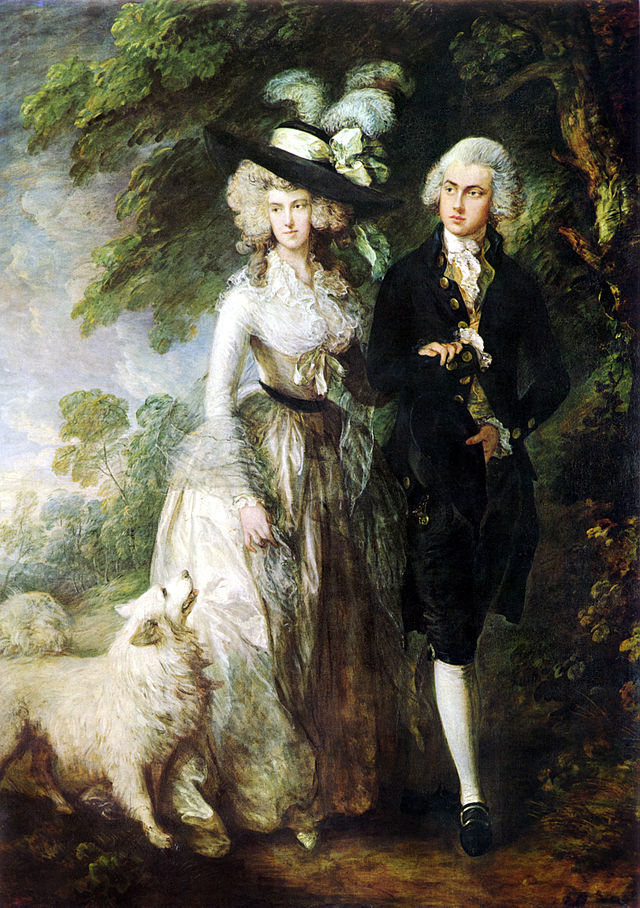
When we are writing about local people, particularly those who lived over a hundred years ago, it is almost impossible to know exactly what they looked like or to find a photo or painting of them. This is not the case with the man responsible for the building of Denford House, William Hallett. Shortly before his marriage in 1785, Hallett and his bride-to-be, Elizabeth Stephens, were painted by the renowned and fashionable portrait painter, Thomas Gainsborough.
So who was William Hallett?
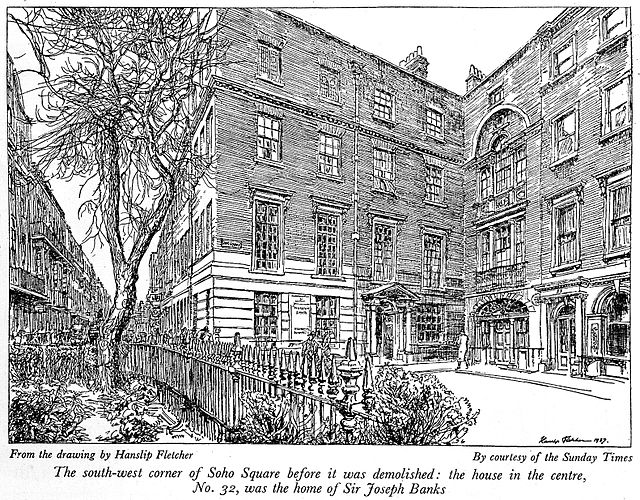
William Hallett III was born in Soho Square, a fashionable area of Westminster, Middlesex, in 1764. His father, William II died when he was three years old so the younger William was brought up by his grandfather, William Hallett I, a successful and highly fashionable cabinet maker. When this William died in 1782, William III inherited the house and estate at Canons, Middlesex, which his grandfather had had built on land he had purchased from the Duke of Chandos. The Halletts clearly moved in the first circle of Georgian society.
At this time, William III was still legally a minor, being under the age of 21. Like many young men of his class and back ground at that time, William next chose to embark on the “Grand Tour”- taking a year or more to travel through France and Italy to learn more about classical art and architecture. Also, presumably, having a good time along the way.
On his return to England, William became betrothed to Elizabeth Stephens, the daughter of a surgeon. Before their marriage in 1785, the couple chose to have their portrait painted by the very fashionable portrait painter Thomas Gainsborough who had arrived on the London scene some ten years earlier.
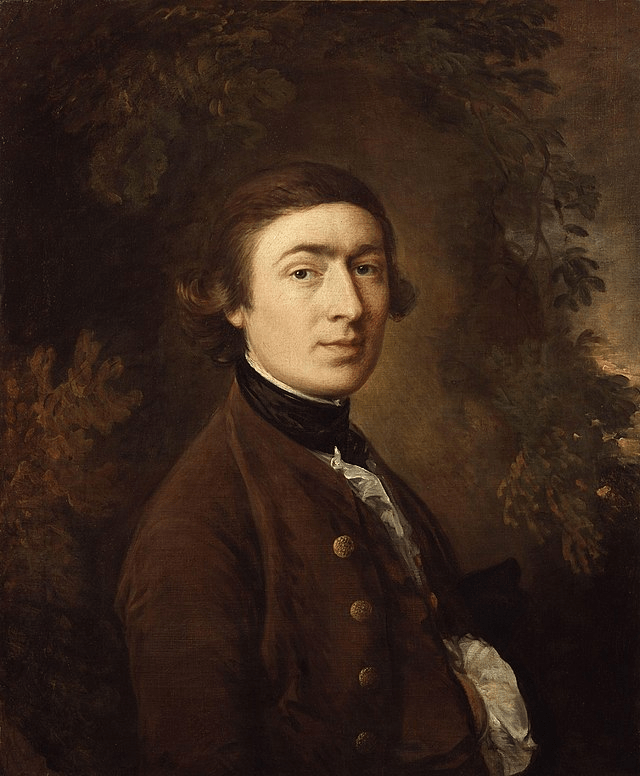
Thomas Gainsborough had previously lived and worked in Bath, where, despite his preference for painting landscapes, he had gained a reputation for his portraits of the elegant upper classes. In his works, in what was known as the “nouvelle style”, Gainsborough’s subjects are always elegantly dressed in a neo-classical style characterised to the modern eye by bewigged gentlemen and flowing silk dresses worn by the ladies. Dogs and occasionally horses feature, as well. Perhaps Gainsborough’s best known painting is his double portrait of “Mr & Mrs Andrews”, a work which provided a show case for the wealthy young couple – the beautiful people of their age.
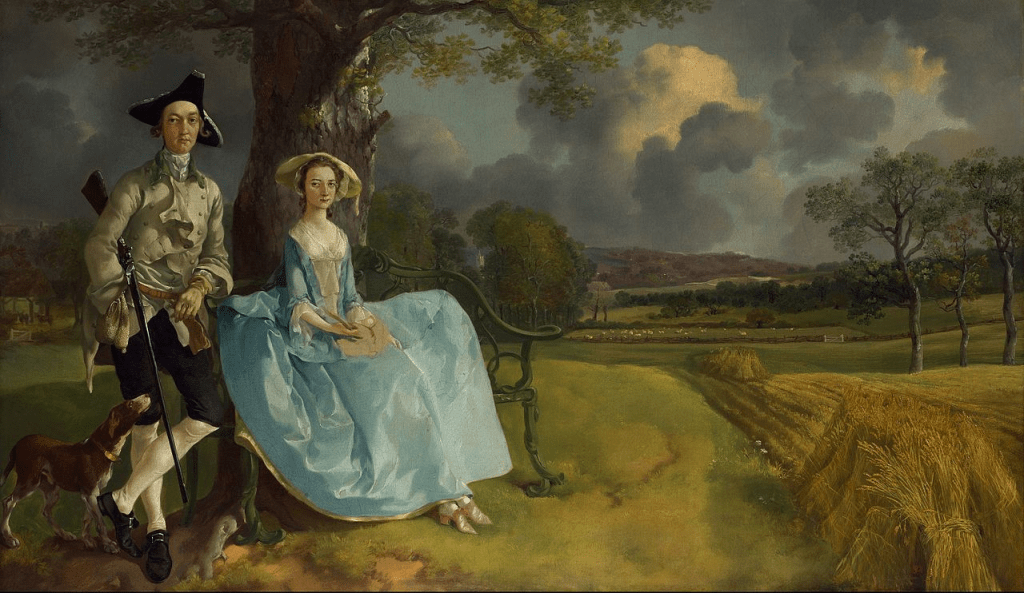
A portrait by Gainsborough made a statement of one’s status and wealth. The painting of the Halletts – known as “Mr & Mrs Hallett: The morning walk” cost £126 and includes their dog; Gainsborough charged extra if a horse was to feature in the painting, apparently.
Although £126 might have seemed an absolute fortune to the majority of England’s population in 1785, it was nothing to the Halletts – on her marriage to William, Elizabeth Stephens had a personal fortune of £20,000. It could have been that this was particularly fortuitous for her new husband – William was fond of expensive and risky sports such as racing, betting and gambling which, it was believed, ultimately contributed to his downfall.
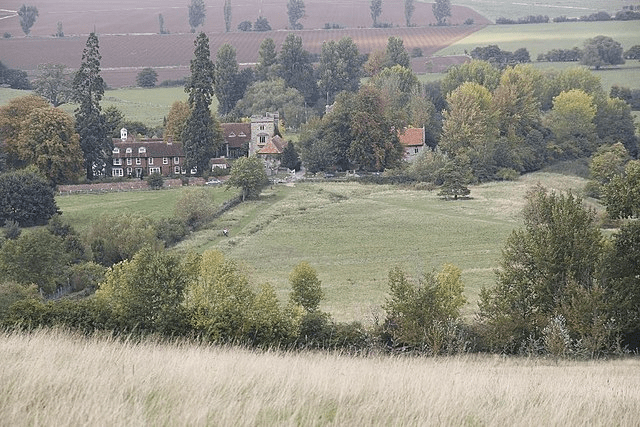
In 1788, William Hallett bought the manor of Little Wittenham, a village in what was then Old Berkshire, ten miles to the south of Oxford. Two years later, however, after having had much of the original Little Wittenham manor house pulled down and rebuilt, the Halletts moved on. Their next seat was on the edge of Faringdon, a market town twenty miles to the west in what was then north west Berkshire. At the confluence of several coaching roads, Faringdon offered relatively easy access to both London and Bath, something that must have been a consideration for a society couple.

Built around 1780 and so a modern residence at the time, Faringdon House is in the Palladian style and set on a ridge above the Vale of the White Horse with spectacular views to the north over the upper Thames Valley and into the Cotswolds beyond. The Vale of the White Horse is also famed as fox hunting country which must have appealed to Hallett with his love of the sport.
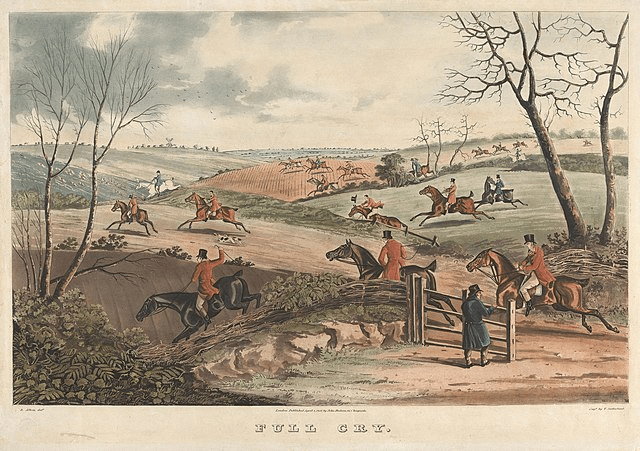
The Halletts may have felt that their new home confirmed their position within the affluent upper-classes of Georgian England as they continued to live in Faringdon for the next twenty years and four of their children were born there.
There is evidence to suggest, however, that William continued to build what today might be called his property portfolio; he may even have owned, at one time, Avebury Manor, now the property of the National Trust in Wiltshire, as well as other properties across the south.
By 1810, William Hallett had bought Townhill, a manor house in South Stoneham, Hampshire. The same year he also bought Denford Park, just two miles from Kintbury on the Bath Road. Just as he had done at Wittenham, it seems that Hallett had the existing house demolished – or demolished in part – and rebuilt, using some of the architectural features he had taken from his property in South Stoneham which he had also partly demolished and rebuilt. Work on the house at Denford Park was completed in 1832 and the principal architect was Sir Jeffry Wyattville.
Neither Denford Park nor the property at South Stoneham proved to be sound investments for Hallett who lost money on both as well as quarrelling, as a result, with his son, William IV. The Halletts eventually moved to a another newly built property , Candys, at South Stoneham.
Hallett did not stay long at the newly built Denford House, indeed, rebuilding and moving on seems to have been the pattern of his life with the exception of Faringdon House. However, Denford Park remains an imposing and important property within the Kintbury and Hungerford area. It was sold for £32,026 12s in 1822 when it was bought by George Henry Cherry, a local magistrate and sometime High Sheriff of Berkshire. It remained in the Cherry family until 1913.
More recently, between 1967 and 2002, Denford Park was home to the world famous Norland Nursery Training College. It is now once more in private ownership.
However, Denford Park is not the Halletts only connection with the Kintbury area. William & Elizabeth’s daughter, Emily Hallett had been born in Faringdon in 1879. It is not known if she ever lived at Denford Park herself but it has to be likely as, on 27th March 1819, she married Kintbury’s Fulwar William Fowle at St Mary’s church, Kintbury.
Fulwar William Fowle followed his father, grandfather and great grandfather into the church; following graduation from Merton College, Oxford, he was ordained deacon in 1814 and priest in 1816. He became rector of Allington, near Salisbury, in Wiltshire in 1816 and perpetual curate of Amesbury, Wiltshire in 1817.
For Emily Hallett, growing up in the modern elegance of a Faringdon House or Denford Park, living in the Allington Rectory must have been quite different. Although the Rev Fuwar William was quite well connected, particularly to the Lords Craven, and his family members would have moved within the upper circles of society, life in the rural rectory might have been grand by comparison to that of the labouring villagers but nothing like living in a Palladian mansion.
Emily and Fulwar lived all their married life at Allington. They had eleven children together, of which nine survived although Emily died soon after the birth of the last one in 1833. Her mother, Elizabeth Hallett, died the same year.
William Hallett died in 1842. By this time he had lost much of his money and so there was little that could be passed on to his descendants. Interestingly, son-in-law Fulwar William was bequeathed Hallett’s religious books – strange, perhaps, as in his life Hallett himself seemed to have more interest in sport and gambling than in things spiritual
The Gainsborough portrait, for which William Hallett paid £126, was bought by the National Gallery in 1954. It cost the gallery £30, 000 and is still on display in London.
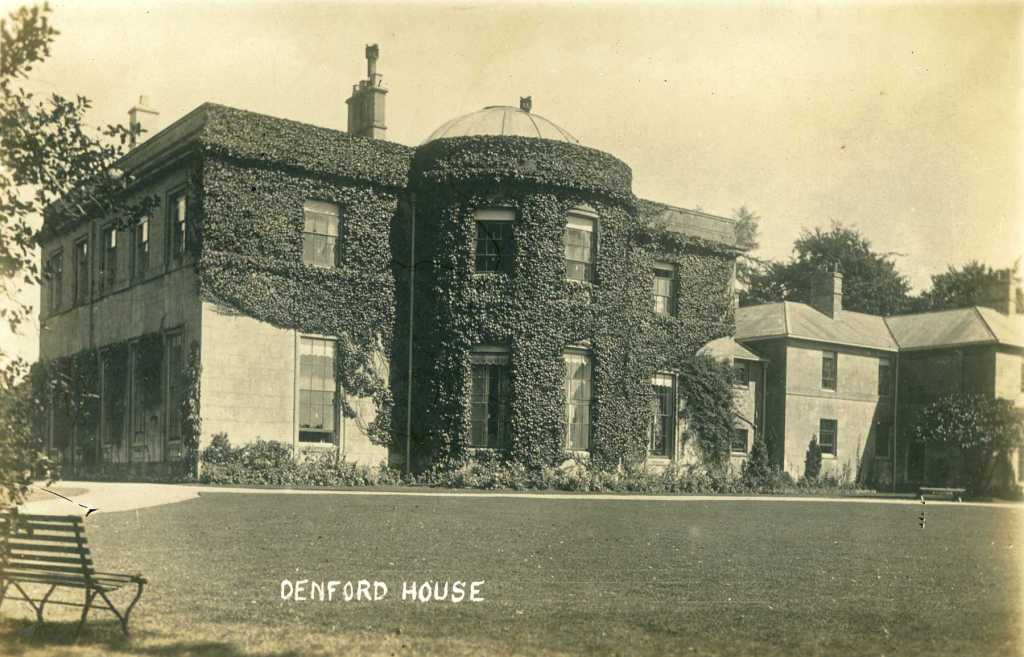
Image: Denford House, Kintbury 1, Nick Kingsley
Attribution-NonCommercial-ShareAlike 2.0 Generic: https://creativecommons.org/licenses/by-nc-sa/2.0/deed.en
Sources:
https://www.nationalgallery.org.uk/catalogues/egerton-2000/mr-and -mrs-hallett-the-morning-walk
https://gainsborough.org/about/about-thomas-gainsborough
https:/www.faringdon.org/faringdon-house.
ancestry.co.uk
http://www.british-history.ac.uk/vch/wilts
© Theresa Lock 2025
 Kintbury and Beyond