On January 11th each year, local people, family members and supporters from further afield including historians, trade unionists and those concerned with social justice, gather at the grave of William Winterbourne in St Mary’s churchyard.
William Winterbourne, also known as William Smith, was hanged at Reading Gaol at 12 o’clock on January 11th 1831. His crime was to have been involved in the protests that swept across southern England the previous autumn as labourers fought for improvements to their pay and conditions of work.
This year, the bright sunlight shone on the lichen covered stone such that William’s name could be read clearly. As his parents were not married at the time of his birth, he is buried under his mother’s name of Smith, in accordance with the custom of the time.
This year, we were joined by over twenty people who gathered to listen to accounts of how the Swing Riots had impacted on this part of West Berkshire, and William’s involvement in them.
All Photos (C) Chloë Wells
You may be interested in further posts about the Swing Riots in West Berkshire, those involved, and also what happened to one who was convicted and transported to Australia:
Queen Victoria came to the throne on 20th June 1837 so, by her Golden Jubilee in 1887, many people had grown up knowing no other monarch. Consequently, the fiftieth anniversary of her coronation was seen as a cause for great celebration.
Reports in the Newbury Weekly News covered three local villages: Kintbury, West Woodhay and Combe, although the other villages would certainly have held celebrations. Reading those three reports, what is most interesting, I think, is the way in which events in the two smaller villages are organised – and presumably largely funded – by the families in their respective “big houses” to whom, it is naturally expected, the villagers will demonstrate deference and appreciation.
A church service of thanksgiving was a central to the celebrations in all three villages: at Combe villagers marched behind a banner to St Swithun’s church while St Mary’s, Kintbury flew the Royal Standard and the bells were rung.
Celebrations in the two smaller villages very much revolved around the respective “big houses” with their principal families. At Combe, Mr W.H. Cole gave his workers, game keepers and labourers on the Combe estate a meal “of hot roast beef, mashed potatoes, plum pudding and beer”, all enjoyed on the village green. The villagers, “did not fail to express themselves most grateful”, but then, it would be expected to show appreciation to those you were dependent on for employment. The meal was followed by singing and dancing, “freely indulged in by the village lads and lasses” and – presumably for the men only – the, “fragrant weed, too, liberally supplied by Mr Cole, was thoroughly enjoyed.”
At West Woodhay, celebrations kicked off in sporting vein with a cricket match although presumably this was something to be enjoyed more by the men than the women. The church service was held at a quarter past five after which parishioners proceeded to the home of Mr & Mrs Cole at “the big house” (sic) for hot roast beef and plum pudding which, the report tells us, consumed in a West Woodhay fashion “cannot be beaten.” What “West Woodhay fashion” was, we are left to wonder. The meal was followed by a “Jubilee pipe” and “a good packet of Jubilee tobacco for every man”. If anything special was given to the women of the village, the NWN report does not say. I doubt it was.
The Cole’s son, Mr A.C. Cole, had returned to his parents’ home for the celebration; he gave a speech which was, apparently, well received especially as he had recently been, “in town” where he had been, “viewing Her Majesty in her world-famed procession and at personal inconvenienced had come down to assist in making his father’s servants happy.”
So that was nice.
At 9 o’clock everyone proceeded to “our beacons” to watch bonfires and rockets.
The NWN report of the celebrations in Kintbury illustrate a village which did not revolve around one family in a “big house”, although the report mentions the names of certain influential and benevolent villagers. Celebrations commenced with a peal of church bells at 5 am so an early start was assured whether the good people of Kintbury wanted it or not! The village was decorated with bunting the like of which had never been seen before, apparently, and music was supplied by the Hungerford Town Band.
Kintbury was then, as it is now, a much bigger village than the others and this is reflected in its celebrations. A table covered with a calico cloth was placed in Dr Lidderdale’s meadow, to seat nearly one thousand people – presumably all at once! A meal of roast and boiled beef as well as boiled ham was served, accompanied by hot potatoes and plum pudding, washed down with a pint of beer or two bottles of ginger beer for each person. Somewhere referred to as “the Baths” was loaned by Mrs General Dunn for tea making. It seems no expense was spared and during the meal, children were entertained by one Professor Burssord, allegedly of London, who performed various and amusing tricks with great dexterity.
Sports and music followed the meal and about 450 children enjoyed bread and butter and cake with tea served in a Jubilee mug. I hope they were able to take the mug home with them afterwards!
Those unable to get to the event due to age or infirmity had their dinners delivered to them.
The day concluded in sports at which money prizes could be won.
What became of all that calico used as table cloths? It was later given to the local schools (interestingly, there must have been more than one either in Kintbury or the satellite hamlets) to be made into children’s garments.
Apart from the size of the village – perhaps that should be small town – the big difference between celebrations in Kintbury and the other two villages is that the event in Kintbury did not revolve around the benevolence of one particular family. The NWN report says that the celebrations were enjoyed by, “ all classes, creeds, in all conditions of life” who “evinced a desire not only to participate in the celebration but also to contribute towards the expenditure thereof.” There is no sense in which the people of Kintbury were expected to show gratitude to one particular family; there is no sense of there being forelock tugging or cap doffing to anyone in a Lord of the Manor role. The celebrations were organised – much more democratically – by a committee chaired by Mr W. H. Dunn with the vicar, Rev Edwards as vice chair. Altogether, dozens of other Kintburians contributed to making the day something to remember.
Queen Victorian lived and reigned for a further fourteen years and her Diamond Jubilee was celebrated in 1897. This , however, was a much more low key event throughout the country, perhaps because by now the aged Queen was seen very little in public – I do not know for sure. But I am sure those who celebrated in 1887 would have remembered the roast beef, the hot potatoes, the tobacco and the beer – not forgetting the Jubilee mugs – for a very, very long time!
The League of Nations Union was formed in Britain in October 1918 to promote justice and peace between nations following the end of the First World War, with its aims and ideals based upon those of the League of Nations. Enjoying cross-party support politically, by the mid 1920s it had over a quarter of a million members with branches established in many towns and villages.
It seems likely that a branch was first established in Kintbury in 1930 although there are no records of meetings being held until 1933.
Although the LNU, as an organisation, is now long gone and pretty much forgotten, the minutes reveal a time of awareness of international affairs and a concern for what was happening in the world beyond Kintbury. Meetings in local village halls were addressed by influential and well-informed speakers, reflecting, in its early years, a sense of optimism throughout the LNU. What had happened between 1914 and 1918 must not be allowed to happen again. However, as the international situation deteriorated and the League of Nations seemed increasingly powerless, disillusionment set in, as these minutes reflect.
1933
According to the minutes of the March AGM, held in the Methodist schoolroom, the previous year had seen eight committee meetings and two public meetings, one in Inkpen and one in Kintbury. Membership numbered 86 and included the President, Mr H.D.Watson and Rev’d C.R.G. Hughes who was Hon.Sec. and Hon Treasurer. The committee comprised Messers Lawrence, Rolfe, Pinnock, Browne, Bridgeman and Giles. A very male dominated committee.
The March meeting, a public one, was very well attended. Four members of the Reading Youth Group addressed the meeting on their visit to Geneva and the Kintbury Choral Society sang a chorus. A lively discussion followed.
Committee meetings were held at the Vicarage and between May, and August 1933, five open air meetings had taken place on the Kintbury street corner. In October 1933, Mr. Hughes offered his resignation because of his impending departure from the village.
Education was important to the LNU and across the country schools were encouraged to take up corporate membership as were cooperatives and also churches.
In November, 1933, a Mr. Archer came to Kintbury from the Federal Council to address members and local schoolchildren. He apparently gave ‘every satisfaction’ and proved himself capable of keeping the children to whom he lectured at a ‘high pitch of interest’.
1934
A year later in November, 1934, committee meetings were resumed in the vicarage as the new vicar, Rev’d Guthrie Alison, became a member of the League. It was agreed during this year to canvass the village for the Peace Ballot, which was being organized across the country. Nationally, over 11 million people voted in favour of the aims of the LNU. In Kintbury, 540 voting papers were collected, but the time taken to organise the ballot locally prevented canvassing for new members and there was a slight drop in membership. However, Mr. Alison recruited at least one new member in November, Mrs. Goodheart of Inkpen.
1935
On a wet summer evening of 19th July, 1935, a very enjoyable and successful meeting and whist drive took place at ‘Windrush’, home of Mr. H. D. Watson. Sixty members attended and partook of pleasant refreshments as well as listening to an attractive and illuminating speech by Mr. Alec Wilson on the work of the League.
LNU Head Quarters suggested an effort be made to increase membership by arranging a campaign. However, the Kintbury contingent felt that this had better be left until after the General Election in November and until after the Italo-Abyssinian war had concluded. Mussolini, the Italian leader, had invaded Ethiopia (Abyssinia) with the intention of expanding Italian influence across East Africa. Such aggression ran counter to the pacifist-mindset of many in the LNU.
In October, 1935, Mr. Alison read aloud a pamphlet on ‘Five Minutes of Your Time’ by A. A. Milne, the popular author who was, at that time, a pacifist. This was sent by H.Q. and deemed very suitable for propaganda. (Used here and at that time, the word did not imply political or ideological bias as it has since come to mean. It implied more of a dissemination of information.)
All branches were asked to find the views of their parliamentary candidates on the vital international issues of the moment. This, Mr. Watson had done for the Kintbury Branch and he drew attention to the answer of local M.P. General Clifton Browne in the Newbury Weekly News.
In November, Mr. Alison, now President, talked of his recent visit to Geneva and his inspection of the League of Nations’ new building. There was a suggestion of acting a play for propaganda purposes but, as the last play had not been a success it was decided to postpone the suggestion. Arrangements were made however, for a public meeting to be held in December, in the Coronation Hall, Vice Admiral S. R. Drury Lowe to speak. The vicar was successful in gaining the consent of Barton Court’s Lord Burnham to take the chair.The secretary was asked to communicate with the Heads of the Mothers’ Union, Women’s Institute and Christchurch School regarding this meeting and the vicar was to give notice in church and see the Head of St. Mary’s School. It seems every effort was being made to ensure this meeting was well attended.
1936
Another public meeting was held in Inkpen on Wednesday, 29th January, 1936. An omnibus ran from Kintbury to Inkpen free of charge and a good many members availed themselves of this facility. Fifty or more people were present to hear the most fluent explanatory and interesting speech by Mr. Anthony Mouravieff. Mouravieff, a Parliamentary Private Secretary to an MP, and a prominent member of the League, was a popular speaker on international affairs and addressed many branch meetings across the country at this time. Inkpen must have been lucky to secure his appointment to address their meeting. Discussion followed with several short speeches made with animation and new members enrolled.
At the February AGM, Mr. Pinnock mentioned that Mr. Liggins secretary of the Thatcham Branch would be willing to bring a cinematograph with a League of Nations film to Kintbury!
Meanwhile, the crisis surrounding Abyssinia had not been resolved. The League of Nations had banned weapons sales although these actions were generally ignored by Mussolini. The British government wanted to keep Mussolini on side as an ally against Hitler and were reluctant to enforce sanctions. Together with France, Britain began secret negotiations with Italy without involving the Ethiopian leader, Heili Selassie.
Britain had adopted a position of neutrality and non-intervention with regards to the Spanish Civil War which began in 1936. This way, it was reasoned, made it less likely that the conflict would escalate. However, many young idealistic British men and women travelled to Spain to fight against the rise of fascism. Despite many countries having signed the League of Nations’ Non Intervention agreement, this was ignored by many; Italy and Germany provided military support to Spain’s military general Franco who was aiming to establish a fascist dictatorship. For many, events in Spain served to illustrate how ineffectual the League of Nations actually was at preventing or resolving conflict.
In Kintbury, a resolution was proposed and sent to H.Q. that:
‘the Branch expresses its concern about the present position of the League in relation to the action taken by this country alone in the Mediterranean without a mandate from the League and would be interested to know if H.Q. of the League considers that such concern is justified’.
In June the League was in sad financial straights. Indeed. Mr.Jowett, organising secretary for Bucks, Berks and Oxon, was told that his salary must cease owing to the need for economy. However, he agreed to carry on for a while without salary. Mrs. Goodheart meanwhile, resigned from the committee and the Union. While still believing in the ideal, she could not approve of the Union or belong to it. The worsening political situation must have made many people reconsider where they stood on issues such as pacifism and appeasement.
Another open air meeting was proposed for late July. Unfortunately, July, 1936 was extremely wet and as rainy day succeeded rainy day, an open air meeting became impossible and instead an open meeting was held in the Methodist schoolroom.
Mrs. Corbett-Fisher made a strong and extremely interesting speech and the popular amateur dramatic group, the Reading Pax Players performed “Gas Masque”. This was fresh, well-acted and caused much amusement – it was sadly disappointing that so few people came.
In October it was announced that nationally, 3,000 more members had joined than at the same time last year. The Chairman, who had attended a meeting in Scarborough, went on to report that
‘The League is always most useful in some matters if apparently useless to stop a war. The constitution was not elastic, not workable with regard to some affairs – but might be altered.’
When the League’s debts became known people hastened to its support and £10,000 raised to pay the debt. There was still enthusiasm and resignations were not taking place in large numbers. Discussion took place on the League’s actions and inactions. Mr. Padel wished to form a protest from Kintbury with regard to the League’s inaction in relation to Abyssinian and the Spanish troubles. The League was not doing its duty, he believed. Mr. Giles opposed intervention in Spain but joined in warm criticism!
The vicar resigned as a committee member in November. Whist Drives were suggested as a fund raiser but it was thought that these were overdone at the moment. There followed a discussion concerning the International Peace Campaign – a movement started in 1935 as a response to Italy’s invasion of Abyssinia. Mr. Giles hoped that the League of Nations would try to prevent war, not wait and only try to stop it when it had already begun.
On December, 7th, 1936, there was a public meeting in the Methodist Schoolroom. The Chair was taken by Lord Faringdon and the Speaker was once again Vice Admiral S. R. Drury-Lowe, who had achieved splendid work for The League. The Admiral spoke of the difficulties and weakness of the League at times but stressed its great possibilities and unique position. He spoke of its inability to stop the last war of aggression, but its immense good in the cause of workers in all parts of the world. It did much good for children and had opposed the opium and so-called white slave traffic, doing work no other organization could do. There was no other organisation to do the work. It must be helped and strengthened to allow it to rise to greater power and influence.
It was an extremely cold evening with a searching wind, the attendance at the meeting was very poor. The Vice Admiral had a whimsical story and a light touch to occasionally relieve his earnest speech, but no new members were made and no new faces seen.
1937
By 1937, the financial situation of the local branch seems to have been less than robust as at the March meeting Mr. Pinnock was asked to find out from the Methodist Trustees, Mr. Phillips and Mr. Mackrill, if the schoolroom could be hired for less than the usual five shillings.
The following month, at the A.G.M. the President, H. D. Watson Esq. gave the little meeting an informal, delightful talk as they sat around a fire. He spoke of his recent visit to Geneva where the League was housed in a magnificent building. However, he reported an atmosphere of depression as regards the peace work of the League particularly amongst the Italian delegates.
In the International Labour Section there was a keen and enthusiastic spirit, as if the good work done was heartening. He spoke of the wonderfully good work done in the ‘Save The Children Branch’ its great activity and hopefulness. The League was doing magnificent work for the so-called white slave traffic, drug smuggling and slavery.
It was decided that all accounts must be audited as was the case in all other Kintbury Societies.
The Vicar consented to be Vice-President again. As H.Q. was in great need of money Kintbury forwarded ten shillings in November 1937.
1938
The public meeting on January, 17th, 1938, was a great success. Miss. Chu Chan Koo (Miss. Wellington Koo), daughter of China’s representative at Geneva, made a moving speech on the history of China and its present sad state which was particularly well received. This was followed by a short pageant play entitled ‘Friendships Chain’. The parts were taken by 23 Kintbury ladies and girls and watched by an audience of over 200 people. A collection for medical relief for Chinese sufferers raised £3-17s-0d.
It was announced that Mr. Lloyd resigned as President of the Berkshire Federal Council. He still adhered to the League of Nations but not to its instrument, the League of Nations Union. Lord Neston of Agra agreed to take his place.
At the March meeting of 1938, the committee spoke with great regret of the death of Mr. Rolfe, ‘an important member of the committee’. The committee also lost two other members, Miss Joan Ewins resigned and Mr. Gordon Abraham moved to Surrey.
Mr. Watson continued as President. He had just visited Geneva again and reported on the international situation which was not optimistic. In May, it was explained, Italy will require Abyssinia to be acknowledged as part of the Italian Empire. All nations, with the possible exception of Russia, will have to do this. It would be necessary for Great Britain to recognise Italy’s conquest of Abyssinia in order to keep the peace and be on good terms with Mussolini. In return, Italy was apparently anxious to maintain good relations with Great Britain because of affairs in Austria.
The outlook in Geneva seemed gloomy and the League was anxious. Great Britain still believed in the work of the League but acknowledged that reconstruction of it might be necessary. Although it might not be able to maintain international peace it still had important work to do regarding the sale of dangerous drugs and so-called white slave traffic, and, importantly, continuing to help all refugees and keep up the Save The Children Fund.
Mr. Watson was thanked for his talk and the vicar continued in a ‘happy little speech’, to hint that such an end as peace perhaps justifies the means i.e. the recognition of Abyssinia’s conquest. A lively general discussion followed.
In May, the vicar suggested that a meeting be held soon in Kintbury in which a speaker could explain the current situation in central Europe, particularly with regards to Czechoslovakia and the threat to peace. This was arranged to take place in the Coronation Hall at 7.30pm on Sunday, 19th June.
Mr. Anthony Moore gave an interesting address to an audience of fifty to sixty people. He explaining that the Czechoslovakians are not an upstart nation, but Bohemians, a small nation now since the 14-18 war. Their country was a buffer state with a German minority population likely to cause trouble, he believed, in the near future. It was Hitler’s intention, he explained, to acquire all the smaller nations of Central Europe. The Germans, he believed, had taken against the Jews because they were “international”.
The League of Nations Union has passed a resolution to ask the British Government to support Czechoslovakia and present a bold front to Hitler.
Mr. Moore answered several pertinent questions from the audience, who keenly enjoyed his fluency and grasp of the subject. A vote of thanks was warmly seconded by General Rennie, who said that he appreciated the speech but not the League of Nations Union. The vote was carried with acclamation.
1939
Attendance at the May A.G.M., 1939, was very poor: President, Secretary, Treasurer, four committee members only. At the Public Meeting that followed, Mr. Alec Wilson, M.I.R.A., gave a short, optimistic speech: ‘After the Great War there were widespread results. The League of Nations was formed to help peace and goodwill among nations. After the great slump set in over the world, Germany was very low in money and work. Hitler, whose plans were for all Germans to be one huge family, rose as Dictator or Leader. His book, ‘Mine Kampf’, shows his idea that the Germans are the only people fit to govern Central Europe’.
The lecturer traced events from 1914 up to date, showing how the German threat to Poland arose and that part of South Russia called the Ukraine. Wilson was of the opinion that Britain’s alliance with Russia posed a problem as the British had a dislike for communism and also there was much danger in naval and military commitments in a vast distant territory.
On 30th July, 1939 it was decided that ‘the time had come for the Kintbury and Inkpen Branch to acknowledge that no work was done in connection with the League of Nations’.
The Treasurer, Mr.Pinnock, had left the neighbourhood, the Secretary, Mrs. Norton, said she wished to resign because the League of Nations Union seemed quite dormant here and she had other work to do. The President said that although other branches were closing many were active, especially in the north. He wished some remnants of the branch to be kept – in view of a revival, when their time came again, when peace was near. The vicar agreed to keep the minute book and list the members until peace came and a working secretary was needed.
Ironically, peace was to be a long time coming as war broke out across Europe in September of that year. The League of Nations was officially disbanded in 1946 although its aims and intentions were enshrined in the United Nations, established by charter in 1945. Its work continues to this day.
This year Keith Jerome, a retired trade unionist, was able to join us as we remembered William Winterbourne. Keith has given us permission to reproduce here the speech he gave, reflecting on the injustices suffered by the Kintbury Martyr and his comrades.
William Smith, known as Winterbourne, has been referred to as ‘The Kintbury Martyr‘. And why not? The men of Tolpuddle, the Six Men of Dorset, also achieved this title without a trip to the gallows.
The document Sentences of the Prisoners tried at the Special Assizes at Reading, began December 27, ended January 4, 1831 shows that several village communities were to be deprived of many members of their agricultural workforce and, most of all, deprived of family members who were the principal breadwinners. The ‘Swing Rioters‘ had been acting in protest against poverty and starvation and for those families losing wage earners from January 1831 the prospect was bleak. They too would share the punishment meted out.
The Kintbury men, like their comrades further to the South West, were apprehended and taken to gaol. They went to Abingdon and to Reading, leaving their homes to which they would never return.
Our Kintbury Martyrs were hunted down by a posse of 300 horsemen who were on a bonus of 50 guineas for each prisoner they delivered up to Reading Gaol. They shared £600 from the County Sheriff (Probably a four figure sum in today’s money). They were led by Charles Dundas and Lord Craven and included ex Yeomanry troops plus Grenadier Guards and Special Constables. Both the Red Lion (today the Dundas Arms) and the Blue Ball were raided and many began the onward journey to Reading Gaol where they remained pending the Special Assizes. This activity was described as “A good day’s sport” by Mr Dundas..
Twenty–two men from Kintbury and Hungerford were sentenced to be transported, of whom fourteen were married. Six were farm labourers and the remainder were country tradesmen and all were destined for the ‘Hulks‘. These were old wooden warships used as floating prisons They were utilised as a temporary measure in 1777 but were still in use 70 years later. Described as “Hell on Earth“, scrofula, consumption and scurvy were rife. Retired battleship the ‘York‘ at Portsmouth to which the Berkshire men were taken held 500 prisoners. Men were held here until convict ships became available and prisoners were judged fit to sail. That could be months and “Men died almost immediately from disease induced by despair and a great many died later due to despair and a deep sense of shame and desperation“.
“Naval guards were brutal, tyrannised, cruel by consciousness of the power they possessed“. Beatings, punishments and reduction in rations, together with “Floggings of unspeakable severity” were inflicted on prisoners.
Fortunately, the Berkshire men did not have to wait too long. The Kintbury Martyrs left Portsmouth on 19 February 1832 on the convict ship the ‘Eleanor‘ while four of them sailed on the ‘Eliza‘. They sailed via Madeira and Cape Verde, round the Cape of Good Hope and on 26 June were in sight of Sydney, New South Wales while the ‘Eliza‘ was bound for what was then Van Diemens Land.
Although the sentence of transportation was not for life, it was in fact a life sentence, as few had any hope of returning home. Back in Berkshire, their families were reliant on the support given by parish relief, principally to be able to feed their children and themselves.
We remember William Winterbourne in 2024 as we have done for many years. We must also remember his fellow comrades and their families, who did not suffer the ultimate punishment of being deprived of life but the lives they had known were changed completely.
The hope that change for the better has befallen those seeking a better life and freedom from tyranny is challenged when we recall that the concept of transportation has been promoted by the current government. However, it is faltering in its intent to use modern methods of transportation to ship refugees and so called ‘illegal‘ immigrants to Rwanda. It also faces a problem of the costs of housing the increasing number of refugees in hotels.
But here comes an eighteenth century solution! Buy in a ‘hulk‘ (from Holland), the barge now moored in Portland Harbour in Dorset. Conditions on board, while not like those of the eighteenth and nineteenth centuries, are far from ideal for providing shelter to men accused of no crime, who are merely seeking freedom and a better life.
As we recall the terrible fate suffered by William Winterbourne and the life sentences to which his comrades and their families were condemned in 1831 let us recognise that the protest against the tyranny which seeks to deprive people of their freedom and their right to a better quality of life must go on.
Quotes thanks to the late Norman Fox, Author ‘Berkshire to Botany Bay‘. Teacher, Trades Unionist, Marxist and friend. Keith Jerrome 11 January 2024.
William Winterbourne remembered, Kintbury, January 11th 2024
Kintbury and Hungerford were not the only places to be affected by the events we now know as the “Swing Riots”on those dark nights in November, 1830. Other parts of West Berkshire saw similar protests and by December there were 249 prisoners being held in custody at the County Gaol, according to the newspaper. On Monday 27th December the trial opened of the labourers from Kintbury and Hungerford as well as others from the Aldermaston area – 134 men in all.
The trial begins
The Berkshire Chronicle reported that the majority were charged with “ riotously assembling and destroying threshing machines and other species of property.” These “outrages” were “accompanied by robberies of money and in a fewer number of instances, provisions were forcibly demandedand obtained.”
The report goes on to say that only 25 of the prisoners could read and write, 37 could read only and the remainder could neither read nor write. (This is not surprising considering that no formal education would have been available to them.)
On Tuesday 28th December, William Oakley, William Smith alias Winterbourne, Daniel Bates and Edmund Steel were placed at the bar, charged with robbing John Willes, Esq of five sovereigns on 22nd November in Hungerford, and also of riot, further robbery and destroying machinery. (Presumably, robbing a gentleman of five shillings was considered to be a more serious crime than the rioting and destroying machinery.) None of the men were themselves agricultural labourers. Oakley was described as being about 25 and “better dressed than is usual among members of the class of working tradesmen.”
The Berkshire Chronicle’s journalist clearly felt no need to avoid subjectivity or bias in his reporting, stating that Oakley was, “apale sinister-looking person, as is Winterbourne.” Winterbourne was 33 but looked older. Bates was described as having, “an extremely mild, good natured expression of countenance”, whilst Steele was a “determined looking man”. Winterbourne was the only one of the four who could neither read nor write, being described as, “entirely uneducated”.
John Hill of Standon House, Hungerford, was quoted at length. He recounted that on 22nd of November he was in the company of 11 or 12 others intending to prevent the “Kintbury mob” from approaching Mr Cherry’s house (Denford House). They met the mob, which apparently consisted of 200 to 300 men, on the Bath Road. “Some of them had large stakes and sticks in their hands.”
The mob proceeded to Hungerford where they broke windows in Mr Annings’ house. Next they broke into Mr Gibbons’ foundry. Mr Willes, Mr Pearse and others then went to the Town Hall where they met with five “deputies” from the Hungerford mob and five from the Kintbury mob. Winterbourne, Oakley, Bates and Steele were four of the Kintbury deputies and were present when the Hungerford deputies demanded 12 shillings a week wages, the destruction of the threshing machines and a reduction in house rent. Mr Pearce agreed that wages should be raised though he was not able to say anything about the rent.
Next the Kintbury deputies spoke and according to John Hill, Oakley said, “You have had a parcel of flats to deal with, but weare not to be so easily caught”. He demanded £5. Then Bates allegedly flourished a sledge hammer and, striking it on the ground, said, “We will be d—– if we don’t have the £5 or blood”.
Apparently, other witnesses could recall more of what was said: Mr Joseph Atherton recalled Oakley as having added, “We willhave 2 shillings a day till Lady day and half a crown afterwardsfor labourers, and 3 shillings and six pence for tradesmen. And, as we are here, we will have £5 before we leave the place or we will smash it.”
According to Atherton, many of the men were armed with bludgeons, sledge hammers and iron bars.
Oakley is reported as having then addressed himself to Mr Pearce: “You gentlemen have been living long enough on the good things; now it is our time, and we will have them. You gentlemen would not speak to us now, only you are afraid and intimidated.”
Until this point there is no account of Winterbourne having spoken but then someone called Osbourne is alleged to have put a hand on his shoulder, to which he replied, “If any man put his hand upon me, I will knock him down or split his skull”.
Atherton alleged that Winterbourne was carrying an iron bar, three or four feet long in his hand, whilst Oakley had an iron bar, Bates a sledge hammer and Steel a stick.
According to the witness, Winterbourne said to Bates, “ Brother, we have lived together and we will die together” and this was the point at which Bates struck the sledge hammer hard on the floor, saying, “Yes, we will have it or we will have blood and down with the b—–y place”.
According to Atherton, this was the point at which Bates flourished the sledge hammer over the head of Mr Willes who responded with. “If you kill me you only shorten the days of an old man”. Mr Willes then gave five sovereigns to the prisoners, who left.
A third witness, Mr Stephen Major, recalled Mr Willes as requesting the men to leave their weapons outside the door, but that Oakley replied, “I’ll see you d—- first”. Then he said, “Here are only five of us, but we can soon clear the room.”
The final witness whose evidence was reported, was Willes – a magistrate – himself. Willes recalled meeting with the mob on their way to Mr Cherry’s house (Denford House, on the Bath Road). He asked the men not to go to Denford House but to follow him to Hungerford Town Hall where, if they were reasonable, he would hear their grievances. He recalled trying to stop the men from breaking Mr Annings’ windows and attacking Mr Gibbons’ manufactory but without success.
Willes believed that the combined Hungerford and Kintbury mob numbered 400 and it was his request that five members from each village should come into the town hall. He alleged that the men said that they never would have come there but for he who enticed them and that they would not leave the hall without having money – £5. When he was cross examined, Willes said that the mob treated him kindly and led his horse by the bridle. Observing that Steel had a hatchet in his hand, he said to him, “My friend, that is a lethal weapon you have; it would split aman’s skull”, to which Steel replied, “Depend upon it, sir, it shall never injure yours”.
The next crime for which the men were, variously, charged was that of riotous and tumultuous assembly and destroying certain machinery employed in the manufacture of cast-iron goods. Several machines had been destroyed that night, and demands made for money or “vituals”. This included destroying the threshing machine belonging to Captain Thomas Dunn at Kintbury and also one belonging to Joseph Randall in Hampstead Marshall, where the men also demanded money or food and drink. Elizabeth Randall recalled that one man wielded a sledge hammer, others had sticks. She said that the men referred to William Winterbourne as, “Captain” which would have given the impression that he was a ring leader. He had instructed the men, she said, not to damage the farm house.
Intimidating behaviour?
It is interesting to note that the accounts of witnesses to the events of 22nd November, particularly those in Hungerford Town Hall, describe scenes which are much more intimidating and potentially violent than the impression given by Rev Fowle of his meetings with the men that day. Fowle’s account includes none of the kind of language used by Dundas in his letter to Home Secretary Melbourne of November 24th when he speaks of the, “shameful and outrageous conduct of the labourers”.In describing his meetings with the men, Fowle’s tone would seem to be conciliatory, even sympathetic in an understated way. He is not judgemental and makes no negative or pejorative comments about their behaviour, even though it could not have been pleasant to have been woken up at four in the morning by a band of men intent upon destroying machinery. The men obviously felt he was on their side when they gave him three cheers. All the evidence available would suggest that Fowle has sympathy with the plight of these men – his parishioners.
Sentenced to death
Sympathy, however, seems to have been in short supply as far as the court was concerned. Sentences of imprisonment, transportation and execution were available to the judges at the trials of the 138 West Berkshire men who stood accused and most were given prison sentences or sentenced to transportation of between 7 and 14 years. However, Mr Justice Park passed sentence of death on just three of the men, all of them from Kintbury. These were William Oakley, Alfred Darling and William Winterbourne.
According to the judge, William Oakley had taken an active part in acts of robbery and, in the robbery of Mr Wilkes, had been armed with dangerous weapons, refusing to lay them aside.
Alfred Darling, as a blacksmith, had no right – according to the judge – to be involved with the rioters.
William Winterbourne, he maintained, had taken an alarming part in the outrages as leader of the mob. He had acted as captain of the band, dictated what was to be done and “received money or not according to his will and pleasure.”
Mr Rigby disagrees
Many people disagreed with Mr Justice Park’s sentencing. Mr Rigby, counsel for the defence and the solicitor who had cross examined the men, was quoted in the Reading Mercury of 10th January 1831 as having said:
“It has been said, that some of the persons who perpetrated these outrages were artisans, not agriculturalists, and had not the excuse of poverty or low wages. But surely let those who advance the argument consider. What! has the poor man no feeling of commiseration for his fellow man because he has a loaf on his table for his own wife and family?”
Whilst Rigby’s sympathy and understanding would have been welcomed, there is an irony here in that the pay of artisans – ie tradesmen, for example blacksmiths or carpenters – would not have been high, either.
The Reading Mercury reported that Oakley, Winterbourne and Darling were, “to be executed, the jury having found them guilty of encouraging unlawful meetings of the people, and by intimidation obtaining money from individuals.”
A petition to the King
A petition for mercy was swiftly organised to be sent to the king, William IV. In a day and a half it had collected 15,000 signatures. The ladies of the borough also organised a petition to be sent to Queen Adelaide.
This was not the only petition: many County & Borough magistrates appealed to the Home Secretary, Lord Melbourne.
“Your petitioners believe….. the offence for which the prisoners have been convicted is one, which in the common opinion of uneducated men, was not considered as capital, and though ignorance of the law may be no legal defence, in all moral feeling it must and ought to have great weight; for it is possible that had these unfortunate persons been apprized of the danger they incurred, they might have stopped short of the violation of that law on account of which they have been doomed to suffer.”
Two of the grand jurors involved with the case, J.B.Monke, Esq and J.Wheble Esq, also appealed to Secretary of State, Lord Melbourne, to petition the King for mercy.
It is interesting to note that, in an age when there were so many laws on the statute books which seem to us today to be biased against the working man and woman and which did nothing but cause them hardship, the imposition of the death penalty in this case caused such strong feelings of objection. Perhaps the case of the rioters, laid out every day in the Reading newspaper reports, had caused members of the middle and upper classes to consider what life was really like for their poorer neighbours.
For Oakley and Darling, the execution of the death sentence was respited (sic) although no such mercy was accorded to Winterbourne.
January 11th 1831
According to the Berkshire Chronicle of 15th January 1831, it was not until the morning of his execution that Winterbourne was told he would be the only man to die. “He expressed himself glad to hear that his companions were spared.” The newspaper goes on to say that Winterbourne’s wife was lying dangerously ill of typhus fever and that one of his last wishes was that she might die before he suffered or that she might not survive to be shocked by the news of his execution.
Winterbourne was led to the scaffold where, “His large muscular form seemed cramped ,- probably from the position of his arms and tightened of the bonds by which he was pinioned. He walked firmly, but his cheek was pallid, his eyes glazed, and the prayers he uttered, though fervently and audibly expressed, came from quivering lips.”
As the prison clock struck twelve on 11th January 1831, Winterbourne was executed.
Return to Kintbury
It would have been the custom for the executed prisoners to be buried at Reading Gaol. However, Rev Fowle arranged for Winterbourne’s body to be brought back to Kintbury, where he was buried in St Mary’s churchyard the following, day 12th January. Furthermore, he arranged and paid for a stone to be place on the grave – something that would have been totally beyond the reach of the labouring classes at that time, whose graves would be completely unmarked and grassed over.
According to the custom of the time, the name on the grave stone reads as “William Smith”, Smith being his mother’s name and his parents not being married at the time of his birth. Also, the grave is not tucked away in some far and distant corner of the churchyard, out of sight.
There has been for some time the persistent idea that Rev Fulwar Craven Fowle had Winterbourne’s body returned to Kintbury and the stone erected because he felt in some way guilty about what had happened to him. I have to say that, in researching this, I have found no evidence for this to be the case. The letter written by Fowle to Charles Dundas (now in the National Archives) contains none of the harsh or judgemental language used against the protestors by others. As I have described above, the men gave Fowle three cheers and obviously felt able to tell him of their plans. There is no suggestion that the men arrived at the vicarage armed or that Fowle felt intimidated. All the evidence suggests to me that they expected to be treated fairly by him, and that they were.
It is believed that around 2,000 people were involved in the Swing Riots by the end of 1830. Five hundred were transported and 19 executed. This was four years before the men of Tolpuddle in Dorset were convicted of swearing a secret oath as members of the Friendly Society of Agricultural Labourers, and sentenced to transportation. Those involved in the Swing Riots are not as well remembered as the men of Tolpuddle, but they deserve to be remembered too, for their part in the workers’ struggle for a fairer life.
In Kintbury, William Smith, alias Winterbourne, is not forgotten.
Bibliography
Griffin, Emma, (2018), Diets, hunger & living standards duringthe British industrial revolution, Past & Present.
Lindert & Williamson, (1983), English workers living standards in the industrial revolution, The Economic History Review
Phillips, Daphne (1993), Berkshire: A County history, Newbury: Countryside Books
Thompson, David (1969), England in the nineteenth century, Pelican
Trevelyan, G.M.(1960) Illustrated English Social History:4, Pelican
Woodward, Sir Llewellyn (1962), The Age of Reform, Oxford: OUP
The Berkshire Chronicle (December1830 & January 1831)
The Berkshire Mercury (December 1830 & January 1831)
The National Archives: Letter to Rt Hon Lord Melbourne fromCharles Dundas, MP, November 24th 1830
The National Archives: Anonymous letter to Rt Hon LordMelbourne, November 24th 1830
The National Archives: Letter to Rt Hon Lord Melbourne fromCharles Dundas MP & ninety other signatories, November 1830
The National Archives: Letter to Rt Hon Lord Melbourne fromLord Craven, November, 1830
The National Archives: Letter to Rt Hon Lord Melbourne from RevFulwar Craven Fowle, November 1830
1830 saw rioting break out across southern England
A labouring man
William Smith, also known as William Winterbourne, was born in Kintbury in 1798. It is likely that he was the son of Rose Smith and that he was baptised in Kintbury on 9th December 1798. There is no record of William’s father: it was the custom of the time for a child of unmarried parents to take the mother’s surname, although William was also known as Winterbourne which is likely to have been the name of his father.
Whilst the name William Smith appears in the Kintbury parish registers of the early 1800s, it is difficult to know for sure if this William Smith is also the man known as William Winterbourne. However, it is likely that our William married Mary Hobbs in the parish church of St Mary’s on 27th May 1822. Unfortunately, Mary died on 27th December 1827.
St Mary’s parish marriage register records a William Smith, who is at that time a widower, marrying a Sarah Brackstone on 28th September, 1829. On 3rd January 1830, William, son of William & Sarah Smith, is baptised in the parish church.
We know that William was a labourer and that the England of 1830 was not an easy time for families such as the Smiths. Forget any idea of a rural idyll. Life for William & Sarah would have been hard.
The harvest of 1830 was particularly bad. Furthermore, unemployment was on the increase as was the resulting hunger amongst the labouring classes. For the agricultural labourers, the arrival of threshing machines on many farms meant the loss of work and therefore of an income at a time when it was most needed. Many rural workers felt desperate.
Throughout England, more and more working people began to believe that they did not have to accept their lowly position in life as inevitable: it had not been ordained by God. To what extent the labourers were influenced by the ideas of Cobbett or Hunt – or indeed by many of the other emerging radical thinkers – it is difficult to say. Perhaps the anger and resentment which had been simmering for so long finally boiled over.
Many farmers had invested in the new threshing machines and these became a focus of the agricultural labourers’ resentment and rioting broke out across the country. Many landowners received threatening letters signed by someone identifying as “Captain Swing” or simply, “Swing”. No one knows if there had ever been one particular person behind the first disturbances; it is more likely that the name “Swing” was adopted by various men instigating rebellion in different areas. Threshing machines were destroyed and fires set; perhaps it seemed to some facing destitution and starvation that the labourers were finally rising up against their oppressors.
In West Berkshire, demonstrations for improved wages and the destruction of threshing machines began in Thatcham on 13th November 1830, moving then to other villages. In many places the gangs of protestors – commonly referred to as a “mob” – demanded money from the landowners. In some places the demonstrations were largely peaceful but by 21st and 22nd things in Hungerford and Kintbury apparently became more threatening.
The Kintbury Mob at the vicarage
The Old Vicarage in Kintbury
On November 22nd 1830, the Rev Fowle wrote to Charles Dundas, Member of Parliament and Kintbury resident, informing him that the Kintbury “mob” had been breaking threshing machines all through the previous night and that they had come to him at 4 o’clock in the morning. It seems that the men told the priest what they had been doing and which farms they intended to visit next. In the letter, Rev Fowle explains that he had consulted with one of Dundas’s men and it was agreed that, rather than destroying his threshing machine on his land at Barton Court, the men should bring it up to Kintbury and destroy it there, in the street. Presumably Fowle was trying to be conciliatory to suggest this, as the men agreed. He says that he gave the men £2, and that other landowners did the same. The men were then intending to go on to other villages in the neighbourhood, similarly demanding £2 from each landowner.
The tone of Rev Fowle’s letter to Charles Dundas is particularly interesting in that it expresses no anger or criticism of the men and in that respect is markedly different from many other letters and newspaper reports written at the time. He writes:
“I have not heard that they have committed personal violence on anyone than forcing the labourers to join them”.
He also notes that:
“Ploughs with cast iron shears appear to be as much the object of their hatred as machines and I hear they have broken many.”
At this point in the letter, Rev Fowle writes that he has just received a message from W.Willes (the Hungerford magistrate) which informed him that the Kintbury men had later been joined by those from Hungerford, and the mob now numbered 1000 men. A deputation of ten men had spoken with some gentlemen at Hungerford (the distinction of class being particularly significant at that time) and it had been agreed that the men should receive 12 shillings a week for a man, wife and three children and the price of a gallon loaf for every child above three. Fowle says that he hopes the farmers will agree to this.
In a post script to the letter, Rev Fowle explains to Dundas that he has since met again with the men, who have returned from Hungerford:
“ I told them that as far as was in my power I would endeavour to persuade the farmers to agree with them. The men gave three cheers and expressed themselves perfectly satisfied but they also agreed that there must be no payment in bread but all in money”.
Letters to the Home Secretary
What the protesting men of Kintbury told others in the village about their meeting at the vicarage could have caused trouble for the vicar. It was not the time or place for a person such as Rev Fowle to appear to be sympathetic to the “mob”. Someone, it seems, later complained to Lord Melbourne, the Home Secretary, suggesting that Rev Fowle had encouraged the rioters. This would never do. The Home Secretary was the person to whom those in positions of authority would appeal for support when confronting disorder, so it would not look good if a local priest and magistrate had been reported as encouraging the rioters. Consequently, Charles Dundas and ninety other parishioners signed a letter to Melbourne, to ensure him that Mr Fowle had done everything he could to quiet the disturbances and prevent the destruction of property.
What the papers said
Despite Rev Fowle’s interventions, however, it would seem that the men had not returned peaceably to work and support in suppressing the mob had been requested. According to a report in the Reading Mercury of 29th November, the previous Wednesday, November 24th, had seen a detachment of Grenadier Guards who arrived in Newbury in three stage coaches, followed by a troop of Lancers. An order was given that every householder or individual who could muster on horseback should attend the Market Place at 12 o’clock and eventually a band of men some 200 strong and including special constables made its way towards Kintbury where it met Charles Dundas in his role as Colonel of the White Horse Volunteer Cavalry.
The Reading Mercury report stated that the mob had retreated to public houses, stables, outhouses and cottages so a detachment of horse was sent to the south and west of Kintbury to prevent any escaping. The Grenadier Guards were to guard the prisoners when they had been brought in by the horsemen. Colonel Dundas, it reports, had heard that several men were concealed at the Red Lion (now the Dundas Arms) and took a ringleader by the name of Westal. The men then went on to the Blue Ball, – described as the “chief depot”- where they met little resistance.
“Shameful & outrageous”
Later that day, Charles Dundas wrote to Home Secretary Melbourne of the “shameful and outrageous conduct of the labourers.” There had been a “most notorious gang” which had surrounded the ale houses. However, at the end of the operation, fifty five of the principal rioters had been delivered to commander of the guards, Captain Aston.
What had happened between Rev Fowle’s meeting with the protestors at four o’clock on the morning of November 22nd and the afternoon of November 24th to require a detachment of Grenadier Guards to be sent to Kintbury? Fowle’s letter of November 22nd to Dundas does not suggest that the sixty-six year old vicar felt threatened or intimidated by the labourers, although it may be that only a few of the more respectful of them had approached the vicarage. His letter says that he has spoken to them on their return from Hungerford when he assures them he will do everything in his power to persuade the farmers to agree to 12 shillings a week pay. There is no suggestion that the labourers showed signs of violent behaviour when they had arrived at Rev Fowle’s vicarage. However, it seems that other events that night were not so peaceful – with tragic outcomes.
Bibliography
Griffin, Emma, (2018), Diets, hunger & living standards duringthe British industrial revolution, Past & Present.
Lindert & Williamson, (1983), English workers living standards in the industrial revolution, The Economic History Review
Phillips, Daphne (1993), Berkshire: A County history, Newbury: Countryside Books
Thompson, David (1969), England in the nineteenth century, Pelican
Trevelyan, G.M.(1960) Illustrated English Social History:4, Pelican
Woodward, Sir Llewellyn (1962), The Age of Reform, Oxford: OUP
The Berkshire Chronicle (December1830 & January 1831)
The Berkshire Mercury (December 1830 & January 1831)
The National Archives: Letter to Rt Hon Lord Melbourne fromCharles Dundas, MP, November 24th 1830
The National Archives: Anonymous letter to Rt Hon LordMelbourne, November 24th 1830
The National Archives: Letter to Rt Hon Lord Melbourne fromCharles Dundas MP & ninety other signatories, November 1830
The National Archives: Letter to Rt Hon Lord Melbourne fromLord Craven, November, 1830
The National Archives: Letter to Rt Hon Lord Melbourne from RevFulwar Craven Fowle, November 1830
With Christmas lights in Newbury’s Northbrook Street and shops already decked out for the festive season, even though, at the time of writing this, it is not yet even December, I began to wonder how different Christmas might have been in years gone by.
So I turned once more to the pages of local newspapers, care of the British Newspaper Archive and found, perhaps surprisingly, that it is quite difficult to find much reporting at all specifically relating to Christmas at the end of the nineteenth century.
Throughout the century, it was usual for local shops and businesses to advertise the arrival of new stock by placing small advertisements in the columns of the Newbury Weekly News. With no illustrations and a minimum of text, a shop would announce that, for example, new winter coats or shoes were in stock. In the weeks closest to Christmas, similarly low-key advertisements announced the arrival of Christmas cards and suitable presents.
By the later .years of the century, it seems to have become a thing for the paper to report on the displays of “Christmas meats” in the windows of various butchers’ shops. But of specifically seasonal parties, events or entertainment, I could find very little evidence. Christmas, it seems, was a much lower-key event.
I narrowed my search to reports from Kintbury and neighbouring villages but once again I found very little to distinguish the Christmas season from any other time of the year in respect of the subject matter covered. That is, with a very few exceptions and these are almost all characterised by being reports of how the wealthier principal families were benevolent to the less well off, and how enthusiastically this benevolence was received by the grateful recipients. One imagines there must have been much forelock tugging.
In January 1888, the Newbury Weekly News reported on a tea having been held at the “Big House” (sic), home of Mr & Mrs Cole of West Woodhay. All the children of the parish attended and there followed a “capital display of fireworks” attended by all parishioners. However, the display was, “allowed to pass off without any exhibition of enthusiasm, owing to the indisposition of Mr Cole, for whose speedy recovery every inhabitant of West Woodhay is most desirous”.
No shouts of “Oooh” or “Ahhh” as rockets went up and burst into colours, presumably.
Afterwards the “usual presents of game and coals were againdistributed”, about which I would imagine, the grateful villagers were allowed – probably expected – to look enthusiastic.
The Coles were not the only local family of standing in their village to give to the less well off. In Enborne, Mr K. H. Valpy of Enborne Lodge and in Hamstead Marshall, Mr James Bishop of Hamstead Park both “most generously” gave gifts of clothing and coal to the parishioners of their respective villages. Whilst much is made in the NWN’s reporting of the generosity of certain families, the fact that many other people were quite obviously in need of this kind of charitable giving goes unremarked upon. This, of course, is before the days of the welfare state and a time when dire poverty could lead to admittance to the workhouse.
In December 1903, two hundred of the younger children from St Mary’s School, Kintbury and Christ Church School ( between Kintbury and Inkpen) all received “ a printed invitation, enclosed inan envelope” which I think was a rather pleasing touch on the part of Mr and Mrs Whiston of Barrymores, Kintbury. On December 27th, the children enjoyed a, “bountiful spread” after which there was a, “hearty indulgence” in games. “Handsome presents” were given out from a huge Christmas tree for which the children “showed theirgratitude by loud and hearty cheers.”
On Boxing Day, 1907, the children attending Christ Church School were given, “a splendidtreat” due to the “kindness of Miss Dunn of Wallingtons.” Following “a good tea” a “fine Christmas tree was lighted up, from which each child received a bag of sweets and toys, besides a very useful present in the shape of a garment.”
Bearing in mind that the “lighting up” of the Christmas tree would have involved candles attached to the branches, I think I would have wanted to stand well back as this would have been a fire hazard. I do like the fact that Miss Dunn gave each child sweets and toys as well as a garment, so her idea of a Christmas gift must have seemed much more interesting the young recipients. Accompanying teachers were all given “something useful” whatever that was, and oranges & sweets were in abundance.
The children heartily cheered Miss Dunn, as, of course, they would have been expected to do so. However, for many children the gift of a toy must have been very welcome, so perhaps the cheering was genuinely heart-felt.
Perhaps, for some better-off villagers, being seen to be charitable was what mattered, to enhance one’s standing in the community. This might not have been the case, but it does make me wonder. According to the NWN of January 1907, a Mr and Miss Hinton had recently taken up residence in the “remote village” of Combe, where they lived at the manor. During Christmas week, the Hintons organised “an unusual treat” in the form of an, “entertainment” which was held at the manor and to which “nearly everyone turnedout in the snow”. Most of the entertainment consisted of songs or piano pieces although the audience also enjoyed gramophone selections. For many villagers I expect this would have been the first time they heard recorded music. If there was a Christmas tree, fire works or presents, the Newbury Weekly News report did not mention it.
Reporting styles of the time mean that each account is littered with words such as, “splendid”, “hearty”, “generous” and so on. Social mores of the time meant that poorer villagers were expected to be subservient to the upper or upper middles classes and be appreciative of the charity they bestowed on them. Despite this, however, the Christmas parties, in particular, must have been eagerly anticipated and enjoyed by the children. Gifts of coal, game birds or clothing would have been welcomed by many even if not necessarily living in poverty but on a restricted budget.
I like the sound of Miss Dunn’s party in particular; it seems she took care to give presents that were both practical and fun. Also, it is interesting to note that a legacy of the Dunn family still exists in Kintbury: for well over a hundred years, Mrs Dunn’s Kintbury Charity has given grants to young people of the village.
The late 1820s saw riots and demonstations break out in many villages and towns across southern England, including Kintbury. So what had happened to England’s green and pleasant land to cause this?
1830: A time of poverty, resentment and anger
In the early years of the nineteenth century, the industrial revolution was leading to the growth of factories and mills in the rapidly expanding towns of the north and midlands. However, counties in the south of England such as Berkshire remained predominantly agricultural. And it wasn’t just the men who worked the land: many women were employed in agriculture and even children worked on the land rather than receiving an education. As it would be another forty years before the introduction of free education for all, very many poorer people in the earlier years of the nineteenth century had no opportunity to learn to read or write.
A link to the wider world
The Kennet & Avon canal had been completed in 1810 so Kintbury people would have become used to seeing colourful barges pass through the village, manned by the itinerate families of bargees; such sights must have seemed strange and exotic to Kintburians who might never have travelled as far as Newbury. Travel for most was by foot or horse drawn vehicle, although occasionally coaches belonging to the better off would have turned off the Bath Road, down what we now know as the avenue, past the church and south through the village.
Whilst families such as those at Barton Court would have lived in comfort and luxury, home for the average agricultural labourer and his family was a very humble cottage, often little more than two or three rooms, sparsely furnished and lit by tallow candles.
Bread on the table
The war with France had ended some fifteen years previously but the peace had also brought with it a recession. Furthermore, 1830 saw the third poor harvest in succession, putting up the price of wheat and subsequently of bread. This was not good news for the agricultural labourer, whose wages for the year had dropped from £40.00 (15 shillings or 76 pence a week) in 1815 to £31 (12 shillings or 59 pence a week) in 1827.
Labourers in other occupations fared a little better with an average pay of £43 a year (16 shillings or 82p a week ). Meanwhile, colliers in the north and midlands averaged £54 a year (slightly over the lofty sum of £1 a week ) and cotton spinners £58.50 a year (£1 / 2 shillings or £1.10p a week ). It was no wonder that many agricultural workers in the north of England were migrating to the urban areas where work in mills and factories promised higher wages. But no such opportunities existed for the agricultural labourers of the south.
These wages were in stark contrast to the annual incomes of those in authority and positions of power. Whilst a clergyman was not considered wealthy within his class, an annual income of £254 or £4/17shillings a week must have seemed a fortune to the labourer. Meanwhile, far removed in their offices in Newbury or Reading, a solicitor could earn up to £522 a year. But this was a world away from the life of the agricultural labourer.
A restricted diet
So how did the agricultural labourer exist on 12 shillings a week? His family’s diet would have been restricted and unvarying, consisting, for example, of bread, bacon, small amounts of cheese, butter, milk, tea, sugar and salt – all carefully rationed. There might have been small amounts of meat other than bacon and some labourers were able to keep a pig. If the cottage garden was large enough and the soil suitable, vegetables could also be grown at home. Research has suggested that 71% of the family’s income would have been spent on bread alone: not surprising as it would have been a staple and eaten at every meal. The Berkshire Chronicle of April 3rd 1829 records the latest price for a gallon loaf in Newbury to be between 1 shilling, 7 pence (1/7d) and 1 shilling, 9 pence (1/9d). Prices, however, varied according to the success or otherwise of the harvest each year.
No more rabbit pie
Whilst previous generations of country dwellers would have been able to augment their diets by catching rabbits and fowl on common land, the Enclosure Acts meant that land owners had been able to fence off vast tracts of land over which the labourers had previously been able to walk freely. It also drastically reduced the areas of land available for the poorer classes to cultivate for themselves. Furthermore, the harsh Game Laws resulted in strict penalties for anyone caught poaching. The law of 1816 imposed the penalty of seven years transportation (ie being sent to a penal colony in Australia) for anyone caught with nets to snare a rabbit, even if no rabbit had been trapped. Until 1827 it was perfectly legal for landowners to set mantraps on their land. These devices could, at best, break a man’s leg and at worst cause him a long and lingering death as a result of his injuries.
Keeping the peace
These are the years before the establishment of police forces across the country: Newbury Borough Police was not established until 1835. Instead, law and order were maintained through a system of harsh penalties designed to deter crime and the only way of dealing with more extreme disorder was to call upon the militia. The death penalty existed for over 200 crimes and for others, those convicted could be transported – a system of dealing with convicts, both men and women, until 1868.
In the towns and villages, watchmen and constables were responsible for keeping the peace and those arrested were taken before the local magistrates. These local magistrates, or Justices of the Peace, represented the face of the establishment for the villagers, and it was their business to uphold the laws enacted by parliament. In 1830, the Houses of Parliament might as well have been on the moon to the working people of England, most of whom were not able to vote until the early years of the twentieth century. One of Berkshire’s two MPs at the time, Charles Dundas, 1st Baron Amesbury, lived at Barton Court, Kintbury. The wealthier villagers, particularly the very few men who were at that time able to vote, might have felt that Dundas represented their interests. This sentiment would not have been shared by the poorer working people.
The Rev Fulwar Craven Fowle
Whilst many villagers might well have been unfamiliar with Charles Dundas other than by name and as the owner of the large and comfortable house along the avenue on the way to the Bath Road, they would have been much more familiar with the local magistrate. The Rev Fulwar Craven Fowle was vicar of Kintbury, the third generation of his family to hold the living. He was also the grandson of Lord “Governor” Craven, sometime governor of South Carolina and previous resident of Hamstead Park. Thus, Rev Fowle was several rungs up the social ladder from the labourers at the very bottom, inhabiting a world far distant from theirs. We know from the letters of Jane Austen – a family friend of the Fowles – that Fulwar Craven Fowle could be bad tempered although there is evidence that he was much loved by his parishioners. Many of the village labourers, however, may very well not have belonged to the Anglican church and are likely to have been members of one of the non-conformist churches (or chapels) and so would not have known Rev Fowle as their priest, but as a magistrate and as a member of one of the better-off village families.
Thus Rev Fowle represented the face of an establishment which had introduced harsh and punitive laws, a system which had reduced the labourer to a life of poverty from which there was no chance of escape.
Representing the people
Charles Dundas, Baron Amesbury
by William Say, after Sir William Beechey mezzotint, (1823) NPG D11326
In 1830, only around 5% of the people were eligible to vote and, with the exception of a few women living in some towns, those who could vote were all men. There was much political corruption and some constituencies were always represented by certain, influential families. In Berkshire, Abingdon (then in Berkshire) returned one member of parliament, Reading two and Wallingford (also in Berkshire at that time), also returned two MPs. The rest of Berkshire – which then stretched as far north as the Thames –was represented in total by just two MPs. In 1830, these were Robert Palmer and the resident of Barton Court, Kintbury, Charles Dundas. Over the border to the west, Great Bedwyn, smaller than Hungerford, returned two MPs, and further south in Wiltshire, Old Sarum – a place with no inhabitants at all, continued to send two MPs to Westminster.
So whilst Members of Parliament were responsible for passing the laws which severely restricted the lives of the working people, causing much hardship, those MPs were answerable to very few. And those who could vote lived their lives pretty much untouched by the kind of challenges afflicting the poor.
Know your place
There existed a very clearly defined class system in England at this time. At the top of the social ladder were the nobility such as William Lamb, 2nd Viscount Melbourne, the Home Secretary in 1830. Letters addressed to him begin, “My Lord…”.
Further down the social ladder, but still a long way from the bottom, those of the landowning classes who did not have titles have “Esq” – short for “esquire”- after their names whilst those on the next rung down are referred to as “Gentlemen”.
Newspaper reports of this time often refer to “gentlemen and farmers”, because a farmer was not necessarily also a “gentleman”. However, the farmer was several rungs above the labourers who worked for him. These labourers are not even afforded the title, “Mr” and in some reports are referred to as “the peasantry”.
The popular hymn, “All things bright and beautiful”, published in 1848, originally included the verse which read:
The rich man in his castle, The poor man at his gate, God made them high and lowly, And ordered their estate.
Campaigning for change.
It is not surprising that there was, throughout England, a growing movement advocating reform. However, many who could remember the events of the French Revolution of the 1790s, which had seen the overthrow of the monarchy and the execution of many members of the upper classes, continued to fear that something similar would happen in England. Demands such as the right for everyone to vote, equal rights before the law or the abolition of child labour – all of which seemed perfectly reasonable to many – were regarded by some members of the establishment as a threat to their way of life and a slippery slope towards a repeat in England of what had happened in France.
By contrast, the events in France had inspired others to advocate reform of parliament and the law. One such was the wealthy farmer from Wiltshire, Henry Hunt, an inspirational speaker who had been given the nick-name “Orator” Hunt. In 1819, he had been invited to speak at a rally in Manchester which was attended by a crowd of around 60,000 people. Fearful of the effect one of Hunt’s rousing speeches would have upon the crowd, the local magistrates panicked and sent in the militia, who were armed with sabres. In the resulting massacre, up to fifteen people are believed to have been killed and hundreds injured.
Another radical thinker of the period was William Cobbett, the son of a farmer from Surrey who had become involved in political debate and the need for parliamentary reform. Cobbett was also a journalist and as well as essays and letters he published a weekly newspaper called The Political Register which soon became popular amongst the poorer classes. Not everyone was able to read Cobbett’s newspaper for themselves but it is likely that those lucky enough to be literate would have read aloud to others and so the views expressed were shared more widely than the circulation of the paper copies.
William Cobbett
possibly by George Cooke oil on canvas, circa 1831 NPG 1549
It is very likely that that copies of The Political Register would have been shared or read aloud, perhaps in the public houses or other meeting places, around Hungerford or Kintbury such that the poor and oppressed rural labourers became aware of those who had already set out to challenge the status quo.
Threshing is the process of separating the grains of wheat from the chaff. Before the introduction of threshing machines, this was a very labour intensive process done by hand using a flail. Threshing took place in the autumn after the harvest had been brought in and provided employment for hard-pressed agricultural labourers at a time in the year when there was very little other farm work available. At a time when wages were lower than ever and the price of bread increasing, what the farm labourer could earn by threshing helped to keep him and his family throughout the bleakest part of the winter.
Threshing machines required very few labourers to operate them so their introduction meant the loss of work for many men. And loss of work at such a crucial time meant, for many, the fear of starvation throughout the winter months.
Many agricultural workers literally feared for their lives.
Bibliography
Griffin, Emma, (2018), Diets, hunger & living standards duringthe British industrial revolution, Past & Present.
Lindert & Williamson, (1983), English workers living standards in the industrial revolution, The Economic History Review
Phillips, Daphne (1993), Berkshire: A County history, Newbury: Countryside Books
Thompson, David (1969), England in the nineteenth century, Pelican
Trevelyan, G.M.(1960) Illustrated English Social History:4, Pelican
Woodward, Sir Llewellyn (1962), The Age of Reform, Oxford: OUP
“Season of mists and mellow fruitfulness,
Close bosom-friend of the maturing sun.”
– Ode to Autumn by John Keates
The word September comes from the Latin septem, meaning seven. In the Roman calendar it was the seventh month.
Anglo Saxons called it gerst monath or barley month. This was when they harvested barley to make their favourite drink. It was also called haefest monath or harvest month.
In 1752 the British government decided to change from the Julian calendar to the Gregorian calendar but unfortunately this meant that there was a difference of 11 days between the “old style” and the “new style “ calendars. So, for example, 3rd September became the 14th. This caused much unrest and there were street protests with people shouting, ‘give us back our eleven days’. Some people thought they would die eleven days earlier as a result of this change!
Notable dates in September
The September 3rd is the anniversary of the outbreak of the Second World War.
On the first Monday after the 4th, the Abbots Bromley Horn Dance is performed.
September 23rd is the Autumnal Equinox, one of two days in the year when day and night are of equal length.
September 29th is the Feast of St Michael and also a “quarter day”, one of the four days in the year when, traditionally, rents were due to be paid.
St Michael and folk lore
In folk lore, St Michael was said to have cast the devil to earth where he fell into a blackberry bush -it is therefore unlucky to eat blackberries after this date. Scientifically, however, the first frosts could occur after this date and reduce the vitamin C in blackberries thus reducing their goodness.
There are two local churches, Enborne and Inkpen, dedicated to St Michael (most churches with this dedication are on a hill) and until fairly recently we often celebrated these Patronal Festivals together as a benefice.
St Michael’s Enborne (c) 2023 T Lock
The famous St Michael ley line runs across England from the tip of Cornwall to the Eastern tip of Norfolk on the Norfolk/Suffolk border, passing through the prehistoric sites of Glastonbury and Avebury, also numerous other significant sites either named after St. Michael or St. George, both dragon slaying saints.
In his book , “The Old Straight Track” (1925), Alfred Watkins identified what he called a “church ley”, five churches which, when looked at on an OS map, can be linked by a straight line drawn between all of them. The five churches in this example are not far from Kintbury:
Here five churches – Tidcombe, Linkenholt, Faccombe, Burghclere and Sydmonton – align precisely , and on the ley are homesteads with the ancient names of Folly Barn, Bacon’s (formerly Beacon’s) Farm, and Curzon Street Farm, with fragments of present-day road in approximate alignment
From, “Something of great public interest” to “stupidity second to none”.
For hundreds of years, the fastest form of transport known to most people, either in towns or villages, was the four or five miles an hour of the carrier’s cart. The heady speeds achieved by the stage coach might be enjoyed by the wealthier classes but for most, life could only continue at a gentle, plodding pace.
Then the railways arrived, first in the industrialised north then, thanks to Isambard Kingdom Brunel, in the south and west as well. By 1841, Brunel’s Great Western Railway between London and Bristol had fully opened and for the very first time passengers could experience travelling through the Vale of the White Horse at over 25 miles an hour.
Clearly, railways were the transport of the future and many in our part of Berkshire were keen for a slice of the action. In 1845 an Act of Parliament was passed which, with the support of the already well-established GWR, created the Berks & Hants Railway Company. This was to be a branch line from the Great Western, leaving the main line just south west of Reading towards Theale. This was the “Berks” section of the line; the “Hants” section turned south east towards Basingstoke.
There were to be four stations on the way to Newbury: Theale, Aldermaston, Woolhampton and Thatcham, then to the west, Kintbury and Hungerford. The line finally opened on the very cold morning of 21st December 1847 when, according to the report in the Newbury Weekly News of December 24th, there were initially few spectators but, as the day advanced, however, ” the bustle began to increase and it was very evident that something of great public interest was occurring.”
The NWN was not impressed by the speed of the new service which covered the eight and a quarter miles between Newbury & Hungerford – with one stop at Kintbury – in 25 minutes, but commented, “this will doubtless be improved”. The reporter seems to have forgotten that this speed was probably four times faster than a carrier’s cart would have completed the same distance, but perhaps expectations had been raised by the railway company.
However, those who travelled along this new branch line were, apparently, unanimous “with respect to the very great smoothness, absence of oscillation and of noise which appears to distinguish the Berks & Hants from other railways.”
It would be interesting to know how many of these travellers enjoyed seats in first class carriages and how many, if any, took that first journey in a second or third class carriage.
Many of the wealthier classes of our villages – the inhabitants of West Woodhay House, Kirby House, Hamstead Marshall Park, Barton Court and so on – might well have availed themselves of the opportunity to travel up to London at previously unimagined speeds though I doubt many cottagers would have joined them. For some people, the arrival of the railway meant a serious decline in business: canal travel could in no way compete with the speed of the train, for example. Coach travel took a blow, too: previously, seven horse-drawn coaches a day had left Newbury for Reading but this service was soon discontinued.
William Huskisson M.P. was famously the first person to die in a railway accident when he was unable to get out of the way of a moving engine before it ran him over. That had been in 1830. But other people failed to appreciate how dangerous it could be to get too close to a fast moving engine.
The Bath Chronicle of November 1847 reported the story of , “a lad in the employment of Mr Alderman of Kintbury” who was crossing the line at Hamstead (sic) with a donkey and cart when he saw an engine coming down the line, “at a pretty rapid rate”. Presumably to get a better view , the young man, “actually pulled up with his donkey and cart on the middle of the line on which the engine was running.” His stupidity, the paper opined, was second to none.
Luckily, “the son of Mr Gibbons of Hamstead” was passing by and he ran up to him and, “succeeded in hurrying the donkey off the line just as the engine came up.”
You can imagine something the conversation in the Gibbons’ household that evening!
It is perhaps not surprising that fare dodging arrived with the railways. The Reading Mercury of January 1848 reported the case of Daniel Gingell and Richard Tiggell who had jumped out of a second class carriage at Kintbury, “to evade the payment of their fares and thereby defrauding the company.” They were fined £2 3s 6d each (the equivalent of several weeks pay at least) or one month’s imprisonment.
I bet they didn’t do it again.
By 1862, our branch line was extended to Devizes. Originally, this line was of Brunel’s preferred broad gauge of 7 feet ¼ inch although lines across the Great Western were eventually replaced by standard gauge to conform with the rest of the country’s growing railway network. However, if you walk along the canal to Vicarage Bridge, Kintbury (left), you will see two lengths of former broad gauge rails being used to buttress the bridge on the east facing side. A relic of Brunel’s engineering!
If you are a railway enthusiast or if you know anything about the early days of the Berks & Hants railway, I would really like to hear from you. Email me at kintburyandbeyond@gmail.com
Tessa Lock
Note from the editor: We do not have a photo of a wide gauge engine, and have had to make do with standard gauge GWR Pendennis Castle no. 4079, pictured here at Didcot Railway Centre. Apologies!
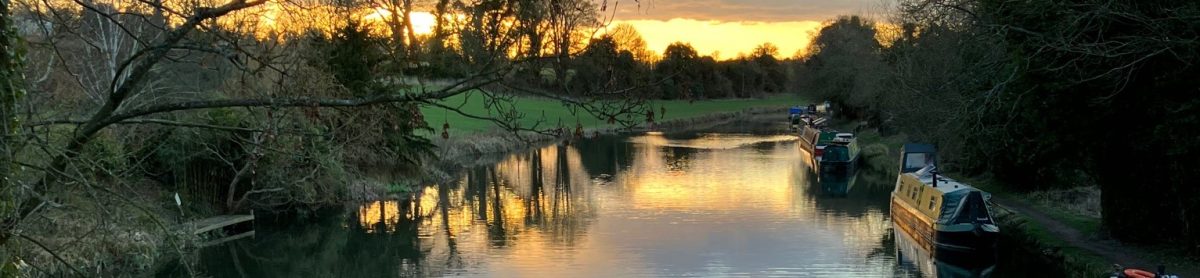
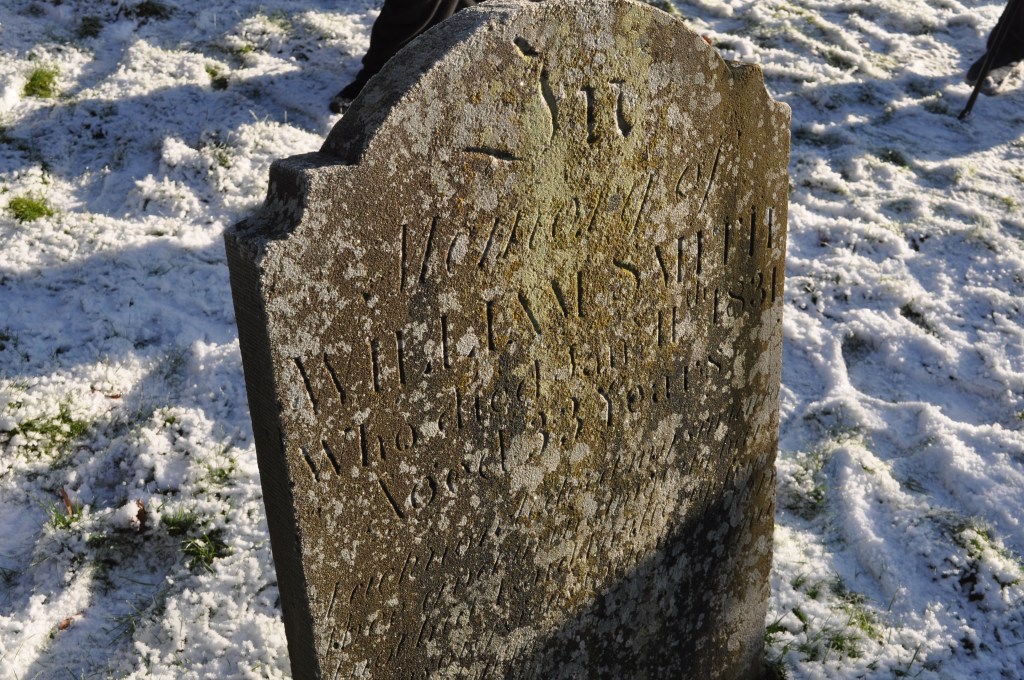

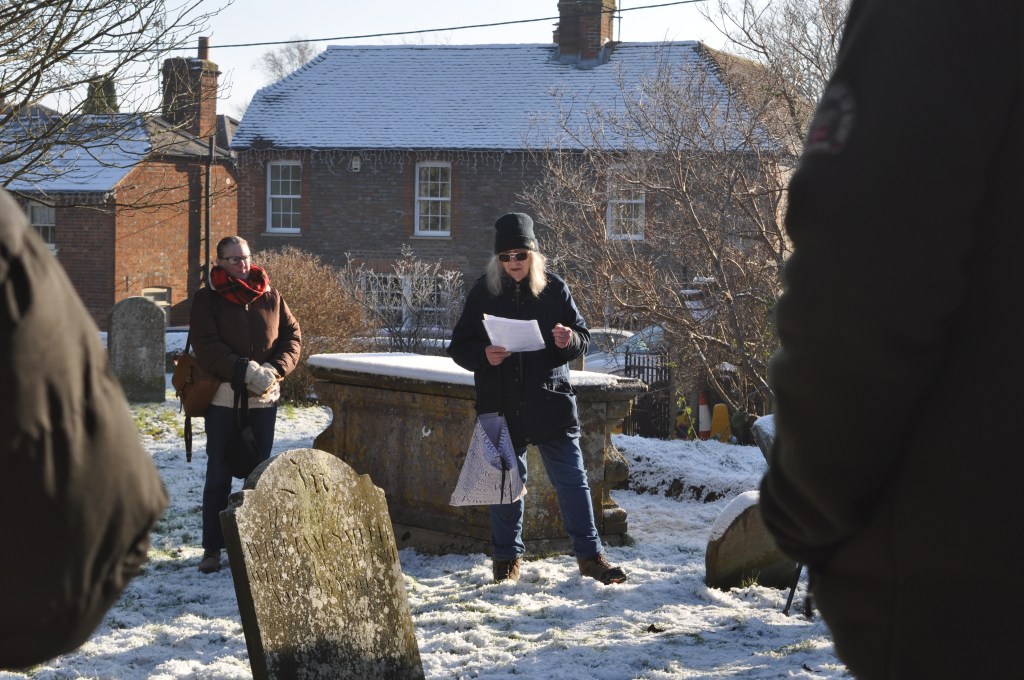
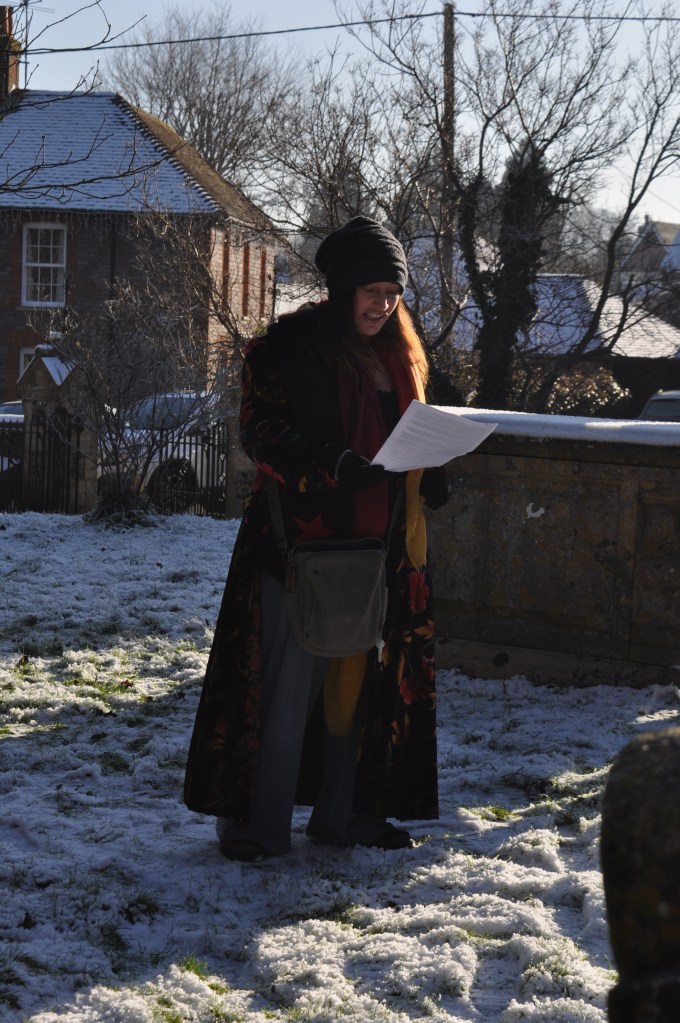
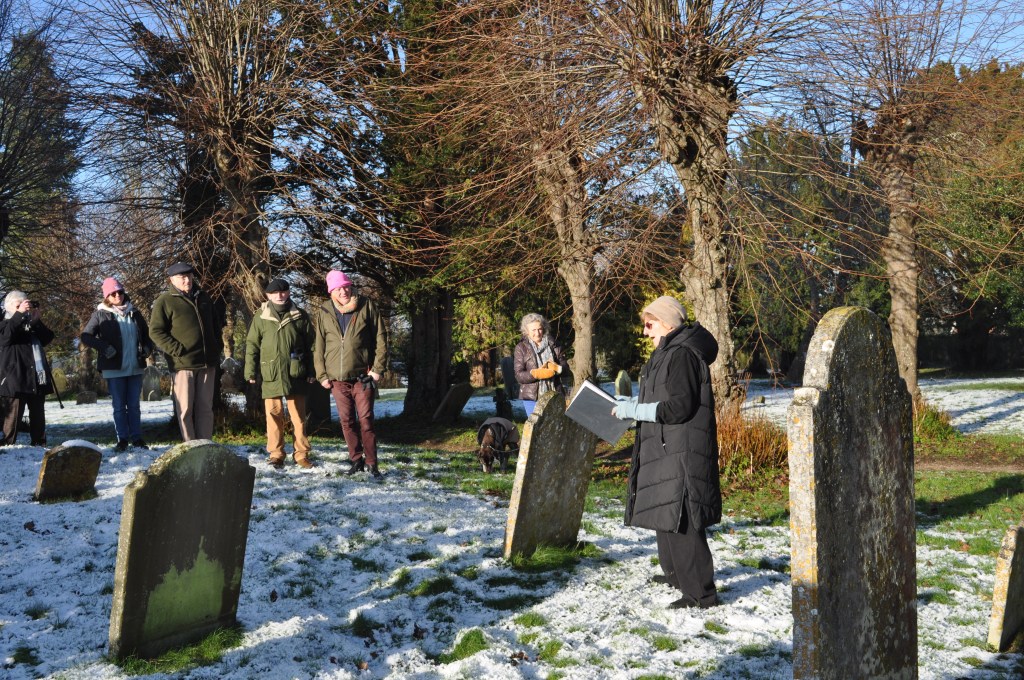
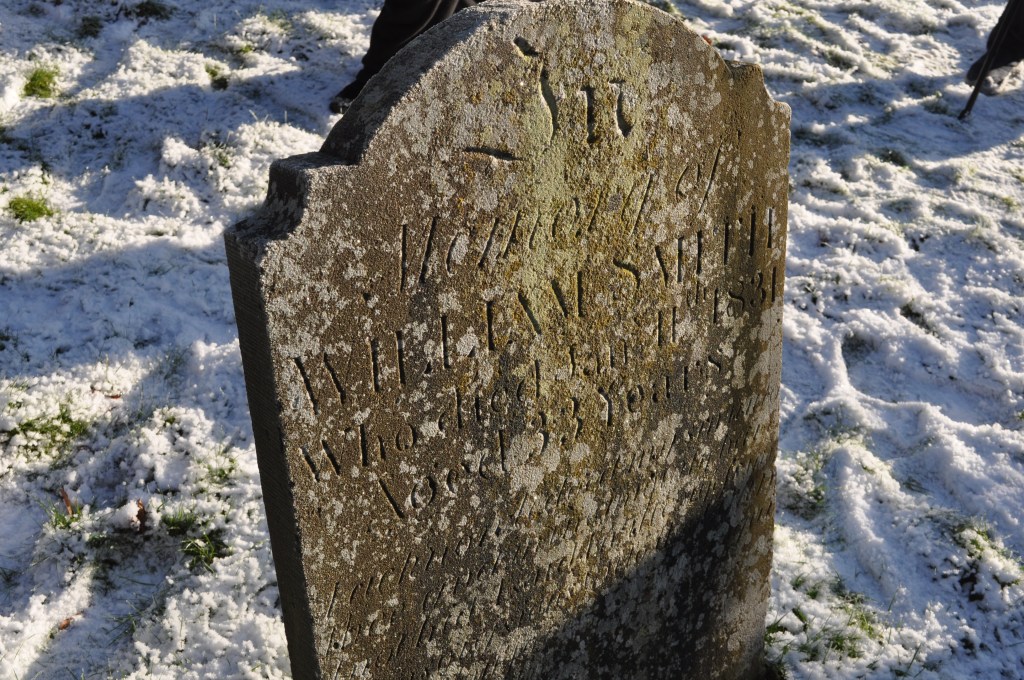
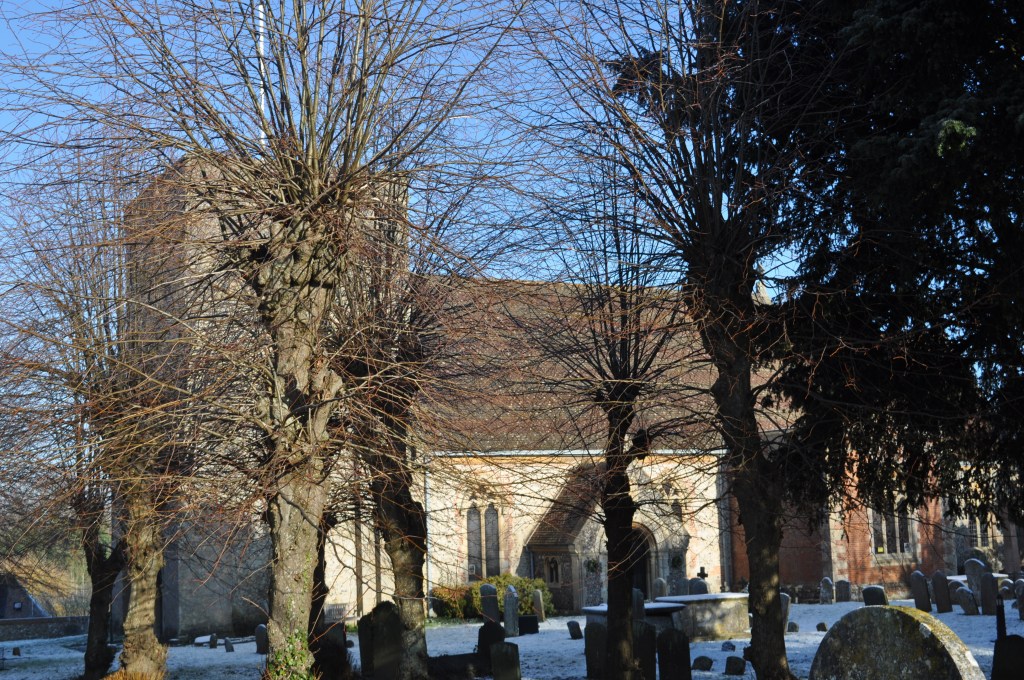
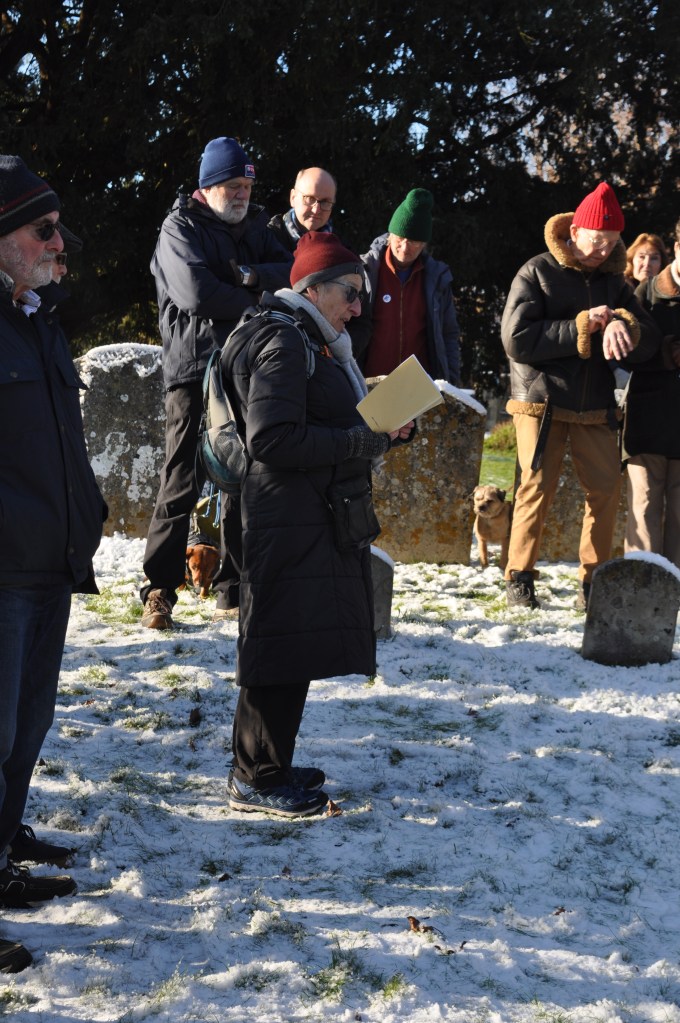
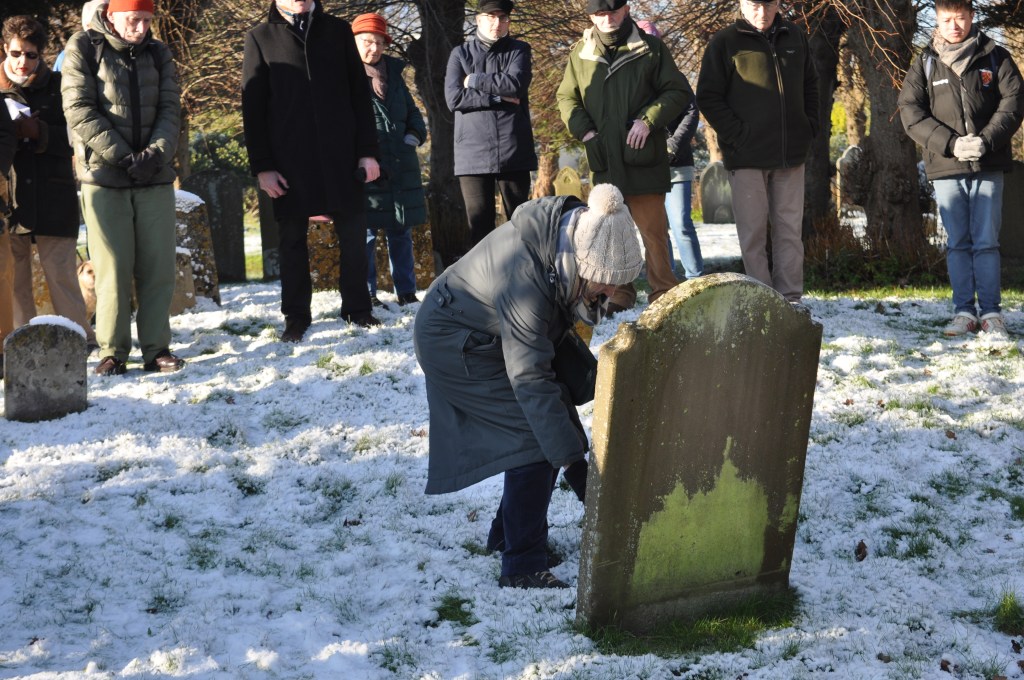
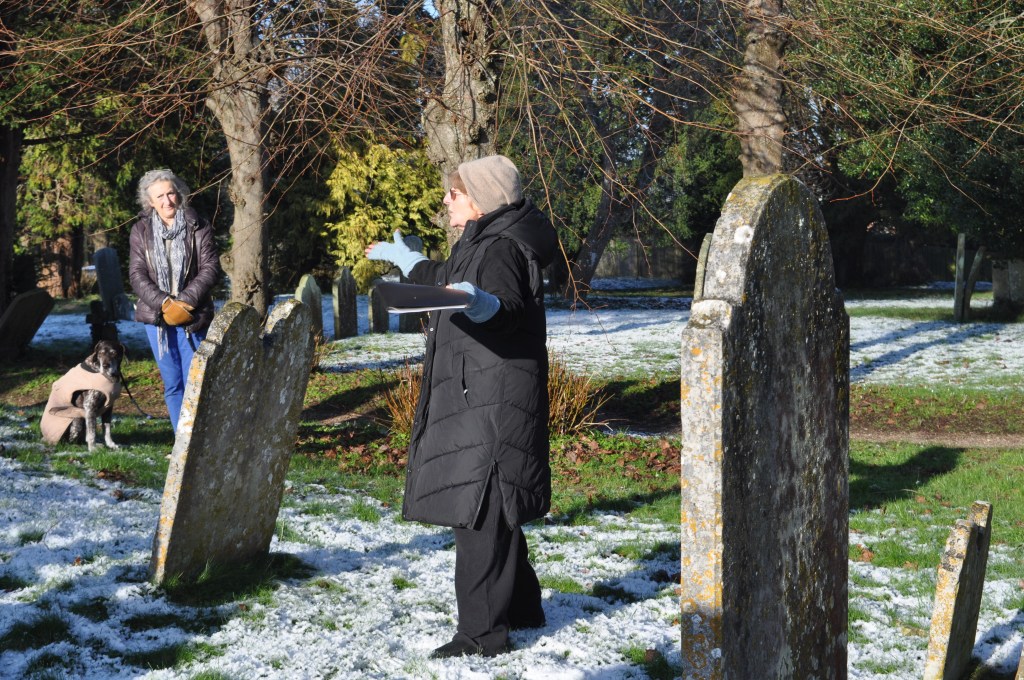
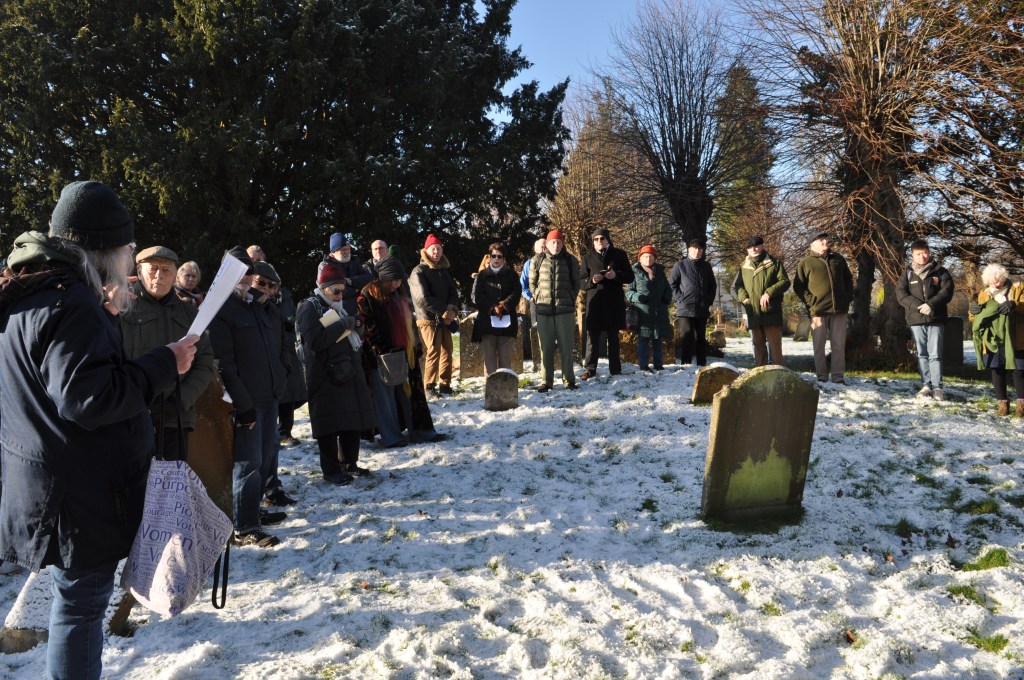
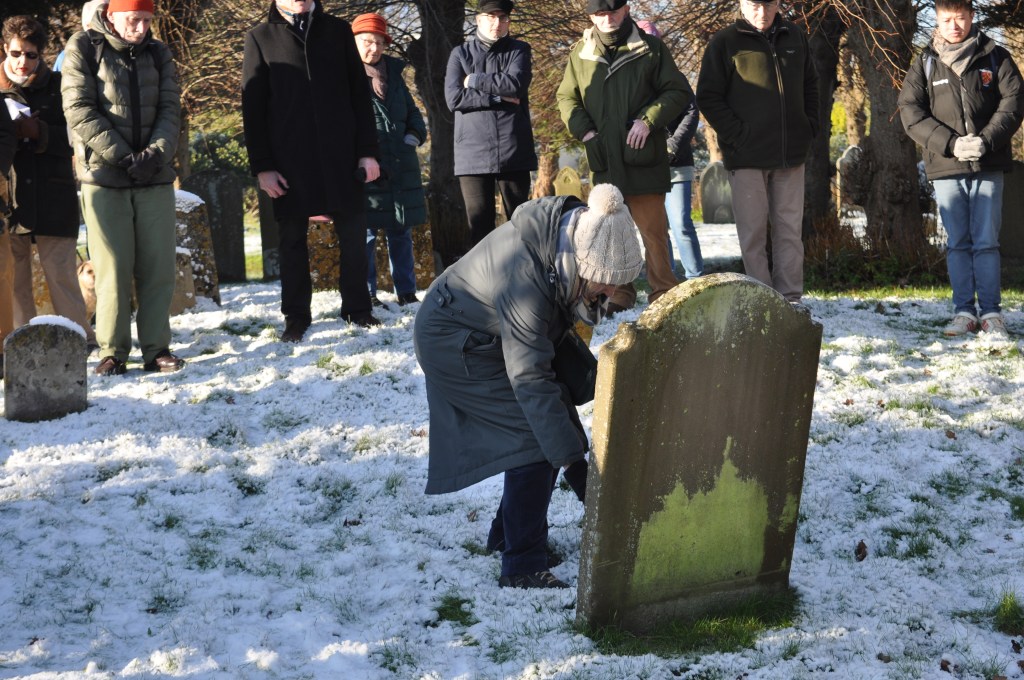
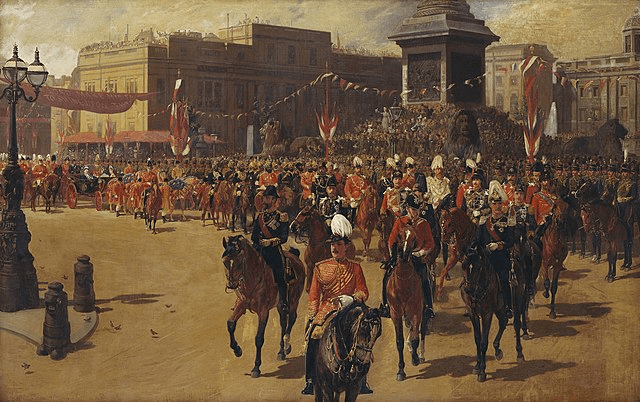
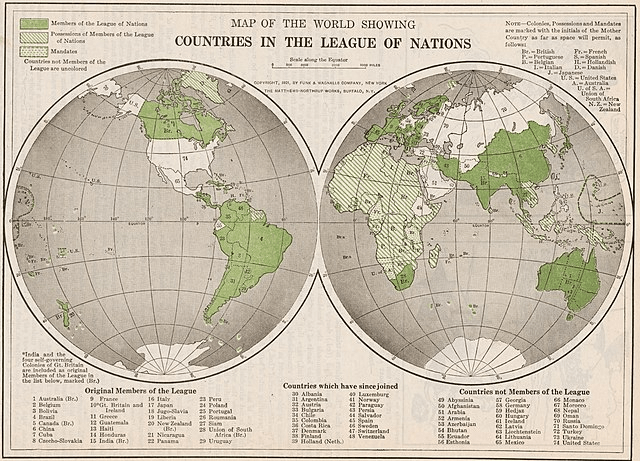


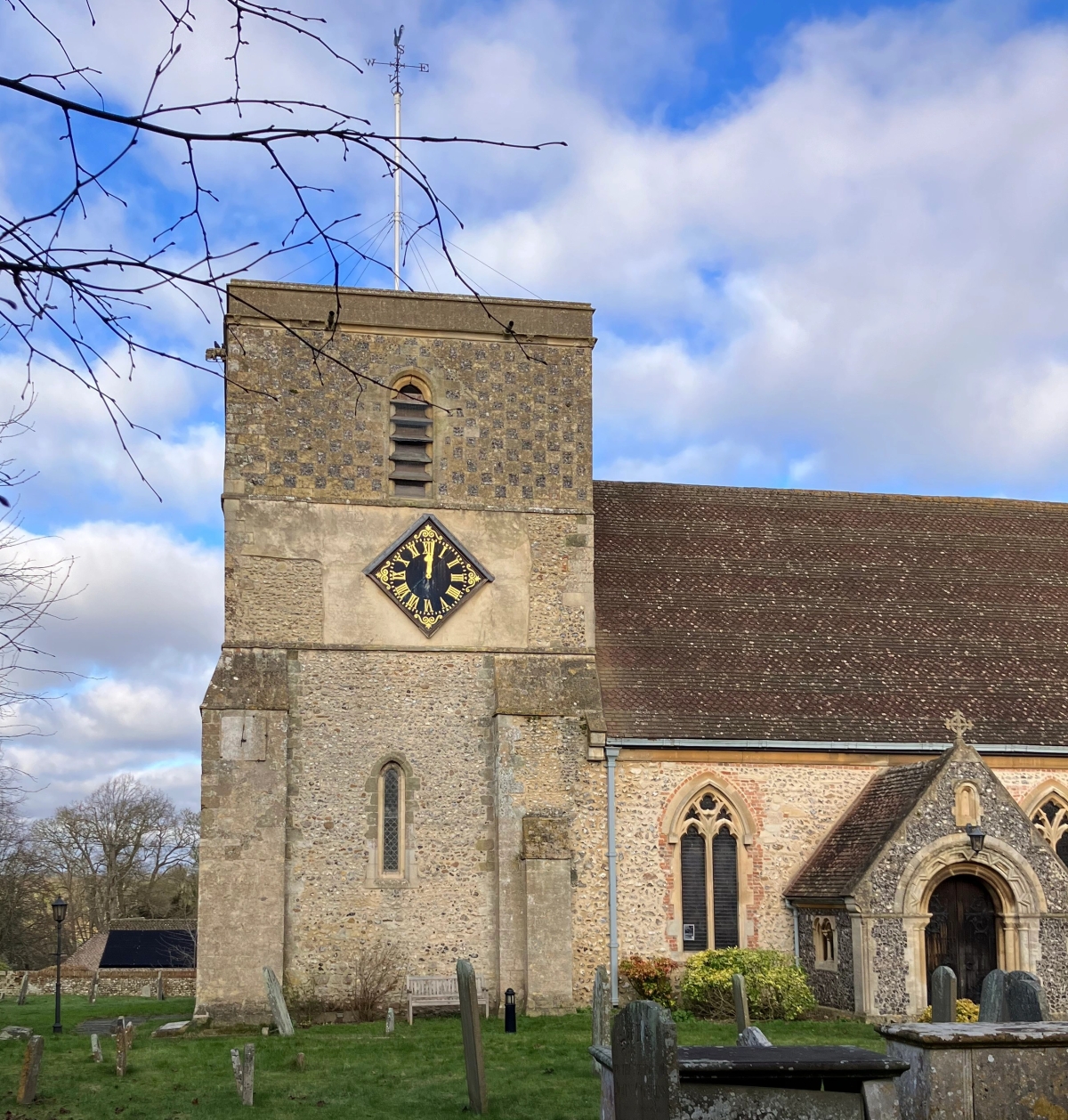


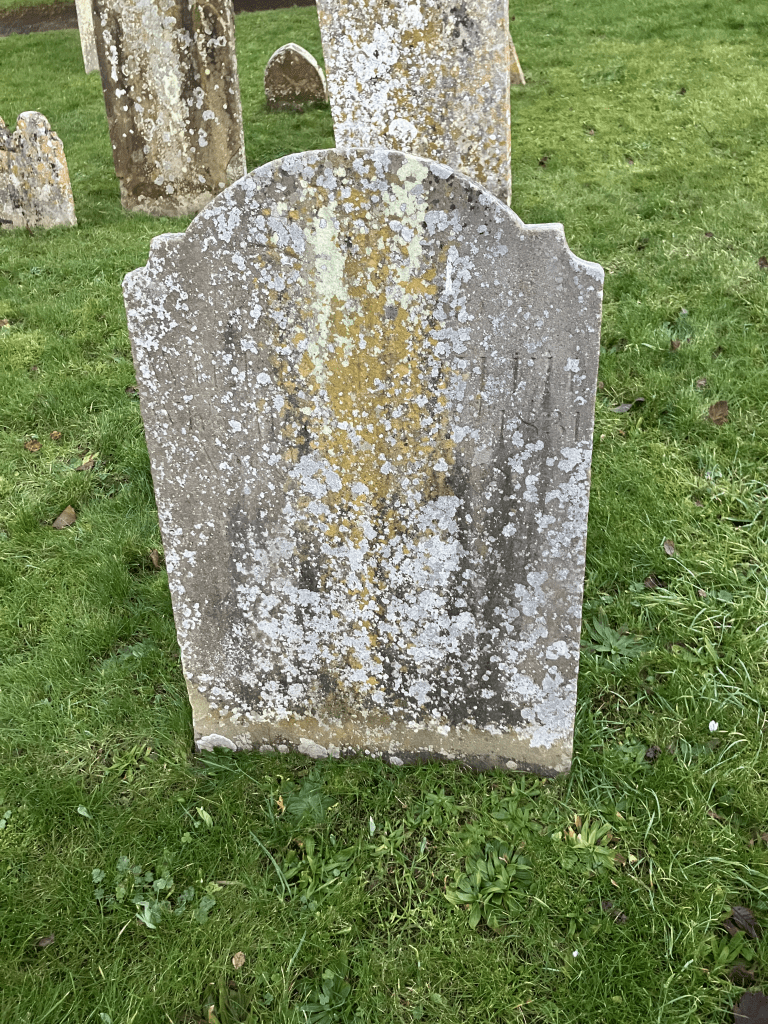


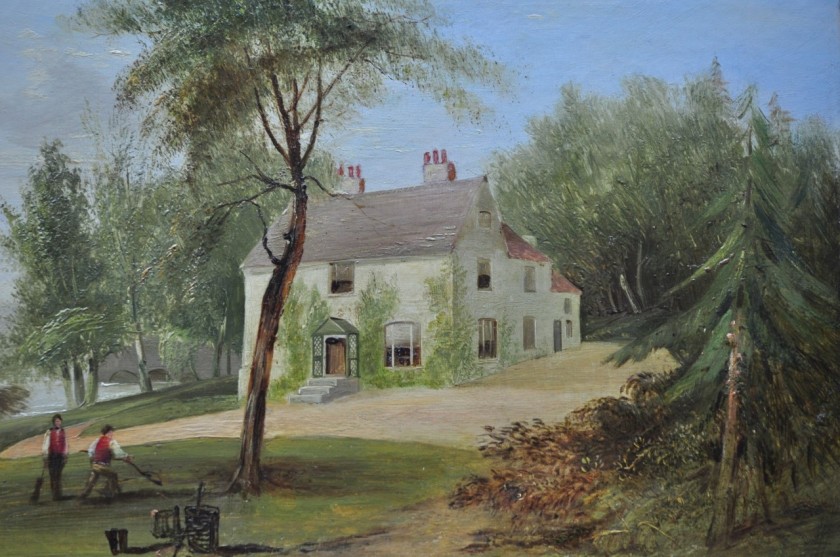
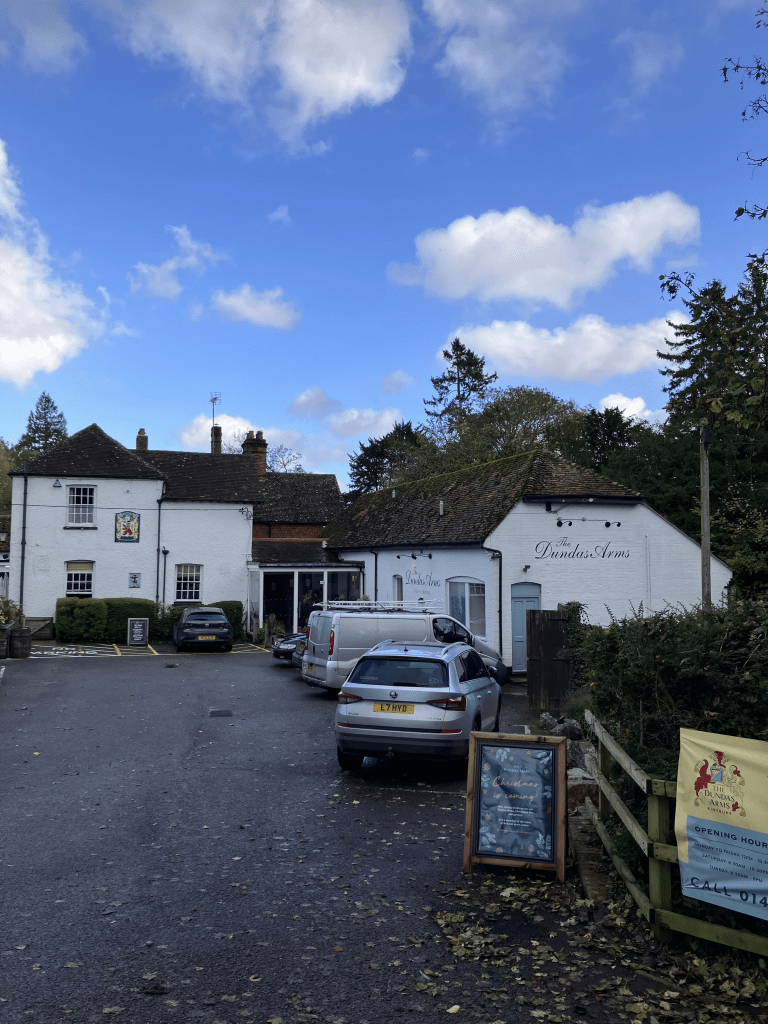
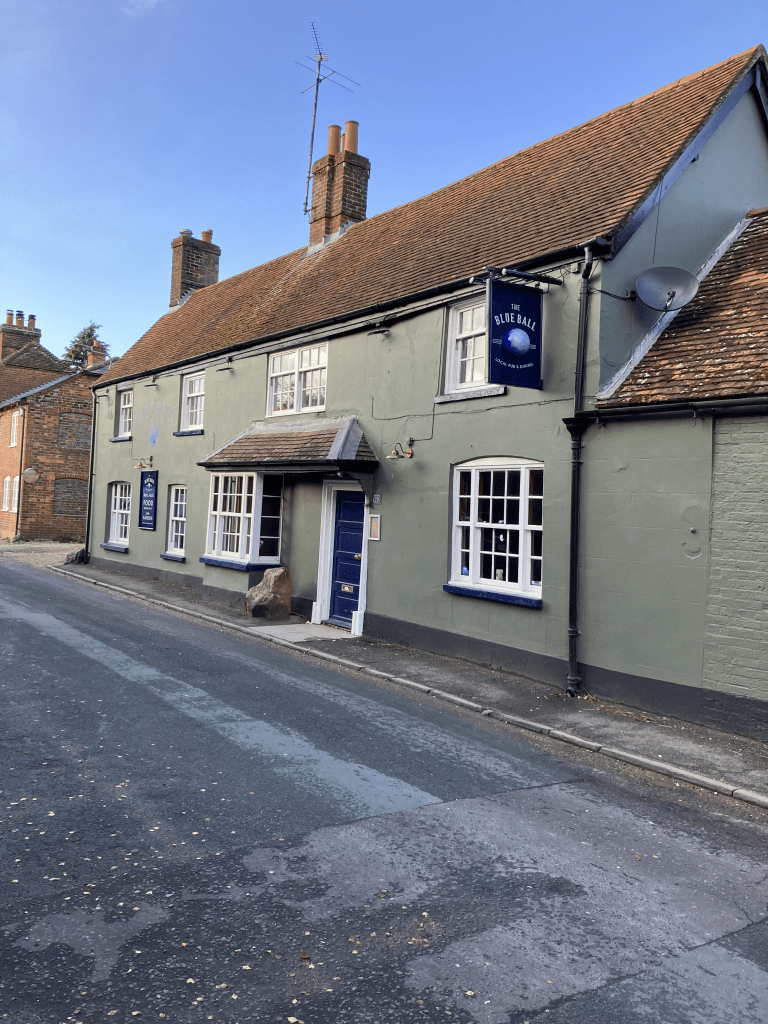

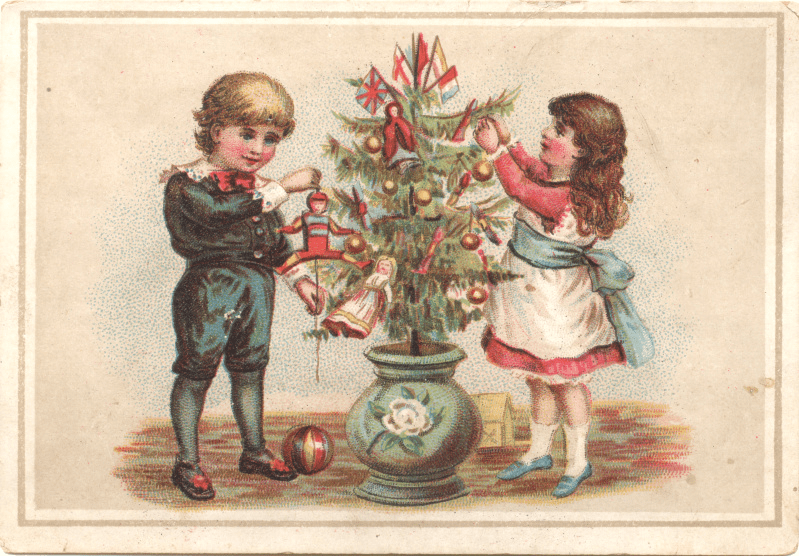
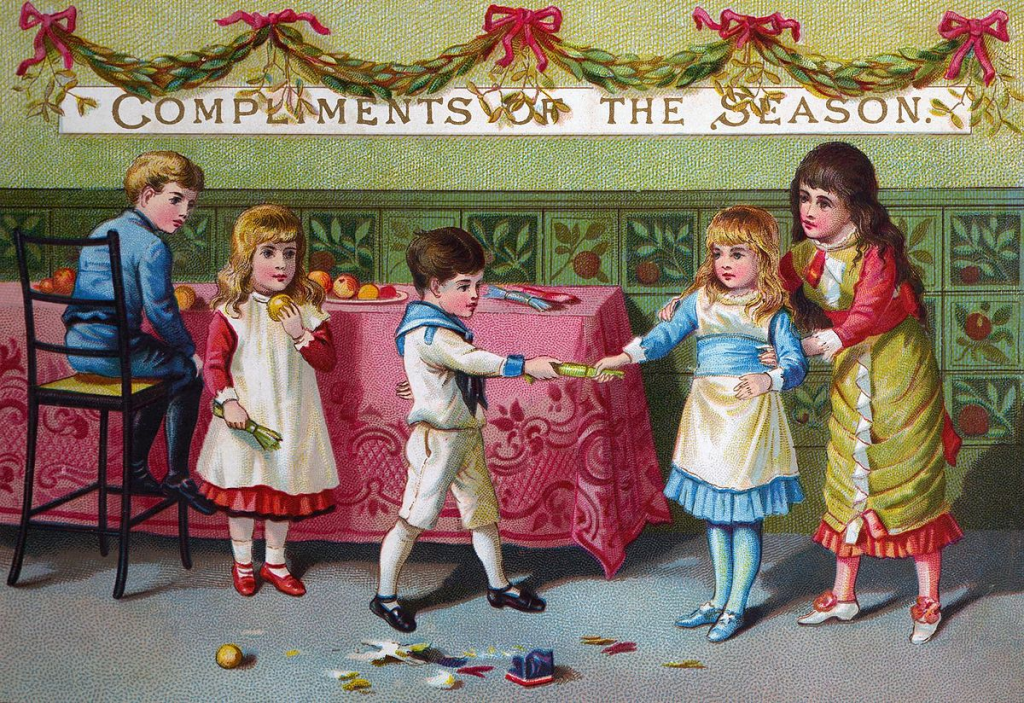
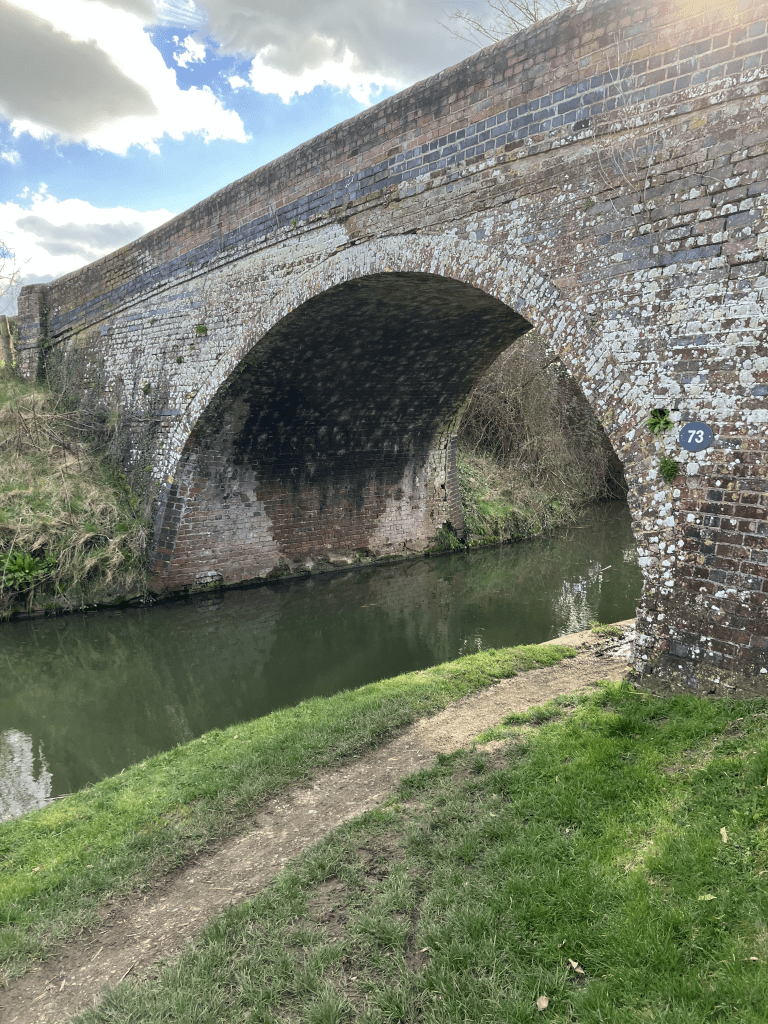
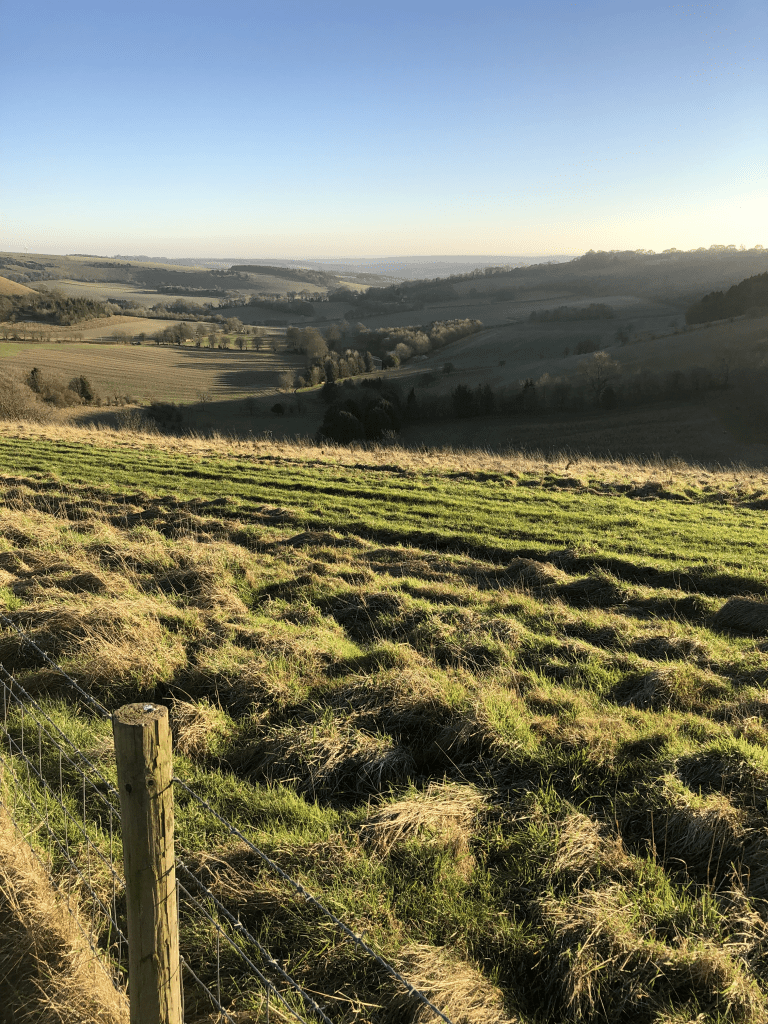

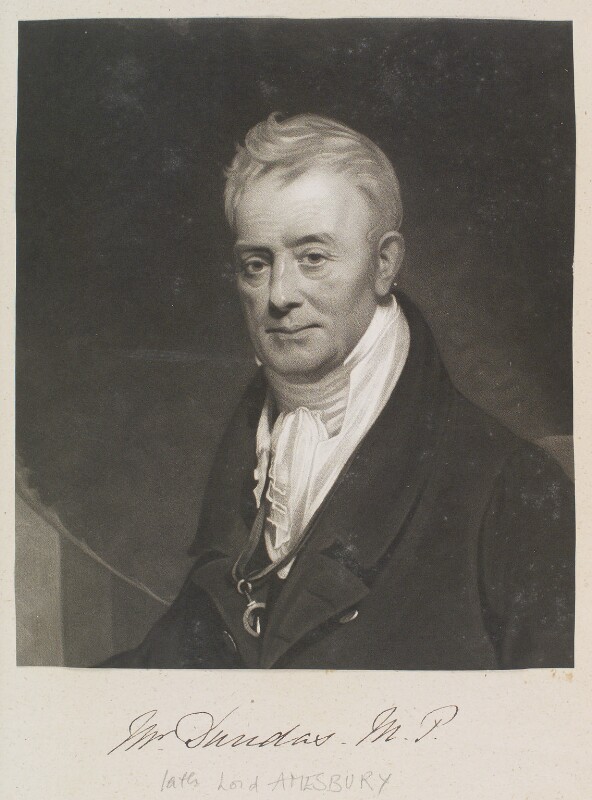

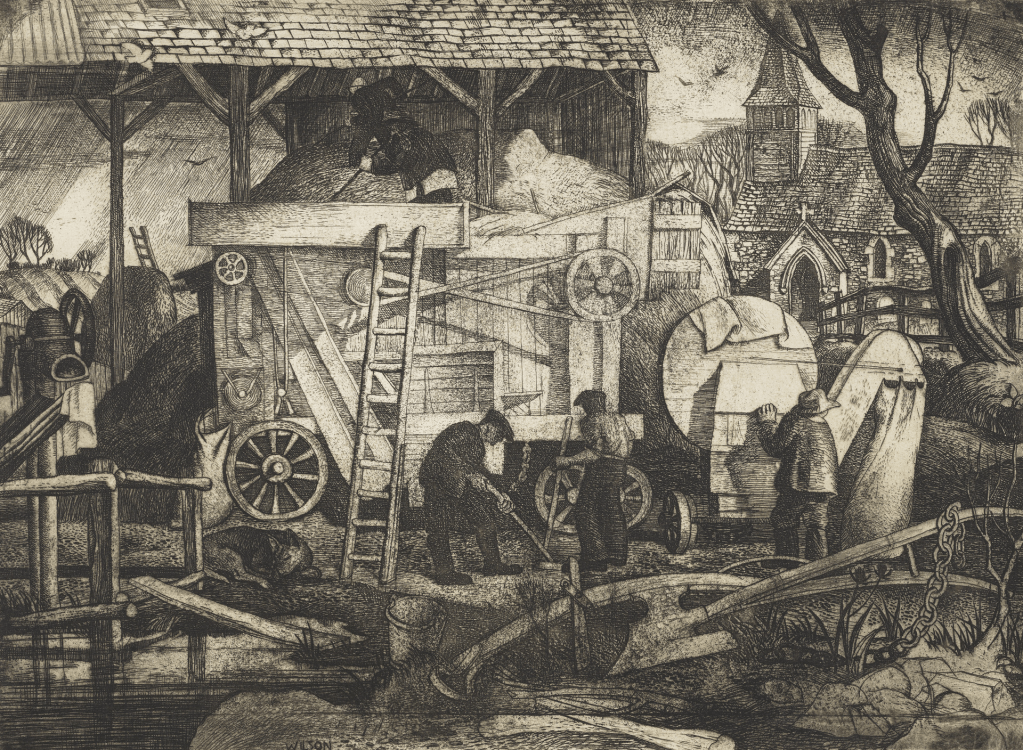
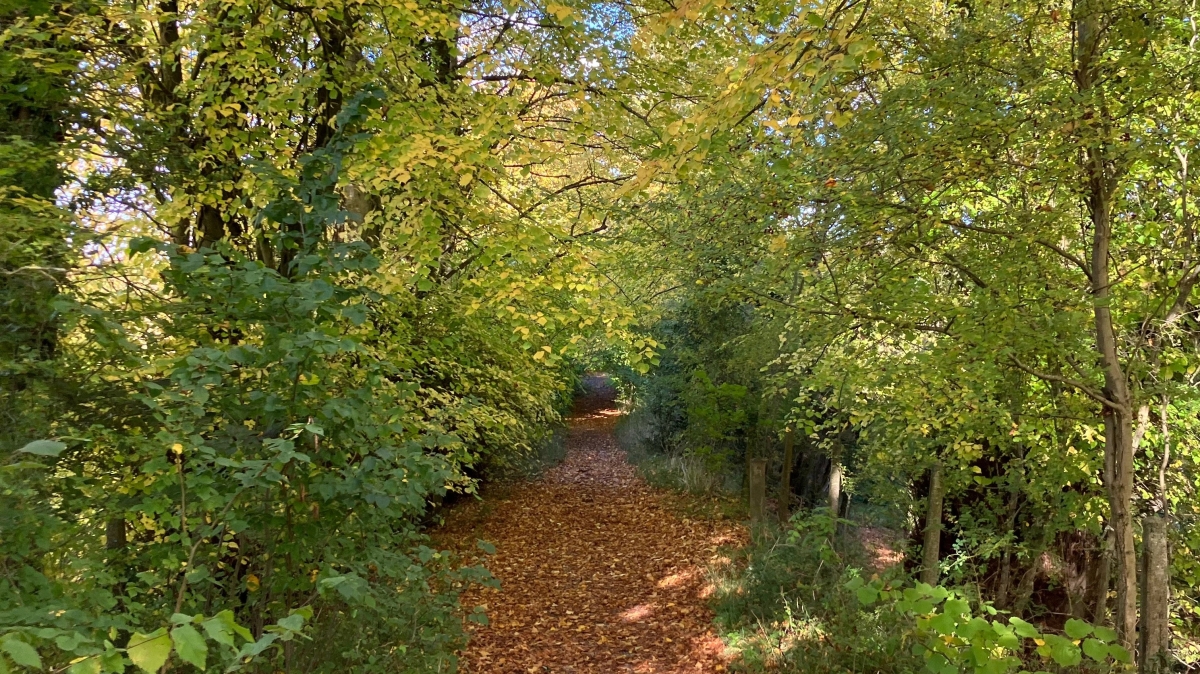
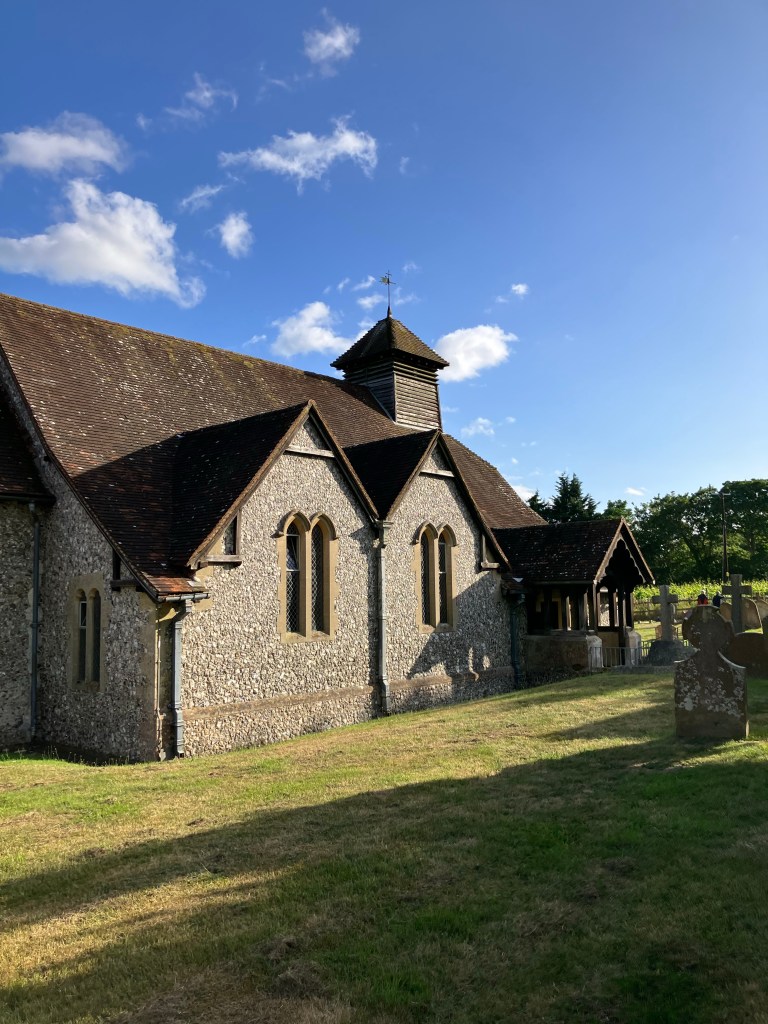
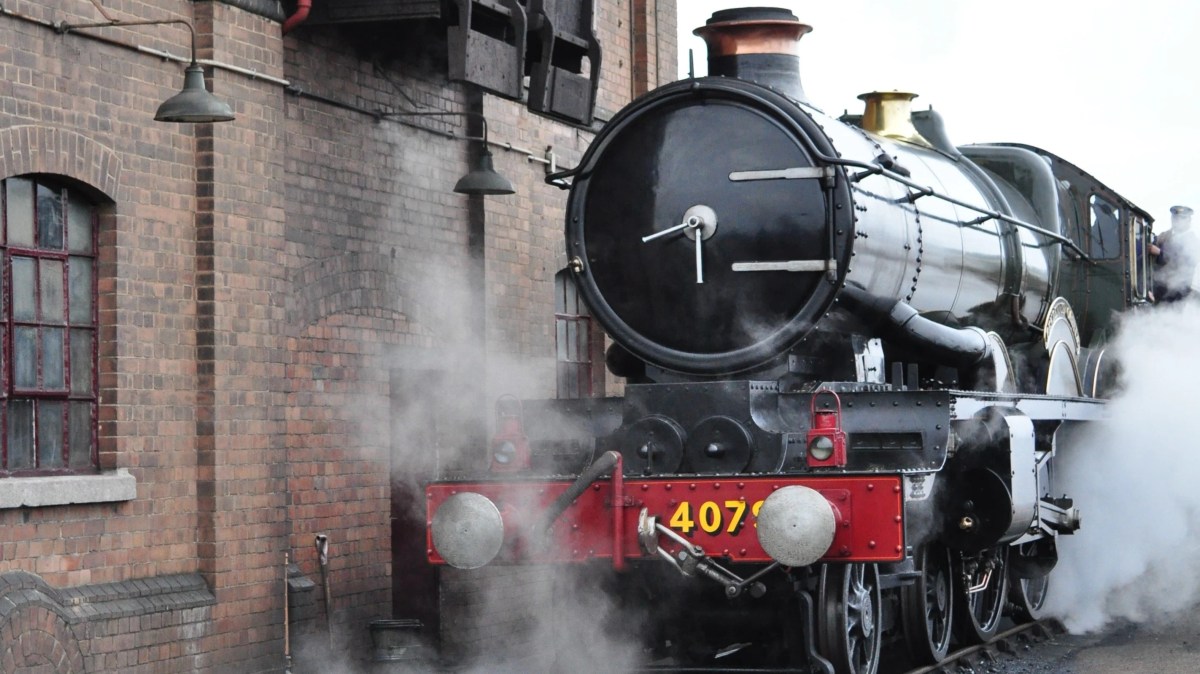
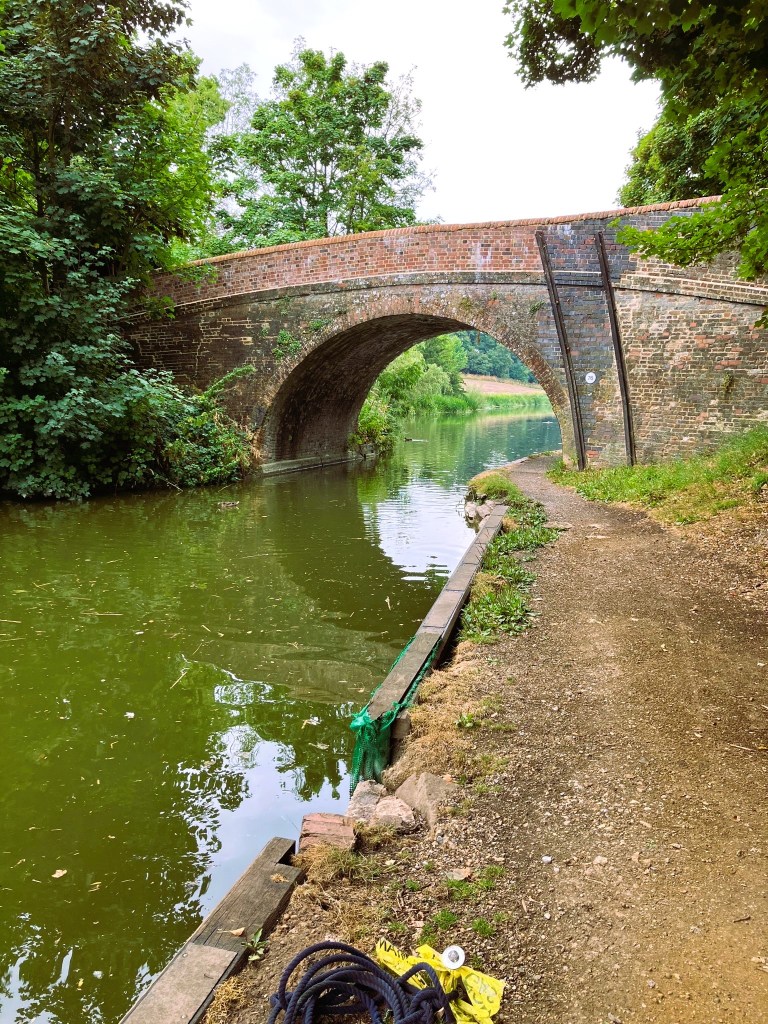
 Kintbury and Beyond