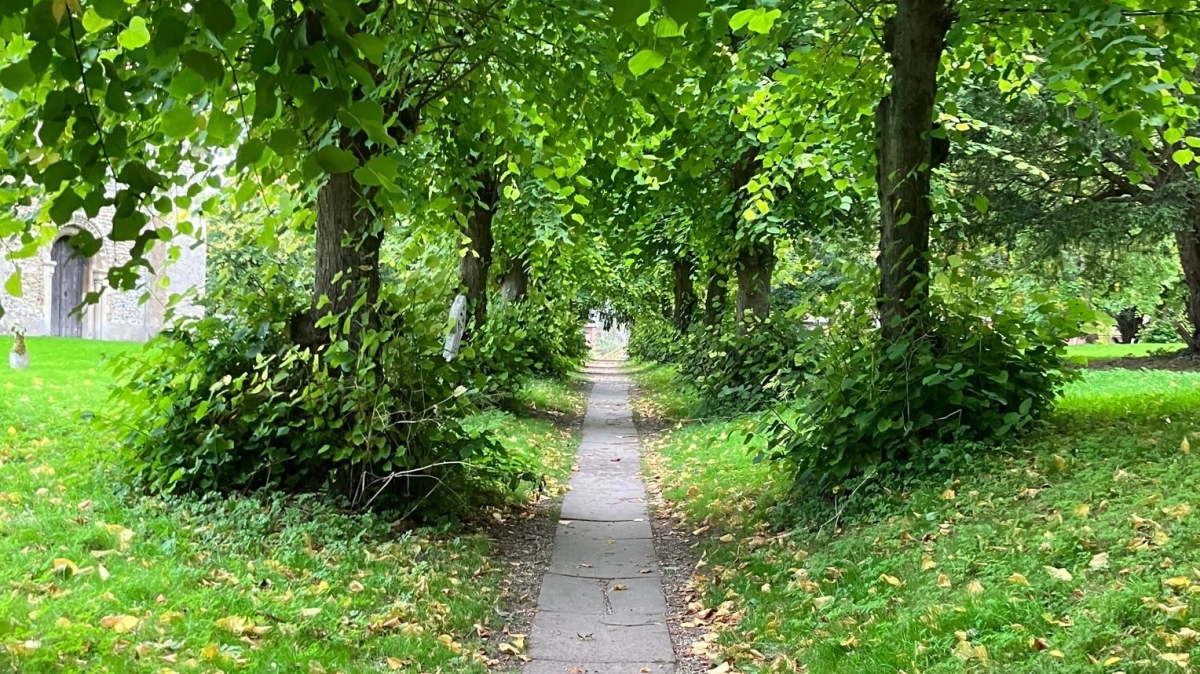
Celebrating Pentecost in the countryside

Pentecost or Whitsun is the date in the Christian calendar which commemorates the Holy Spirit descending upon Christ’s disciples following his death and resurrection, and occurs on the seventh Sunday after Easter.

The old English word hwit can mean  “bright, radiant; clear, fair”.

Years ago, the newly baptised wore white at this time. (In the 50s when I was young it was a time for Confirmation, when we also wore white). It is one of the three festivals when one is supposed to take communion: Christmas, Easter, Whitsun.

In medieval times, it was an important date because those in domestic service to a landowner would be free to celebrate. Among the traditions associated with Whitsuntide are Whit Walks, including brass bands and choirs. Whit fairs and parades also took place during the break, along with Morris dancing.

Drinking Whitsun ales was customary. In 1826, answering a survey, the Kintbury’s Rev’d Fulway Craven Fowle was asked the question:

Have you any Wake or Whitsun-ale doles, annual processions or perambulations?

He answered:

“Chiefly at night. A drunken whitsuntide and not a sober feast.”

One presumes this also applied to other villages near by: Inkpen, West Woodhay, Hamstead Marshall etc.

Penny Fletcher, June 2023

Rogation Sunday

In times past Rogation was celebrated in the Benefice of Walbury Beacon by groups of people setting out from each church after a service, joining at West Woodhay and onwards to Inkpen and Combe. It was a very popular event; the countryside is glorious and Combe the highest point in the south.

In times past Rogation was celebrated in the Benefice of Walbury Beacon by groups of people setting out from each church after a service, joining at West Woodhay and onwards to Inkpen and Combe. It was a very popular event; the countryside is glorious and Combe the highest point in the south.

Today, we celebrated in the West Woodhay Memorial Garden next to the church. It was a a beautiful morning, we sang, we prayed for God’s blessing. We were joined by a robin that hopped amongst us and a cuckoo calling in the background. The service was made even more memorable when Mr. Henderson and his Estate Manager told us of their wonderful decision a few years back to dispense with pesticides, chemicals etc and bring the land back clean and productive -thus of course, promoting biodiversity. Maybe we shall once again hear the plaintive cry of the lapwing and song of the nightingale.

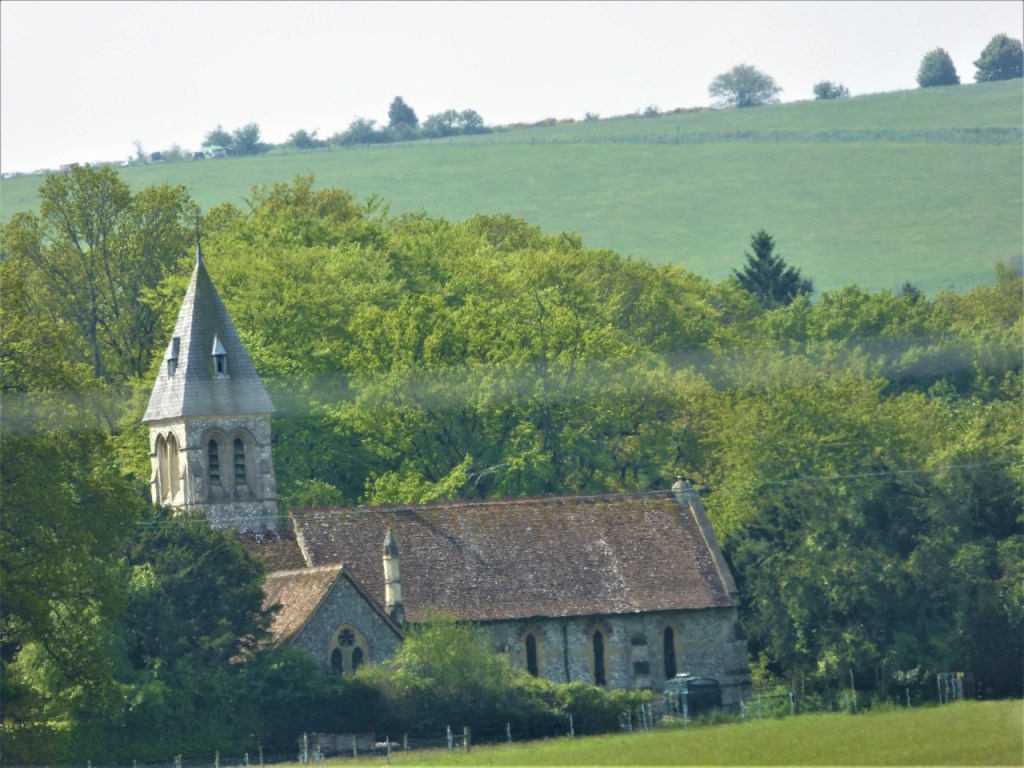
St Laurence’s Church, West Woodhay

After the service there was a chance to drive around the farm to see the work in action.

A great step forward in our area and one we hope that will be followed. Many thanks to Mr. Henderson for this decision and the hospitality of the day.

‘All creation is designed to work together: God made it this way to show his Glory.

Humans were created to look after everything in the world; they should not destroy it.

The world’s resources, including animals, are not to be exploited’

The Christian Assisi Declaration

Penny Fletcher

Ascension Day

Ascension Day 2023 is observed on Thursday 18th May. It marks the last appearance of Jesus to the disciples after his resurrection at Easter.

Ascension Day 2023 is observed on Thursday 18th May. It marks the last appearance of Jesus to the disciples after his resurrection at Easter.

Rogationtide, which begins on 14th May (rogation from the Latin rogatio is to intercede asking God’s blessing upon the land), ends at Ascension. Ten days after, Pentecost is celebrated.

There are many folk customs and beliefs connected with this day.

It was believed that eggs laid on Ascension Day will not go bad and, if placed on the roof, will bring good luck to the household. In Devon, it was an ancient belief that the clouds always formed into the familiar Christian image of a lamb on Ascension Day. In Wales it was considered unlucky to do any work on the day.


Weather

If the weather is sunny on Ascension Day, the summer will be long and hot; but if it rains, crops will do badly and livestock, especially cattle, will suffer from disease. Although traditionally, it was considered that a cold May is better for people and harvest, and a wet May brings a good load of hay (probably because it usually meant a warm sunny June).


 Food

It was a widespread custom in many parts of Europe, during the Middle Ages, to eat a bird on Ascension Day, because Christ “flew” to Heaven. Pigeons, pheasants, partridges and even crows graced the dinner tables. In western Germany bakers and innkeepers gave their customers pieces of pastry made in the shapes of various birds. In England the feast was celebrated with games, dancing and horse races.


Odd customs

 In Italy, particularly in Florence, a man used to gift his beloved some flowers on this Feast, and give her a cricket cage. It is uncertain how the cricket became associated with the Ascension, but the Feast is known in parts of Italy as “La Festa del Grillo” (“the Feast of the Cricket”). According to Tracy Tucciarone, of FishEaters.com, this “custom usually takes place on the Sunday after Ascension Day, and caged crickets are sold so that children can release them.”

Early in its observance as a Festival it had a distinctive feature in that the liturgical procession went outside the city to the top of a hill in imitation of Christ leading the Apostles ‘out towards Bethany’, Luke 24 verse 50.


Unknowingly, when we first became a Benefice and celebrated Ascension, we were in a way following this tradition by worshipping in the church in the foothills of Combe. (Any crickets around Inkpen?)

Penny Fletcher