For hundreds of years, the fastest form of transport known to most people, either in towns or villages, was the four or five miles an hour of the carrier’s cart. The heady speeds achieved by the stage coach might be enjoyed by the wealthier classes but for most, life could only continue at a gentle, plodding pace.
Then the railways arrived, first in the industrialised north then, thanks to Isambard Kingdom Brunel, in the south and west as well. By 1841, Brunel’s Great Western Railway between London and Bristol had fully opened and for the very first time passengers could experience travelling through the Vale of the White Horse at over 25 miles an hour.
Clearly, railways were the transport of the future and many in our part of Berkshire were keen for a slice of the action. In 1845 an Act of Parliament was passed which, with the support of the already well-established GWR, created the Berks & Hants Railway Company. This was to be a branch line from the Great Western, leaving the main line just south west of Reading towards Theale. This was the “Berks” section of the line; the “Hants” section turned south east towards Basingstoke.
There were to be four stations on the way to Newbury: Theale, Aldermaston, Woolhampton and Thatcham, then to the west, Kintbury and Hungerford. The line finally opened on the very cold morning of 21st December 1847 when, according to the report in the Newbury Weekly News of December 24th, there were initially few spectators but, as the day advanced, however, ” the bustle began to increase and it was very evident that something of great public interest was occurring.”
The NWN was not impressed by the speed of the new service which covered the eight and a quarter miles between Newbury & Hungerford – with one stop at Kintbury – in 25 minutes, but commented, “this will doubtless be improved”. The reporter seems to have forgotten that this speed was probably four times faster than a carrier’s cart would have completed the same distance, but perhaps expectations had been raised by the railway company.
However, those who travelled along this new branch line were, apparently, unanimous “with respect to the very great smoothness, absence of oscillation and of noise which appears to distinguish the Berks & Hants from other railways.”
It would be interesting to know how many of these travellers enjoyed seats in first class carriages and how many, if any, took that first journey in a second or third class carriage.
Many of the wealthier classes of our villages – the inhabitants of West Woodhay House, Kirby House, Hamstead Marshall Park, Barton Court and so on – might well have availed themselves of the opportunity to travel up to London at previously unimagined speeds though I doubt many cottagers would have joined them. For some people, the arrival of the railway meant a serious decline in business: canal travel could in no way compete with the speed of the train, for example. Coach travel took a blow, too: previously, seven horse-drawn coaches a day had left Newbury for Reading but this service was soon discontinued.
William Huskisson M.P. was famously the first person to die in a railway accident when he was unable to get out of the way of a moving engine before it ran him over. That had been in 1830. But other people failed to appreciate how dangerous it could be to get too close to a fast moving engine.
The Bath Chronicle of November 1847 reported the story of , “a lad in the employment of Mr Alderman of Kintbury” who was crossing the line at Hamstead (sic) with a donkey and cart when he saw an engine coming down the line, “at a pretty rapid rate”. Presumably to get a better view , the young man, “actually pulled up with his donkey and cart on the middle of the line on which the engine was running.” His stupidity, the paper opined, was second to none.
Luckily, “the son of Mr Gibbons of Hamstead” was passing by and he ran up to him and, “succeeded in hurrying the donkey off the line just as the engine came up.”
You can imagine something the conversation in the Gibbons’ household that evening!
It is perhaps not surprising that fare dodging arrived with the railways. The Reading Mercury of January 1848 reported the case of Daniel Gingell and Richard Tiggell who had jumped out of a second class carriage at Kintbury, “to evade the payment of their fares and thereby defrauding the company.” They were fined £2 3s 6d each (the equivalent of several weeks pay at least) or one month’s imprisonment.
I bet they didn’t do it again.
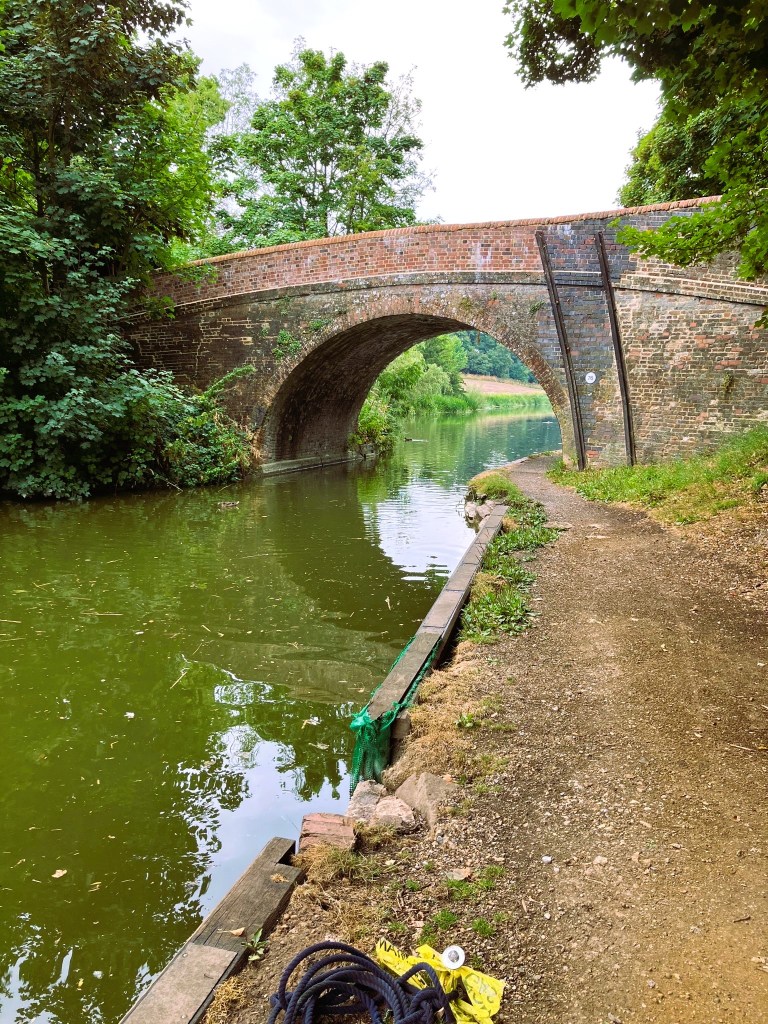
By 1862, our branch line was extended to Devizes. Originally, this line was of Brunel’s preferred broad gauge of 7 feet ¼ inch although lines across the Great Western were eventually replaced by standard gauge to conform with the rest of the country’s growing railway network. However, if you walk along the canal to Vicarage Bridge, Kintbury (left), you will see two lengths of former broad gauge rails being used to buttress the bridge on the east facing side. A relic of Brunel’s engineering!
If you are a railway enthusiast or if you know anything about the early days of the Berks & Hants railway, I would really like to hear from you. Email me at kintburyandbeyond@gmail.com
Tessa Lock
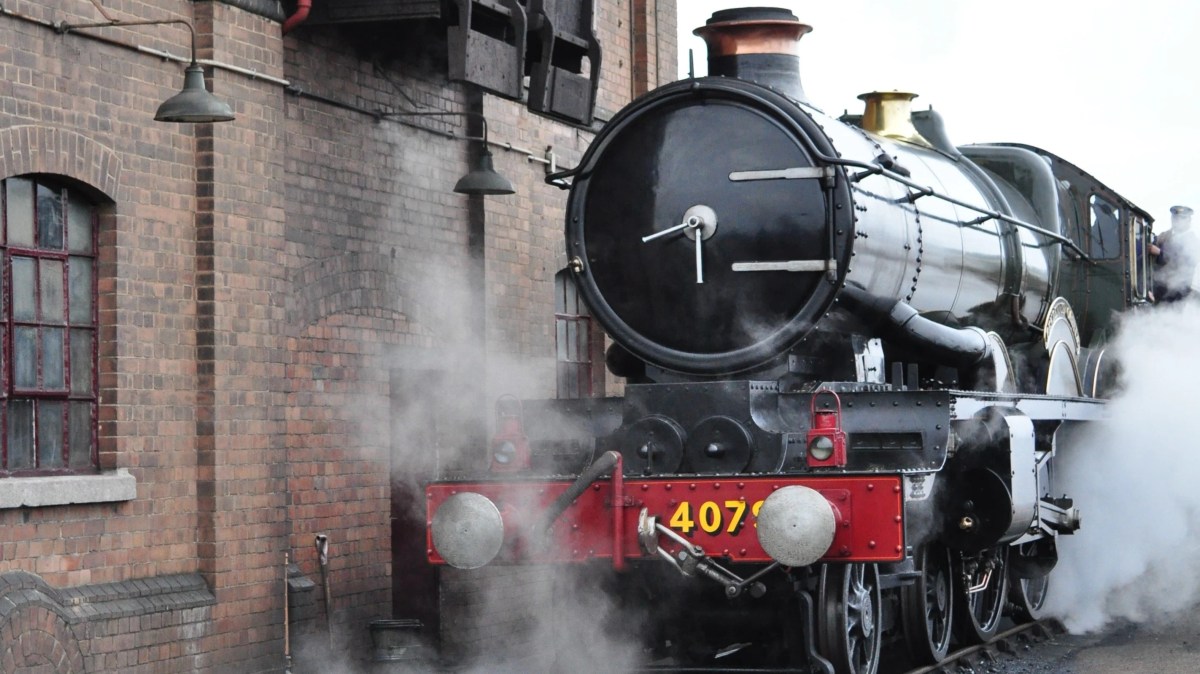
Note from the editor: We do not have a photo of a wide gauge engine, and have had to make do with standard gauge GWR Pendennis Castle no. 4079, pictured here at Didcot Railway Centre. Apologies!
 Kintbury and Beyond