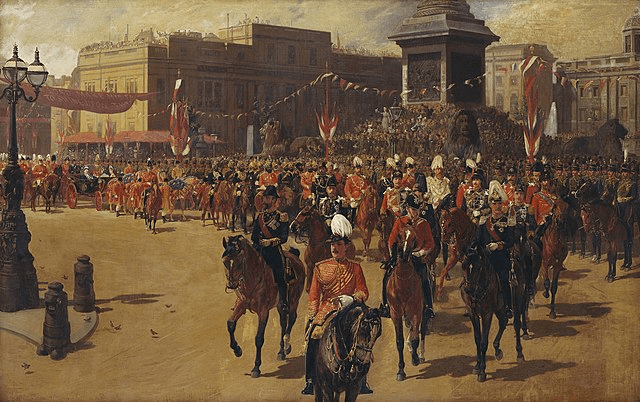
Celebrating Victoria’s Golden Jubilee

Queen Victoria came to the throne on 20th June 1837 so, by her Golden Jubilee in 1887, many people had grown up knowing no other monarch. Consequently, the fiftieth anniversary of her coronation was seen as a cause for great celebration.

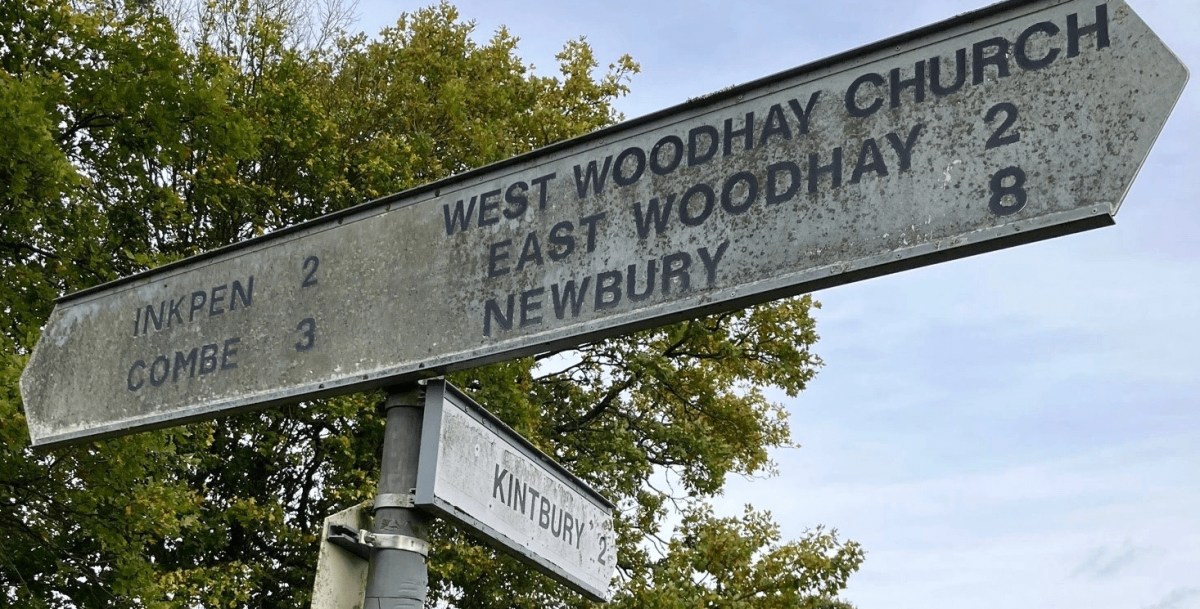
Reports in the Newbury Weekly News covered three local villages: Kintbury, West Woodhay and Combe, although the other villages would certainly have held celebrations. Reading those three reports, what is most interesting, I think, is the way in which events in the two smaller villages are organised – and presumably largely funded – by the families in their respective “big houses” to whom, it is naturally expected, the villagers will demonstrate deference and appreciation.

A church service of thanksgiving was a central to the celebrations in all three villages: at Combe villagers marched behind a banner to St Swithun’s church while St Mary’s, Kintbury flew the Royal Standard and the bells were rung.

Celebrations in the two smaller villages very much revolved around the respective “big houses” with their principal families. At Combe, Mr W.H. Cole gave his workers, game keepers and labourers on the Combe estate a meal “of hot roast beef, mashed potatoes, plum pudding and beer”, all enjoyed on the village green. The villagers, “did not fail to express themselves most grateful”, but then, it would be expected to show appreciation to those you were dependent on for employment. The meal was followed by singing and dancing, “freely indulged in by the village lads and lasses” and – presumably for the men only – the, “fragrant weed, too, liberally supplied by Mr Cole, was thoroughly enjoyed.”

At West Woodhay, celebrations kicked off in sporting vein with a cricket match although presumably this was something to be enjoyed more by the men than the women. The church service was held at a quarter past five after which parishioners proceeded to the home of Mr & Mrs Cole at “the big house” (sic) for hot roast beef and plum pudding which, the report tells us, consumed in a West Woodhay fashion “cannot be beaten.” What “West Woodhay fashion” was, we are left to wonder. The meal was followed by a “Jubilee pipe” and “a good packet of Jubilee tobacco for every man”. If anything special was given to the women of the village, the NWN report does not say. I doubt it was.

The Cole’s son, Mr A.C. Cole, had returned to his parents’ home for the celebration; he gave a speech which was, apparently, well received especially as he had recently been, “in town” where he had been, “viewing Her Majesty in her world-famed  procession and at personal inconvenienced had come down to assist in making his father’s servants happy.”

So that was nice.

At 9 o’clock everyone proceeded to “our beacons” to watch bonfires and rockets.

The NWN report of the celebrations in Kintbury illustrate a village which did not revolve around one family in a “big house”, although the report mentions the names of certain influential and benevolent villagers. Celebrations commenced with a peal of church bells at 5 am so an early start was assured whether the good people of Kintbury wanted it or not! The village was decorated with bunting the like of which had never been seen before, apparently, and music was supplied by the Hungerford Town Band.

Kintbury was then, as it is now, a much bigger village than the others and this is reflected in its celebrations. A table covered with a calico cloth was placed in Dr Lidderdale’s meadow, to seat nearly one thousand people – presumably all at once! A meal of roast and boiled beef as well as boiled ham was served, accompanied by hot potatoes and plum pudding, washed down with a pint of beer or two bottles of ginger beer for each person. Somewhere referred to as “the Baths” was loaned by Mrs General Dunn for tea making. It seems no expense was spared and during the meal, children were entertained by one Professor Burssord, allegedly of London, who performed various and amusing tricks with great dexterity.

Sports and music followed the meal and about 450 children enjoyed bread and butter and cake with tea served in a Jubilee mug. I hope they were able to take the mug home with them afterwards!

Those unable to get to the event due to age or infirmity had their dinners delivered to them.

The day concluded in sports at which money prizes could be won.

What became of all that calico used as table cloths? It was later given to the local schools (interestingly, there must have been more than one either in Kintbury or the satellite hamlets) to be made into children’s garments.

Apart from the size of the village – perhaps that should be small town – the big difference between celebrations in Kintbury and the other two villages is that the event in Kintbury did not revolve around the benevolence of one particular family. The NWN report says that the celebrations were enjoyed by, “ all classes, creeds, in all conditions of life” who “evinced a desire not only to participate in the celebration but also to contribute towards the expenditure thereof.” There is no sense in which the people of Kintbury were expected to show gratitude to one particular family; there is no sense of there being forelock tugging or cap doffing to anyone in a Lord of the Manor role. The celebrations were organised – much more democratically – by a committee chaired by Mr W. H. Dunn with the vicar, Rev Edwards as vice chair. Altogether, dozens of other Kintburians contributed to making the day something to remember.

Queen Victorian lived and reigned for a further fourteen years and her Diamond Jubilee was celebrated in 1897. This , however, was a much more low key event throughout the country, perhaps because by now the aged Queen was seen very little in public – I do not know for sure. But I am sure those who celebrated in 1887 would have remembered  the roast beef, the hot potatoes, the tobacco and the beer – not forgetting the Jubilee mugs – for a very, very long time!

(C) Theresa A. Lock June 2024
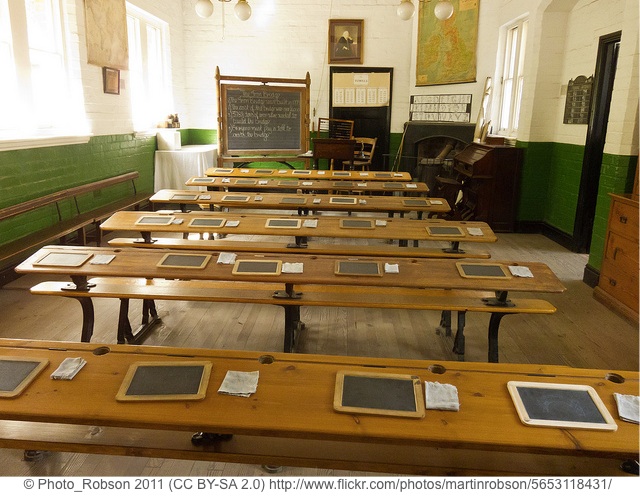
Our Village Schools in the late 19th century

Today, three of our local villages have village schools. Two of them, Inkpen and Enborne, are still based in their original Victorian buildings just like many other primary schools in West Berkshire. However, you might be surprised to find out that, at the end of the nineteenth century, there were twice that many village schools in our area.

By the middle of the nineteenth century, many towns and villages benefitted from schools established by churches or charitable organisations. However, it was not until Forster’s Education Act of 1870 that local school boards were created with the power to levy rates to finance building and running of so-called National Schools in their areas. Thus universal education became available to all children up to the age of 13.

It would be fascinating to research our village schools through documents in the Berkshire Records Office. For now, however, I decided to begin my research by looking at the 1881 census as by this time those schools opened as a result of Forster’s Act would be well established.  

At the time of the 1881 census, the occupant of the Kintbury St Mary’s school house is 25 year old James Humphries, originally from Ditton Marsh, Wiltshire. James is described as a “certificated teacher” meaning he has gained a professional qualification at a teacher training college. His sister, Catherine, 20, who is living with him, is described as “assistant teacher” which might indicate that she trained to teach by learning “on the job” as a pupil teacher which was how the majority of teachers  qualified at that time. How Kintbury parents would have viewed this fresh faced young man and his even younger sister, both in positions of authority over the village sons and daughters, we can only imagine!

James and Catherine did not stay in Kintbury for long, or so it seems. In November 1883 the Newbury Weekly News reported on a recent Diocesan Inspection at the school which found it to be, “in very good condition. The children are well taught throughout.” The master at this time was a Mr T. Sadgrove. But he did not stay long either. In May of the following year the NWN carried a report concerning the schoolboy Alfred Sturgess who was charged with stealing 2 shillings and 6 pence from the National School Board ( in other words, from St Mary’s school ), the case being proved by the master who was then W. Garrett Jones.

Perhaps Messrs Humphries, Sadgrove and Garrett Jones all found Kintbury too challenging to stay long, or perhaps they were ambitious and wanted to move on to bigger schools in towns. So far I can find no record of any of them to suggest where they were living when they moved on from Kintbury, or if they even stayed in teaching.

Things were different down the road in Inkpen. In 1881 the occupant of the village school house is 49 year old certified teacher Jesse Collins. Jesse was a retired naval captain originally from East Tilbury, Essex, whose teaching post in 1871 had been in Portsmouth. 

Interestingly, Jesse’s wife, Charlotte, is also described on the census as “School mistress”, although at this time women were not – officially – allowed to teach after they had married.

Life in the relatively isolated, rural community of Inkpen must have been very different to life in Portsmouth for the Collinses, although it seems to have suited them as they were still there in 1891. Despite, that is, Jesse having appeared before the local magistrates in 1884, charged with having assaulted one Alfred Abraham, a school boy, and having been fined 5s and 16s 6d costs. Perhaps the experience of his former naval career led Jesse to take this in his stride as he is otherwise involved with the local community and, according to the NWN, with local politics.

If Inkpen was a relatively isolated rural community, then Enborne was more so. Back then as now, the school with its adjoining school house was in an isolated spot in Crockham Heath, on the road up to Wash Common where, in 1881, the school mistress was 58 year old Ann Elizabeth Pears. Ann was an experienced teacher: in 1871 she had been teaching near Salisbury in Wiltshire and in 1861 in Suffolk.

According to a report in the NWN of March 1887, two men broke into the school house when Ann was away from home and stole 10 shillings and a quantity of brandy. This must have been particularly unpleasant for a woman living on her own in an isolated house and might have contributed to Ann’s decision to move on. By the time of the 1891 census, Ann has relocated to Hampshire but not yet retired from teaching. At 68  Ann is head teacher at East Woodhay school.

Today there is no primary school in the village of West Woodhay – by modern standards it would probably be considered too small a community to support its own school. The censuses of 1881, 1891 and 1901 indicate that there were no teachers living in the village in those years which suggests to me that there was not a school or accompanying school house ( the usual Victorian arrangement, common in many local villages.) The evidence suggests that West Woodhay’s children attended East Woodhay school as, in December 1903, the NWN reported that a request had been made for a footbridge to be placed “over the water between East and West Woodhay” as “children went down there on their way to school and got their feet damp.”

However, for fifty years, from about 1903 to 1961, West Woodhay did have its own school, marked on early 20th century OS maps as being somewhere near the village hall but on the opposite side of the road. Perhaps surprisingly, the NWN does not seem to have covered the opening of the school although the 1911 census shows assistant teacher, Celia Cook, 29, from Walworth, London, living in the school house.

Another local school I have, so far, found out very little about is Christchurch. Built at Kintbury Crossways close to the now demolished church which shared its name, Christchurch School opened in 1870 to relieve crowding at the established school down in Kintbury. Whilst the Reading Mercury reported on the opening, for some reason the more local paper, the NWN, did not.

I can find no record of the head teacher at the time of the school’s opening. However, the NWN of February 1884 reported that complaints had been made that a mistress, Agnes Peacock, had been ill treating the children. Unfortunately, a parent, Mary Ann Nash of Kintbury, had decided to take things into her own hands after Miss Peacock had patted her son on the hand by way of discipline. The teacher reportedly pushed the boy and he fell over. Nash went to the house where Miss Peacock was lodging and struck the teacher on the head with a stick. She was subsequently charged with assault and fined 9 shillings 6 pence with 10 shillings 6 pence costs.

As the smallest village in our benefice, then as now, it is perhaps most surprising that Combe had its own school. Although I can find no trace of when it first opened, the NWN of September 1894 reported that the school in the village had been, “nobly restored” with, “all the necessary requirements”. Local dignitary, Mr A.C.Cole had, “spared no expense” and the village children no longer had to walk to the neighbouring school, 2 or 3 miles distant. The school house furniture was supplied as a gift from Mrs Cole, as was that of the school, “according to government requirements”. Three cheers, then, for the Cole family.

In 1901, the schoolmistress at Combe was 34 year old Elizabeth Dingwall. Born in Chelsea, Elizabeth had been teaching in Fulham in 1891. At Combe, she shared the school house with her sister Isabella, a nurse and, although life the tiny village must have been very different from Chelsea or Fulham, the Dingwall sisters are still there in 1911.

One thing that has surprised me in researching this is that none of the teachers, either masters or mistresses, are local people. Whether this was a deliberate policy or coincidence, it is impossible to say for certain, although the weight of evidence suggests to me that the school boards deliberately chose to appoint people from out of the local area. For those single schoolmistresses, living alone in a village schoolhouse, life must have been very lonely. Whilst we know very little about the lives of Ann Elizabeth Pears, Celia Cook, Agnes Pocock or Elizabeth Dingwall, we do know a bit more about a schoolmistress living and working about 20 miles from here, in Denchworth, formerly North Berkshire, in the 1860s. Mary Hardy had been born near Dorchester in Dorset and trained to teach at the teacher training college in Salisbury so she was a “certified teacher”. Denchworth village school, 80 miles from her home and family, was her first post for which she was paid £40 a year and expected to play the church organ. Mary found the experience of living in Denchworth to be so lonely that she persuaded her parents to allow her younger sister, Kate, still a school pupil herself, to come to Berkshire to live with her.

We know a little more about Mary Hardy than we do about most Victorian village schoolmistresses because her brother, Thomas, was to become the celebrated novelist and so some of her correspondence is preserved in Dorset Museum. But while the names of most of the other women – and men – are mostly forgotten, many of the nineteenth century school houses are still standing. During my time as a supply teacher I was lucky enough to work in many village schools still using their original buildings, though now much adapted and extended. The school house has been, in some instances, sold off but in others the former living accommodation is now used as classrooms, staff rooms or storage. As you walk from late 20th century extensions back into those Victorian rooms, there is, I think, a distinct change in atmosphere, an awareness that you have entered somewhere that has been in constant use for over 150 years.

Tessa Lock September 2023

Thomas Hardy and North Wessex

Think of the author, Thomas Hardy (1840 -1928), and your first thoughts are probably of Dorset, the county most associated with his life and where most of his novels and poems are set.

So, what did this author, most associated with the countryside around Dorchester, have to do with Berkshire?

Think of the author, Thomas Hardy (1840 -1928), and your first thoughts are probably of Dorset, the county most associated with his life and where most of his novels and poems are set.

Fans of Hardy will know that in his novels he identified his semi-fictional Dorset as South Wessex, Wiltshire as Mid Wessex, Hampshire as Upper Wessex and so on, adapting the name of the early medieval kingdom. If you look carefully at the map of Hardy’s Wessex inside most editions of the novels, you will see that North Wessex corresponds to pre 1974 Berkshire with “Christminster” or Oxford, just to the north.

So, what did this author, most associated with the countryside around Dorchester, have to do with Berkshire? Well, Hardy’s paternal grandmother, Mary Head, was actually born in Reading and brought up in Fawley, a village on the downs south of Wantage. In his novel, Jude the Obscure, Hardy gave Jude the surname, Fawley, but chose to identify the village as Marygreen, after his grandmother. Similarly, Wantage becomes Alfredstone after the King Alfred who was born there, and Newbury, Kennetbridge, after its river. Along with Aldbrickham for Reading, all these places feature in Jude the Obscure, Hardy’s novel of 1895.

Another Hardy link with Old Berkshire, this time in reality rather than fiction, is with Denchworth, a village in the Vale of White Horse north of Wantage. Hardy’s sister Mary had trained as a teacher in Salisbury and accepted her first teaching post at Denchworth village school. Quite why she took a post so far north of either her home or the town in which she trained, I cannot find out. I do not believe that teaching posts were so difficult to come by in those days but I might be wrong. Perhaps she had connections with the Wantage area or had been recommended by someone. It would be interesting to find out. Mary was, apparently, very lonely in this isolated spot so her mother allowed her much younger sister Kate to live with her there. Whether Hardy ever visited his sisters in Denchworth we do not know, although it has to be a possibility.

As a successful author, Hardy and his first wife Emma lived for a time in London where they befriended some of the society figures living in the capital at the time. These included Sir Frances & Lady Jeune who, in the later years of the nineteenth century, also owned Arlington Manor, north of Newbury on Snellsmore Common. Hardy came to stay with the Jeunes in their Berkshire home in 1893 when he also visited Shaw House, Newbury at that time the property of the Eyre family.

In October of the same year, Hardy paid a visit to his grandmother’s childhood home up on the downs at Fawley. Sadly he does not seemed to have enjoyed the North Wessex downland, or at least that around Fawley, as he wrote, “Entered a ploughed vale which might be called the Valley of Brown Melancholy”.

I hope that the surrounding downland untouched by the plough was more to Hardy’s liking!

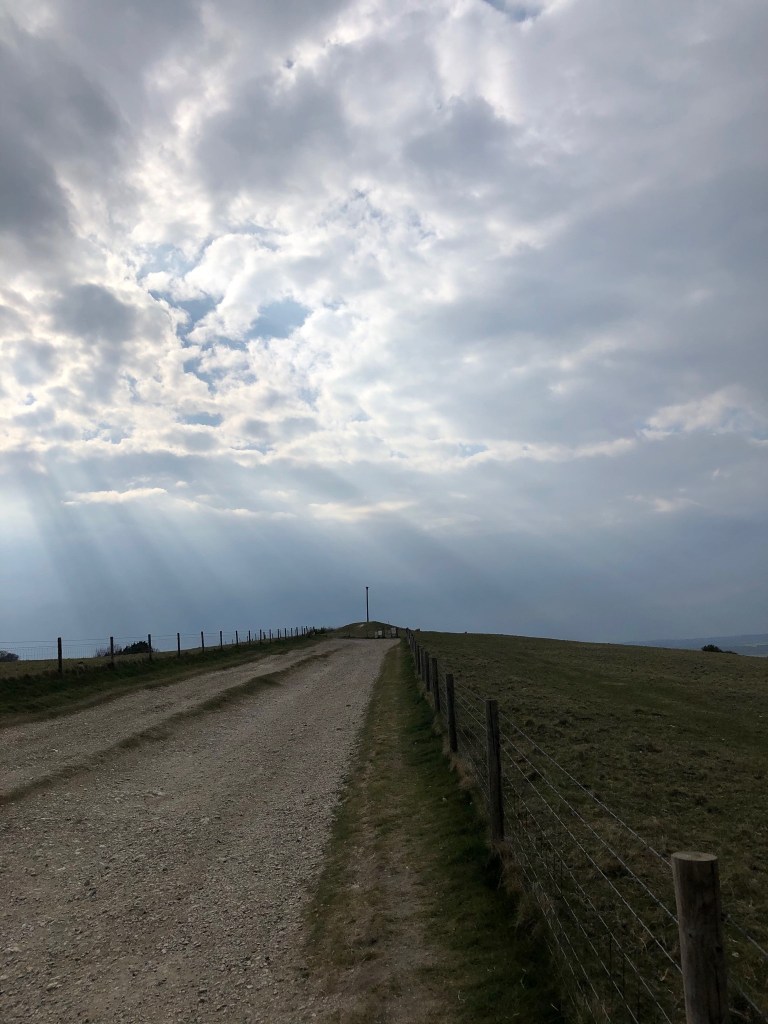
However, we do know that there was somewhere in Berkshire that was very much to Hardy’s liking. Although we do not know for sure when or how he got there, Hardy visited our own Walbury Beacon. We know this because he refers to it – as “Ingpen Beacon”- in his poem of 1896, “On Wessex Heights”.

Perhaps Hardy visited whilst he was staying with the Jeunes the previous year. Maybe they had a very early model of motor car, although it is difficult imagining one negotiating the incline to reach the top. Perhaps Hardy, and whoever was accompanying him, travelled to Kintbury station and made the rest of the journey in a horse drawn vehicle. We shall never know. However, I am sure he would have been fascinated to see the gibbet (in its late 19th century manifestation ) silhouetted against the skyline – I do so hope someone made him aware of the story of George Broomham & Dorothy Newman as I think he would have enjoyed it.

The gibbet as seen today

But it was the hill we know as Walbury Beacon which Hardy particularly enjoyed visiting and compared favourably with other hills across Wessex, inspiring the following:

Wessex Heights

There are some heights in Wessex, shaped as if by a kindly hand

 For thinking, dreaming, dying on, and at crises when I stand,

Say, on Ingpen Beacon eastward, or on Wylls-Neck westwardly,

 I seem where I was before my birth, and after death may be.

In the lowlands I have no comrade, not even the lone man’s friend –

Her who suffereth long and is kind; accepts what he is too weak to mend:

 Down there they are dubious and askance; there nobody thinks as I,

 But mind-chains do not clank where one’s next neighbour is the sky.

Thomas Hardy, December 1896

Theresa Lock

This article was first published in The Beacon in September 2022.

Where in the world is Combe?

Close scrutiny of the 1901 census shows something rather odd about the inhabitants of Combe.  On first sight it would seem that many of the 90 or so inhabitants identified as having been born in Hampshire but were now living in Berkshire – a sort of mass migration across the border to the north. Had they left behind them a deserted village somewhere like Imber on Salisbury Plain or Tyneham in Dorset? If not, what had happened sometime in the previous ten years?

Close scrutiny of the 1901 census shows something rather odd about the inhabitants of Combe.  On first sight it would seem that many of the 90 or so inhabitants identified as having been born in Hampshire but were now living in Berkshire – a sort of mass migration across the border to the north. Had they left behind them a deserted village somewhere like Imber on Salisbury Plain or Tyneham in Dorset? If not, what had happened sometime in the previous ten years?

What had actually occurred happened a long way from Combe; in the hallowed debating chambers and offices of Westminster the late Victorian governments had been bringing in laws to change how the country was being governed at a local level. Late nineteenth century policy changes are totally mind boggling unless you are one of those people for whom study of such minutiae brings you deep joy. However, put simply the 1894 Local Government Act enabled elections to take place for district and parish councillors. In doing so it brought a level of democracy much nearer for many people. This was mostly men, although the 1894 Act enabled women who owned property to vote in local elections.

Before district and parish councillors could be elected, it was necessary to determine where district and more importantly parish borders actually were. A glance at early nineteenth century county maps will show that back then not all county boundaries were where they are now. One such example is Combe which was originally in Hampshire although for the purposes of the Poor Law it was part of the Hungerford Union. This meant that anyone in Combe unlucky enough to fall upon hard times such that they could not look after themselves might find themselves in the workhouse in Hungerford.

In July 1894 a Joint Enquiry was held by representatives of the County Councils of Wiltshire, Berkshire and Hampshire to define more conveniently the county boundaries between those three administrative areas. At that time, the boundary between Berkshire and Hampshire passed right through the middle of Walbury camp and just to the north of the gibbet, as you can see on old OS maps.

Representing Combe, the vicar – and also Poor Law Guardian – Rev George Pearson expressed the view that his parishioners would rather their village to be in Berkshire. It was easier to get to Hungerford than either Kingsclere or Andover for what the Newbury Weekly News reported as “magisterial” purposes and for paying the rates into the Hungerford Bank. Questioned as to where the nearest Union (or workhouse ) was in Hampshire, the Rev Pearson explained that the one in Kingsclere was 10 or 11 miles away across difficult roads. Other members of the Enquiry concurred with this.

Absent from the meeting was Mr A.C. Coles, Combe’s representative of the landed gentry and, presumably, the most significant person in the community. However, his representative, a Mr Browning, informed the enquiry that Mr Coles was anxious that the parish should be transferred to Berkshire as it would be more convenient for highway purposes and that there were only one or two paupers in the parish, anyway.

I have to say the precise significance of this remark is lost on me, although  I would hazard a guess that the implication is that the poor of Combe are not going to be a drain on the rates of those in the Hungerford Union area.

And so, in this rather prosaic way, Combe – despite being on the other side of the one-time mountain and highest point on chalk in England – came in to Berkshire and turned its back on Hampshire. Its ninety-something inhabitants, from the Coles in the manor house to the two paupers in their cottages, moved without going anywhere because the roads into Hungerford were better and more convenient despite the climb up and over Walbury Beacon. The boundary was redrawn so that Berkshire included Combe Wood and Eastwick and there it has stayed ever since.

St Swithun’s church stayed in the diocese of Winchester, at least for the time being. In the years that followed it was transferred to the diocese of Salisbury and then back again, moving eventually to the diocese of Oxford in the early 1960s.

I have heard of other reasons being given for why the county boundary across our benefice was moved. However, I can find no other reasons other than those given above – essentially the convenience of road communications between Combe and Hungerford in implementing the 1894 Act.

I would love to hear from anyone else who might know or have evidence otherwise!

Tessa Lock

This article was first published in “The Beacon” in 2022