When the Stars & Stripes flew over Enborne

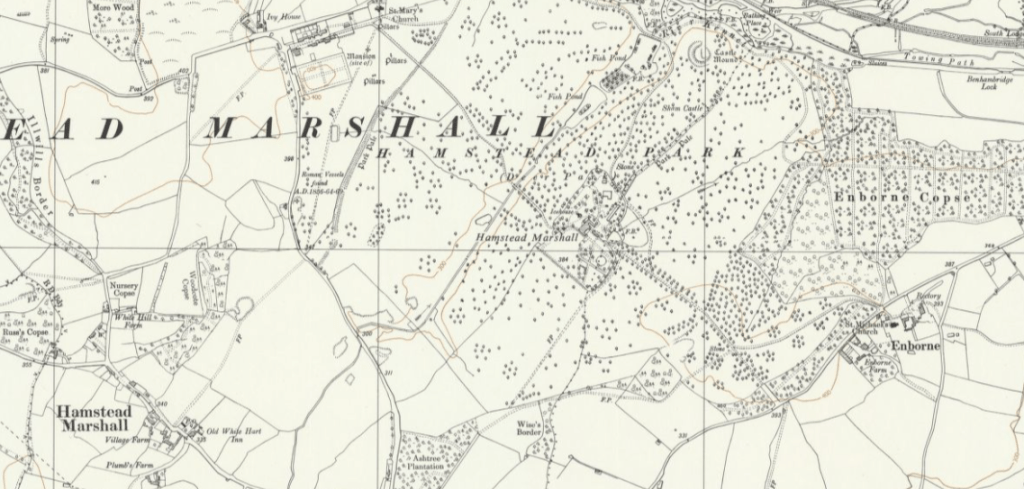
Hamstead Park lies between the villages of Hamstead Marshall and Enborne, around four miles to the east of Kintbury. In medieval times it was a deer park belonging to William, Earl Marshall of England and later became the property of the Crown. However, between 1620 and 1984, Hamstead Park belonged to the Craven family. A notable member of this family was Governor Charles Craven, governor of South Carolina between 1711 & 1716.

But Governor Craven was not to be Hamstead Park’s only link with America.

In the years immediately preceding and following the outbreak of war with Nazi Germany in 1939, the Government was able to requisition properties and land for use in the war effort. One thousand new military industrial factories were built on green field sites and 450 new military airfields were constructed, mainly on agricultural land. Throughout the south and east of England, concrete “pill boxes” and anti -tank devices appeared across the landscape.

A “pill box”. Photo: Sam Tait, Wikicommons

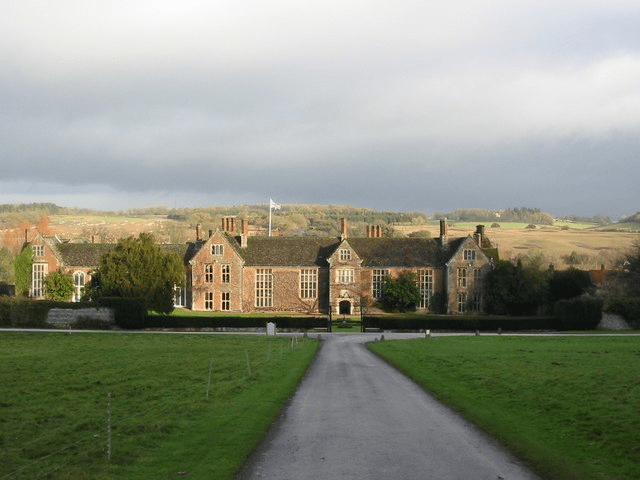
Many larger private houses were requisitioned for military purposes. Basildon Park, near Reading, Shaw House near Newbury and Littlecote House near Hungerford were under military occupation for at least part of the war.

Littlecote House. Photo: Phil Catterell, Wikicommons

Following the Japanese attack on Pear Harbour in December 1941, the United States, under President Franklin D. Roosevelt, entered the war. In the following years, over two million American troops passed through Britain.

President Franklin D. Roosevelt

In preparation for their departure, British and Canadian troops were stationed in the south and south east of England, whilst the American troops were stationed towards the south and south west.

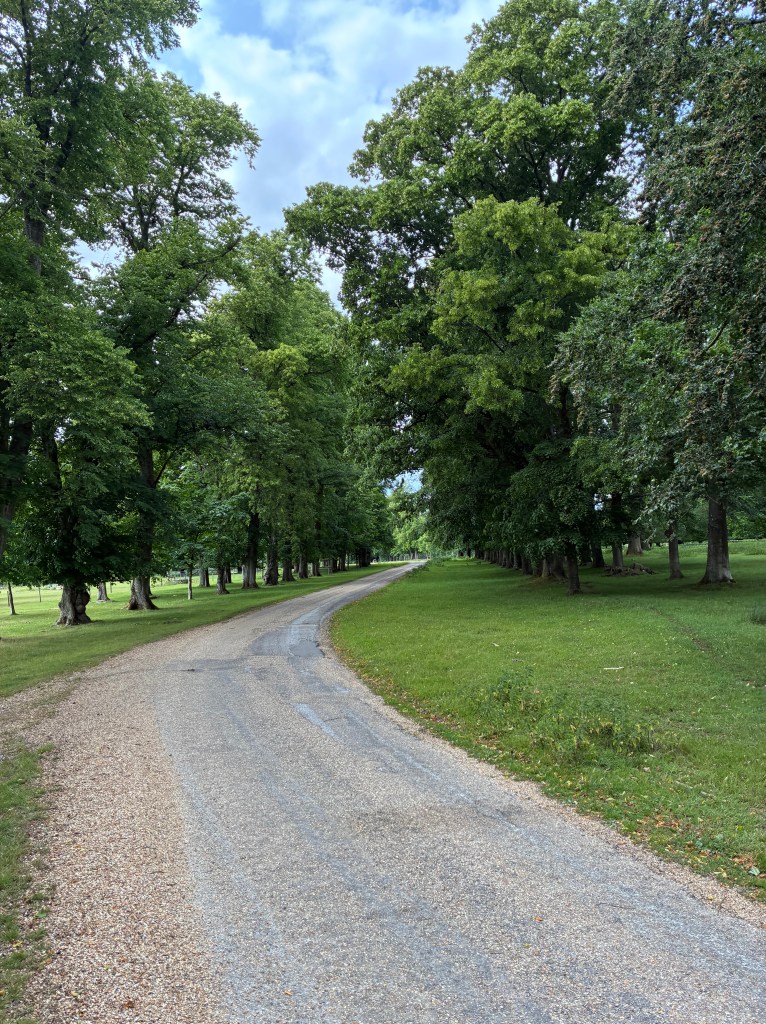
Hamstead Park today

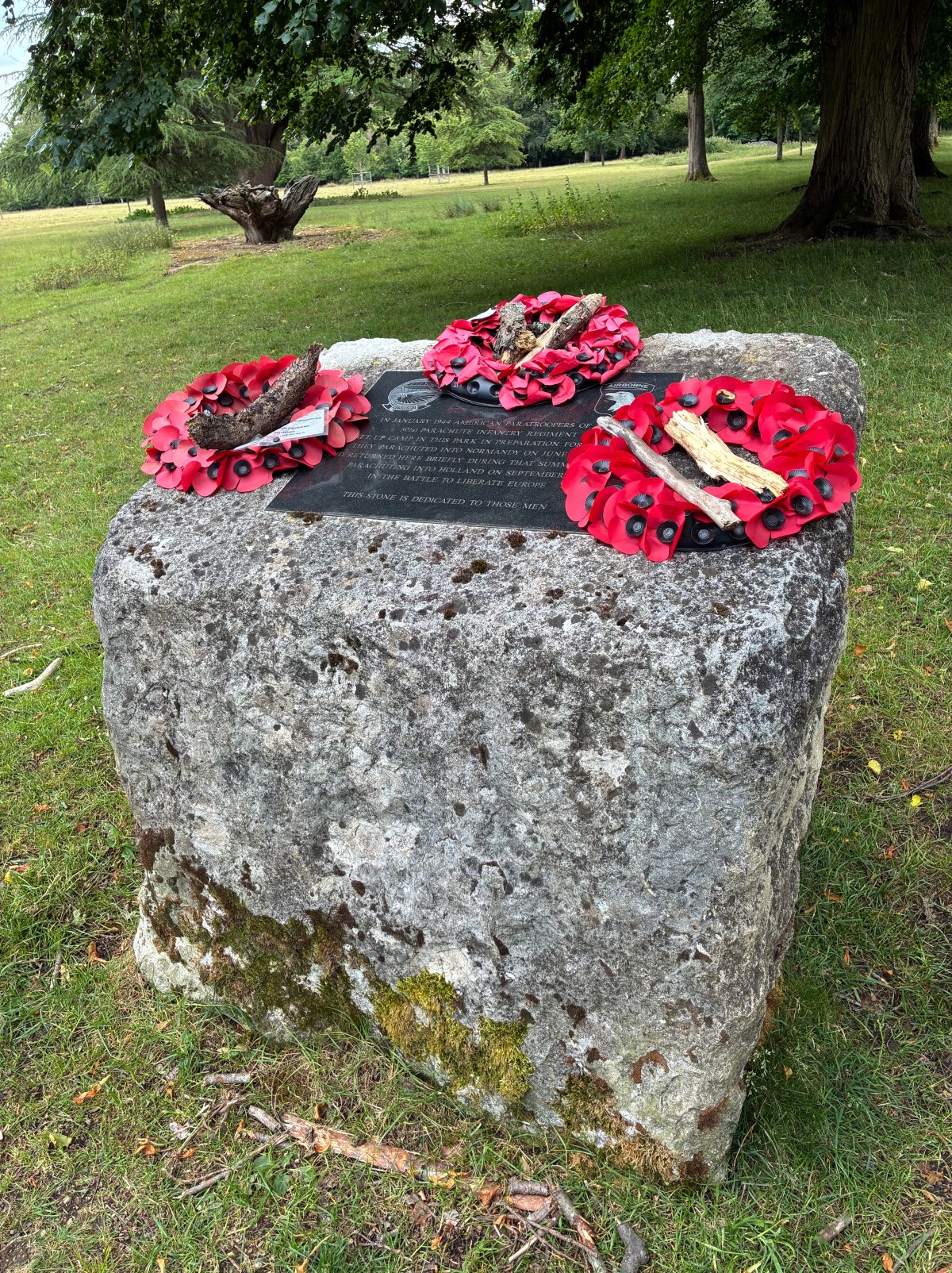
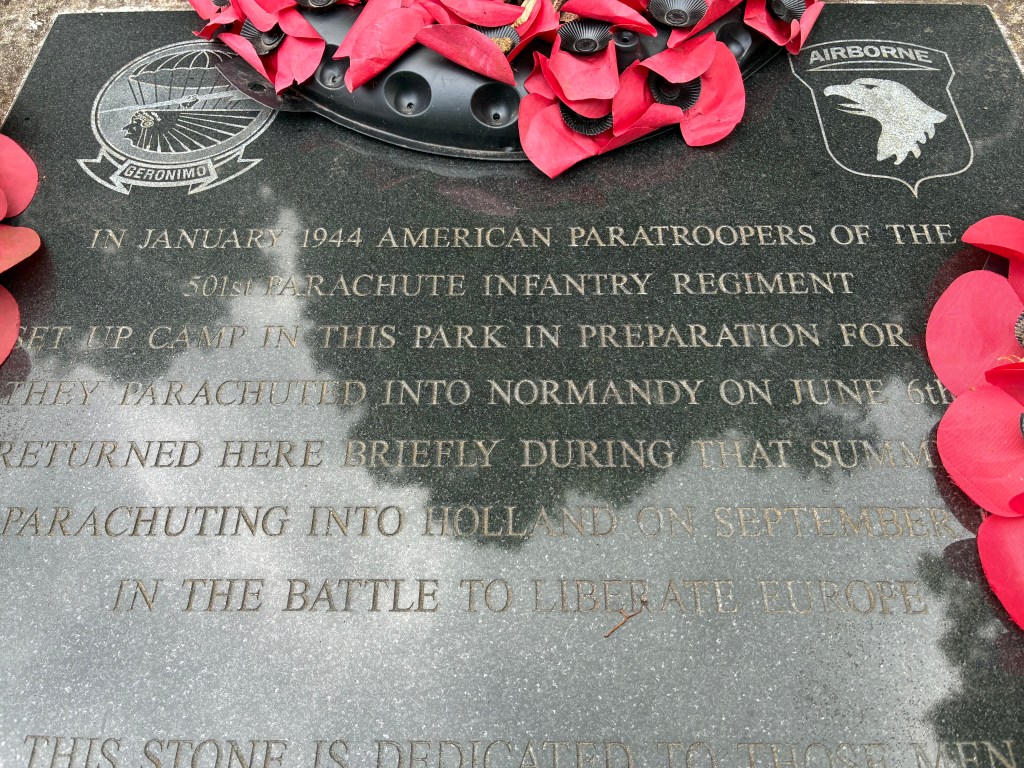
In January 1944, Hamstead Park had seen the arrival of men from the 2nd Battalion of the 501st Parachute Infantry Regiment.

Once in England, the battalion became permanently attached to the 101st Airborne Division, known as the “Screaming Eagles”. Several villages in the area found themselves playing host to men of the 101st, including Ramsbury, Chilton Foliat, Froxfield and Aldbourne in Wiltshire and Greenham Common, Welford and Aldermaston as well as Hamstead Park in Berkshire.

According to Newbury resident, Allan Mercado, speaking to the Newbury Weekly News in June 2024, Newbury children would cycle out to Enborne at weekends to see the fascinating new arrivals living in tents in Hamstead Park. The soldiers would give the children gum and teach them card games.

By May 1944, 1.5 million American troops had arrived in Britain in preparation for “D Day” – the day on which they would depart for France as part of the plan to liberate northern Europe in what was to be known as Operation Overlord.

For those weeks in 1944, American soldiers were a familiar sight in the village shops in this part of Berkshire and over the border in Wiltshire. American voices filled village pubs. But then, very suddenly, on that day in June, they disappeared. At first no one knew where they had all gone, or why

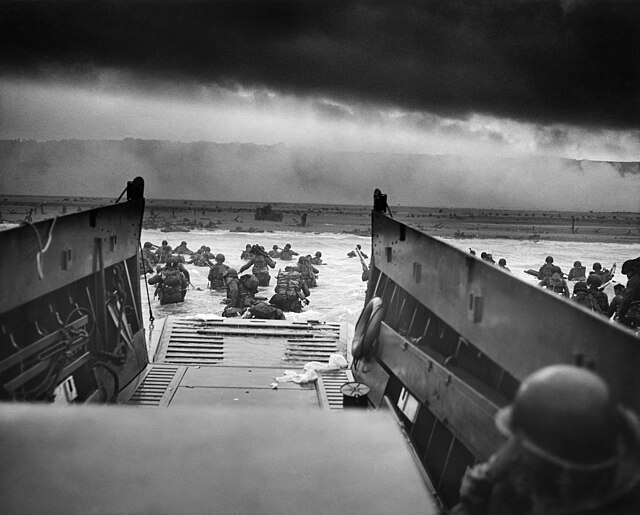
By the time the various villagers realised the soldiers had departed, those men would have been fighting on the beaches of Normandy. Many would never return home.

D Day landings Photo: Robert F. Sargent, Wikimedia

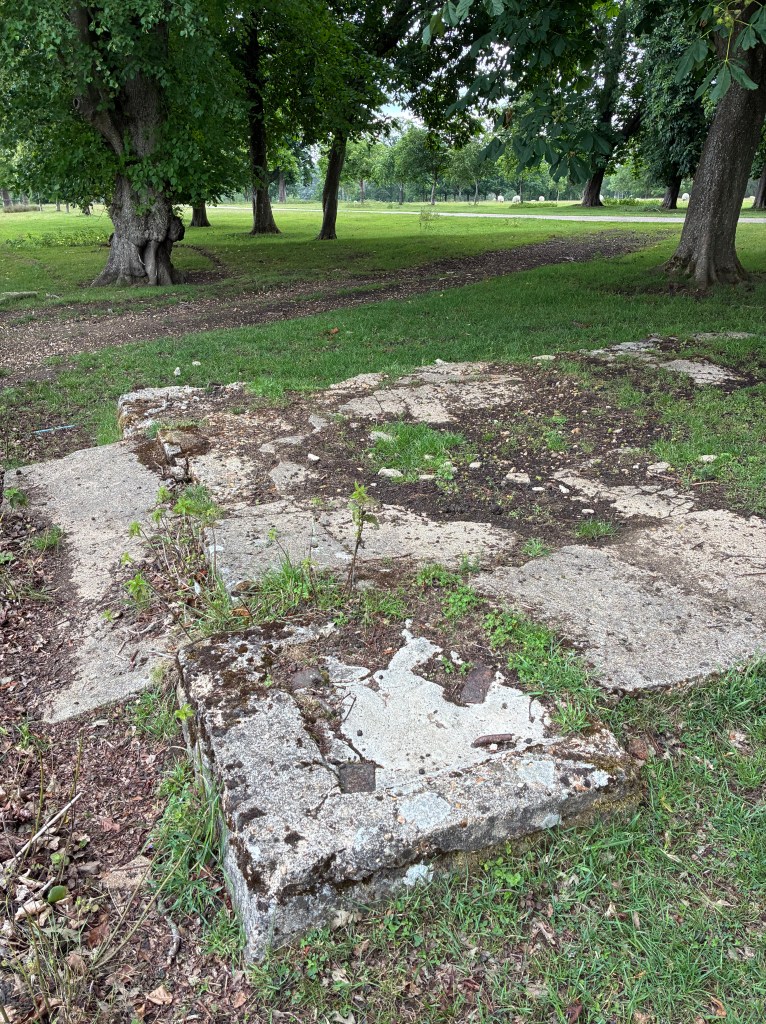
Today Hamstead Park is a peaceful green space enjoyed by ramblers and local dog walkers. Sheep occupy the area once filled with temporary military accommodation, the only remaining signs of the paratroupers’ presence being the concrete platforms slowly being lost to the grass and undergrowth.

All that emains of the soldiers’ accommodation

But the people of Hamstead Marshall and Enborne remember when the villages played host to the American troops and every year on Remembrance Sunday the service at St Michael’s & All Angels, Enborne begins at the memorial in the park.

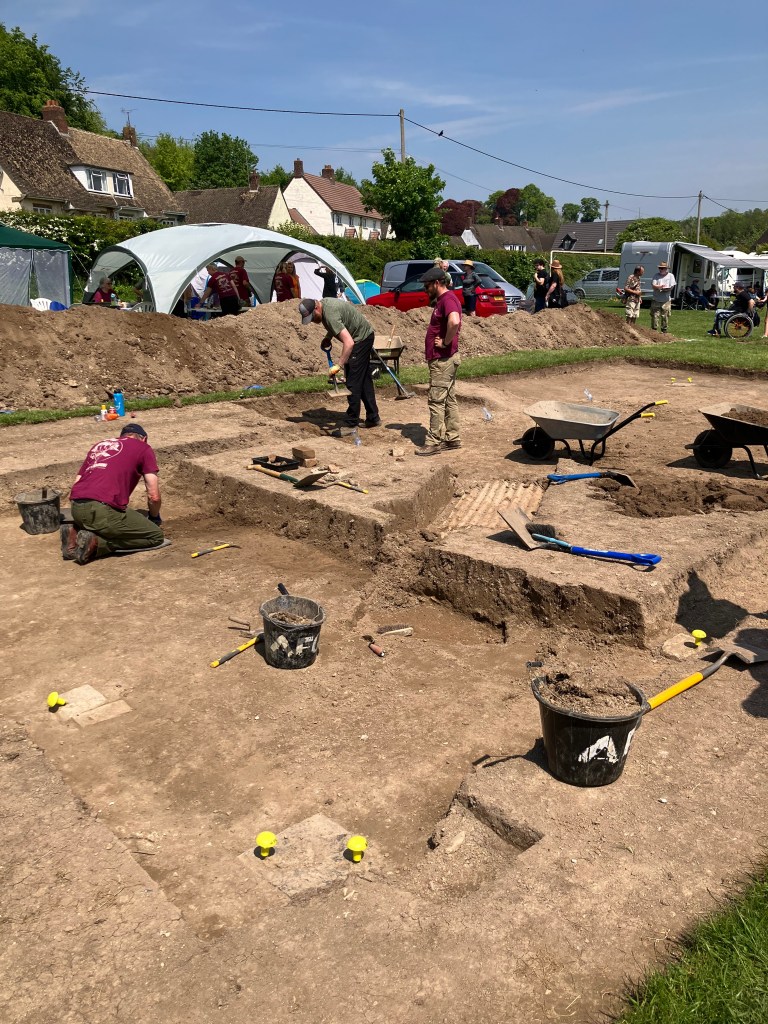
At Chilton Foliat, just over the county border in Wiltshire, the site of the 101st Airborne Division’s base has been excavated by archaeologists from Operation Nightingale and Time Team:

:https://www.timeteamdigital.com/digging-band-of-brothers—wiltshire

TimeTeam & Operation Nightingale archaeologists excavating at Aldbourne

Sources:

http://www.ww2-airborne.us/units/501/501

museumofberkshireaviation.co.uk/html/history/avinberks

https://www.berkshiregardenstrust.org/hamstead-parkhttps://www.berkshiregardenstrust.org/hamstead-park

hungerfordvirtualmuseum.co.uk

(C) Theresa A. Lock 2025

The Lloyd family of Enborne…and beyond

On the chancel wall of St Michael & All Angels, Enborne, near Newbury, is a plaque to the memory of a former rector with a rather unusual name.

Nowes ( pronounced “Noise” ) Lloyd had been born in Essex and was baptised on 6th September 1719. His father was the Rev John Lloyd of Epping and his mother Isabella. Isabella’s maiden name had been Nowes, hence the baby’s rather unusual name.

As a young man, Nowes seems to have taken the traditional route to the priesthood for the time, having graduated with a BA from St John’s College, Oxford in 1742 before being ordained by the Bishop of London at Whitehall on 9th June, 1745. However, his vocation was to take him out of the city and into rural Wiltshire. By 1751, Nowes had become vicar of Bishopstone as well as Rector of the next door parish of Hinton Parva, near Swindon.

St Mary’s church, Bishopstone, Wiltshire

 The position of parish priest has never been a lucrative one, and this may be why the Rev Lloyd did not marry until 1763, when he was 43. His bride, ten years her husband’s junior, however, may well have been used to a more affluent lifestyle than the vicarage could offer, since she was Martha Craven, the daughter of the Honourable Charles Craven of Hamstead Marshall, and his wife Elizabeth, Lady Craven.

 Martha’s father had been the first Governor of South Carolina in what is now the U.S. Martha’s mother is reputed to have been something of a socialite and a very difficult person, with little time for Martha or her sisters, Mary and Jane. Consequently, Mary left home to make a very unhappy marriage with a horse dealer whilst Martha worked for a time as a seamstress at a school, using a false name to hide her identity before marrying Nowes.

Martha Craven and Nowes Lloyd were married by licence at Bishopstone on 2nd June 1763. I do not know why the marriage was by licence rather than banns; there may have been a very simple reason although I wonder if Martha’s difficult relationship with her mother might have caused the couple to arrange their marriage at short notice thereby requiring a licence rather than banns. We will probably never know.

 In the same year that Martha married Nowes, her sister Jane married Rev Thomas Fowle of Kintbury.

Martha and Nowes began their married life at Bishopstone, where four children were born to them. The first child, also Martha, was baptised there on 16th November 1765, to be followed by Elizabeth on June 15th, 1767, Charles on December 21st, 1768 and Mary on May 20th 1771.

The Rev Lloyd’s relationship with what is now the Walbury Beacon Benefice seems to have begun in 1764 when he became Domestic Chaplain to William Craven, 5th Baron Craven of Hamstead Marshall. Baron Craven was, of course, a relative of Martha Lloyd. These were the days when who you knew rather than what you knew could make a really big difference to your life.

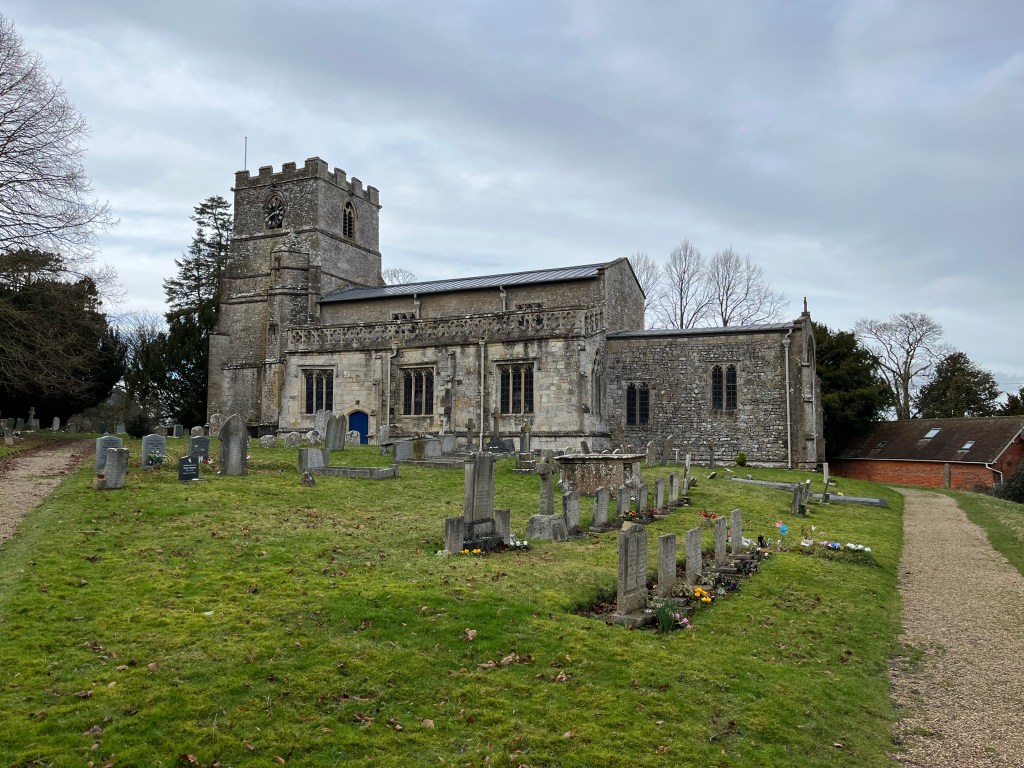
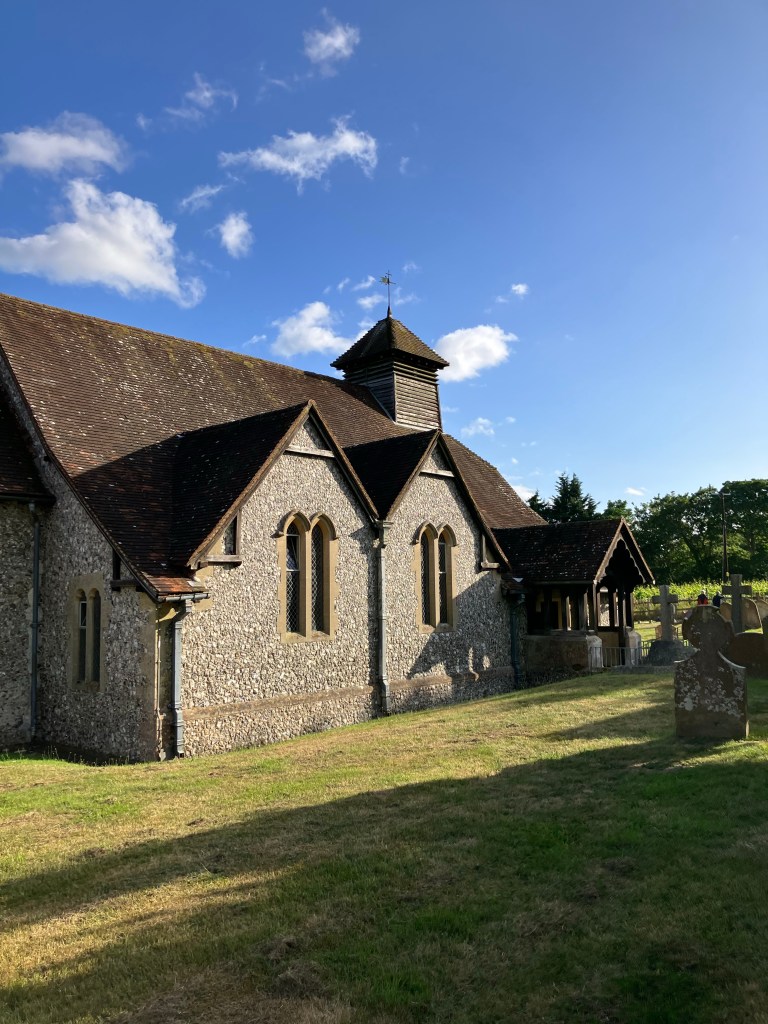
St Michael’s & All Angels, Enborne, Berkshire

 In 1771, Nowes Lloyd became rector of Enborne whilst retaining his position at the other parishes, even though they were over thirty miles apart. This was not an unusual situation for the time, when it was quite common for a curate to undertake all the duties of the absent priest. Eventually, the Lloyd family moved to Enborne where Martha would be much closer to her sister Jane at Kintbury. Their mother, however, was by now also living in Kintbury, at Barton Court, with her second husband, Jemmet Raymond. We can only wonder what Elizabeth Raymond’s relationship with her daughters was like by this time.

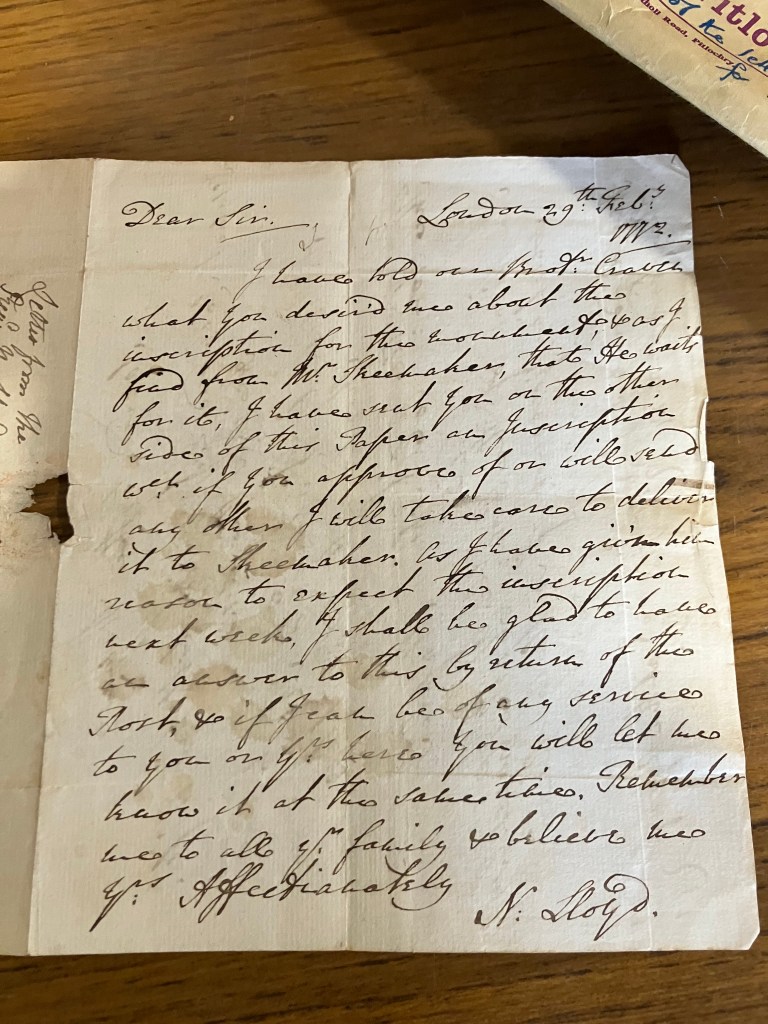
 Sadly, there was an outbreak of smallpox in the Enborne area in 1775 and, whilst his sisters survived, Charles Lloyd, then only six, died. He was buried in the churchyard on 13th April of that year. Martha’s mother, meanwhile, had died in 1771. As if to demonstrate the wealth and status of the Raymond family, an elaborate marble memorial was commissioned from the renowned sculptor, Peter Scheemakers, to be placed next to the altar in Kintbury church. A letter written by Nowes Lloyd to his brother-in-law, Rev Thomas Fowle, regarding arrangements with Scheemakers, is still in the church’s possession.

Letter from Rev Nowes Lloyd to Rev Thomas Fowle concerning the Scheermackers monument, Kintbury

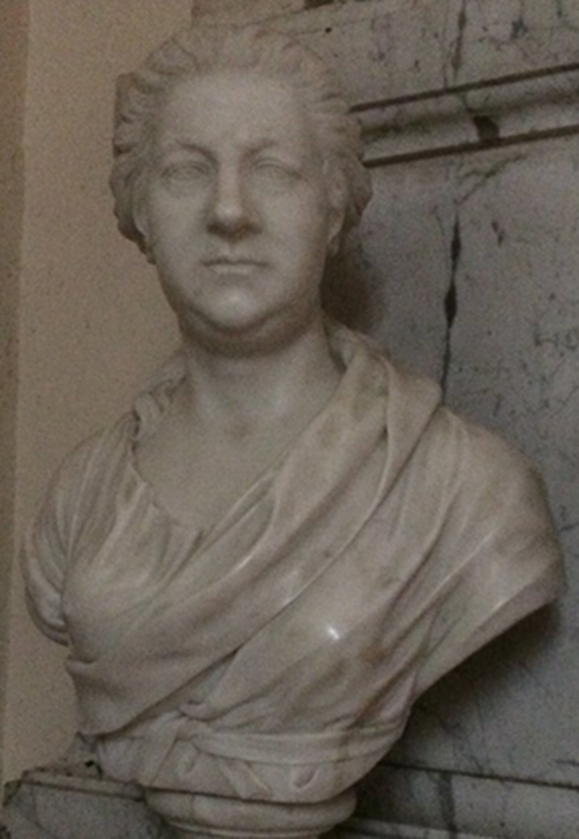
 You might have seen Elizabeth Raymond, formerly Lady Craven, in Kintbury church. If you happen to be standing in a pew near the front and to the left hand side of the aisle, possibly singing a favourite hymn, and casually turn your head to the left – there, in her current position in the north transept will be Elizabeth, stonily staring back at you as if in disapproval of something, you know not what.

Elizabeth, former Lady Craven

Nowes remained as rector of Enborne until his death on February 3rd, 1789. The previous year, his daughter Elizabeth had married her cousin from Kintbury, Fulwar Craven Fowle. At this time  Martha and Mary were still living at home. There was a need to vacate the Enborne rectory but fortunately for Rev Lloyd’s widow and her daughters, a friend of the Fowles offered them his parsonage at Deane. The move to Deane proved to be quite significant for Martha Lloyd in particular as she became a close friend of the vicar’s daughter, later living with her, her sister and their mother in Bath.

 Martha’s friend was creative and lively with a keen if sometimes wicked sense of humour. She loved walking, wrote long, detailed letters whenever she was away from her family and friends and, in particular, would entertain them all by reading to them the stories she had spent hours writing. In this way, Martha Lloyd, formerly of Enborne, became one of the first people to read what have become some of the best loved novels in the English language. Martha’s close friend was none other than Jane Austen. In 1797, the link between the Lloyds and the Austens became even stronger when Mary Lloyd became the second wife of the Jane Austen’s widowed brother, James. When Jane Austen, along with her mother and sister Cassandra moved back to their native Hampshire, Martha went with them to share the cottage in Chawton, now the Jane Austen’s House Museum. It says something of the position of women in the early nineteenth century that Martha Lloyd, grand daughter of Lady Craven with her elaborate and expensive monument in Kintbury church, had no home of her own except the one she shared with her friends. But life had another surprise in store for the young woman from Enborne. After Jane Austen’s death in 1817, Martha continued to live in the cottage at Chawton with Cassandra Austen. However, on 24th July 1828, she became Sir Francis Austen’s second wife and therefore, Lady Austen.

 Today, the name of Martha Lloyd is well known to Jane Austen fans all over the world. A facsimile of her household book containing the recipes for dishes she cooked at Chawton, has been published and earlier last year saw the publication of Jane Austen’s Best Friend: The Life and Influence of Martha Lloyd by Zoe Wheddon . So, while Janeites (as fans of Jane Austen are known) all over the world think of Martha Lloyd as Jane Austen’s best friend, I will always think of her as the young woman from Enborne.

Many thanks to Alec Morley of Romsey Local History Society https://www.ltvas.org.uk/ for information regarding Nowes Lloyd’s family and also for clarifying for me how to spell and pronounce his unusual first name.

© Theresa A. Lock 2024

Our churches: Not what they seem?

The church’s restoration,

In eighteen eighty-three,

Has left for contemplation,

Not what there used to be.

John Betjeman

Many church guide books will proudly tell you that St Whoever’s is a fine example of, say, Norman architecture. It is easy to imagine, as you sit in your pew, listening to this week’s sermon, that the church you see around you is more or less the same building that, for example, knights would have known as they stopped off on their way to the crusades, carving on the Norman pillars the familiar crosses while their horses chewed on the church yard grass outside.

Although there are very few churches which exist today just as they were when the last mason knocked off work for the last time and the building was consecrated, it was the Victorians who were responsible for the greatest changes to our much-loved buildings. By the nineteenth century, many ancient buildings might well have required building work but in their enthusiasm for what they chose to call restoration, the Victorians swept away many significant features, and at times, entire buildings.

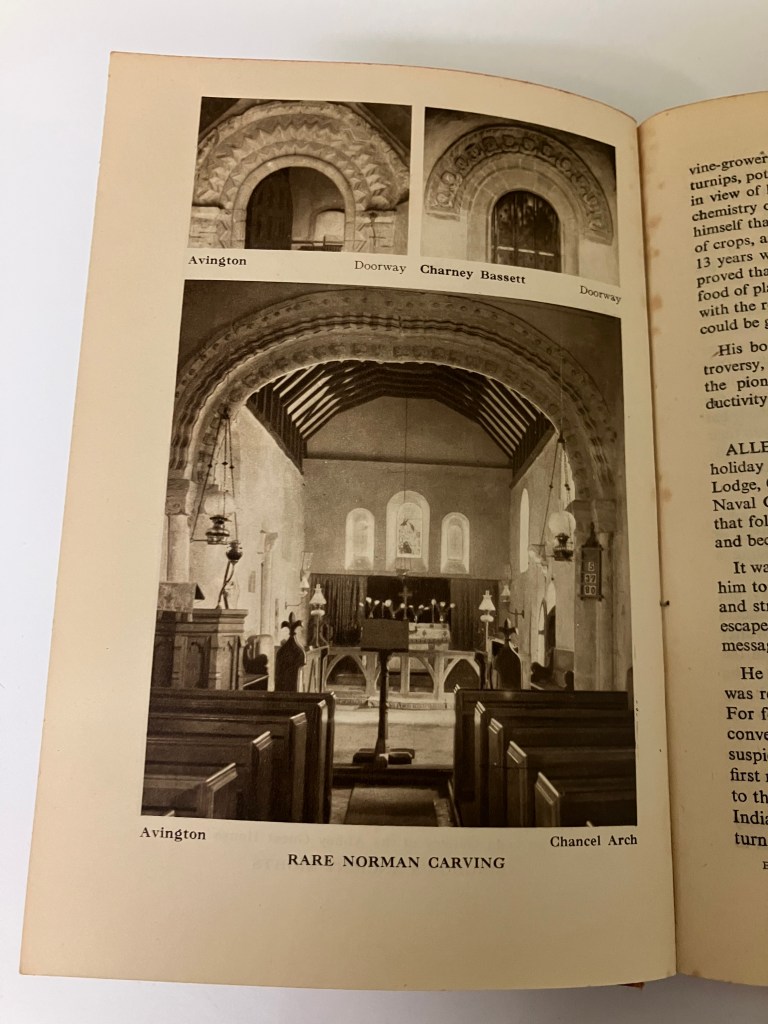
In the Berkshire volume of his series, The Buildings of England, the architecture historian Nikolaus Pevsner, describes St Mark & St Luke’s church at Avington as being, “A memorable little church … Entirely Norman …” so perhaps the crusade-bound knights of my imagination would have seen the very-same church that we see today. Except, that is, for the pulpit and pews, which are Victorian. Also the vestry. And the stained glass, of course.

So how did the other churches in our benefice fare during the nineteenth century?

St Mary’s, Hamstead Marshall seems to have survived the Victorian enthusiasm for restoration relatively unscathed, leaving earlier architectural features as they were. Pevsner says the building underwent a restoration in 1893 and another in 1929 – 30, “preserving and enhancing the C17th & C18th character of the interior.” Perhaps, therefore, the interior of this beautiful church does not look so very different as it did when the first battle of Newbury was being fought in 1643, just a few miles up the road. Perhaps a battle-weary soldier, either cavalier or roundhead, might have staggered into this church and seen before him an interior almost identical to that which we see today.

But what about the other churches?

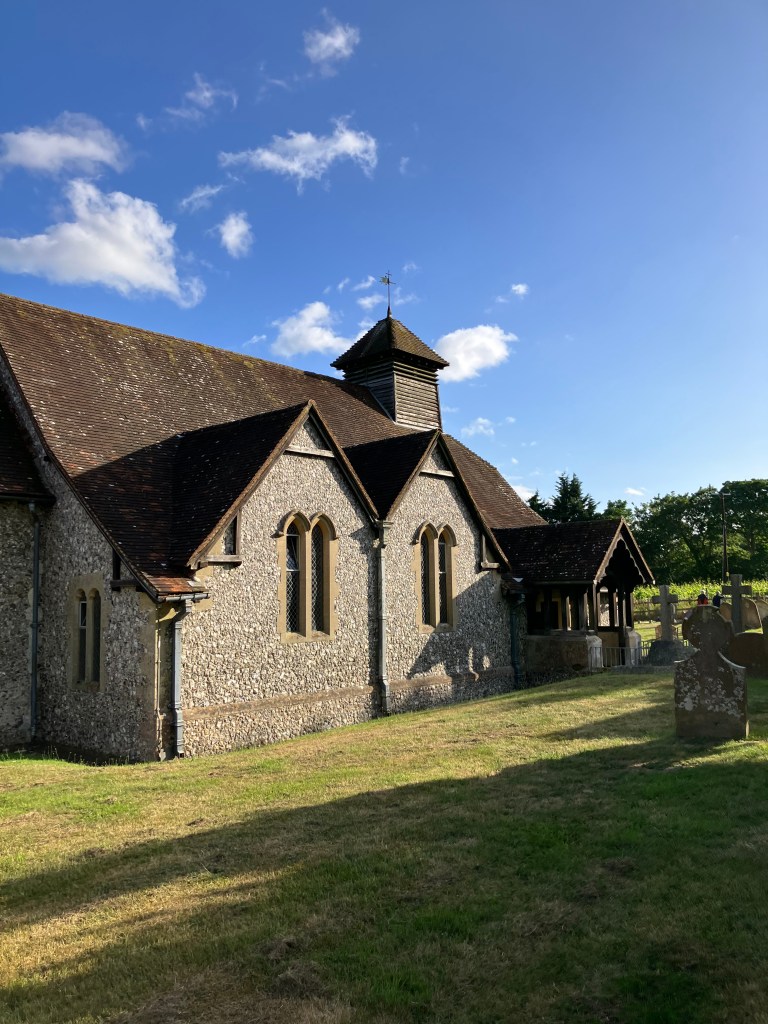
I used to imagine Jane & Cassandra Austen would have known St Mary’s, Kintbury, just as I know it today, but this is far from the case. In 1859, the architect responsible for the now long-gone Christchurch and also the former vicarage, Thomas Talbot Bury worked on St Mary’s in what Pevsner refers to as a heavy-handed restoration. More restoration work followed 1882 – 84 by George Frederick Bodley & Thomas Garner. All three architects worked in the popular Gothic Revival style which took its inspiration from the medieval buildings much admired by the late Victorians.

In St Mary’s, many changes and remodelling included moving the Scheemakers monuments from their original position by the altar to their present one in the north transept. The gallery was repositioned to its present position under the tower and plans were proposed to enlarge the building, although this never happened. The eye-catching, brightly painted reredos is a Bodley & Garner addition, so one way and another Jane Austen’s view of the altar – in fact the church as a whole – would have been very different to ours.

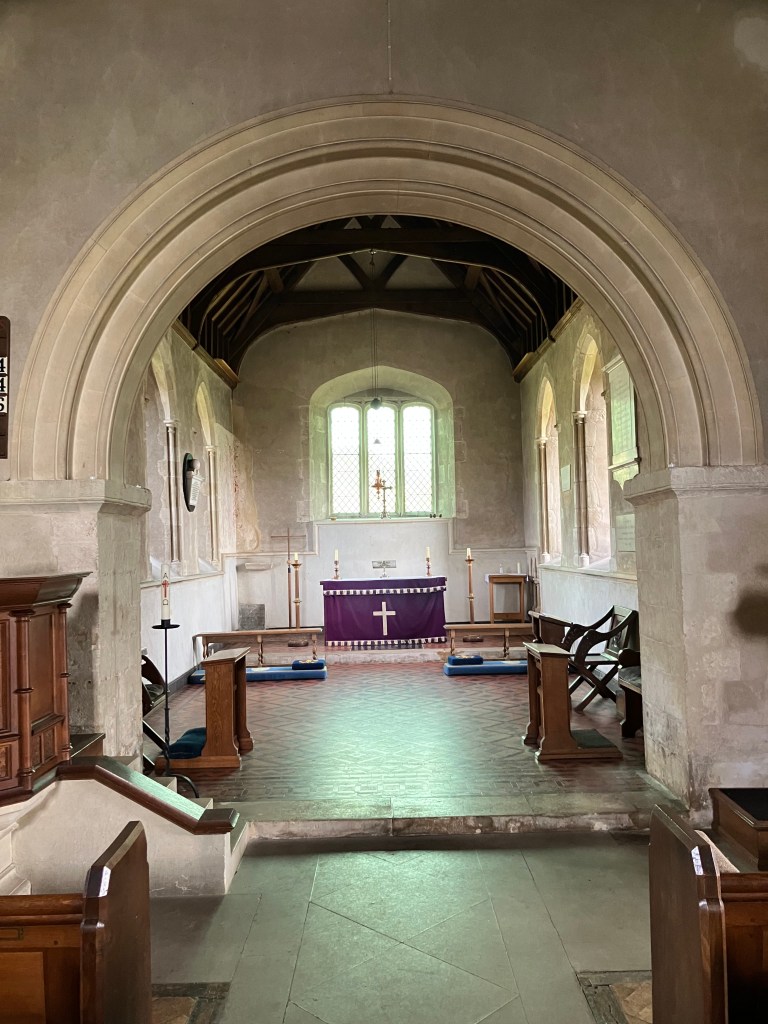
Pevsner describes St Michael’s at Enborne as “an aisled Norman church” so could this delightful building really be almost exactly the same today as it was when my (imagined) knights passed through on their way to Jerusalem? Unfortunately, although Enborne church retains many Norman features, it did not escape the enthusiastic hand of the Victorians. However, it seems that there might have been a good reason for the work. The Newbury Weekly News of 12th January 1893 included an article in which the Rector of St Michael’s is quoted as saying, “The church at present is in such a dilapidated state that the less said about it the better unless it is of a view of increasing the Restoration Fund at the Newbury Bank. The plans are the result of much care and thought.”

The Reading Mercury of August 12th 1893 reported:

“The restoration of St Michael’s, Enborne is being satisfactorily carried out by Mr G. Elms of Marsh Benham under the direction of the architect Mr James H. Money.”

Apparently, the diocesan architect had recently visited the church along with James Money:

“… and has testified to the great pains being taken to render the restoration a favourable one in all aspects.”

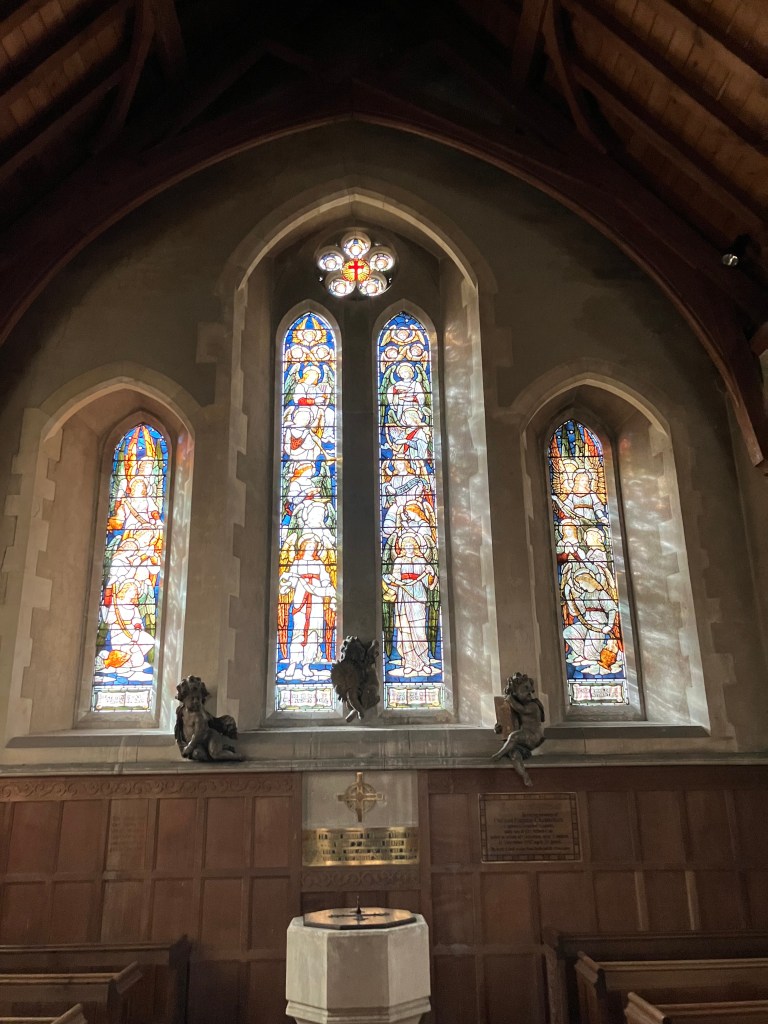
The chancel, St Michael’s, Enborne

Clearly, not everyone approved of what was being done, although there is little evidence of dissenting voices in the local papers.

On March 6th 1897, the Reading Mercury reported on the rededication of St Michael & All Angels’ church, Inkpen, it having been “in restorer’s hands” for more than a year. The rector, the Rev Henry Dobtree Butler believed it had “long fallen into a lamentable state of decay” and so the grandly named Oxford architect, Mr Clapton Crabbe Rolfe, had been engaged to carry out a restoration. And a very thorough job he did of it, too. The Reading Mercury went on to report:

“The greater part of the church has been rebuilt and a new north aisle added …

The only ancient portions of the actual fabric are the exterior walls and one west window.”

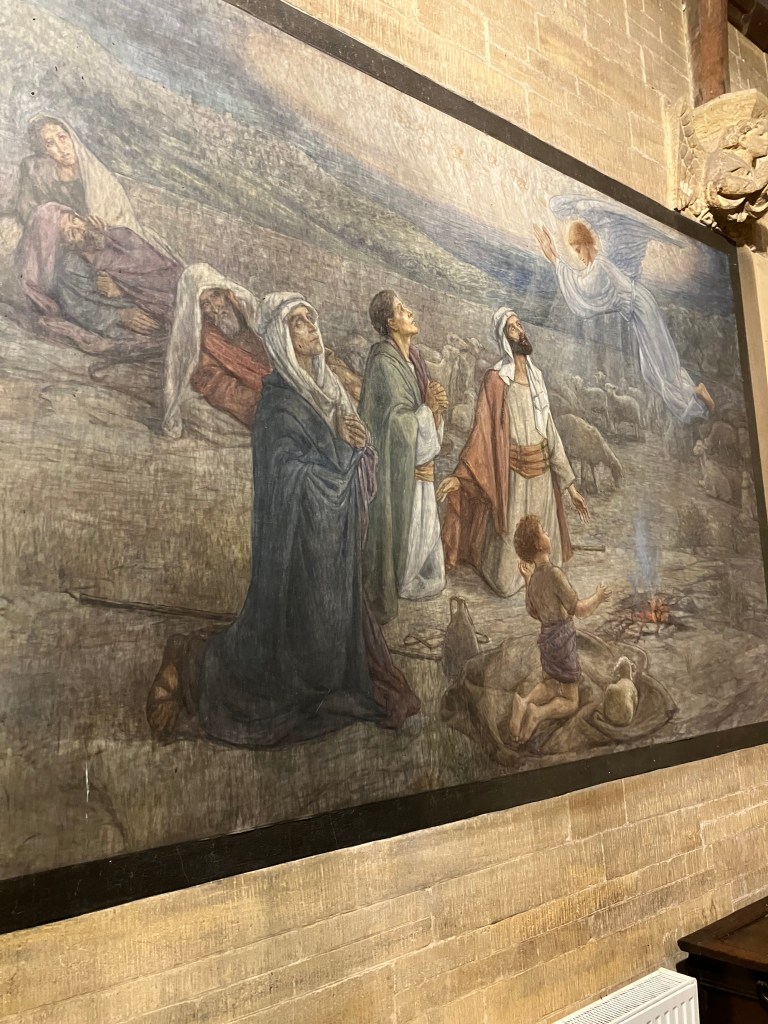
Nineteenth century mural, St Michael & All Angels, Inkpen

Whilst the tone of the Reading Mercury’s report suggests that the destruction of much of the original building was a positive thing, not everyone agreed. According to Pevsner, the recently formed Society for the Protection of Ancient Buildings had opposed the drastic restoration. Founded in 1877 by William Morris and Philip Webb, SPAB was concerned that the fashionable enthusiasm for restoration was destroying the historic fabric of many venerable buildings.

East window, St Laurence’s, West Woodhay

Despite his opposition to the fashion for extreme restoration, William Morris contributed work to many churches, including St Laurence’s, West Woodhay. Here, the red brick church which had stood next to West Woodhay House since 1716 was demolished and a church designed by Sir Arthur Blomfield built on a new site in 1882. The distinctive east window was designed by Burne Jones for Morris & Co as were the side windows of the sanctuary. On 15th April, 1882, the Hampshire Chronicle waxed lyrical in their appreciation of this new amenity:

“The inhabitants of West Woodhay … have reason to congratulate themselves upon having in their midst a resident lord of the manor whose liberality bids fair to effect a great improvement in the social position of all in the village.”

Quite how the new church would effect a great improvement in the social position of the cottagers of West Woodhay, the Hampshire Chronicle does not explain! 

West window, St Laurence’, West Woodhay

So, there is nothing ancient about St Laurence’s, West Woodhay and it remains the only church in our benefice to represent just one period of church building. But this beautiful little church demonstrates, I think, some of the very best of Victorian architecture and design. No crusade bound knight in shining armour may ever have passed through passed through its door. No weary parliamentarian would have sought sanctuary from the battle field to the north. But it is beautiful, all the same.

And I would very much like to know if William Morris or Edward Burne Jones ever visited in person!

© Theresa A. Lock 2024

Our Village Schools in the late 19th century

Today, three of our local villages have village schools. Two of them, Inkpen and Enborne, are still based in their original Victorian buildings just like many other primary schools in West Berkshire. However, you might be surprised to find out that, at the end of the nineteenth century, there were twice that many village schools in our area.

By the middle of the nineteenth century, many towns and villages benefitted from schools established by churches or charitable organisations. However, it was not until Forster’s Education Act of 1870 that local school boards were created with the power to levy rates to finance building and running of so-called National Schools in their areas. Thus universal education became available to all children up to the age of 13.

It would be fascinating to research our village schools through documents in the Berkshire Records Office. For now, however, I decided to begin my research by looking at the 1881 census as by this time those schools opened as a result of Forster’s Act would be well established.  

At the time of the 1881 census, the occupant of the Kintbury St Mary’s school house is 25 year old James Humphries, originally from Ditton Marsh, Wiltshire. James is described as a “certificated teacher” meaning he has gained a professional qualification at a teacher training college. His sister, Catherine, 20, who is living with him, is described as “assistant teacher” which might indicate that she trained to teach by learning “on the job” as a pupil teacher which was how the majority of teachers  qualified at that time. How Kintbury parents would have viewed this fresh faced young man and his even younger sister, both in positions of authority over the village sons and daughters, we can only imagine!

James and Catherine did not stay in Kintbury for long, or so it seems. In November 1883 the Newbury Weekly News reported on a recent Diocesan Inspection at the school which found it to be, “in very good condition. The children are well taught throughout.” The master at this time was a Mr T. Sadgrove. But he did not stay long either. In May of the following year the NWN carried a report concerning the schoolboy Alfred Sturgess who was charged with stealing 2 shillings and 6 pence from the National School Board ( in other words, from St Mary’s school ), the case being proved by the master who was then W. Garrett Jones.

Perhaps Messrs Humphries, Sadgrove and Garrett Jones all found Kintbury too challenging to stay long, or perhaps they were ambitious and wanted to move on to bigger schools in towns. So far I can find no record of any of them to suggest where they were living when they moved on from Kintbury, or if they even stayed in teaching.

Things were different down the road in Inkpen. In 1881 the occupant of the village school house is 49 year old certified teacher Jesse Collins. Jesse was a retired naval captain originally from East Tilbury, Essex, whose teaching post in 1871 had been in Portsmouth. 

Interestingly, Jesse’s wife, Charlotte, is also described on the census as “School mistress”, although at this time women were not – officially – allowed to teach after they had married.

Life in the relatively isolated, rural community of Inkpen must have been very different to life in Portsmouth for the Collinses, although it seems to have suited them as they were still there in 1891. Despite, that is, Jesse having appeared before the local magistrates in 1884, charged with having assaulted one Alfred Abraham, a school boy, and having been fined 5s and 16s 6d costs. Perhaps the experience of his former naval career led Jesse to take this in his stride as he is otherwise involved with the local community and, according to the NWN, with local politics.

If Inkpen was a relatively isolated rural community, then Enborne was more so. Back then as now, the school with its adjoining school house was in an isolated spot in Crockham Heath, on the road up to Wash Common where, in 1881, the school mistress was 58 year old Ann Elizabeth Pears. Ann was an experienced teacher: in 1871 she had been teaching near Salisbury in Wiltshire and in 1861 in Suffolk.

According to a report in the NWN of March 1887, two men broke into the school house when Ann was away from home and stole 10 shillings and a quantity of brandy. This must have been particularly unpleasant for a woman living on her own in an isolated house and might have contributed to Ann’s decision to move on. By the time of the 1891 census, Ann has relocated to Hampshire but not yet retired from teaching. At 68  Ann is head teacher at East Woodhay school.

Today there is no primary school in the village of West Woodhay – by modern standards it would probably be considered too small a community to support its own school. The censuses of 1881, 1891 and 1901 indicate that there were no teachers living in the village in those years which suggests to me that there was not a school or accompanying school house ( the usual Victorian arrangement, common in many local villages.) The evidence suggests that West Woodhay’s children attended East Woodhay school as, in December 1903, the NWN reported that a request had been made for a footbridge to be placed “over the water between East and West Woodhay” as “children went down there on their way to school and got their feet damp.”

However, for fifty years, from about 1903 to 1961, West Woodhay did have its own school, marked on early 20th century OS maps as being somewhere near the village hall but on the opposite side of the road. Perhaps surprisingly, the NWN does not seem to have covered the opening of the school although the 1911 census shows assistant teacher, Celia Cook, 29, from Walworth, London, living in the school house.

Another local school I have, so far, found out very little about is Christchurch. Built at Kintbury Crossways close to the now demolished church which shared its name, Christchurch School opened in 1870 to relieve crowding at the established school down in Kintbury. Whilst the Reading Mercury reported on the opening, for some reason the more local paper, the NWN, did not.

I can find no record of the head teacher at the time of the school’s opening. However, the NWN of February 1884 reported that complaints had been made that a mistress, Agnes Peacock, had been ill treating the children. Unfortunately, a parent, Mary Ann Nash of Kintbury, had decided to take things into her own hands after Miss Peacock had patted her son on the hand by way of discipline. The teacher reportedly pushed the boy and he fell over. Nash went to the house where Miss Peacock was lodging and struck the teacher on the head with a stick. She was subsequently charged with assault and fined 9 shillings 6 pence with 10 shillings 6 pence costs.

As the smallest village in our benefice, then as now, it is perhaps most surprising that Combe had its own school. Although I can find no trace of when it first opened, the NWN of September 1894 reported that the school in the village had been, “nobly restored” with, “all the necessary requirements”. Local dignitary, Mr A.C.Cole had, “spared no expense” and the village children no longer had to walk to the neighbouring school, 2 or 3 miles distant. The school house furniture was supplied as a gift from Mrs Cole, as was that of the school, “according to government requirements”. Three cheers, then, for the Cole family.

In 1901, the schoolmistress at Combe was 34 year old Elizabeth Dingwall. Born in Chelsea, Elizabeth had been teaching in Fulham in 1891. At Combe, she shared the school house with her sister Isabella, a nurse and, although life the tiny village must have been very different from Chelsea or Fulham, the Dingwall sisters are still there in 1911.

One thing that has surprised me in researching this is that none of the teachers, either masters or mistresses, are local people. Whether this was a deliberate policy or coincidence, it is impossible to say for certain, although the weight of evidence suggests to me that the school boards deliberately chose to appoint people from out of the local area. For those single schoolmistresses, living alone in a village schoolhouse, life must have been very lonely. Whilst we know very little about the lives of Ann Elizabeth Pears, Celia Cook, Agnes Pocock or Elizabeth Dingwall, we do know a bit more about a schoolmistress living and working about 20 miles from here, in Denchworth, formerly North Berkshire, in the 1860s. Mary Hardy had been born near Dorchester in Dorset and trained to teach at the teacher training college in Salisbury so she was a “certified teacher”. Denchworth village school, 80 miles from her home and family, was her first post for which she was paid £40 a year and expected to play the church organ. Mary found the experience of living in Denchworth to be so lonely that she persuaded her parents to allow her younger sister, Kate, still a school pupil herself, to come to Berkshire to live with her.

We know a little more about Mary Hardy than we do about most Victorian village schoolmistresses because her brother, Thomas, was to become the celebrated novelist and so some of her correspondence is preserved in Dorset Museum. But while the names of most of the other women – and men – are mostly forgotten, many of the nineteenth century school houses are still standing. During my time as a supply teacher I was lucky enough to work in many village schools still using their original buildings, though now much adapted and extended. The school house has been, in some instances, sold off but in others the former living accommodation is now used as classrooms, staff rooms or storage. As you walk from late 20th century extensions back into those Victorian rooms, there is, I think, a distinct change in atmosphere, an awareness that you have entered somewhere that has been in constant use for over 150 years.

Tessa Lock September 2023
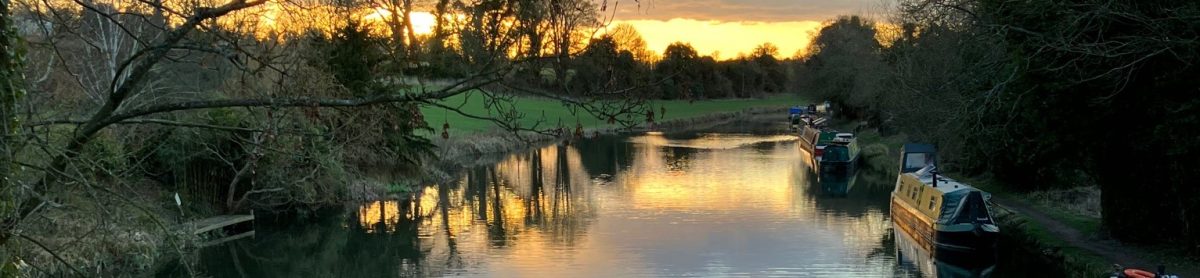
September

“Season of mists and mellow fruitfulness,
Close bosom-friend of the maturing sun.”
– Ode to Autumn by John Keates

The word September comes from the Latin septem, meaning seven. In the Roman calendar it was the seventh month.

Anglo Saxons called it gerst monath or barley month. This was when  they harvested barley to make their favourite drink. It was also called haefest monath or harvest month.

In 1752 the British government decided to change from the Julian calendar to the Gregorian calendar but unfortunately this meant that there was a difference of 11 days between the “old style” and the “new style “ calendars. So, for example, 3rd September became the 14th. This caused much unrest and there were street protests with people shouting, ‘give us back our eleven days’. Some people thought they would die eleven days earlier as a result of this change!

Notable dates in September

The September 3rd is the anniversary of the outbreak of the Second World War.

On the first Monday after the 4th, the Abbots Bromley Horn Dance is performed.

September 23rd is the Autumnal Equinox, one of two days in the year when day and night are of equal length.

September 29th is the Feast of St Michael and also a “quarter day”, one of the four days in the year when, traditionally, rents were due to be paid.

St Michael and folk lore

In folk lore, St Michael was said to have cast the devil to earth where he fell into a blackberry bush -it is therefore unlucky to eat blackberries after this date. Scientifically, however, the first frosts could occur after this date and reduce the vitamin C in blackberries thus reducing their goodness.

There are two local churches, Enborne and Inkpen, dedicated to St Michael (most churches with this dedication are on a hill) and until fairly recently we often celebrated these Patronal Festivals together as a benefice.

St Michael’s Enborne (c) 2023 T Lock

The famous St Michael ley line runs across England from the tip of Cornwall to the Eastern tip of Norfolk on the Norfolk/Suffolk border, passing through the prehistoric sites of Glastonbury and Avebury, also numerous other significant sites either named after St. Michael or St. George, both dragon slaying saints.

In his book , “The Old Straight Track” (1925), Alfred Watkins identified what he called a “church ley”, five churches which, when looked at on an OS map, can be linked by a straight line drawn between all of them. The five churches in this example are not far from Kintbury:

Here five churches – Tidcombe, Linkenholt, Faccombe, Burghclere and Sydmonton – align precisely , and on the ley are homesteads with the ancient names of Folly Barn, Bacon’s (formerly Beacon’s) Farm, and Curzon Street Farm, with fragments of present-day road in approximate alignment

Alfred Watkins, 1925, The Old Straight Track

– Penny Fletcher, September 2023
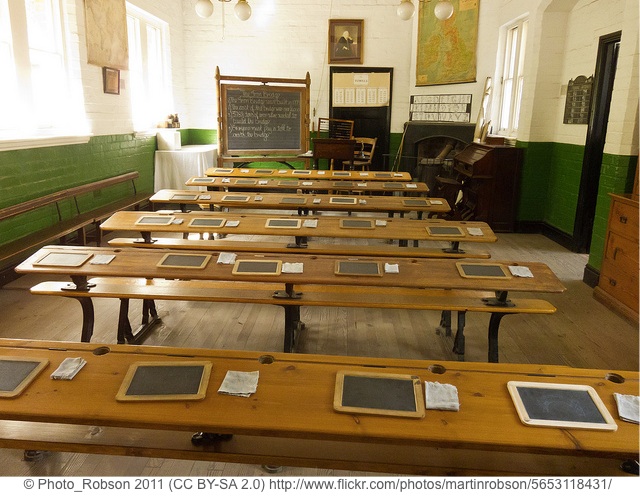
Jane Austen : Our Kintbury Connection

This story begins in the second half of the eighteenth century with the families of two West Berkshire priests.

 In 1771, the Reverend Noyes Lloyd became vicar of Enborne, a small village to the west of Newbury in Berkshire. Noyes and his wife Martha had three daughters: Martha, Eliza and Mary, and a son Charles.

A few miles further to the west, in Kintbury, the Reverend Thomas Fowle the younger had been vicar since 1762. His wife, Jane, was the sister of Martha Lloyd over at Enborne. Thomas & Jane Fowle had four sons: Fulwar Craven, Thomas, William & Charles.

When  Jane & Thomas Fowle were considering an education for their boys, they decided to send them to an establishment run by an old friend of Thomas’s from his university days. The friend was one George Austen who had opened up his vicarage home in Steventon as a school for boys.

This might seem to us a very odd thing to do but back in the eighteenth century it was not unusual. And so despite having seven children of their own living at home, the Austens welcomed even more young men to share their vicarage with them. What Mrs Austen thought of this is not recorded but it would seem that she was perfectly happy with the arrangement!

 And so, Fulwar, Thomas, William & Charles Fowle were to spend some of their formative years in the home of the Austens and of course, they got to know the Austen children, including Jane & Cassandra, very well.

Jane herself was still quite little when the first of the Fowle brothers arrived at her home. To her it must have been something like having extra brothers in the house.


At this time, obtaining a degree from Oxford or Cambridge, and becoming ordained as a clergyman was considered a very solid, respectable career path. Fulwar Craven Fowle went on to obtain a degree from Oxford then followed his father into the church and eventually became vicar of Kintbury in 1798. By this time he had married his cousin from Enborne, Eliza Lloyd, daughter of the Rev Noyes Lloyd. Jane Austen’s brother James – a good friend of Fulwar – was at the wedding and this is very likely the first time he would have met the Lloyd family.

However,  Eliza’s sisters were soon to become very close friends with Jane and Cassandra. When the Rev Noyes Lloyd died, his widow and her two unmarried daughter, Martha & Mary, left Enborne rectory to live in the parsonage at Dean, very close to the Austen family home at Steventon. And so began the very close friendship between Jane & Cassandra with Martha & Mary Lloyd.


 We know from Jane’s letters that the Austen family maintained their close friendship with the Fowles at Kintbury. Several Austens – father George, the brothers, Jane & Cassandra themselves – sometimes stayed at the vicarage in Kintbury.

In 1792 Cassandra Austen became engaged to Thomas Fowle,- that is to say, Thomas Fowle III, the second son of Thomas Fowle junior and his wife, Jane. By now, Tom Fowle is an ordained minister himself, although too poor to marry. In 1796 he accepted a position as chaplain on a voyage to the West Indies but tragically died on the voyage. It was months before Cassandra – or indeed the Fowle family -received the news of his death. It must have been a very difficult time for both the Fowle family and the Austens. However, it seems as if the mutual loss only served to strengthen the relationship between Cassandra and the Fowles and she seems to have become almost a member of their extended family staying often at Kintbury.

Then, in 1797, Mary Lloyd – daughter of Noyes Lloyd of Enborne and sister to Eliza in Kintbury – married Jane Austen’s brother, James who had been widowed in 1795. Martha Lloyd continued to live with her mother at Dean but on Mrs Lloyd’s death in 1806, she moved in with the Austens and stayed with them as they moved from Southampton to Bath and finally Chawton.

I think this tells us a lot about the position of women at this time. Martha Lloyd of Enborne could claim aristocratic ancestry – indeed, her grandfather was the Honorable Charles Craven sometime governor of Carolina. Her grandmother, the former Elizabeth Staples was the second wife of Jemmet Raymond and a bust of her likeness can be seen on the very elaborate Scheemakers tomb in Kintbury church – a monument which, when it was new, was extremely expensive and would have said much about the wealth and status of those it commemorated. Yet, on the death of both her parents, Martha – as yet unmarried – does not have her own household. Until 1828 when she became Francis Austen’s second wife, she shared the home of Jane & Cassandra Austen.

If you visit Jane Austen’s house in Chawton today, you will see that Martha Lloyd was her very close friend and companion. Jane’s letters reflect the close and supportive relationship between Martha, her sister & brother-in-law at Kintbury and Cassandra and herself. Although Cassandra Austen destroyed many of her sister’s letters after Jane’s death, many of those existing are written to Cassandra while she is staying at Kintbury. In them we read of visits to Fulwar & Eliza, news of their children, the receipt of a basket of apples in return for one of fish and even a request for Charles Fowle to purchase Jane some silk stockings. Martha’s new maid, we learn, is the niece of someone from Kintbury.

And so it is that Jane’s connections with Kintbury are so much more than Cassandra’s fateful relationship with Tom Fowle. The Fowle family of Kintbury and their cousins the Lloyds of Enborne were all part of the Austens’ extended family circle and emotional support. Kintbury meant something to Jane Austen.

There are just two existing descriptions of Jane, by those who knew her. One is from her nephew James Edward Austen Leigh but the other is from our own Fulwar Craven Fowle. He recalled that she was:

“…certainly pretty – bright and a good deal of colour in her face – like a doll – no, that would not give at all the idea for she had so much expression – she was like a child – quite a child very lively and full of humour.”

We know that Jane’s last visit to Kintbury was in the spring of 1816. Fulwar’s daughter, Mary Jane Dexter, recalled that,

“She went about her old haunts and recalled old recollections with them in a peculiar manner, as if she did not expect to see them again.”

Theresa Lock, June 2023

Fifty miles of good road?

And what is fifty miles of good road? Little more than half a day’s journey. Yes, I call it a very easy distance.

Jane Austen, Pride & Prejudice

That was the opinion of Mr Darcy from Jane Austen’s novel of 1813, Pride & Prejudice. Whether many travellers of the time would have agreed with him it is difficult to say.

Of course, roads in towns and cities would have been very different from roads – where they existed – in rural areas such as ours. The villages of our benefice would have been linked back then, as now, by a network of winding lanes  but then they would have become muddy and impassable in bad weather. Street names sometimes indicate what would have been the most direct or preferred route into larger towns such as Newbury Street in Kintbury, the road which can be followed eastwards through Hamstead Marshall and Enborne to enter Newbury on the south side, or oldest, part of town. This would have been the route used by the carriers’ carts and others for whom life moved at a much slower pace.

In Jane Austen’s day many working people rarely travelled beyond a few miles from their homes – although there were, of course, exceptions, such as the servants who travelled with their more affluent employers. But for many people the local villages furnished all their day to day needs and even somewhere as small as Combe had its own shops and even a post office.   

But for some local people – and it goes without saying these were the upper classes – travel to the world beyond was part of their lives.

For the benefit of these people, with their liveried carriages, many roads had been steadily improving since the early years  of the eighteenth century. This was when turnpike trusts, with responsibility for improving and maintaining important routes, were set up by acts of parliament and toll houses  with their accompanying gates, became a familiar sight. So, whilst the lanes through Kintbury to Inkpen, West Woodhay and the like would have remained dusty or muddy track ways, roads linking important towns were much improved to facilitate coach travel.

At this time, Bath had become a very fashionable venue for the upper classes, many of whom travelled there from London. Consequently, the road we now know as the A4 – the Bath Road – was much repaired and widened. The stretch between Marlborough and Newbury in particular saw much improvement after 1744 when an act of parliament established a turnpike trust responsible for its repair. Milestones erected along the route at this time can still be seen today. One of its trustees was a man local to our area, a Dr Brickenden of Inkpen House, who, one can presume, could see the advantage of faster travel beyond his village.

The first public stage coaches to run between London and Bath had begun in 1657 when there were two regular services a week. By the end of the eighteenth century, however, the service had grown to over 150 a week. The Bear Inn, Cheap Street, Bath even advertised “A day and a half coach to London every Monday, Wednesday and Friday”. This was the express travel of the day.

For those able to afford to travel, mail coaches offered a more comfortable – and speedy -travelling experience. In 1782, John Palmer, a theatre owner from Bath, suggested to the Post Office in London that mail could be transported more quickly using the service he had developed for transporting his actors and stage scenery. An experimental run proved he was correct and his coach travelled along the Bath Road to London in just sixteen hours.

Mail coaches were pulled by teams of four horses, each team replaced every ten miles at one of the many coaching inns which had become well established along the Bath Road.  Journeying more frequently through the night when the road was less busy, the black and maroon coaches with the coat of arms and words, “Royal Mail” emblazoned on the doors would have made a striking sight on a moonlit night as they made their way towards the toll house by the Hoe Benham turning.

There would have been a stop, too, at the Elcot turning; we know this because mail for the local area was deposited with the blacksmith there. We have, at St Mary’s, Kintbury, a letter written by Rev Noyes Lloyd of Enborne regarding his communication with the sculptor Sheermakers regarding the monument to the former Lady Craven, now in the north transept. Presumably written and sent from London, the letter is for the Rev Thomas Fowle of Kintbury but the direction is to the blacksmith’s at Elcot. From here the mail would have been collected and distributed. For those of the letter-writing classes, having relatively easy access to a speedy mail coach route must have been a big advantage.   

But would this much improved turnpike road, along with the availability of fast travel to the bright lights of London or the fashionable resort of Bath, have really made much difference to the working villagers of Combe or Inkpen, West Woodhay or Kintbury? For those for whom travel was either by the carriers’ cart or a stout pair of boots, the answer is most probably no. The road to Newbury would have remained the lane through Enborne and the route to Hungerford was across the common.

For the toilers in the fields to the north of Kintbury, Hamstead Marshall or Enborne, the site and sounds of fashionable coaches rumbling past must have emphasised the great gulf between their lived experiences and those of the better off. So who would have used the new, improved Bath Road?

It goes without saying that the upper classes and members of the wealthier middle classes are most likely to have made the Bath Road their route of choice, particularly those who kept and maintained their own efficient carriage and horses. Dr Brickenden of Inkpen House, an early Commissioner of the Turnpike Trust, was most probably acting out of self interest in his support for the road.

Members of the Craven family of Hamstead Marshall may well have availed themselves of the fashionable amenities and social life to be had at Bath during the season. For the likes of them, a seat with very easy access to the turnpike road was equivalent to one’s country retreat having easy access to the M4 and onwards to Heathrow today.

Another person for whom the improved Bath Road must have been particularly convenient would have been Charles Dundas, member of Parliament for Berkshire from 1794 to 1832. Dundas lived at Barton Court which was – and still is – situated just off the Avenue, Kintbury. Two hundred years ago this route was one of the main roads into the village from the Bath Road, thus making access to the turnpike road particularly convenient for someone who could afford the very best carriage and team of horses. 

Kintbury to Westminster along the Bath Road was – and still is – around 65 miles so just a bit longer than the fifty miles of good road which Mr Darcy thought “ a very easy distance” to travel  in little more than half a day. I think Dundas would have needed the very best horses and several changes to travel to parliament in so short a time. However, if Palmer’s coaches managed nearly twice the distance in sixteen hours, it seems likely that the MP could have reached The House from his house on the same day as he set out, all other things, such as weather conditions, being equal.

Tessa Lock, May 2023