
Chalk is a naturally occurring commodity hereabouts and it provided the raw material for the whiting industry. Excavated at various locations around the village – nineteenth century maps show several “chalk pits” now mostly filled in and long forgotten – the chalk would be crushed in specially adapted mills and mixed with water to produce whiting. The finished product had a variety of uses including bleaching ships’ sails, mixed with linseed oil to produce builders’ putty and more locally, to whitewash walls.
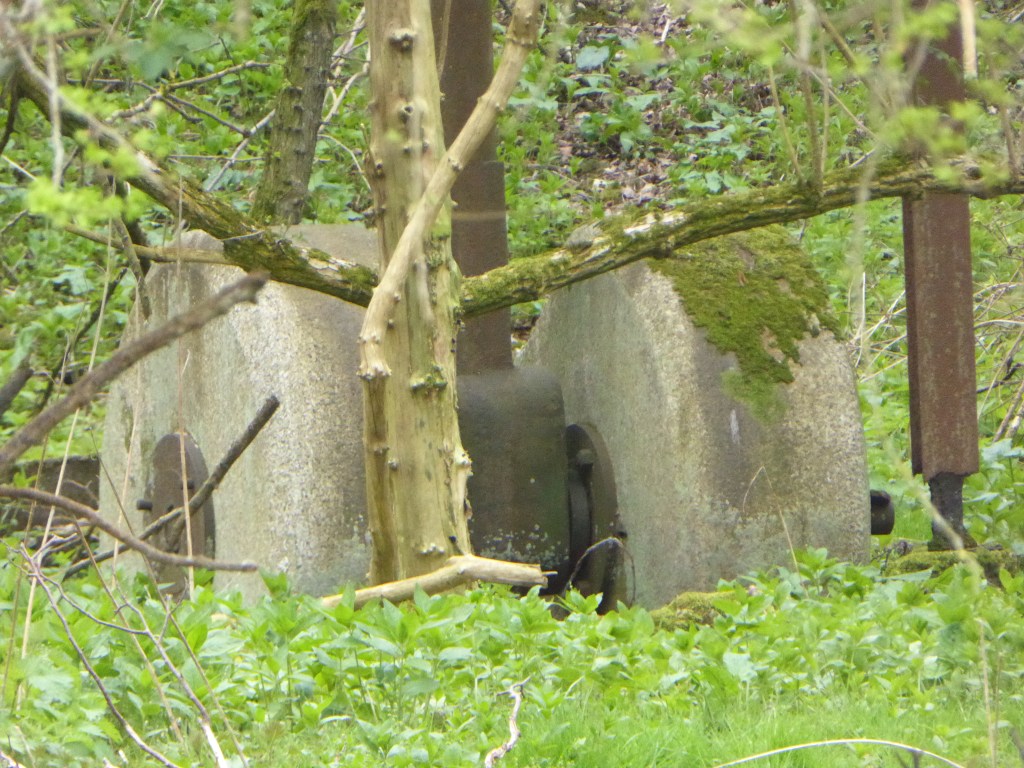
In 1862 there were five manufactories of whiting in Kintbury, one of which was making 600 tons of whiting per annum. Remains of what is believed to be an edge runner mill used in the preparation of the chalk can still be seen beneath the undergrowth on Irish Hill, just to the east of Kintbury. Another whiting works was situated close to a chalk pit in Laylands Green, just to the south of the village, and a third was situated on land belonging to Barton Court.
By 1905 there was just one whiting manufactory left: the Kintbury Whiting Company, which operated in the village until the 1930s.
Whilst some chalk was extracted using open cast methods and so leaving pits which, at a later date, required in filling, it was also mined. This method left cavernous underground caves as the photo on the Geological Society website shows:
http://www.ukgeohazards.info/pages/eng_geol/subsidence_geohazard/eng_geol_subsidence_chalk.htm
As it is very soft, chalk is not a good building material. There are very few stone walls around Kintbury although there is natural flint in some older buildings. It is not surprising, therefore, that brick making was an important industry in Kintbury until the early years of the twentieth century, utilizing clay extracted from various locations around the village.
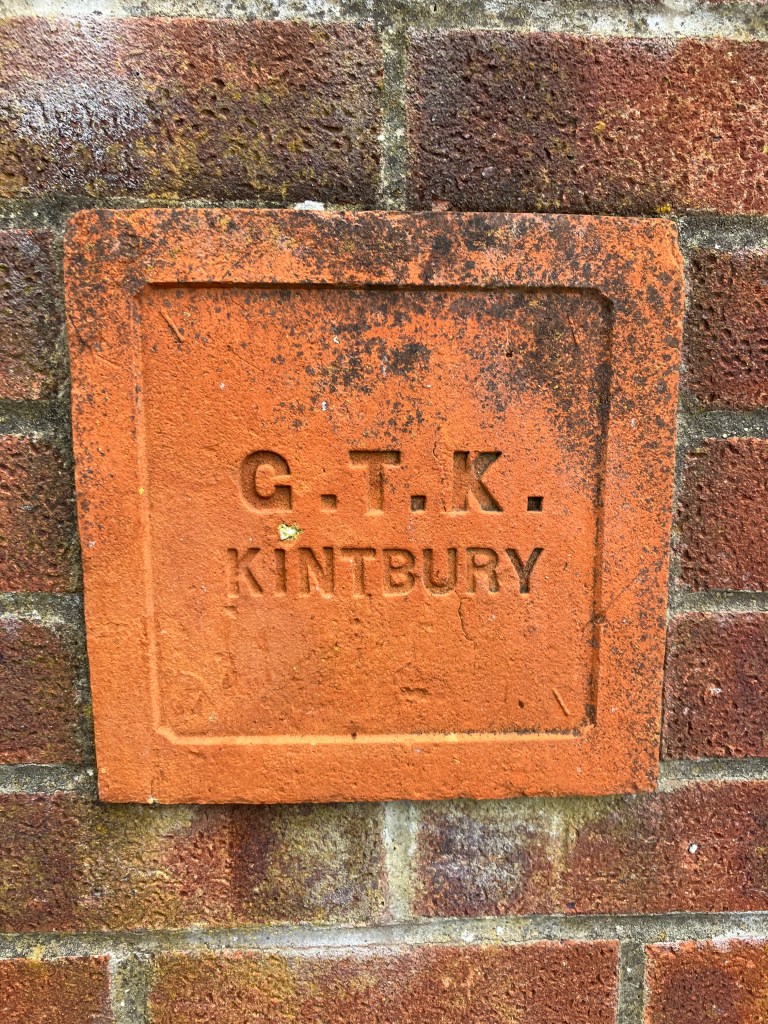
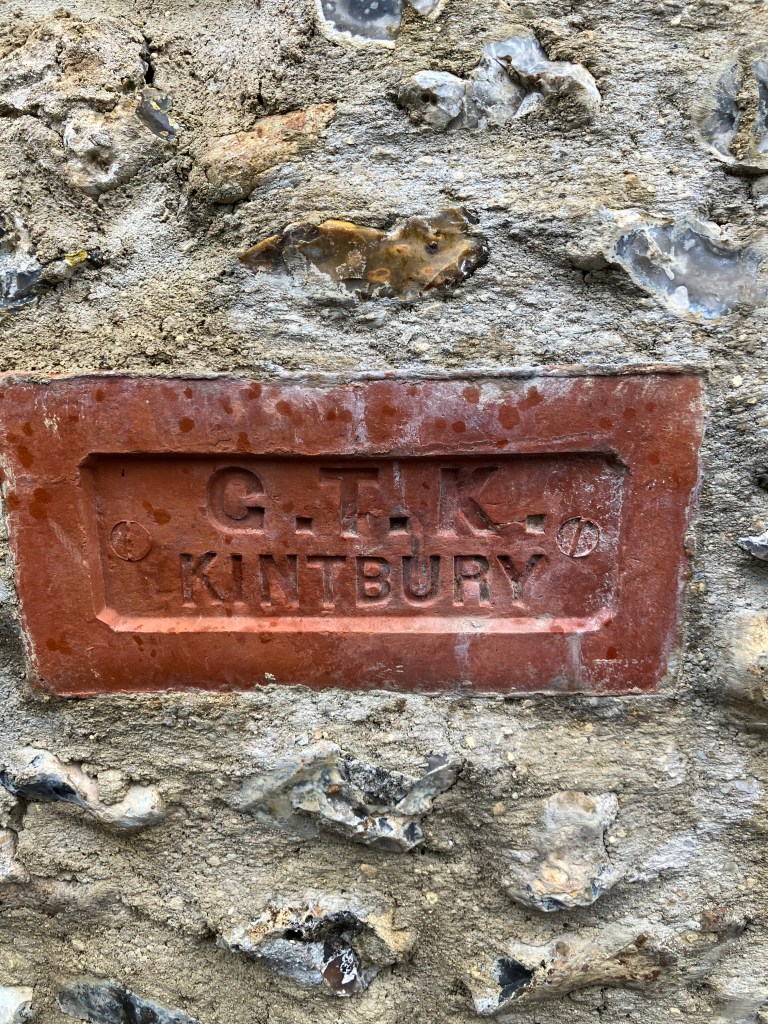
The last known brick maker in Kintbury was George Thomas Killick whose brickworks were in Laylands Green. Some examples of Killick’s bricks can still be seen around the village, set into relatively modern walls and placed so that the “GTK KINTBURY” can be displayed. It is thought that these examples might have originally been made for advertising purposes rather than for use in bricklaying.
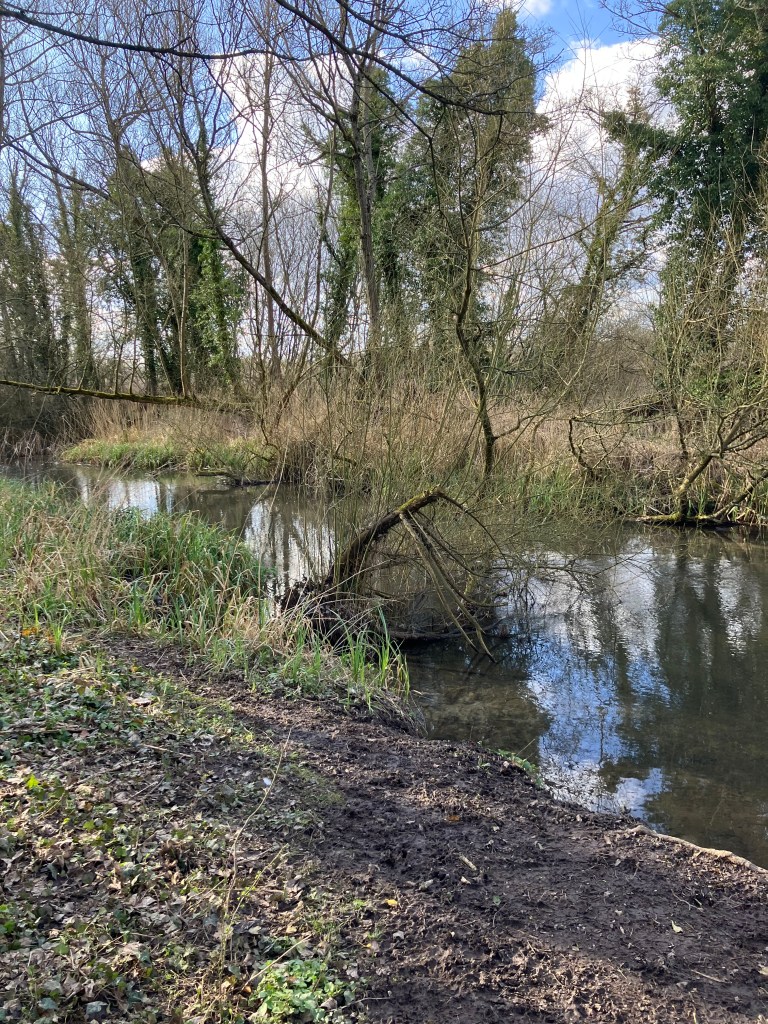
One lasting legacy of Kintbury’s industrial past is what is now Kintbury Newt Ponds Nature Reserve. The ponds are the result of industrial excavations, long since water-filled and colonised by three types of newt: smooth, palmate and great crested. As the great crested newt has statutory protection the site of their habitat cannot be built on. Today it is a nature reserve under the protection of the Berkshire, Buckinghamshire & Oxfordshire Wildlife Trust.
https://www.bbowt.org.uk/nature-reserves/kintbury-newt-ponds
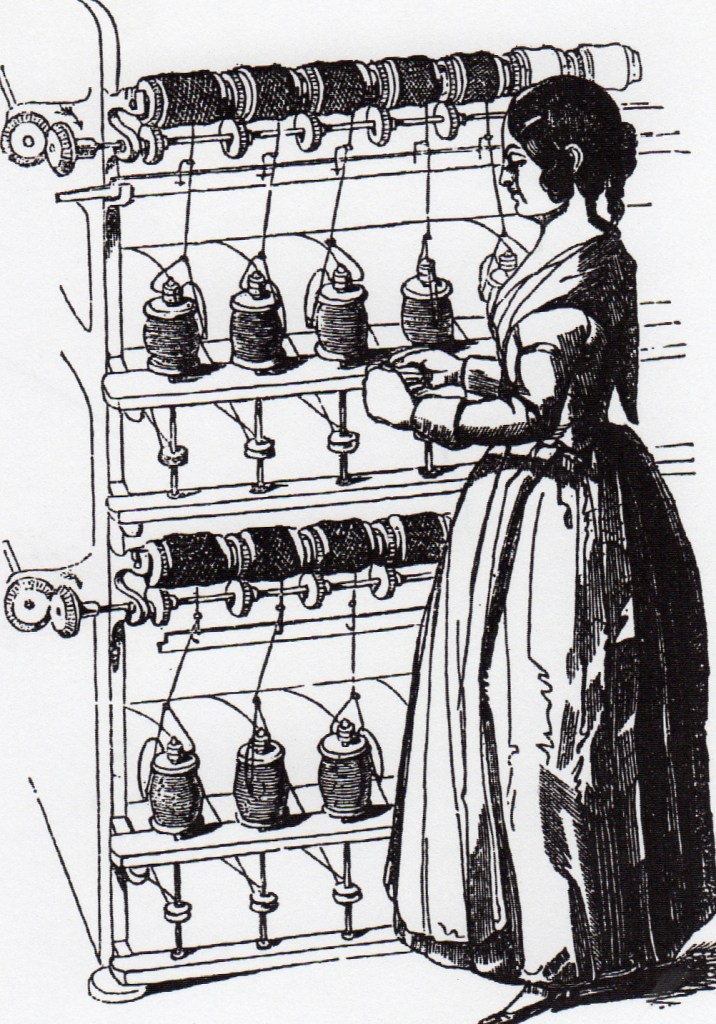
A very different industry to either making bricks or whiting is the manufacture of silk. A naturally produced fibre obtained from the silk moth, it can be woven into a delicate fabric much more frequently used for a variety of garments and accessories in years gone by. The volume 4 of the Berkshire editions of the Victoria County Histories (London, 1924) says that there was a silk mill in Kintbury in the early nineteenth century. Unfortunately, there is no record of where, exactly, it was situated although it may well have been near to, or on the site of, the former mill ( now converted to apartments ) close to the station.
Very little is known about silk production in Kintbury. The census of 1841 – the first to record names and occupations – lists just one person in Kintbury whose occupation mentions employment in silk manufacture: eighteen year old Luisa Shuttle is listed as being a “silk winder”. By 1851, no one, it seems, was employed at the silk mill.
Tantalizingly, there is a fleeting reference to silk, with association to Kintbury, in one of Jane Austen’s letters of 1796. Writing to her sister Cassandra who was then staying with the Fowle family at the vicarage, Jane says,
“You say nothing of the silk stockings; I flatter myself, therefore, that Charles has not purchased any, as I can not very well pay for them; all my money is spent in buying white gloves and pink persian.”
It is likely that Jane is sharing something of a joke with Cassandra and we will, of course, never know its full context. However, it seems clear that Charles Fowle, son of Rev Thomas Fowle, with whom Cassandra was staying, had at some point been asked to purchase silk stockings for Jane and that it has to be extremely likely that this was because they would be produced in Kintbury.
Sources:
https://www.heritagegateway.org.uk/gateway
Berkshire Chronicle (online at www.britishnewspaperarchive.co.uk)
“Chalk links in North Wessex Downs” https://www.northwessexdowns.org.uk/wp-content/uploads/2021/11/ChalkLinks_Racing.pdf
Ancestry.co.uk
 Kintbury and Beyond