From Combe Gibbet to Hollywood

Many people hereabouts are familiar with the story of the two young Oxford students who, in September 1948, set out to make their first feature film.

Filmed entirely on location around Inkpen and Combe with many scenes shot on Walbury Hill, the plot of the film is based on true events. These were the murders in 1676, of Combe ’s Martha Broomham and her son Robert, by Martha’s husband George and his lover, Dorothy Newman of Inkpen. The murderers were executed at Winchester and their bodies subsequently displayed on Combe gibbet.

Entitled, Black Legend, the film used actors drawn from, variously, members of Oxford University Dramatic Society, one young director’s family who lived locally, villagers from Inkpen & Combe and children from Christchurch School, Kintbury.
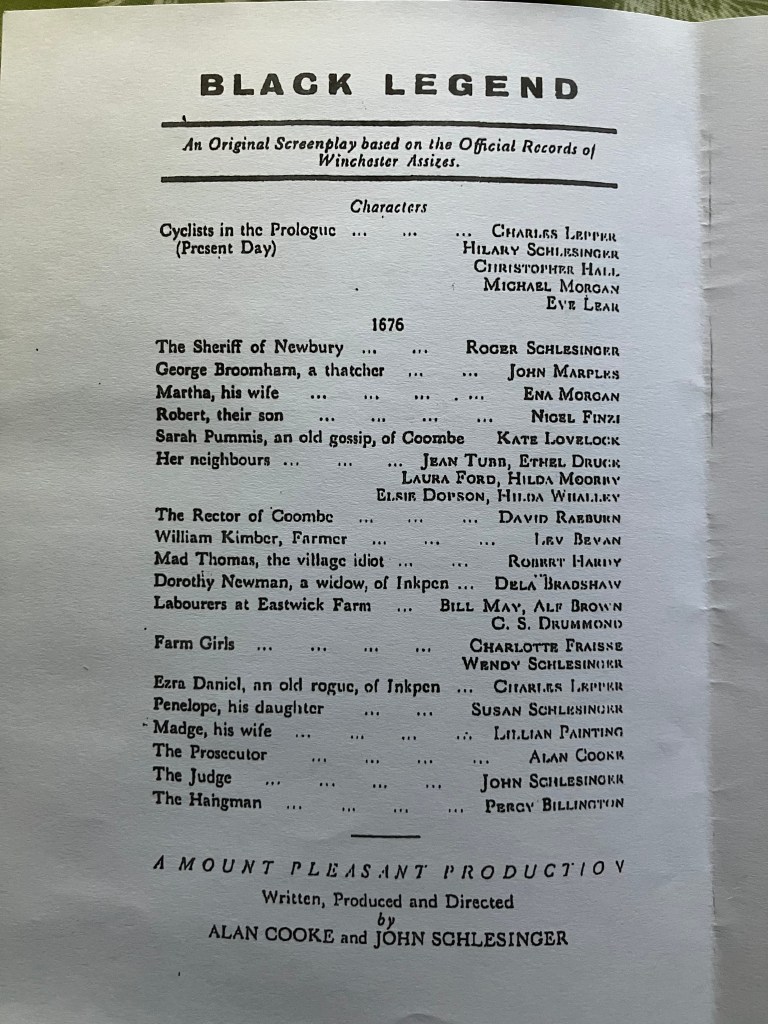
The weather that September was sometimes cold and bleak; shooting was held up when the camera broke and had to be sent away for repairs. However, the young men were pleased with their results, writing in the film’s accompanying programme notes:

But for all its failings we believe BLACK LEGEND to be an achievement that in one respect at least has rarely been equalled. For it shows how much can be achieved by the co-operation of enthusiastic people, even in a project so technical as a film.
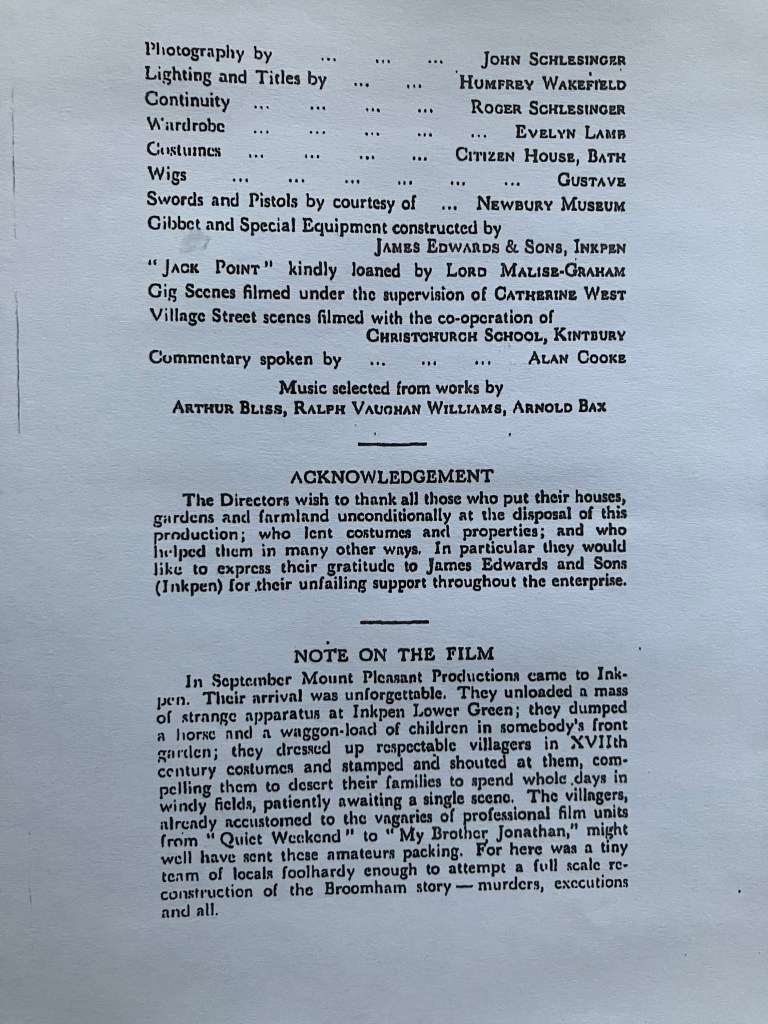
Copy of the original programme for Black Legend

Were the young students right to feel so positively about their work? Well, when the finished version was shown – in Hungerford, Inkpen, Ashmansworth and West Woodhay the following January, 1949 – the Newbury Weekly News declared in its advertisement for the screening, “The Film YOU helped to make” and “YOU’LL BE SORRY YOU MISSED IT”.

In its review, the Newbury Weekly News quotes an anonymous film critic as saying:

“Black Legend is a film to see and remember…

The acting is a marvel of cooperation among amateurs, some skilled, some quite inexperienced, but all gifted enough to convey their thoughts and often their probable words without any speech.

Soon, Black Legend was to receive a wider audience than the villages around Newbury. An article in the Scotsman of March 1949 reports that it had been shown in the Grand Committee Room of the House of Commons. The film is now described as, “having all the cinema world by the ears.”

The report goes on to say,

“The wonderful landscape, the local people, the farms and their implements, are all so used … that the compositions are beautifully organised; the photography of these young people with relatively little experience resulting in a work which ought to make the film industry pull up its socks.”

These young men obviously showed promise: but did they fulfil that promise?

In 1965 one of those young men returned to film on the chalk downland not so very far from here. By now, John Schlessinger – whose family had lived near Kintbury in the 1940s – was regarded as part of the British “New Wave” of film directors and his previous movie, “Darling,” had been Oscar nominated.

This time, Schlessinger’s leading actors were  well known throughout the movie world of the early 1960s: Terence Stamp, Alan Bates and Julie Christie, although, as with Black Legend, his cast included many local people. “Far from the madding crowd,” an adaptation of the novel by Thomas Hardy, was to be filmed entirely on location – as Black Legend had been – this time in Wiltshire and Dorset. Just as Black Legend had featured music by Vaughan Williams to compliment the film’s rural setting, so Richard Rodney Bennett’s score for “Far from the madding crowd” is frequently reminiscent of Vaughan Williams’ work, similarly using variations on English folk songs to evoke the period and place of the piece.

Schlessinger’s “Far from the madding crowd” is one of my favourite films. It must be one of the most visually beautiful films ever shot in England and captures the Wessex downland like no other, in my opinion. So many shots, I feel, are reminiscent of scenes in Black Legend, almost as if Schlessinger was finally perfecting, on a much higher budget and in glorious technicolour, scenes he had shot with Alan Cooke on and around Walbury Hill, all those years before.
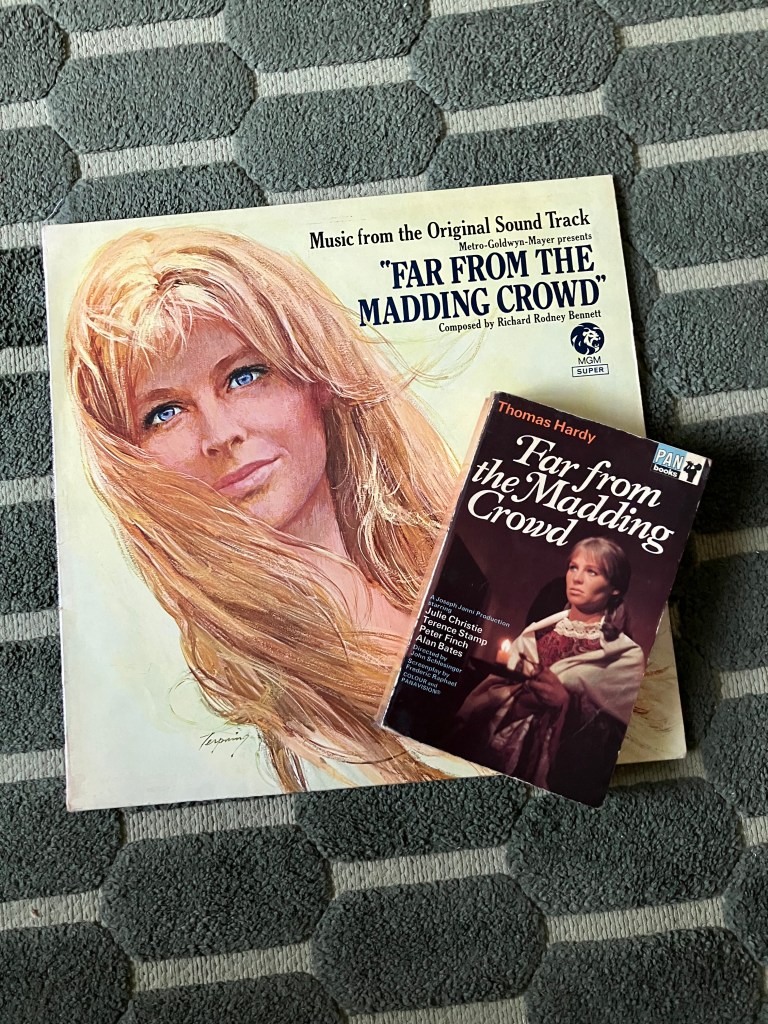
Iconic 60s star Julie Christie starred in Far From The Madding Crowd

Throughout his career as a film maker, John Schlessinger received four BAFTAs and an Academy Award (an “Oscar”). He was made a CBE in 1970 and a BAFTA Fellow in 2002.

He died in 2003.

(C) Theresa A. Lock 2024

References:

https://www.bfi.org.uk/features/where-begin-with-john-schlesinger

Newbury Weekly News Archive, West Berkshire Library

British Newspaper Archive
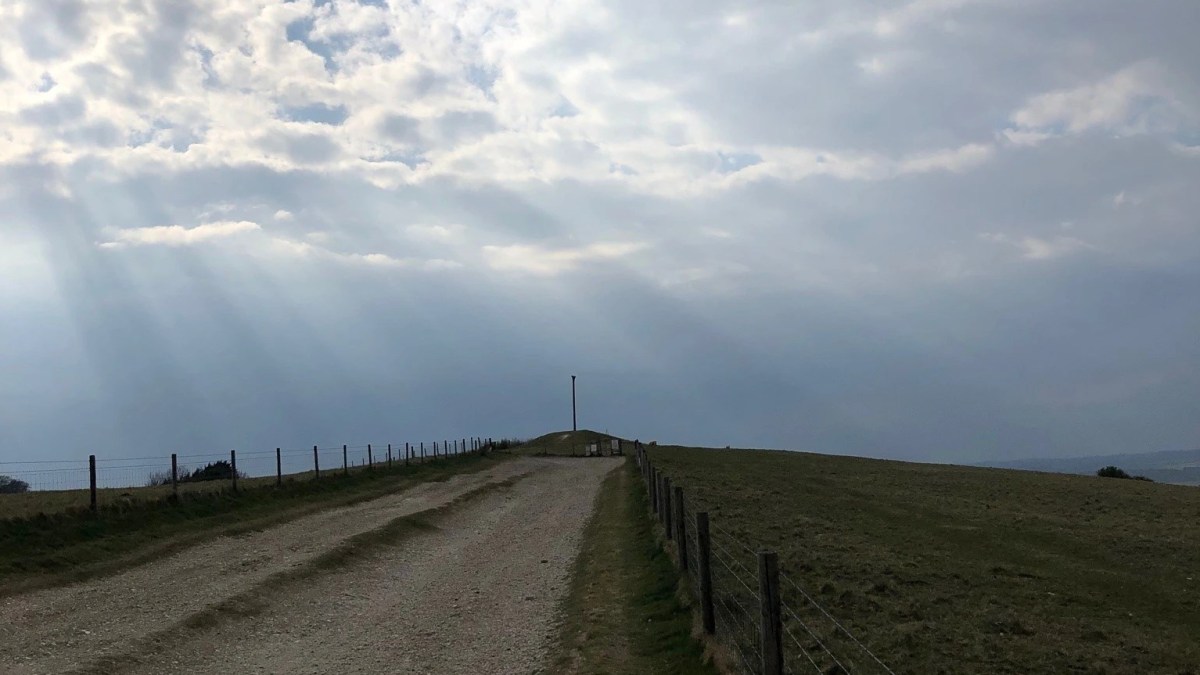
Once a mountain

Walbury Beacon Benefice is named after the point on Walbury Hill where, traditionally, a beacon has been built.

But mind-chains do not clank where one’s next neighbour is the sky.

Thomas Hardy, “On Wessex Heights

Walbury Beacon Benefice is named after the point on Walbury Hill where, traditionally, a beacon has been built. Originally beacons were lit across the south of England as an alert to the danger of invasion. More recently and at least since Victorian times, the chain of beacons has been lit to celebrate royal jubilees. Sometimes known as Inkpen Beacon, at 974 feet above sea level, Walbury Hill is the highest point on chalk in England and the site of Walbury Camp, an Iron Age hill fort, which, I believe, has never been excavated.

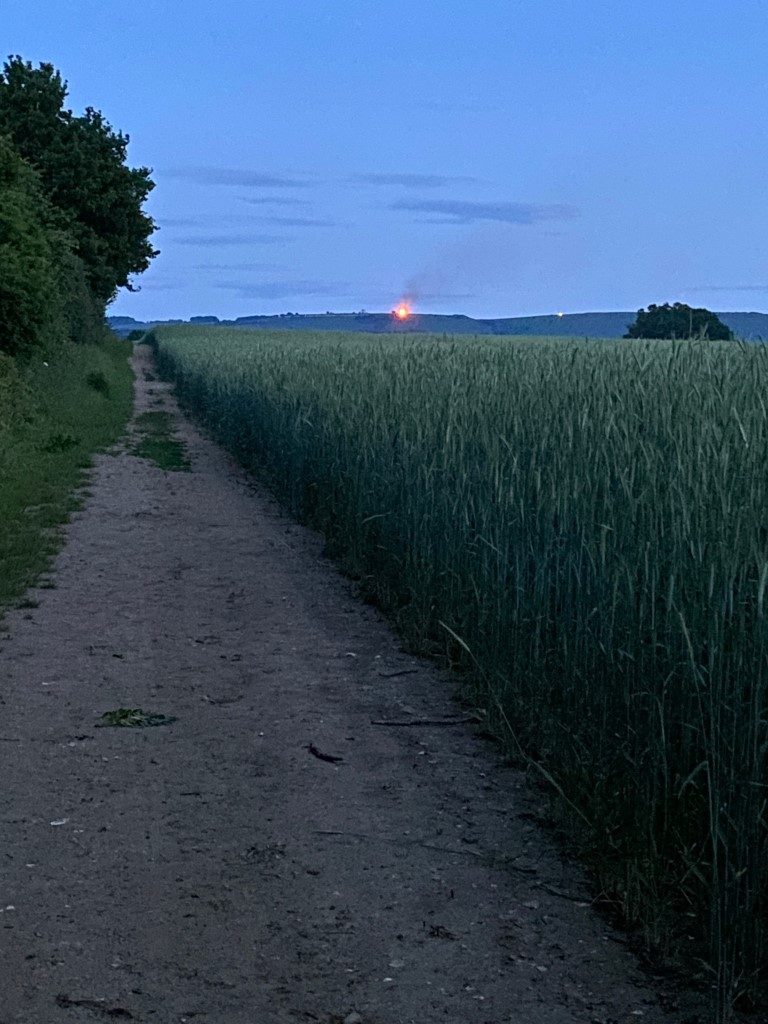
A beacon on Walbury Hill/Inkpen Beacon celebrating the Platinum Jubilee in June 2022

It will surprise some people to know that when the Ordnance Survey first surveyed this area, Walbury Hill was measured as being 1,011 feet above sea level, thus making it a mountain! However, a subsequent survey in the late C19th measured Walbury at less than 975 feet and so demoted it to the status of a hill.

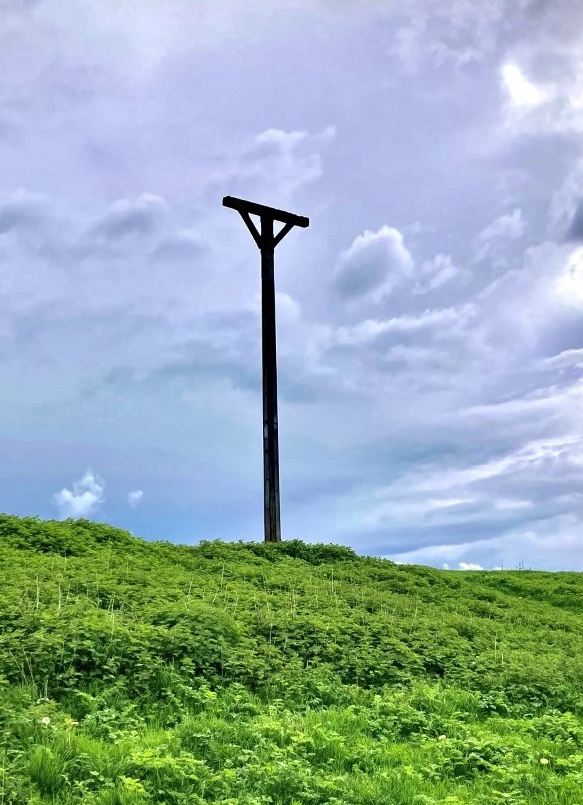
Further westward along the ridge is Inkpen Long Barrow, one of only three long barrows in Berkshire but one of a cluster, most of which are located in Wiltshire and Dorset. However, it is not the long barrow that many visitors come to see, but the famous (or perhaps that should be infamous) Combe Gibbet.

Combe gibbet

Many people mistakenly believe that a gibbet was the site of a public execution, but this was not so. The original Combe Gibbet was only used once but it was not for an execution. In 1676, George Broomham and Dorothy Newman were convicted of the murder of George’s wife Martha and son, Robert. They were executed at Winchester but their bodies returned to their home parishes where they were hung on the gibbet – as a deterrent to anyone contemplating committing murder. What contributes to the general confusion between a gibbet and a gallows is the fact that the downland on the north side below the gibbet is marked on OS maps as “Gallows Down” – presumably a misnomer which has stuck!

As many of you will know, the story of Broomham and Newman inspired the then young Oxford graduate John Schlessinger, to make his first feature film, “The Black Legend”. In the late 1940s the Schlessinger family lived at Mount Pleasant, between Inkpen and Kintbury  and so the grisly local landmark would have been a familiar sight to them. With family members and friends from Oxford taking the major roles, John Schlessinger filmed the story of murder during the summer of 1948, using many local people as extras. I doubt any of these villagers had the remotest idea that this young man would one day go on to be one of Britain’s foremost directors winning 7 BAFTAs and an Oscar.

Nearly 20 years later John Schlessinger was to return to Wessex to film his adaptation of Thomas Hardy’s “Far from the Madding Crowd”. Filmed entirely on location in Wiltshire and Dorset, what fascinates me about this later work are the number of scenes which recall moments from Schlessinger’s earlier film. It is as if the inspiration he took from his work around Walbury Hill stayed with him and was used in this, one of the visually most beautiful of British films.

However, it is not only because of the Black Legend that many other people visit Walbury Hill. The Newbury Weekly News archive features various accounts of visits to the area or discussions of its history. Some time in the late C19th, the novelist and poet Thomas Hardy visited Walbury Beacon – though perhaps to confuse us even more, he calls it “Ingpen Beacon” – and referenced it in his poem, Wessex Heights:

There are some heights in Wessex, shaped as if by a kindly hand
For thinking, dreaming, dying on, and at crises when I stand,
Say, on Ingpen Beacon eastward, or on Wylls-Neck westwardly,
I seem where I was before my birth, and after death may be.

Walbury Hill might not be a mountain but it remains a much loved landmark.

Theresa Lock