Kintbury in the time of Jane Austen

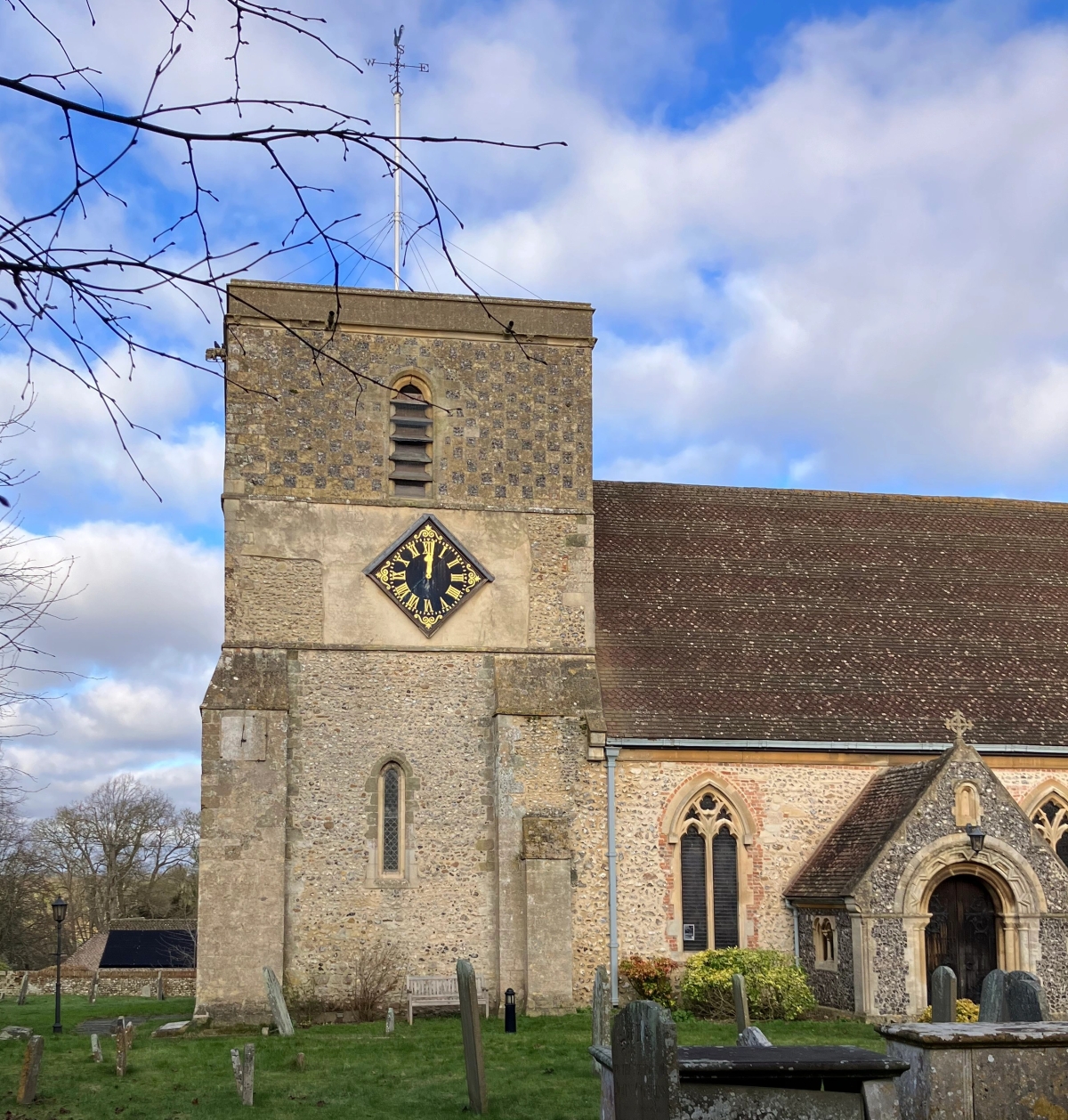
Jane Austen, the celebrated novelist, lived from 1775 to 1817. Although the Austens were a Hampshire family, there was a close friendship between them and the Fowle family of Kintbury and we know that various Austen family members visited our village.

The village Jane knew was, of course, very different from the village we know now. So, what do we know about Kintbury- and the wider world – in Jane Austen’s time?

For much of Jane’s life, England was at war with the French. When Jane was 5 in 1780, the Gordon Riots took place. In 1788 George III’s  first illness began and the first convicts were sent to Australia. In 1792, the September massacre took place in France and 12,000 political prisoners were murdered. In 1793 Louis XVI and Marie Antoinette were executed and France declared war on Great Britain. Then, in 1797 the French landed in Wales, – the last invasion of Britain!  In 1798 the Battle of the Nile took place.

In 1804 Napoleon had himself crowned Emperor, then 1805 saw the battle of Trafalgar and the death of Nelson. In 1807 the Slave Trade was abolished, 1810 and 11 saw the King’s illness recur and the Regency established. In 1812 Napoleon invaded Russia and America declared war on Great Britain. The war ended in 1814 and 1815 saw the battle of Waterloo and restoration of Louis XVIII to the throne of France.

The 1834 Poor Law Act saw the building of more workhouses throughout the country to house the poor and destitute; one was built in Kintbury.

For cricket fans June, 1814 also saw the first match to be played at Lords.

Jane received letters from her sailor brothers and other relatives and was therefore conversant with European news. In her novels, sailors  and soldiers appear but there is never any specific reference to the situation in Europe or to war. Similarly, life in inland villages such as Kintbury would have been lived with far less reference to the turmoil across the channel and the fear of invasion than that which threatened some coastal areas during the war with France.

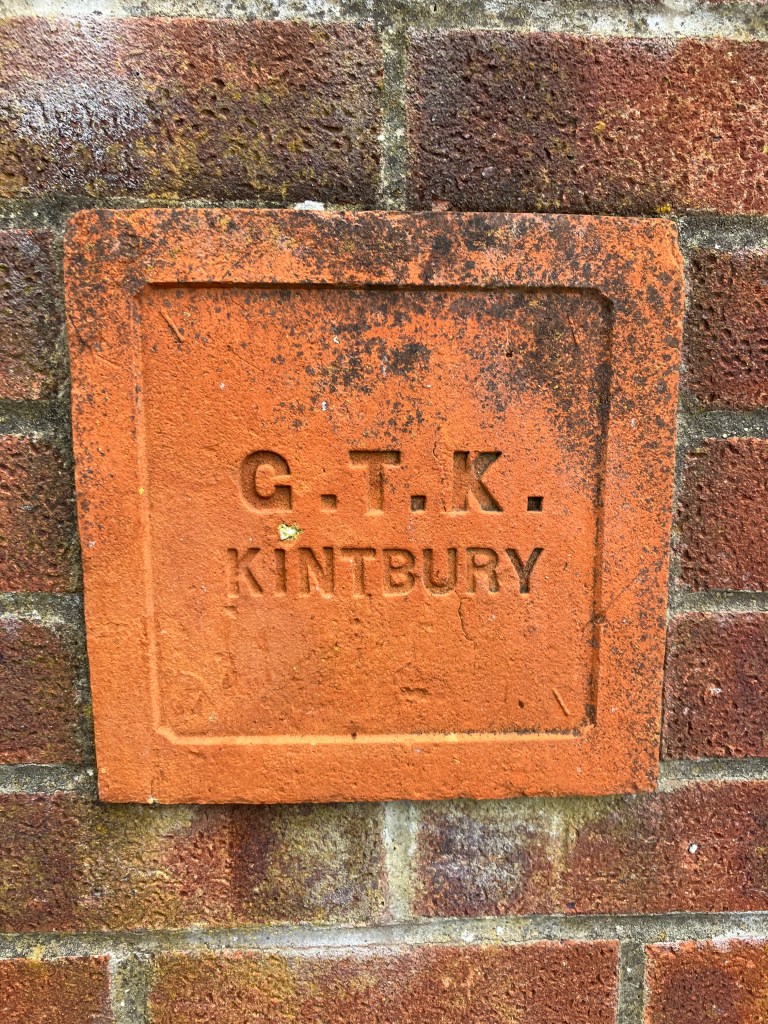
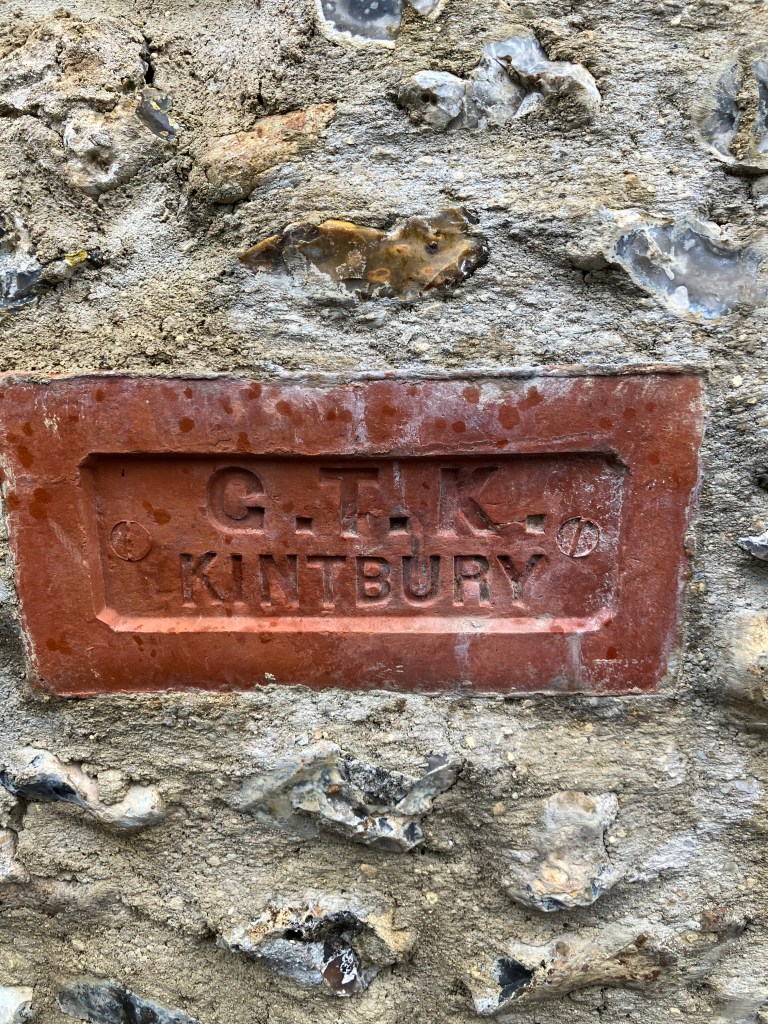
The Kintbury Jane knew was much smaller than the modern village we know today; most of the housing was located around the centre and surrounded by fields or open land. Dotted around the village were whiting pits as well as pits from which clay for brick making was extracted.

Irish Hill had its own little clutch of cottages which remained until the 20th century. Despite the legend that it was named “Irish Hill” for the Irish navvies who worked on the canal, the original name, which predated the arrival of the canal, was in fact Ayrish Hill. It was the site of yet another of Kintbury’s whiting manufactories and after the canal came into existence had a jetty where the whiting was loaded onto barges.

The Rev’d Thomas Fowle II was vicar of Kintbury from 1762 to 1798. He had been a close friend of Jane Austen’s father George since their days together as students at Oxford University.
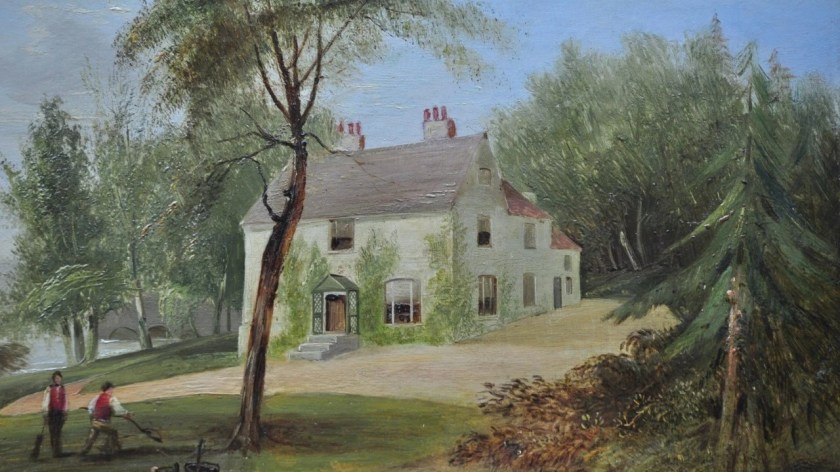
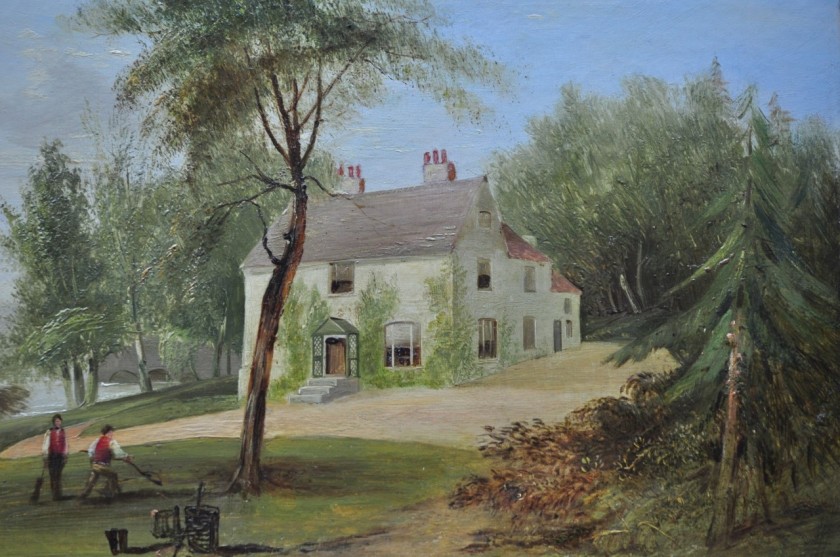
The Old Vicarage in Kintbury

In 1775 an alarming event at the Rev’d Mr Fowle’s vicarage was reported in the local papers: on Wednesday 6th  September, at about nine of the evening, a ball of fire entered the house at one of the garrets which went through the house, melted the bell wires, threw two candlesticks from the table, entered a cupboard and set fire to some papers. The family were much alarmed but no further injury sustained.

Also in June 1775, the paper reported that smallpox had broken out and was likely to increase. It was advisable to inoculate the poor and as the situation was very hazardous people were advised not to visit the area. This is the attack in which the Lloyd family at nearby Enborne suffered.  At this time, Martha – who was later to become Jane’s close friend – was 10, Eliza – later to be Mrs Fulwar Fowle – was 8, and their sister Mary,4. Sadly their brother, Charles, aged 7, died.

In 1779 Jeff Painter, an old parish pauper, was found dead and Mrs Giles, in a despondent state, cast herself into a well. The Jury’s verdict on this last was ‘lunacy’.

One notable Kintbury resident at this time was Samuel Dixon, a barrister at Lincoln’s Inn, who lived with his sister in Wallingtons, (now St Cassian’s Centre), Kintbury. One night in early 1784, when Dixon was staying in London, his butler, a man called Benjamin Griffiths, broke into Wallingtons, stealing several items and setting fire to the house which was burnt to the ground.

At first, Griffiths was not suspected of being the arsonist and, ironically, he was sent to inform Dixon of what had happened. However, his behaviour aroused suspicion. When charged he confessed and cut his throat but recovered, was convicted and hanged.

 Griffiths had previously been a toll gate keeper and was suspected of murdering his partner although never convicted of the crime.  There were, according to Newbury historian Walter Money, three toll gates between Newbury and Marlborough and Dixon was on the board of The Turnpike Trust which might go some way to explain why he later employed Griffith. Dixon tried, unsuccessfully, to get the death sentence commuted. In his will left money to two of Griffiths’ children.

Samuel Dixon died in 1892. His sister Elizabeth had predeceased him in 1786 and he had carried out her wishes in providing the parish with a ‘good fire engine’ which is now in the Newbury museum. 

Arson was not the only crime to be committed by a resident of Georgian Kintbury.

In October 1785, Charles Smart was transported for seven years for stealing wheat from Mr. Barker. Then, in July, 1787, Thomas Page was sentenced to be kept for three months hard labour in the House of Correction for leaving his family chargeable to the parish.

Also in 1785, an advertisement appeared in a local paper for a Kintbury School for Young Gentlemen.  It stated that the young gentlemen were to be carefully instructed in language according to the principles of grammar.  The charges for boarders at this school were:

  • Boys under twelve: 12 guineas
  • Boys 12-13: 14 guineas
  • Over 14: 16 guineas.

If the boys were kept at school over the Christmas and midsummer periods then the charge was 1 guinea.

In January, 1790, Thomas Hillin was committed to the county Bridewell charged on the oath of James Thatcher, surgeon of Hungerford, with attempting to extort money by threatening to charge him with a detestable crime! However, what, exactly, the detestable crime was, we do not know!

A village woollen manufactory was advertised in July 1797 as containing: “scribbling, raising, shearing etc in a high state of perfection, erected in a commodious building with 40 looms, twisting mill and other articles used in making cloth. A Dye House with every fixture for washing and dying and land surrounding the manufactory desirable and situated with ample supply of water and built to command ever benefit of light and air.”

This must have employed a number of people.

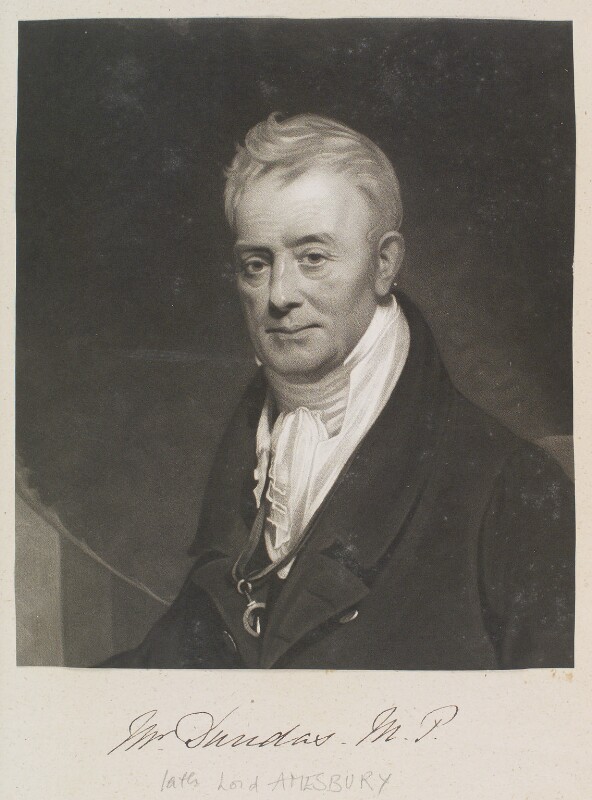
 There was also a silk manufactory said to be situated behind the cottages on The Cliffs.  Perhaps this was why local resident and MP Charles Dundas raised the question in the House concerning imports of French silk which were ruining the English silk trade.

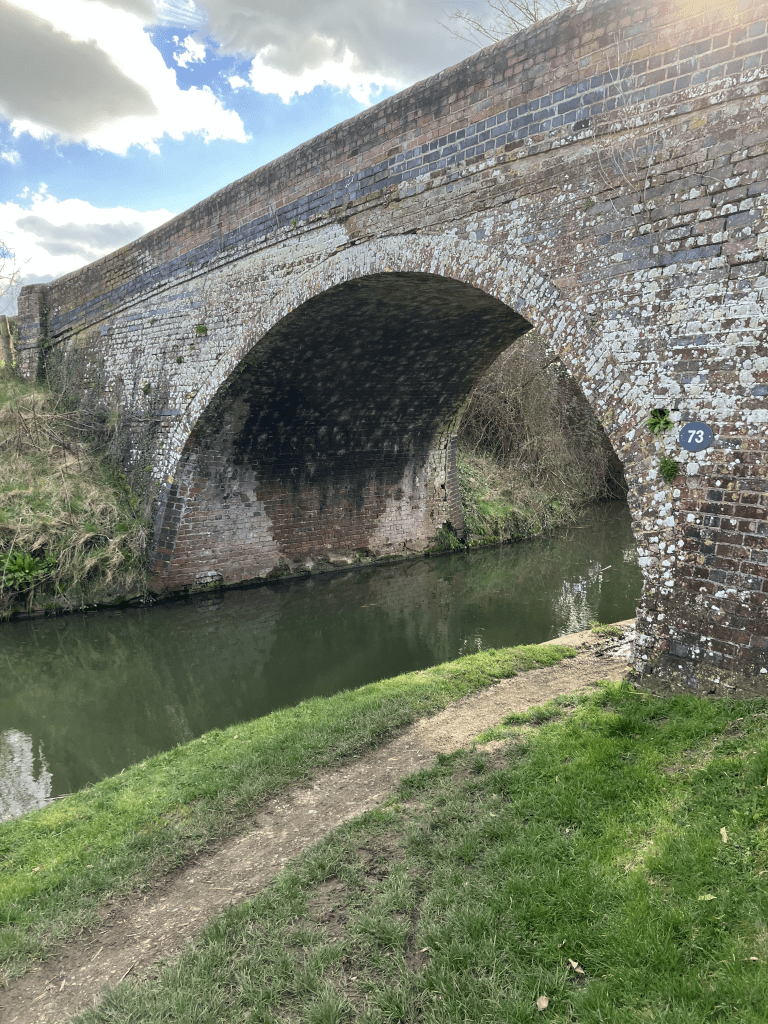
1797 saw the completion of the canal from Newbury to Kintbury. A wharf was built opposite the Red Lion and a busy trade soon developed in all sorts of goods but also it aided the increasingly productive Whiting Industry. The inaugural voyage consisted of  a horse drawn barge carrying the band of the 15th Dragoons and several important dignitaries. They were watched by large crowds, reached Kintbury in two hours and dined with the Canal’s Chairman Charles Dundas before setting back to Newbury in the rain.

A crime particularly associated, in the popular imagination, with the Georgian period must surely be highway robbery and it is not surprising that there was at least one example of this crime recorded in Kintbury. In March 1798. John Williams alias Timms and John Davis alias William Emmery held up the Hon Hugh Lindsay and Robert Spottiswood on the highway in the parish of Kintbury.  The gentlemen were relieved of money, banknotes and a gold watch.

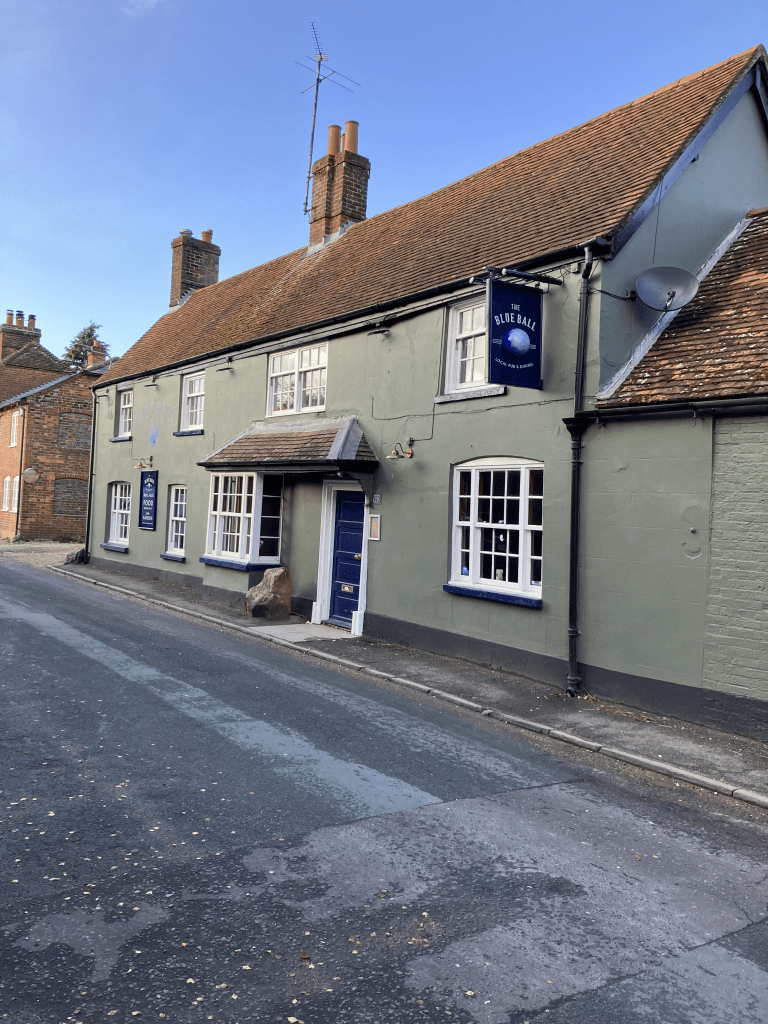
Daniel Heath is mentioned as innkeeper for the Blue Ball; He was still there in 1830 when, it was said, Prize Fights took place at the back of the inn. Prize fights were a popular sport in Regency times and mostly took place outside cities and towns and their location kept secret. This was the age of Tom Crib famous for his victory over the American Tom Molyneaux and Gentleman John Jackson, the English Champion, both of whom taught boxing to gentlemen.

A more peaceful pursuit was the annual was the Pink Show which began in 1778. Silver plate was presented as a prize and a dinner was held in the Blue Ball.

The Napoleonic  Wars formed the background of most of Jane’s life and in March 1794 a call had been sent out to the Lords Lieutenants of the counties to form infantry and yeomanry to defend their local areas.

Here in Kintbury, the Kintbury Volunteer Rifles played their part in preparing to defend  England if needed. 

Particular friends of both Jane and Cassandra Austen were the Rev’d Fulwar Craven Fowle and his wife, Eliza. Fulwar was the son of Rev’d Thomas Fowle II and had taken over the living in Kintbury in 1798.

 In 1805,  Fulwar led the local Volunteer Brigade to Bulmersh near Reading where they and the other Berkshire Volunteer Regiments were inspected by none other than King George III himself. According to a contemporary report, the troops were on parade at 10.00am and at 2pm the king and Royal Family arrived and then His Majesty rode down the lines whilst the band played a lively air. Afterwards His Majesty expressly desired the Duke of Cambridge to communicate to the Commanders, the particular gratification he felt at having witnessed the military perfection of his Berkshire Volunteers. The King, according to one source, told Fulwar that he knew he was a good clergyman and a good man, now he knew that he was a good officer. Praise indeed!

Rev’d Fulwar Craven Fowle

As well as having an active interest in the military, Fulwar Craven Fowle also had an interest in the developing science of agriculture, keeping his own prize winning flock of sheep. In 1808 two dogs worried his valuable Leicestershire sheep, eleven of which died. It is to be lamented, said the report, that individuals are not careful in securing their dogs as a disaster of this kind is a very serious injury in this most valuable flock in the county.

Unsurprisingly, theft continued to be a problem in Kintbury. In May 1815,  someone entered the house of Fulwar Craven Fowle and stole the silver cutlery which had a crest of an arm holding a battleaxe surmounted by a ducal coronet. Silversmiths and pawnbrokers were asked to look out for it and £20 reward offered.

Then, in 1817, John Cozens had  a dark bay gelding stolen from the stables opposite the Red Lion and offered £5 reward. Seemingly he could not offer as much as Fowle had following the theft of his silver.

Throughout this period, populations of towns and villages were growing throughout England and Kintbury was no exception. During the years 1761-1815 its population rose from 1,170 to 1,430.

The marriage registers show that, although many people chose local partners i.e. from Inkpen, Kintbury, Hungerford etc  some brides chose their husbands from further afield: Binfield, Basingstoke, Marlborough and even Crewkerne. Similarly, brides appeared from Salisbury, Ramsbury, Chieveley, Farnborough and Hurstbourne. Of the grooms, 42% were able to sign their names and 34% of the brides, which suggests quite a high level of literacy at a time when very few people were able to have received an education.

Between the years 1761 and 1812 the average number of births per year was 42 –with an average of 7.2% being illegitimate.  Some of the mothers appear to have been in long standing relationships such as Ann Palmer who had five children surnamed Mason. Ann Darling had seven children of whom only one had a surname. Sadly Ann later appears in the workhouse records.

When Ann Green had her baby baptised the vicar wrote disapprovingly that, ’her husband had been transported some years’.

When Elizabeth Harrison brought her son James for baptism it was  noted that ‘her husband has been beyond seas for two years’.

Fathers could be summoned to pay for illegitimate children. The father of Elizabeth Watts’ son had to pay £1 towards the ‘lying in’ and one penny a week for the  maintenance and twenty pence weekly as long as the child was chargeable to the parish. Elizabeth had to pay or cause to be paid six pence a week. However, Mark Bird from Welford – the father of Esther Sawyer’s daughter – had to pay 40/- for the lying in and £4 19s 6d for maintenance . Esther had to pay 6d weekly.

Although the first census in England and Wales took place in 1801, its results were recorded numerically and it was not until 1841 that we begin to have a clearer idea of trades and occupations in each town or village. However, a study of the church baptismal records give us some idea of how early nineteenth century Kintburians made a living.

In 1813 the church baptismal records began to record the father’s profession and  from these  we are able to see that the village provided the following:

  • 3 shopkeepers
  • 1 gamekeeper
  • 4 wheelwrights
  • 4 blacksmiths 1 of them at Elcot
  • 3 cordwainers
  • 1 shoemaker
  • 4 sawyers
  • 1 yeoman who was Bailiff to Charles Duindas
  • 4 other yeoman: 1 at Clapton, 1 at Elcot and 1 at Walcot
  • 6 carpenters
  • 1 coachmaker
  • 1 publican
  • 2 bakers
  • 1 miller
  • 1 thatcher
  • 3 farmers
  • 1  pig dealer
  • 1 maltster
  • 1 grinder at mill
  • 1 tanner
  • 2 gentlemen identified as “Esquire”
  • 1 clerk in holy orders at Barton Court.

However, the majority of fathers were listed as labourers and these numbered around 80. Of course, these were only those men who had brought their children for baptism in the years 1813-1817.

Today Kintbury could be regarded as a dormitory village and a great majority of residents are employed outside the village. The Kintbury known to Jane Austen must have been a busy, vibrant place largely supporting its own community.

Penelope Fletcher ©2024
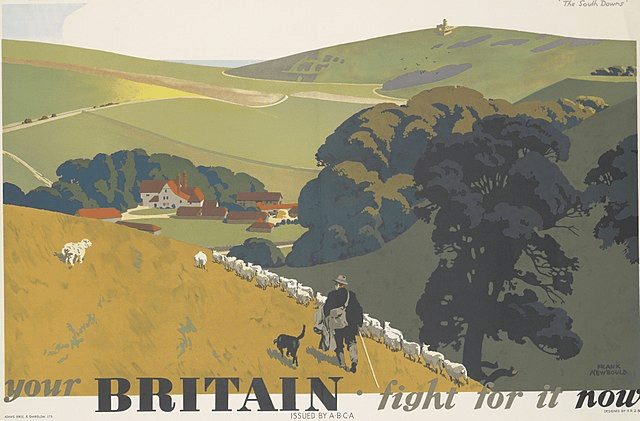
Kintbury W.I. during World War II

Women’s Institute meetings were first held in Kintbury in the June of 1930. In the following months, the pattern was set for the years to come: demonstrations, competitions, social time, games, talks, round table conferences and a summer meeting at Hungerford Park.

However, the 1930s were a time of increased tension on the international scene leading to war being declared in 1939. How this impacted on the lives of the ladies of Kintbury can be traced through a reading of the WI meetings’ minutes.

In September, 1938 the decision was taken to begin Keep Fit Classes at a cost: 2/6 for 24 lessons. However, the start was delayed for at least a week owing to the  “International Situation.”

Despite this, however, the spring of 1939 saw some members set off on a jaunt to Belgium under the leadership of Mrs. Baxendale. They arrived home safely and promptly gave a talk about their experiences.

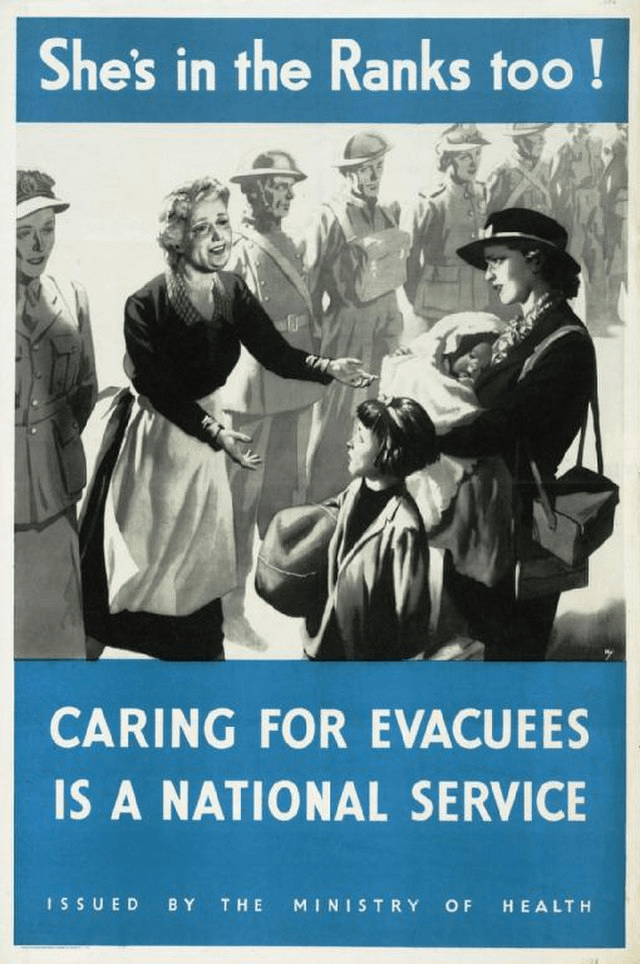
 Meanwhile other members had arranged a series of Red Cross lectures and Mrs.Packer, wife of the Headmaster, called for volunteers to help in a canteen providing refreshments for evacuated children. During the next few years the Billeting Officer, Mrs. Mackworth, was to house some 600 evacuees, (some of these in a biblically named Upper Room somewhere across the A4 and owned by the church).

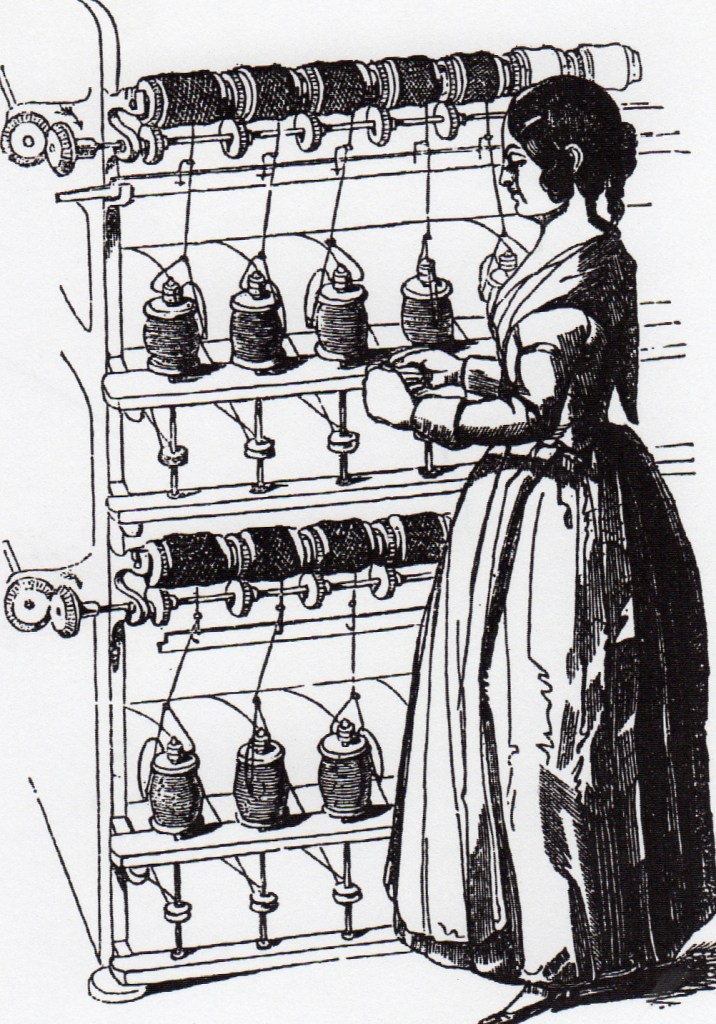
Illustration in public domain Wikimedia Commons

The last meeting before the war was declared was a carefree summer one and took place at Barton Court, then the home of Lord Burnham. There was a picnic tea, walks in the gardens and the great man, after providing a large cake, undertook to judge the ankle competition -and this was in two categories, under fifty and over fifty. The winners are not named!

Poor Lord Burnham was to see his house become the HQ of a searchlight battery, his grounds full of Nissan huts and soldiers everywhere. Kintbury was about to embark upon the most intense, vivid and busy period of its history.

In October, 1939, the future of the W.I. seemed bleak. It proved impossible to obtain speakers and the President, Miss Corsair, had to resign because of her war duties in a military hospital. Lady Spickernell agreed to take her place. All branches were urged by H.Q. to continue if at all possible and to help in all forms of voluntary service and in the growing and preservation of food. This our ladies proceeded to do with great success.

The voluntary service began with a decision to knit for the Berkshire Regiment and a box was produced for contributions to buy the necessary wool. From this moment an incessant noise must have been heard throughout Kintbury -the non stop clicking of needles.

1939 drew to an end with the wives of servicemen being invited to join the November meeting which included a Round Table Conference on Wartime Economies and December produced a display of garments for the Regiment and an appeal for more money.

1940 opened with the news that the Coronation Hall had been commandeered by the troops and a new venue for WI meetings had to be found. This proved to be the Wesleyan Schoolroom in the Inkpen Road. This being settled the knitters were spurred on to greater things when in February a “particularly fine scarf ” was put on show. Produced by a member’s husband it was judged a ‘very fine effort’.

The knitters being duly encouraged had, by April, sent 45 garments for Army Comforts and a letter of thanks requested more socks, furthermore, in May, a Captain Phillips appealed for ‘a continuity of supplies of woollen comforts for the British Expeditionary Force.’

The W.I,, then turned its attention towards money and decided to form a National Savings Scheme in the village. Fifty books were issued in March and by May this had increased to a hundred and five. Collections were taken in the Parish Room on Wednesday afternoons between 2.30pm and 3.30pm. This continued throughout the war.

On the domestic front, sugar began to disappear and members were told to make individual applications for jam making and to take their own to meetings if they desired it in their tea.

During 1940 Mrs Bowen obtained a ‘very nice album for local history’ and asked for local pictures and cuttings to be collected and preserved. This was so successful that in 1945 a -and I quote -‘Historian’ asked that a copy be sent to the British Museum.

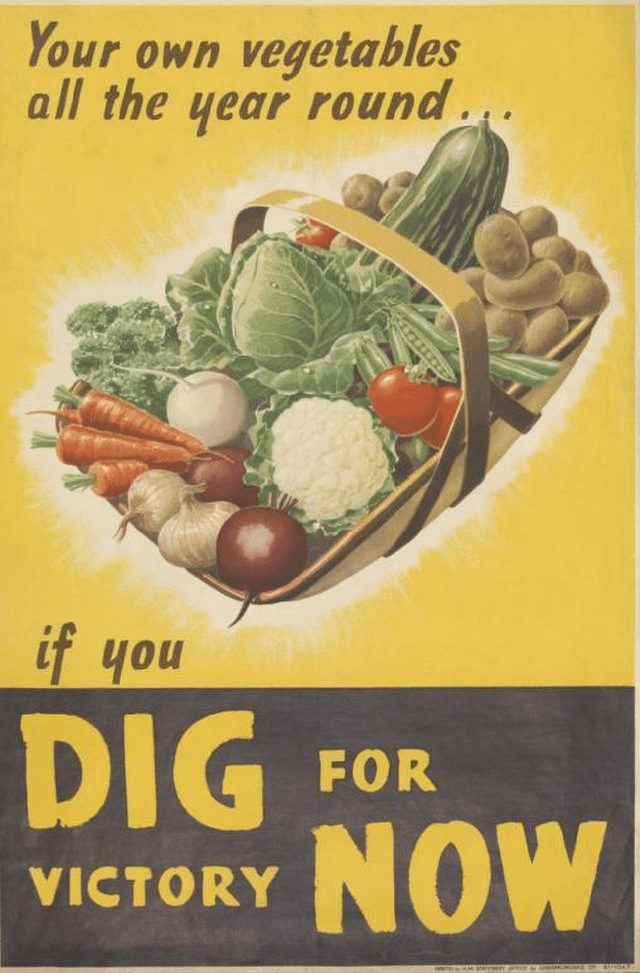
Despite gloom and bad weather, it was decided to hold the usual open air summer meeting at Hungerford Park. The emphasis was on self sufficiency. The Campden Fruit preserving solution was shown and vegetable seeds on sale. Two appeals were issued during the afternoon for khaki gloves and gumboot stockings and funds for an institute ambulance.

Members struggled to keep meetings going and decided that despite the blackout, which meant short meetings and difficulty in obtaining speakers, they must continue.

The talks that they did receive reflected the preoccupations of 1940: National Savings; Food Production; First Aid; Best Use of Preserved Food; even the social half an hour had a game called The Dustbin Game which taught that nothing need be thrown away. A lighter moment resulted in a competition of “Working a pig on a postcard with needle and wool”.

Let no one wonder what occupied Kintbury ladies during the anxious winter months of 1940/41. They must have been knitting non stop. The county appealed for comforts for POWs and money was advanced to buy wool from a firm in Bradford. Besides producing all these garments the ladies now began to take in the washing of the large numbers of troops billeted in the parish.

began with a party but also brought a reminder of the scourge of diphtheria and the WI was urged to have their children inoculated and to spread the news of free inoculations.

In March H.Q. drew attention to the need to grow onions and tomatoes to provide a surplus. A Mrs. Butler gave a pep talk entitled ‘The Home Front, the Aims of the Present Struggle and How Women Play a Great Part’ – which without doubt they did.

Illustration in public domain. Wikimedia Commons

The 19th -25th April was designated ‘War Weapons Week’ and members volunteered to sell stamps in the Parish Room each day between 4pm and 7pm. They ran a money raising stall and sold tickets for a concert at Haworth House, home of Mrs. Lucas. This plus a raffle and Mrs. Chislett’s box of groceries raised the grand sum, of £31-2s-lld.

In May, Lady Peterson joined the W.I.. Lady Peterson was the sister of Mrs. Nancy Goulding who lived in The Tannery. Sir Maurice Peterson had been Ambassador in Spain and went on to be Ambassador in Moscow where Lady Peterson kept chickens in the Embassy attics!

Lady Peterson lived at Inglewood Lodge which proved very helpful for she owned some stables and when Lady Spick reported that the Fruit Preservation Scheme was now compulsory, these stables were offered for the making of jam, storing of sugar and the finished product. The Scheme was not reserved for the W.I. but they were in a good position to organise it. It did not get off to a flying start as owing to the late frosts fruit was not available until July. However, by September 576 1bs had been produced and sold to the Reading Co-Op.

Whilst our ladies were waiting for the fruit to materialise the knitting continued. A blanket was handed to the Hungerford Evacuation Centre and another started for Shipwrecked Merchant Seamen. The Berkshire Regiment was still being catered for and an appeal was issued for comforts for the ARP. The W.I. issued their own appeal — for more knitters. Kintters could register with Camp Hopson ( haberdashers in Newbury ) under a scheme which allowed 1 1/2  lbs of wool per year to knit for relatives in the forces. At the end of 1941 members were asked to knit also for Yugoslav POWs.

A talk was given on how to overcome the shortage of sugar, and perhaps in an effort to produce the required surplus of onions and tomatoes, Mr. Davis took the W.I. around Hungerford Park gardens and gave many useful tips on growing and storing vegetables.

I cannot think where the money came from but in 1941, in addition to the fund raising already mentioned, the W.I. joined the Red Cross penny a week fund, organized a collection for St. Dunstans – a favourite village charity. During Warships Week a stall  raised £8-10s-0d.

In case the enthusiasm for gathering money had started to flag, the ladies were treated to a talk on ‘War Savings and The Government’s Urgent Need as War Expenditure Increased’.

But all was not concerned with money -Miss Green gave a thrilling talk upon her experiences in the Balkans during the last war with an American Red Cross Unit. Whether the thrills came from the Balkans or the Americans we are not informed!

Despite the hard work time was found for a choir to train under Miss Walden. Performing in Reading they earned the verdict of ‘good interpretation and musical rendering of a high standard’.

This high standard was demonstrated to the parish when the choir sang for a Nativity Play at the end of December. This must have been an interesting performance for although staged in the church the PCC had strictly forbidden any rehearsals to be held there!

1942 began with Mrs. Marsden giving a talk on her thrilling experiences as a War Correspondent in Holland and France and on the domestic front a stall was started for outgrown children’s clothes. Thrilling experiences seem to have abounded in for the Kintbury ladies!

The Ministry of Labour informed the W.I. in February, that it had organised transport for villagers who wished to undertake war work in the Newbury area. Also in February the fruit preservation scheme -which had made a profit of £8, asked everyone to save jam jars as it was thought these would become difficult to obtain -and arrangements were made for the elusive cup of tea to be provided again -at the price of 1d.

Now, on top of knitting, jam making, organising collections and acting as town criers, the W.I. became responsible for running monthly whist drives to provide money for POW parcels. The first of these raised £20!!

In March, Mrs. Bowen attended a meeting on Post War Planning. A trifle optimistic as this was early 1942 but perhaps the arrival of the Americans brought renewed optimism.  On her return she stressed the importance of planning with respect to agriculture, education, health and housing.

In April, Lady Farrington asked the W. I. to make it known that she had had an interview with the manager of the Vickers Armstrong Factory in Hungerford and had been told that part-time workers were badly needed and half day shifts and transport could be provided if enough people applied.

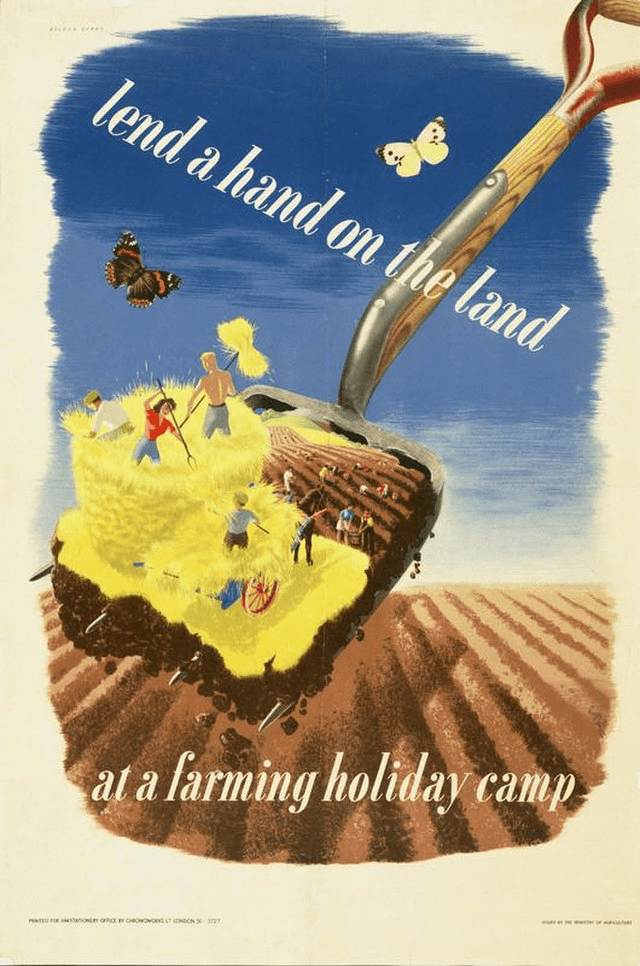
April also brought yet another pep talk from HQ and attention was drawn this time to unskilled work on farms. One wonders where our ladies were expected to find the time.

Illustration in public domain. Wikimedia Commons

The 1942 Fruit Scheme opened on 19th June with the making of 135 lbs of gooseberry jam, but July was devoted to the gathering and drying of herbs. These were despatched in July and again in September and future supplies were requested. The year was relentless in its demands upon women and this is only the report of one organisation. The Paper Salvage Drive was next -each member asked to bring at least ten books and by September 570 books and innumerable magazines had been collected. One wonders how so many pre war books survived. A further 281 lbs of plum jam was produced and the school children despatched to collect a consignment of fox glove leaves -these were urgently needed to treat heart disease and cases of shell shock.

Despite all this, time was found to form a Drama Society and work in the garden – Lady Peterson and Miss Hayward won first class certificates in the Country Garden Competition. In October the Institute asked Mr. Packer to allow children to collect rosehips, which he did and they collected l cwt -no mean feat. HQ again drew attention -this time to harvesting leek seeds. How casually we treat these things today but in 1942 leek seeds were apparently another vital ingredient in the war effort. But jam, was the main priority and before closing for the winter 160 lbs of blackberry and 130 lbs of crab apple were produced. This meant that in 1942 the grand total of jam produced was 706 lbs!!

The knitters, of course ,were still on the go. Thanks were received from POWs, RAFBF and  the Comfort Depot. Next the ladies were then asked to knit for the Merchant Navy or join a Red Cross Working party. The latter was chosen and from 1939 until 1944 the Red Cross Working party produced 4,000 garments and among the special orders were: Pyjamas for the Royal Artillery, Gloves for the Wrens, Socks and Gloves for POWs, Hessian Aprons for ATS Kintbury Home Guard, Kintbury Service men and, later, Baby Clothes for liberated Europe.

Just think for a moment: 4,000 garments in addition to jam making, fund raising, gardening, herb gathering etc all without washing machines, often only kitchen ranges rather than cookers, no main water or drainage, no main sewers.

By December the elusive cup of tea had disappeared again -this time due to a milk shortage.

During 1942, our ladies listened to such serious talks as ‘The Need to Co-Operate with Russia’; Archaeology’; ‘The Early Life of Churchill’; and the intriguing ‘Who Are The Americans?’

The year closed with a curious resolution being sent to HQ from Kintbury. It read as follows: ‘That representation be made to the Ministry of Labour and National Service, that the interviewing of housewives who are mothers of families should be undertaken by women of mature age and experience of running a home. It has been found that young women without practical experience of this kind find difficulty in comprehending the extent of labour and planning necessary to provide a home for a family’.Obviously members felt very strongly about the subject.

1943 began with a very successful party at Hawath House and this seems to set the scene for a lighter note creeps in but the relentless work continued.

The Institute was asked to produce material for occupational parcels for POWs and to take a three month turn in making and despatching them. A talk on savings urged everyone to intensify their efforts. This they did by helping with a variety show for Wings Week.

These shows seemed to have been quite a feature of village life and indeed at one time sported a Minstrel Group called the ‘White Coons’. The Girls Club rehearsed under Mrs. McCartney singing and cabaret acts and the soldiers at Barton Court took part in various sketches, singing and piano playing. A very popular act was Mr. Funnel and his fiddle. Mr. Funnel was a local shopkeeper and his wife a W.I. member. The Wings Week included an auction and made £156 7s Od.

In April, Miss Lansley agreed to become Chief Harvester and to undertake the collection of medicinal herbs. Culinary herbs were also required and these sent to POWs, but in June HQ announced that these were no longer needed and could be sold to the market stall. Presumably medicinal herbs continued to be harvested.. The W.I. was again urged to think of working on farms and perhaps in an effort to obtain agricultural workers it was proposed to erect houses in the village for them. W.I. members were invited to a parish meeting to discuss this but the RDC stated that although four houses were proposed plans had not been approved or rents fixed. Housing was evidently upon the villager’s minds for later in the year there was a talk on housing schemes and how they would affect Kintbury after the war!

Illustration in public domain Wikimedia Commons

Jam making began in June with 160 lbs of gooseberry which was put on sale in the shops and passed as of ‘excellent’ quality. The output for 1943 was 684 lbs.

Whist Drives continued to finance POW parcels and between September and January raised £21 2s 8d. The Drama Club went from strength to strength but perhaps a sign that the war was going well was the return of the travelogue talks. The armchair travellers were treated to talks on America, Russia and the Canary Islands.

1942 ended with the choir raising £10 10s for the Red Cross by carol singing.

1943 began with food and diet uppermost. The W.I. organised and distributed cocoa from the National Milk Cocoa Scheme. Mrs. Willoughby obtained a lemon and raffled it for £1! In the spring members were asked to stress the importance of Cod Liver Oil, and the importance of fruit juice for children.

July brought another Variety Show for Salute The Soldier Week which raised £80 10s Od and Jim Crowe and his concert party gave a show to boost POW funds. Jim came from Newbury and the mere mention of his name brought shrieks of laughter from the people who told me about him.

1944 was a bad year for fruit as I can only find mention of 192 lbs -but perhaps it was not so desperately needed.

December brought the only recorded disagreement and this happened when two more names were put forward to receive POW parcels making six in all. One lady contended that the two men concerned were not Kintbury people and thus not eligible.  A definition was called for and Lady Peterson proposed that a ‘local prisoner should be one whose wife or relative is living in Kintbury and has been for at least six months and was not receiving help from any other source’. This was agreed.

The year was supposed to end with a film show -but the machine broke down so an hilarious game of clumps was played. Talks given included, ‘The Danish Folk Movement’, ‘How to Attract Younger Women to the W.I.’ and ‘Housing for The Country’, this last causing many lively comments and criticisms. Just in case the knitters thought that they could ease off a little, they were asked to knit for the European Clothing Relief Fund.

The last few months of the war brought an urgent appeal for a collection for Lewisham. Miss Lawrence placed an office at the disposal of the village and was there to receive gifts at 5 o’clock on Wednesday and Friday. Many gifts were collected and a letter of thanks received. It seems that Kintbury seldom failed to respond generously to charitable appeals.

Eventually the long awaited day arrived: Victory in Europe, 8th May, 1945. Finally, there was  time to relax and the next W.I. meeting became an open party. Mr. Saunders undertook to be M.C. and everyone was grateful for his able assistance. The hall was very well filled and Sir Frank Spickernell played the piano for dancing and musical games. Mrs. McCartney gave an account of the arrangements for The Welcome Home Fund, tea and cakes were served and the Drama Club performed a sketch entitles Mrs. Whipple’s Husband. More games and dancing followed.

A committee was formed to organize the Welcome Home Celebrations. These were to include four Welcome Home Parties in the Coronation Hall – with the hilarious Jim Crowe supplying the variety items. At this party 68 returning servicemen were welcomed and altogether 227 received gifts of money and a card of thanks.

The last months of 1945 were spent trying to get back to a normal life and Lady Spick asked to be allowed to retire as she had served 5 years as President instead of the usual 3. It was obvious to those of us who moved into Kintbury in the last years of Lady Spickernell’s life, that she was held in very high regard and much affection. I have been told that she was a lovely person who really cared.

So the W.I. war duties came to an end and to demonstrate that they were now back in the realms of domesticity. The first talk of 1946 was given by a Mrs. Rigg and entitled, ‘Singing While You Work’. Housework, said Mrs. Rigg, particularly bed making, would be less irksome if one sang or hummed a tune.

Perhaps we should bear that in mind!

“It’s your Britain, fight for it now” poster by Frank Newbould. Public domain. Wikimedia Commons

©Penelope Fletcher December 2023

William Winterbourne: A Reflection by Keith Jerrome

This year Keith Jerome, a retired trade unionist, was able to join us as we remembered William Winterbourne. Keith has given us permission to reproduce here the speech he gave, reflecting on the injustices suffered by the Kintbury Martyr and his comrades.

William Smith, known as Winterbourne, has been referred to as The Kintbury Martyr. And why not? The men of Tolpuddle, the Six Men of Dorset, also achieved this title without a trip to the gallows

The document Sentences of the Prisoners tried at the Special Assizes at Reading, began December 27, ended January 4, 1831 shows that several village communities were to be deprived of many members of their agricultural workforce and, most of all, deprived of family members who were the principal breadwinners. The Swing Riotershad been acting in protest against poverty and starvation and for those families losing wage earners from January 1831 the prospect was bleak. They too would share the punishment meted out

The Kintbury men, like their comrades further to the South West, were apprehended and taken to gaol. They went to Abingdon and to Reading, leaving their homes to which they would never return

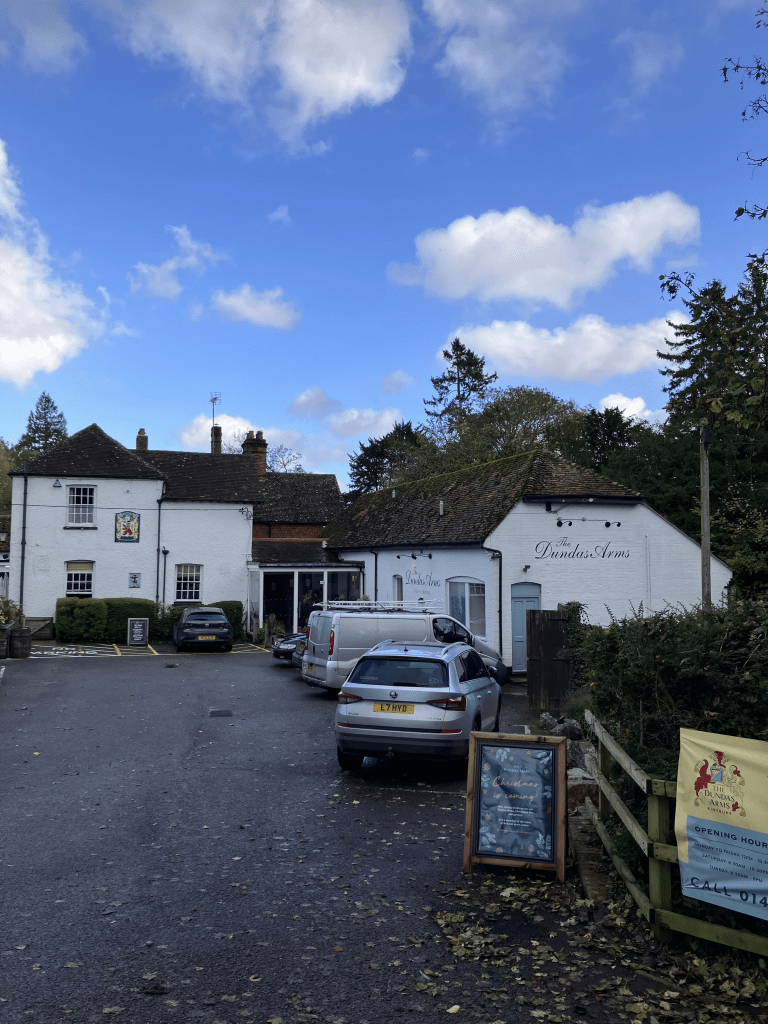
Our Kintbury Martyrs were hunted down by a posse of 300 horsemen who were on a bonus of 50 guineas for each prisoner they delivered up to Reading Gaol. They shared £600 from the County Sheriff (Probably a four figure sum in today’s money). They were led by Charles Dundas and Lord Craven and included ex Yeomanry troops plus Grenadier Guards and Special Constables. Both the Red Lion (today the Dundas Arms) and the Blue Ball were raided and many began the onward journey to Reading Gaol where they remained pending the Special Assizes. This activity was described as A good day’s sportby Mr Dundas.

Twentytwo men from Kintbury and Hungerford were sentenced to be transported, of whom fourteen were married. Six were farm labourers and the remainder were country tradesmen and all were destined for the Hulks. These were old wooden warships used as floating prisons They were utilised as a temporary measure in 1777 but were still in use 70 years later. Described as Hell on Earth, scrofula, consumption and scurvy were rife. Retired battleship the Yorkat Portsmouth to which the Berkshire men were taken held 500 prisoners. Men were held here until convict ships became available and prisoners were judged fit to sail. That could be months and Men died almost immediately from disease induced by despair and a great many died later due to despair and a deep sense of shame and desperation

Naval guards were brutal, tyrannised, cruel by consciousness of the power they possessed. Beatings, punishments and reduction in rations, together with Floggings of unspeakable severitywere inflicted on prisoners

Fortunately, the Berkshire men did not have to wait too long. The Kintbury Martyrs left Portsmouth on 19 February 1832 on the convict ship the Eleanorwhile four of them sailed on the Eliza. They sailed via Madeira and Cape Verde, round the Cape of Good Hope and on 26 June were in sight of Sydney, New South Wales while the Elizawas bound for what was then Van Diemens Land. 

Although the sentence of transportation was not for life, it was in fact a life sentence, as few had any hope of returning home. Back in Berkshire, their families were reliant on the support given by parish relief, principally to be able to feed their children and themselves

We remember William Winterbourne in 2024 as we have done for many years. We must also remember his fellow comrades and their families, who did not suffer the ultimate punishment of being deprived of life but the lives they had known were changed completely
The hope that change for the better has befallen those seeking a better life and freedom from tyranny is challenged when we recall that the concept of transportation has been promoted by the current government. However, it is faltering in its intent to use modern methods of transportation to ship refugees and so called illegalimmigrants to Rwanda. It also faces a problem of the costs of housing the increasing number of refugees in hotels

But here comes an eighteenth century solution! Buy in a hulk(from Holland), the barge now moored in Portland Harbour in Dorset. Conditions on board, while not like those of the eighteenth and nineteenth centuries, are far from ideal for providing shelter to men accused of no crime, who are merely seeking freedom and a better life

As we recall the terrible fate suffered by William Winterbourne and the life sentences to which his comrades and their families were condemned in 1831 let us recognise that the protest against the tyranny which seeks to deprive people of their freedom and their right to a better quality of life must go on

Quotes thanks to the late Norman Fox, Author Berkshire to Botany Bay. Teacher, Trades Unionist, Marxist and friend. Keith Jerrome 11 January 2024.

William Winterbourne remembered, Kintbury, January 11th 2024
Christchurch: Kintbury’s missing church

When I first wandered into Christchurch churchyard sometime in the mid 1970s, I assumed it was a very long-established cemetery. I had no idea that a Victorian Gothic Revival church had stood on the site until the 1950s.

So what is the story of Christchurch, and why, less than a hundred years after it was newly built, was it demolished?

Back in the days of high numbers attending church services and – for many – no means of transport other than by foot, parishoners living in homes remote from the nearest town or village would have faced a long and often muddy or dusty trek to attend Sunday worship. In response to this problem, “chapels of ease” were built to serve the requirements of scattered communities and by the 1860s a need for such a chapel was identified in the Kintbury/Inkpen area. The Earl of Craven donated land for the project and its position at Kintbury Crossways must have seemed the ideal location between the villages of Kintbury and Inkpen.

The architect chosen for this project was Thomas Talbot Bury, a person well known to the diocese. He had designed St Mary’s, Lambourn Woodlands and St Gregory’s, Welford, both in the early 1850s as well as working on St Mary’s, Kintbury in what Pevsner was, much later, to call a “heavy handed restoration”. The old vicarage in Kintbury is also the work of Thomas Talbot Bury. Architecturally, it seems, he was the man of the moment.

The new church was to be in the fashionable “Decorated Gothic” style, one which took inspiration from medieval buildings such as Westminster Abbey and Salisbury Cathedral. However at 95 feet long and 46 feet wide, Christchurch would be of modest size with pews enough for 250 adults. All seating would be free.

The tower, however, was to be particularly eye-catching, and was described in the Illustrated London News as being:

“…very effective, both from its massiveness and from the picturesque appearance of the spire, which is of tile in two stages with perforated woodwork intervening.”

The building was to be constructed of locally made brick with Bath stone and the work carried out by local craftsmen. A Mr Cumnor from Kintbury was to be responsible for the brickwork and plaster while fellow Kintburian, Mr Cruise was to be responsible for the woodwork. A Mr Keats from Newbury was the mason chosen to work with the Bath stone.

When it came to the stained glass windows, however, craftsmen from further afield were sought. Heaton & Butler were leading stained glass window designers and manufacturers, working in the fashionable Gothic Revival style. They had already produced a window for St Mary’s, Kintbury: theirs is the window to the left of the south door, featuring Jesus walking on the water.

The Illustrated London News mentions a “good sculpture” of the Last Supper by “Mr Farmer”. I think this most likely refers to Farmer of Farmer & Butler, a London firm of architectural sculptors who had worked on sculptures for the Natural History Museum.

There was also to be a richly carved pulpit and font.

The total cost of building this new church came in at  £3133, 1shilling, 9 1/2d. This might not seem a lot to us today but it needs to be remembered that this was at a time when the average wage for the labouring people attending its services was around 10 shillings (50 pence) a week. Furthermore, at the time of the building being opened, only £1835, 3s 0¼d had been raised whilst it was intended that £2035 3s 01¼d should be raised by a subscription and grants. A further sum of £1097 18s 8¼d should be achieved, it was hoped, by, “opening services and subsequent efforts.” One can only imagine the sort of discussions being held by those responsible for overseeing the financing of the project when the full cost was not realised before the church was opened.

“My First Sermon”, John Everet Millais. City of London Corporation

However, certain of the upper classes had deep pockets, and it would have looked good to be seen as a benefactor of this new place of worship. Members of the Dunel family of Barton Court, Kintbury, presented the pulpit, font and reredos; the sacramental plate and six of the windows were given by the Rev J.W. Dundas and two chancel windows by Talbot Bury himself.

The completed church was consecrated on Tuesday, May 28th 1867 by the Lord Bishop of Oxford. The Newbury Weekly News reported on the event and noted in particular the Minton tiles on the chancel steps, the splendid altar cloth, the elaborate reredos and the handsome font supported by marble columns. It was reported that, “an air of comfort and extreme neatness pervades the interior”. Christchurch, it seems, epitomised Victorian values of good taste and design.

Although most of Christchurch’s 250 “free” seats must have been intended for the less wealthy people living in scattered communities between Inkpen and Kintbury, it seems the great and the good turned out to attend that first service. In the style of reporting typical of the mid-19th century, the Newbury Weekly News name-checked well over thirty people including Rev H.W. Majendie, J.W.Dundas, G.C.Cherry Esq. ,Captain Butler, RN. and T. Bury, F.S.A. himself. One wonders if any of the local agricultural labourers crept quietly in at the back.

I do not know if the £1097 18s 8¼d outstanding cost was easily raised in the months or years after Christchurch was consecrated. So far I have found out very little about the life of the church over the next eighty years. But we do know that by the 1940s the building had severe problems and required extensive repairs. Whether this was due to neglect, stresses resulting from the effects of two world wars upon a rural community or problems inherent in the building’s structure, I have not been able to find out. There is a suggestion that the building was suffering from an infestation by death-watch beetle, but I have not been able to confirm this. Was it simply that Christchurch was not loved enough as a place of worship for anyone who could afford it to contribute to its repairs? By the middle of the twentieth century, the neo-gothic style of architecture so beloved of the Victorians was out of fashion, derided and disliked; it was still some time before the better examples would be championed by John Betjeman. In Newbury, St Joseph’s RC church, opened in 1928, and St John’s, opened in 1955, are both examples of how fashion and tastes in architectural styles had changed.

“My second sermon” John Everet Millais, City of London Corporation

Whatever the reason, in 1948 the decision was taken to close the church and in the mid 1950s it was pulled down. By the time I wandered into the churchyard in 1975, all traces of the building had long gone.

It all seems so sad to me: the craftsmen who worked on that building in the 1860s must have done so with pride, probably thinking their work would last for, perhaps, hundreds of years. Mrs Dunel had presented the font in memory of her children; perhaps she imagined it would be in use to baptise other people’s children for many, many years to come. I am sure none of the people who worked, or contributed in other ways, with pride and love to achieve what must have been – for some years at least – an impressive building, imagined that within the space of a lifetime the decision would be made to tear it down.

Tessa Lock.

The Kintbury Martyr: 3

Kintbury and Hungerford were not the only places to be affected by the events we now know as the “Swing Riots”on those dark nights in November, 1830. Other parts of West Berkshire saw similar protests and by December there were 249 prisoners being held in custody at the County Gaol, according to the newspaper. On Monday 27th December the trial opened of the labourers from Kintbury and Hungerford as well as others from the Aldermaston area – 134 men in all.

The trial begins

The Berkshire Chronicle reported that the majority were charged with “ riotously assembling and destroying threshing machines and other species of property.” These “outrages” were “accompanied by robberies of money and in a fewer number of instances, provisions were forcibly demanded and obtained.”

The report goes on to say that only 25 of the prisoners could read and write, 37 could read only and the remainder could neither read nor write. (This is not surprising considering that no formal education would have been available to them.)

On Tuesday 28th December, William Oakley, William Smith alias Winterbourne, Daniel Bates and Edmund Steel were placed at the bar, charged with robbing John Willes, Esq of five sovereigns on 22nd November in Hungerford, and also of riot, further robbery and destroying machinery. (Presumably, robbing a gentleman of five shillings was considered to be a more serious crime than the rioting and destroying machinery.) None of the men were themselves agricultural labourers. Oakley was described as being about 25 and “better dressed than is usual among members of the class of working tradesmen.”

The Berkshire Chronicle’s journalist clearly felt no need to avoid subjectivity or bias in his reporting, stating that Oakley was, “a pale sinister-looking person, as is Winterbourne.” Winterbourne was 33 but looked older. Bates was described as having, “an extremely mild, good natured expression of countenance”, whilst Steele was a “determined looking man”. Winterbourne was the only one of the four who could neither read nor write, being described as, “entirely uneducated”.

John Hill of Standon House, Hungerford, was quoted at length. He recounted that on 22nd of November he was in the company of 11 or 12 others intending to prevent the “Kintbury mob” from approaching  Mr Cherry’s house (Denford House). They met the mob, which apparently consisted of 200 to 300 men, on the Bath Road. “Some of them had large stakes and sticks in their hands.”

The mob proceeded to Hungerford where they broke windows in Mr Annings’ house. Next they broke into Mr Gibbons’ foundry. Mr Willes, Mr Pearse and others then went to the Town Hall where they met with five “deputies” from the Hungerford mob and five from the Kintbury mob. Winterbourne, Oakley, Bates and Steele were four of the Kintbury deputies and were present when the Hungerford deputies demanded 12 shillings a week wages, the destruction of the threshing machines and a reduction in house rent. Mr Pearce agreed that wages should be raised though he was not able to say anything about the rent.

Next the Kintbury deputies spoke and according to John Hill, Oakley said, “You have had a parcel of flats to deal with, but we are not to be so easily caught”. He demanded £5. Then Bates allegedly flourished a sledge hammer and, striking it on the ground, said, “We will be d—– if we don’t have the £5 or blood”.

Apparently, other witnesses could recall more of what was said: Mr Joseph Atherton recalled Oakley as having added, “We will have 2 shillings a day till Lady day and half a crown afterwards for labourers, and 3 shillings and six pence for tradesmen. And, as we are here, we will have £5 before we leave the place or we will smash it.”

According to Atherton, many of the men were armed with bludgeons, sledge hammers and iron bars.

Oakley is reported as having then addressed himself to Mr Pearce: “You gentlemen have been living long enough on the good things; now it is our time, and we will have them. You gentlemen would not speak to us now, only you are afraid and intimidated.”

Until this point there is no account of Winterbourne having spoken but then someone called Osbourne is alleged to have put a hand on his shoulder, to which he replied, “If any man put his hand upon me, I will knock him down or split his skull”.

Atherton alleged that Winterbourne was carrying an iron bar, three or four feet long in his hand, whilst Oakley had an iron bar,  Bates a sledge hammer and Steel a stick.

According to the witness, Winterbourne said to Bates, “ Brother, we have lived together and we will die together” and this was the point at which Bates struck the sledge hammer hard on the floor, saying,  “Yes, we will have it or we will have blood and down with the b—–y place”.

According to Atherton, this was the point at which Bates flourished the sledge hammer over the head of Mr Willes who responded with. “If you kill me you only shorten the days of an old man”. Mr Willes then gave five sovereigns to the prisoners, who left.

A third witness, Mr Stephen Major, recalled Mr Willes as requesting the men to leave their weapons outside the door, but that Oakley replied, “I’ll see you d—- first”.  Then he said, “Here are only five of us, but we can soon clear the room.”

The final witness whose evidence was reported, was Willes – a magistrate – himself. Willes recalled meeting with the mob on their way to Mr Cherry’s house (Denford House, on the Bath Road). He asked the men not to go to Denford House but to follow him to Hungerford Town Hall where, if they were reasonable, he would hear their grievances. He recalled trying to stop the men from breaking Mr Annings’ windows and attacking Mr Gibbons’ manufactory but without success.

Willes believed that the combined Hungerford and Kintbury mob numbered 400 and it was his request that five members from each village should come into the town hall. He alleged that the men said that they never would have come there but for he who enticed them and that they would not leave the hall without having money – £5. When he was cross examined, Willes said that the mob treated him kindly and led his horse by the bridle. Observing that Steel had a hatchet in his hand, he said to him, “My friend, that is a lethal weapon you have; it would split a man’s skull”, to which Steel replied, “Depend upon it, sir, it shall never injure yours”.

The next crime for which the men were, variously, charged was that of riotous and tumultuous assembly and destroying certain machinery employed in the manufacture of cast-iron goods. Several machines had been destroyed that night, and demands made for money or “vituals”. This included destroying the threshing machine belonging to Captain Thomas Dunn at Kintbury and also one belonging to Joseph Randall in Hampstead Marshall, where the men also demanded money or food and drink. Elizabeth Randall recalled that one man wielded a sledge hammer, others had sticks. She said that the men referred to William Winterbourne as, “Captain” which would have given the impression that he was a ring leader. He had instructed the men, she said, not to damage the farm house.

Intimidating behaviour?

It is interesting to note that the accounts of witnesses to the events of 22nd November, particularly those in Hungerford Town Hall, describe scenes which are much more intimidating and potentially violent than the impression given by Rev Fowle of his meetings with the men that day. Fowle’s account includes none of the kind of language used by Dundas in his letter to Home Secretary Melbourne of November 24th when he speaks of the, “shameful and outrageous conduct of the labourers”.  In describing his meetings with the men, Fowle’s tone would seem to be conciliatory, even sympathetic in an understated way. He is not judgemental and makes no negative or pejorative comments about their behaviour, even though it could not have been pleasant to have been woken up at four in the morning by a band of men intent upon destroying machinery. The men obviously felt he was on their side when they gave him three cheers. All the evidence available would suggest that Fowle has sympathy with the plight of these men – his parishioners.

Sentenced to death

Sympathy, however, seems to have been in short supply as far as the court was concerned.  Sentences of imprisonment, transportation and execution were available to the judges at the trials of the 138 West Berkshire men who stood accused and most were given prison sentences or sentenced to transportation of between 7 and 14 years. However, Mr Justice Park passed sentence of death on just three of the men, all of them from Kintbury. These were William Oakley, Alfred Darling and William Winterbourne.

According to the judge, William Oakley had taken an active part in acts of robbery and, in the robbery of Mr Wilkes, had been armed with dangerous weapons, refusing to lay them aside.

Alfred Darling, as a blacksmith, had no right – according to the judge – to be involved with the rioters.

William Winterbourne, he maintained, had taken an alarming part in the outrages as leader of the mob. He had acted as captain of the band, dictated what was to be done and “received money or not according to his will and pleasure.”

Mr Rigby disagrees

Many people disagreed with Mr Justice Park’s sentencing. Mr Rigby, counsel for the defence and the solicitor who had cross examined the men, was quoted in the Reading Mercury of 10th January 1831 as having said:

“It has been said, that some of the persons who perpetrated these outrages were artisans, not agriculturalists, and had not the excuse of poverty or low wages. But surely let those who advance the argument consider. What! has the poor man no feeling of commiseration for his fellow man because he has a loaf on his table for his own wife and family?”

Whilst Rigby’s sympathy and understanding would have been welcomed, there is an irony here in that the pay of artisans – ie tradesmen, for example blacksmiths or carpenters – would not have been high, either.     

The Reading Mercury reported that Oakley, Winterbourne and Darling were, “to be executed, the jury having found them guilty of encouraging unlawful meetings of the people, and by intimidation obtaining money from individuals.”

A petition to the King

A petition for mercy was swiftly organised to be sent to the king, William IV. In a day and a half it had collected 15,000 signatures. The ladies of the borough also organised a petition to be sent to Queen Adelaide.

King William IV, by Sir Martin Archer Shee - NPG 2199

King William IV

by Sir Martin Archer Shee
oil on canvas, circa 1800
NPG 2199© National Portrait Gallery, London

This was not the only petition: many County & Borough magistrates appealed to the Home Secretary, Lord Melbourne.

“Your petitioners believe….. the offence for which the prisoners have been convicted is one, which in the common opinion of uneducated men, was not considered as capital, and though ignorance of the law may be no legal defence, in all moral feeling it must and ought to have great weight; for it is possible that had these unfortunate persons been apprized of the danger they incurred, they might have stopped short of the violation of that law on account of which they have been doomed to suffer.”

Two of the grand jurors involved with the case, J.B.Monke, Esq and J.Wheble Esq, also appealed to Secretary of State, Lord Melbourne, to petition the King for mercy.

It is interesting to note that, in an age when there were so many laws on the statute books which seem to us today to be biased against the working man and woman and which did nothing but cause them hardship, the imposition of the death penalty in this case caused such strong feelings of objection. Perhaps the case of the rioters, laid out every day in the Reading newspaper reports, had caused members of the middle and upper classes to consider what life was really like for their poorer neighbours.  

For Oakley and Darling, the execution of the death sentence was respited (sic) although no such mercy was accorded to Winterbourne.

January 11th 1831

According to the Berkshire Chronicle of 15th January 1831, it was not until the morning of his execution that Winterbourne was told he would be the only man to die. “He expressed himself glad to hear that his companions were spared.” The newspaper goes on to say that Winterbourne’s wife was lying dangerously ill of typhus fever and that one of his last wishes was that she might die before he suffered or that she might not survive to be shocked by the news of his execution.

Winterbourne was led to the scaffold where, “His large muscular form seemed cramped ,- probably from the position of his arms and tightened of the bonds by which he was pinioned. He walked firmly, but his cheek was pallid, his eyes glazed, and the prayers he uttered, though fervently and audibly expressed, came from quivering lips.”

As the prison clock struck twelve on 11th January 1831, Winterbourne was executed.

Return to Kintbury

It would have been the custom for the executed prisoners to be buried at Reading Gaol. However, Rev Fowle arranged for Winterbourne’s body to be brought back to Kintbury, where he was buried in St Mary’s churchyard the following, day 12th January. Furthermore, he arranged and paid for a stone to be place on the grave – something that would have been totally beyond the reach of the labouring classes at that time, whose graves would be completely unmarked and grassed over.

According to the custom of the time, the name on the grave stone reads as “William Smith”, Smith being his mother’s name and his parents not being married at the time of his birth. Also, the grave is not tucked away in some far and distant corner of the churchyard, out of sight.

There has been for some time the persistent idea that Rev Fulwar Craven Fowle had Winterbourne’s body returned to Kintbury and the stone erected because he felt in some way guilty about what had happened to him. I have to say that, in researching this, I have found no evidence for this to be the case. The letter written by Fowle to Charles Dundas (now in the National Archives) contains none of the harsh or judgemental language used against the protestors by others. As I have described above, the men gave Fowle three cheers and obviously felt able to tell him of their plans. There is no suggestion that the men arrived at the vicarage armed or that Fowle felt intimidated. All the evidence suggests to me that they expected to be treated fairly by him, and that they were. 

It is believed that around 2,000 people were involved in the Swing Riots by the end of 1830. Five hundred were transported and 19 executed. This was four years before the men of Tolpuddle in Dorset were convicted of swearing a secret oath as members of the Friendly Society of Agricultural Labourers, and sentenced to transportation. Those involved in the Swing Riots are not as well remembered as the men of Tolpuddle, but they deserve to be remembered too, for their part in the workers’ struggle for a fairer life.

In Kintbury, William Smith, alias Winterbourne, is not forgotten.

Bibliography

Griffin, Emma, (2018), Diets, hunger & living standards during the British industrial revolution, Past & Present.

Lindert & Williamson, (1983), English workers living standards in the industrial revolution, The Economic History Review

Phillips, Daphne (1993), Berkshire: A County history, Newbury: Countryside Books   

Thompson, David (1969), England in the nineteenth century, Pelican 

Trevelyan, G.M.(1960) Illustrated English Social History:4, Pelican

Woodward, Sir Llewellyn (1962), The Age of Reform, Oxford: OUP

The Berkshire Chronicle (December1830 & January 1831)

The Berkshire Mercury (December 1830 & January 1831)

The National Archives: Letter to Rt Hon Lord Melbourne from Charles Dundas, MP, November 24th 1830

The National Archives: Anonymous letter to Rt Hon Lord Melbourne, November 24th 1830

The National Archives: Letter to Rt Hon Lord Melbourne from Charles Dundas MP & ninety other signatories, November 1830

The National Archives: Letter to Rt Hon Lord Melbourne from Lord Craven, November, 1830

The National Archives: Letter to Rt Hon Lord Melbourne from Rev Fulwar Craven Fowle, November 1830

Theresa A. Lock, Kintbury, October 17th, 2020. 

The Kintbury Martyr: 2

1830 saw rioting break out across southern England

A labouring man

William Smith, also known as William Winterbourne, was born in Kintbury in 1798. It is likely that he was the son of Rose Smith and that he was baptised in Kintbury on 9th December 1798. There is no record of William’s father: it was the custom of the time for a child of unmarried parents to take the mother’s surname, although William was also known as Winterbourne which is likely to have been the name of his father.

Whilst the name William Smith appears in the Kintbury parish registers of the early 1800s, it is difficult to know for sure if this William Smith is also the man known as William Winterbourne. However, it is likely that our William married Mary Hobbs in the parish church of St Mary’s on 27th May 1822. Unfortunately, Mary died on 27th December 1827.

St Mary’s parish marriage register records a William Smith, who is at that time a widower, marrying a Sarah Brackstone on 28th September, 1829. On 3rd January 1830, William, son of William & Sarah Smith, is baptised in the parish church.

We know that William was a labourer and that the England of 1830 was not an easy time for families such as the Smiths. Forget any idea of a rural idyll. Life for William & Sarah would have been hard.

“Captain Swing”

© The Trustees of the British Museum. Reproduced under creative commons licence: https://creativecommons.org/licenses/by-nc-sa/4.0/ https://www.britishmuseum.org/collection/image/347082001

The harvest of 1830 was particularly bad. Furthermore, unemployment was on the increase as was the resulting hunger amongst the labouring classes. For the agricultural labourers, the arrival of threshing machines on many farms meant the loss of work and therefore of an income at a time when it was most needed. Many rural workers felt desperate.

Throughout England, more and more working people began to believe that they did not have to accept their lowly position in life as inevitable: it had not been ordained by God. To what extent the labourers were influenced by the ideas of Cobbett or Hunt – or indeed by many of the other emerging radical thinkers – it is difficult to say. Perhaps the anger and resentment which had been simmering for so long finally boiled over.

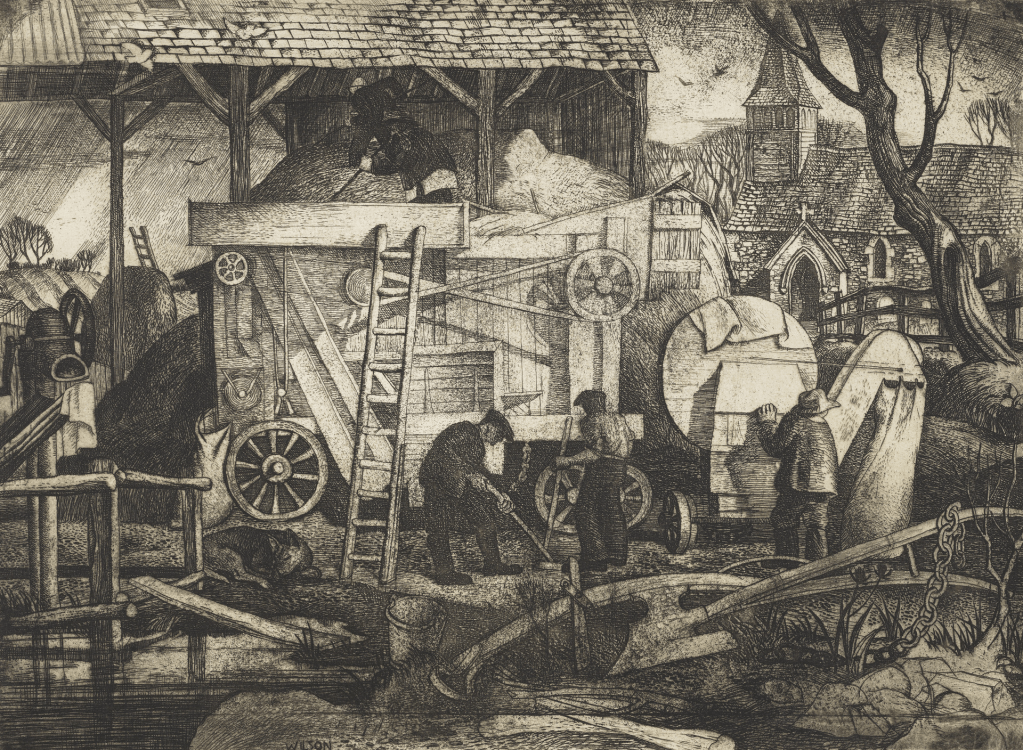
Many farmers had invested in the new threshing machines and these became a focus of the agricultural labourers’ resentment and rioting broke out across the country. Many landowners received threatening letters signed by someone identifying as “Captain Swing” or simply, “Swing”. No one knows if there had ever been one particular person behind the first disturbances; it is more likely that the name “Swing” was adopted by various men instigating rebellion in different areas. Threshing machines were destroyed and fires set; perhaps it seemed to some facing destitution and starvation that the labourers were finally rising up against their oppressors.  

In West Berkshire, demonstrations for improved wages and the destruction of threshing machines began in Thatcham on 13th November 1830, moving then to other villages. In many places the gangs of protestors – commonly referred to as a “mob” – demanded money from the landowners. In some places the demonstrations were largely peaceful but by 21st and 22nd things in Hungerford and Kintbury apparently became more threatening.

The Kintbury Mob at the vicarage

The Old Vicarage in Kintbury

On November 22nd 1830, the Rev Fowle wrote to Charles Dundas, Member of Parliament and Kintbury resident, informing him that the Kintbury “mob” had been breaking threshing machines all through the previous night and that they had come to him at 4 o’clock in the morning. It seems that the men told the priest what they had been doing and which farms they intended to visit next. In the letter, Rev Fowle explains that he had consulted with one of Dundas’s men and it was agreed that, rather than destroying his threshing machine on his land at Barton Court, the men should bring it up to Kintbury and destroy it there, in the street. Presumably Fowle was trying to be conciliatory to suggest this, as the men agreed. He  says that he gave the men £2, and that other landowners did the same. The men were then intending to go on to other villages in the neighbourhood, similarly demanding £2 from each landowner.

The tone of Rev Fowle’s letter to Charles Dundas is particularly interesting in that it expresses no anger or criticism of the men and in that respect is markedly different from many other letters and newspaper reports written at the time. He writes:

“I have not heard that they have committed personal violence on anyone than forcing the labourers to join them”.

He also notes that:

“Ploughs with cast iron shears appear to be as much the object of their hatred as machines and I hear they have broken many.”

At this point in the letter, Rev Fowle writes that he has just received a message from W.Willes (the Hungerford magistrate) which informed him that the Kintbury men had later been joined by those from Hungerford, and the mob now numbered 1000 men. A deputation of ten men had spoken with some gentlemen at Hungerford (the distinction of class being particularly significant at that time) and it had been agreed that the men should receive 12 shillings a week for a man, wife and three children and the price of a gallon loaf for every child above three. Fowle says that he hopes the farmers will agree to this.

In a post script to the letter, Rev Fowle explains to Dundas that he has since met again with the men, who have returned from Hungerford:

“ I told them that as far as was in my power I would endeavour to persuade the farmers to agree with them. The men gave three cheers and expressed themselves perfectly satisfied but they also agreed that there must be no payment in bread but all in money”.

Letters to the Home Secretary

What the protesting men of Kintbury told others in the village about their meeting at the vicarage could have caused trouble for the vicar. It was not the time or place for a person such as Rev Fowle to appear to be sympathetic to the “mob”. Someone, it seems, later complained to Lord Melbourne, the Home Secretary, suggesting that Rev Fowle had encouraged the rioters. This would never do. The Home Secretary was the person to whom those in positions of authority would appeal for support when confronting disorder, so it would not look good if a local priest and magistrate had been reported as encouraging the rioters. Consequently, Charles Dundas and ninety other parishioners signed a letter to Melbourne, to ensure him that Mr Fowle had done everything he could to quiet the disturbances and prevent the destruction of property.

What the papers said

Despite  Rev Fowle’s interventions, however, it would seem that the men had not returned peaceably to work and support in suppressing the mob had been requested. According to a report in the Reading Mercury of 29th November, the previous Wednesday, November 24th, had seen a detachment of Grenadier Guards who arrived in Newbury in three stage coaches, followed by a troop of Lancers. An order was given that every householder or individual who could muster on horseback should attend the Market Place at 12 o’clock and eventually a band of men some 200 strong and including special constables made its way towards Kintbury where it met Charles Dundas in his role as Colonel of the White Horse Volunteer Cavalry. 

The Reading Mercury report stated that the mob had retreated to public houses, stables, outhouses and cottages so a detachment of horse was sent to the south and west of Kintbury to prevent any escaping. The Grenadier Guards were to guard the prisoners when they had been brought in by the horsemen. Colonel Dundas, it reports, had heard that several men were concealed at the Red Lion (now the Dundas Arms) and took a ringleader by the name of Westal. The men then went on to the Blue Ball, – described as the “chief depot”- where they met little resistance.

“Shameful & outrageous”

Later that day, Charles Dundas wrote to Home Secretary Melbourne of the “shameful and outrageous conduct of the labourers.” There had been a “most notorious gang” which had surrounded the ale houses. However, at the end of the operation, fifty five of the principal rioters had been delivered to commander of the guards, Captain Aston.

What had happened between Rev Fowle’s meeting with the protestors at four o’clock on the morning of November 22nd and the afternoon of November 24th to require a detachment of Grenadier Guards to be sent to Kintbury? Fowle’s letter of November 22nd to Dundas does not suggest that the sixty-six year old vicar felt threatened or intimidated by the labourers, although it may be that only a few of the more respectful of them had approached the vicarage. His letter says that he has spoken to them on their return from Hungerford when he assures them he will do everything in his power to persuade the farmers to agree to 12 shillings a week pay. There is no suggestion that the labourers showed signs of violent behaviour when they had arrived at Rev Fowle’s vicarage. However, it seems that other events that night were not so peaceful – with tragic outcomes.

Bibliography

Griffin, Emma, (2018), Diets, hunger & living standards during the British industrial revolution, Past & Present.

Lindert & Williamson, (1983), English workers living standards in the industrial revolution, The Economic History Review

Phillips, Daphne (1993), Berkshire: A County history, Newbury: Countryside Books   

Thompson, David (1969), England in the nineteenth century, Pelican 

Trevelyan, G.M.(1960) Illustrated English Social History:4, Pelican

Woodward, Sir Llewellyn (1962), The Age of Reform, Oxford: OUP

The Berkshire Chronicle (December1830 & January 1831)

The Berkshire Mercury (December 1830 & January 1831)

The National Archives: Letter to Rt Hon Lord Melbourne from Charles Dundas, MP, November 24th 1830

The National Archives: Anonymous letter to Rt Hon Lord Melbourne, November 24th 1830

The National Archives: Letter to Rt Hon Lord Melbourne from Charles Dundas MP & ninety other signatories, November 1830

The National Archives: Letter to Rt Hon Lord Melbourne from Lord Craven, November, 1830

The National Archives: Letter to Rt Hon Lord Melbourne from Rev Fulwar Craven Fowle, November 1830

Theresa A. Lock, Kintbury, October 17th, 2020. 

In search of Christmas past

With Christmas lights in Newbury’s Northbrook Street and shops already decked out for the festive season, even though, at the time of writing this, it is not yet even December, I began to wonder how different Christmas might have been in years gone by.

So I turned once more to the pages of local newspapers, care of the British Newspaper Archive and found, perhaps surprisingly, that it is quite difficult to find much reporting at all specifically relating to Christmas at the end of the nineteenth century.  

Throughout the century, it was usual for local shops and businesses to advertise the arrival of new stock by placing small advertisements in the columns of the Newbury Weekly News. With no illustrations and a minimum of text, a shop would announce that, for example, new winter coats or shoes were in stock. In the weeks closest to Christmas, similarly low-key advertisements announced the arrival of Christmas cards and suitable presents.

 By the later .years of the century, it seems to have become a thing for the paper to report on the displays of “Christmas meats” in the windows of various butchers’ shops. But of specifically seasonal parties, events or entertainment, I could find very little evidence. Christmas, it seems, was a much lower-key event. 

I narrowed my search to reports from Kintbury and neighbouring villages but once again I found very little to distinguish the Christmas season from any other time of the year in respect of the subject matter covered. That is, with a very few exceptions and these are almost all characterised by being reports of how the wealthier principal families were benevolent to the less well off, and how enthusiastically this benevolence was received by the grateful recipients. One imagines there must have been much forelock tugging.

In January 1888, the Newbury Weekly News reported on a tea having been held at the “Big House” (sic), home of Mr & Mrs Cole of West Woodhay. All the children of the parish attended  and there followed a “capital display of fireworks” attended by all parishioners. However, the display was, “allowed to pass off without any exhibition of enthusiasm, owing to the indisposition of Mr Cole, for whose speedy recovery every inhabitant of West Woodhay is most desirous”.

No shouts of “Oooh” or “Ahhh” as rockets went up and burst into colours, presumably.

Afterwards the “usual presents of game and coals were again distributed”, about which I would imagine, the grateful villagers were allowed – probably expected – to look enthusiastic.  

The Coles were not the only local family of standing in their village to give to the less well off. In Enborne, Mr K. H. Valpy of Enborne Lodge and in Hamstead Marshall, Mr James Bishop of Hamstead Park both “most generously” gave gifts of clothing and coal to the parishioners of their respective villages. Whilst much is made in the NWN’s reporting of the generosity of certain families, the fact that many other people were quite obviously in need of this kind of charitable giving goes unremarked upon. This, of course, is before the days of the welfare state and a time when dire poverty could lead to admittance to the workhouse.

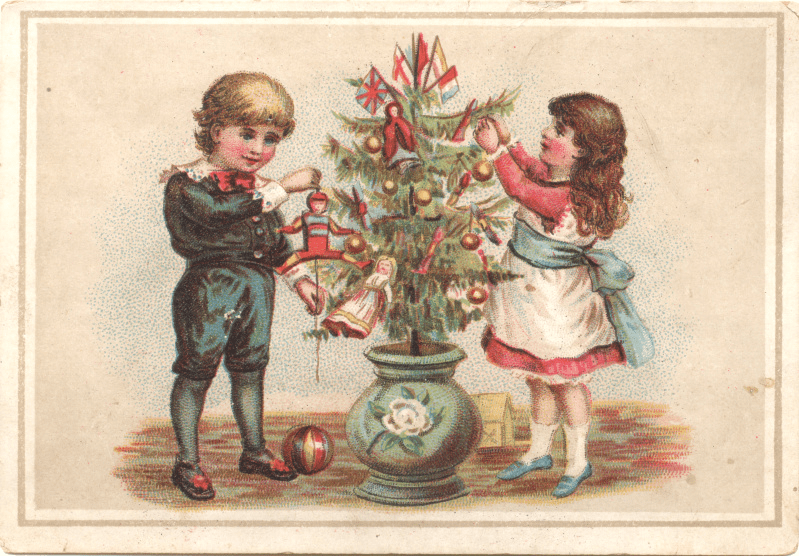
In December 1903, two hundred of the younger children from St Mary’s School, Kintbury and Christ Church School ( between Kintbury and Inkpen) all received “ a printed invitation, enclosed in an envelope” which I think was a rather pleasing touch on the part of Mr and Mrs Whiston of Barrymores, Kintbury. On December 27th, the children enjoyed a, “bountiful spread” after which there was a, “hearty indulgence” in games. “Handsome presents” were given out from a huge Christmas tree  for which the children “showed their gratitude by loud and hearty cheers.” 

On Boxing Day, 1907, the children attending Christ Church School  were given, “a splendid treat” due to the “kindness of Miss Dunn of Wallingtons.” Following “a good tea” a “fine Christmas tree was lighted up, from which each child received a bag of sweets and toys, besides a very useful present in the shape of a garment.”

Bearing in mind that the “lighting up” of the Christmas tree would have involved candles attached to the branches, I think I would have wanted to stand well back as this would have been a fire hazard. I do like the fact that Miss Dunn gave each child sweets and toys as well as a garment, so her idea of a Christmas gift must have seemed much more interesting the young recipients. Accompanying teachers were all given “something useful” whatever that was, and oranges & sweets were in abundance.

The children heartily cheered Miss Dunn, as, of course, they would have been expected to do so. However, for many children the gift of a toy must have been very welcome, so perhaps the cheering was genuinely heart-felt.

Perhaps, for some better-off villagers, being seen to be charitable was what mattered, to enhance one’s standing in the community. This might not have been the case, but it does make me wonder. According to the NWN of January 1907, a Mr and Miss Hinton had recently taken up residence in the “remote village” of Combe, where they lived at the manor. During Christmas week, the Hintons organised “an unusual treat” in the form of an, “entertainment” which was held at the manor and to which “nearly everyone turned out in the snow”. Most of the entertainment consisted of songs or piano pieces although the audience also enjoyed gramophone selections. For many villagers I expect this would have been the first time they heard recorded music. If there was a Christmas tree, fire works or presents, the Newbury Weekly News report did not mention it.

Reporting styles of the time mean that each account is littered with words such as, “splendid”, “hearty”, “generous” and so on. Social mores of the time meant that poorer villagers were expected to be subservient to the upper or upper middles classes and be appreciative of the charity they bestowed on them. Despite this, however, the Christmas parties, in particular, must have been eagerly anticipated and enjoyed by the children. Gifts of coal, game birds or clothing would have been welcomed by many even if not necessarily living in poverty but on a restricted budget.

I like the sound of Miss Dunn’s party in particular; it seems she took care to give presents that were both practical and fun. Also, it is interesting to note that a legacy of the Dunn family still exists in Kintbury: for well over a hundred years, Mrs Dunn’s Kintbury Charity has given grants to young people of the village.

© Theresa A. Lock 2023

Illustrations: Public domain, Wikimedia Creative Commons

The Kintbury Martyr: 1

The late 1820s saw riots and demonstations break out in many villages and towns across southern England, including Kintbury. So what had happened to England’s green and pleasant land to cause this?

1830: A time of poverty, resentment and anger

In the early years of the nineteenth century, the industrial revolution was leading to the growth of factories and mills in the rapidly expanding towns of the north and midlands. However, counties in the south of England such as Berkshire remained predominantly agricultural. And it wasn’t just the men who worked the land: many women were employed in agriculture and even children worked on the land rather than receiving an education. As it would be another forty years before the introduction of free education for all, very many poorer people in the earlier years of the nineteenth century had no opportunity to learn to read or write.

A link to the wider world

The Kennet & Avon canal had been completed in 1810 so Kintbury people would have become used to seeing colourful barges pass through the village, manned by the itinerate families of bargees; such sights must have seemed strange and exotic to Kintburians who might never have travelled as far as Newbury. Travel for most was by foot or horse drawn vehicle, although occasionally coaches belonging to the better off would have turned off the Bath Road, down what we now know as the avenue, past the church and south through the village.

Whilst families such as those at Barton Court would have lived in comfort and luxury, home for the average agricultural labourer and his family was a very humble cottage, often little more than two or three rooms, sparsely furnished and lit by tallow candles.

Bread on the table

The war with France had ended some fifteen years previously but the peace had also brought with it a recession. Furthermore, 1830 saw the third poor harvest in succession, putting up the price of wheat and subsequently of bread. This was not good news for the agricultural labourer, whose wages for the year had dropped from £40.00 (15 shillings or 76 pence a week) in 1815 to £31 (12 shillings or 59 pence a week) in 1827.

 Labourers in other occupations fared a little better with an average pay of £43 a year (16 shillings or 82p a week ). Meanwhile, colliers in the north and midlands averaged £54 a year (slightly over the lofty sum of £1 a week ) and cotton spinners £58.50 a year  (£1 / 2 shillings or £1.10p a week ). It was no wonder that many agricultural workers in the north of England were migrating to the urban areas where work in mills and factories promised higher wages. But no such opportunities existed for the agricultural labourers of the south.

These wages were in stark contrast to the annual incomes of those in authority and positions of power. Whilst a clergyman was not considered wealthy within his class, an annual income of £254 or £4/17shillings a week must have seemed a fortune to the labourer. Meanwhile, far removed in their offices in Newbury or Reading, a solicitor could earn up to £522 a year. But this was a world away from the life of the agricultural labourer. 

A restricted diet

So how did the agricultural labourer exist on 12 shillings a week? His family’s diet would have been restricted and unvarying, consisting, for example, of bread, bacon, small amounts of cheese, butter, milk, tea, sugar and salt – all carefully rationed. There might have been small amounts of meat other than bacon and some labourers were able to keep a pig. If the cottage garden was large enough and the soil suitable, vegetables could also be grown at home. Research has suggested that 71% of the family’s income would have been spent on bread alone: not surprising as it would have been a staple and eaten at every meal. The Berkshire Chronicle of April 3rd 1829 records the latest price for a gallon loaf in Newbury to be between 1 shilling, 7 pence (1/7d) and 1 shilling, 9 pence (1/9d). Prices, however, varied according to the success or otherwise of the harvest each year.

No more rabbit pie

Whilst previous generations of country dwellers would have been able to augment their diets by catching rabbits and fowl on common land, the Enclosure Acts meant that land owners had been able to fence off vast tracts of land over which the labourers had previously been able to walk freely. It also drastically reduced the areas of land available for the poorer classes to cultivate for themselves. Furthermore, the harsh Game Laws resulted in strict penalties for anyone caught poaching. The law of 1816 imposed the penalty of seven years transportation (ie being sent to a penal colony in Australia) for anyone caught with nets to snare a rabbit, even if no rabbit had been trapped. Until 1827 it was perfectly legal for landowners to set mantraps on their land. These devices could, at best, break a man’s leg and at worst cause him a long and lingering death as a result of his injuries.

Keeping the peace

These are the years before the establishment of police forces across the country: Newbury Borough Police was not established until 1835. Instead, law and order were maintained through a system of harsh penalties designed to deter crime and the only way of dealing with more extreme disorder was to call upon the militia. The death penalty existed for over 200 crimes and for others, those convicted could be transported – a system of dealing with convicts, both men and women, until 1868.

In the towns and villages, watchmen and constables were responsible for keeping the peace and those arrested were taken before the local magistrates. These local magistrates, or Justices of the Peace, represented the face of the establishment for the villagers, and it was their business to uphold the laws enacted by parliament. In 1830, the Houses of Parliament might as well have been on the moon to the working people of England, most of whom were not able to vote until the early years of the twentieth century. One of Berkshire’s two MPs at the time, Charles Dundas, 1st Baron Amesbury, lived at Barton Court, Kintbury. The wealthier villagers, particularly the very few men who were at that time able to vote, might have felt that Dundas represented their interests. This sentiment would not have been shared by the poorer working people.

The Rev Fulwar Craven Fowle

Whilst many villagers might well have been unfamiliar with Charles Dundas other than by name and as the owner of the large and comfortable house along the avenue on the way to the Bath Road, they would have been much more familiar with the local magistrate. The Rev Fulwar Craven Fowle was vicar of Kintbury, the third generation of his family to hold the living. He was also the grandson of Lord “Governor” Craven, sometime governor of South Carolina and previous resident of Hamstead Park. Thus, Rev Fowle was several rungs up the social ladder from the labourers at the very bottom, inhabiting a world far distant from theirs. We know from the letters of Jane Austen – a family friend of the Fowles – that Fulwar Craven Fowle could be bad tempered although there is evidence that he was much loved by his parishioners. Many of the village labourers, however, may very well not have belonged to the Anglican church and are likely to have been members of one of the non-conformist churches (or chapels)  and so would not have known Rev Fowle as their priest, but as a magistrate and as a member of one of the better-off village families.

Thus Rev Fowle represented the face of an establishment which had introduced harsh and punitive laws, a system which had reduced the labourer to a life of poverty from which there was no chance of escape.

Representing the people

Charles Dundas, Baron Amesbury

by William Say, after Sir William Beechey
mezzotint, (1823)
NPG D11326

In 1830, only around 5% of the people were eligible to vote and, with the exception of a few women living in some towns, those who could vote were all men. There was much political corruption and some constituencies were always represented by certain, influential families. In Berkshire, Abingdon (then in Berkshire) returned one member of parliament, Reading two and Wallingford (also in Berkshire at that time), also returned two MPs. The rest of Berkshire – which then stretched as far north as the Thames –was represented in total by just two MPs. In 1830, these were Robert Palmer and the resident of Barton Court, Kintbury, Charles Dundas. Over the border to the west, Great Bedwyn, smaller than Hungerford, returned two MPs, and further south in Wiltshire, Old Sarum – a place with no inhabitants at all, continued to send two MPs to Westminster.

 So whilst Members of Parliament were responsible for passing the laws which severely restricted the lives of the working people, causing much hardship, those MPs were answerable to very few. And those who could vote lived their lives pretty much untouched by the kind of challenges afflicting the poor.

Know your place

There existed a very clearly defined class system in England at this time. At the top of the social ladder were the nobility such as William Lamb, 2nd Viscount Melbourne, the Home Secretary in 1830. Letters addressed to him begin, “My Lord…”.

Further down the social ladder, but still a long way from the bottom, those of the landowning classes who did not have titles have “Esq” – short for “esquire”- after their names whilst those on the next rung down are referred to as “Gentlemen”.

Newspaper reports of this time often refer to “gentlemen and farmers”, because a farmer was not necessarily also a “gentleman”. However, the farmer was several rungs above the labourers who worked for him. These labourers are not even afforded the title, “Mr” and in some reports are referred to as “the peasantry”.

The popular hymn, “All things bright and beautiful”, published in 1848, originally included the verse which read:

The rich man in his castle,
The poor man at his gate,
God made them high and lowly,
And ordered their estate.

Campaigning for change.

 It is not surprising that there was, throughout England, a growing movement advocating reform. However, many who could remember the events of the French Revolution of the 1790s, which had seen the overthrow of the monarchy and the execution of many members of the upper classes, continued to fear that something similar would happen in England. Demands such as the right for everyone to vote, equal rights before the law or the abolition of child labour – all of which seemed perfectly reasonable to many – were regarded by some members of the establishment as a threat to their way of life and a slippery slope towards a repeat in England of what had happened in France.

By contrast, the events in France had inspired others to advocate reform of parliament and the law. One such was the wealthy farmer from Wiltshire, Henry Hunt, an inspirational speaker who had been given the nick-name “Orator” Hunt.  In 1819, he had been invited to speak at a rally in Manchester which was attended by a crowd of around 60,000 people. Fearful of the effect one of Hunt’s rousing speeches would have upon the crowd, the local magistrates panicked and sent in the militia, who were armed with sabres. In the resulting massacre, up to fifteen people are believed to have been killed and hundreds injured.

Another radical thinker of the period was William Cobbett, the son of a farmer from Surrey who had become involved in political debate and the need for parliamentary reform. Cobbett was also a journalist and as well as essays and letters he published a weekly newspaper called The Political Register which soon became popular amongst the poorer classes. Not everyone was able to read Cobbett’s newspaper for themselves but it is likely that those lucky enough to be literate would have read aloud to others and so the views expressed were shared more widely than the circulation of the paper copies.

William Cobbett

possibly by George Cooke
oil on canvas, circa 1831
NPG 1549

It is very likely that that copies of The Political Register would have been shared or read aloud, perhaps in the public houses or other meeting places, around Hungerford or Kintbury such that the poor and oppressed rural labourers became aware of those who had already set out to challenge the status quo.

The Threshing Machine

The Threshing Machine , William Wilson © Estate of William Wilson OBE RSA

National Gallery of Scotland

Threshing is the process of separating the grains of wheat from the chaff. Before the introduction of threshing machines, this was a very labour intensive process done by hand using a flail. Threshing took place in the autumn after the harvest had been brought in and provided employment for hard-pressed agricultural labourers at a time in the year when there was very little other farm work available. At a time when wages were lower than ever and the price of bread increasing, what the farm labourer could earn by threshing helped to keep him and his family throughout the bleakest part of the winter.

Threshing machines required very few labourers to operate them so their introduction meant the loss of work for many men. And loss of work at such a crucial time meant, for many, the fear of starvation throughout the winter months.  

Many agricultural workers literally feared for their lives.

Bibliography

Griffin, Emma, (2018), Diets, hunger & living standards during the British industrial revolution, Past & Present.

Lindert & Williamson, (1983), English workers living standards in the industrial revolution, The Economic History Review

Phillips, Daphne (1993), Berkshire: A County history, Newbury: Countryside Books   

Thompson, David (1969), England in the nineteenth century, Pelican 

Trevelyan, G.M.(1960) Illustrated English Social History:4, Pelican

Woodward, Sir Llewellyn (1962), The Age of Reform, Oxford: OUP

Theresa A. Lock, Kintbury, October 17th, 2020. 

Ring out those bells

“Treble’s going. She’s gone!”

Queen Victoria’s Golden Jubilee in 1887 was celebrated with festivities in villages across Britain and the villages in our area were no exception. The village was decorated with bunting the like of which had not been seen before and a peal of bells was commenced at 5 am. Tough on anybody living in Church Street hoping to sleep in until 6 o’clock!

There has been a long tradition of ringing of church bells at times of national celebration as well as to indicate a church service is about to start or a wedding has taken place. A muffled peal, when one side of each clapper is fitted with a leather muffler so that every other round sounds like an echo, is customary for funerals or commemorative services and also to “ring out” the old year.

Recently, there was a concerted effort to ring in as many towers as possible to celebrate the Coronation of King Charles III.

However, the bells of St Mary’s, Kintbury, have rung out many times before.

Back in the eighteenth century, parish records state that between the years 1746 and 1775, ringers were paid for four “Ringing Days” in addition to the usual Sundays. The ringers were paid £1 4s 0d which would have been a princely compared to the labourers’ weekly wage at that time.

It would be interesting to know who financed this? Would it have been the vicar, Rev Thomas Fowle or maybe one of his affluent Craven relatives?  

1746 had three Ringing Days the dates of which were: 5th November – Guy Fawkes; 29th May – Restoration of King Charles; and 11th June (?)

It can be assumed that the fourth one was instituted to mark the final defeat of the Jacobites in the ‘45 Rebellion.

These Ringing Days occur regularly until 1782 and restart in 1806 with only two.

The many military victories were not mentioned but in 1788 they were rung for a Rejoicing Day – the King’s recovery from his first bout on insanity.

For a time during World War II, bell ringing was prohibited by the government because the bells were to be used to alert people in towns and villages if an invasion had occurred. The bells were, of course, rung again to celebrate the end of war!

Penny Fletcher, November 2023

Whiting, bricks and Jane Austen’s stockings

As in many other villages in the nineteenth century, many Kintburians of the time were employed either in agriculture or other associated rural crafts. However, the position of the village between the chalk of the North Wessex downs and the clays of the Kennet valley gave rise to two other industries which have long since disappeared.

Chalk is a naturally occurring commodity hereabouts and it provided the raw material for the whiting industry. Excavated at various locations around the village – nineteenth century maps show several “chalk pits” now mostly filled in and long forgotten – the chalk would be crushed in specially adapted mills and mixed with water to produce whiting. The finished product had a variety of uses including bleaching ships’ sails, mixed with linseed oil to produce builders’ putty and more locally, to whitewash walls.

In 1862 there were five manufactories of whiting in Kintbury, one of which was making 600 tons of whiting per annum. Remains of what is believed to be an edge runner mill used in the preparation of the chalk can still be seen beneath the undergrowth on Irish Hill, just to the east of Kintbury. Another whiting works was situated close to a chalk pit in Laylands Green, just to the south of the village, and a third was situated on land belonging to Barton Court.

By 1905 there was just one whiting manufactory left: the Kintbury Whiting Company, which operated in the village until the 1930s.

Whilst some chalk was extracted using open cast methods and so leaving pits which, at a later date, required in filling, it was also mined. This method left cavernous underground caves as the photo on the Geological Society website shows:

http://www.ukgeohazards.info/pages/eng_geol/subsidence_geohazard/eng_geol_subsidence_chalk.htm

As it is very soft, chalk is not a good building material. There are very few stone walls around Kintbury although there is natural flint in some older buildings. It is not surprising, therefore, that brick making was an important industry in Kintbury until the early years of the twentieth century, utilizing clay extracted from various locations around the village.

The last known brick maker in Kintbury was George Thomas Killick whose brickworks were in Laylands Green. Some examples of Killick’s bricks can still be seen around the village, set into relatively modern walls and placed so that the “GTK KINTBURY” can be displayed. It is thought that these examples might have originally been made for advertising purposes rather than for use in bricklaying.

One lasting legacy of Kintbury’s industrial past is what is now Kintbury Newt Ponds Nature Reserve. The ponds are the result of industrial excavations, long since water-filled and colonised by three types of newt: smooth, palmate and great crested. As the great crested newt has statutory protection the site of their habitat cannot be built on. Today it is a nature reserve under the protection of the Berkshire, Buckinghamshire & Oxfordshire Wildlife Trust.

https://www.bbowt.org.uk/nature-reserves/kintbury-newt-ponds

A very different industry to either making bricks or whiting is the manufacture of silk. A naturally produced fibre obtained from the silk moth, it can be woven into a delicate fabric much more frequently used for a variety of garments and accessories in years gone by. The volume 4 of the Berkshire editions of the Victoria County Histories (London, 1924) says that there was a silk mill in Kintbury in the early nineteenth century. Unfortunately, there is no record of where, exactly, it was situated although it may well have been near to, or on the site of, the former mill ( now converted to apartments ) close to the station.

Very little is known about silk production in Kintbury. The census of 1841 – the first to record names and occupations – lists just one person in Kintbury whose occupation mentions employment in silk manufacture: eighteen year old Luisa Shuttle is listed as being a “silk winder”. By 1851, no one, it seems, was employed at the silk mill. 

Tantalizingly, there is a fleeting reference to silk, with association to Kintbury, in one of Jane Austen’s letters of 1796. Writing to her sister Cassandra who was then staying with the Fowle family at the vicarage, Jane says,

“You say nothing of the silk stockings; I flatter myself, therefore, that Charles has not purchased any, as I can not very well pay for them; all my money is spent in buying white gloves and pink persian.”

It is likely that Jane is sharing something of a joke with Cassandra and we will, of course, never know its full context. However, it seems clear that Charles Fowle, son of Rev Thomas Fowle, with whom Cassandra was staying, had at some point been asked to purchase silk stockings for Jane and that it has to be extremely likely that this was because they would be produced in Kintbury.

Sources:

https://new.millsarchive.org

https://www.heritagegateway.org.uk/gateway

Berkshire Chronicle (online at www.britishnewspaperarchive.co.uk)

“Chalk links in North Wessex Downs” https://www.northwessexdowns.org.uk/wp-content/uploads/2021/11/ChalkLinks_Racing.pdf

Ancestry.co.uk