Anyone who has spent some time researching the history of the Newbury area will, eventually, have come across the name of Walter Money.
Born in Shaw-cum-Donnington, Newbury in the 1830s, both Walter and his brother James Money studied architecture in London. Both brothers returned to establish a practice in Newbury where Walter also developed a keen interest in local history and antiquity. His History of the Ancient Town and Borough of Newbury (1887) is still a very useful resource for the local historian and he is one of the people we have to thank for establishing a museum in the town.
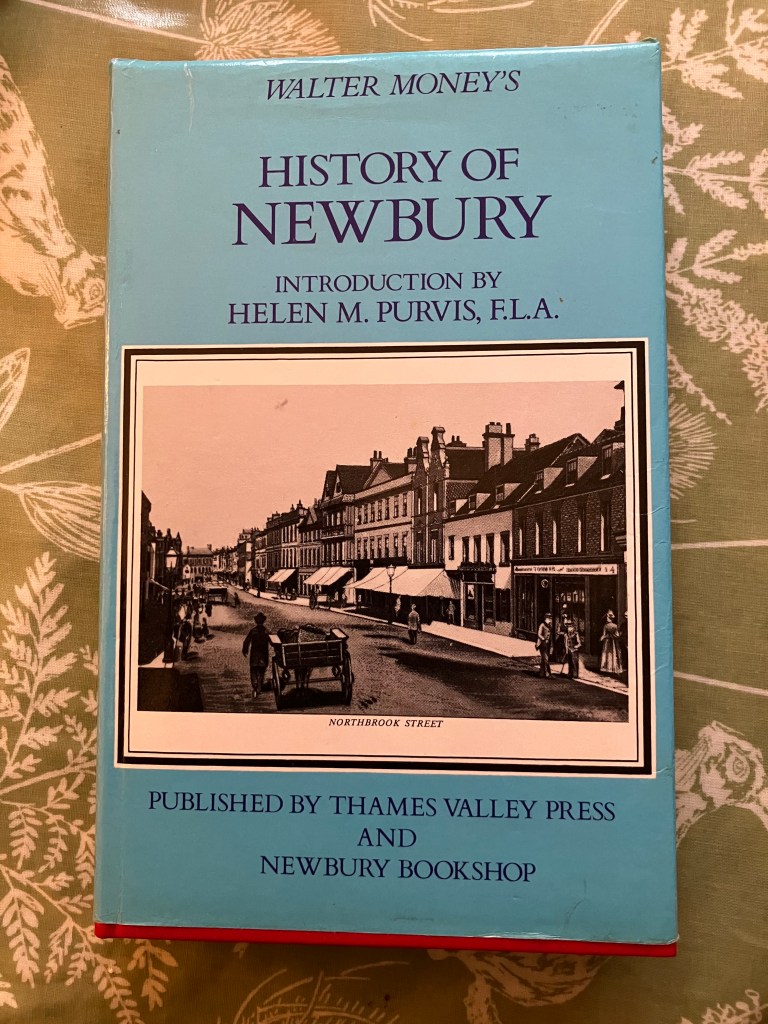
Aside from a career as an architect and a notable antiquarian, Walter Money was prominent in civic life where his involvements included, amongst other roles, being a Church Warden at St Nicholas’ church, a promoter of the Newbury, Didcot & Southampton Railway, a member of the Town Council, a Governor of the Grammar School and manager of church schools. He was also involved with establishing Newbury District Hospital, the Clock Tower and the Falkland Memorial.
There must be few people whose interests in life have left their mark on the town as Walter Money has.
As I have said above, anyone researching local history in our area will come across the name of Walter Money. My most recent meeting with Walter occurred as I was researching what were believed to be Saxon graves originally uncovered in Kintbury during the late nineteenth century. By chance I found an article from The Journal of the Anthropological Institute of Great Britain and Ireland, 1878
“An Ancient Burial Ground at Kintbury” was submitted by Professor Rupert Jones but is the work of Walter Money. In it, Money outlines why he believed the graves to be Roman rather than Saxon.
Many of the graves had been revealed when the chalk pits were excavated for the purposes of whiting manufacture. The banks of the pits were strewn with fragments of Roman pottery including, Money says, “urns and other vessels; the ware is black, brown and red but principally a dark bluish grey colour on fracture, and somewhat coarse in texture.”
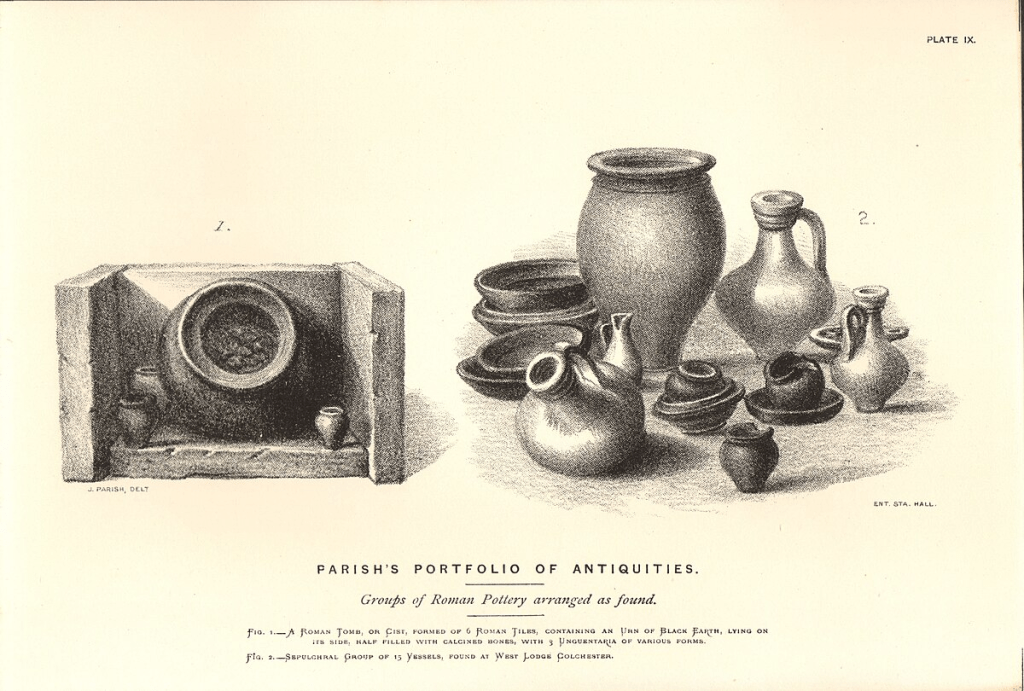
Money says that he also found glass, two portions of hypocaust tiles and a fluted brick with plaster still adhering to the outer face. The Romans are well known for their use of hypocausts for a sophisticated heating system which the Saxons did not have and similarly the use of plaster was Roman and not Saxon. He suggests that the Saxon graves are evidence of the continued use of a Roman cemetery before the Saxons converted to Christianity.

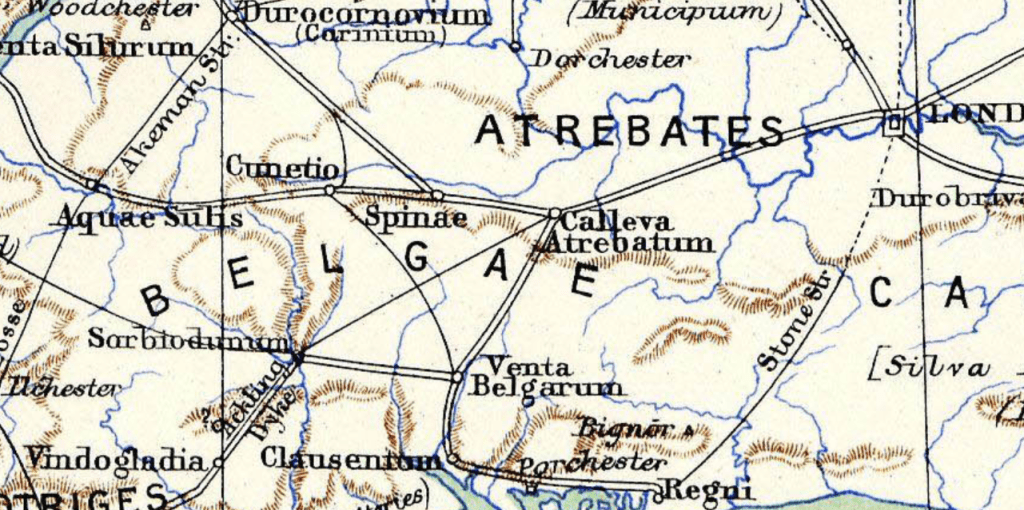
Money believed that Kintbuty was in Roman occupation, and probably a minor station on the road from Aqua Solis (sic) – Bath, through Cunetio – Marlborough, then through Lawn Coppice, Cake Wood, Standgrove, Hungerford and then Kintbury. From Kintbury the road would go on to Spinae, which he believd was the site of Newbury.
Finally, Money throws doubt on the suggestion that the graves are Saxon as graves from this period are usualy accompanied by grave goods. However, no grave goods had been found.
Today, archaeological remains can be dated using such techniques as optically stimulated luminescence, radio carbon dating and the study of a person’s DNA. Skeletons such as that belonging to the “Amesbury Archer” in Salisbury Museum can not only be dated but we also know where he travelled from in Europe before settling on Salisbury Plain. But none of these scientific advancements were avilable to Money.
I do not know what has become of the artefacts that Money describes having found – furthermore it is likely that the contexts in which they were found were never recorded as they would be today. I would like to know why neither Professor Jones, nor the distinguised antiquarian Colonel Lane Fox, who visited the site later, mentioned or drew any conclusions regarding the Roman finds. Perhaps it’s just that I cannot find those details.
We know that there was a Romano-British villa in the valley to the east of Kintbury so surely it is not such a leap to believe that Kintbury itself was a small Roman settlement. Although the evidence is slight, I find myself wanting to believe Walter Money.
References & sources:
Web Site of Friends of Newtown Road Cemetery – article by Avril Thesing
http://www.fnrcnewbury.org.uk/persondetails.asp?PersonID=478
The Journal of the Anthropological Institute of Great Britain and Ireland © 1878
Royal Anthropological Institute of Great Britain and Ireland
© Theresa Lock 2025
 Kintbury and Beyond