However, the 1930s were a time of increased tension on the international scene leading to war being declared in 1939. How this impacted on the lives of the ladies of Kintbury can be traced through a reading of the WI meetings’ minutes.
In September, 1938 the decision was taken to begin Keep Fit Classes at a cost: 2/6 for 24 lessons. However, the start was delayed for at least a week owing to the “International Situation.”
Despite this, however, the spring of 1939 saw some members set off on a jaunt to Belgium under the leadership of Mrs. Baxendale. They arrived home safely and promptly gave a talk about their experiences.
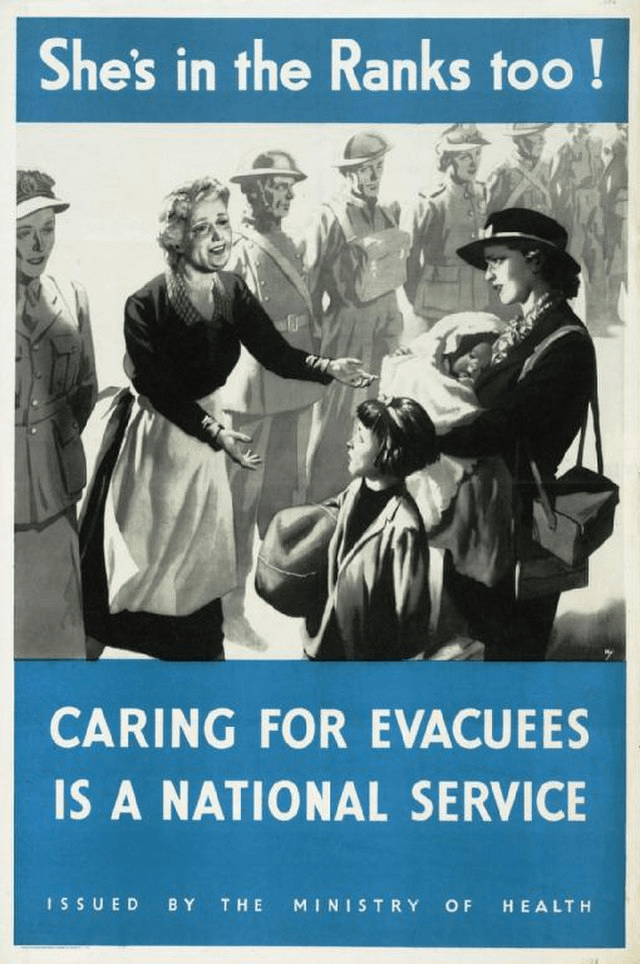
Meanwhile other members had arranged a series of Red Cross lectures and Mrs.Packer, wife of the Headmaster, called for volunteers to help in a canteen providing refreshments for evacuated children. During the next few years the Billeting Officer, Mrs. Mackworth, was to house some 600 evacuees, (some of these in a biblically named Upper Room somewhere across the A4 and owned by the church).
The last meeting before the war was declared was a carefree summer one and took place at Barton Court, then the home of Lord Burnham. There was a picnic tea, walks in the gardens and the great man, after providing a large cake, undertook to judge the ankle competition -and this was in two categories, under fifty and over fifty. The winners are not named!
Poor Lord Burnham was to see his house become the HQ of a searchlight battery, his grounds full of Nissan huts and soldiers everywhere. Kintbury was about to embark upon the most intense, vivid and busy period of its history.
In October, 1939, the future of the W.I. seemed bleak. It proved impossible to obtain speakers and the President, Miss Corsair, had to resign because of her war duties in a military hospital. Lady Spickernell agreed to take her place. All branches were urged by H.Q. to continue if at all possible and to help in all forms of voluntary service and in the growing and preservation of food. This our ladies proceeded to do with great success.
The voluntary service began with a decision to knit for the Berkshire Regiment and a box was produced for contributions to buy the necessary wool. From this moment an incessant noise must have been heard throughout Kintbury -the non stop clicking of needles.
1939 drew to an end with the wives of servicemen being invited to join the November meeting which included a Round Table Conference on Wartime Economies and December produced a display of garments for the Regiment and an appeal for more money.
1940 opened with the news that the Coronation Hall had been commandeered by the troops and a new venue for WI meetings had to be found. This proved to be the Wesleyan Schoolroom in the Inkpen Road. This being settled the knitters were spurred on to greater things when in February a “particularly fine scarf ” was put on show. Produced by a member’s husband it was judged a ‘very fine effort’.
The knitters being duly encouraged had, by April, sent 45 garments for Army Comforts and a letter of thanks requested more socks, furthermore, in May, a Captain Phillips appealed for ‘a continuity of supplies of woollen comforts for the British Expeditionary Force.’
The W.I,, then turned its attention towards money and decided to form a National Savings Scheme in the village. Fifty books were issued in March and by May this had increased to a hundred and five. Collections were taken in the Parish Room on Wednesday afternoons between 2.30pm and 3.30pm. This continued throughout the war.
On the domestic front, sugar began to disappear and members were told to make individual applications for jam making and to take their own to meetings if they desired it in their tea.
During 1940 Mrs Bowen obtained a ‘very nice album for local history’ and asked for local pictures and cuttings to be collected and preserved. This was so successful that in 1945 a -and I quote -‘Historian’ asked that a copy be sent to the British Museum.
Despite gloom and bad weather, it was decided to hold the usual open air summer meeting at Hungerford Park. The emphasis was on self sufficiency. The Campden Fruit preserving solution was shown and vegetable seeds on sale. Two appeals were issued during the afternoon for khaki gloves and gumboot stockings and funds for an institute ambulance.
Members struggled to keep meetings going and decided that despite the blackout, which meant short meetings and difficulty in obtaining speakers, they must continue.
The talks that they did receive reflected the preoccupations of 1940: National Savings; Food Production; First Aid; Best Use of Preserved Food; even the social half an hour had a game called The Dustbin Game which taught that nothing need be thrown away. A lighter moment resulted in a competition of “Working a pig on a postcard with needle and wool”.
Let no one wonder what occupied Kintbury ladies during the anxious winter months of 1940/41. They must have been knitting non stop. The county appealed for comforts for POWs and money was advanced to buy wool from a firm in Bradford. Besides producing all these garments the ladies now began to take in the washing of the large numbers of troops billeted in the parish.
began with a party but also brought a reminder of the scourge of diphtheria and the WI was urged to have their children inoculated and to spread the news of free inoculations.
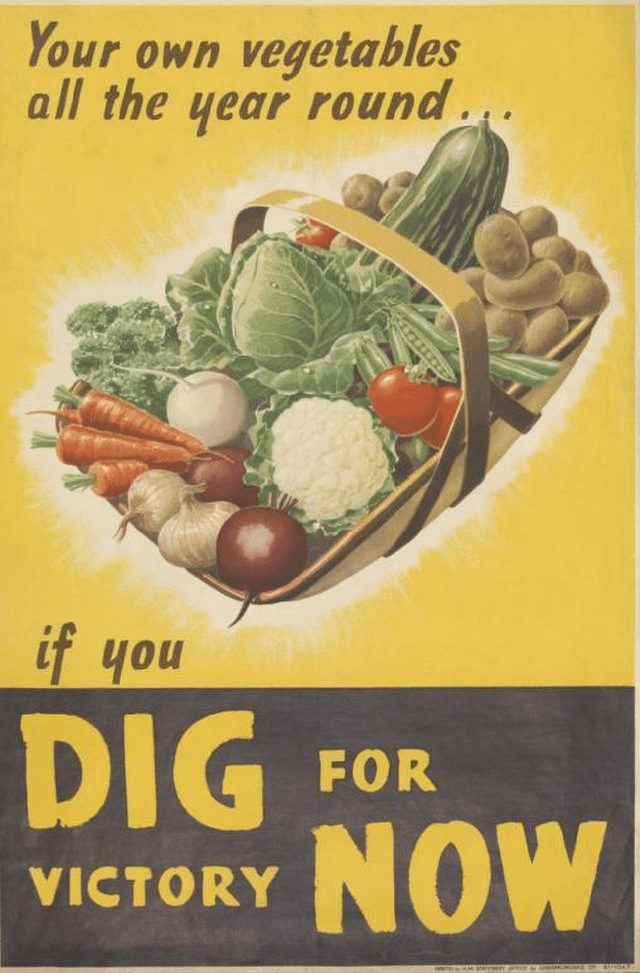
In March H.Q. drew attention to the need to grow onions and tomatoes to provide a surplus. A Mrs. Butler gave a pep talk entitled ‘The Home Front, the Aims of the Present Struggle and How Women Play a Great Part’ – which without doubt they did.
The 19th -25th April was designated ‘War Weapons Week’ and members volunteered to sell stamps in the Parish Room each day between 4pm and 7pm. They ran a money raising stall and sold tickets for a concert at Haworth House, home of Mrs. Lucas. This plus a raffle and Mrs. Chislett’s box of groceries raised the grand sum, of £31-2s-lld.
In May, Lady Peterson joined the W.I.. Lady Peterson was the sister of Mrs. Nancy Goulding who lived in The Tannery. Sir Maurice Peterson had been Ambassador in Spain and went on to be Ambassador in Moscow where Lady Peterson kept chickens in the Embassy attics!
Lady Peterson lived at Inglewood Lodge which proved very helpful for she owned some stables and when Lady Spick reported that the Fruit Preservation Scheme was now compulsory, these stables were offered for the making of jam, storing of sugar and the finished product. The Scheme was not reserved for the W.I. but they were in a good position to organise it. It did not get off to a flying start as owing to the late frosts fruit was not available until July. However, by September 576 1bs had been produced and sold to the Reading Co-Op.
Whilst our ladies were waiting for the fruit to materialise the knitting continued. A blanket was handed to the Hungerford Evacuation Centre and another started for Shipwrecked Merchant Seamen. The Berkshire Regiment was still being catered for and an appeal was issued for comforts for the ARP. The W.I. issued their own appeal — for more knitters. Kintters could register with Camp Hopson ( haberdashers in Newbury ) under a scheme which allowed 1 1/2 lbs of wool per year to knit for relatives in the forces. At the end of 1941 members were asked to knit also for Yugoslav POWs.
A talk was given on how to overcome the shortage of sugar, and perhaps in an effort to produce the required surplus of onions and tomatoes, Mr. Davis took the W.I. around Hungerford Park gardens and gave many useful tips on growing and storing vegetables.
I cannot think where the money came from but in 1941, in addition to the fund raising already mentioned, the W.I. joined the Red Cross penny a week fund, organized a collection for St. Dunstans – a favourite village charity. During Warships Week a stall raised £8-10s-0d.
In case the enthusiasm for gathering money had started to flag, the ladies were treated to a talk on ‘War Savings and The Government’s Urgent Need as War Expenditure Increased’.
But all was not concerned with money -Miss Green gave a thrilling talk upon her experiences in the Balkans during the last war with an American Red Cross Unit. Whether the thrills came from the Balkans or the Americans we are not informed!
Despite the hard work time was found for a choir to train under Miss Walden. Performing in Reading they earned the verdict of ‘good interpretation and musical rendering of a high standard’.
This high standard was demonstrated to the parish when the choir sang for a Nativity Play at the end of December. This must have been an interesting performance for although staged in the church the PCC had strictly forbidden any rehearsals to be held there!
1942 began with Mrs. Marsden giving a talk on her thrilling experiences as a War Correspondent in Holland and France and on the domestic front a stall was started for outgrown children’s clothes. Thrilling experiences seem to have abounded in for the Kintbury ladies!
The Ministry of Labour informed the W.I. in February, that it had organised transport for villagers who wished to undertake war work in the Newbury area. Also in February the fruit preservation scheme -which had made a profit of £8, asked everyone to save jam jars as it was thought these would become difficult to obtain -and arrangements were made for the elusive cup of tea to be provided again -at the price of 1d.
Now, on top of knitting, jam making, organising collections and acting as town criers, the W.I. became responsible for running monthly whist drives to provide money for POW parcels. The first of these raised £20!!
In March, Mrs. Bowen attended a meeting on Post War Planning. A trifle optimistic as this was early 1942 but perhaps the arrival of the Americans brought renewed optimism. On her return she stressed the importance of planning with respect to agriculture, education, health and housing.
In April, Lady Farrington asked the W. I. to make it known that she had had an interview with the manager of the Vickers Armstrong Factory in Hungerford and had been told that part-time workers were badly needed and half day shifts and transport could be provided if enough people applied.
April also brought yet another pep talk from HQ and attention was drawn this time to unskilled work on farms. One wonders where our ladies were expected to find the time.
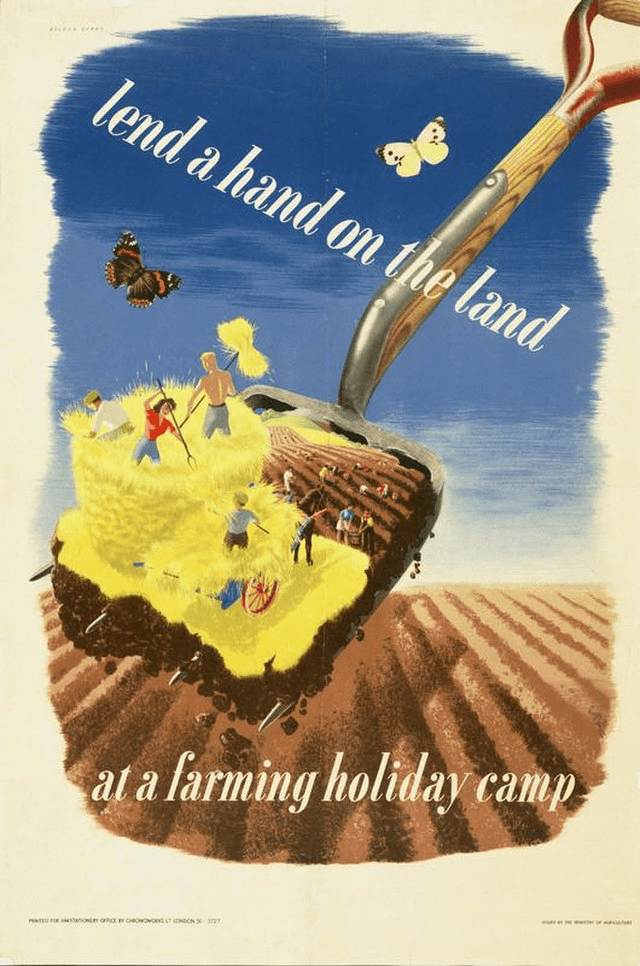
The 1942 Fruit Scheme opened on 19th June with the making of 135 lbs of gooseberry jam, but July was devoted to the gathering and drying of herbs. These were despatched in July and again in September and future supplies were requested. The year was relentless in its demands upon women and this is only the report of one organisation. The Paper Salvage Drive was next -each member asked to bring at least ten books and by September 570 books and innumerable magazines had been collected. One wonders how so many pre war books survived. A further 281 lbs of plum jam was produced and the school children despatched to collect a consignment of fox glove leaves -these were urgently needed to treat heart disease and cases of shell shock.
Despite all this, time was found to form a Drama Society and work in the garden – Lady Peterson and Miss Hayward won first class certificates in the Country Garden Competition. In October the Institute asked Mr. Packer to allow children to collect rosehips, which he did and they collected l cwt -no mean feat. HQ again drew attention -this time to harvesting leek seeds. How casually we treat these things today but in 1942 leek seeds were apparently another vital ingredient in the war effort. But jam, was the main priority and before closing for the winter 160 lbs of blackberry and 130 lbs of crab apple were produced. This meant that in 1942 the grand total of jam produced was 706 lbs!!
The knitters, of course ,were still on the go. Thanks were received from POWs, RAFBF and the Comfort Depot. Next the ladies were then asked to knit for the Merchant Navy or join a Red Cross Working party. The latter was chosen and from 1939 until 1944 the Red Cross Working party produced 4,000 garments and among the special orders were: Pyjamas for the Royal Artillery, Gloves for the Wrens, Socks and Gloves for POWs, Hessian Aprons for ATS Kintbury Home Guard, Kintbury Service men and, later, Baby Clothes for liberated Europe.
Just think for a moment: 4,000 garments in addition to jam making, fund raising, gardening, herb gathering etc all without washing machines, often only kitchen ranges rather than cookers, no main water or drainage, no main sewers.
By December the elusive cup of tea had disappeared again -this time due to a milk shortage.
During 1942, our ladies listened to such serious talks as ‘The Need to Co-Operate with Russia’; Archaeology’; ‘The Early Life of Churchill’; and the intriguing ‘Who Are The Americans?’
The year closed with a curious resolution being sent to HQ from Kintbury. It read as follows: ‘That representation be made to the Ministry of Labour and National Service, that the interviewing of housewives who are mothers of families should be undertaken by women of mature age and experience of running a home. It has been found that young women without practical experience of this kind find difficulty in comprehending the extent of labour and planning necessary to provide a home for a family’.Obviously members felt very strongly about the subject.
1943 began with a very successful party at Hawath House and this seems to set the scene for a lighter note creeps in but the relentless work continued.
The Institute was asked to produce material for occupational parcels for POWs and to take a three month turn in making and despatching them. A talk on savings urged everyone to intensify their efforts. This they did by helping with a variety show for Wings Week.
These shows seemed to have been quite a feature of village life and indeed at one time sported a Minstrel Group called the ‘White Coons’. The Girls Club rehearsed under Mrs. McCartney singing and cabaret acts and the soldiers at Barton Court took part in various sketches, singing and piano playing. A very popular act was Mr. Funnel and his fiddle. Mr. Funnel was a local shopkeeper and his wife a W.I. member. The Wings Week included an auction and made £156 7s Od.
In April, Miss Lansley agreed to become Chief Harvester and to undertake the collection of medicinal herbs. Culinary herbs were also required and these sent to POWs, but in June HQ announced that these were no longer needed and could be sold to the market stall. Presumably medicinal herbs continued to be harvested.. The W.I. was again urged to think of working on farms and perhaps in an effort to obtain agricultural workers it was proposed to erect houses in the village for them. W.I. members were invited to a parish meeting to discuss this but the RDC stated that although four houses were proposed plans had not been approved or rents fixed. Housing was evidently upon the villager’s minds for later in the year there was a talk on housing schemes and how they would affect Kintbury after the war!

Jam making began in June with 160 lbs of gooseberry which was put on sale in the shops and passed as of ‘excellent’ quality. The output for 1943 was 684 lbs.
Whist Drives continued to finance POW parcels and between September and January raised £21 2s 8d. The Drama Club went from strength to strength but perhaps a sign that the war was going well was the return of the travelogue talks. The armchair travellers were treated to talks on America, Russia and the Canary Islands.
1942 ended with the choir raising £10 10s for the Red Cross by carol singing.
1943 began with food and diet uppermost. The W.I. organised and distributed cocoa from the National Milk Cocoa Scheme. Mrs. Willoughby obtained a lemon and raffled it for £1! In the spring members were asked to stress the importance of Cod Liver Oil, and the importance of fruit juice for children.
July brought another Variety Show for Salute The Soldier Week which raised £80 10s Od and Jim Crowe and his concert party gave a show to boost POW funds. Jim came from Newbury and the mere mention of his name brought shrieks of laughter from the people who told me about him.
1944 was a bad year for fruit as I can only find mention of 192 lbs -but perhaps it was not so desperately needed.
December brought the only recorded disagreement and this happened when two more names were put forward to receive POW parcels making six in all. One lady contended that the two men concerned were not Kintbury people and thus not eligible. A definition was called for and Lady Peterson proposed that a ‘local prisoner should be one whose wife or relative is living in Kintbury and has been for at least six months and was not receiving help from any other source’. This was agreed.
The year was supposed to end with a film show -but the machine broke down so an hilarious game of clumps was played. Talks given included, ‘The Danish Folk Movement’, ‘How to Attract Younger Women to the W.I.’ and ‘Housing for The Country’, this last causing many lively comments and criticisms. Just in case the knitters thought that they could ease off a little, they were asked to knit for the European Clothing Relief Fund.
The last few months of the war brought an urgent appeal for a collection for Lewisham. Miss Lawrence placed an office at the disposal of the village and was there to receive gifts at 5 o’clock on Wednesday and Friday. Many gifts were collected and a letter of thanks received. It seems that Kintbury seldom failed to respond generously to charitable appeals.
Eventually the long awaited day arrived: Victory in Europe, 8th May, 1945. Finally, there was time to relax and the next W.I. meeting became an open party. Mr. Saunders undertook to be M.C. and everyone was grateful for his able assistance. The hall was very well filled and Sir Frank Spickernell played the piano for dancing and musical games. Mrs. McCartney gave an account of the arrangements for The Welcome Home Fund, tea and cakes were served and the Drama Club performed a sketch entitles Mrs. Whipple’s Husband. More games and dancing followed.
A committee was formed to organize the Welcome Home Celebrations. These were to include four Welcome Home Parties in the Coronation Hall – with the hilarious Jim Crowe supplying the variety items. At this party 68 returning servicemen were welcomed and altogether 227 received gifts of money and a card of thanks.
The last months of 1945 were spent trying to get back to a normal life and Lady Spick asked to be allowed to retire as she had served 5 years as President instead of the usual 3. It was obvious to those of us who moved into Kintbury in the last years of Lady Spickernell’s life, that she was held in very high regard and much affection. I have been told that she was a lovely person who really cared.
So the W.I. war duties came to an end and to demonstrate that they were now back in the realms of domesticity. The first talk of 1946 was given by a Mrs. Rigg and entitled, ‘Singing While You Work’. Housework, said Mrs. Rigg, particularly bed making, would be less irksome if one sang or hummed a tune.
Perhaps we should bear that in mind!
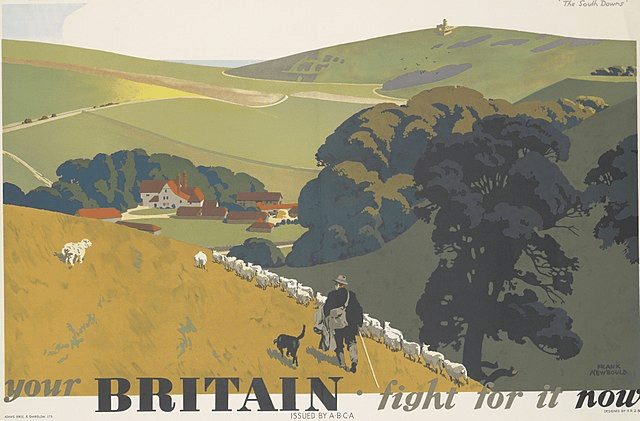
“It’s your Britain, fight for it now” poster by Frank Newbould. Public domain. Wikimedia Commons
©Penelope Fletcher December 2023
 Kintbury and Beyond