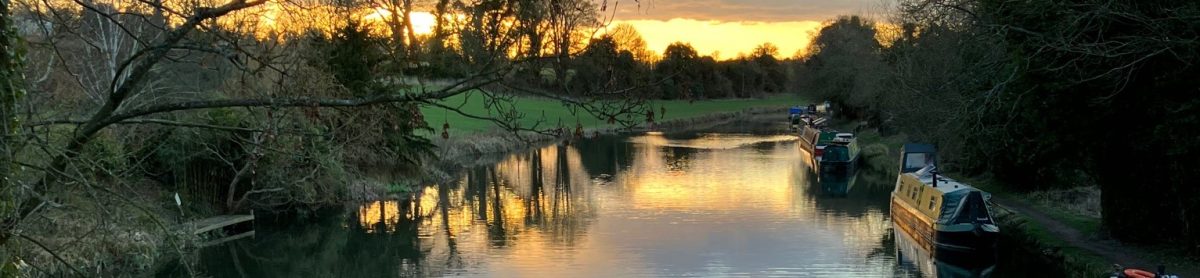

The very first canal to be built in England was the Bridgewater Canal, constructed in 1761 to carry coal from the Duke of Bridgewater’s coal mines to the newly industrialised Manchester. Over the next 70 years, many more followed, not as an amenity to facilitate leisure activities as we may think of canals today, but as part of the industrial revolution. Canals were, at the time, the easiest and cheapest way to transport heavy materials for distribution from source to work shop or factory.
Business owners, landed gentry and the like would have followed the progress of the canal network and the economic advantages it brought to each area. In March 1788, a meeting was held in Hungerford “to consider the Utility of an Extension of the Navigable River from Newbury to Hungerford as far further as shall hereafter be thought eligible.”
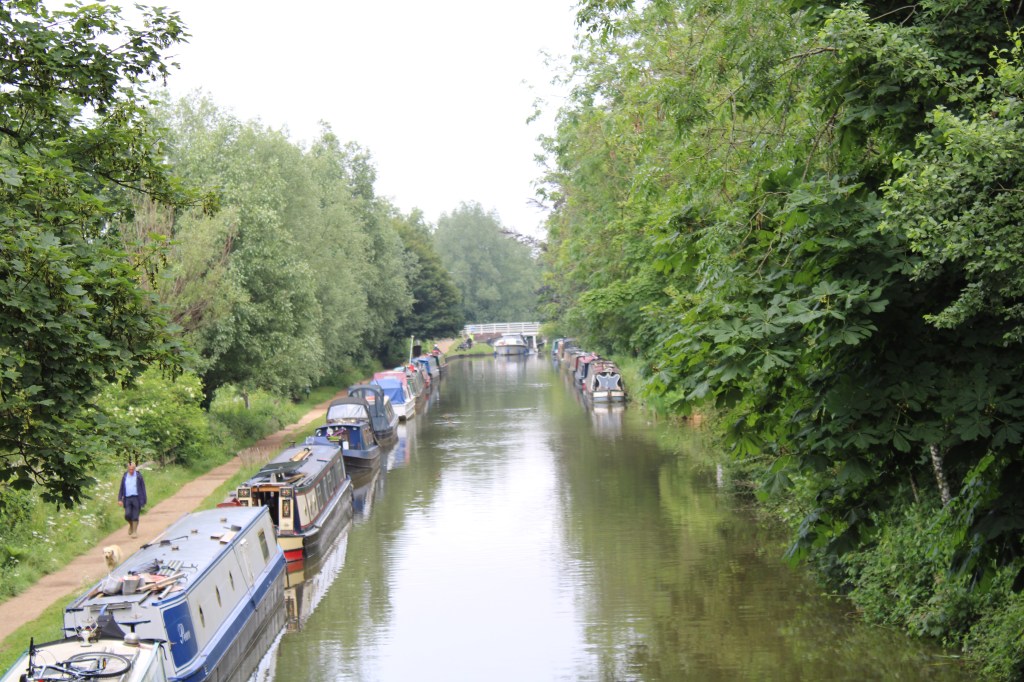
Obviously, the proposed canal was going nowhere without the co-operation of other landowners; not surprisingly, the idea was sold to them by insisting that a subsequent reduction in the price of the carriage of coals and other heavy materials would significantly advantage their estates.
The landowners, it seems, were easily won over and in its edition of October 14th 1793, the Reading Mercury published the following:
“Notice is hereby given, That application is intended to be made to Parliament in the next session, for leave to bring in a Bill and to obtain an Act for making and maintaining a navigable canal and communications for Boats, Barges and other Vehicles… from the River Kennet at or near the town of Newbury … to the River Avon at or near the City of Bath.“
We are so used to the presence of the canal today that it is easy to forget this proposal and its impact in its day must have been very similar to the decision in the late 1960s that the new M4 motorway should be built across the Berkshire Downs.
The first chairman of the Kennet & Avon Canal Company was to be Charles Dundas Esq., MP for Berkshire since 1794. He lived at Barton Court, near Kintbury.
The engineer to be responsible for the new canal was the relatively inexperienced young Scotsman, John Rennie. However, very few people had actually built canals at this time so new skills had to be learnt and adapted from the experience of military engineers.
There were, of course, no mechanical diggers, earth movers or any other high tech equipment available to Rennie and his workforce. The 40 feet wide and 5 feet deep canal was dug entirely by men using picks, shovels and wheelbarrows. The men – known as “navvies”, a shortened form of “navigators” – were mostly recruited from agricultural workers who could earn much more working on the canal than they had been able to on the land. Unfortunately, though perhaps not surprisingly, gangs of young men, most probably living away from their homes and families for the duration, often turned to drinking and drunken, disruptive behaviour became a feature of the navvies’ life style.
As it passed just to the north of Kintbury, the canal avoided most of the village although one notable exception was the vicarage. At that time, this was the much older house that predated the 1860 Victorian gothic building and was the one known to Cassandra & Jane Austen. We know that various members of the Austen family would have stayed with the Fowle family at the vicarage during the years of the canal’s construction or just after and I cannot help but wonder what Jane would have thought of all the earth moving and construction work being carried on just yards from the house.
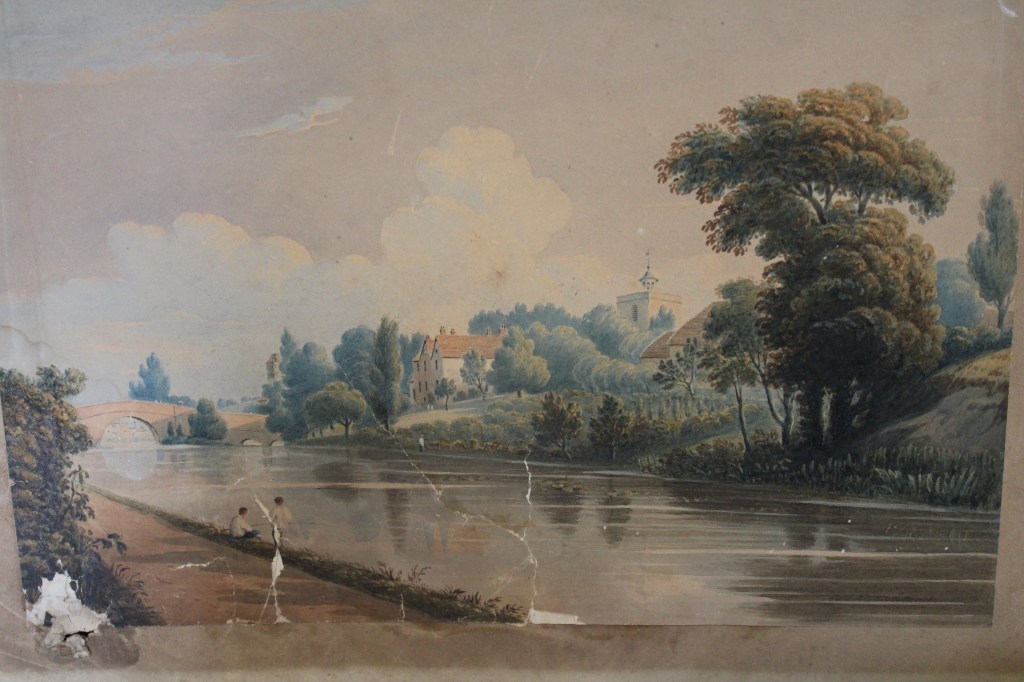
In June 1797, the eastern end of the Kennet & Avon canal opened from Newbury to Kintbury. The Reading Mercury reported,
“A barge of near 60 tons having on board the band of the 15th Regiment of Dragoons left Newbury at twelve o’clock and arrived at Kintbury at half past two where the Committee of Management, having dined with their chairman, Charles Dundas, Esq., embarked at six.”
Kintbury had entered the canal age. A wharf was built opposite the Red Lion (now the Dundas Arms) to facilitate the transport by barge rather than the slower carriers’ cart and this benefitted local businesses such as the whiting industry. This was the march of progress and the future was to be horse-drawn and afloat.
But that, of course, was before the railway!
References:
Reading Mercury (britishnewspaperarchive.co.uk)
The Kennet & Avon Canal Trust ( katrust.org.uk)
The Waterways Trust (thewaterwaystrust.org.uk)
Hungerford Virtual Museum (hungerfordvirtualmuseum.co.uk)
 Kintbury and Beyond