Playing, however, is thirsty work, and unfortunately brass bands were often associated with heavy drinking. This was a time before licencing hours introduced during the First World War restricted the hours a public house could open and, “the sacred freedom of drinking was tampered with” (A. J. P. Taylor). It had long been recognised that excessive alcohol consumption was becoming a serious problem.
The temperance movement – calling for abstinence from drinking alcohol – began in Ireland in the 1830s. Throughout the following decades the movement spread across England where temperance coffee shops, hotels, billiard rooms and even music halls were opened. People were encouraged to, “sign the pledge” to say that they would never drink alcohol.
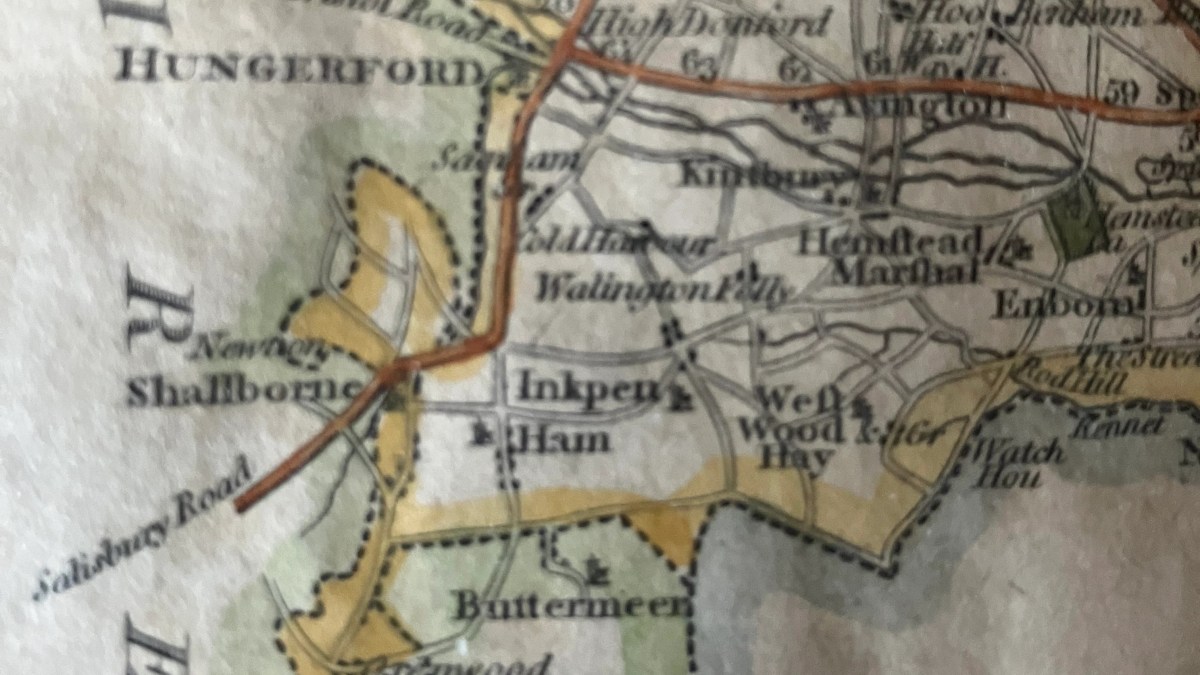
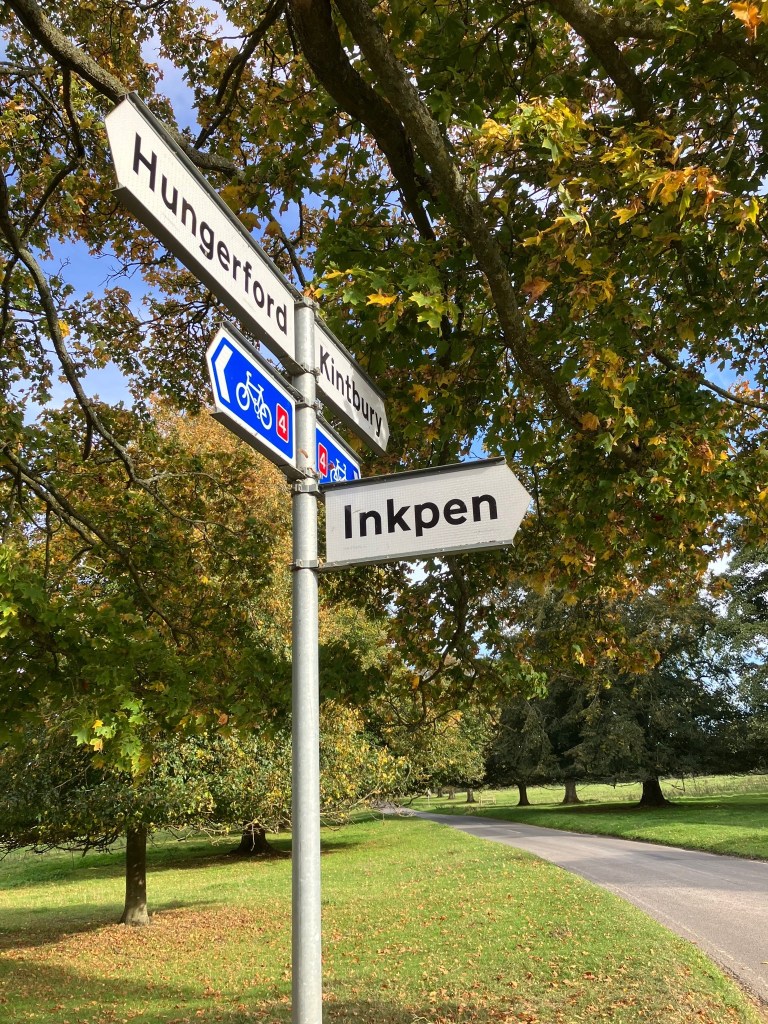
Temperance brass bands were seen as a way of spreading the word. By the turn of the century, hundreds of towns and villages could boast their own temperance bands, a great many of which – although not all – were associated with methodist churches. Hungerford, Newbury and Thatcham all had temperance bands but one of the smaller communities to host a band was Inkpen.
Mr Arthur J. Edwards, the band’s conductor, was a member of the Edwards family from the Sawmills, Inkpen, on whose land the Methodist chapel had been built and who were well known as Methodist church members. Edwards was a talented musician himself and clearly very successful at teaching his band of young players. Band practice was held in the Wesleyan schoolroom where rules and regulations were displayed on a card hanging on the wall.
The first reference to the band that appeared in the local press was in a Newbury Weekly News report of April 1902 when the Inkpen Temperance Band performed at a fund raising event for Inkpen Wesleyan Methodists. The chapel in Post Office Road Inkpen had recently been renovated and the event was to make up a shortfall in the costs of doing so.
In June 1904, the band played at another Wesleyan fund raiser, this time for the Wesleyan Sunday School in Kintbury. It seems the band was well received as the same month, Mr. Edwards placed an advertisement in the Newbury Weekly News stating that the, “12 to 20” performers would play, “First-class, up-to-date- music” but that they were already booked up on August 21st as they were to play at Kintbury Flower Show.
Although Mr Edwards continued to advertise in the newspaper across the following months, the next report of the band’s appearance is not until August 1905 when they play at the Annual Camp Meeting in Gore End. Although the report does not specify, I’m assuming from reading later reports this is an event of the Primitive Methodist Church. The meeting was, apparently, well attended: “A large gathering of people listened to the Word of Life simply and earnestly expounded by men who evidently spoke from a religious experience”.
Presumably no women were permitted to speak, whether they had had a religious experience or not.
By 1906, Mr Edwards is confidently advertising the band as having 20 performers, “open for engagements”, wearing, “Full dress uniform” and playing, “Good class music”. Bookings must have been increasing because, as well as having Mr Edwards as conductor, the advertisement names F.D.Carter of Inkpen as “Hon Sec”.
The Christmas season of 1906 was a very busy one for the band who, according to the report in the Newbury Weekly News were, “in splendid form now, and has received praise all round for their fine playing seeing they are only a young band.”
The committee were planning to buy new instruments and were hoping to receive the aid, “of the generous public”.
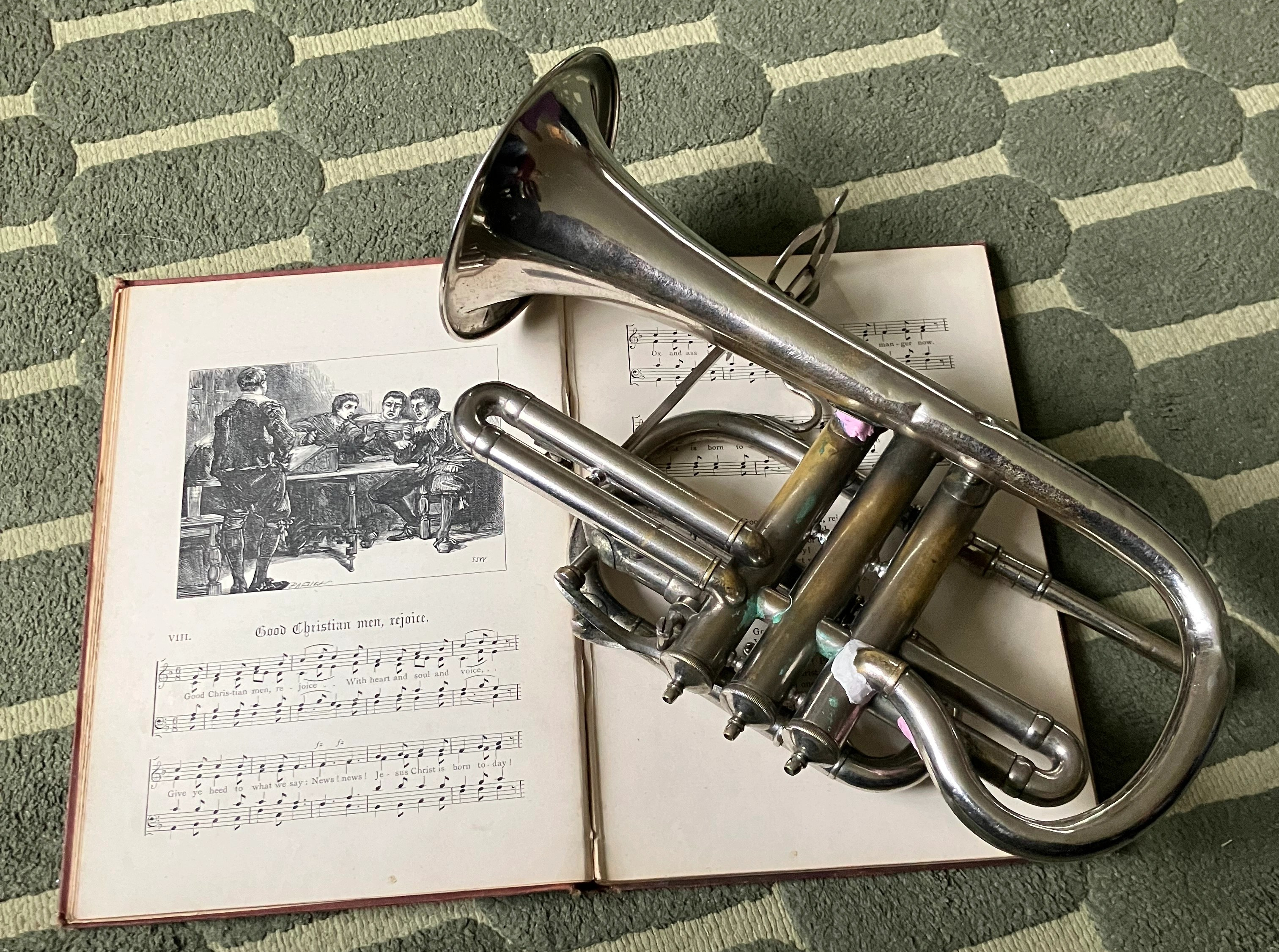
In January 1907, band members enjoyed an “excellent supper” in Inkpen’s Wesleyan Schoolroom although the severe weather prevented some members from travelling the long distance. It would seem that the popularity and success of the band was attracting members from villages beyond Inkpen. The “esteemed bandmaster” Mr Edwards and others “gave some capital songs and pianoforte solos while various games were freely indulged in”. A Mr Tilley from Newbury “gave some capital selections on the phonograph” – a rare opportunity for some to hear recorded music, I expect. The report concludes:
Great praise is due to the bandmaster for his never-tiring patience, especially with the younger members, and it is hoped that the members will rally round their leader so that this year might be a record one
1907 proved to be a particularly successful one for the band. In May they played at the Whit Sunday Primitive Methodists camp meeting in Inkpen where a special feature was, apparently, their rendering of the march, “Crown Him With Many Crowns.”
In July the band performed at another Wesleyan fund raising event, this time at a sale of work and jumble sale for the Kintbury Wesleyan Sunday School.
August was a busy month. The band played at another Annual Camp Meeting, this time at Ashmansworth where, following talks by visiting preachers, the band led the singing and, “rendered a nice selection of sacred music”. The “profitable day” ended with an, “old-fashioned love feast and prayer”.
What an old-fashioned love feast was, I have absolutely no idea – although it sounds to me more like something that would have happened in the late 1960s!
On August 7th – a week day, interestingly – the band played at the Speen and Stockcross Horticultural Society show, and on August 21st – also a week day – they were at the Kintbury and Avington Annual Flower Show & Sports. Then in September, the band won third prize at a band contest at Blenheim Park, Woodstock. This must have been no mean feat as it could not have been cheap or easy to transport twenty band members and their instruments the 42 miles to Woodstock and back. The Newbury Weekly News commented that great credit was due to Mr A. Edwards, “seeing that the band is quite young”.
By April of 1909, Mr Edwards seems to have achieved his aim of purchasing new instruments although these had not come cheaply. The band’s end of year financial report recorded a total income of £70 13s 2 1/2d although a further £100 was still required to defray the cost of the instruments.
In the following years there are fewer reports mentioning the Inkpen Temperance Band although in August of 1911 they were playing at Kintbury & Avington Cottagers’ Show which suggests that the debt regarding the purchase of the instruments had not resulted in the demise of the band.
In the August of the following year, the band played at the Inkpen Flower Show, although their conductor is now Mr W. Edwards.
I found the last reference to the band in a local newspaper was in a report of March 1913 which records the Inkpen band – now known as the Inkpen Temperance Prize band – as attending a Wokingham & District Band League competition, where they came 3rd in the “March” section and 1st in the “Own choice”. Mr Edwards is once again the conductor.
Perhaps the outbreak of war in August 1914 meant that newspapers had other concerns rather than reporting on the doings of village brass bands. However, the website, brassbandresults.co.uk, records Mr Edwards and the Inkpen band – known variously over the years as Inkpen Silver Band and Inkpen United Band – as continuing to compete in various competitions throughout the south of England. On occasions the band is conduced by Arthur Muddiman, later B. Edwards and then P.G.Dyson. The very last competition the band entered was on February 27th, 1954, in Southampton.
Whether the band retained its strong links with the methodist church, I have no way of knowing. Many bands which began as “temperance” bands eventually dropped that word from their names and many of them are still playing today. Locally, the Reading Spring Gardens Silver Band, the Basingstoke Silver Band and the Tadley Silver Band all began life as temperance bands.
It is, of course, impossible to know how many band members – if any – who played at Southampton in 1953 had also been at Woodstock in 1907. Many reports describe the band as being young then – the generation whose lives would be tragically interrupted by the outbreak of the First World War.
References and sources:
https://www.brassbandresults.co.uk/bands/inkpen
The Newbury Weekly News
E.A.Martin: Inkpen Yesterday 1993
Theresa A. Lock © 2024
 Kintbury and Beyond