So who were our neolithic neighbours?
It is mind boggling to think of people living in this area over 6000 years ago. However, if you know where to look for it you can still see evidence of those people who lived around here between c4000 and 2500 years BC in the neolithic period.
The neolithic, or new stone age, was the period which saw a more settled way of life with the domestication of plants and animals and the beginning of farming rather than a hunter/gatherer life style.
During this period there were communal constructions of large scale earth works, banks and ditches. The famous henge monument at Avebury dates from this period.
But where is the evidence that neolithic people once lived in this area?
A favourite local destination for many of us in our area is Combe Gibbet above Gallows Down, close to the highest point on chalk in England and affording spectacular views particularly to the north across the Kennet valley. Standing right next to the gibbet we admire the view and identify local landmarks. It is an uplifting and spectacular spot.
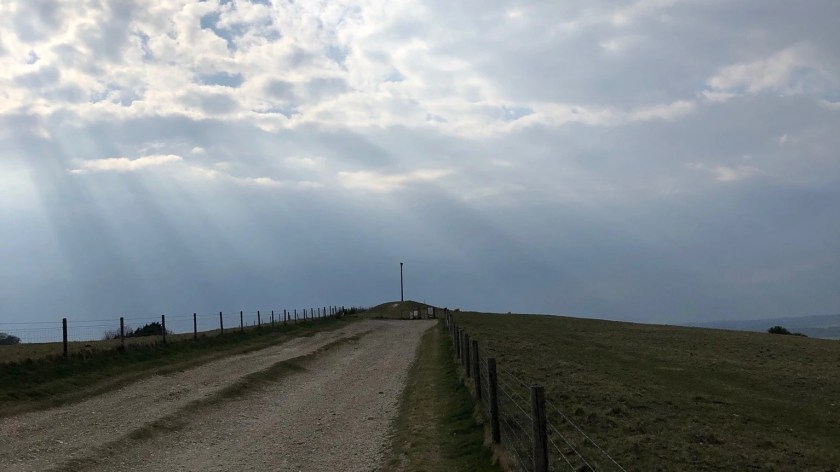
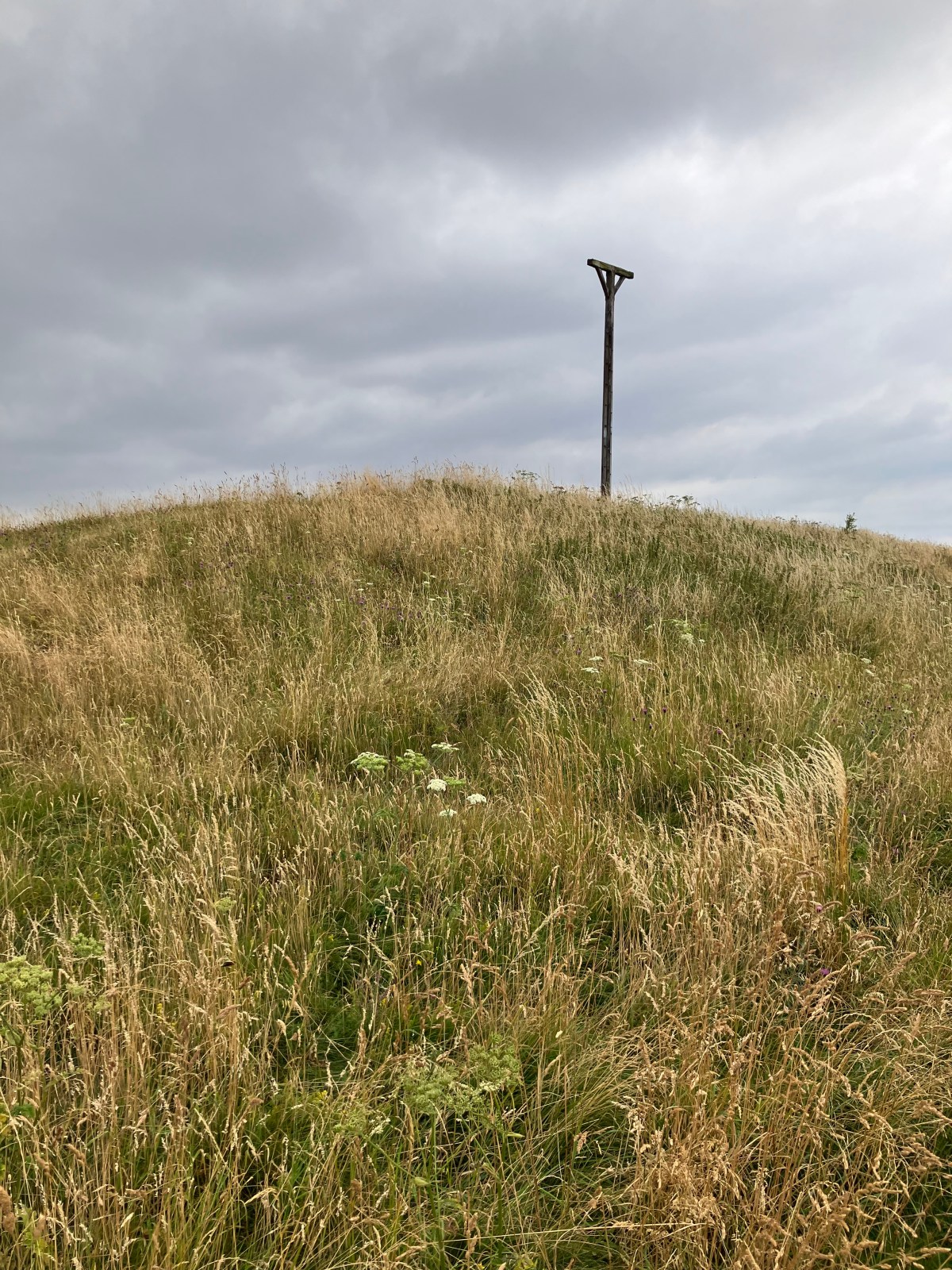
But is there something that we miss? I know I did when I first walked up to the gibbet. As it stands on one of the highest points of the hill, it is easy to overlook the fact that the gibbet has been erected on a mound. The mound on which it stands is actually a neolithic long barrow.
There are around 500 neolithic long barrows in England of which three are in Berkshire and many more over the borders in Wiltshire and Dorset. Generally speaking most are in the Cotswolds or Wessex.
Our local barrow is oriented east to west and measures 65 meters by 20 meters and is surrounded by a ditch about 7 meters wide. Constructing it was no mean feat particularly when the only tools available were made from bone or flint and would have required a well-organised and dedicated work force.
But why was it built up here?
Long barrows were important communal burial sites during the neolithic. A chamber was usually constructed of wood or stone with an entrance at one end, then covered over with earth. Members of the community were laid to rest in the tomb but, in a practice that seems strange to us, often only certain bones were placed within and it seems likely that the remains were, at times, taken out and replaced.
It is likely that the long barrow would have been an important ritual site for the local community and might have indicated ownership of a particular area by a particular group of people. A location commanding an impressive view seems to have been important; for example, Wayland’s Smithy Long Barrow near Uffington and West Kennet near Avebury are also sited on higher ground.
The long barrow above Gallows Down was likely to have been the focus of communal events. However it may well be that our neolithic neighbours would have travelled further afield to meet up with other family members or community groups; the henge and stones at Avebury could have been reached by following the river Kennet westwards, for example. We know that neolithic peoples often travelled hundreds of miles to join in the ceremonies at Stonehenge so the thirty or so from here across Salisbury Plain would have seemed any easy journey to people used to walking long distances
So, as we traipse up to the gibbet and admire the view, perhaps we should remember that beneath our feet is a construction that would have been important to our neolithic neighbours – something that would have been revered and respected, which had taken much time and effort to build. After all, we can not imagine a time when we would walk through Winchester Cathedral whilst ignoring its significance as a place of worship, or pass Windsor Castle without seeing it as something just a bit special.
Our local long barrow, up above Gallows Down, might not look particularly important to us now, but it is worth remembering that 6000 years ago it might have been the most significant thing in the landscape.
(C) Theresa Lock 2024
 Kintbury and Beyond