It is easy to forget that, before the reformation, all English parish churches would have been Catholic and all priests looked to the authority of the Pope. Although ancient buildings such as St Mary’s in Kintbury or St Michael’s in Enborne might seem to represent an enduring and continuing tradition of Christian worship, over the hundreds of years parishioners will have experienced turmoil and change particularly in respect of the break with the Catholic church in Rome.
After the Reformation, life became very difficult for those people who chose to follow the “Old” religion as keeping the Catholic faith became prohibited by law. Catholic positions in public life were restricted, for example Catholics were not allowed to enter the legal profession until 1791 and no Catholics were able to vote – even if they fulfilled other restrictive requirements – until 1829. Catholics were not accepted at either Oxford or Cambridge university until 1871.
It is not surprising, therefore, that in the south of England most people in towns or villages were either members of the Anglican church or one of the other protestant denominations – Baptist, Methodist, Congregationalist, Quaker and so on. However, some prominent families were able to maintain their Catholic faith and, in the south at least, these were mostly the wealthier families.
The Dukes of Norfolk, whose family seat is at Arundel in Sussex, are one such example. The present Duke is the country’s most eminent Catholic. Nearer to Kintbury, Sir John Throckmorton of Buckland House – the man who, in 1811 put up the wager which resulted in the Newbury Coat – was Catholic. Unusually for a small English village, mass was regularly held in the Catholic church in Buckland until the beginning of the twenty first century.
In 1893, a member of a wealthy Catholic family from the north of England chose to relocate to West Berkshire.
Humphrey J.G. Walmsley had been born in 1846 in Wigan, second son of William Gerard Walmesley & Caroline De Trafford of Westwood House, Lower Ince in what is now Greater Manchester. In common with other wealthy Catholic families of the time, the Walmesleys had a private chapel of their own which had been built between 1855 & 1856, the work having been overseen by the prominent church architect, Edward Welby Pugin.
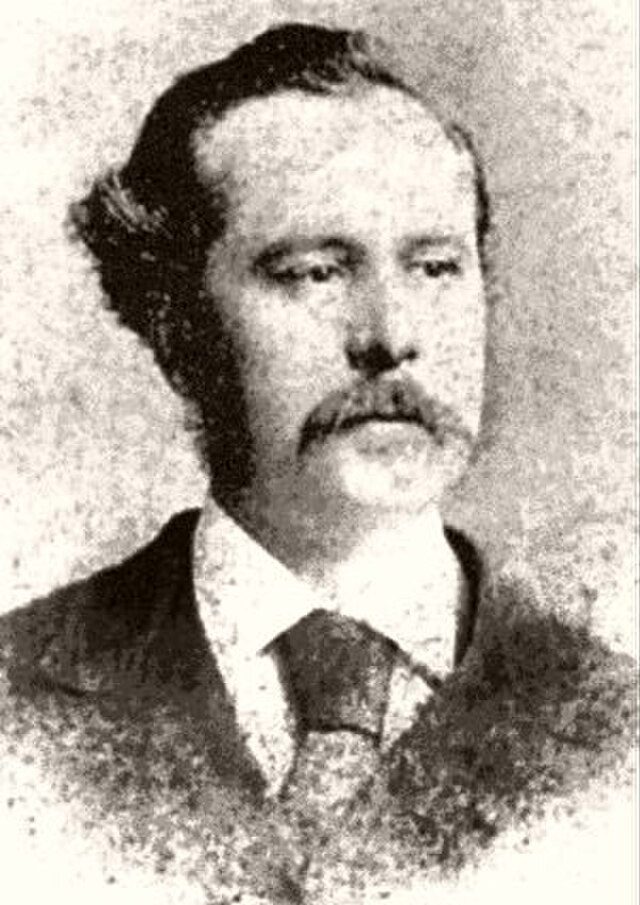
In the world of church architecture, Pugin was a name to be reconned with. E.W. Pugin was the son of Augustus Northmore Welby Pugin, particularly remembered for having designed the interior of the palace of Westminster and the Elizabeth Tower which houses “Big Ben”. When his father died in 1875, E.W. Pugin took up the family business and continued as a successful designer of buildings in the then much admired Gothic style.

In employing E.W.Pugin to design the family chapel, the Walmesleys must have been making a statement not only of their commitment to the Catholic faith but also one which spoke of their ability to afford this addition to their home in the most fashionable design.
When Walmesley relocated to Inglewood House, a mansion near Kintbury, the nearest Catholic church was in Newbury. This must have been one of the reasons why the new owner decided to have a chapel erected at Inglewood. However, rather than commissioning the building of an entirely new place of worship, Walmesley had the chapel at his home in Wigan removed and transported brick-by-brick to Berkshire using the canal system for transportation. It must have been a slow and laborious process – to say nothing of the expense.
The re-erected chapel was consecrated on 26th July 1905 by the Right Reverend Dr Cahill, Bishop of Portsmouth. According to the Wigan Observer, the new chapel was a site to behold with an altar of marble and alabaster, the altar steps of Italian marble. The stained glass had been designed by Hardman & Co., one of the leading designers of the time. Lamps, candlesticks, candelabra and vases were of brass burnished with gold. “It is a gift to West Berkshire” the report concludes.
It seems that everything about Humphrey Walmesley’s chapel was lavish. Not surprisingly, perhaps, as this family newly arrived from the north were clearly very wealthy. During his time at Inglewood, Walmesley was able to purchase several neighbouring farms to add to his estate making him a prominent local landowner and person of standing in the Kintbury area. The 1901 census had shown that he was living on independent means and, not surprisingly, he and his wife Marie employed 16 live-in staff at Inglewood House as well as their own Roman Catholic priest.
The Walmesleys welcomed other local members of their faith to hear mass with them at their chapel thus enabling Catholics from the Hungerford area to attend a service without having to travel to Newbury or Woolhampton. I have not been able to find out if baptisms or weddings were ever celebrated at Inglewood, although I believe it must be likely that some baptisms would have been.
Inglewood House remained in the Walmesley family until 1928 when it was purchased by the De La Salle brothers, meaning it remained a centre for the local Catholic community
However, in 1972 the De La Selle brothers left Inglewood for Wallingtons, a similarly large property a little nearer to Kintbury. From 1972 the house was home to the Inglewood Health Hydro, then in 2006 it was sold to Raven Audley Court as a retirement home.
This sale was bad news for what remained of the relocated Pugin chapel and those with a fondness for Victorian ecclesial architecture, as well as those local Catholics who may have had very fond memories of hearing mass there. Despite representations to English Heritage from both the Victorian Society and the Pugin Society, the demolishers moved in before the building could be listed and subsequently preserved. The English Heritage report of 2006 gives us some idea of what it might once have looked like:
The chapel is built in Gothic style and is brick built with stone dressing.
Historic photographs indicate that the windows had tracery and stained glass.
The painted ribs to the nave ceiling and painted panels and ribs to the chancel survive as does the highly colourful tiled floor to the chancel. The tiles are Minton and are decorated with fleur-de-lys and floral motifs. There is also an elaborate metal-work rood screen in blue and gold incorporating the family coat of arms.
Historic photographs indicate that the chapel was very richly decorated internally with fixtures and fittings that were originally of the Pugin scheme. These included stained glass depicting the name saints of the Walmesley family, and a carved altar and reredos in alabaster and marble.
The walls were part covered in carved wooden panels.
All these features are believed to have been removed in the last couple of weeks.
So, to all intents and purposes, Humphrey Walmesley’s chapel was no more, its fittings and stained glass sold or given away to who knows where. The rest of the building was finally demolished and Kintbury’s small Pugin masterpiece became just a memory.
©Theresa A. Lock, 2024
References & sources:
https://www.hungerfordvirtualmuseum.co.uk/
English Heritage adviser’s report re possible Listing of Chapel, 22 Dec 2006.
The Wigan Local History and Heritage Society website on Humphrey J.G. Walmsley.
“Bulldozers outpace the Heritage bureaucrats”, The Times, 9 Feb 2007.
 Kintbury and Beyond