In Medieval England, many church walls were decorated with colourful murals depicting Biblical scenes or the lives of saints. In an age of mass illiteracy, these images helped in the teaching of scripture and often provided a warning of what might happen to those who strayed from the narrow path of righteousness. “Doom” paintings depicting the day of judgement were popular if rather uncomfortable to look at.
For poorer people whose homes were very much devoid of colour, the bright paintings on otherwise white interior walls must have provided something to gaze at and wonder. Sadly, so very many were painted over in the years following the Civil War (1642 – 1651) when they were regarded as idolatrous by the puritanical protestants. Much later, other murals were destroyed during the eighteenth and nineteenth century when the fashion for “restoration” meant that they were painted over in favour of plain white interior walls.
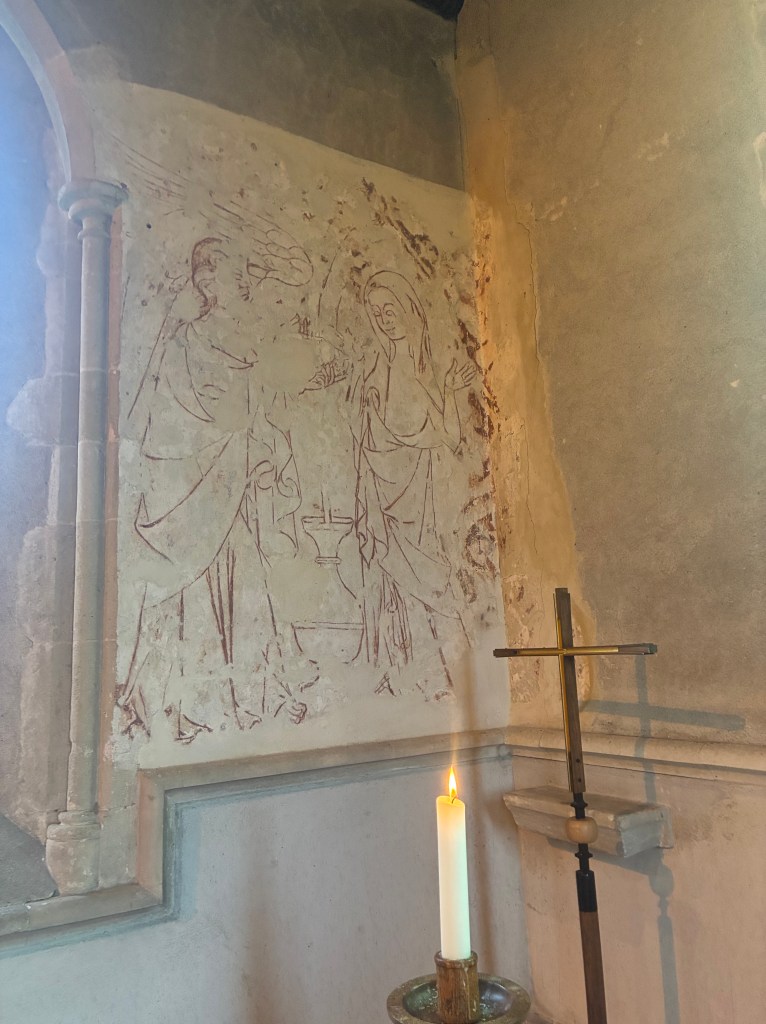
Where these murals have survived, it is frequently just the reds and reddish browns which can be seen today. One such example in this area is in St Michael’s, Enborne where there is a painting of the Annunciation at the east end of the north wall. What other paintings have been lost we shall never know.
In the late nineteenth century, St Michael & All Angels’ church in Inkpen was “restored”. According to the Reading Mercury of March 1897 the church had, in the words of its rector, “long fallen into a lamentable state of decay”. As a result, a restoration, lasting more than a year, had seen the greater part of the church rebuilt and, “the only ancient portions of the actual fabric are the exterior walls and one west window” remained.
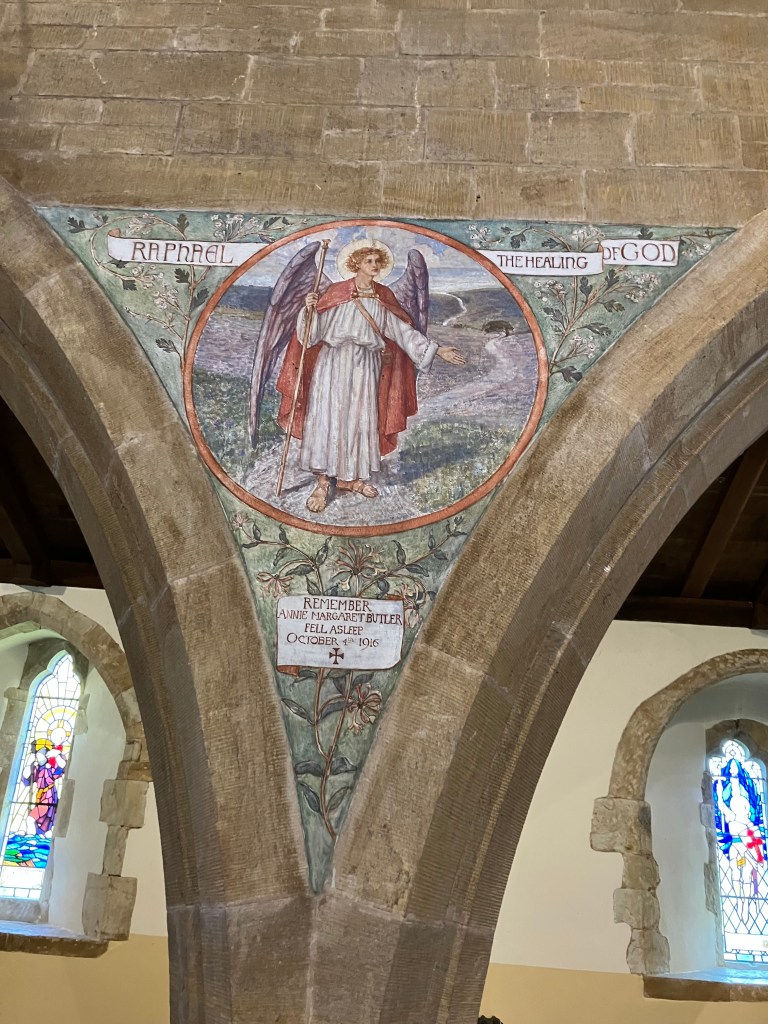
Medieval wall paintings had been discovered when the plaster was stripped from the walls but these were badly decayed. However, the architect, Mr C.C. Rolfe decided that there should be new and at that time very modern murals to grace the newly restored interior.
The person chosen for this work was Miss Ethel King Martin, an artist and sculptor.
Ethel had been born in Bristol in 1863, the daughter of Samual – a physician – and his wife Katharine. She studied at the Slade School of Fine Art in London’s Gower Street, then a very new establishment which had opened in 1871. It was groundbreaking as, unlike other art schools, it enabled women to study on the same terms as men, in particular with reference to life drawing. Other students studying there at around the same time included the illustrator Kate Greenaway and Evelyn De Morgan.
At this time, the influence of the Pre Raphaelite Brotherhood of some 40 or 50 years earlier could still be seen in contemporary work. The “Brotherhood” which included D.G. Rossetti, William Holman Hunt, J.E. Millais and Ford Maddox Brown was a group of artists dedicated to painting in a style which had, they believed, existed “before the time of Raphael.”
Pre Raphaelite paintings are bright, clear and bold, their subjects mostly devoid of the swirling drapery or dark backgrounds of earlier works.
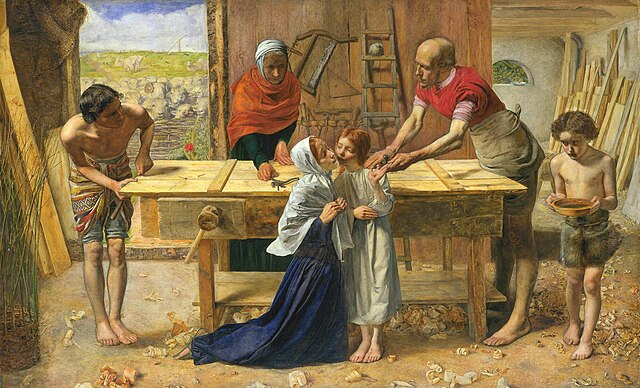
Their work used bright colours and achieved a realism by having friends and family as models, giving their work a contemporary feel. Later other artists and craftsmen joined their circle of influence, most notably William Morris and Edward Burne Jones.
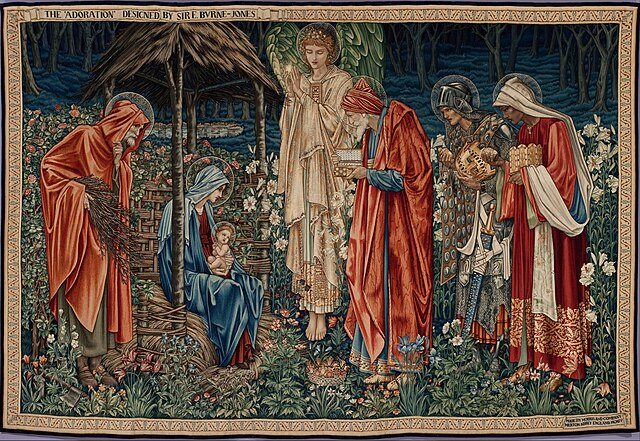
In turn, Morris and Burne Jones became influential in what has become known as the Arts & Crafts movement – in part a reaction to factory made and mass produced items. Emphasis was placed instead on traditional crafts in arts and design.
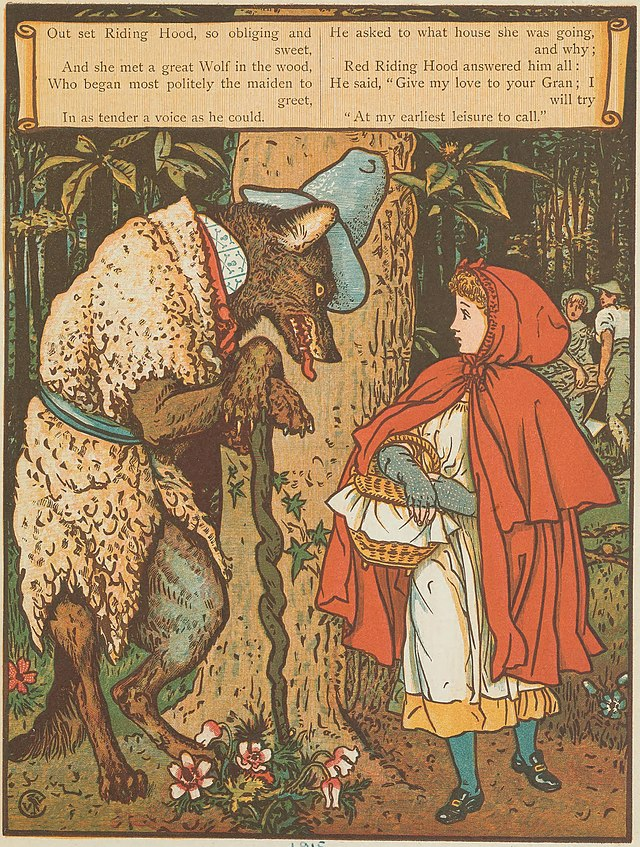
One name associated with the Arts & Crafts movement is Walter Crane, remembered particularly for his illustrations of children’s books.
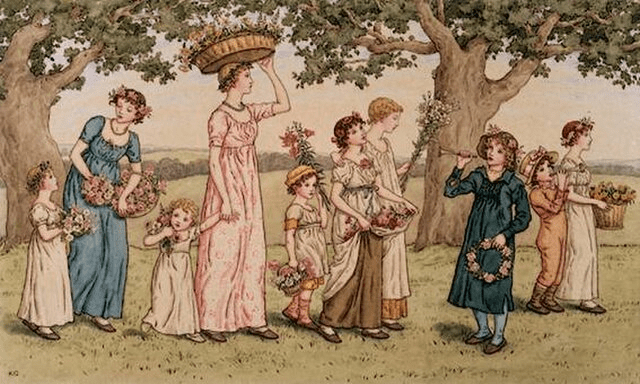
Another was Kate Greenaway – a near contemporary of Ethel Martyn who had studied at the Slade some years earlier and who, like Walter Crane, is particularly remembered for her illustrations of children’s books.
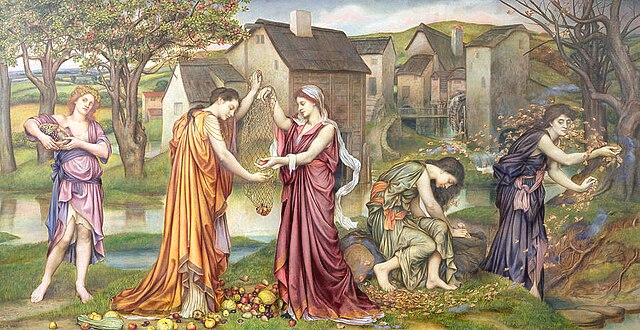
Another female student in the early years of the Slade was Evelyn De Morgan. Her work, which frequently features the female form, also shows the influence of the Pre Raphaelites.
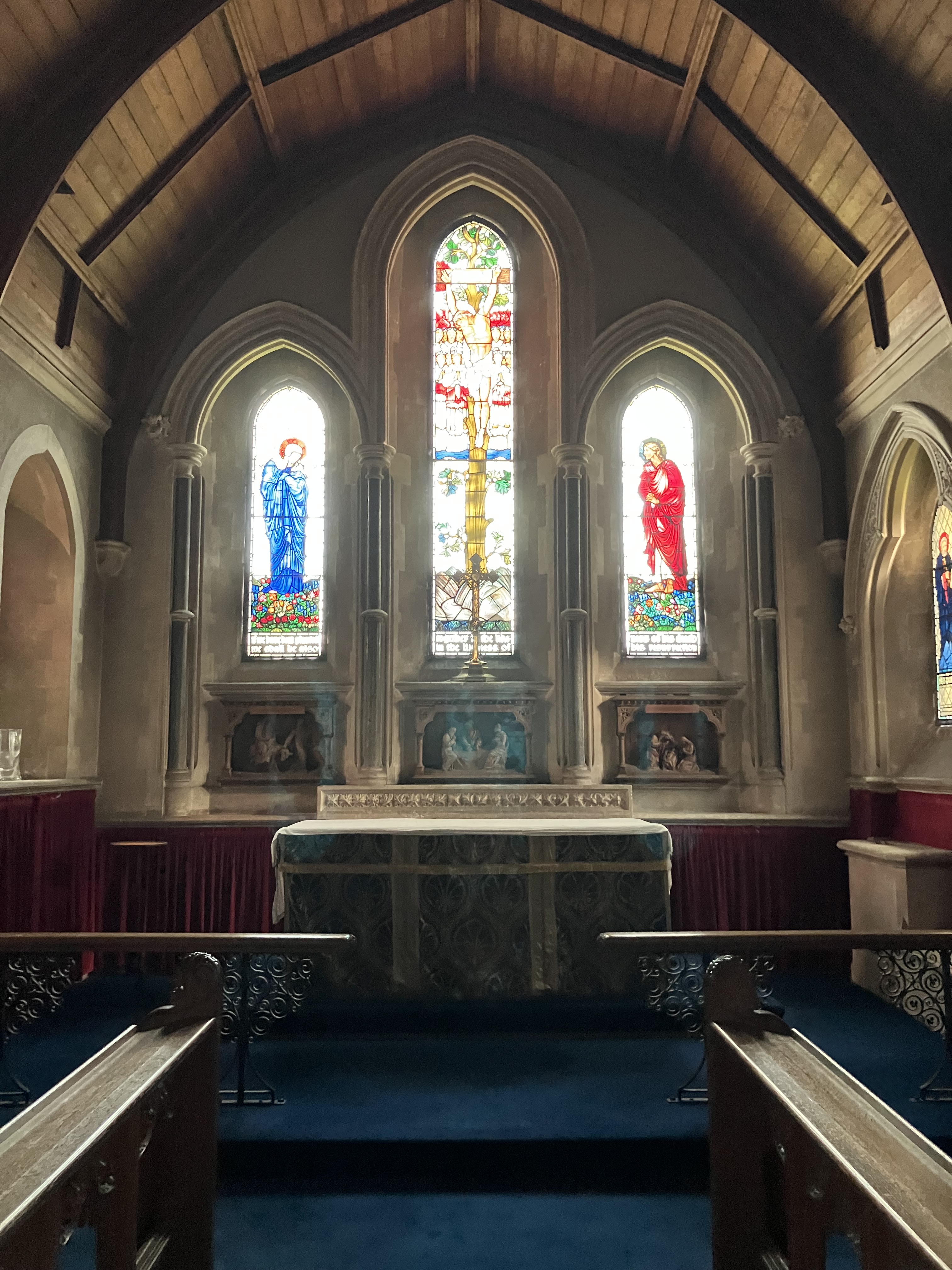
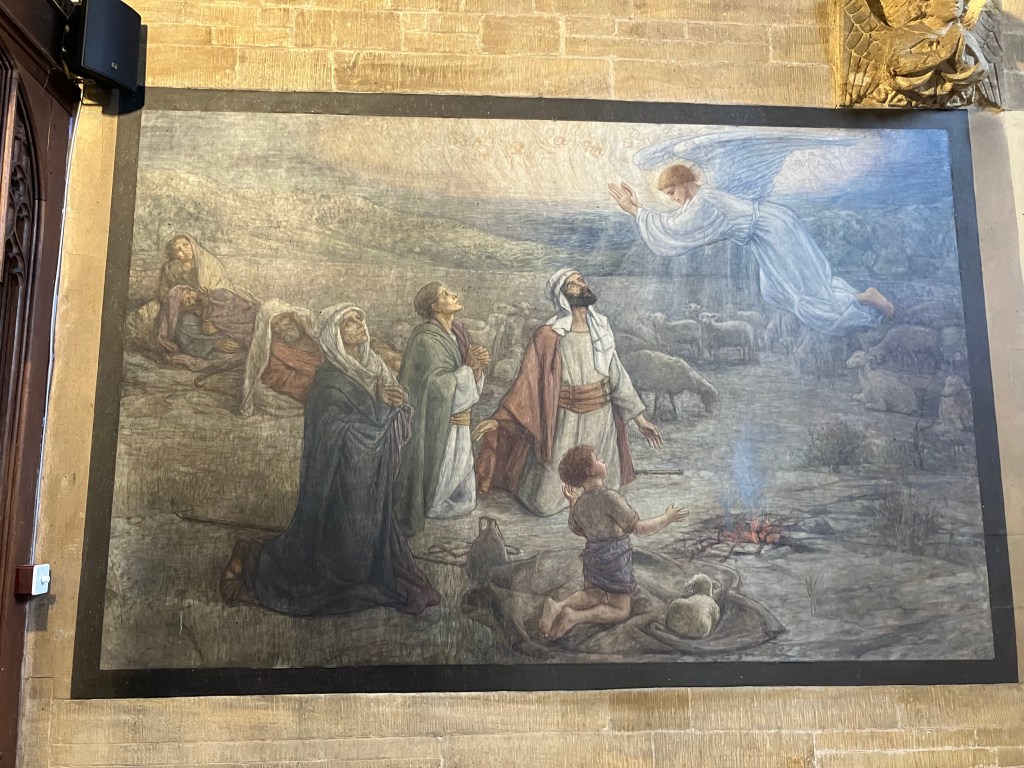
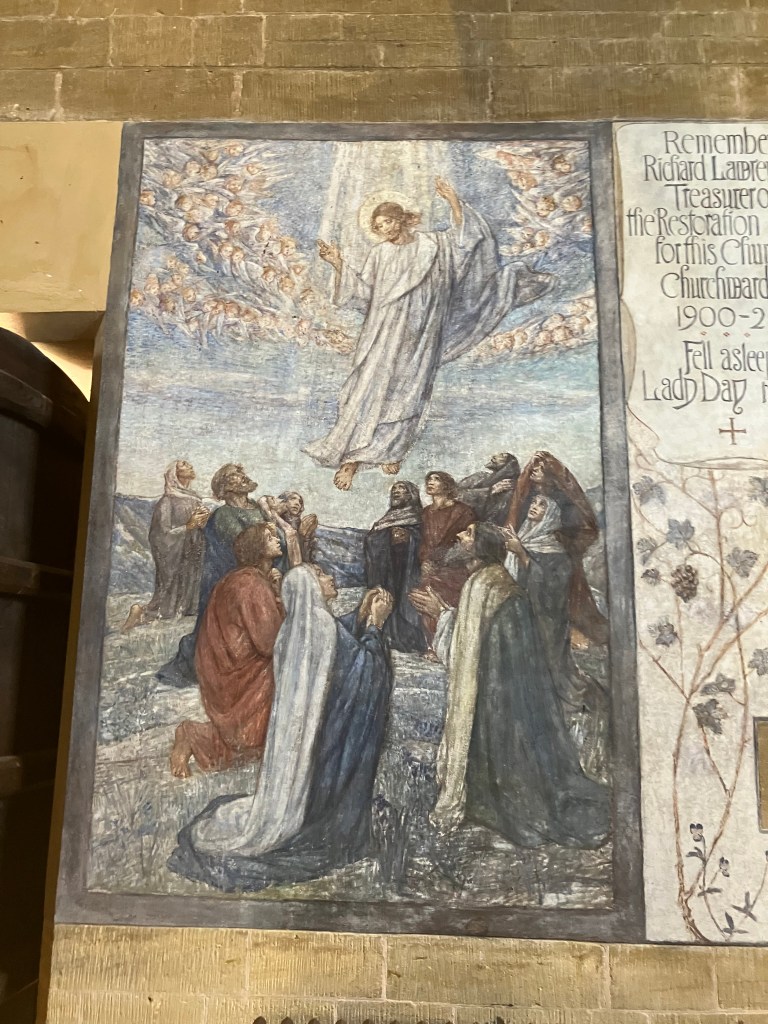
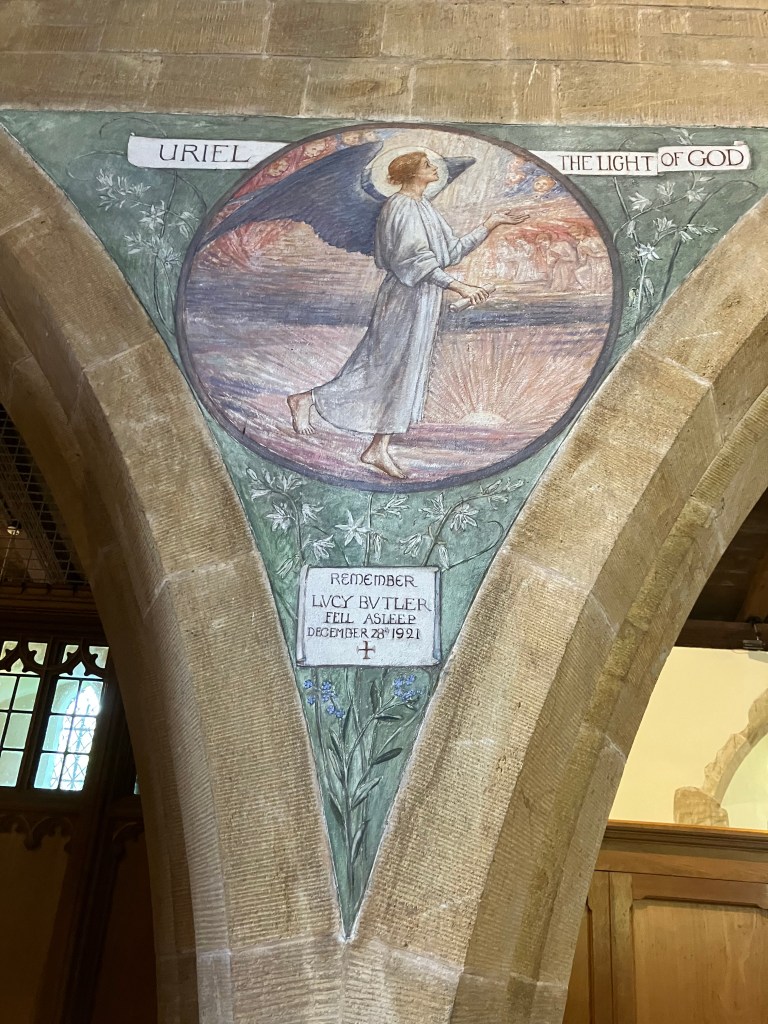
By the time of the “restoration” of St Michael’s Inkpen, Ethel King Martyn was an established painter and illustrator, having been elected Associate of the Royal Society of Printmakers in 1892 and then Fellow in 1902. She had also exhibited at the Royal Academy. Her work at Inkpen was completed in 1910 and remains as beautiful today as it was then.
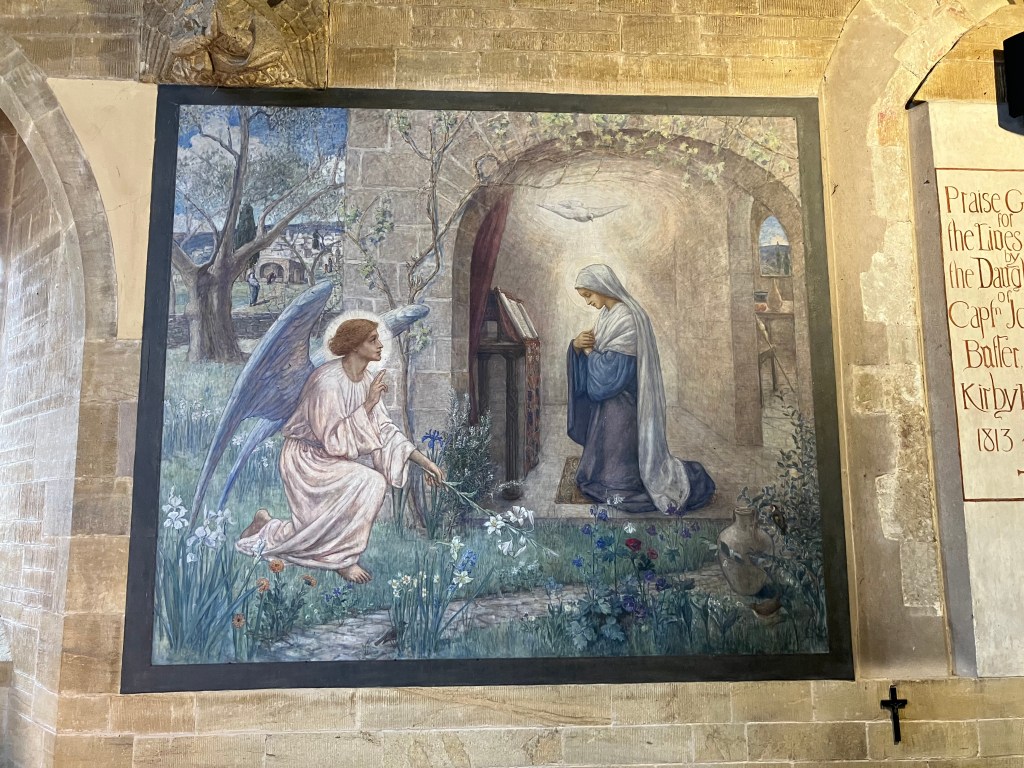
It is, I think, easy to see the influences of the Pre Raphaelite painters in Ethel’s work in terms of the use of bright colours, composition and realism as well as an appealing story-book quality reminiscent of Walter Crane and Kate Greenaway.
.
Some time ago, I wrote an article for this blog called, “Our churches: Not what they seem?” When I researched that article, using sources from the nineteenth and early twentieth century, I hardly ever came across the name of a woman – certainly there were no references to female architects, designers, builders or, of course, priests. Nationally, some women had achieved recognition alongside the men who were their contemporaries – I have already mentioned Kate Greenaway and Evelyn De Morgan in the field of art and design, however, they are in the minority.
Ethel King Martyn never married but lived with her twin sister, Agnes. She died in Budleigh Salterton, Devon, in 1938. You may never have heard of her before reading this, and her work has never, as far as I am aware, been reproduced on posters or greetings cards. But her work on the walls of the church at Inkpen is, I believe, stunning, and for that she should be celebrated.
(C) Theresa A. Lock 2026
 Kintbury and Beyond