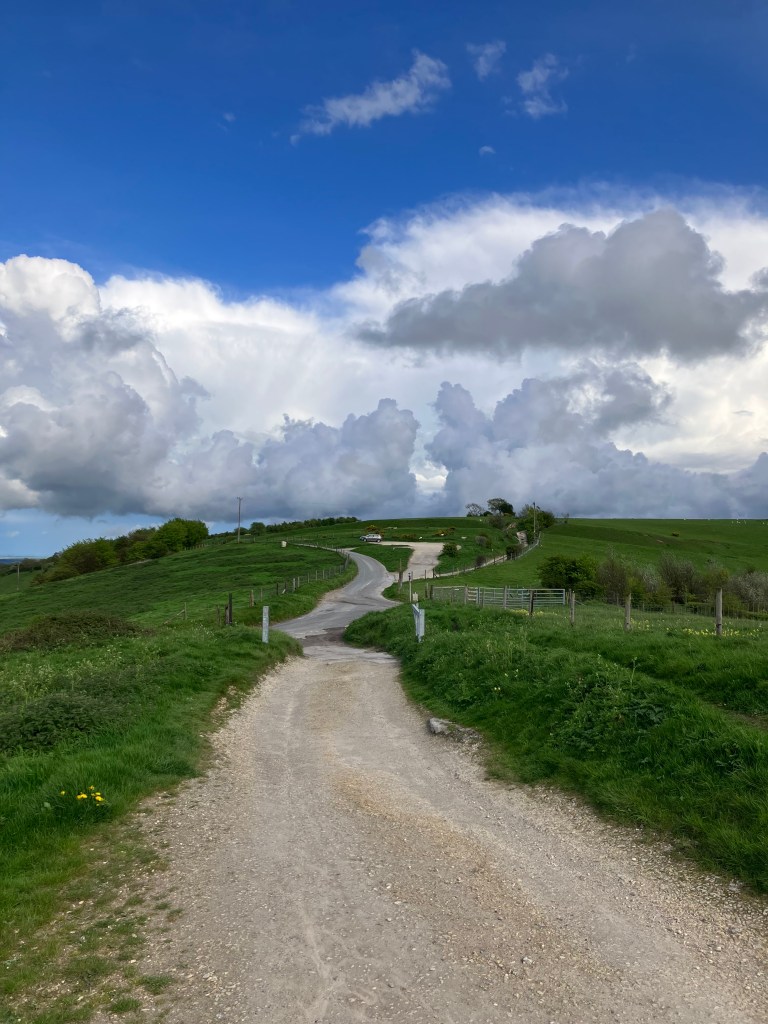
Defending the border? The view from Walbury Hill

The view from Walbury Hill

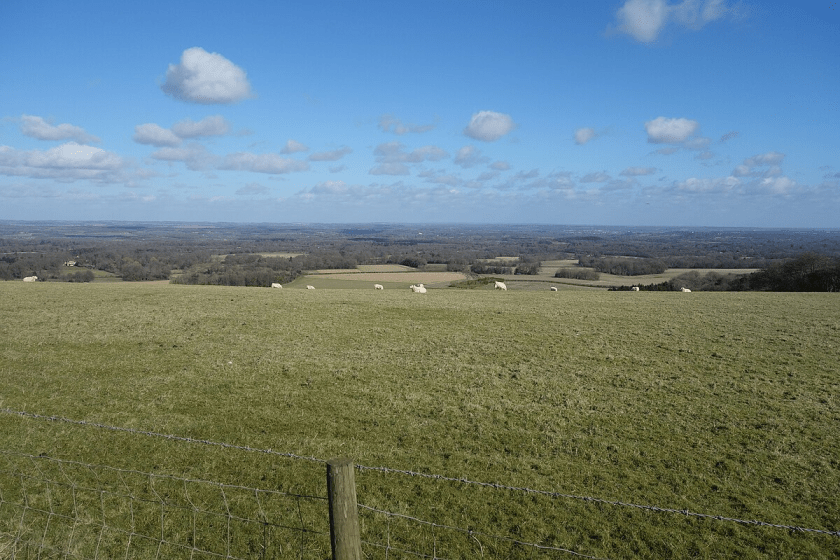
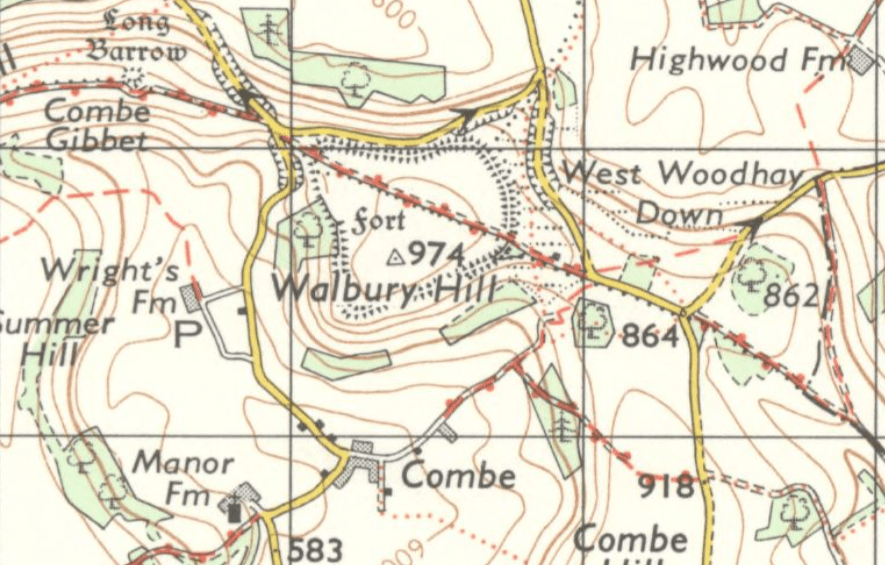
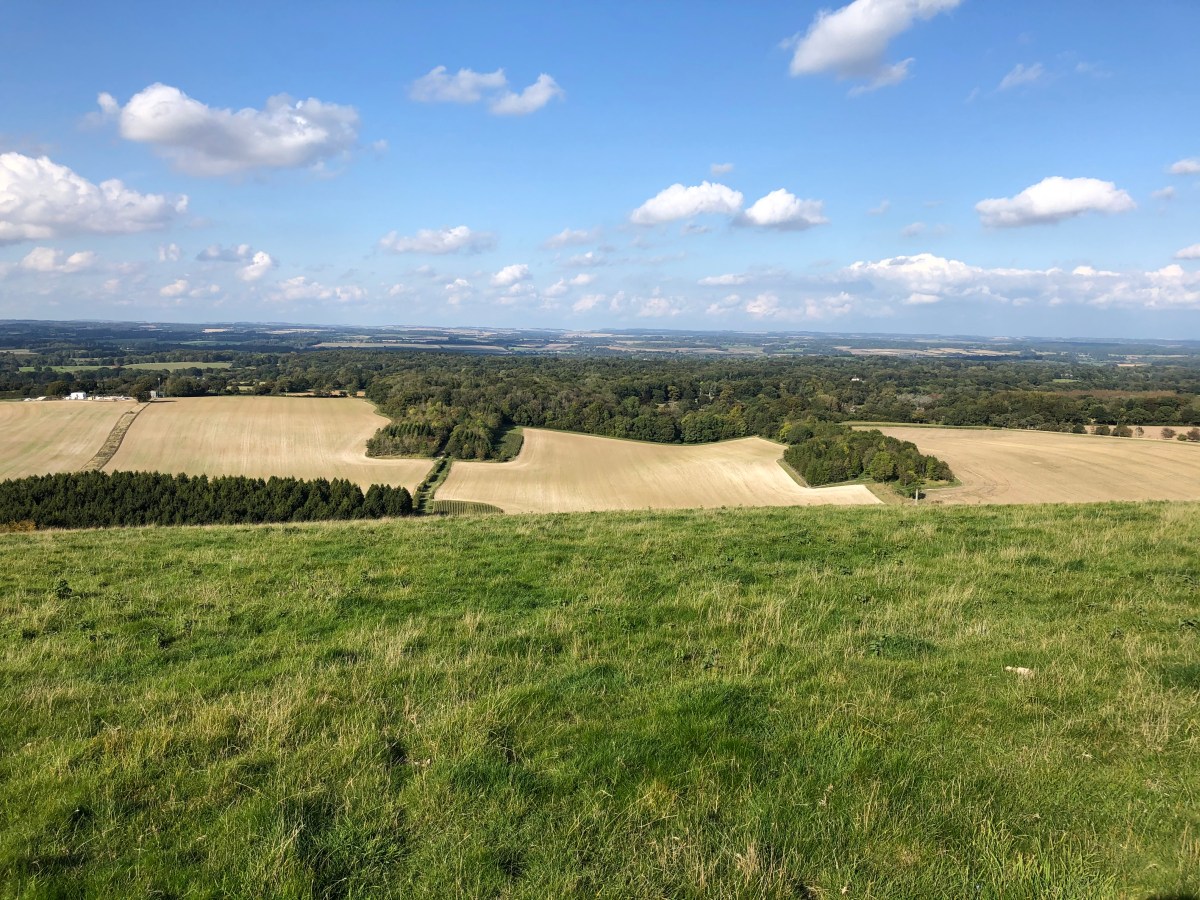
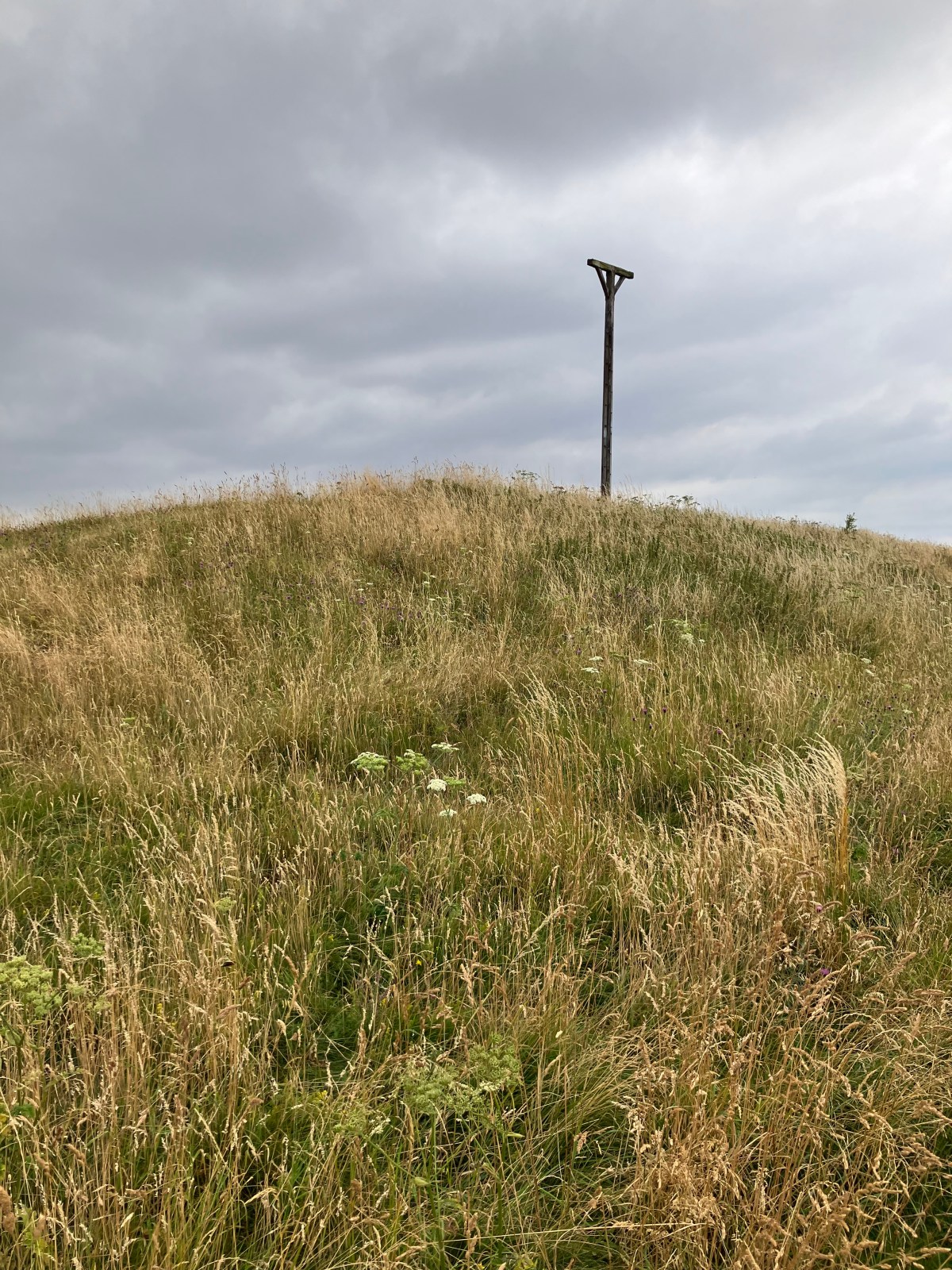
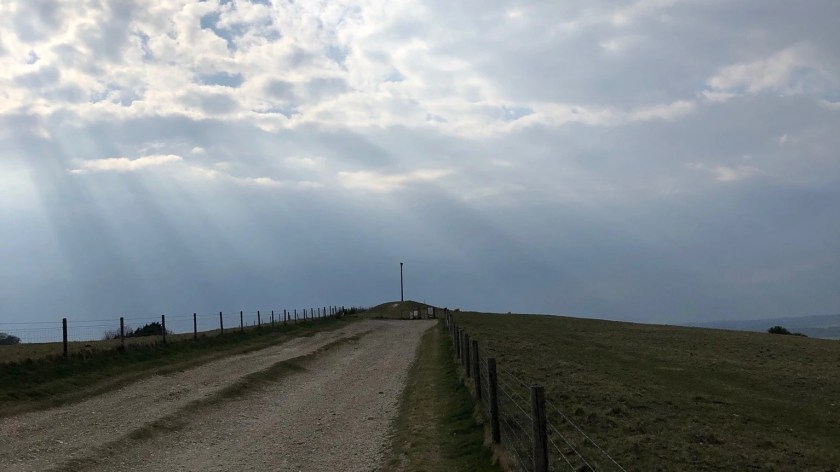
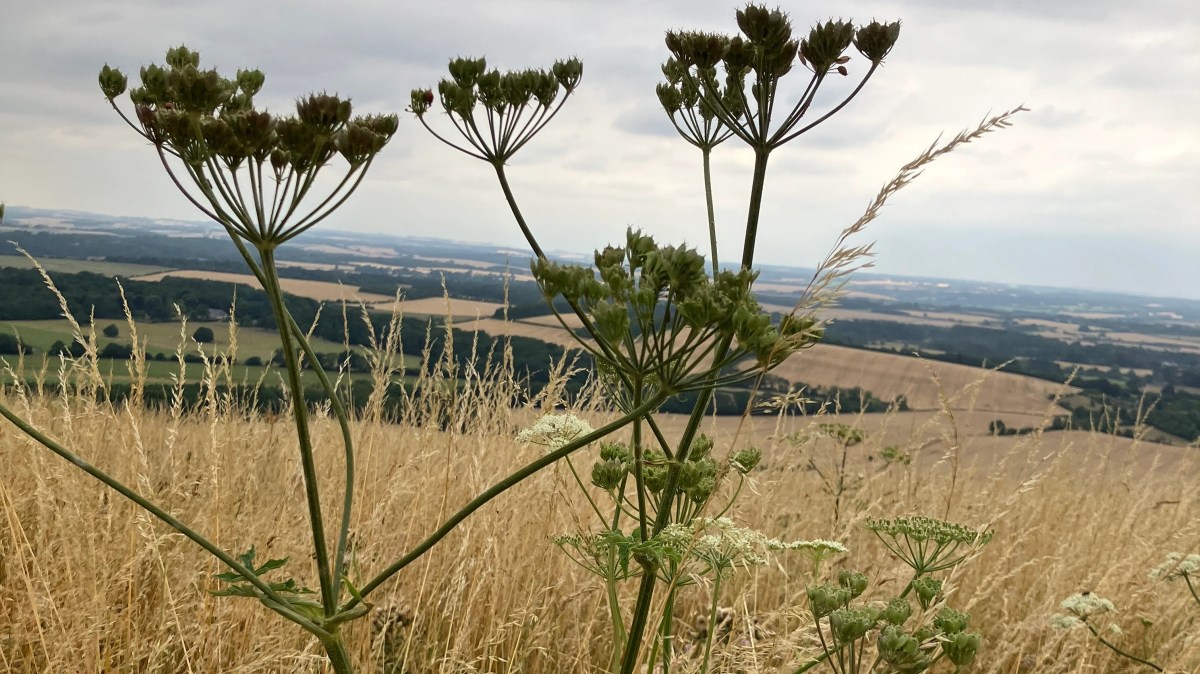
At present I am writing this as I look out at my garden on a particularly hot day. I am in Berkshire, or, if you prefer, Royal Berkshire. Less than three miles from my garden fence is Hampshire and I can look out of my bedroom window at Wiltshire. If I were to stand on my roof, I would see, three miles to the south, Walbury Hill, the highest point on chalk in England.

This wider area is often described as Central Southen England, although I like to think that, in our corner of West Berkshire, we look much more towards the west than towards Reading and the south east.

Berksshire and surrounding counties before 1974

My local authority – the one responsible for emptying our bins, amongst other things – is West Berkshire, based in Newbury. Before 1998, when West Berkshire became a unitary authority, our local authority was Berkshire, based in Reading. The Berkshire, that is, which was considerably smaller than it had been before April 1974, when the Vale of the White Horse in the north of the old shire county was transferred to Oxfordshire, and Berkshire gained Slough, previously in Buckinghamshire.

West Berkshire from 1974
Image:Nilfanion under Commons Licence, accessed from Wikimedia

Some people, with both a sense of history and also an ironic sense of humour, like to call the Vale, “occupied North Berkshire” – a nod to the feeling that Berkshire’s border with Oxfordshire should be along the Thames as it had been for hundreds of years.

The Upper Thames: The Berkshire/Oxfordshire border? Or perhaps the frontier between Wessex & Mercia?

However, very soon our local authority will be changing yet again. It may, although at the time of writing, this has not yet been confirmed, be known as Ridgeway, named for the prehistoric track that runs east to west across the Berkshire Downs. The Berkshire Downs, that is to say, the downs currently partly in Oxfordshire after Vale of White Horse – formerly in north Berkshire – was transferred to Oxfordshire following the local government reorganisation in 1974.

The Ridgeway on the OS map

So, when – and if – we become “Ridgeway”, our devolved local authority will once more include the Vale, although people living there – for example in Uffington  – will still be in Oxfordshire as far as their postal address is concerned. Furthermore, the Thames will once more become the border between our local authority and whatever the devolved authorites to the north are finally called.

Confusing? Definitely. But this is definitely not new.

To consider the long view – the very long view – we need to travel back in time over two thousand five hundred years to the Iron Age. The hill fort on Walbury Hill – which I mentioned in my opening paragraph -is home to people known to the Romans as the Atrebates. We will never know how they identified themselves because the Atrebates did not have a written culture but valued committing ideas and stories to memory instead.

If a man or woman from that hill fort were to stand on the highest point of Walbury Hill and look across the Kennet Valley, all the territory below would, perhaps reassuringly, belong to their tribe. In the far distance to the north west, was the territory of the Dobunni, and to the distant south, the Belgae. Of course there was no signage back then; no, “You are entering the territory of the Atrebates” although the locals may well have known that a particular river or ditch marked the boundary between Us and Them. Indeed, the very existance of a hill fort on a prominent ridge would have of itself made a statement visible for miles around.

Emil Reich
Map by Emil Reich. Under Commons Licence accessed from Wikimedia

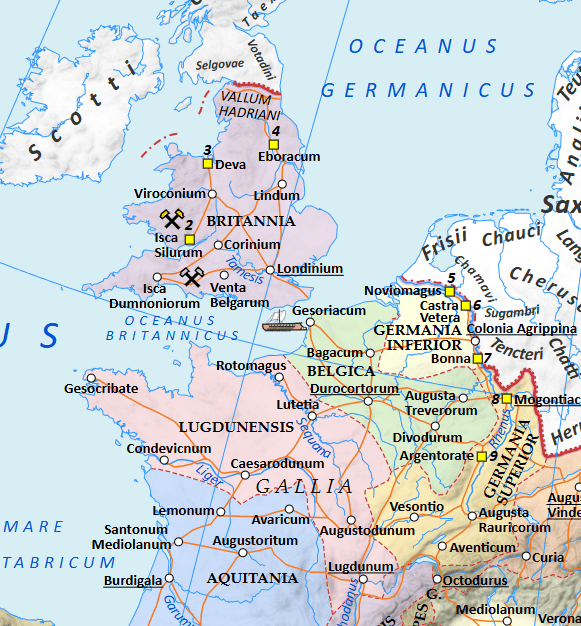
Our area at the time of the Romans. Spinae may be modern day Speen and Cunetio is near modern day Marlborough

The arrival of the Romans in Britain around 55 BC brought some obvious changes. For the people of the Atrebates, their tribal centre at Calleva, ( modern day Silchester ) became an important Roman town. In the valley below Walbury Hill, the construction of the road to Aqua Sulis ( the Roman name for Bath ) would have seen an increase in traffic. Villas appeared in the landscape, as at Kintbury. Trade with the newcomers meant an increased variety of  foods and other goods.

We do not know for sure if anyone was still living in the hill fort on Walbury Hill when the Romans arrived. We do not know, for sure, if any Iron Age man or woman, standing on the highest point on chalk in southern Britain, would have felt threatened by the increasing presence of the Romans in the valley below. We do know that it has to be likely that many Iron Age Celts continued to live pretty much as they had done before Caesar landed in Kent and continued to do so long after.

Roman province of Britannia. (Map of the Historical Atlas of Gustav Droysen, 1886) Under Commons Licence accessed from Wikimedia

It may well be that, being impressed by the site of Roman soldiers marching through the valley below, young Iron Age Britons were persuaded to join up. As Roman soldiers and with the promise of Roman citizenship after a long period in military service, they would have identified as Roman. Perhaps they would have served in the north of the country or even abroad and maybe they began to view the world below and beyond Walbury Hill as part of something greater – as part of the Roman Empire. We will never know for sure, but, human nature being as it is, this has to be a possibility.

Part of North West Roman Empire

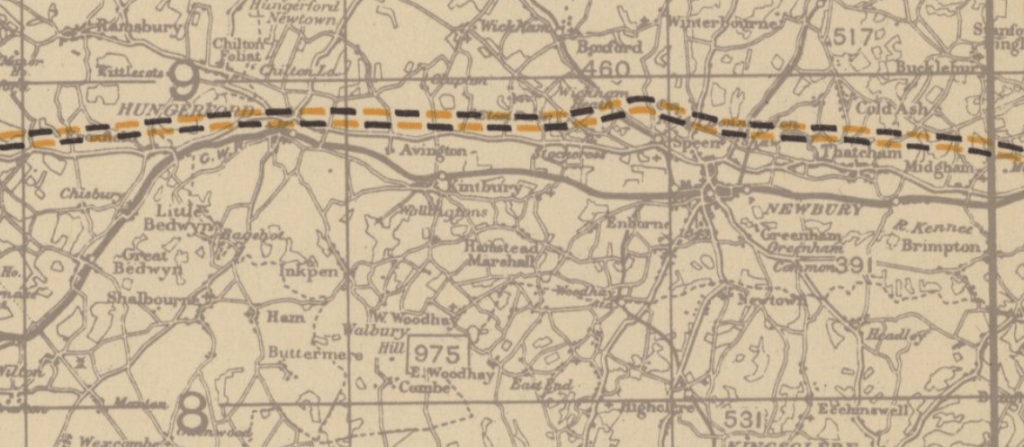
Fast forward some four or five hundred years. On a clear day it might have been possible to spot some activity in the valley below Walbury  just to the west of what is now Inkpen.

Director General of the Ordnance Survey, UK. Under Commons Licence accessed from Wikimedia

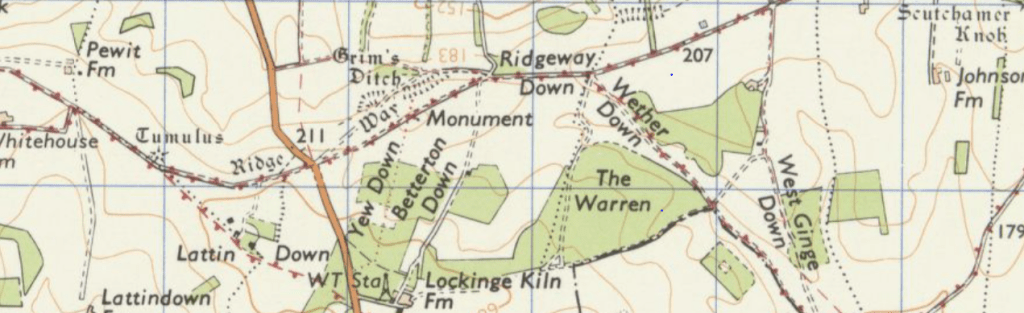
To the left – or west – of the map above, “Wodnes Dic” is the earth work we know today as the Wansdyke. The crossed swords symbols at Ellandun, Beranburgh and Bedwyn indicate that this area sawconflictds during this period, known as the “Dark Ages”.

Part of OS map showing Inkpen and the eastern end of the Wansdyke

If you look carefully at modern editions of the OS map for this area, and you will see a track running north to south and just to the east of Lower Spray Farm, Inkpen, at grid reference SU 35170 63746. This is Old Dyke Lane, marked on the map as an earthwork and as a scheduled ancient monument.

Despite the name “dyke”, Old Dyke Lane has nothing to do with drainage, neither is it a scheduled ancient monument just because it is a lane. On some maps, Old Dyke Lane also has the word, “Wansdyke” printed in Old English script, which gives a clue to its historic importance.

The Inkpen section of the Wansdyke is in fact the very eastern end of “Woden’s Dic” – defensive ditch and bank running all the way from Portishead near Bristol, right across Wiltshire and concluding just over the border in what is now Berkshire. In places the bank is at least 4 meters high with the ditch being 2.5 meters deep although when first constructed it is likely to have been both higher and deeper. As the ditch is on the north side of the bank, it is likely that the Wansdyke was built by those living to the south of it for defence against those living to the north.

When first constructed, the bank may have had wooded revetments and a walkway; certainly the chalk of the freshly constructed bank would have been bright white, making a definite statement in the landscape and very likely visible from the hills above.

Constructing such a defensive work as this, at a time when there were only primitive excavation tools available, must have been a colossal feat, so who would have been responsible and whom were they defending themselves against?

There had been suggestions that the Wansdyke was constructed by the Romans but now this idea has been challenged. However, although Roman authority departed Britain around 410 C.E., that did not mean that every last Roman marched to Dover, waved goodbye and got on a boat heading to Italy. By the early fifth century, many who had originally arrived with the Roman army had formed relationships with the indigenous Britons whose culture and way of life had endured despite the occupation. So, by the fifth century, many people could be described as “Romano-British”.

There are, of course, very few written documents from this period of British history and what there are were written by clerics and the religious. Gildas was a monk writing in the 6th century CE and a very early chronicler of British history – although not necessarily a very accurate one.

Gildas believed the Wansdyke was constructed by one Ambrosius Aurelianus, a fifth century Romano-British military leader who fought against the Anglo Saxons as they advancing towards the south west from the north.

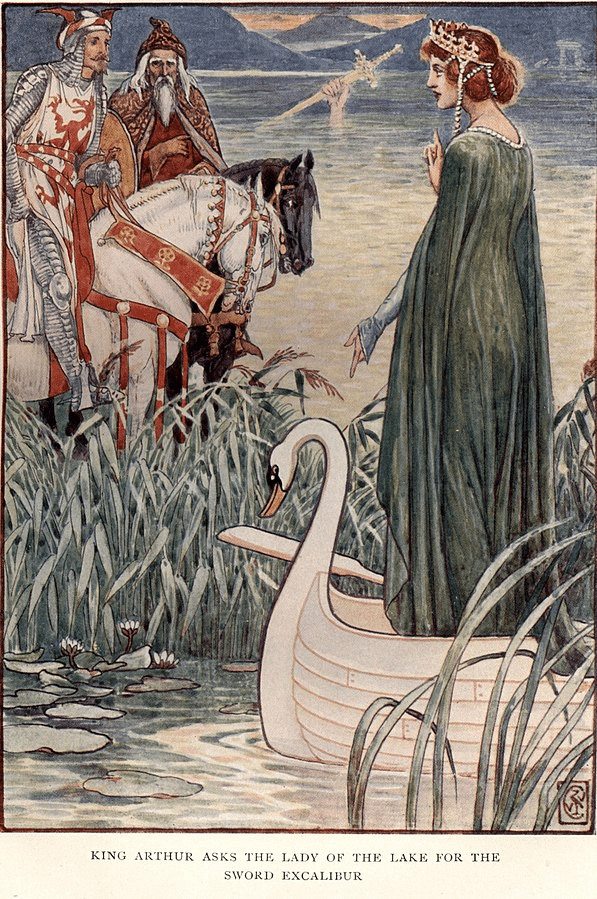
The Welsh cleric, Geoffrey of Monmouth was an eleventh century historian with a particular interest in the Arthurian legend. He elaborated on the story of Ambrosius Aurelianus, describing him as the uncle of King Arthur, no less. 

King Arthur Asks the Lady of the Lake for the Sword Excalibur, illustration by Walter Crane. Under Commons Licence, Accessed from Wikimedia

It is, of course, completely fanciful to think of the Wansdyke as having any connection – even remotely – with King Arthur. However, it may well have been constructed in the Dark Ages – the time in which the Arthurian legends are set – by Romano- British people as defence against aggression coming from the north.

Alternatively, some archaeologists believe that the Wansdyke could have been constructed in the 8th century by West Saxons as a defence against the Mercians, attacking from the area of the River Severn and Avon Valley.

We can – almost – be certain that the section of the Wansdyke in this area would have been constructed, at least in part, by local people who would have felt the need to defend themselves. Whether those people would have indentified as Romano-British or West Saxon, we shall popbably never know but we can deduce that they felt the need to construct a defensive border to define and defend their territory.

By the 6th century CE, the Anglo-Saxons – incomers from the European mainland – were the dominant authority in what is now England. In our part of the country, that is to say the south and south west, it was the West Saxons who held sway, and our area came to be known as Wessex. For most of this period, the River Thames was the border between Wessex and the Saxon kingdom of Mercia which stretched up into the Midlands.

Cross-border relationships were tense: leaders on each side wanted hegemony over the other Saxon kingdom, and there were frequent battles. A West Saxon person, standing on Walbury Hill and looking northwards, could have regarded the distant hills as enemy territory, to be defended. However a decisive engagement is believed to have come in 825 when Ecgberht of Wessex defeated Beornwulf of Mercia at the Battle of Ellendun, near what is now Wroughton in modern day Wiltshire.

Although relations between those identifying as West Saxons and the Mercians north of the Thames might have become more peaceful, there was to be another potential threat.

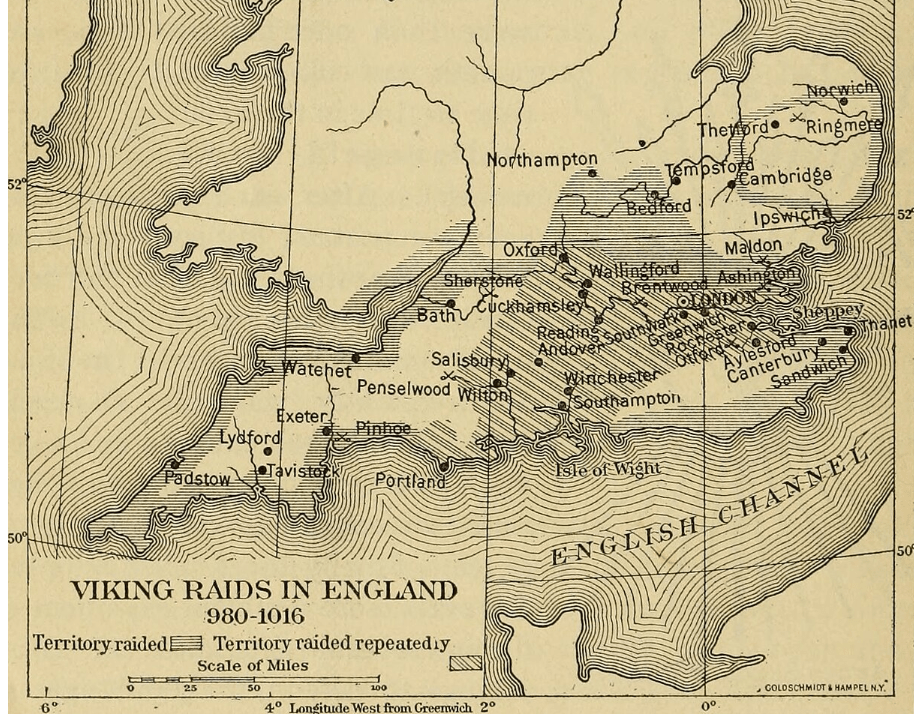
 Larson, Laurence Marcellus, 1868-1938 Under Commons Licence, accessed from Wikimedia

The Vikings had begun to invade and attack towns and villages on the north east coast of what is now England in the late 8th century. The term, “Viking” means pirate or raider and is often used to describe any raiders from what is now regarded as Scandinavia. The raiders from Scandinavia who attacked Wessex in 871 are more accurately referred to as Danes and these are the invaders defeated by (almost) local man, King Alfred at the Battle of Ashdown in 871.

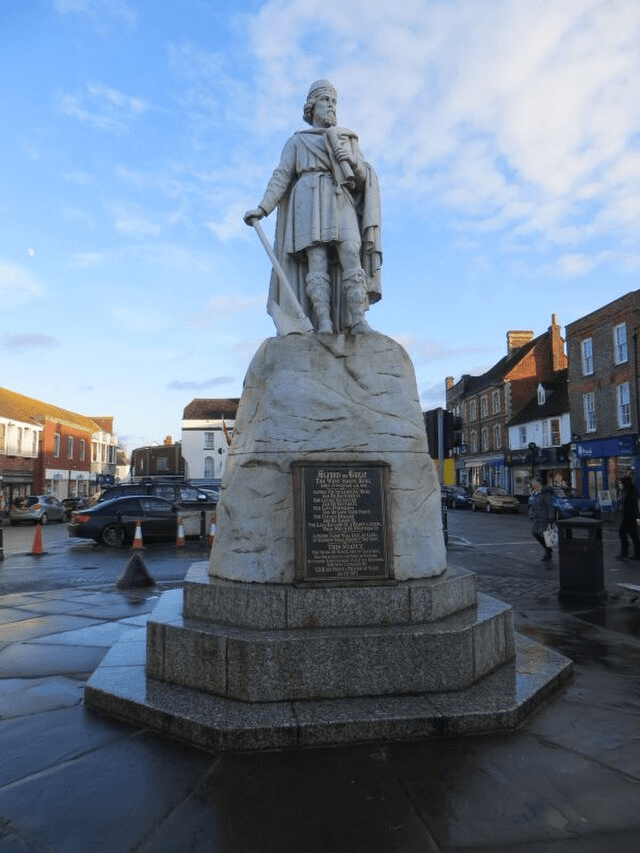
“King Alfred” Photo: Bill Nichols Under Common Licence accessed from Wikimedia

Alfred had been born in Wantage – or Wandesiege as he would have known it – sixteen miles to the north of Kintbury across the downs, in 849. As well as effectively seeing off the Danish threat, King Alfred did much to improve standards of literacy and education in his kingdom and also revised the legal system. He remains the only British monarch to be known as, “the Great.”

By the beginning of the tenth century, a man or woman standing on Walbury Hill would have been looking at Wessex to the north, to the south, to the east and to the west. Now the Kingdom of Wessex was one of the most powerful in what was being called Enga land.

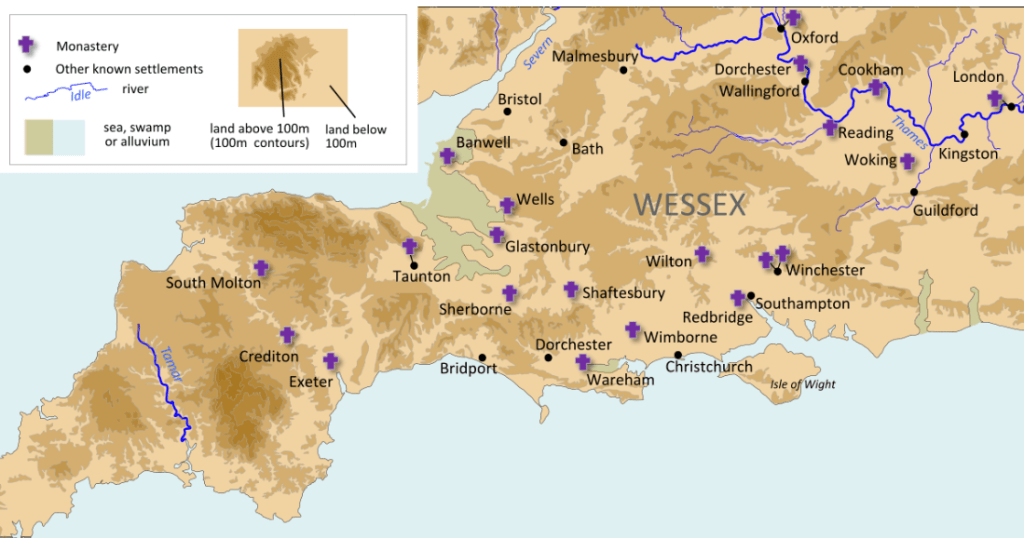
Anglo Saxon Wessex: Informatiion based on Hill, An Atlas of Anglo-Saxon England Under Common Licence accessed from Wikimedia

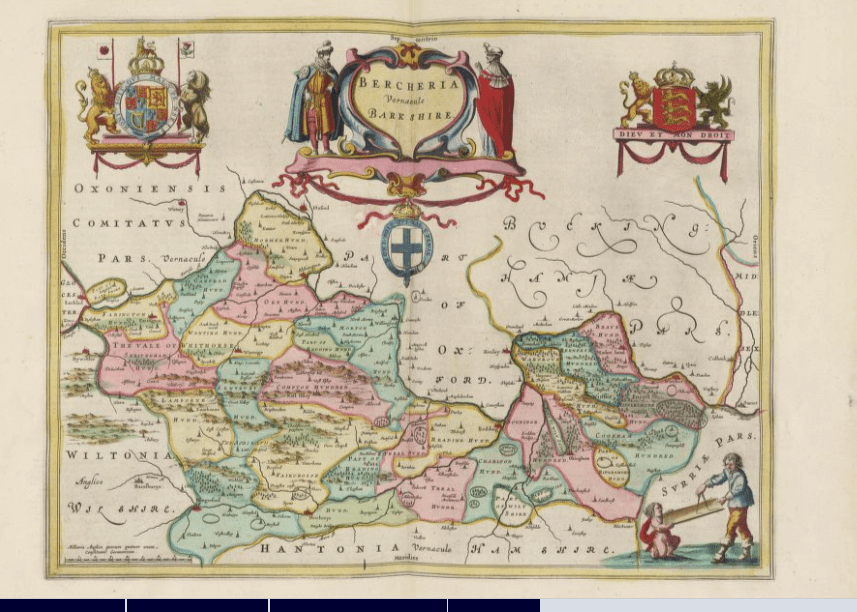
The Saxons were responsible for dividing up the country into administrative areas we know today as counties. Berkshire exists from sometime in the 9th century.

Berkshire in the 17th century. National Library of Scotland

By the Norman conquest, I think it is safe to say Berkshire was a county of size and shape we could identify at least as looking something like the pre 1974 county. However, the final details were not set in stone.

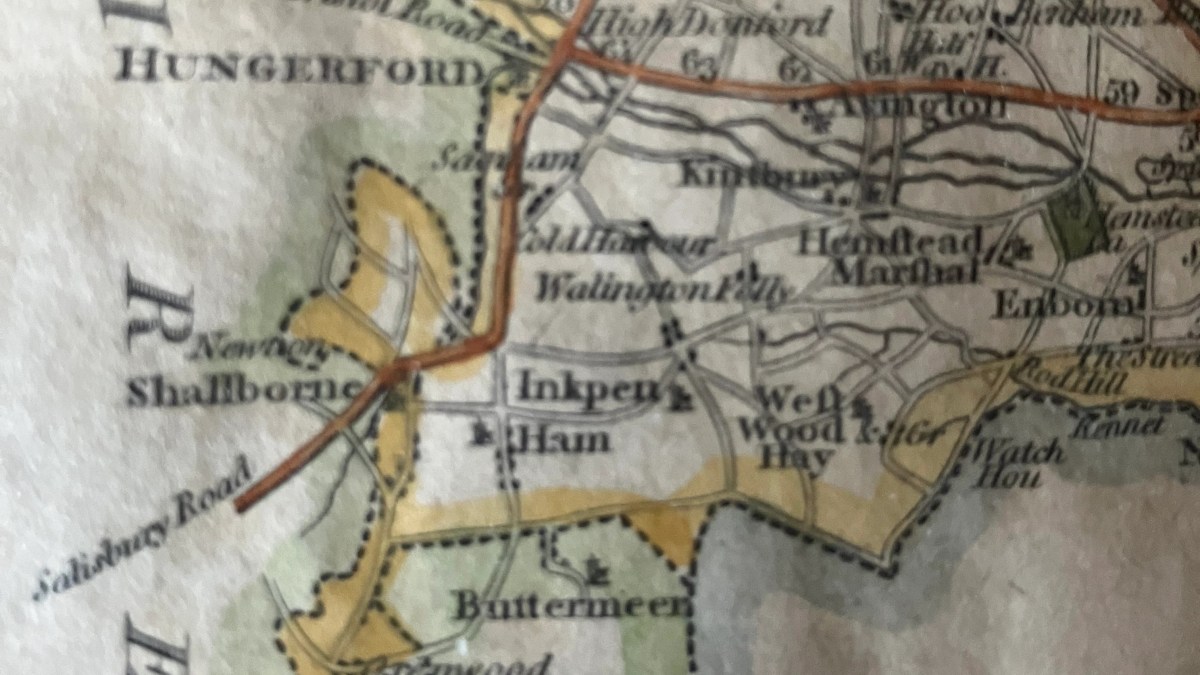
Detail from map of Berkshire, 1830, by Sidney Hall. Note Shalbourn & Oxenwood shown as being in Berkshire (National Library of Scotland)

The 1894 Local Government Act resulted in some smaller towns and villages moving from one authority to another. (See my earlier post, “Where in the world is Combe?”)

Until 1894, the border between Berkshire and Hampshire ran across Walbury Hill. Combe Gibbet was just inside Hampshire as was the village of Combe. The intention of the Local Government act was to enable the public – by which was meant certain men over 21 – to vote for local and district councillors. Districts were defined by a consideration of certain factors which included not only population but proximity to magistrates courts, banks and poor law unions ( or workhouses.) And so it was decided that for Combe, Hungerford in Berkshire was nearer and more convenient than Kingsclere in Hampshire. The boundary was redrawn therefore, so that Combe and Walbury Hill, along with Combe Gibbet, should be in Berkshire.

But, as far as I am aware, none of these changes were accompanied by violence. In 1894 the good burghers of Charnham Street, Hungerford did not have to defend themselves against Berkshire taking it by force from Wiltshire. And no one in Combe sharpened their pike staffs and marched up Walbury Hill to repel similar forces from Inkpen and Kintbury.

Although the redrawn border between Hampshire and Berkshire was not done for defensive purposes, certain measures taken in 1940 definitely were.

Part of OS map, 1945 showing defences of Britain

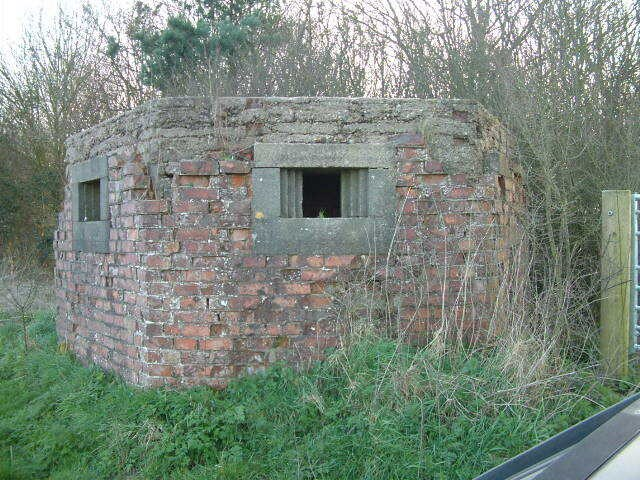
After the defeat at Dunkirk in 1940, Britain faced the severe threat of invasion. Plans were made to delay the German forces should they actually invade, to which end a series of defensive constructions were eventually built which included concrete “pill boxes” at locations along the Kennet & Avon – known as “Stop Line Blue” – and also the Thames. They would be manned by Local Defence Volunteers – men unable for whatever reason to join the regular forces but who could contribute to defence.

Thankfully, there was never an invasion during World War II and so the pill boxes were never used to defend a border. But it is a chilling thought that, if an invasion had been succesful, the Kennet & Avon canal, or even the Thames, could have become the border between a free England and the occupied sector.

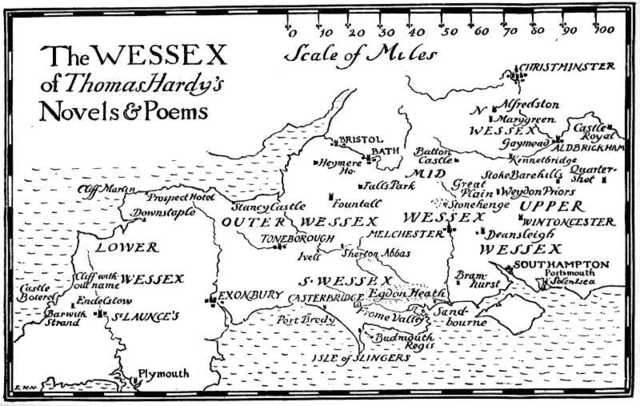
Interestingly, the name Wessex has endured even though Alfred’s Kingdom has long gone. It is as if many of us still take a kind of atavistic pride in living in what was once a very powerful part of England – and perhaps also a very beautiful one. I believe the novelist Thomas Hardy was in part responsible for the resurgence of Wessex as an idea, if not strictly a geographic location, when he used it as locations in his novels.

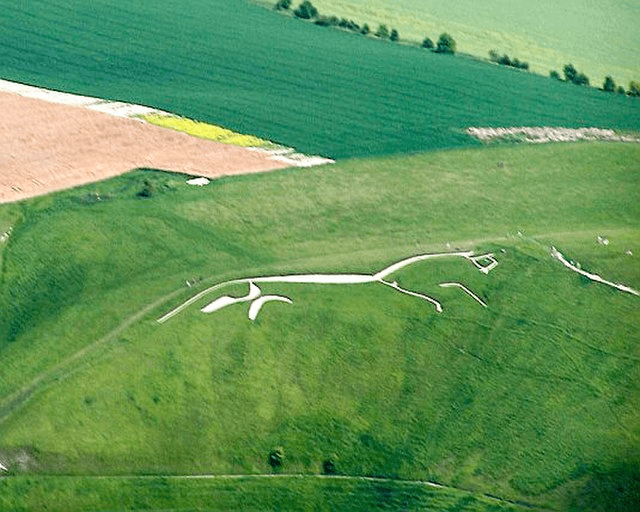
Speaking for myself, I quite like the name “Ridgeway” and I hope that is what our authority will be called. Alternatively, I rather like “North Wessex” as Thomas Hardy called this area in his novels. But whether we are Wessex or Ridgeway, West Berkshire or Royal Berkshire, Walbury Hill – our highest point in chalk in England – will still be there, and the White Horse will still be galloping over the downs above the vale

White Horse from the air: Dan Huby Under Commons Licence .accessed from Wikimedia

(C). Theresa A. Lock 2025

Sources:

http://www.wansdyke21.org.uk/faqs.htm https://howardwilliamsblog.wordpress.com/2022/10/24/exploring-east-wansdyke

Charles Wright & the White Horse of Inkpen

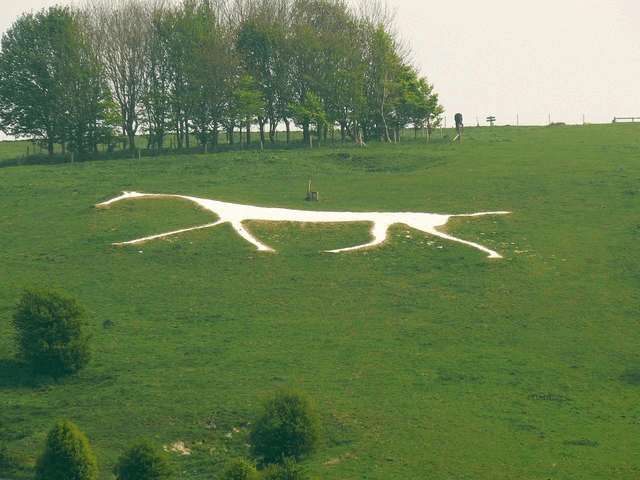
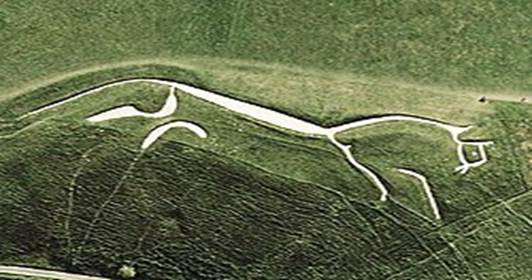
There are many hill figures cut into the chalk downland of southern Britain. The oldest and probably the most famous is the Uffington White Horse in Oxfordshire (formerly in Berkshire before 1974) cut into the scarp slope of the North Wessex Downs overlooking the Upper Thames Valley, which is over 3,000 years old.

The Uffington white horse

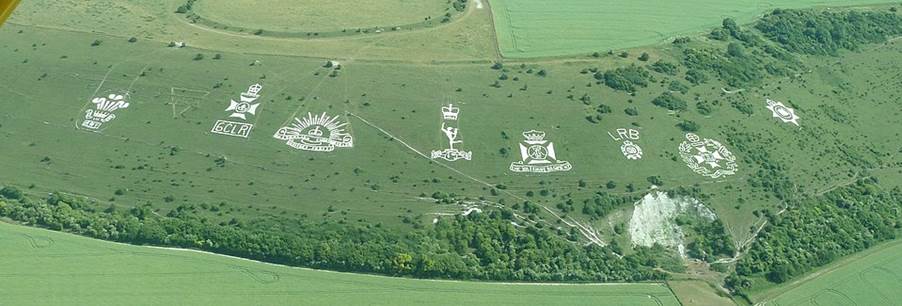
By contrast, the Fovant Badges were originally cut in the years after the First World War. These depictions of  military badges were cut to honour the hundreds of soldiers who had been training near the village of Fovant in south west Wiltshire.

Fovant badges Marchibald.fly via Creative Commons

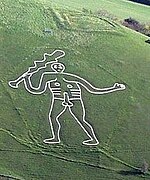
Dorset boasts two hill figures. The horse and rider on Osmington Down near Weymouth was created in 1808 in honour of George III, a frequent visitor to the town. However, no one really knows why the Cerne Abbas giant  – a figure of more likely humorous or satirical intent – was created above the village in Early Medieval times.

Humerous or satirical intent?
Pete Harlow via Creative Commons

However, the majority of white horses can be found across Wiltshire. The Westbury white horse is believed to have been made sometime in the late seventeenth century which would make it the oldest figure in the county. Next comes the white horse above Cherhill, which is believed to date from 1780. Pewsey’s  horse was cut in 1785 and then in 1808, pupils at a boys’ school in Marlborough constructed the town’s white horse.

The Cherhill white horse
Brian Robert Marshall via Creative Commons

At Broad Hinton, it is believed that the parish clerk, Henry Eatwell, may have been responsible for the Hackpen Hill white horse, which was constructed in 1838 to commemorate Queen Victoria’s coronation. 

Broad Hinton white horse
Brian Robert Marshall via Creative Commons

The Devizes white horse first appeared in 1845. Then, rather later than the rest, Broad Town in 1885.  

But how many people know that, sometime in the early 1870s, Inkpen was added to this list?

The Ordnance Survey map, Berkshire, Sheet XLI, surveyed in 1873 and published in 1877, does  indeed show another white horse, situated on the north facing slope of Inkpen Hill and just over the county boundary in Wiltshire.

So, who was responsible for Inkpen’s white horse and what happened that we can no longer see it?

The Inkpen ( or Ham ) white horse was constructed on land owned as part of the Ham Spray estate, just to the east of the small village of Ham in Wiltshire and to the west of Inkpen, Berkshire. In 1869 it was bought by the then thirty year old Charles Wright. In the 1871 census, Wright is described as a farmer of 370 acres employing 8 men and 4 boys, so is clearly quite successful.

Wright had been born in 1839 in the Leicestershire village of Market Bosworth. In 1841 he is living with his grandfather, a clergyman and in 1851 he is a boarder at a grammar school in Derby. By the age of 22 he is living with his father and his older brother Thomas who is in the military.  Charles himself is described as “gent”: a very precise distinction at this socially divided time.

Ten years later, Thomas Wright has a seat of his own: Tidmington House in Worcestershire, where he lives with his wife and eight staff. Younger brother Charles has relocated to the south west.

When Charles Wright bought Ham Spray House, it was a modern building still only around thirty years old. Perhaps Charles wanted to establish his own seat, distinct and away from the family in Leicestershire.

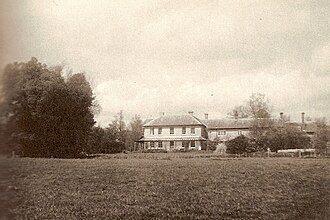
Ham Spray House
Charles Richard Sanders via Creative Commons

Some nineteenth century landowners become high profile figures within their towns or villages and their names feature frequently in the local press. This cannot be said of Charles Wright in the time he lived at Ham Spray House. The only reference I can find to him in local papers, aside from details of the sale of his property, was when he contributed generously, along with other local gentry, to a fund for the sick.

Finding himself in a county famed for its white horses cut into the chalk downland, Wright may have wanted the distinction of adding to that number. Perhaps he wanted to impress his neighbours, or just to add to the view from his house. So, sometime in the early 1870s he had his workers cut the outline of a horse into the downs. The new white horse must have been distinctive enough for the Ordnance Survey surveyors to notice it when working in the area in 1873 and include it on the latest edition of the O.S. map, published four years later..

However, the 1877 O.S. map is the only one to include the new, Inkpen white horse. Sadly, it did not endure partly because it had been constructed by stripping away the turf with out digging and packing out trenches with compacted chalk. Further, subsequent landowners did not bother to clear away the encroaching grass.

Charles Wright died on 12th December 1876 at Ham Spray House. He was only 37.  The estate, his house and all its contents were sold. His time at Ham Spray House, like that of his newly cut white horse on the downs above Inkpen, had been brief.


Ancestry

British newspaper Archive

(C) Theresa A. Lock, 2025

Our Neolithic neighbours

So who were our neolithic neighbours?

It is mind boggling to think of people living in this area over 6000 years ago. However, if you know where to look for it you can still see evidence of those people who lived around here between c4000 and 2500 years BC in the neolithic period.

The neolithic, or new stone age, was the period which saw a more settled way of life with the domestication of plants and animals and the beginning of farming rather than a hunter/gatherer life style.

During this period there were communal constructions of large scale earth works, banks and ditches. The famous henge monument at Avebury dates from this period.

But where is the evidence that neolithic people once lived in this area?

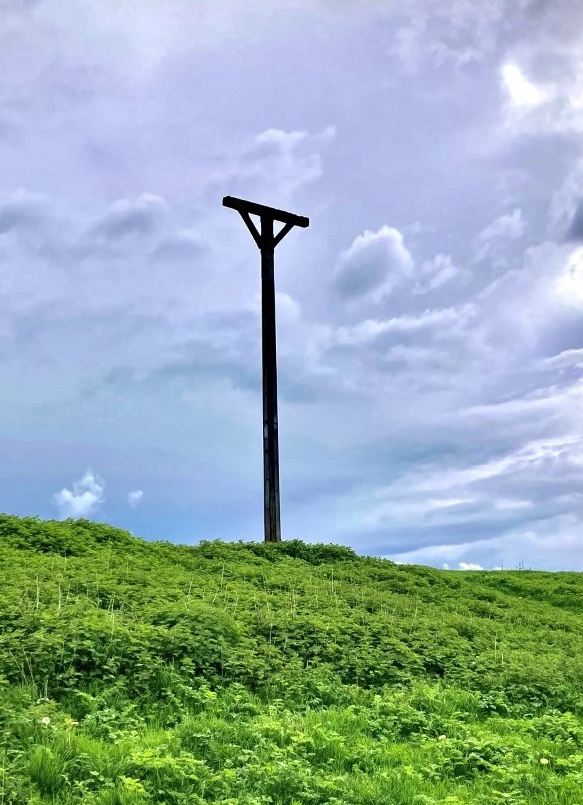
A favourite local destination for many of us in our area is Combe Gibbet above Gallows Down, close to the highest point on chalk in England and affording spectacular views particularly to the north across the Kennet valley. Standing right next to the gibbet we admire the view and identify local landmarks. It is an uplifting and spectacular spot.

But is there something that we miss? I know I did when I first walked up to the gibbet. As it stands on one of the highest points of the hill, it is easy to overlook the fact that the gibbet has been erected on a mound. The mound on which it stands is actually a neolithic long barrow.

There are around 500 neolithic long barrows in England of which three are in Berkshire and many more over the borders in Wiltshire and Dorset. Generally speaking most are in the Cotswolds or Wessex.

Our local barrow is oriented east to west and measures 65 meters by 20 meters and is surrounded by a ditch about 7 meters wide. Constructing it was no mean feat particularly when the only tools available were made from bone or flint and would have required a well-organised and dedicated work force.

But why was it built up here?

Long barrows were important communal burial sites during the neolithic. A chamber was usually constructed of wood or stone with an entrance at one end, then covered over with earth. Members  of the community were laid to rest in the tomb but, in a practice that seems strange to us, often only certain bones were placed within and it seems likely that the remains were, at times, taken out and replaced.

It is likely that the long barrow would have been an important ritual site for the local community and might have indicated ownership of a particular area by a particular group of people. A location commanding an impressive view seems to have been important; for example, Wayland’s Smithy Long Barrow near Uffington and West Kennet near Avebury are also sited on higher ground.

The long barrow above Gallows Down was likely to have been the focus of communal events. However it may well be that our neolithic neighbours would have travelled further afield to meet up with other family members or community groups; the henge and stones at Avebury could have been reached by following the river Kennet westwards, for example. We know that neolithic peoples often travelled hundreds of miles to join in the ceremonies at Stonehenge so the thirty or so from here across Salisbury Plain would have seemed any easy journey to people used to walking long distances

So, as we traipse up to the gibbet and admire the view, perhaps we should remember that beneath our feet is a construction that would have been important to our neolithic neighbours – something that would have been revered and respected, which had taken much time and effort to build. After all, we can not imagine a time when we would walk through Winchester Cathedral whilst ignoring its significance as a place of worship, or pass Windsor Castle without seeing it as something just a bit special.

Our local long barrow, up above Gallows Down, might not look particularly important to us now, but it is worth remembering that 6000 years ago it might have been the most significant thing in the landscape.

(C) Theresa Lock 2024

From a dig at Inkpen to the skies above Stonehenge:

O.G.S. Crawford – the man who put history on the O.S. Maps

I have always enjoyed looking at Ordnance Survey maps – to plan routes for days out or just afternoon walks, or simply to see the names of woods, rivers, hills or countless other features all carefully recorded. But for me one of the most fascinating features of O.S. maps are those places labelled in a gothic or Old English font which indicate a site of historic or archaeological significance. “Walbury”, “long barrow” ( on Gallows Down ) and “moat” ( at Balsden Farm ) are all good examples from the Kintbury area.

Although the Ordnance Survey started publishing maps over 200 years ago, originally for military purposes, it was not until the 1920s that historic and archaeological sites were first identified as they are now. And the person first responsible for including that information had an interesting connection with our area.

Osbert Guy Stanhope Crawford was born in 1886 in Bombay, India where his father was a judge. However, as his mother died soon after his birth, he was sent back to England to live in London with two of his aunts. While the young Osbert was still of school age, he moved with them to The Grove, East Woodhay, a few miles from Kintbury and just over the border in Hampshire. Later the Crawfords relocated to Tan House, Donnington, just outside Newbury.

Crawford was educated at Marlborough College in Wiltshire and it was there that his interest in archaeology grew. As a member of the College’s Natural History Society, Crawford visited various Wiltshire archaeological sites such as Stonehenge, West Kennet Long Barrow and Avebury.

From Marlborough, Crawford went up Oxford University where his interest in archaeology continued. In 1908, whilst still a student, he excavated a Bronze Age round barrow at Inkpen, not far from his aunts’ East Woodhay home, as well as other – possibly less successful – work excavating at Walbury Beacon.

It was around this time that Crawford became friends with archaeologist and anthropologist Harold Peake and his wife Charlotte, excavating with them at Botley Copse near Marlborough. Harold Peake is particularly remembered in this area as being curator of the Borough of Newbury Museum from 1867 to 1946 and the person responsible for building up an important collection for what was later to become the West Berkshire Museum.

The Peakes lived at Westbrook House, Boxford, just to the north of Kintbury. Their interests included not only archaeology and anthropology but music, folklore and drama and they were very supported of younger people such as Crawford. It is believed that, under Peake’s influence, Crawford began to question the kind of extreme religious beliefs held by his aunts, in favour of a more science-based world view.

After graduating from Oxford, Crawford worked as an archaeologist in both Britain and Sudan. During the First World War he served as a photographer with the Royal Flying Corp but spent time in a German P.O.W. camp, having been shot down.

In the 1920s, Crawford worked for the Ordnance Survey in Southampton, as its first Archaeological Officer. It was around this time that historians and archaeologists began to use aerial photography in identifying and interpreting historic sites which could no longer be seen clearly above ground. The remains of structures and earth works which have long disappeared can be identified through crop marks and shadows which can then be studied using aerial photographs. Crawford’s time with the Royal Flying Corp would have given him first hand experience of how useful such photographs can be.

Crawford used the study of aerial photographs as well as information gathered from local antiquarian and historical societies to identify the locations of many ancient monuments which would not have been visible to cartographers working in the field. He also conducted his own surveys, often travelling across the countryside on his bicycle. Crawford then annotated each O.S. map by hand, adding the names and locations we are now familiar with but which today are identified on our maps in a gothic font.  

At this time, Alexander Keiller, heir to the family fortune made in  marmalade, was living at Avebury Manor. An amateur archaeologist, he had been involved in excavating the world-famous neolithic henge and other associated sites. In 1924 Crawford joined Keiller in an aerial survey of Wiltshire and Somerset as well as Berkshire, Hampshire and Dorset and in 1928 they published Wessex From The Air, a groundbreaking aerial photography survey of our area and the landscape of the wider Wessex.

Crawford assisted Keiller in the fund raising which enabled Stonehenge to be bought for the nation, and in 1927 he founded the influential archaeological journal, Antiquity.

Keiller worked for the O.S. until 1946 when he turned his attention to the preservation of those historic buildings in Southampton which had survived the devastation of the blitz during the Second World War.

Today, O.G.S. Crawford is recognised as an important figure in twentieth century archaeology. It is interesting to think that this important career began in part with an excavation at Inkpen and a friendship in Boxford.

Crawford died in 1957.

Sources:

https://www.ordnancesurvey.co.uk/about/history

https://historicengland.org.uk/images-books/archive/collections/aerial-photos/

https://hantsfieldclub.org.uk/ihr100/profiles-c/crawford.html

https://www.sarsen.org/2018/04/capturing-material-invisible-ogs.html

© Theresa Lock 2024

The League of Nations Union in Kintbury

The League of Nations Union was formed in Britain in October 1918 to promote justice and peace between nations following the end of the First World War, with its aims and ideals based upon those of the League of Nations. Enjoying cross-party support politically, by the mid 1920s it had over a quarter of a million members with branches established in many towns and villages.

It seems likely that a branch was first established in Kintbury in 1930 although there are no records of meetings being held until 1933.

Although the LNU, as an organisation, is now long gone and pretty much forgotten, the minutes reveal a time of awareness of international affairs and a concern for what was happening in the world beyond Kintbury. Meetings in local village halls were addressed by influential and well-informed speakers, reflecting, in its early years, a sense of optimism throughout the LNU. What had happened between 1914 and 1918 must not be allowed to happen again. However, as the international situation deteriorated and the League of Nations seemed increasingly powerless, disillusionment set in, as these minutes reflect.

1933

According to the minutes of the March AGM, held in the Methodist schoolroom, the previous year had seen eight committee meetings and two public meetings, one in Inkpen and one in Kintbury. Membership numbered 86 and included the President, Mr H.D.Watson and Rev’d C.R.G. Hughes who was Hon.Sec. and Hon Treasurer. The committee comprised Messers Lawrence, Rolfe, Pinnock, Browne, Bridgeman and Giles. A very male dominated committee. 

The March meeting, a public one, was very well attended. Four members of the Reading Youth Group addressed the meeting on their visit to Geneva and the Kintbury Choral Society sang a chorus. A lively discussion followed.

Committee meetings were held at the Vicarage and between May, and August 1933, five open air meetings had taken place on the Kintbury street corner. In October 1933, Mr. Hughes offered his resignation because of his impending departure from the village.

Education was important to the LNU and across the country schools were encouraged to take up corporate membership as were cooperatives and also churches.

 In November, 1933, a Mr. Archer came to Kintbury from the Federal Council to address members and local schoolchildren. He apparently gave ‘every satisfaction’ and proved himself capable of keeping the children to whom he lectured at a ‘high pitch of interest’.

1934

A year later in November, 1934, committee meetings were resumed in the vicarage as the new vicar, Rev’d Guthrie Alison, became a member of the League. It was agreed during this year to canvass the village for the Peace Ballot, which was being organized across the country. Nationally, over 11 million people voted in favour of the aims of the LNU. In Kintbury, 540 voting papers were collected, but the time taken to organise the ballot locally prevented canvassing for new members and there was a slight drop in membership. However, Mr. Alison recruited at least one new member in November, Mrs. Goodheart of Inkpen.

1935

On a wet summer evening of 19th July, 1935, a very enjoyable and successful meeting and whist drive took place at ‘Windrush’, home of Mr. H. D. Watson. Sixty members attended and partook of pleasant refreshments as well as listening to an attractive and illuminating speech by Mr. Alec Wilson on the work of the League.

LNU Head Quarters suggested an effort be made to increase membership by arranging a campaign. However, the Kintbury contingent felt that this had better be left until after the General Election in November and until after the Italo-Abyssinian war had concluded. Mussolini, the Italian leader, had invaded Ethiopia (Abyssinia) with the intention of expanding Italian influence across East Africa. Such aggression ran counter to the pacifist-mindset of many in the LNU.

In October, 1935, Mr. Alison read aloud a pamphlet on ‘Five Minutes of Your Time’ by A. A. Milne, the popular author who was, at that time, a pacifist. This was sent by H.Q. and deemed very suitable for propaganda. (Used here and at that time, the word did not imply political or ideological bias as it has since come to mean. It implied more of a dissemination of information.)

 All branches were asked to find the views of their parliamentary candidates on the vital international issues of the moment. This, Mr. Watson had done for the Kintbury Branch and he drew attention to the answer of local M.P. General Clifton Browne in the Newbury Weekly News.

In November, Mr. Alison, now President, talked of his recent visit to Geneva and his inspection of the League of Nations’ new building. There was a suggestion of acting a play for propaganda purposes but, as the last play had not been a success it was decided to postpone the suggestion. Arrangements were made however, for a public meeting to be held in December, in the Coronation Hall, Vice Admiral S. R. Drury Lowe to speak.  The vicar was successful in gaining the consent of Barton Court’s Lord Burnham to take the chair.The secretary was asked to communicate with the Heads of the Mothers’ Union, Women’s Institute and Christchurch School regarding this meeting and the vicar was to give notice in church and see the Head of St. Mary’s School. It seems every effort was being made to ensure this meeting was well attended.

1936

Another public meeting was held in Inkpen on Wednesday, 29th January, 1936. An omnibus ran from Kintbury to Inkpen free of charge and a good many members availed themselves of this facility. Fifty or more people were present to hear the most fluent explanatory and interesting speech by Mr. Anthony Mouravieff. Mouravieff, a Parliamentary Private Secretary to an MP, and a prominent member of the League, was a popular speaker on international affairs and addressed many branch meetings across the country at this time. Inkpen must have been lucky to secure his appointment to address their meeting. Discussion followed with several short speeches made with animation and new members enrolled.

At the February AGM, Mr. Pinnock mentioned that Mr. Liggins secretary of the Thatcham Branch would be willing to bring a cinematograph with a League of Nations film to Kintbury!

Meanwhile, the crisis surrounding Abyssinia had not been resolved. The League of Nations had banned weapons sales although these actions were generally ignored by Mussolini. The British government wanted to keep Mussolini on side as an ally against Hitler and were reluctant to enforce sanctions. Together with France, Britain began secret negotiations with Italy without involving the Ethiopian leader, Heili Selassie.

Britain had adopted a position of neutrality and non-intervention with regards to the Spanish Civil War which began in 1936. This way, it was reasoned, made it less likely that the conflict would escalate. However, many young idealistic British men and women travelled to Spain to fight against the rise of fascism. Despite many countries having signed the League of Nations’ Non Intervention agreement, this was ignored by many; Italy and Germany provided military support to Spain’s military general Franco who was aiming to establish a fascist dictatorship. For many, events in Spain served to illustrate how ineffectual the League of Nations actually was at preventing or resolving conflict.    

In Kintbury, a resolution was proposed and sent to H.Q. that:

the Branch expresses its concern about the present position of the League in relation to the action taken by this country alone in the Mediterranean without a mandate from the League and would be interested to know if H.Q. of the League considers that such concern is justified’.

In June the League was in sad financial straights. Indeed. Mr.Jowett, organising secretary for Bucks, Berks and Oxon, was told that his salary must cease owing to the need for economy. However, he agreed to carry on for a while without salary.  Mrs. Goodheart meanwhile, resigned from the committee and the Union. While still believing in the ideal, she could not approve of the Union or belong to it. The worsening political situation must have made many people reconsider where they stood on issues such as pacifism and appeasement.

Another open air meeting was proposed for late July. Unfortunately, July, 1936 was extremely wet and as rainy day succeeded rainy day, an open air meeting became impossible and instead an open meeting was held in the Methodist schoolroom.

Mrs. Corbett-Fisher made a strong and extremely interesting speech and the popular amateur dramatic group, the Reading Pax Players performed “Gas Masque”. This was fresh, well-acted and caused much amusement – it was sadly disappointing that so few people came.

In October it was announced that nationally, 3,000 more members had joined than at the same time last year.  The Chairman, who had attended a meeting in Scarborough, went on to report that

 ‘The League is always most useful in some matters if apparently useless to stop a war. The constitution was not elastic, not workable with regard to some affairs – but might be altered.’ 

 When the League’s debts became known people hastened to its support and £10,000 raised to pay the debt. There was still enthusiasm and resignations were not taking place in large numbers.  Discussion took place on the League’s actions and inactions. Mr. Padel wished to form a protest from Kintbury with regard to the League’s inaction in relation to Abyssinian and the Spanish troubles. The League was not doing its duty, he believed. Mr. Giles opposed intervention in Spain but joined in warm criticism!

The vicar resigned as a committee member in November. Whist Drives were suggested as a fund raiser but it was thought that these were overdone at the moment. There followed a discussion concerning the International Peace Campaign – a movement started in 1935 as a response to Italy’s invasion of Abyssinia. Mr. Giles hoped that the League of Nations would try to prevent war, not wait and only try to stop it when it had already begun.

On December, 7th, 1936, there was a public meeting in the Methodist Schoolroom.  The Chair was taken by Lord Faringdon and the Speaker was once again Vice Admiral S. R. Drury-Lowe, who had achieved splendid work for The League.  The Admiral spoke of the difficulties and weakness of the League at times but stressed its great possibilities and unique position.  He spoke of its inability to stop the last war of aggression, but its immense good in the cause of workers in all parts of the world.  It did much good for children and had opposed the opium and so-called white slave traffic, doing work no other organization could do. There was no other organisation to do the work.  It must be helped and strengthened to allow it to rise to greater power and influence.

It was an extremely cold evening with a searching wind, the attendance at the meeting was very poor.  The Vice Admiral had a whimsical story and a light touch to occasionally relieve his earnest speech, but no new members were made and no new faces seen.

1937

By 1937, the financial situation of the local branch seems to have been less than robust as at the March meeting Mr. Pinnock was asked to find out from the Methodist Trustees, Mr. Phillips and Mr. Mackrill, if the schoolroom could be hired for less than the usual five shillings.

The following month, at the A.G.M. the President, H. D. Watson Esq. gave the little meeting an informal, delightful talk as they sat around a fire. He spoke of his recent visit to Geneva where the League was housed in a magnificent building. However, he reported an atmosphere of depression as regards the peace work of the League particularly amongst the Italian delegates.

In the International Labour Section there was a keen and enthusiastic spirit, as if the good work done was heartening. He spoke of the wonderfully good work done in the ‘Save The Children Branch’ its great activity and hopefulness.  The League was doing magnificent work for the so-called white slave traffic, drug smuggling and slavery.

It was decided that all accounts must be audited as was the case in all other Kintbury Societies.

The Vicar consented to be Vice-President again. As H.Q. was in great need of money Kintbury forwarded ten shillings in November 1937.

1938

The public meeting on January, 17th, 1938, was a great success.  Miss. Chu Chan Koo (Miss. Wellington Koo), daughter of China’s representative at Geneva, made a moving speech on the history of China and its present sad state which was particularly well received.  This was followed by a short pageant play entitled ‘Friendships Chain’. The parts were taken by 23 Kintbury ladies and girls and watched by an audience of over 200 people. A collection for medical relief for Chinese sufferers raised £3-17s-0d.

It was announced that Mr. Lloyd resigned as President of the Berkshire Federal Council. He still adhered to the League of Nations but not to its instrument, the League of Nations Union.  Lord Neston of Agra agreed to take his place.

At the March meeting of 1938, the committee spoke with great regret of the death of Mr. Rolfe, ‘an important member of the committee’. The committee also lost two other members, Miss Joan Ewins resigned and Mr. Gordon Abraham moved to Surrey.

 Mr. Watson continued as President. He had just visited Geneva again and reported on the international situation which was not optimistic. In May, it was explained, Italy will require Abyssinia to be acknowledged as part of the Italian Empire.  All nations, with the possible exception of Russia, will have to do this. It would be necessary for Great Britain to recognise Italy’s conquest of Abyssinia in order to keep the peace and be on good terms with Mussolini. In return, Italy was apparently anxious to maintain good relations with Great Britain because of affairs in Austria.

The outlook in Geneva seemed gloomy and the League was anxious.  Great Britain still believed in the work of the League but acknowledged that reconstruction of it might be necessary. Although it might not be able to maintain international peace it still had important work to do regarding the sale of dangerous drugs and so-called white slave traffic, and, importantly, continuing to help all refugees and keep up the Save The Children Fund.

Mr. Watson was thanked for his talk and the vicar continued in a ‘happy little speech’, to hint that such an end as peace perhaps justifies the means i.e. the recognition of Abyssinia’s conquest. A lively general discussion followed.

In May, the vicar suggested that a meeting be held soon in Kintbury in which a speaker could explain the current situation in central Europe, particularly with regards to Czechoslovakia and the threat to peace. This was arranged to take place in the Coronation Hall at 7.30pm on Sunday, 19th June.

Mr. Anthony Moore gave an interesting address to an audience of fifty to sixty people. He explaining that the Czechoslovakians are not an upstart nation, but Bohemians, a small nation now since the 14-18 war.  Their country was a buffer state with a German minority population likely to cause trouble, he believed, in the near future. It was Hitler’s intention, he explained, to acquire all the smaller nations of Central Europe.  The Germans, he believed, had taken against the Jews because they were “international”.

  The League of Nations Union has passed a resolution to ask the British Government to support Czechoslovakia and present a bold front to Hitler.

Mr. Moore answered several pertinent questions from the audience, who keenly enjoyed his fluency and grasp of the subject.  A vote of thanks was warmly seconded by General Rennie, who said that he appreciated the speech but not the League of Nations Union.  The vote was carried with acclamation.

1939

Attendance at the May A.G.M., 1939, was very poor: President, Secretary, Treasurer, four committee members only. At the Public Meeting that followed, Mr. Alec Wilson, M.I.R.A., gave a short, optimistic speech: ‘After the Great War there were widespread results. The League of Nations was formed to help peace and goodwill among nations. After the great slump set in over the world, Germany was very low in money and work. Hitler, whose plans were for all Germans to be one huge family, rose as Dictator or Leader.  His book, ‘Mine Kampf’, shows his idea that the Germans are the only people fit to govern Central Europe’.

The lecturer traced events from 1914 up to date, showing how the German threat to Poland arose and that part of South Russia called the Ukraine.  Wilson was of the opinion that Britain’s alliance with Russia posed a problem as the British had a dislike for communism and also there was much danger in naval and military commitments in a vast distant territory. 

On 30th July, 1939 it was decided that ‘the time had come for the Kintbury and Inkpen Branch to acknowledge that no work was done in connection with the League of Nations’.

The Treasurer, Mr.Pinnock, had left the neighbourhood, the Secretary, Mrs. Norton, said she wished to resign because the League of Nations Union seemed quite dormant here and she had other work to do.  The President said that although other branches were closing many were active, especially in the north. He wished some remnants of the branch to be kept – in view of a revival, when their time came again, when peace was near.  The vicar agreed to keep the minute book and list the members until peace came and a working secretary was needed.

Ironically, peace was to be a long time coming as war broke out across Europe in September of that year. The League of Nations was officially disbanded in 1946 although its aims and intentions were enshrined in the United Nations, established by charter in 1945. Its work continues to this day.

(c) Penelope Fletcher, 2024
Our churches: Not what they seem?

The church’s restoration,

In eighteen eighty-three,

Has left for contemplation,

Not what there used to be.

John Betjeman

Many church guide books will proudly tell you that St Whoever’s is a fine example of, say, Norman architecture. It is easy to imagine, as you sit in your pew, listening to this week’s sermon, that the church you see around you is more or less the same building that, for example, knights would have known as they stopped off on their way to the crusades, carving on the Norman pillars the familiar crosses while their horses chewed on the church yard grass outside.

Although there are very few churches which exist today just as they were when the last mason knocked off work for the last time and the building was consecrated, it was the Victorians who were responsible for the greatest changes to our much-loved buildings. By the nineteenth century, many ancient buildings might well have required building work but in their enthusiasm for what they chose to call restoration, the Victorians swept away many significant features, and at times, entire buildings.

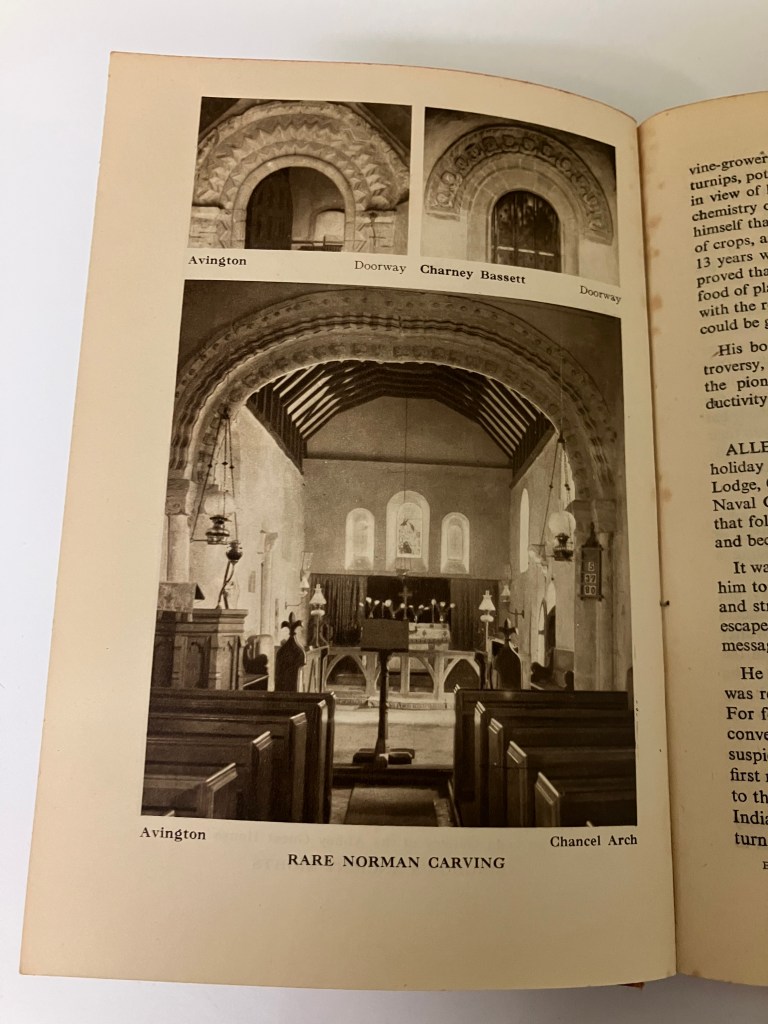
In the Berkshire volume of his series, The Buildings of England, the architecture historian Nikolaus Pevsner, describes St Mark & St Luke’s church at Avington as being, “A memorable little church … Entirely Norman …” so perhaps the crusade-bound knights of my imagination would have seen the very-same church that we see today. Except, that is, for the pulpit and pews, which are Victorian. Also the vestry. And the stained glass, of course.

So how did the other churches in our benefice fare during the nineteenth century?

St Mary’s, Hamstead Marshall seems to have survived the Victorian enthusiasm for restoration relatively unscathed, leaving earlier architectural features as they were. Pevsner says the building underwent a restoration in 1893 and another in 1929 – 30, “preserving and enhancing the C17th & C18th character of the interior.” Perhaps, therefore, the interior of this beautiful church does not look so very different as it did when the first battle of Newbury was being fought in 1643, just a few miles up the road. Perhaps a battle-weary soldier, either cavalier or roundhead, might have staggered into this church and seen before him an interior almost identical to that which we see today.

But what about the other churches?

I used to imagine Jane & Cassandra Austen would have known St Mary’s, Kintbury, just as I know it today, but this is far from the case. In 1859, the architect responsible for the now long-gone Christchurch and also the former vicarage, Thomas Talbot Bury worked on St Mary’s in what Pevsner refers to as a heavy-handed restoration. More restoration work followed 1882 – 84 by George Frederick Bodley & Thomas Garner. All three architects worked in the popular Gothic Revival style which took its inspiration from the medieval buildings much admired by the late Victorians.

In St Mary’s, many changes and remodelling included moving the Scheemakers monuments from their original position by the altar to their present one in the north transept. The gallery was repositioned to its present position under the tower and plans were proposed to enlarge the building, although this never happened. The eye-catching, brightly painted reredos is a Bodley & Garner addition, so one way and another Jane Austen’s view of the altar – in fact the church as a whole – would have been very different to ours.

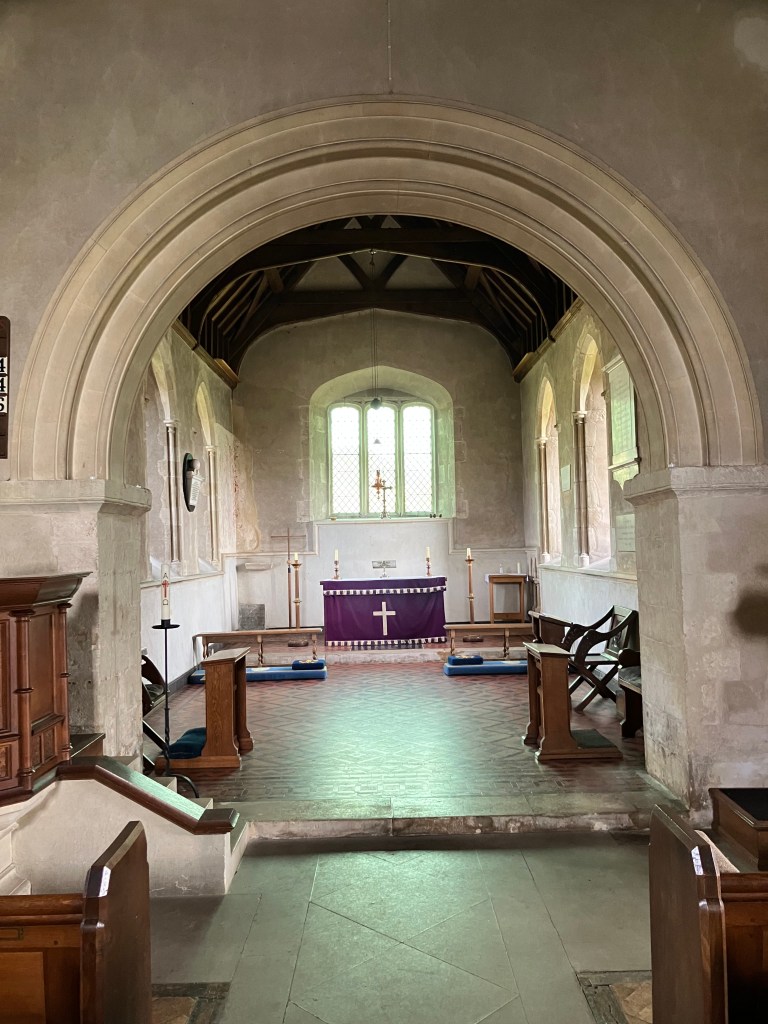
Pevsner describes St Michael’s at Enborne as “an aisled Norman church” so could this delightful building really be almost exactly the same today as it was when my (imagined) knights passed through on their way to Jerusalem? Unfortunately, although Enborne church retains many Norman features, it did not escape the enthusiastic hand of the Victorians. However, it seems that there might have been a good reason for the work. The Newbury Weekly News of 12th January 1893 included an article in which the Rector of St Michael’s is quoted as saying, “The church at present is in such a dilapidated state that the less said about it the better unless it is of a view of increasing the Restoration Fund at the Newbury Bank. The plans are the result of much care and thought.”

The Reading Mercury of August 12th 1893 reported:

“The restoration of St Michael’s, Enborne is being satisfactorily carried out by Mr G. Elms of Marsh Benham under the direction of the architect Mr James H. Money.”

Apparently, the diocesan architect had recently visited the church along with James Money:

“… and has testified to the great pains being taken to render the restoration a favourable one in all aspects.”

The chancel, St Michael’s, Enborne

Clearly, not everyone approved of what was being done, although there is little evidence of dissenting voices in the local papers.

On March 6th 1897, the Reading Mercury reported on the rededication of St Michael & All Angels’ church, Inkpen, it having been “in restorer’s hands” for more than a year. The rector, the Rev Henry Dobtree Butler believed it had “long fallen into a lamentable state of decay” and so the grandly named Oxford architect, Mr Clapton Crabbe Rolfe, had been engaged to carry out a restoration. And a very thorough job he did of it, too. The Reading Mercury went on to report:

“The greater part of the church has been rebuilt and a new north aisle added …

The only ancient portions of the actual fabric are the exterior walls and one west window.”

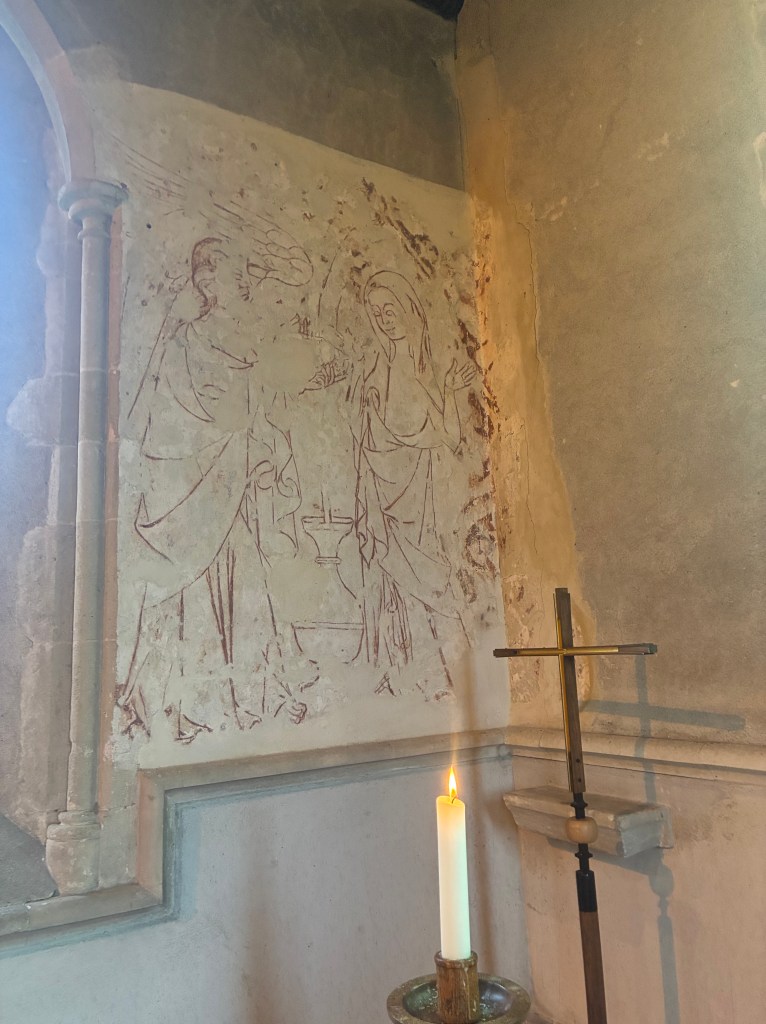
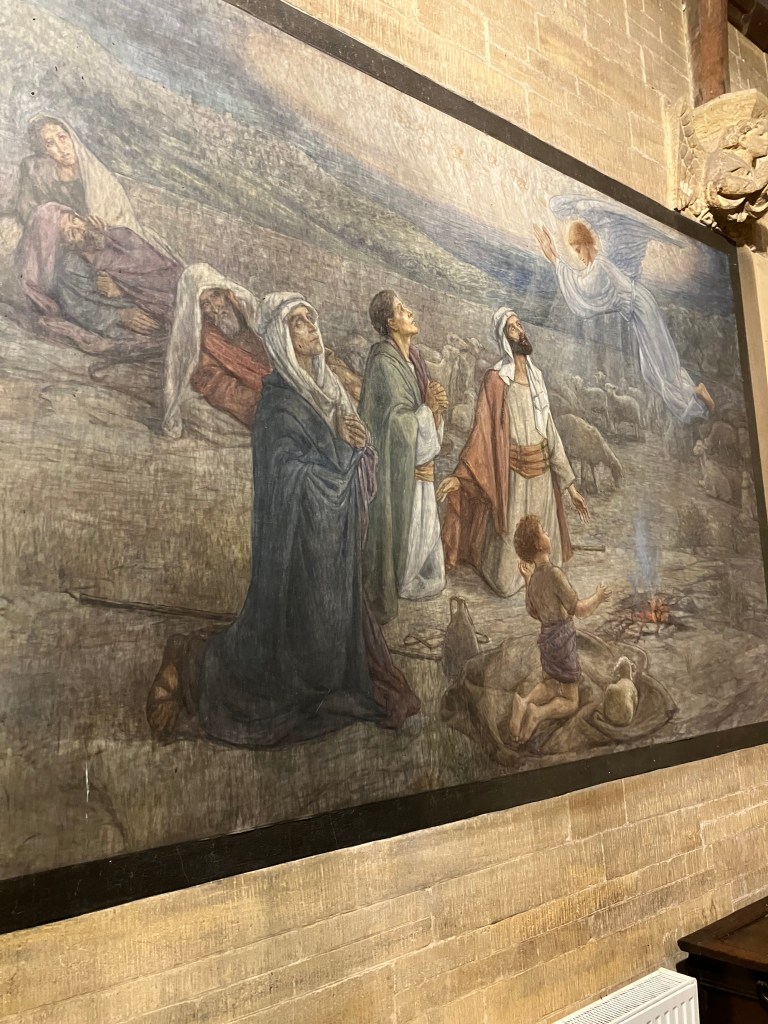
Nineteenth century mural, St Michael & All Angels, Inkpen

Whilst the tone of the Reading Mercury’s report suggests that the destruction of much of the original building was a positive thing, not everyone agreed. According to Pevsner, the recently formed Society for the Protection of Ancient Buildings had opposed the drastic restoration. Founded in 1877 by William Morris and Philip Webb, SPAB was concerned that the fashionable enthusiasm for restoration was destroying the historic fabric of many venerable buildings.

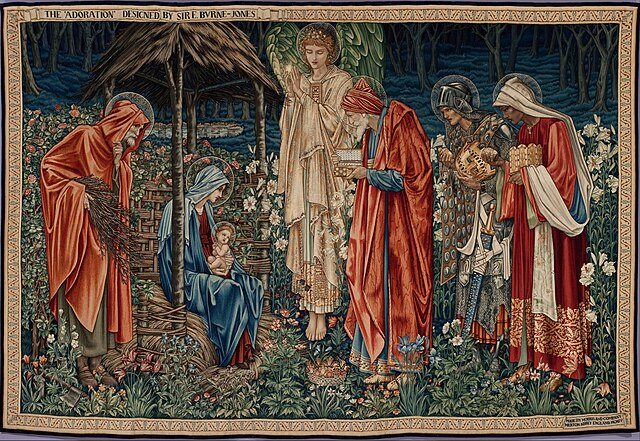
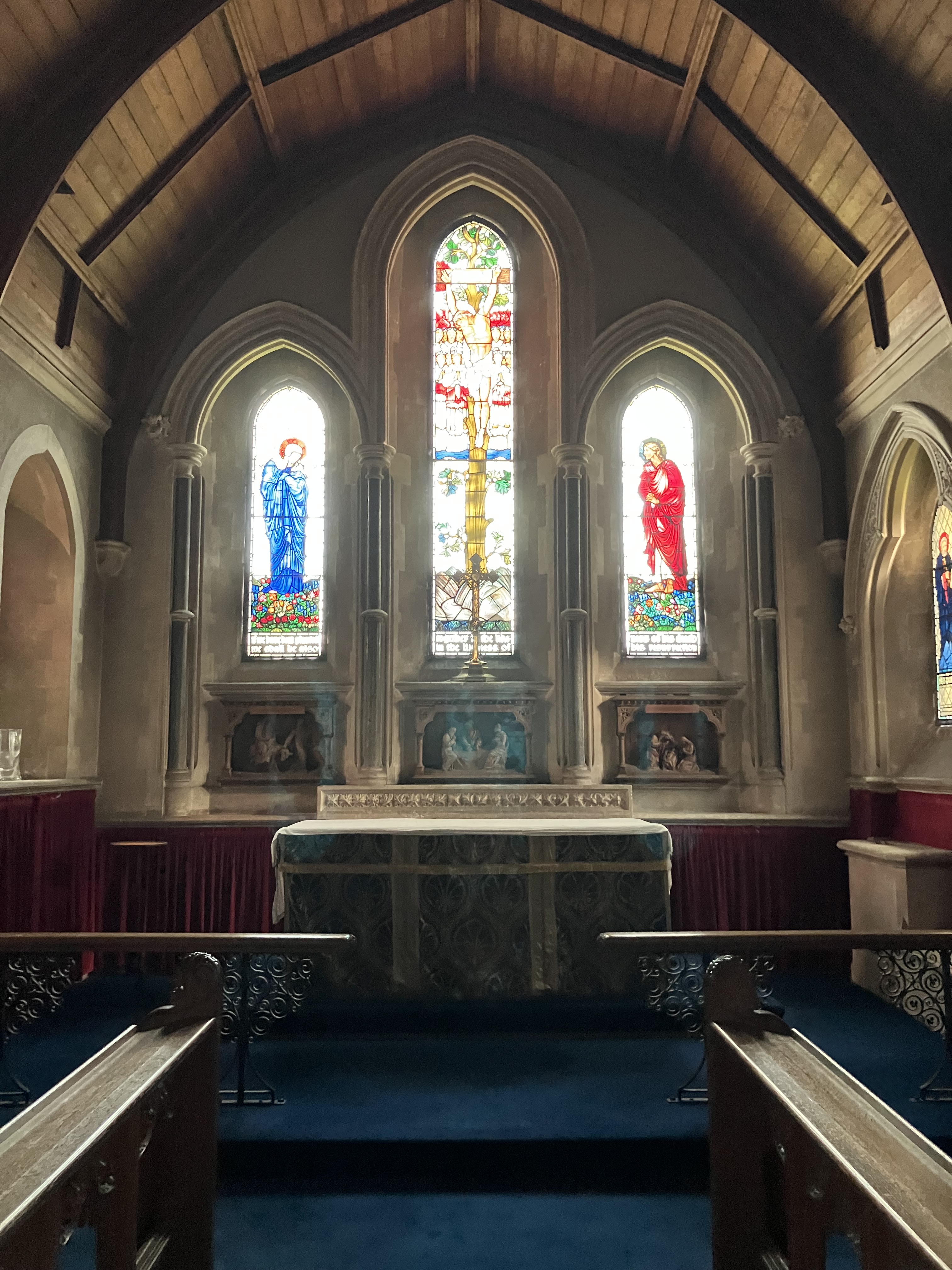
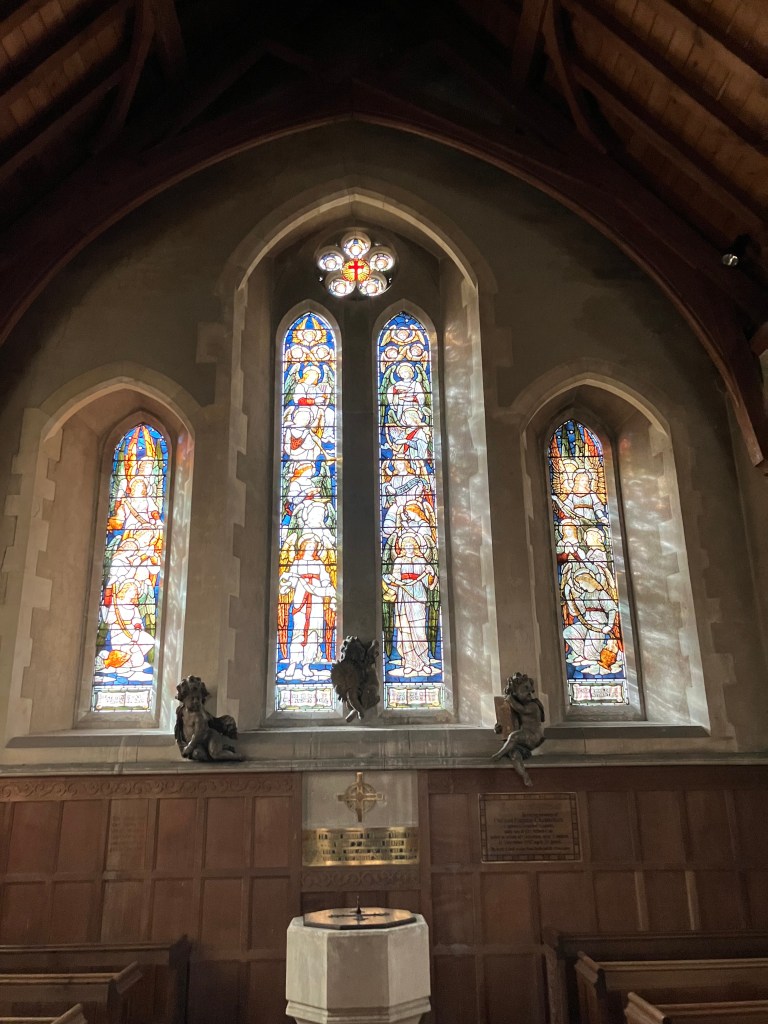
East window, St Laurence’s, West Woodhay

Despite his opposition to the fashion for extreme restoration, William Morris contributed work to many churches, including St Laurence’s, West Woodhay. Here, the red brick church which had stood next to West Woodhay House since 1716 was demolished and a church designed by Sir Arthur Blomfield built on a new site in 1882. The distinctive east window was designed by Burne Jones for Morris & Co as were the side windows of the sanctuary. On 15th April, 1882, the Hampshire Chronicle waxed lyrical in their appreciation of this new amenity:

“The inhabitants of West Woodhay … have reason to congratulate themselves upon having in their midst a resident lord of the manor whose liberality bids fair to effect a great improvement in the social position of all in the village.”

Quite how the new church would effect a great improvement in the social position of the cottagers of West Woodhay, the Hampshire Chronicle does not explain! 

West window, St Laurence’, West Woodhay

So, there is nothing ancient about St Laurence’s, West Woodhay and it remains the only church in our benefice to represent just one period of church building. But this beautiful little church demonstrates, I think, some of the very best of Victorian architecture and design. No crusade bound knight in shining armour may ever have passed through passed through its door. No weary parliamentarian would have sought sanctuary from the battle field to the north. But it is beautiful, all the same.

And I would very much like to know if William Morris or Edward Burne Jones ever visited in person!

© Theresa A. Lock 2024
From Combe Gibbet to Hollywood

Many people hereabouts are familiar with the story of the two young Oxford students who, in September 1948, set out to make their first feature film.

Filmed entirely on location around Inkpen and Combe with many scenes shot on Walbury Hill, the plot of the film is based on true events. These were the murders in 1676, of Combe ’s Martha Broomham and her son Robert, by Martha’s husband George and his lover, Dorothy Newman of Inkpen. The murderers were executed at Winchester and their bodies subsequently displayed on Combe gibbet.

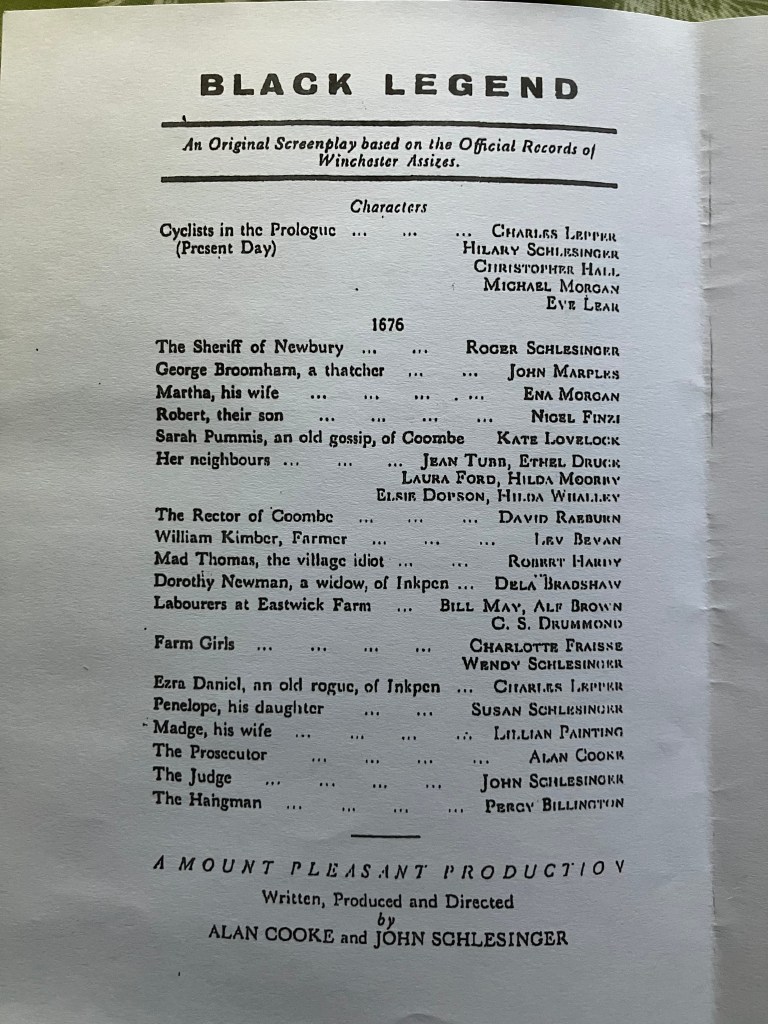
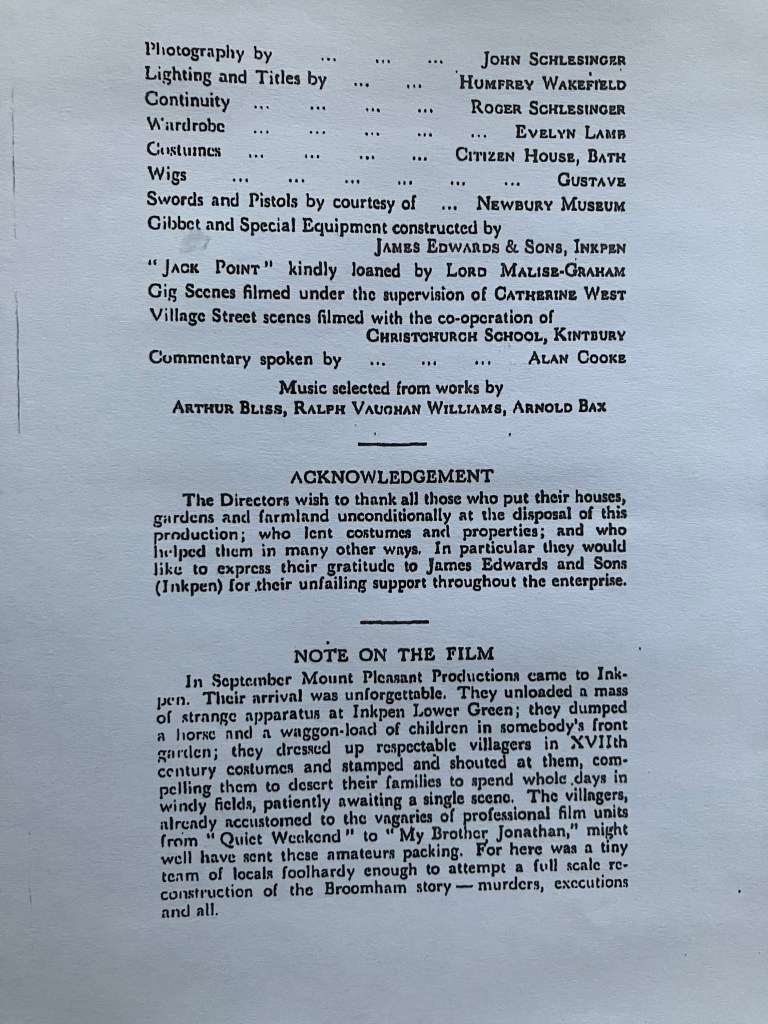
Entitled, Black Legend, the film used actors drawn from, variously, members of Oxford University Dramatic Society, one young director’s family who lived locally, villagers from Inkpen & Combe and children from Christchurch School, Kintbury.

The weather that September was sometimes cold and bleak; shooting was held up when the camera broke and had to be sent away for repairs. However, the young men were pleased with their results, writing in the film’s accompanying programme notes:

But for all its failings we believe BLACK LEGEND to be an achievement that in one respect at least has rarely been equalled. For it shows how much can be achieved by the co-operation of enthusiastic people, even in a project so technical as a film.

Copy of the original programme for Black Legend

Were the young students right to feel so positively about their work? Well, when the finished version was shown – in Hungerford, Inkpen, Ashmansworth and West Woodhay the following January, 1949 – the Newbury Weekly News declared in its advertisement for the screening, “The Film YOU helped to make” and “YOU’LL BE SORRY YOU MISSED IT”.

In its review, the Newbury Weekly News quotes an anonymous film critic as saying:

“Black Legend is a film to see and remember…

The acting is a marvel of cooperation among amateurs, some skilled, some quite inexperienced, but all gifted enough to convey their thoughts and often their probable words without any speech.

Soon, Black Legend was to receive a wider audience than the villages around Newbury. An article in the Scotsman of March 1949 reports that it had been shown in the Grand Committee Room of the House of Commons. The film is now described as, “having all the cinema world by the ears.”

The report goes on to say,

“The wonderful landscape, the local people, the farms and their implements, are all so used … that the compositions are beautifully organised; the photography of these young people with relatively little experience resulting in a work which ought to make the film industry pull up its socks.”

These young men obviously showed promise: but did they fulfil that promise?

In 1965 one of those young men returned to film on the chalk downland not so very far from here. By now, John Schlessinger – whose family had lived near Kintbury in the 1940s – was regarded as part of the British “New Wave” of film directors and his previous movie, “Darling,” had been Oscar nominated.

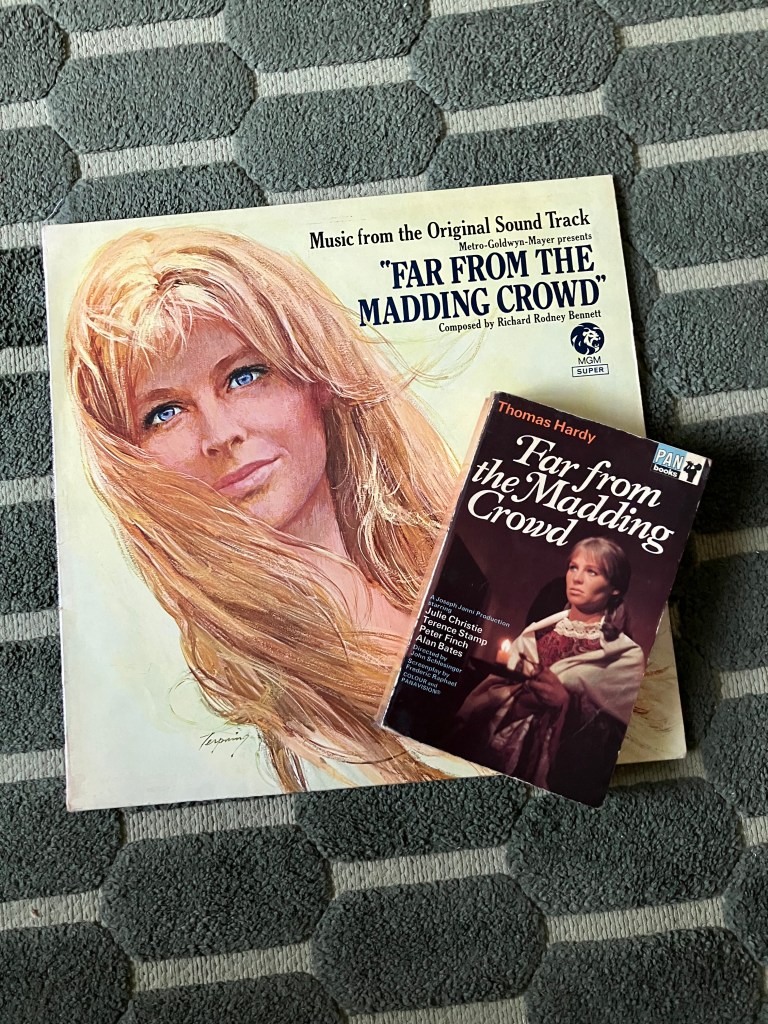
This time, Schlessinger’s leading actors were  well known throughout the movie world of the early 1960s: Terence Stamp, Alan Bates and Julie Christie, although, as with Black Legend, his cast included many local people. “Far from the madding crowd,” an adaptation of the novel by Thomas Hardy, was to be filmed entirely on location – as Black Legend had been – this time in Wiltshire and Dorset. Just as Black Legend had featured music by Vaughan Williams to compliment the film’s rural setting, so Richard Rodney Bennett’s score for “Far from the madding crowd” is frequently reminiscent of Vaughan Williams’ work, similarly using variations on English folk songs to evoke the period and place of the piece.

Schlessinger’s “Far from the madding crowd” is one of my favourite films. It must be one of the most visually beautiful films ever shot in England and captures the Wessex downland like no other, in my opinion. So many shots, I feel, are reminiscent of scenes in Black Legend, almost as if Schlessinger was finally perfecting, on a much higher budget and in glorious technicolour, scenes he had shot with Alan Cooke on and around Walbury Hill, all those years before.

Iconic 60s star Julie Christie starred in Far From The Madding Crowd

Throughout his career as a film maker, John Schlessinger received four BAFTAs and an Academy Award (an “Oscar”). He was made a CBE in 1970 and a BAFTA Fellow in 2002.

He died in 2003.

(C) Theresa A. Lock 2024
References:

https://www.bfi.org.uk/features/where-begin-with-john-schlesinger

Newbury Weekly News Archive, West Berkshire Library

British Newspaper Archive

The Inkpen Temperance Band

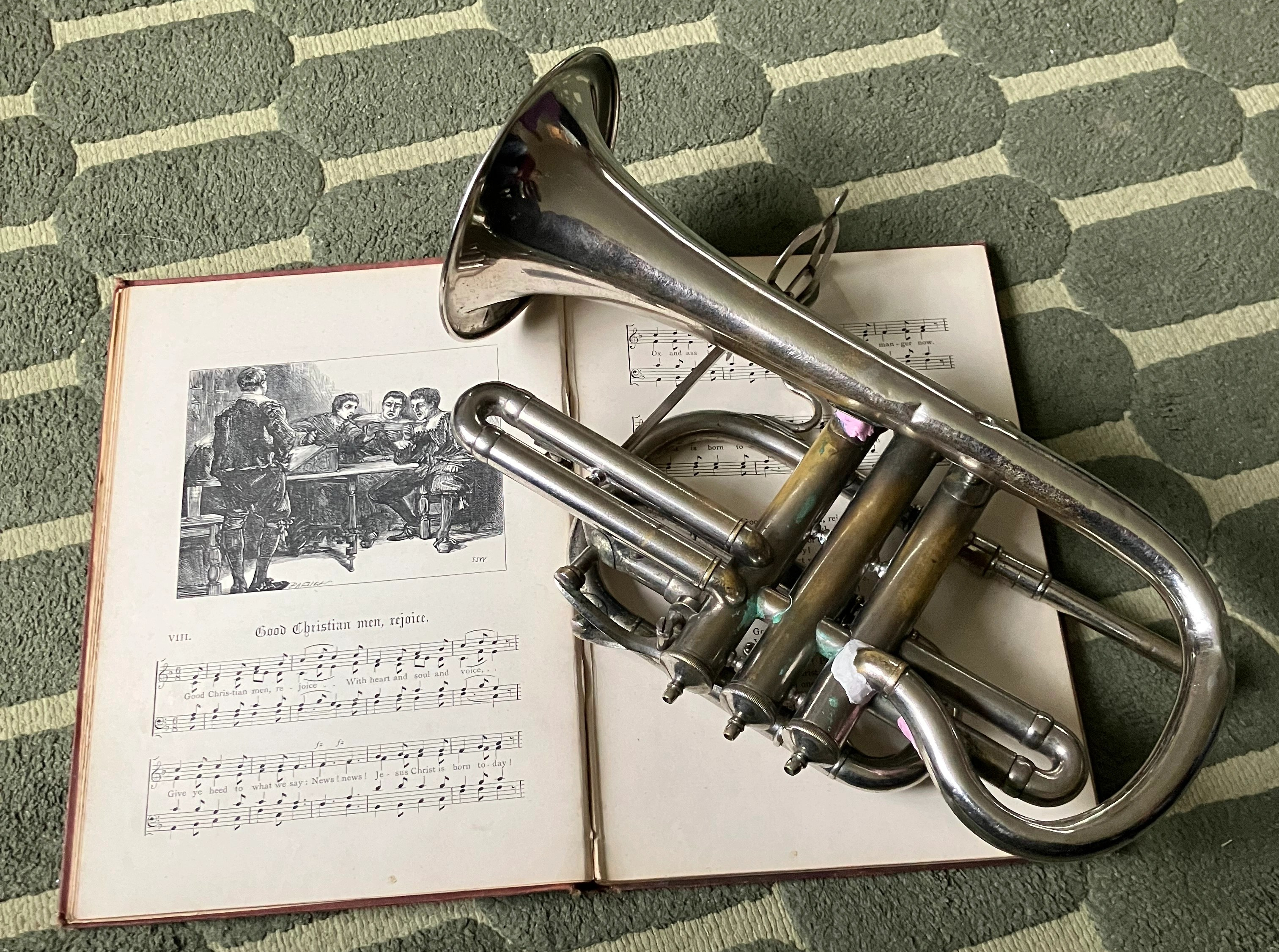
Throughout the nineteenth and into the early twentieth century, brass bands were particularly popular; many towns and villages could boast their own local musicians to offer entertainment at fetes and flower shows, in public houses or to accompany parades

Playing, however, is thirsty work, and unfortunately brass bands were often associated with heavy drinking. This was a time before licencing hours introduced during the First World War restricted the hours a public house could open and, “the sacred freedom of drinking was tampered with” (A. J. P. Taylor).  It had long been recognised that excessive alcohol consumption was becoming a serious problem.

The temperance movement – calling for abstinence from  drinking alcohol – began in Ireland in the 1830s. Throughout the following decades the movement spread across England where temperance coffee shops, hotels, billiard rooms and even music halls were opened. People were encouraged to, “sign the pledge” to say that they would never drink alcohol.

Temperance brass bands were seen as a way of spreading the word. By the turn of the century, hundreds of towns and villages could boast their own temperance bands, a great many of which – although not all – were  associated with methodist churches. Hungerford, Newbury and Thatcham all had temperance bands but one of the smaller communities to host a band was Inkpen.

Mr Arthur J. Edwards, the band’s conductor, was a member of the Edwards family from the Sawmills, Inkpen, on whose land the Methodist chapel had been built and who were well known as Methodist church members.  Edwards was a talented musician himself and clearly very successful at teaching his band of young players. Band practice was held in the Wesleyan schoolroom where rules and regulations were displayed on a card hanging on the wall.

The first reference to the band that appeared in the local press was in a Newbury Weekly News report of April 1902 when the Inkpen Temperance Band performed at a fund raising event for Inkpen Wesleyan Methodists. The chapel in Post Office Road Inkpen had recently been renovated and the event was to make up a shortfall in the costs of doing so.

In June 1904, the band played at another Wesleyan fund raiser, this time for the Wesleyan Sunday School in Kintbury. It seems the band was well received as the same month,  Mr. Edwards placed an advertisement in the Newbury Weekly News stating that the, “12 to 20” performers would play, “First-class, up-to-date- music” but that they were already booked up on August 21st as they were to play at Kintbury Flower Show.

Although Mr Edwards continued to advertise in the newspaper across the following months, the next report of the band’s appearance is not until August 1905 when they play at the Annual Camp Meeting in Gore End. Although the report does not specify, I’m assuming from reading later reports this is an event of the Primitive Methodist Church. The meeting was, apparently, well attended: “A large gathering of people listened to the Word of Life simply and earnestly expounded by men who evidently spoke from a religious experience”.

Presumably no women were permitted to speak, whether they had had a religious experience or not.

By 1906, Mr Edwards is confidently advertising the band as having 20 performers, “open for engagements”, wearing, “Full dress uniform” and playing, “Good class music”. Bookings must have been increasing because, as well as having Mr Edwards as conductor, the advertisement names F.D.Carter of Inkpen as “Hon Sec”.

The Christmas season of 1906 was a very busy one for the band who, according to the report in the Newbury Weekly News were, “in splendid form now, and has received praise all round for their fine playing seeing they are only a young band.”

The committee were planning to buy new instruments and were hoping to receive the aid, “of the generous public”.

In January 1907, band members enjoyed an “excellent supper” in Inkpen’s Wesleyan Schoolroom although the severe weather prevented some members from travelling the long distance. It would seem that the popularity and success of the band was attracting members from villages beyond Inkpen. The “esteemed bandmaster” Mr Edwards and others “gave some capital songs and pianoforte solos while various games were freely indulged in”. A Mr Tilley from Newbury “gave some capital selections on the phonograph” – a rare opportunity for some to hear recorded music, I expect. The report concludes:

Great praise is due to the bandmaster for his never-tiring patience, especially with the younger members, and it is hoped that the members will rally round their leader so that this year might be a record one

1907 proved to be a particularly successful one for the band. In May they played at the Whit Sunday Primitive Methodists camp meeting in Inkpen where a special feature was, apparently, their rendering of the march, “Crown Him With Many Crowns.”

In July the band performed at another Wesleyan fund raising event, this time at a sale of work and jumble sale for the Kintbury Wesleyan Sunday School. 

August was a busy month. The band played at another Annual Camp Meeting, this time at Ashmansworth where, following talks by visiting preachers, the band led the singing and, “rendered a nice selection of sacred music”. The “profitable day” ended with an, “old-fashioned love feast and prayer”.

What an old-fashioned love feast was, I have absolutely no idea – although it sounds to me more like something that would have happened in the late 1960s!

On August 7th – a week day, interestingly – the band played at the Speen and Stockcross Horticultural Society show, and on August 21st – also a week day – they were at the Kintbury and Avington Annual Flower Show & Sports. Then in September, the band won third prize at a band contest at Blenheim Park, Woodstock. This must have been no mean feat as it could not have been cheap or easy to transport twenty band members  and their instruments the 42 miles to Woodstock and back. The Newbury Weekly News commented that great credit was due to Mr A. Edwards, “seeing that the band is quite young”.

By April of 1909, Mr Edwards seems to have achieved his aim of purchasing new instruments although these had not come cheaply. The band’s end of year financial report recorded a total income of £70 13s 2 1/2d although a further £100 was still required to defray the cost of the instruments.

In the following years there are fewer reports mentioning the Inkpen Temperance Band although in August of 1911 they were playing at Kintbury & Avington Cottagers’ Show which suggests that the debt regarding the purchase of the instruments had not resulted in the demise of the band.

In the August of the following year, the band played at the Inkpen Flower Show, although their conductor is now Mr W. Edwards.

I found the last reference to the band in a local newspaper was in a report of March 1913 which records the Inkpen band – now known as the Inkpen Temperance Prize band – as attending a Wokingham & District Band League competition, where they came 3rd in the “March” section and 1st in the “Own choice”. Mr Edwards is once again the conductor.

Perhaps the outbreak of war in August 1914 meant that newspapers had other concerns rather than reporting on the doings of village brass bands. However, the website, brassbandresults.co.uk, records Mr Edwards and the Inkpen band – known variously over the years as Inkpen Silver Band and Inkpen United Band – as continuing to compete in various competitions throughout the south of England. On occasions the band is conduced by Arthur Muddiman, later B. Edwards and then P.G.Dyson. The very last competition the band entered was on February 27th, 1954, in Southampton.

Whether the band retained its strong links with the methodist church, I have no way of knowing. Many bands which began as “temperance” bands eventually dropped that word from their names and many of them are still playing today. Locally, the Reading Spring Gardens Silver Band, the Basingstoke Silver Band and the Tadley Silver Band all began life as temperance bands.

It is, of course, impossible to know how many band members – if any – who played at Southampton in 1953 had also been at Woodstock in 1907. Many reports describe the band as being young then – the generation whose lives would be tragically interrupted by the outbreak of the First World War.

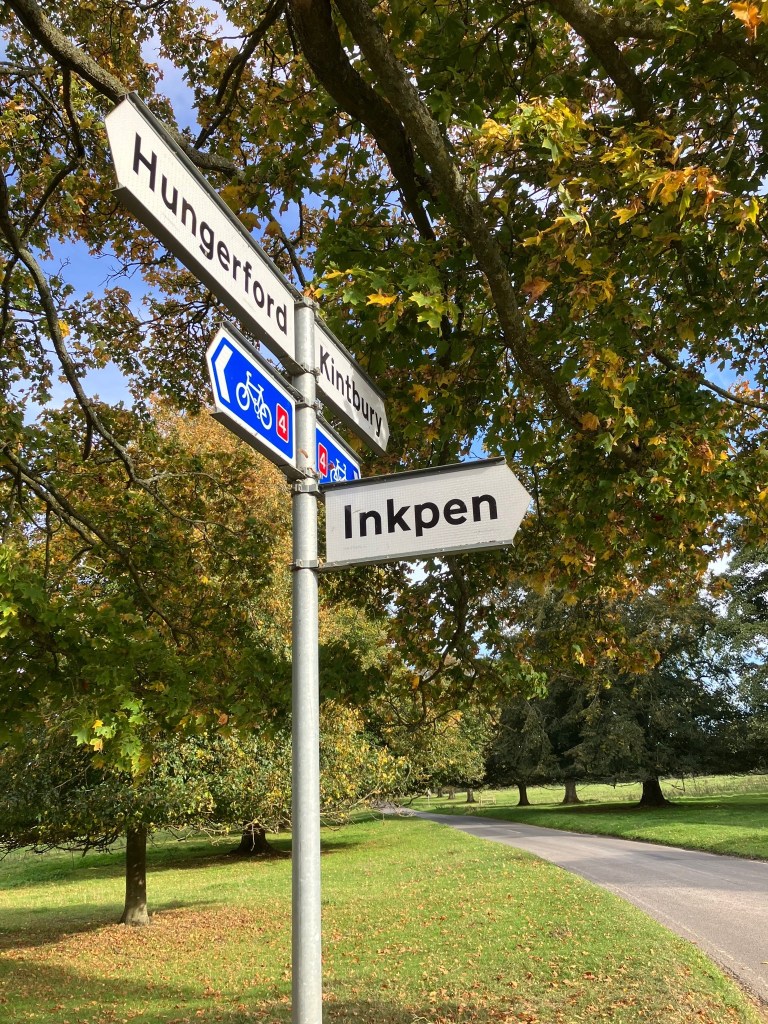
A fingerpost pointing to Inkpen, Hungerford and Kintbury. There are trees on a common with a road going through them behind the sign.

References and sources:

https://www.brassbandresults.co.uk/bands/inkpen

The Newbury Weekly News

E.A.Martin: Inkpen Yesterday 1993

Theresa A. Lock © 2024
Say, ‘Hello’ to Marilyn

I have a vague memory from school geography lessons of being told that, if you draw a line which passes through the Bristol Channel in the south west and the Wash in the north east, everything above the line will, more or less, be in “upland Britain”, whilst everything below will be “lowland Britain”.

Staring at my Philips’ School Atlas and the page showing “British Isles – Political” this distinction did not seem quite right. A line drawn from Bristol to the Wash would leave much of Lincolnshire, a county with a reputation for flatness, in the “upland” sector, whilst much of Gloucestershire and the Cotswolds in the “lowland” half.

Perhaps I’d just got my line in the wrong place. However, it is indisputable that there are more uplands to the north and west. In Scotland, for example, mountains over 3000 feet or 914.4 meters are called Monros and there is a total of 282 of them. There is no way we in the south can compete with that. Climbers who complete all 282 earn the right to call themselves “Monroists” and join the Monro Society.
Down here in Wessex we might not be able to boast any mountains but that is not to say that our landscape is particularly flat. Not all of it, anyway.

A while ago, while researching something about hills in chalk downlands, I came across the term “Marilyns”. I thought this was a joke. So, if Scottish mountains are known as “Monros”, some wag decided to call certain hills, “Marilyns” after Marilyn Monroe” – get it?

But “Marilyns” are not a joke, although there is a certain humour in calling them that. The classification was first coined in 1992 by Alan Dawson in his book, “The Relative Hills of Britain” and refers to UK hills and mountains:

…with a prominence of 150m or more regardless of height.

Or to put it another way:

A Marilyn is a hill of any height with a drop of 150m or more on all sides.

Alan Dawson

And so our “local” hill, Walbury Hill is a Marilyn. Although it rises 974 feet above sea level, it is its prominence of 188m or 617 feet above the surrounding hills which is its qualifying factor. Neighbouring Marilyns are Butser Hill in Hampshire at 158m or 518 feet and Winn Hill in Wilshire at 159m or 522 feet.

There are 174 Marilyns in England and a total of 1556 throughout the UK where Walbury Hill comes in at number 107. Perhaps not much of a distinction for a hill that was once classified as a mountain by the Ordnance Survey in the nineteenth century. But we can still boast that our local Marilyn is the highest point in chalk in southern England!

Theresa Lock, November 2023

Sources including:

rhoc.uk/marilyns/

hill-bagging.co.uk/Marilyns.php

Our Village Schools in the late 19th century

Today, three of our local villages have village schools. Two of them, Inkpen and Enborne, are still based in their original Victorian buildings just like many other primary schools in West Berkshire. However, you might be surprised to find out that, at the end of the nineteenth century, there were twice that many village schools in our area.

By the middle of the nineteenth century, many towns and villages benefitted from schools established by churches or charitable organisations. However, it was not until Forster’s Education Act of 1870 that local school boards were created with the power to levy rates to finance building and running of so-called National Schools in their areas. Thus universal education became available to all children up to the age of 13.

It would be fascinating to research our village schools through documents in the Berkshire Records Office. For now, however, I decided to begin my research by looking at the 1881 census as by this time those schools opened as a result of Forster’s Act would be well established.  

At the time of the 1881 census, the occupant of the Kintbury St Mary’s school house is 25 year old James Humphries, originally from Ditton Marsh, Wiltshire. James is described as a “certificated teacher” meaning he has gained a professional qualification at a teacher training college. His sister, Catherine, 20, who is living with him, is described as “assistant teacher” which might indicate that she trained to teach by learning “on the job” as a pupil teacher which was how the majority of teachers  qualified at that time. How Kintbury parents would have viewed this fresh faced young man and his even younger sister, both in positions of authority over the village sons and daughters, we can only imagine!

James and Catherine did not stay in Kintbury for long, or so it seems. In November 1883 the Newbury Weekly News reported on a recent Diocesan Inspection at the school which found it to be, “in very good condition. The children are well taught throughout.” The master at this time was a Mr T. Sadgrove. But he did not stay long either. In May of the following year the NWN carried a report concerning the schoolboy Alfred Sturgess who was charged with stealing 2 shillings and 6 pence from the National School Board ( in other words, from St Mary’s school ), the case being proved by the master who was then W. Garrett Jones.

Perhaps Messrs Humphries, Sadgrove and Garrett Jones all found Kintbury too challenging to stay long, or perhaps they were ambitious and wanted to move on to bigger schools in towns. So far I can find no record of any of them to suggest where they were living when they moved on from Kintbury, or if they even stayed in teaching.

Things were different down the road in Inkpen. In 1881 the occupant of the village school house is 49 year old certified teacher Jesse Collins. Jesse was a retired naval captain originally from East Tilbury, Essex, whose teaching post in 1871 had been in Portsmouth. 

Interestingly, Jesse’s wife, Charlotte, is also described on the census as “School mistress”, although at this time women were not – officially – allowed to teach after they had married.

Life in the relatively isolated, rural community of Inkpen must have been very different to life in Portsmouth for the Collinses, although it seems to have suited them as they were still there in 1891. Despite, that is, Jesse having appeared before the local magistrates in 1884, charged with having assaulted one Alfred Abraham, a school boy, and having been fined 5s and 16s 6d costs. Perhaps the experience of his former naval career led Jesse to take this in his stride as he is otherwise involved with the local community and, according to the NWN, with local politics.

If Inkpen was a relatively isolated rural community, then Enborne was more so. Back then as now, the school with its adjoining school house was in an isolated spot in Crockham Heath, on the road up to Wash Common where, in 1881, the school mistress was 58 year old Ann Elizabeth Pears. Ann was an experienced teacher: in 1871 she had been teaching near Salisbury in Wiltshire and in 1861 in Suffolk.

According to a report in the NWN of March 1887, two men broke into the school house when Ann was away from home and stole 10 shillings and a quantity of brandy. This must have been particularly unpleasant for a woman living on her own in an isolated house and might have contributed to Ann’s decision to move on. By the time of the 1891 census, Ann has relocated to Hampshire but not yet retired from teaching. At 68  Ann is head teacher at East Woodhay school.

Today there is no primary school in the village of West Woodhay – by modern standards it would probably be considered too small a community to support its own school. The censuses of 1881, 1891 and 1901 indicate that there were no teachers living in the village in those years which suggests to me that there was not a school or accompanying school house ( the usual Victorian arrangement, common in many local villages.) The evidence suggests that West Woodhay’s children attended East Woodhay school as, in December 1903, the NWN reported that a request had been made for a footbridge to be placed “over the water between East and West Woodhay” as “children went down there on their way to school and got their feet damp.”

However, for fifty years, from about 1903 to 1961, West Woodhay did have its own school, marked on early 20th century OS maps as being somewhere near the village hall but on the opposite side of the road. Perhaps surprisingly, the NWN does not seem to have covered the opening of the school although the 1911 census shows assistant teacher, Celia Cook, 29, from Walworth, London, living in the school house.

Another local school I have, so far, found out very little about is Christchurch. Built at Kintbury Crossways close to the now demolished church which shared its name, Christchurch School opened in 1870 to relieve crowding at the established school down in Kintbury. Whilst the Reading Mercury reported on the opening, for some reason the more local paper, the NWN, did not.

I can find no record of the head teacher at the time of the school’s opening. However, the NWN of February 1884 reported that complaints had been made that a mistress, Agnes Peacock, had been ill treating the children. Unfortunately, a parent, Mary Ann Nash of Kintbury, had decided to take things into her own hands after Miss Peacock had patted her son on the hand by way of discipline. The teacher reportedly pushed the boy and he fell over. Nash went to the house where Miss Peacock was lodging and struck the teacher on the head with a stick. She was subsequently charged with assault and fined 9 shillings 6 pence with 10 shillings 6 pence costs.

As the smallest village in our benefice, then as now, it is perhaps most surprising that Combe had its own school. Although I can find no trace of when it first opened, the NWN of September 1894 reported that the school in the village had been, “nobly restored” with, “all the necessary requirements”. Local dignitary, Mr A.C.Cole had, “spared no expense” and the village children no longer had to walk to the neighbouring school, 2 or 3 miles distant. The school house furniture was supplied as a gift from Mrs Cole, as was that of the school, “according to government requirements”. Three cheers, then, for the Cole family.

In 1901, the schoolmistress at Combe was 34 year old Elizabeth Dingwall. Born in Chelsea, Elizabeth had been teaching in Fulham in 1891. At Combe, she shared the school house with her sister Isabella, a nurse and, although life the tiny village must have been very different from Chelsea or Fulham, the Dingwall sisters are still there in 1911.

One thing that has surprised me in researching this is that none of the teachers, either masters or mistresses, are local people. Whether this was a deliberate policy or coincidence, it is impossible to say for certain, although the weight of evidence suggests to me that the school boards deliberately chose to appoint people from out of the local area. For those single schoolmistresses, living alone in a village schoolhouse, life must have been very lonely. Whilst we know very little about the lives of Ann Elizabeth Pears, Celia Cook, Agnes Pocock or Elizabeth Dingwall, we do know a bit more about a schoolmistress living and working about 20 miles from here, in Denchworth, formerly North Berkshire, in the 1860s. Mary Hardy had been born near Dorchester in Dorset and trained to teach at the teacher training college in Salisbury so she was a “certified teacher”. Denchworth village school, 80 miles from her home and family, was her first post for which she was paid £40 a year and expected to play the church organ. Mary found the experience of living in Denchworth to be so lonely that she persuaded her parents to allow her younger sister, Kate, still a school pupil herself, to come to Berkshire to live with her.

We know a little more about Mary Hardy than we do about most Victorian village schoolmistresses because her brother, Thomas, was to become the celebrated novelist and so some of her correspondence is preserved in Dorset Museum. But while the names of most of the other women – and men – are mostly forgotten, many of the nineteenth century school houses are still standing. During my time as a supply teacher I was lucky enough to work in many village schools still using their original buildings, though now much adapted and extended. The school house has been, in some instances, sold off but in others the former living accommodation is now used as classrooms, staff rooms or storage. As you walk from late 20th century extensions back into those Victorian rooms, there is, I think, a distinct change in atmosphere, an awareness that you have entered somewhere that has been in constant use for over 150 years.

Tessa Lock September 2023