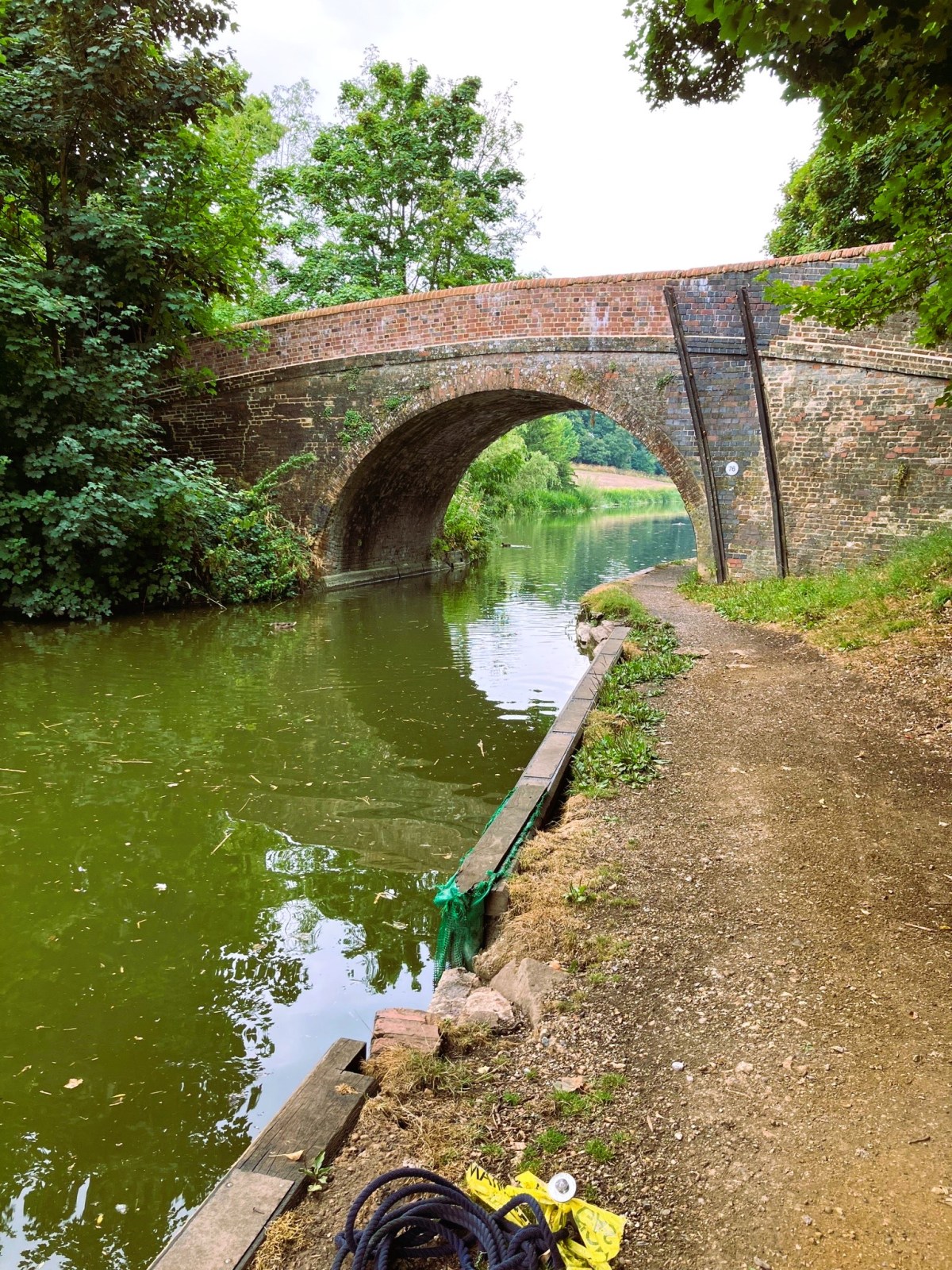
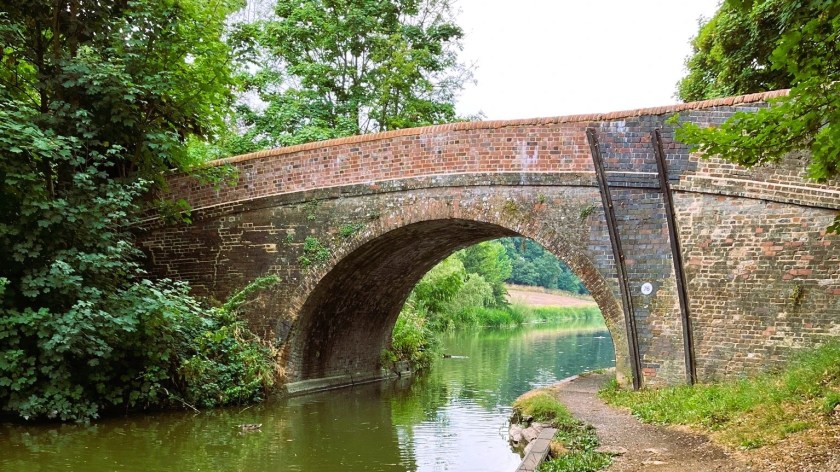
Isambard Kingdom Brunel & the pair of rails on Vicarage Bridge, Kintbury.

A brick bridge over the canal
Vicarage bridge, Kintbury

If you walk westwards along the canal tow path out of Kintbury, you pass under Vicarage Bridge. You will notice, as you approach the bridge, a pair of rails attached to the brickwork on the right hand side.  You could easily mistake these rails for a pair of butresses  but that was not their original purpose.

So what are those rails?

When the celebrated railway engineer, Isambard Kingdom Brunel, designed the Great Western Railway in 1838, he decided that the distance between the rails on which the engines and their carriages should run – the gauge – should be 7 feet 14 inches or 2,140 mm. This gauge, he believed, was safest for engines travelling at speeds and also offered a more comfortable ride for passengers.
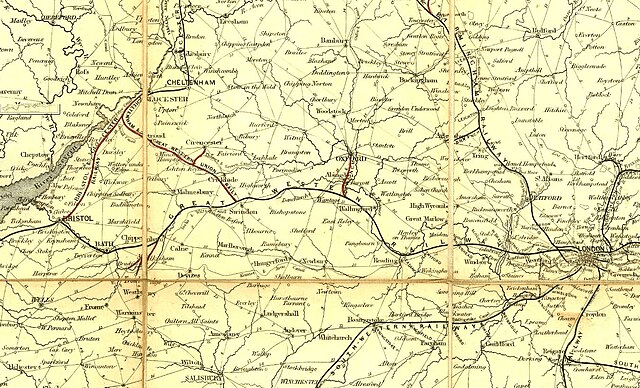
Route of the Great Western Railway, 1850. Public Domaine, via Wikki Commons

By 1841, Brunel’s Great Western Railway had opened between London and Bristol, passing through Reading and the Vale of White Horse on its way. Then, in 1845, an Act of Parliament was passed which enabled the creation of the Berks & Hants Railway Company, a branch line of the Great Western which would leave the main line at Reading, and  on through the Kennet valley. On the 21st of December 1847, the line finally opened westwards with stations at Theale, Aldermaston, Woolhampton, Thatcham, Newbury, Kintbury and Hungerford. The line was, of course, what had come to be known as “broad gauge.”
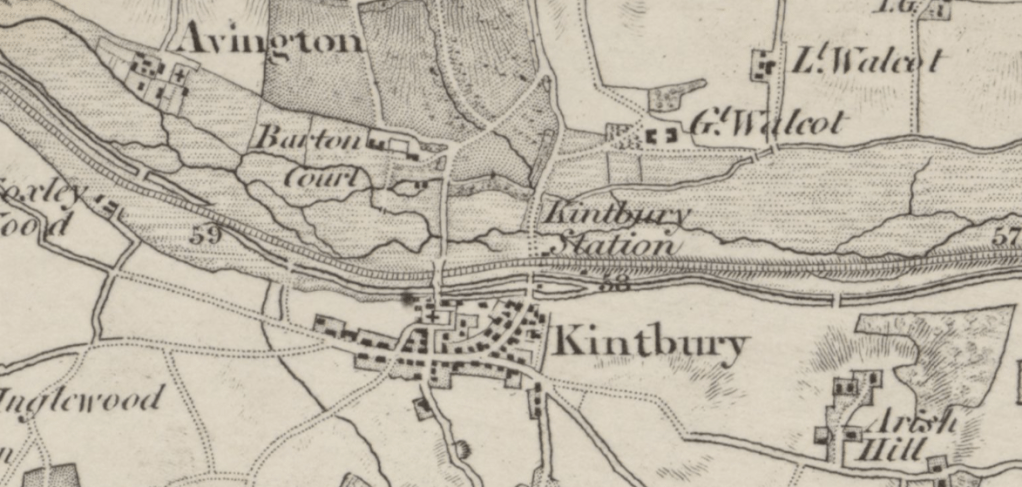
Mid C19th OS map showing Kintbury station . Note the main route into Kintbury from the north runs past Barton Court and down the Avenue.

Kintbury had joined the railway age!

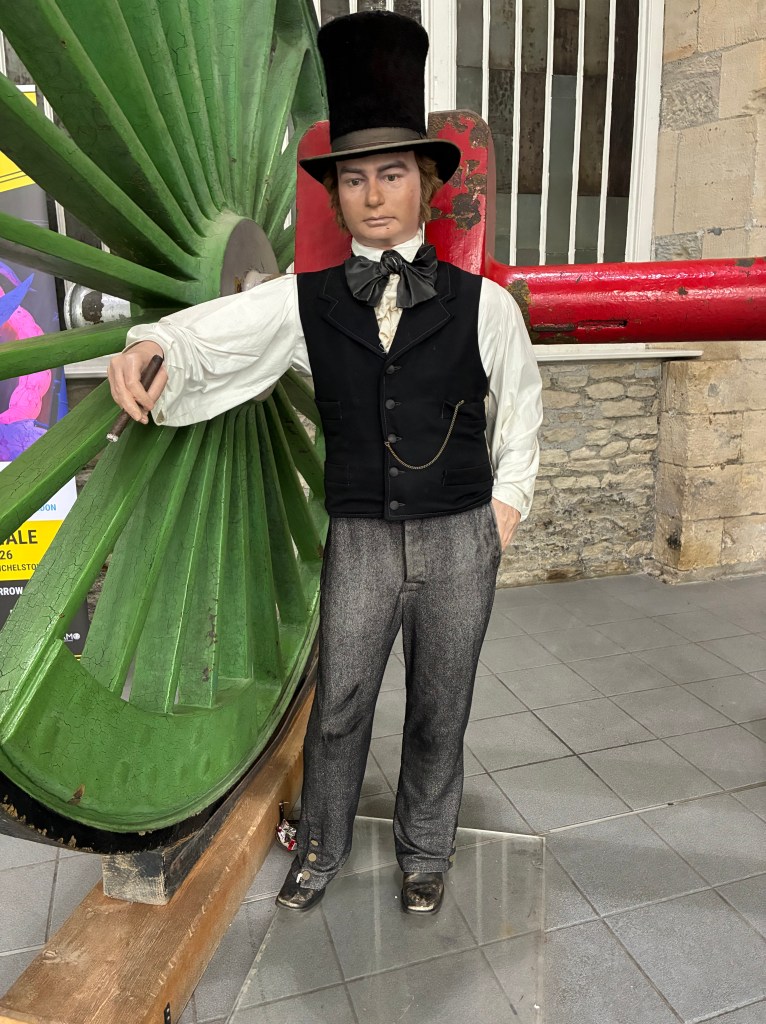
“Isambard Kingdom Brunel” at STEAM: The Museum of the Great Western Railway, Swindon.

By 1855 it had become possible to leave Kintbury station at 7:17 and arrive in Reading at 8:13 – about the length of time it would take to ride into Newbury on a horse. By the 1870s it was possible for Kintburians to travel to Bristol or London with ease, or to enjoy a day out in Weymouth. That is to say, those Kintburians who could afford to do so and who could afford the time off work.

Isambard Kingdom Brunel’s Great Western Railway had proved to be one of the  greatest success stories in British engineering. However, Brunel had a rival in the north of England.
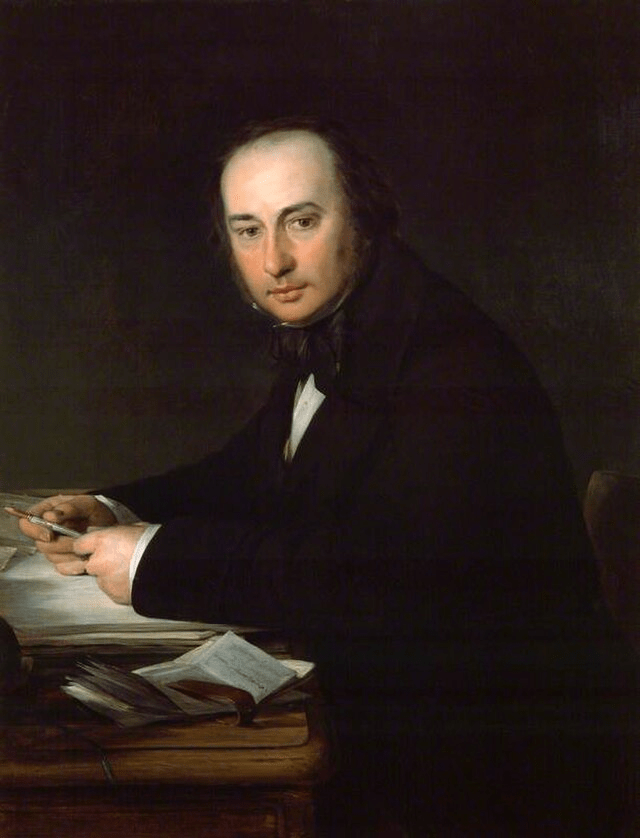
I.K.Brunel

Although the railway engineer Robert Stephenson was a friend of Brunel’s, the two disagreed over the choice of gauge for the railways they designed. Robert Stephenson’s father, George, one of the earliest railway engineers, had chosen a gauge of 4ft 8½inches. This was because it was the average distance between cart wheels of those farmers who also used the early railway tracks to transport their goods, running their horsedrawn wagons along the tracks. Robert Stephenson chose to continue with this gauge which, at the time, was referred to as the “narrow” gauge and later the “standard” gauge.

Whilst Brunel’s Great Western continued to be very successful between London, Wales and the West of England, throughout the north and midlands far more lines were being built, all using the narrower or standard gauge. So although Great Western travellers may have indeed experienced a more comfortable ride, those who had to change trains on journeys northwards had the inconvenience not only of leaving one carriage for another, they had to wait while any luggage had to be transferred from one train to another. This was bad enough when it was trunks and suit cases being transferred but a potentially more serious delay when it was freight destined for markets.
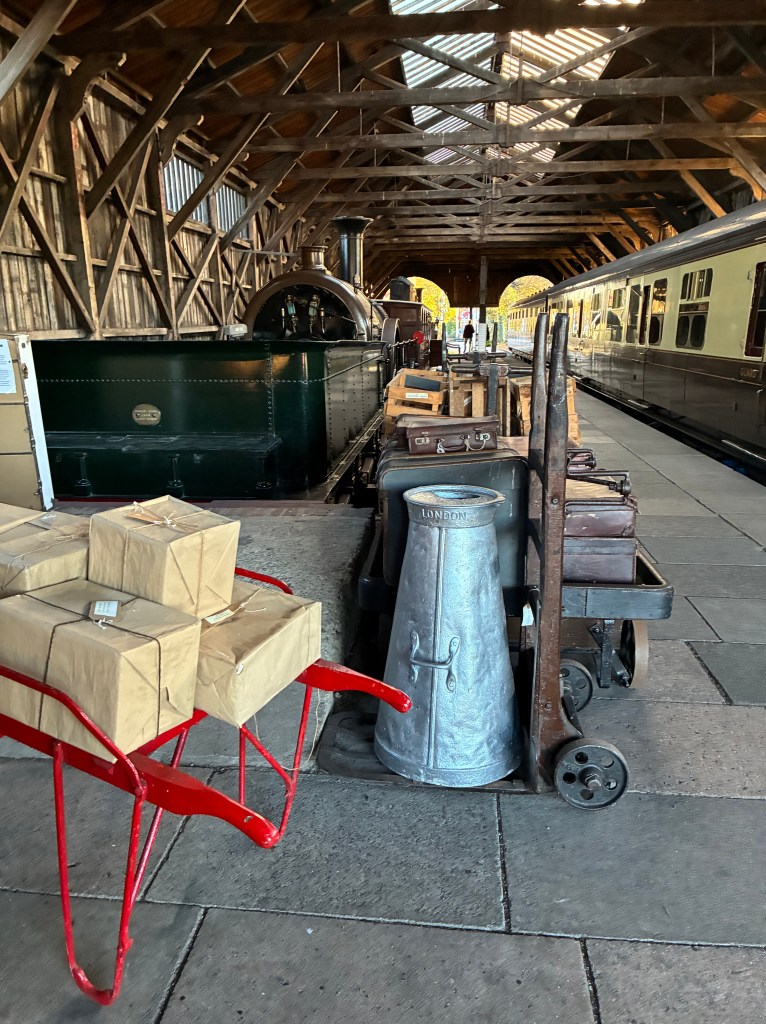
Transferring luggage from broad gauge to standard gauge carriages in the transfer shed. A recreation at the Didcot Railway Centre.

It was not until after Brunel’s death that the Railway Regulation (Gauge ) Act 1846 adopted the narrow or standard gauge for the Great Western, although it was several years before every line was converted.

On June 20th, 1872, the Newbury Weekly News carried a report critical of the Great Western’s perceived delay in converting the local line to the narrow or standard gauge.  At that time, most of the coal used in the Newbury area came from the Forest of Dean coal field – an area already converted to narrow gauge by the GWR. However, as the line through Newbury had not yet been converted, the coal had to be transported to Reading for which the GWR charged an extra 3 pence per ton. To make matters even worse, there was an additional charge of 6 pence per ton to transport it to Newbury. Not surprisingly, around 95 traders petitioned the Board of Directors of the GWR and it was eventually decided that the line should be converted.
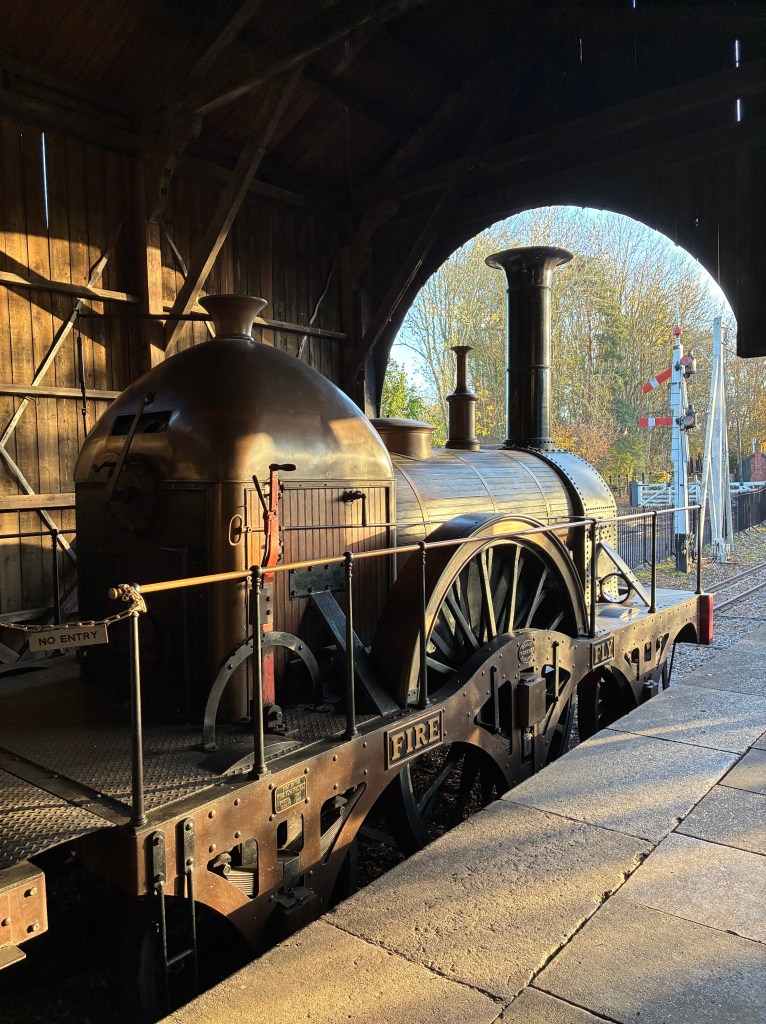
Recreation of a broad gauge engine, Didcot Railway Centre.

On the evening of Tuesday, June 30th 1874, the last train pulling broad gauge carriages left Newbury station at eight o’clock. It was followed half an hour later by the last train of broad gauge trucks and wagons.

According to a report in the Newbury Weekly News, conversion work on the 60 mile stretch between Reading and Holt Junction in Wiltshire began in July 1874. The work was to be undertaken by 600 men, split into gangs of 20 and commencing work on different sections of the line. Each gang had two designated cooks whose job it was to obtain the required provisions, boil water for tea or coffee, and prepare food. The labourers were allowed 1s 3d (about 7 pence)  each day for rations and oatmeal was provided for the cooks to prepare into a “wholesome and strengthening beverage, any amount of which they were at liberty to have.”

Apparently, “so nutritious was the beverage that some of the men cared to eat but little solid food during the day.”

I wonder if they were saving their 1s 3d per day to spend in a local pub once the working day was over.

The labourers were accommodated in various station sheds and slept on “an abundance of clean straw”. Smoking was forbidden.

The working day was between seventeen to eighteen hours long and the work, with no mechanised equipment at all, must have been backbreaking.

For the inhabitants  of those villages along the line, the arrival of gangs of strange men arriving to work on the rails, must have been daunting and perhaps worrying. But it may be that the villagers of Kintbury could feel assured as a member of the Great Western Railway Police lived in the village. Charles Giles had lived in the Kintbury for over twenty years and his presence must have been reassuring.
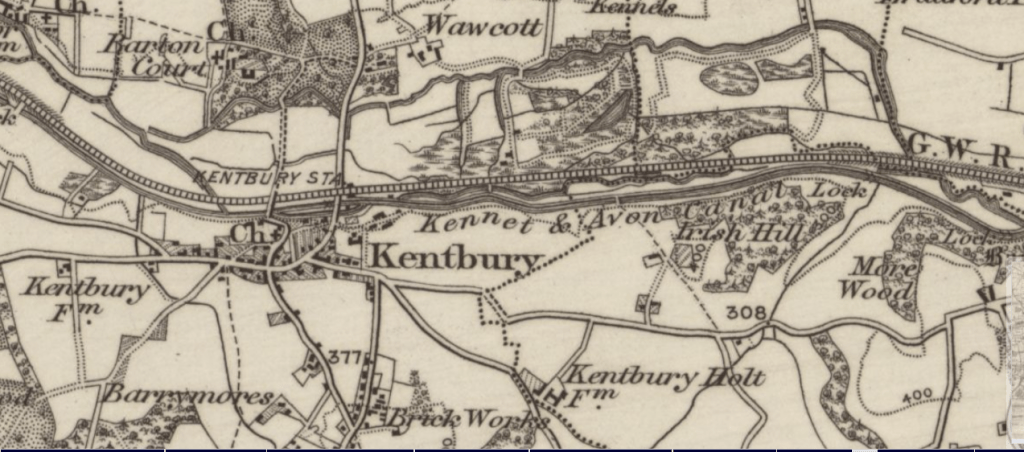
“Kentbury” Detail frpm O.S Map. 1889.

The work, however, was completed very quickly and the gangs of men left Kintbury – and the rest of the Kennet valley – in peace.

So what about those iron rails fixed to the side of Vicarage Bridge? Before being placed where they are today, those were broad gauge rails – a relic of that bygone age and of Brunel’s belief that 7 feet 14 inches was the preferable gauge for comfort and speed.

© Theresa A. Lock

24th March 2026

Sources:

Newbury Weekly News ( British Newspaper Archive )

Friends of the National Railway Museum https://www.nrmfriends.org.uk/

Didcot Railway Centre: didcotrailwaycentre.org.uk
“Corrupted by reading books”

The Sad Story of the Newbury Highway man

In Victorian England, local newspapers such as the Newbury Weekly News, carried national and international news as well as reporting locally. Consequently, their importance back then would have matched that of other media today, such as television, radio and online sources. However, one can imagine that it would have been the local stories that most captured the imagination of readers, particularly reports of crime and punishment.

Back then, as now, the Newbury Weekly News would carry details of the latest hearing at the magistrate court. For Kintbury readers in the 1860s, these would frequently feature a local name as G.C. Cherry, Esq, of Denford Park was chair of Magistrates in Newbury. Then, if a crime was of the severity to be heard at the assizes in Reading, it was likely that G.C.Cherry would have an involvement as a member of the jury. These were the days when only the great and the good held such positions.

One case which was of particular interest in the late 1860s was that of William Purdue, known in press reports as the Newbury Highwayman.

Purdue had been born in Newbury in 1850, the eldest son of Thomas Purdue, a tallow chandler, and his wife Maria. By the time William was 10, Maria & Thomas and their family of now seven children have relocated to Rotherfield Grays, near Henley in South Oxfordshire.

However, at some point in his early teens, William left the family home and by the time he was seventeen he was back in Newbury, living and working with his uncle, Mr Griffin, a painter living in the Enborne Road.

Unfortunately, it seems that William craved more excitement in his life than could be provided by being a house painter in Newbury, so he took to a life of crime – highway robbery, in fact.

Purdue did not ride a horse – he was a pedestrian highwayman, but with a hat pulled over his eyes, a black mask over his face and carrying a pistol, Purdue began terrorising the unsuspecting people of the town sometime in the late summer of 1868. For a while he seems to have got away with it.

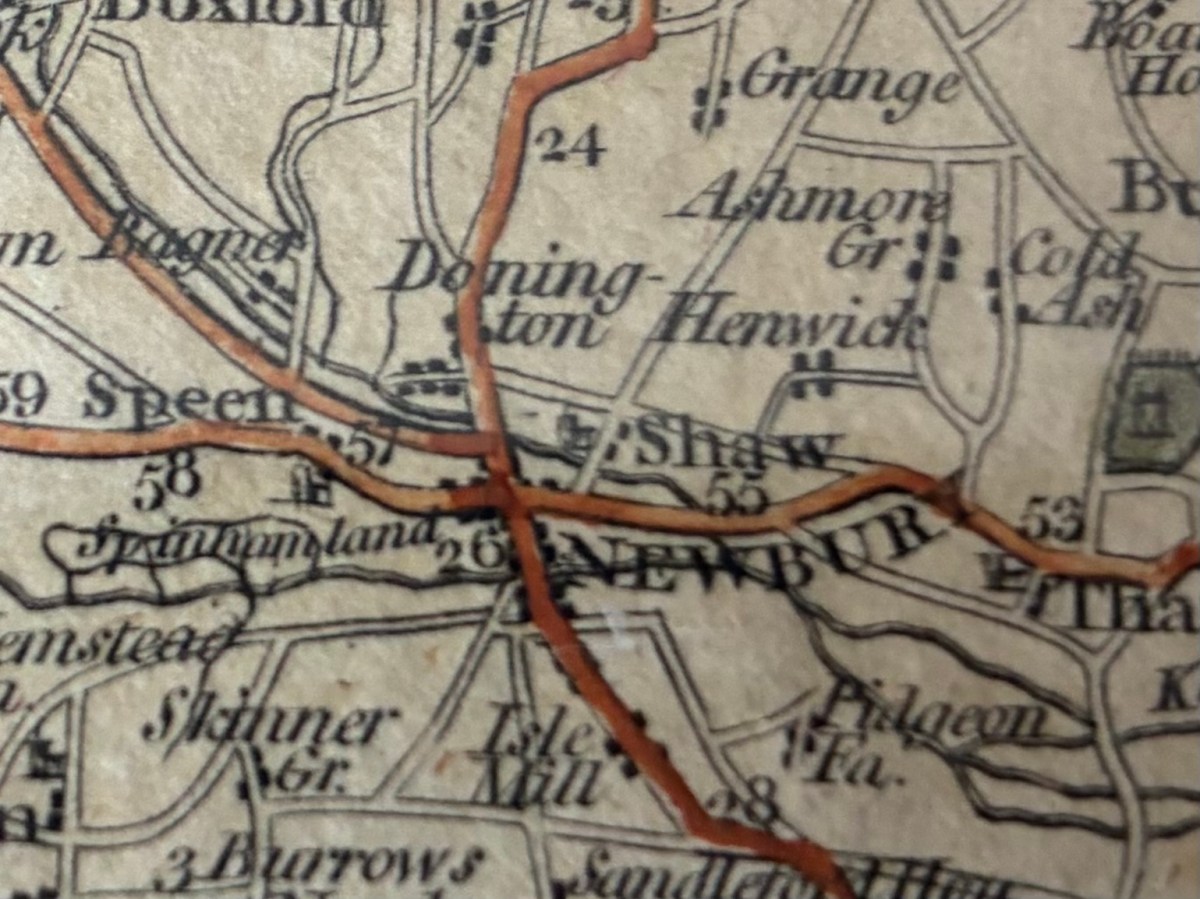
 On the night of  September 12th , he accosted one Richard Griffin, a compositor, along the Shaw Road. Jumping out of the hedge and grabbing his victim by the collar, Purdue held his pistol to Griffin’s head.

“I must have all you’ve got, or I’ll blow your brains out and rob your body”, he shouted as he seized Griffin’s watch.

Griffin tried to resist and grabbed the pistol.

“If you do that, it is loaded with slugs and caps, and I’ll shoot you,” Purdue threatened as he took the victim’s purse from his pocket. It contained a sovereign, three half sovereigns and seven or eight shillings in silver.  Seemingly contented with his loot, Purdue told his victim,

“Go! Go quick; and if you give the least alarm, I’ll shoot you!”.

Griffin asked if he could retrieve his cane. Purdue told him to be quick, then added:

”If you wish to tell anyone who robbed you, you may say Captain Hawkes!”

Perhaps Purdue had become over confident following the ease with which he had been able to rob Richard Griffin, a person who walked with a cane. However, landlord of the White House, Alfred Sindle proved not such an easy victim.

At twenty to eight on the evening of October 12th, Alfred Sindle was walking towards Newbury when he spotted someone coming towards him, a hat pulled down over his eyes.

“Where are you going?” the stranger demanded as he came closer.

“What odds is that to you?” Sindle replied.

The stranger immediately raised a pistol to Sindle’s cheek, saying,

“See this you b——-”

Sindle straight away retaliated by raising his fist and knocking the stranger down, falling on him and catching the hand in which he held the pistol. There was a tussle and the pistol went off. At this, Sindle shouted, “Murder” and “Hoy! Hoy!”. His assailant, meanwhile, clearly knowing he was defeated, cried, “ I’m done. I give in”.

Back at the White House Inn, Alfred Sindle’s father, James,  had heard the sound of pistol shot and his son’s voice shouting “Murder” and “Hoy ! Hoy!” so he rushed out to help. Both father and son held on to Purdue to prevent his escape.

“I suppose you’re Captain Hawkins as you deem yourself,” James Sindle said to Purdue, recognising something of the disguise from press reports. He went on, “Just the gentleman I wanted to catch hold of. You’ve robbed two or three afore just somewhere here, and I’m glad to catch hold of you.”

The game was up for Purdue as father and son Sindle took him to the police station at Speen where he was put in the charge of Superintendent Harfield.

At the police station Harfield began a search of Purdue, who, it seems offered no resistance, drawing his pistol from his pocket himself, saying, “Here is the pistol that I used”.

He also produced from a pocket the piece of black lace he had used as a mask and explained that it enabled him to see through it whilst at the same time hiding his face. Harfield’s search also revealed 11 pistol caps, some lucifer matches, a tobacco box, a knife and the watch stolen from Griffin. 

Purdue was charged with robbery and attempted robbery, and locked up. He had built up something of a reputation in the local area and in the popular imagination was seen as a “ferocious and determined looking character.” The reality, to the surprise of those who saw him for the first time, was a slim eighteen year old with nothing of a muscular appearance.

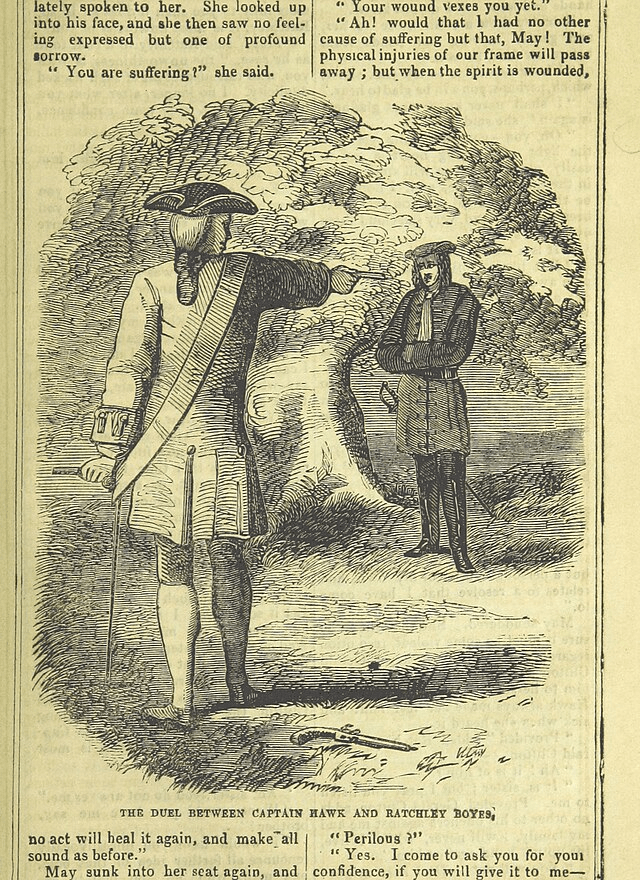
From: Captain Hawk or The Shadow of Death by J.M.Rymer. British Library via Wikimedia Commons

Superintendent George Deane of the Newbury police continued his investigation into the case but no further evidence was found at Purdue’s lodgings in Enborne Road. However, Deane was able to contact a young woman, in domestic service, to whom Purdue had paid some attention. The young woman had given to Deane a series of novels featuring the exploits of a fictional highwayman: “The Black Highwayman, being the second series of Black Bess, or Knight of the Road”. The novels were illustrated with coloured plates. Clearly, this was where Purdue had got his inspiration!

The following Thursday morning, William Purdue was brought before the County Magistrates, charged with being armed with an offensive weapon and attempting to rob Alfred Sindle. The case had attracted a lot of attention and a dense crowd was waiting to see the Newbury Highwayman.

At first Purdue was defiant and tried to contradict witnesses, claiming that he hadn’t sworn at Sindle but that foul language had been use against him. Sindle had not knocked him down, he argued, and that he would have got away if he had not been suffering from a cold.

Speaking in defence of his son, Thomas Purdue told the magistrates that when his son had left home six years previously he had been, “ a good useful lad”, who, “would not go to a circus or attend a theatre, and was a teetotaller.”

In other words, William Purdue had not been corrupted by exposure to popular culture!

Thomas Purdue could not believe that his son had acted on his own, and determined to find out who had assisted him. This was the only point at which William Purdue showed emotion – perhaps he was thinking of the girl who had given him the novels. 

From: Captain Hawk or The Shadow of Death by J.M.Rymer. British Library via Wikimedia Commons

Purdue was committed for trial at Berkshire Assizes and was removed to Reading Gaol.

The 1869 Lent Assizes opened in Reading and on February 25th Purdue was charged with assault whilst armed with an offensive weapon, assault while armed with a pistol, robbery and attempted robbery.

 Alfred Sindle was a witness for the prosecution and the sorry tale of Purdue’s exploits were relayed to the jury as were details of his previous good character and the fact that he was only eighteen years old. However,

“the prisoner’s mind had been corrupted by reading books about highway men, and particularly about ‘Captain Hawk’ whom he attempted to emulate.”

Sentencing was deferred until the following Friday, when the judge addressed Purdue:

“Yours is a painful case to see a youth of your age in the dock on a charge of highway robbery. I have listened to what has been said on your behalf and that you have been led into this stupid as well as wicked transaction by reading stupid and wicked literature.”

Purdue was sentenced to six months’ hard labour.

The editor of the Newbury Weekly News chose to add his own views to those expressed by Mr Justice Hannon regarding the corrupting influence of certain types of literature:

“Yet it is painful to witness the hold which these immoral and distorted narratives have upon the minds of certain classes of society; and the melancholy instance of this, which has lately become so notorious, would seem to show that such unwholesome literature produces effects upon the imaginations of certain youths, most prejudicial to themselves and to society.”

So, it seems, upper and middle class youths could read the “Captain Hawk, Highwayman”, stories with impunity, but not a lad from the lower orders such as William Purdue. 

There is no evidence to suggest that William ever returned to Newbury; by the time of the 1881 census he is married with 5 step children, living in Reading and working as a painter – his trade when he embarked on his fantasy life as a highwayman.

Purdue died in Reading in 1899. He was aged just 48.  

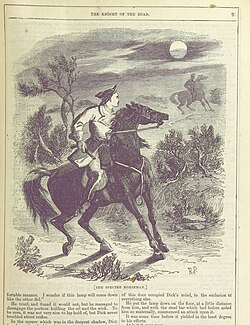
Black Bess; or, The knight of the road. A tale of the good old times (“Price: one penny”) By Edward Viles. Public domain: Wikimedia Commons

Sources:

Ancestry

Newbury Weekly News via British Newspaper Archive

(C) Theresa Lock, 2025