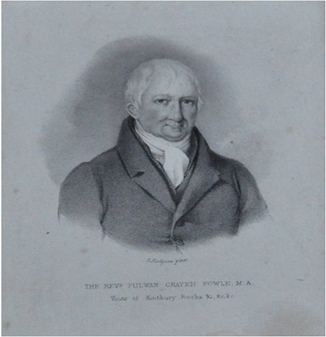
The man who remembered Jane Austen: Kintbury’s Rev Fulwar Craven Fowle

We have, I believe, just one description of Jane Austen’s appearance, recalled by someone who knew her well all her life – someone who had known her since she was a small child of three.

“She was like a doll……certainly pretty – bright and a good deal of colour in her face – like a doll – no, that would not give at all the right idea for she had so much expression – she was like a child – quite a child, very lively and full of humour.”

That person was Kintbury’s vicar, Rev Fulwar Craven Fowle.

Fulwar ( pronounced “Fuller” – it was a family name ) was born in Kintbury on June 12th 1764, the eldest son of Rev Thomas Fowle and his wife, Jane née Craven. These were the days when having connections, either within the family or otherwise, could lead to appointment to a parish; in the case of the Fowles, Fulwar’s grandfather Thomas Fowle I had been appointed vicar of Kintbury in 1741 and his father, Thomas Fowle II, followed him in the post from 1762 to 1806.

At the time, it was not at all uncommon for a priest to hold the position of rector in other parishes. Thomas II was rector of Hamstead Marshall, not far from Kintbury, and also Allington, near Salisbury in Wiltshire. Later, as well as being vicar of Kintbury, Fulwar himself was also rector of Elkstone in Gloucestershire.
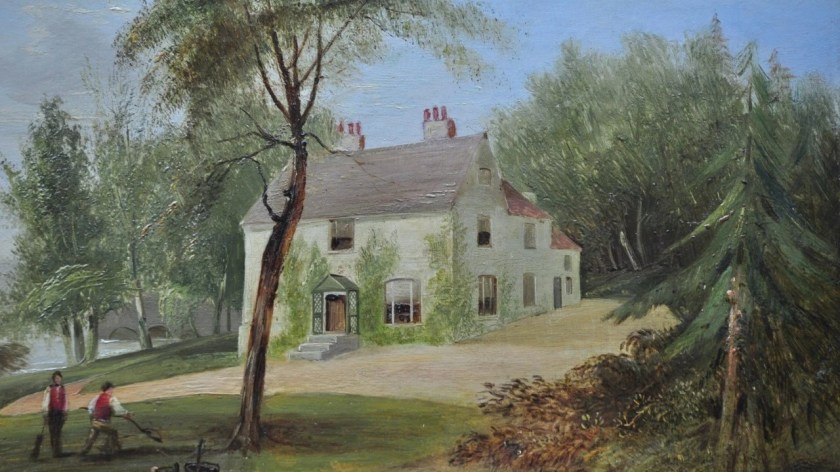
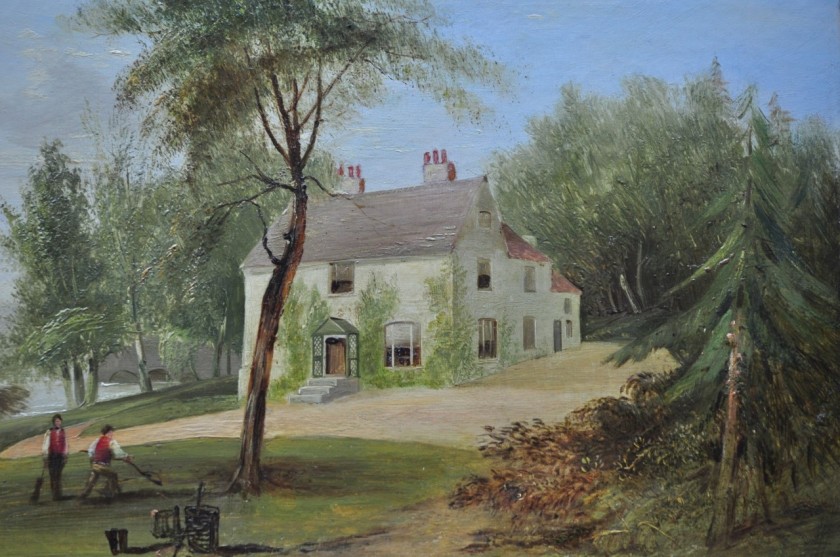
The Old Vicarage in Kintbury

So the Fowles could be said to have been very much a family of the vicarage. This was a time when vicarages, wherever they were, were larger, higher status houses and those who lived in them led relatively comfortable lives supported by servants and other staff. However, a vicarage life was not associated with opulence and none could be described as stately.

By contrast, the Cravens’ seat at Hamstead Marshall, three miles to the east of Kintbury, was far grander.  

Fulwar’s mother Jane Craven was born in 1727, the second daughter of Charles Craven and his wife, Elizabeth Staples of Hamstead Marshall. Charles is better known as “Governor Craven” from his time as being governor of South Carolina in America. The former Elizabeth Staples has a reputation as a socialite with little time for her family.
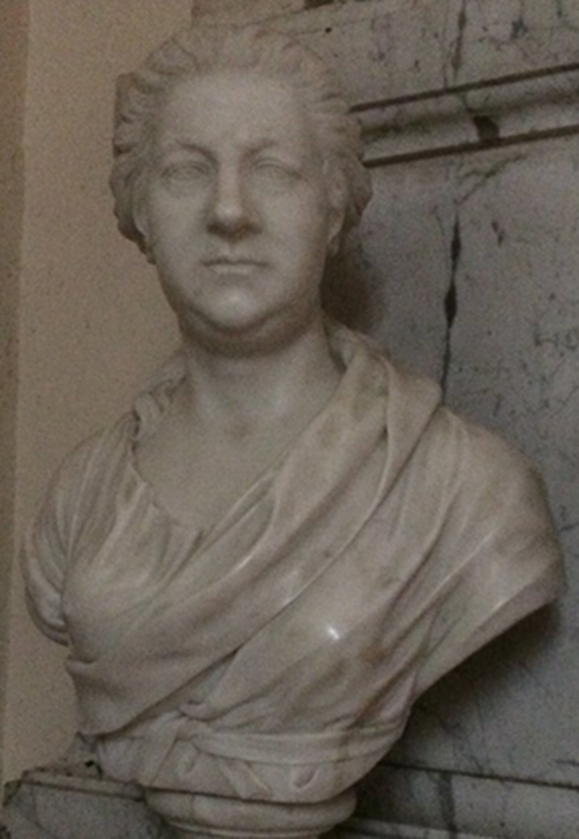
The Former Elizabeth Staples, grandmother of Fulwar Craven Fowle

When Charles Craven had been growing up, the Craven family seat was the elegant baroque mansion in Hamstead Park, designed by the Dutch architect Balthazar Gerbier in the mid C17th. Unfortunately, this building burnt down in 1718 and by the time of Charles Craven’s marriage to Elizabeth Staples in 1720, it is likely that the family home was an extended hunting lodge on the estate.
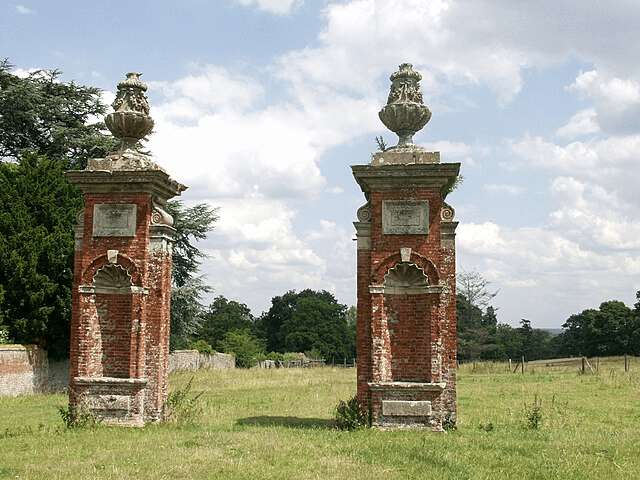
All that remains of the Baroque mansion in Hamstead Park. Photo by Mick Crawley via CreativeCommons

So, even though the Hamstead Marshall Cravens no longer had a “stately” house, they did have a high status home and close family links to the Earls of Craven, such that Jane Craven’s family could be said to occupy a higher rung on the social ladder than that of the Fowles.  

Jane & Thomas were married at Kintbury on July 18th, 1763. Jane was 36 and Thomas was 37. Thomas had been ordained priest the previous year and became vicar of Kintbury following his father’s recent death and the post becoming vacant. Perhaps the comparatively later age at which the couple married could suggest that their marriage was not economically viable until then, despite Jane’s family having been wealthy. We do not know.  

Thomas & Jane had four sons: Fulwar Craven, born 1764, was followed by Thomas, born 1765, then William, born 1767, and finally Charles, born 1770.

Fulwar was a fair-haired, blue-eyed child, slight of stature and never very tall, even in adulthood. The country side would have encroached on the village of Kintbury more so than it does today, enabling the Fowle boys and their friends to roam at will and swim in the Kennet. Like all of the more comfortably off, the boys would have learnt to ride as a matter of course and by adulthood, Fulwar had the reputation of being a very good horseman.

We can assume that, whilst life in the Kintbury vicarage might not have been opulent, it would have been economically secure particularly when compared to the lives of many working people and farm labourers in the cottages of Kintbury.

There was no universal education in late eighteenth century England. In some towns and villages a basic education was offered by religious or charity groups and there were well-established grammar schools in more prosperous towns which prepared young men for the professions or university entry. For the sons of wealthier families there was a choice of “public” schools – a misnomer in that these schools were – and are – expensively fee-paying and elitist.

The novel, “Tom Brown’s School Days”, published in 1857, is a fictionalised account of being a pupil at Rugby, a public school in the south east midlands, in the 1830s. Its author, Thomas Hughes, was the grandson of the vicar at Uffington, then in Berkshire, across the downs around twenty miles to the north of Kintbury.

It might be assumed that, coming from a similar background, the Fowle sons would also have attended a public school, perhaps Eton, close to Windsor in east Berkshire, or Winchester, in Hampshire. Instead, Jane and Thomas chose to send their sons to the school run by Rev George Austen and his wife, at Steventon, near Basingstoke in Hampshire. George Austen’s “school” was actually in the family home – the Steventon vicarage.

Thomas Fowle had known George Austen since their days at Oxford University so perhaps he felt more comfortable entrusting his sons’ education to someone he knew very well. Alternatively the costs of a public school education might have been beyond the budget of a rural parson, we cannot say. The reality might have been a combination of both factors.

We do not know precisely the curriculum Rev Austen would have offered his students although it would very likely have centred on the Classics – Latin and Greek- which would prepare the boys for further study of the same at Oxford University.

Fulwar was fourteen when he first joined the other borders at the Steventon vicarage school. At that time the Austens’ eldest son, James, was nearest to Fulwar in age and became his closest friend. Edward was 11, Henry 7, Cassandra 5 and Francis 4. The baby of the family at that time was Jane, aged 3. Charles was to arrive a year later.  

It goes without saying that the Austens would have had servants; however, even with help with cooking, cleaning and laundry, the household must have been a particularly busy one. One can only assume that George Austen’s wife, Cassandra, must have been a particularly well-organise and relaxed person – laid-back, we might say today – to run such a household.

Fulwar’s brothers later joined him at Steventon: Tom in 1779 and William and Charles sometime in the early 1780s. The young Austens also visited Kintbury, and many years later, in 1812, James Austen wrote a poem in which he recalled staying at the Fowles’ home in Kintbury:

And still in my mind’s eye methinks I see

The village pastor’s cheerful family.

The father grave, but oft with humour dry

Producing the quaint jest or shrewd reply;

The busy bustling mother who like Eve

Would ever and anon the circle leave

Her mind on hospitable thoughts intent

Careful domestic blunders to prevent.

Whilst James Austen was clearly not a second Wordsworth, his words suggest the Fowles were a warm, happy family. Perhaps the “humour dry” and “quaint jest” suggest that the Austens & Fowles shared a common sense of humour or enjoyed the same sort of witticisms. Perhaps both families would a have agreed with Jane Austen’s Mr Bennett when he said,

“For what do we live, but to make sport for our neighbours, and laugh at them in our turn?”

There is certainly evidence that Fulwar had an acerbic sense of humour, which is perhaps not surprising in a close friend of the  Austens.

At Steventon, all the Fowle brothers were successful students. Fulwar went on to enter St John’s College, Oxford in 1871 where he gained a BA in 1785 and an MA in 1788. His brother, Thomas went up to Oxford in 1783 and gained an MA in 1794. William went on to study medicine ( not yet a subject taught in an English university ) as an apprentice to his uncle William Fowle in London. Charles studied law and was called to the bar in 1800, later practising law in Newbury.

Perhaps it was inevitable that Fulwar would follow his father and grandfather into the church; in 1786 he was ordained deacon at Salisbury cathedral and was installed curate of St Mary’s, Hamstead Marshall on the following Christmas Eve. It has to be very likely that he obtained this post due to family patronage, which, at this time, would have seemed perfectly normal and acceptable with no accusation of nepotism.
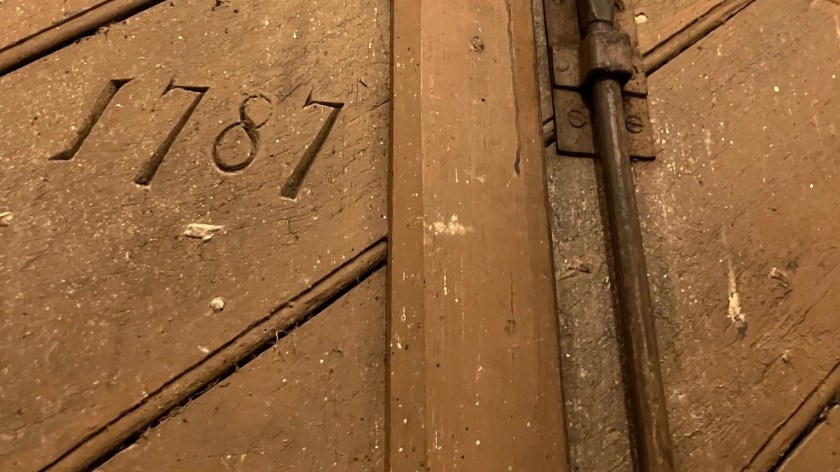
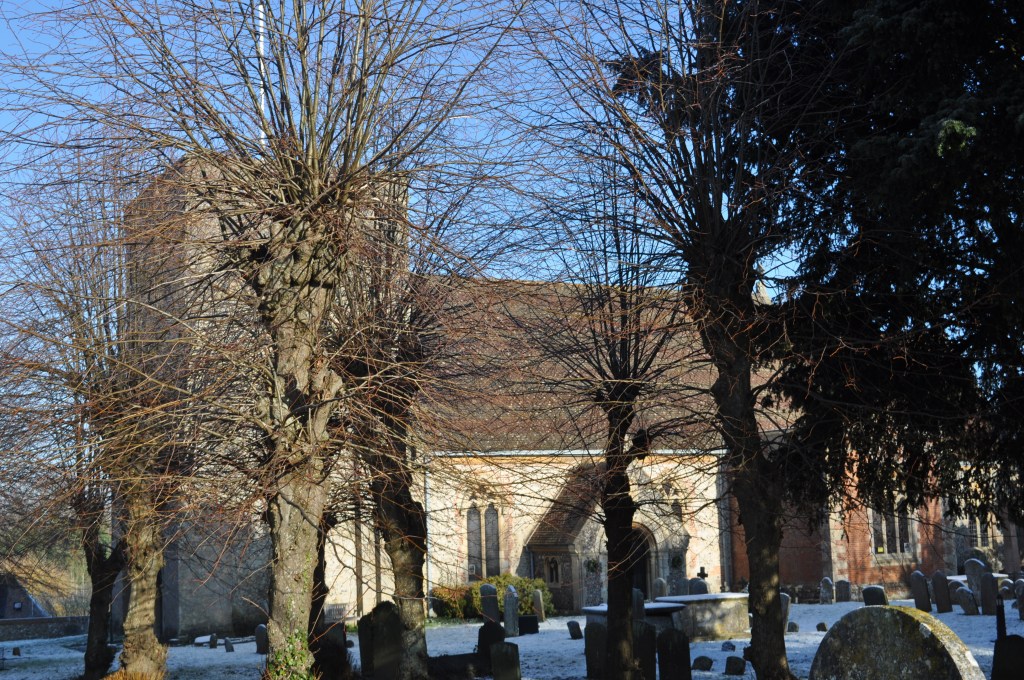
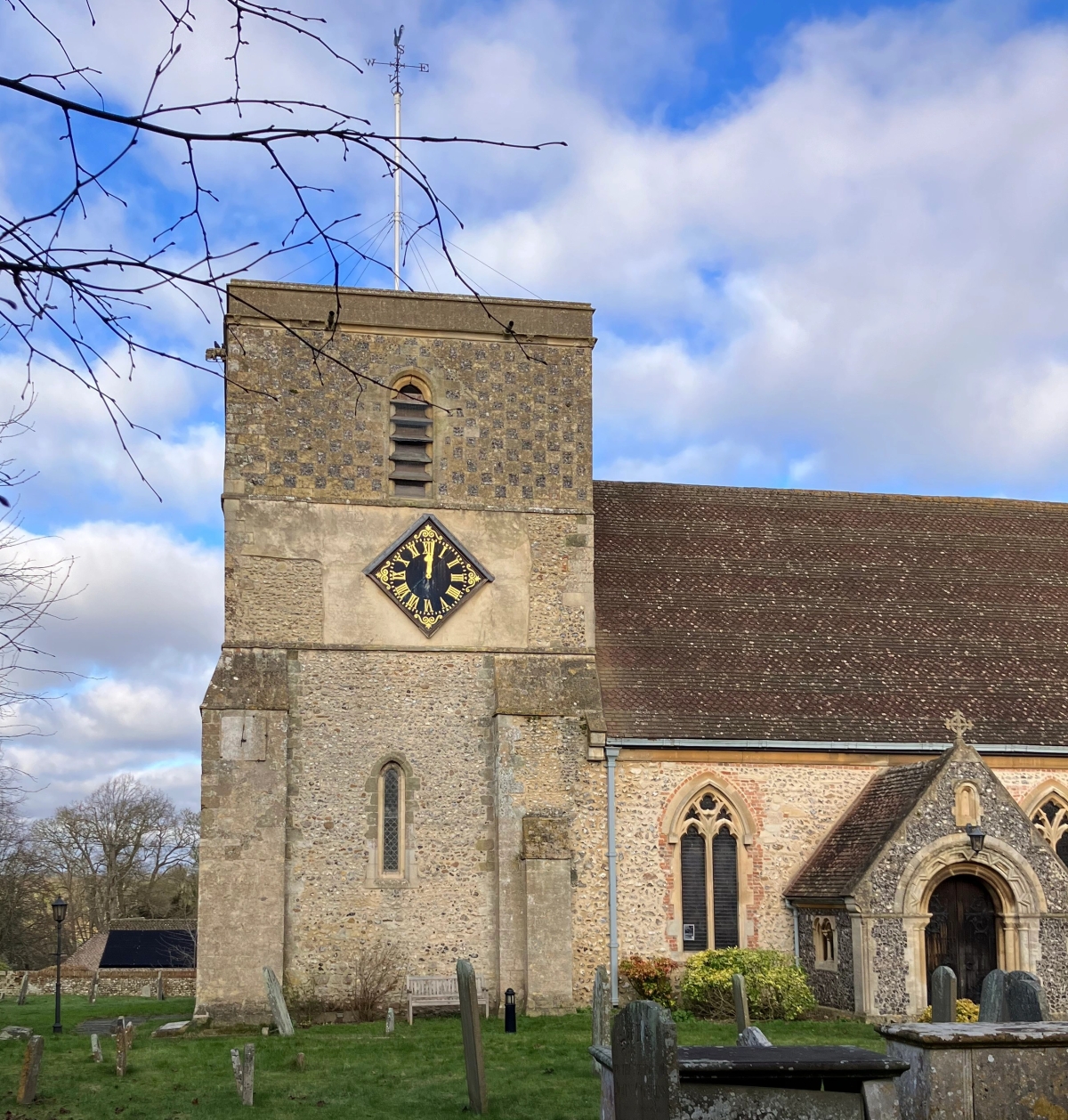
The west door, St Mary’s, Kintbury

Also in the manner of the time, Fulwar became rector of Elkstone in Gloucestershire in 1788 where the manor had belonged to the Craven family since 1623. 0nce again an example of an appointment made as a result of family connections.

1788 was also the year in which Fulwar married his cousin, Elizabeth – known as Eliza – Lloyd. Eliza’s mother was the former Martha Craven, daughter of Governor Craven of Hamstead Marshall. Martha had married the Rev Noyes Lloyd, vicar of Enborne  in 1763 and Eliza, along with her sisters, Martha & Mary, with their brother Charles, had grown up there. Sadly, Charles died in 1775 following an outbreak of smallpox.

In Elkstone, the elegant, three storey rectory built earlier in the century became Eliza & Fulwar’s family home for the first six years of their marriage. Their first child, however, Fulwar William, was born at Deane, near Basingstoke in Hampshire in 1791. It has to be likely that this was because  Eliza’s mother and her sisters Mary & Martha had been living there since having to vacate Enborne vicarage on the death of Rev Nowes Lloyd in 1789. As a first-time mother, Eliza probably wanted her confinement to be somewhere close to her family for support.
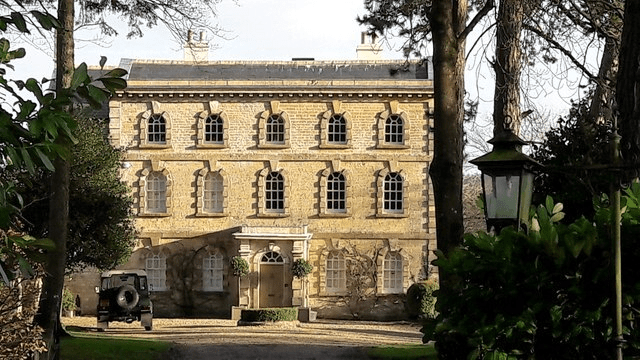
The Old Rectory, Elkstone Phto: Chris Brown, via CreativeCommone

The couple’s second child, Mary Jane, was born at Elkstone in 1792 although the baptism of their third child, Thomas, in 1793, is recorded as being in Hurstbourne Tarrant, near Andover in Hampshire. Although it is a very long way from Elkstone, Eliza’s mother and sisters were now living at Ibstone, a hamlet close to Hurstbourne Tarrant so it would be logical to assume Eliza had once more returned to her family for her confinement.

In 1794 the family returned to Kintbury where Fulwar took over the incumbency. By now there were  two more children: Mary Jane, had been born in Elkstone in 1792 & Thomas in Hurstbourne Tarrant in 1793.
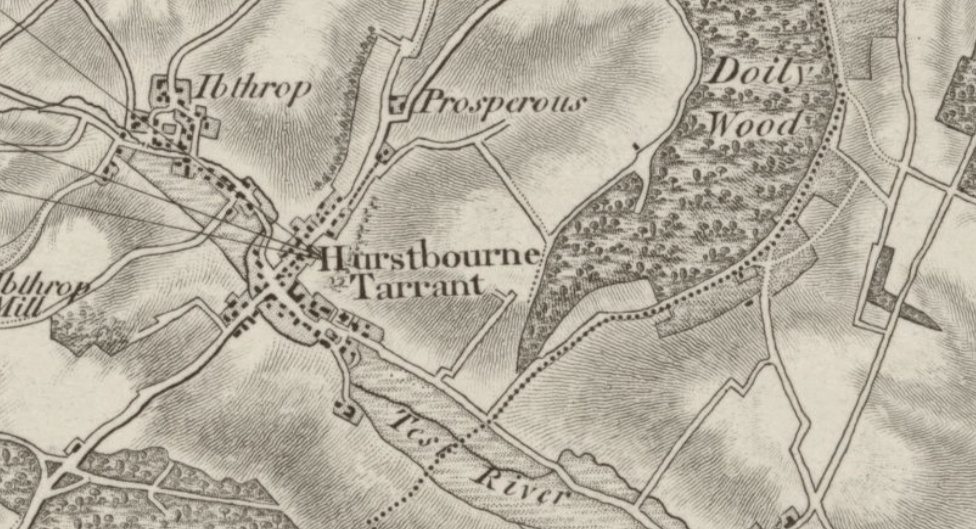
Caroline Elizabeth had been born in December of 1794 but died the following January. Both her baptism and death are recorded as being at Hurstbourne Tarrant.

In January 1797 a happier event occurred at Hurstbourne Tarrant where Eliza’s sisters Mary & Martha were still living with their mother. Mary Lloyd married the widowed James Austen and became step-mother to James’ daughter Anna. In the custom of the time, Eliza Fowle could now speak of James Austen as her brother. Martha Lloyd was to become one of Jane Austen’s closest friends and a life-long companion.

However, tragedy was soon to strike the extended family.

In 1795, Fulwar’s brother Tom Fowle had become engaged in secret to Cassandra Austen prior to joining an expedition to the West Indies as Lord Craven’s chaplain. However, he was never to return and news of his death from yellow fever reached Kintbury in the February of 1797. It was James and Mary who broke the news to Cassandra.

Over the next eight years four more children were born to Fulwar and Eliza in the Kintbury vicarage. In a letter to Cassandra of December 1st, 1798 Jane Austen wrote,

“No news from Kintbury yet – Eliza sports with our impatience.”

It is worth remembering that this was a time when everyone would have known someone who had died in childbirth so Jane Austen’s wry humour would be masking a real concern for Eliza’s welfare. Elizabeth Caroline ( known as Caroline ) arrived five days later on December 6th.  She was christened in Kintbury on January 19th by James Austen.

Isabella followed in 1799, Charles in 1804 and Henry in 1807. 

The Fowles, the Lloyds and the Austens remained friends throughout their lives. The little girl Fulwar had first got to know in the Steventon vicarage had shown a prodigious talent for writing and become a very succesful novelist. In 1815 the Prince Regent even requested that Jane should dedicate her latest novel to him, which she did. As it happens that novel was Emma, the one about which Fulwar famously said he would only read the first and the last chapters as he had heard it wasn’t interesting. I very much doubt that Jane would have been particularly offended by this comment – after all, she knew him almost as well as she knew her older brothers, and for almost as long.

Despite the disparaging comments about Emma, we know that Fulwar did indeed purchase other of Jane’s novels, as copies with his name, written in his handwriting on the title pages, have fairly recently come up for auction. We know from Jane’s letters that Eliza bought a copy of Sense & Sensibility.  

 Throughout this time there are many passing references to Fulwar & Eliza in the letters of Jane Austen. However the most telling reference as regards Fulwar is that January 1801. In her letter to Cassandra, Jane writes:

“We played at vingt-un, which, as Fulwar was unsuccessful, gave him an opportunity of exposing himself as usual.”

Fulwar, it seems , was not good at hiding his bad temper. But by this time Jane had known him for over twenty five years and must have been very well aware of his moods.

As their priest, Fulwar Craven Fowle served the people of Kintbury for the rest of his life. Whilst not all Anglican clergy were in any way wealthy and some seem just to have been scratching a living in their parishes – (indeed it is believed one of the reasons why the ill-fated Rev Thomas Fowle took the post of Chaplain to Lord Craven’s expedition was to raise enough money to marry Cassandra ) – all the evidence suggests that the Fowles’ life in Kintbury was secure and comfortable.

As well as carrying out his duties as parish priest in Kintbury and, from time to time visiting the parish of Elkstone, Fulwar was very much involved in West Berkshire public life.

In 1805 he was appointed Lieutenant Colonel Commandant of the Kintbury Rifle Corps and in the same year led the local Volunteer Brigade to Bulmersh, near Reading where they and other volunteer regiments were inspected by George III. Apparently the King was particularly impressed by the “military perfection” of the Berkshire Volunteers and with Rev Fowle as their officer.

I think it’s worth remembering that at this time there was still the threat of invasion from the French under Napoleon across the channel and the south coast felt particularly vulnerable. Having an efficient volunteer force was important to the nation’s security in the same way as the Home Guard was in the Second World War.

Despite the country being on a war footing and the newspapers continuing to carry reports of Napoleon, daily life continued relatively uninterrupted.

It seems that Rev Fowle moved within what Jane Austen’s Mrs Elton would have described as “the first circle” socially. According to a newspaper report of 1807, for example, he was one of several dignitaries to attend a race meeting at Enborne Heath near Newbury. Others named include the Earl of Craven and Sir Joseph Andrews of Shaw House, Newbury. Very much the local “great and good”.

What is perhaps surprising is the amount of property and land that Fulwar owned in the area. This included 55 acres of farm land, two cottages and other farm buildings at Rooks’ Nest farm just south of Kintbury, and also 350 acres of pasture and arable land with adjoining farm house and other buildings at East Woodhay, just over the border in Hampshire.   

However, Fulwar does seem to have taken an interest in agriculture and was not simply a landowner who cared solely about collecting the rent. In 1808 he was elected Steward of the Berkshire Agricultural Society for that year and in 1820 became a member of the Hampshire Agricultural Society

This was the time of what is now known as the agricultural revolution – the period throughout the late eighteenth century into the nineteenth century  when many landowners and working farmers were developing ways to increase agricultural production. In this area, South Downs and Merinos were the breeds of sheep most commonly kept by farmers but at the Hampshire Agricultural Show of 1820 the Rev Fowle exhibited a pen of Leicesters which, “excited much attention” as they had not been seen there before. Furthermore, the superior weight gain of these sheep, when compared to that of the usual breeds, was due, it was believed, to their having been fed on a diet of “sliced Swedish turnips” rather than corn and cake. Over the next two years, the Leicesters maintained their advantage when reared under controlled conditions.
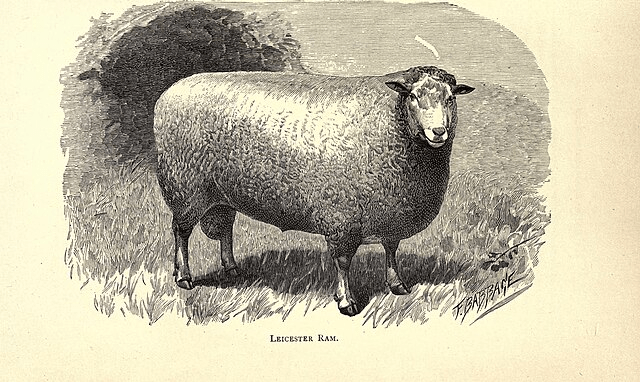
A Leicester Ram Photo: John Wrightson via Creative Commons

Whilst it has to be likely that it was a shepherd in Rev Fowle’s employment who would have undertaken all the husbandry involved in this experiment, Fulwar himself must have approved of its happening and may well have initiated it.

The Agricultural Revolution resulted in a slow and relatively peaceful change throughout the country. The same could not have been said about the French Revolution, observed from across the channel, where social change had included the violent removal of the monarchy and aristocracy. Throughout Fulwar’s life there were campaigns for social and political reform across the country but these were accompanied by fears, on the part of the establishment, of the kind of violence that had been seen in France. I think it is in the light of such fears that we need to assess the response of certain authorities to the unrest that broke out across southern England in 1830, though it does not excuse the more extreme reactions.

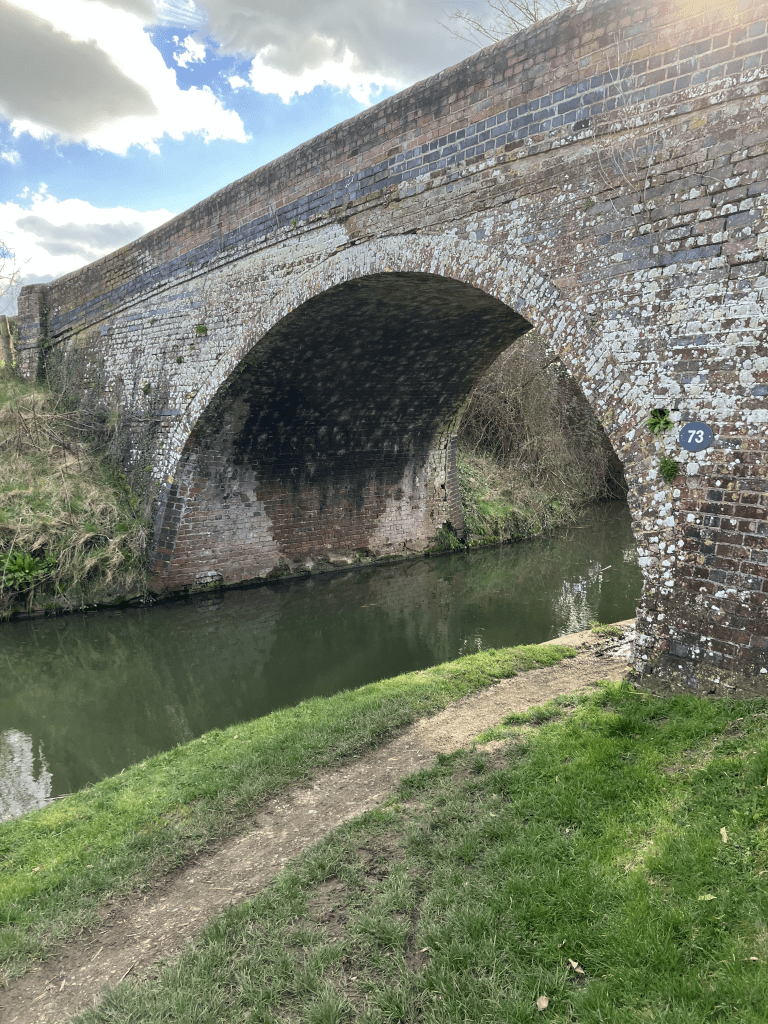
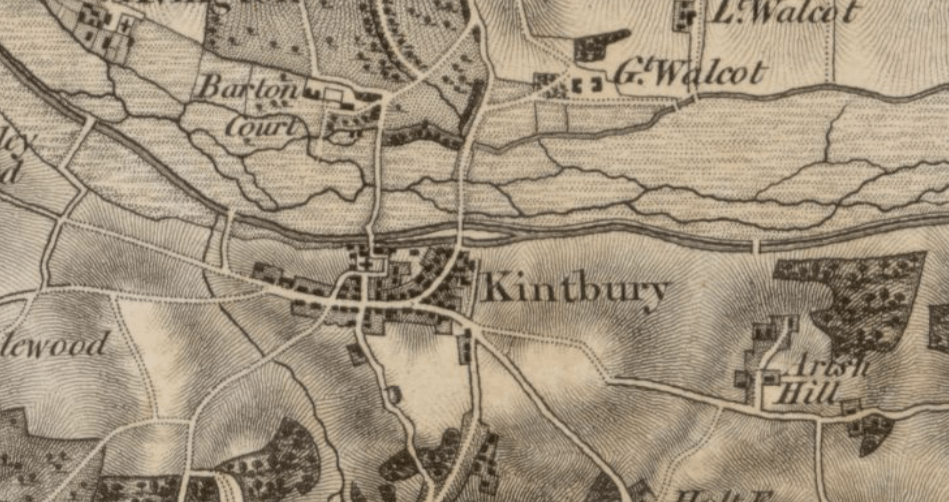
By 1830, Fulwar was 66 and Eliza 65. The couple still lived in the vicarage: the white building  next to the River Kennet where Fulwar had grown up although now its garden formed part of the south bank of the Kennet & Avon canal as it flowed towards Kintbury wharf, bringing coal and other commodities to the village.
Fulwar also served as a magistrate and was, therefore, regarded as a figure of authority and most probably of derision on the part of those who came before the bench. Such is human nature. He seems to have been respected and held in affection by the members of his church; by now, however, Kintbury had both a Methodist church and a Primitive Methodist church so numbers of nonconformists in the village would not have been inconsiderable: Rev Fowle was not everyone’s priest.

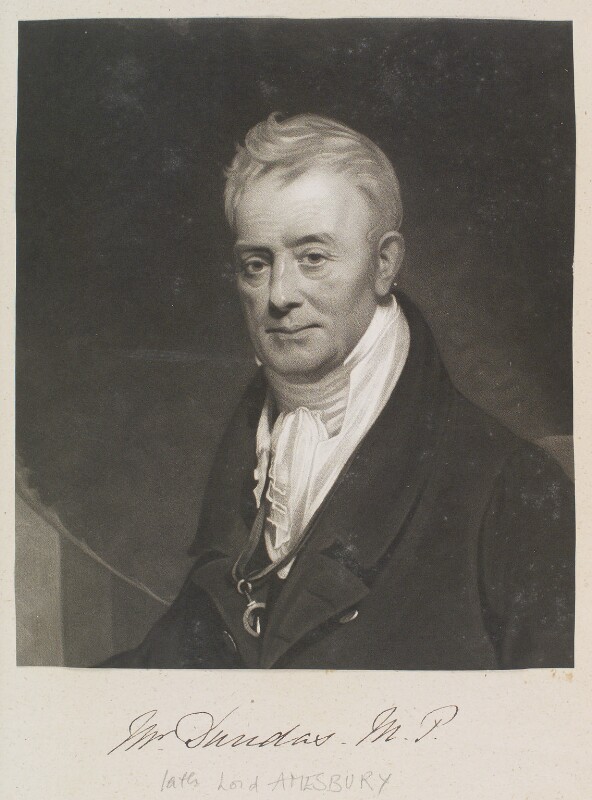
Their neighbour, 79 year old Charles Dundas still had his seat at Barton Court, less than half a mile along the coaching road which led from the Bath Road into the village. Dundas had been Member of Parliament for Berkshire since 1794.


Charles Dundas, MP & Kintbury Resident

We have written quite extensively in this blog about the events which led up to the Swing Riots of 1830. Formore information you might like to look at these articles: The Kintbury Martyr parts 1, 2 and 3.

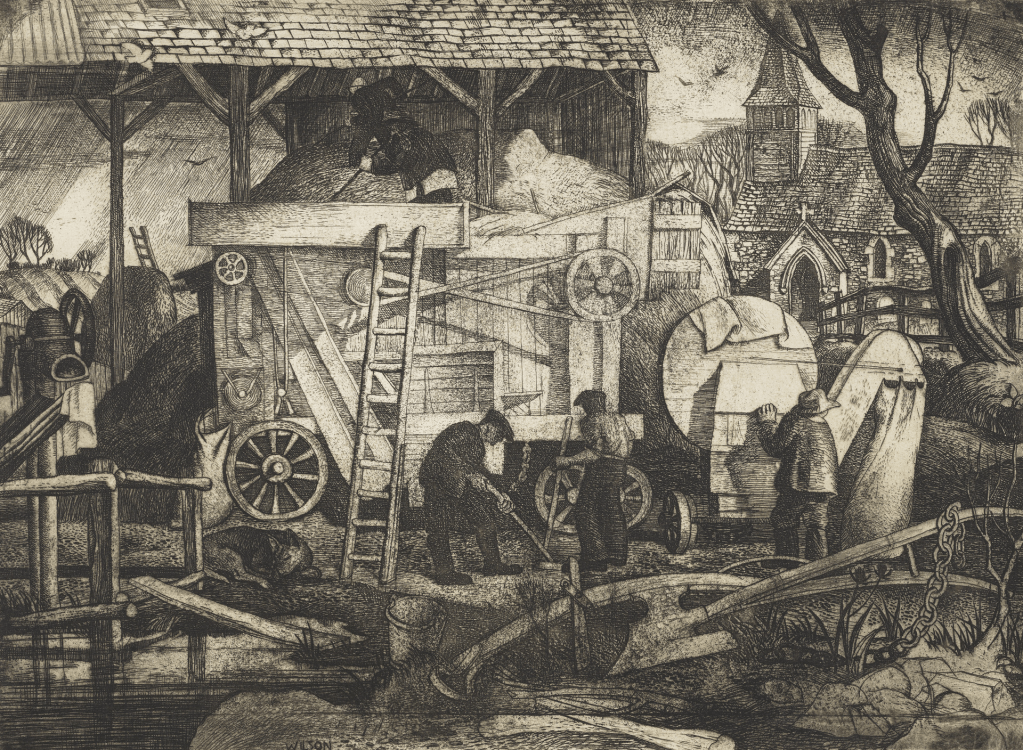
Following a year of escalating hardships, by the autumn of 1830 the agricultural labourers focussed their attention on threshing machine: the mechanical devices that could do the work of several men at a time rendering them redundant when their casual employment was most crucial if they were to earn enough to feed their families through the upcoming winter. By the night of November 21st of that year, a riotous mob of angry men was roaming through the local villages, demanding money from the farmers and threatening to set fires and smash machinery, in particular the hated threshing machines.

Thanks to a letter held by the National Archives we can read Fulwar’s own account of what happened when the Kintbury mob arrived at the vicarage. Apart from some of his sermons, the letter is the only time we can hear his voice through his writing – writing that is small and neat despite the strain of the night he has just witnessed.  He frequently punctuates by using dashes. Both the neatness, much of the letter formations  and the dashes are reminiscent of Jane Austen’s letter writing, which leads me to wonder if both were influenced by George Austen. It’s a thought. 

The letter opens:

Dear Dundas,

The mob continued their work of breaking machines the whole of the night. They came to me about 4 oC in the morning. Harrison consulted with me and I agreed with him that it would be better to bring your machines to Kintbury and let them break them there than that they should go to BC for that purpose. They were brought up accordingly and taken into the street.

I think it is important to remember that at this time there was no police force and no authority that the Fowles could have called upon easily had they felt threatened. We do not know if anyone else was living at the vicarage besides Fulwar and Eliza – there may well have been one or two domestic servants and we know that Fulwar had a gun licence but all the same the couple would have been aware that they had very little personal protection had the mob turned violently against them.

Fulwar’s tone is resigned with acceptance of the situation rather than anger. He is clearly being kept informed of developments, telling Dundas that the mob has moved on to Titcombe, Hungerford Park and North Hidden, intending to go further. If this is correct, the rioters must have been moving swiftly through the area to have covered the distance. Furthermore, someone – or perhaps several people – must have been following on horseback to be able to report back as to what was happening. In these days of radio or mobile phone communication, it is easy to forget just how difficult it must have been in 1830 to follow what was happening.

The rioters have been demanding money:

I understand that they will have two pounds from each person; I know they had two from me, from Johnson, Captain Dunn and Mr Alderman.

According to the Bank of England online inflation calculator, £2 in 1830 equates to £199.40 today.

Once more I find Fulwar’s tone interesting – he is accepting of the situation and, at this time at least, offers no criticism or disapprobation.

I have not heard that they have committed personal violence on anyone rather than forcing the labourers to join them. Ploughs with cast iron shears appear to me as much the object of their hatred as machines and these they have broken many.

It is obviously important to Fulwar that he points out to Dundas that the rioters have not been personally violent to anyone and that the labourers ( by which I understand those not originally part of the “mob” ) are being forced to join in. Today we might speak of these people as being radicalised by the original protesters.

Further details are being brought to the vicarage as Fulwar writes:

I have just received a message from Mr Willes that the different parties have joined at Hungerford and exceed 1000 men.

One thousand men. That is half the population of modern day Kintbury. Even if that number is an exaggeration, a mob of even 250 angry men would be very frightening.

Fulwar continues to add to his letter as further information is brought to him. The Hungerford and Kintbury men have met with Mr Pearce ( a farmer ) and Mr Willes ( John Willes, JP of Hungerford Park ) and others. The men were demanding:

… twelve shillings a week for a man & wife & three children & the price of a gallon loaf for every child above three – these terms were acceded to by the Gentlemen as far as they could be, they were to be recommended for adoption to the farmers. I hope they will aceede (sic) to them I am in momentary expectation of being sent for by the Kintbury men who are returned or just returning to the village. I cannot of course try to beat them down to a lower price. These loaves to the children are all that men in health are to have from the parish as I understand these Gentlemen

According to the Bank of England, twelve shillings in 1830 equates to £59.82 today. The price of a gallon loaf in Newbury varied between one shilling and seven pence and one shilling and nine pence, so something around £8 today.

Fulwar concludes his letter at this point, then adds a post script:

I have just met the men – they (missing text) the same terms which had been agreed at Hungerford and I told them that as far as was in my power I would endeavour to persuade the farmers to agree to them. The men gave three cheers and expressed themselves perfectly satisfied but they all agreed that there must be no payment in bread but all in money. I could not feel justified in bringing back angry feelings  by refusing to promise to recommend that also. 

Fulwar’s tone in this letter is undoubtedly conciliatory. Whilst he admits that he does not want to bring back angry feelings,  I don’t believe he was merely seeming to be sympathetic to the demands because the men are threatening.

Unfortunately, not everyone was in agreement with the way Fulwar dealt with the mob, believing him to be too much in sympathy with them and encouraging them. Someone complained to Lord Melbourne, the Home Secretary, and as a result, Charles Dundas and over ninety other villagers signed a letter to Melbourne, assuring him that Rev Fowle had done everything he could to quieten the disturbances.

Despite Fulwar’s attempts, the wider disturbances did not end there and then at the Kintbury vicarage, as we have written about elsewhere on this blog. The resulting court case was eventually heard at Reading the following January. Whilst several of the rioters were transported to Australia, just one man was executed: Kintbury’s William Winterbourne.

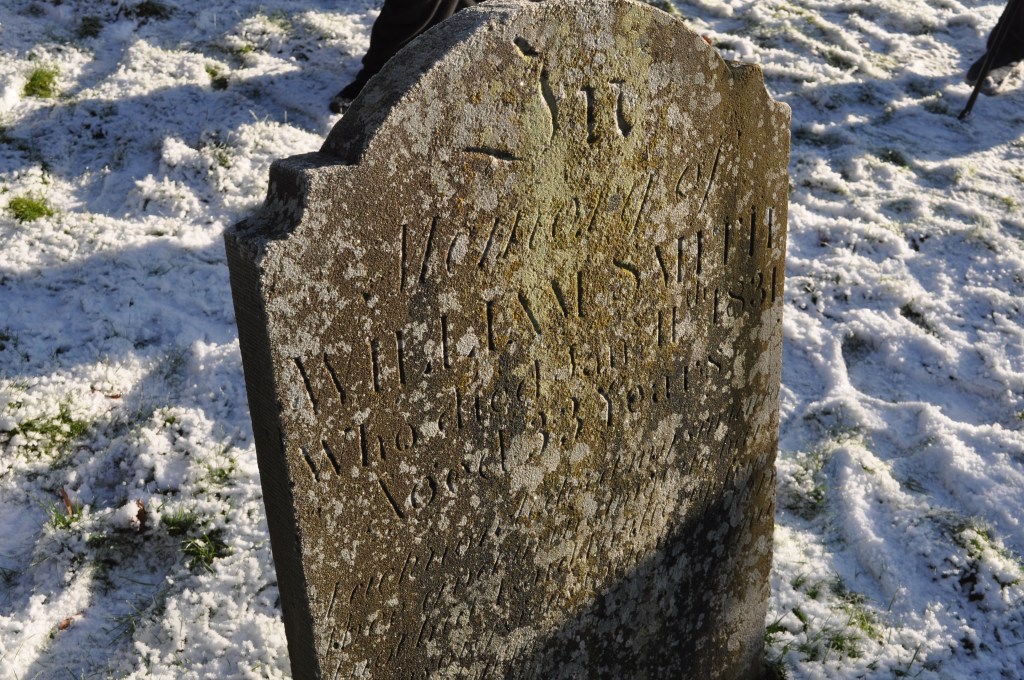
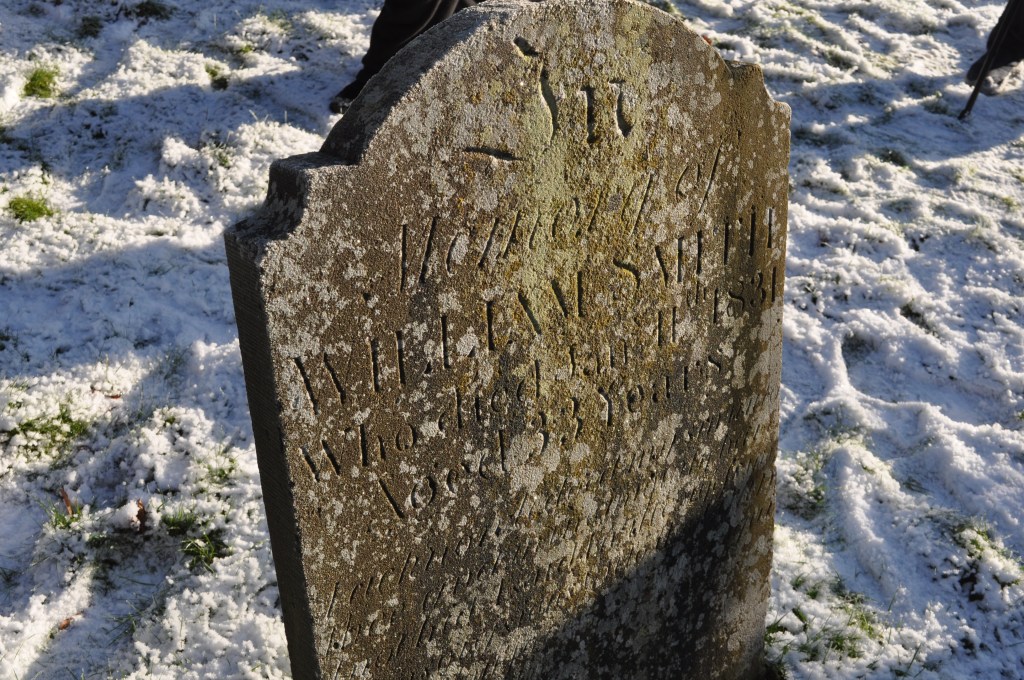
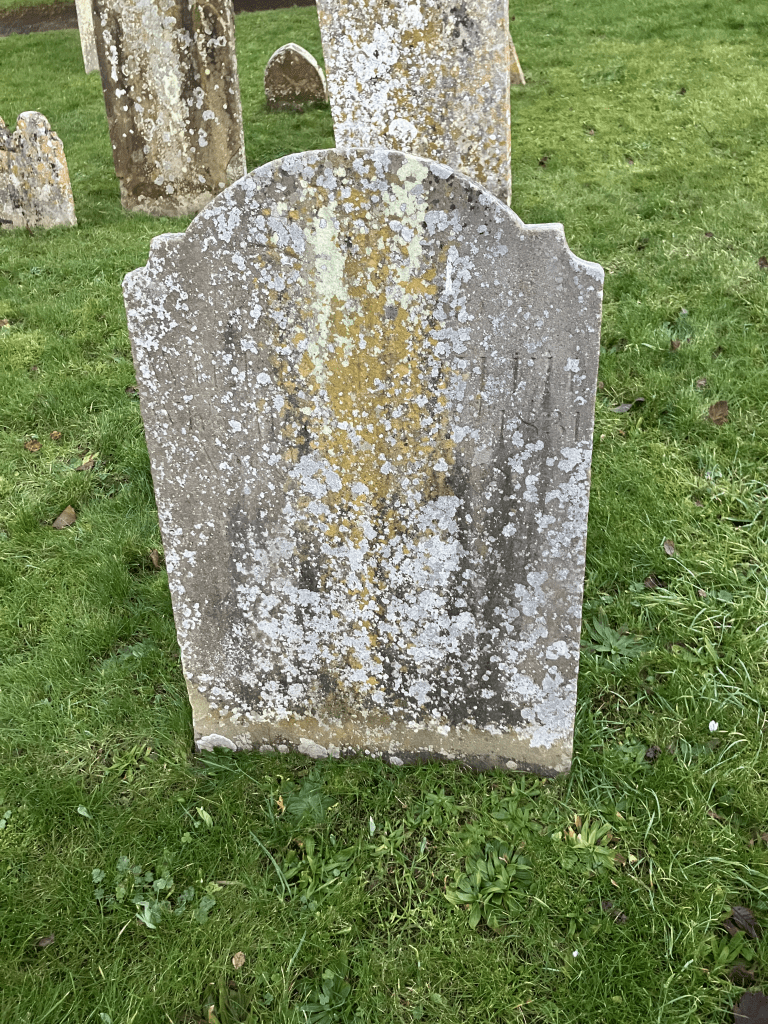
Winterbourne was hanged in Reading Gaol on January 11th 1831. Fulwar had his body returned to Kintbury where he was buried the next day in St Mary’s churchyard and later a grave stone erected. On the stone, Winterbourne is recorded as “William Smith” , Smith being his mother’s name and, as his parents were not married, it was the custom of the time to regard a child’s official surname to be that of the mother.

I think it is difficult for us today to appreciate how very unusual – indeed, practically unheard of – it was then for a labourer such as Winterbourne to have a grave stone. Such would be completely beyond the budget of poorer people and even skilled craftsmen and women and many who today we might consider to be “lower middle class” would not necessarily have a grave stone but be laid to rest in an unmarked plot. Rev Fowle was responsible for Winterbourne’s burial and grave stone in Kintbury churchyard and it would be interesting to know how the rest of the village reacted to what he did.

William winterbourne/Smith’s grave

There has long been a persistent idea locally that Fulwar did this out of a feeling of guilt. I do not believe this to be so and there is absolutely no evidence, as far as I have been able to find, to suggest that Fulwar had any responsibility for the outcome of the trial or felt any guilt as a result of it. I believe his feelings would have been of extreme sorrow.

 As a parish priest and also as a magistrate he was a figure of authority in a village where, in common with all of England at this time, everyone was expected to know their place in society, and stick within it. So, if he was known amongst many villagers as “Ol’ Fowle”, as some people believe, this does not signify any particular derision than that which would have been afforded to many other figures of authority or those who had agency over the working people.

On May 26th 1839, Eliza Fowle died at the Kintbury vicarage. She was 71. On March 9th of the following year, Fulwar also died. He was 75. His memorial, over the pulpit in the church describes him as: Pastor, Neighbour, Friend.
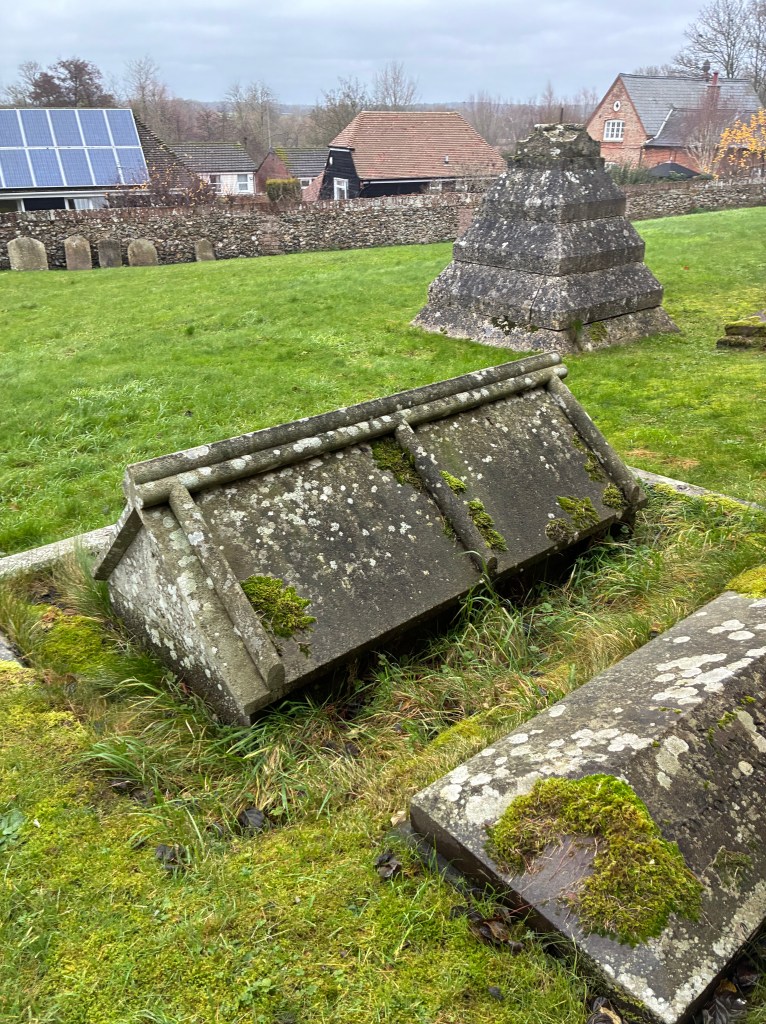
The Fowle family grave, St Mary’s churchyard, Kintbury

Fulwar’s death brought to an end nearly 100 years of the Fowle family as priests in Kintbury. Less than thirty years later, the white vicarage mentioned by James Austen in his poem, had gone, to be replaced by a then very fashionable neo gothic house which is still there today.

Elizabeth Caroline lived in Kintbury all her life. When Cassandra Austen died in 1845, she left £1000 and a shawl which had previously belonged to Mrs Jane Fowle to her. Very sadly, Elizabeth Caroline died in a London asylum in 1860.

Mary Jane Dexter, née Fowle, died in 1883 and Isabella Lidderdale, née Fowle, died in 1884, both in Kintbury.

On January 11th every year, people gather in Kintbury church yard to remember William Winterbourne/Smith, the Kintbury Martyr. But for Fulwar, Winterbourne’s grave would be in Reading, not here in Kintbury.

Throughout the year, Janeites ( as those who love the works of Jane Austen are called ) visit Kintbury because of her connections to the village through the Fowle family. Fulwar Craven Fowle is the link between what are often our very different parties of visitors.

And thanks to him we have this charming recollection of the woman he had known as a friend all her life:

Like a doll……certainly pretty – bright and a good deal of colour in her face – like a doll – no, that would not give at all the right idea for she had so much expression – she was like a child – quite a child, very lively and full of humour.”

Sources:

Jane Austen’s Letters, collected and edited by Deirdre Le Faye, 1996

The National Archives

Ancestry

British Newspaper Archive

Adventuresinarchitecture.co.uk/tag/balthazar-gerbier

Elkstoneparish.gov.uk

National Library of Scotland OS map collection

Bankofengland.co.uk/monetary-policy/inflation/inflation-calculator

(C) Theresa A. Lock, 2025
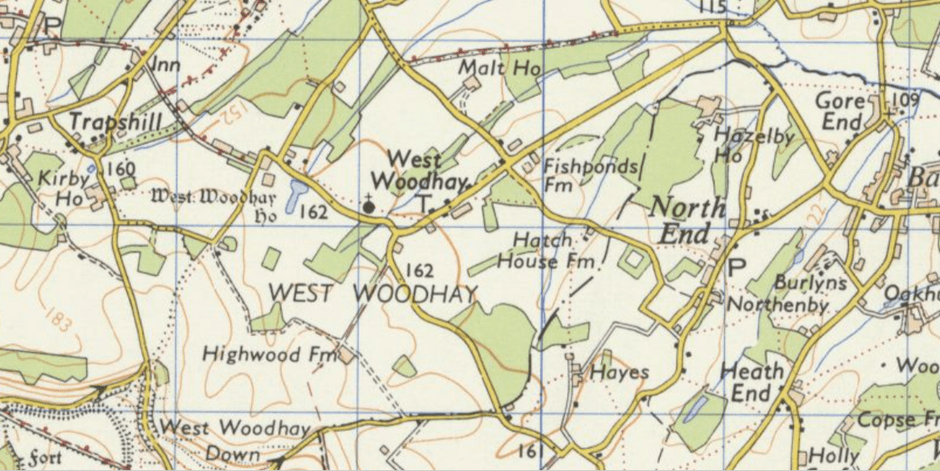
West Woodhay: A downland village in a changing agricultural landscape

This post is in two parts. In the first part, I consider the village of West Woodhay from a changing historical perspective. For the second part, we are delighted to have a contribution from Harry Henderson  of West Woodhay Farms in which he describes the recent changes in agricultural practices which have enabled vitally important regeneration of the land.

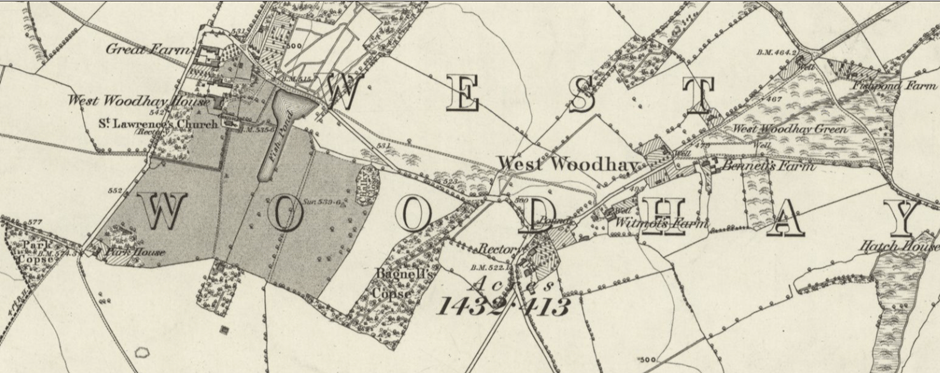
West Woodhay 1817

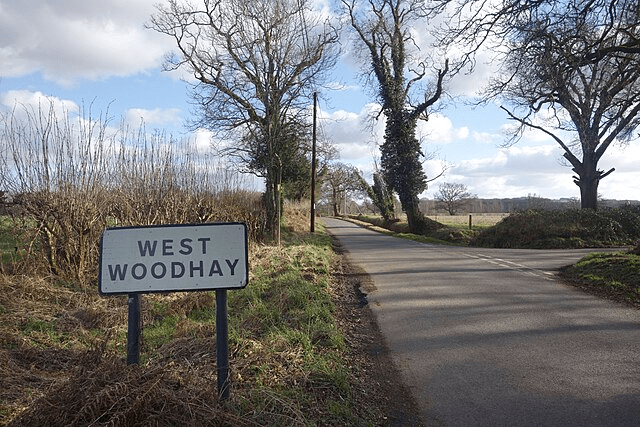
On the road to nowhere  in particular, the hamlet of West Woodhay is situated in the extreme south of West Berkshire just below the North Hampshire downs, a little over two miles south of Kintbury as the crow flies.

The Road to West Woodhay: Des Blenkinsop via Creative Commons

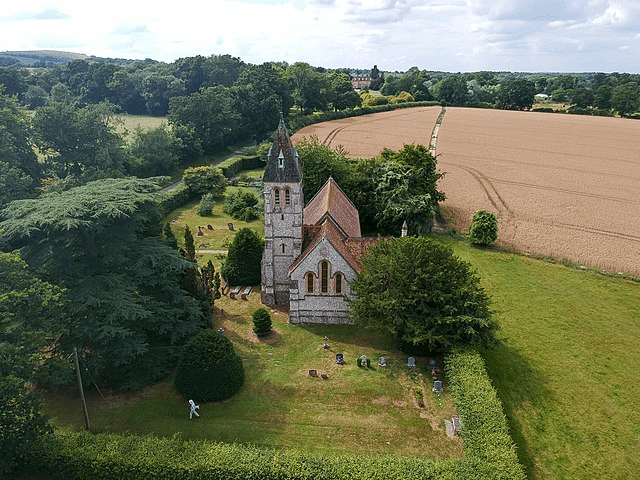
Although a motte is all that remains now of a twelfth century hunting lodge, today the village is probably best known for the elegant grade one listed West Woodhay House and also the grade two listed St Laurence’s church with windows by Morris & Co.

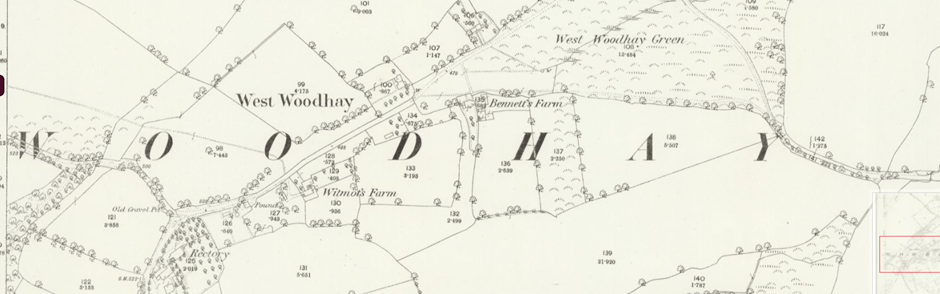
Early censuses show that most of the population were engaged in agriculture during the nineteenth century; early maps of the village suggest there has been little if any development, so, on the whole it might be presumed that very little of any great note has ever happened here. However, the effects of very significant changes in agricultural practices can be traced in the history of this village and the surrounding area.

The  eighteenth century saw many developments in agriculture, enabling increased food production necessary to feed the growing population. Whilst innovations in agricultural machinery, such as the horse drawn seed drill developed by Jethro Tull of Prosperous Farm, near Hungerford, made the cultivation of larger fields much easier, this had a downside for thousands of rural labourers.  

Since medieval times, many rural families had cultivated strips or patches of land, often dotted around their parishes, relying upon what they could grow to feed their families. However such a system was useless for food production on a large scale. The 1773 Inclosure Act enabled the Lords of the Manor or other land owners to enclose the diverse patches and strips of land, creating large fields each devoted to one particular crop and of the size that could be cultivated using new machinery. Whilst this might have been good news for the markets, it was devastating for many who lost their ability to grow their own food.  

The effects of the 1773 Act were not felt straight away although it was eventually to change the face of the English countryside.

The Hampshire Chronicle of July 1816 reported that an Act of Parliament had been passed for the inclosure (sic) of Woodhay Common. However, “the labouring poor in that neighbourhood have lately shewn strong symptoms of their disapprobation and at length proceeded so far as to collect in considerable numbers with the avowed intention of preventing the farmers ( to whom it had been allotted ) from breaking it up.”

Fearful of trouble, the authorities called out military back-up which arrived in the form of the “Donnington and Newbury Troop under the command of Capt. Bacon” and also “Oxford blues ( who had been sent from Maidenhead )”

It is hard to believe that anyone would have felt it necessary to employ the military to prevent any sort of a riot in such a quiet and peaceful corner of the county. It is hard to imagine troops, not just from nearby Newbury but also from Maidenhead, well over a day’s ride away, descending on the village. Insurrection is not something you would associate with West Woodhay.

However, due to the “spirited exertions of constables” the military were not required although several of those involved in the protest were bound over to appear at the Quarter Sessions.

Enclosures were not the only things to make life increasingly difficult for the rural poor. Harsh game laws meant the penalty for catching rabbits for the pot could be transportation and poor harvests in the 1820s resulted in increased prices, particularly for bread.

William Cobbett

William Cobbett was a writer and campaigner born in 1763 to a Hampshire farming family. Critical of the way new laws impacted upon the rural population, in 1821 Cobbett set out on a series of “Rural Rides” to observe for himself the situation throughout the midlands and south of England. Amongst other things, Cobbett was critical of the amount of money the country was spending on defence rather than on improved conditions for the rural poor. One of those of whom he was particularly critical was Berkshire M.P. and Kintbury resident, Charles Dundas. A prominent and influential figure, Dundas would have been well known across local towns and villages.

Although it is not always easy to work out Cobbett’s exact route through the countryside, it is clear from reading his work that he travelled across North Wiltshire and into Berkshire, stopping at Newbury on October 17th.

Whilst at a public dinner in Newbury, Cobbett took the opportunity to call out Dundas’s false accusation that he, Cobbett, was complicit in a plot to assassinate the Prime Minister and members of the cabinet. Known as the Cato Street conspiracy, those involved were eventually either executed or transported. For Dundas to accuse Cobbett of complicity was a particularly serious slur and something which reflects how polarised political views were at this time.

Later, Cobbett observed that “a good part” of the wheat offered for sale at Newbury market was wholly unfit for bread flour. Considering the importance of bread in the diet of poorer people, this must have led to severe consequences locally.

Not everything Cobbett observed as he rode through the downland was negative, however. At one point as he rode across the downs, he observed, “immense flocks of sheep which were now ( at ten o’clock ) just going from their several folds, to the downs for the day..”

The “immense flocks” aside, there was, as Cobbett noted, little to impress in the daily lives of the agricultural workers. Enclosures, the rising cost of bread and harsh laws which mitigated particularly against rural people, and changes in agricultural practices such as the introduction of mechanisation made life for the agricultural worker extremely difficult. The bad harvest of 1830 was the tipping point, leading to what became known as the “swing riots” which broke out in December of that year.

Although most of the protests in this part of West Berkshire were centred on and around Kintbury, West Woodhay did not escape the disorder. Here, Cornelius Bennett and Henry Honey were charged with robbery although both were subsequently acquitted. However, shock waves must have rippled across this part of Berkshire when it was reported that others of the rioters had been charged at Reading Assizes with several transported to Australia and one executed for his involvement.

1877

In the following years, however, the agricultural industry in England generally was thriving. But this was not to last and by the 1870s it was in depression. By 1893 an anonymous contributor wrote to the Newbury Weekly News:

“There are thousands of acres not tenanted at all, and scores of landlords only too anxious to let on almost any terms.”

He continues:

“The real cause of agricultural depression is very easy to find, but very difficult to remedy. It is because the enormous development of steam navigation has brought the millions and millions of foreign acres into practical proximity to our shores and accompanied by a full market has made England a central emporium of a huge percentage of the surplus produce of the world.”

Throughout England, the numbers of people engaged in agriculture, particularly as labourers, declined as many sought better paid factory work in towns and cities. In West Woodhay, the 1851 census records William Taylor of West Woodhay farm as employing 15 labourers. By 1861 the farm has been taken by an in-comer from Buckinghamshire, Job Wooster, who employs 9 labourers. By the 1881 census, there are just 16 agricultural labourers in the whole of the village.

Throughout the early years of the 20th century, many young people from rural communities emigrated to the colonies such as Canada or Australia to try their hand at agricultural work far from home. Whilst I have not been able to discover how many pioneering young men or woman left the villages of West Berkshire in this way, it has to be likely that some, at least, would have done so.

1880

The twentieth century witnessed two world wars during which thousands of agricultural workers from all over the country enlisted in the armed forces. To make up the short fall in manpower, thousands of young women joined the Women’s Land Army and were posted to rural areas throughout the UK. In July of 1918 the Reading Standard featured on its front page photographs of some of these women at work on Berkshire farms under the bold sub-headings:

THEY MILK THE COWS

AND FEED THE PIGS

               AND TRUSS THE LOADS OF HAY

most probably to the cynical and wry amusement of those rural woman who had been undertaking farm work for decades.

The 1939 Register lists 24 people engaged in agriculture in West Woodhay although it is difficult to draw an exact comparison with numbers of agricultural workers at the time of the nineteenth century censuses in part due to changing definitions of occupation. However it is true to say that the village had remained a predominantly agricultural community.

 It is now over 200 years since West Woodhay Common was enclosed and 195 years since the Swing Riots. Although the associated violence is now very much in the past, the farm lands of West Woodhay still reflect the changing agricultural practices and the need for farming to respond to changing times.

For the second part of this post we are grateful to Harry Henderson  whose family owns and runs West Woodhay Farms, an estate on the Berkshire/Hampshire border.

(C) Theresa Lock 2025
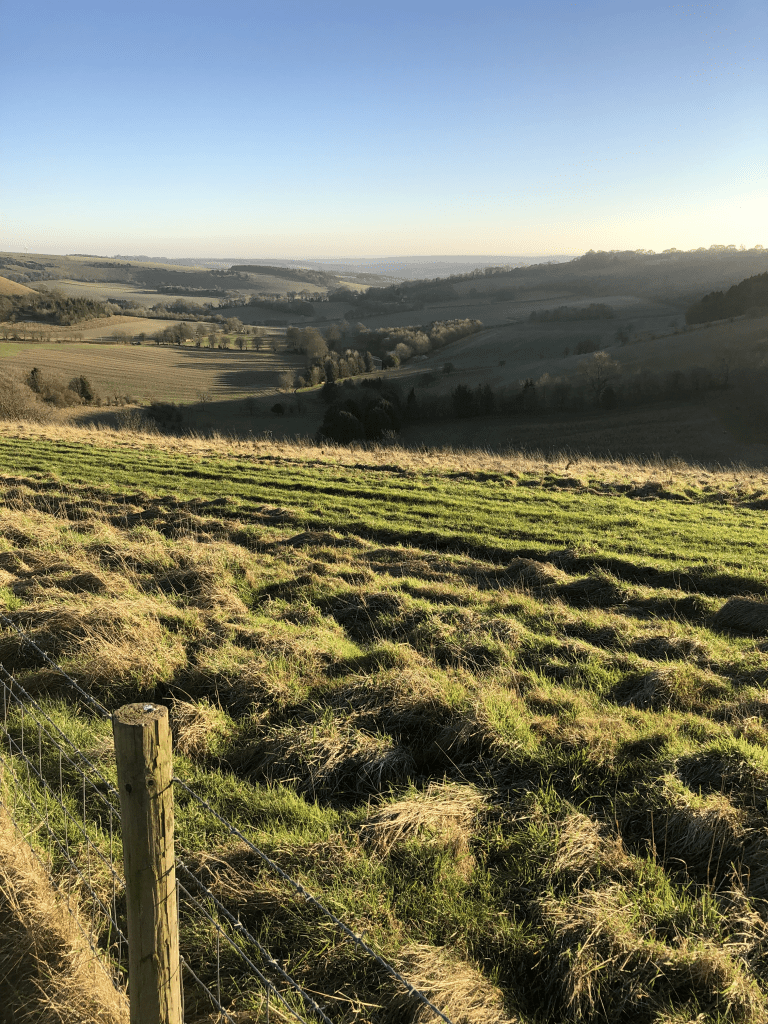
West Woodhay church: Matthew Prior via Creative Commons

Farming for the Future: Soil, Sustainability, and Success at West Woodhay

Harry Henderson

The estate spans 830 hectares of challenging land with fragile soils. Since 2008, a regenerative agricultural policy has been in place, with a focus on prioritizing soil health. The estate now follows a crop rotation system that includes herbal grass leys, flower meadows, wild bird feed areas, and very low-input cereals.

Agricultural chemicals and fertilizers have been replaced with more sustainable cultural methods. As a result, there has been a significant increase in soil biology, leading to enhanced organic matter levels and improved carbon capture.

The shift in farming practices—driven by soil health—has led to remarkable nature recovery. The planting of herbal leys and wildflower plots has created a thriving environment for insect life. Since adopting a no-insecticide policy in 2014, West Woodhay has seen a resurgence of beneficial insects such as spiders, beetles, and parasitic wasps. This has enabled the successful establishment of flea beetle-sensitive crops like stubble turnips.

The rise in insect populations has also benefited birdlife, which is supported further through the planting of wild bird plots for the leaner months. All this recovery work has been monitored and independently audited over many years, and the data clearly shows a strong link between soil health and biodiversity.

In-depth soil analyses have shown that, given time and the absence of soil disturbance, soil indices can begin to rebalance naturally, making primary nutrients more available to crops. This reinforces the estate’s approach of minimal intervention and maximum biological support.

A large sheep flock has been used to manage the land and maintain productivity. The breed of choice is the Welsh Cheviot, native to the Brecon Beacons. With West Woodhay’s highest point reaching 900 feet, this hardy breed is ideally suited to the challenging upland climate. Their thick, dense fleece protects them from January’s easterly winds and rain.

Lambing begins in late March, with all ewes lambing outdoors in a natural environment, giving mothers plenty of space and time to bond with their lambs. During the summer months, the flock grazes on the herbal leys, enriching the soil’s biodiversity. After weaning in early autumn, they are moved to higher ground to help manage the fragile downland ecosystem.

The estate’s latest and most exciting initiative is the production of cereal crops for human consumption, grown with little or no artificial fertilizers or pesticides. These crops are established using zero-tillage methods. By using legumes to naturally supply nutrients for fast-growing spring cereals, West Woodhay has successfully tapped into new opportunities through Wildfarmed contracts.

Importantly, the farming enterprise has remained consistently profitable. Without profit, nature recovery would be difficult to sustain. Savings on fertilizers, agrochemicals, fuel, finance, and labour have helped support this transition. The increase in soil organic matter has broadened the estate’s cropping options, helping to future-proof the farm for the next generation.

(C) Harry Henderson

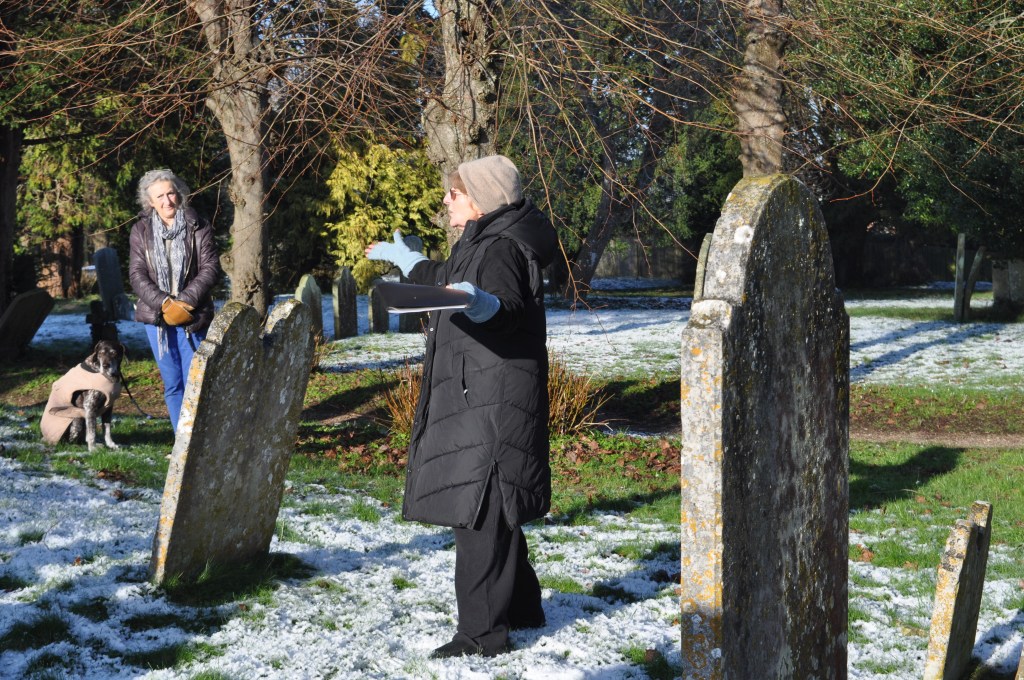
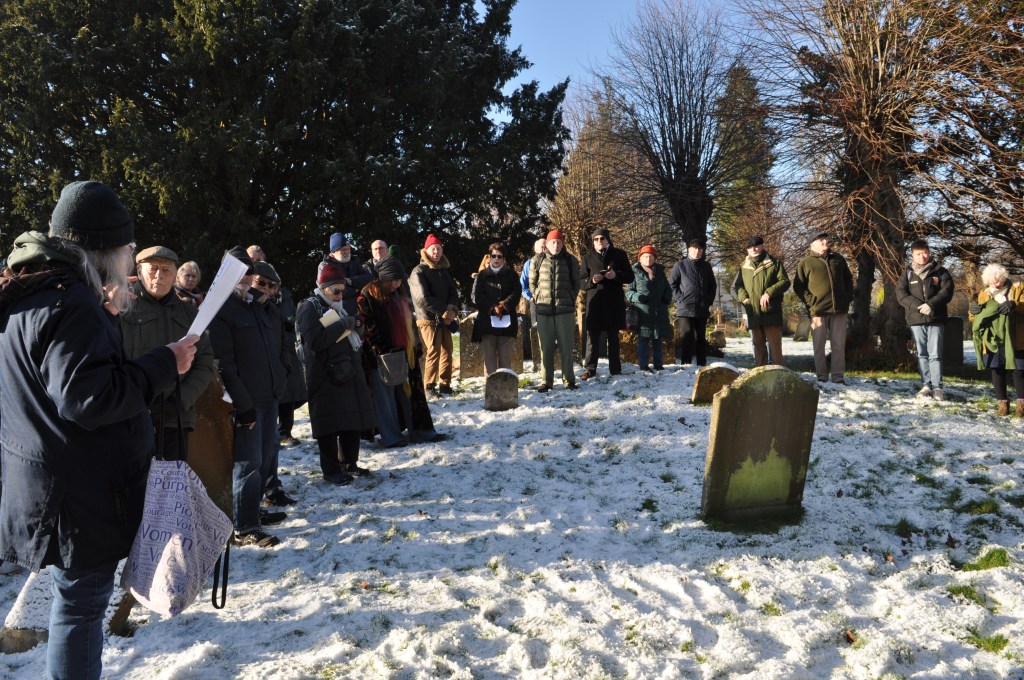
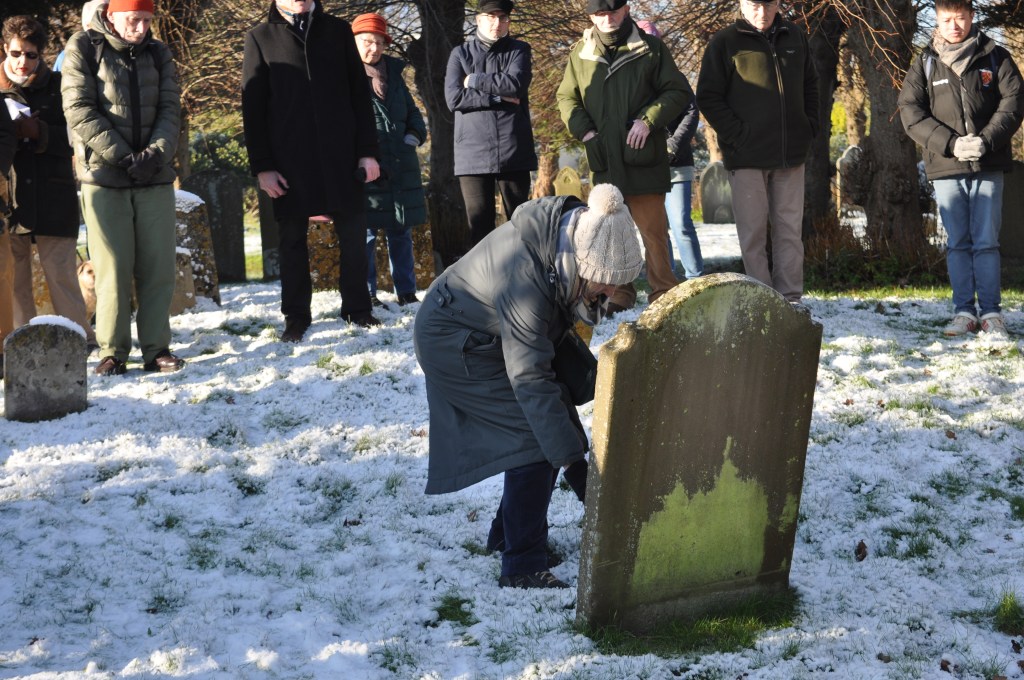
January 11th 2025: Remembering William Winterbourne

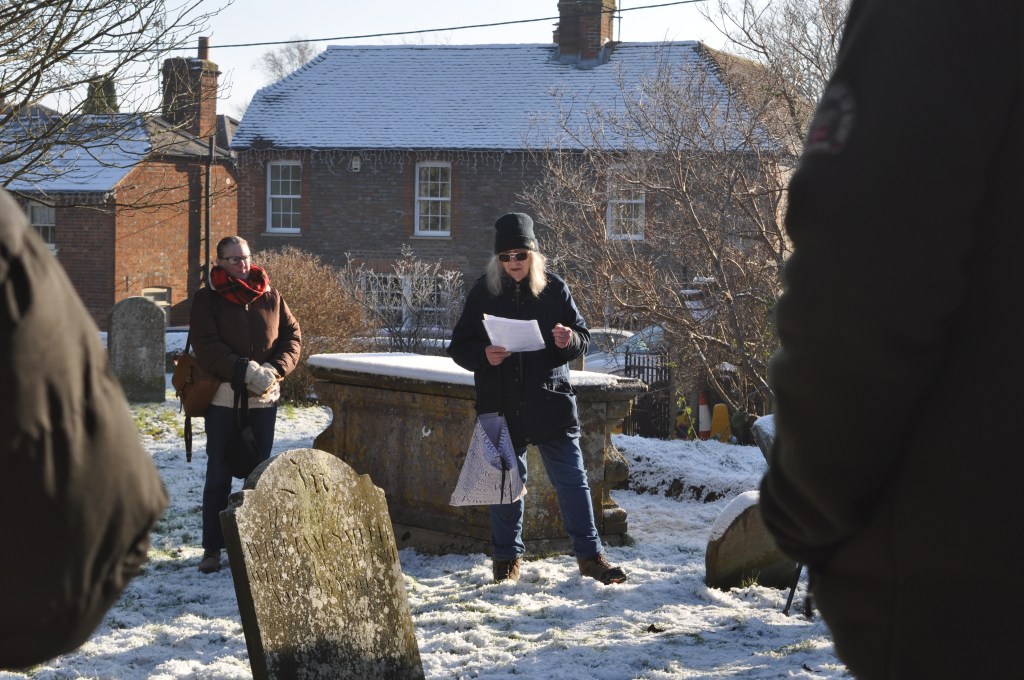
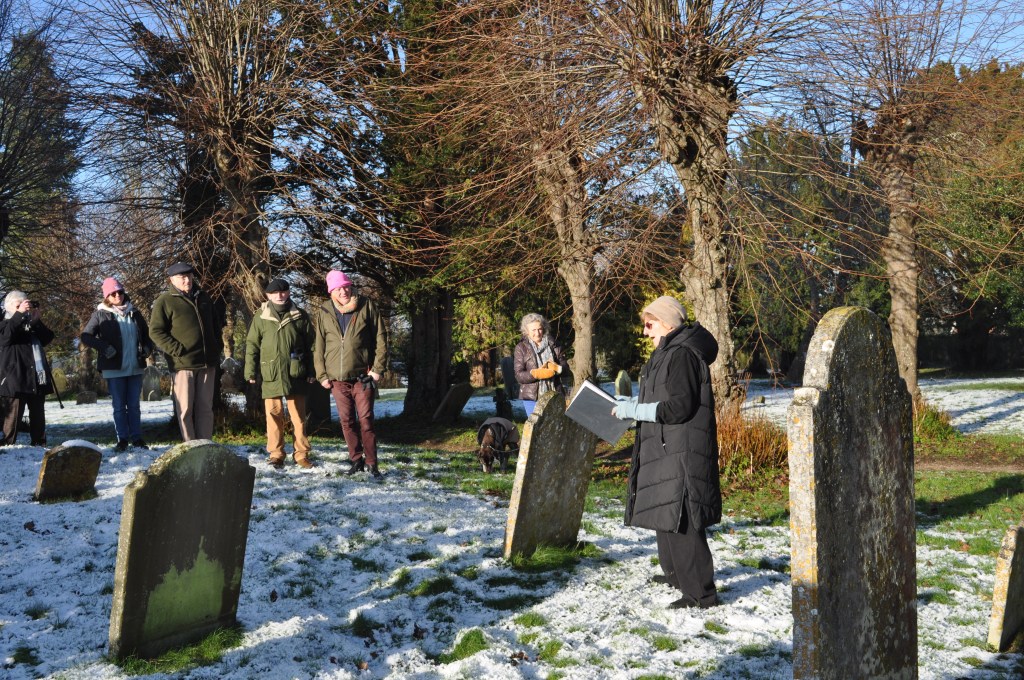
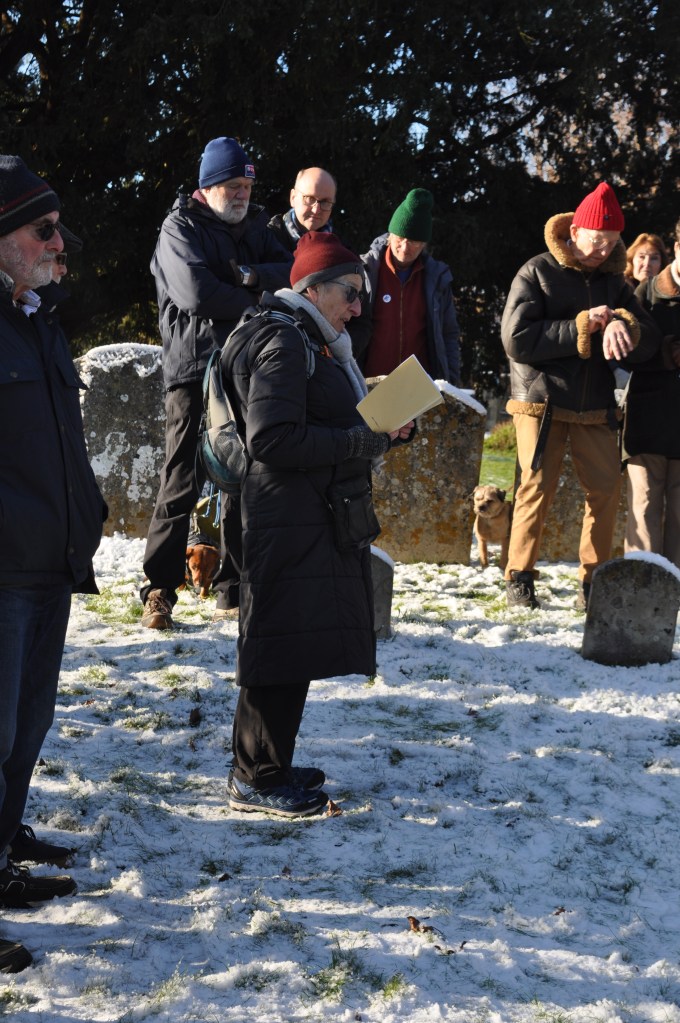
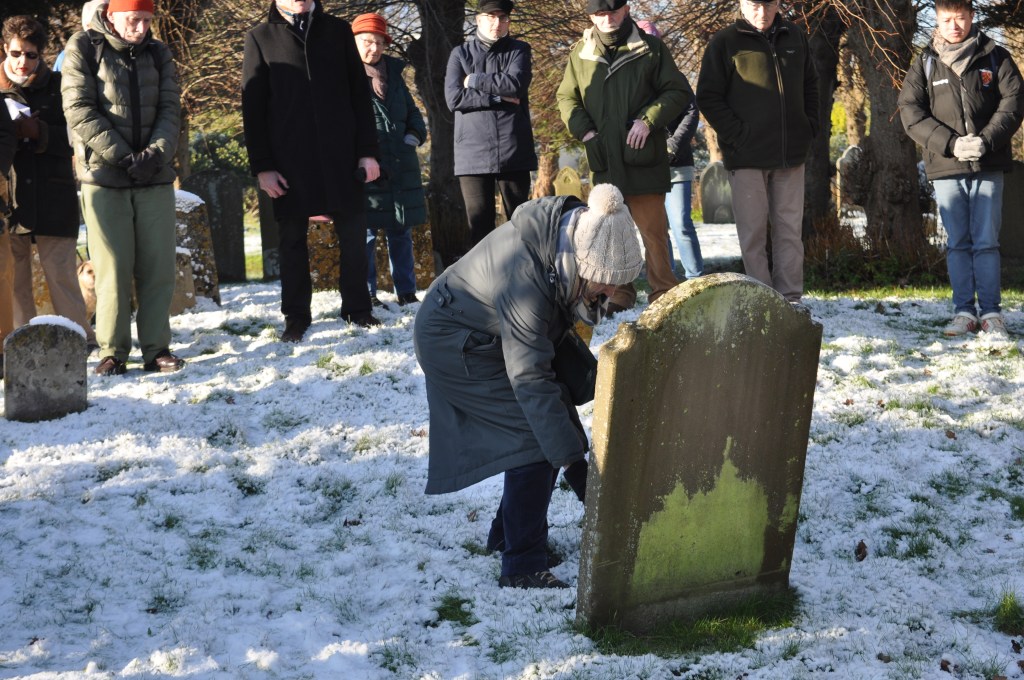
On January 11th each year, local people, family members and supporters from further afield including historians, trade unionists and those concerned with social justice, gather at the grave of William Winterbourne in St Mary’s churchyard.

William Winterbourne, also known as William Smith, was hanged at Reading Gaol at 12 o’clock on January 11th 1831. His crime was to have been involved in the protests that swept across southern England the previous autumn as labourers fought for improvements to their pay and conditions of work.

This year, the bright sunlight shone on the lichen covered stone such that William’s name could be read clearly. As his parents were not married at the time of his birth, he is buried under his mother’s name of Smith, in accordance with the custom of the time.

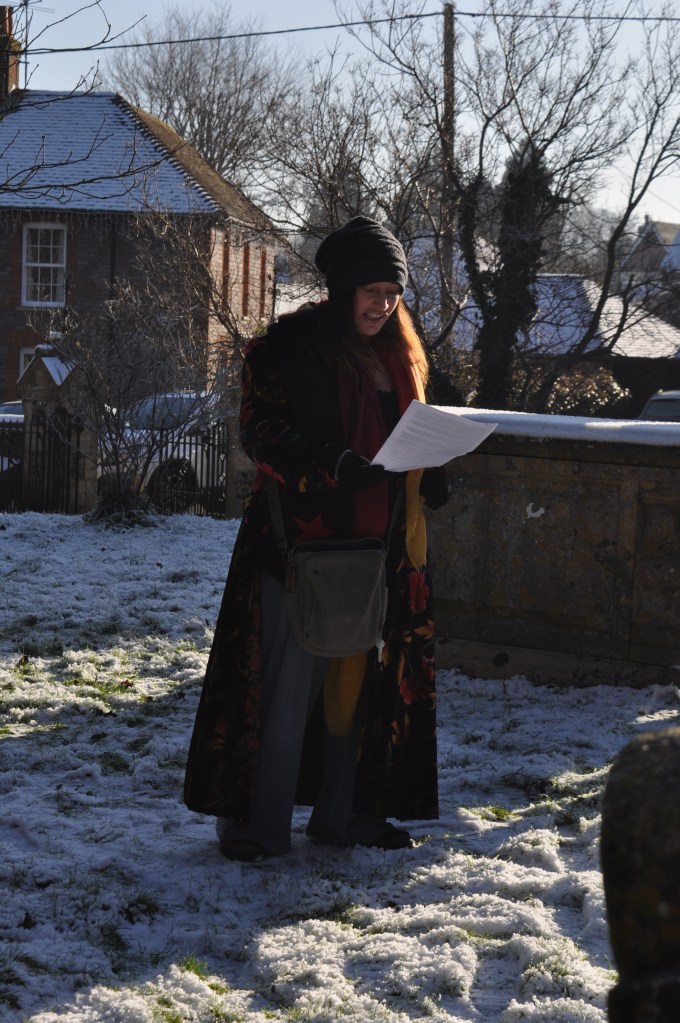
This year, we were joined by over twenty people who gathered to listen to accounts of how the Swing Riots had impacted on this part of West Berkshire, and William’s involvement in them.

All Photos (C) Chloë Wells

You may be interested in further posts about the Swing Riots in West Berkshire, those involved, and also what happened to one who was convicted and transported to Australia:

(C) Theresa Lock January 2025

Far beyond Kintbury

In his article, A Revelation of Personal Endurance, published here on March 22nd, David Hutchinson recounts something of the life in Australia of his ancestor, Edmund Steel.

Edmund was a Kintbury man who was one of the three Kintbury men – the other two were Francis Norris and Daniel Bates – who were sentenced to transportation for their part in the Swing Riots.

David would like to hear from anyone who might have comments or questions about his article. He would also like to hear from anyone who might know more about his ancestor, Edmund Steel. It may be that there are Steel descendants still living in England who have researched their ancestor themselves.

David can be contacted on:

EdmundSteelKintbury1831@gmail.com

Many thanks,

Theresa Lock

A Revelation of Personal Endurance

Perseverance, and Love that arose from the Swing Riots of 1830-31.

We are delighted that David Hutchinson, a direct descendant of Kintbury swing Riots transportee, Edmund Steel, has allowed us to publish this article concerning his ancestor’s life in Australia.

Readers will already know of the ‘Swing Riots’, the trials, and the sentencing of those arrested for their participation in one form or another in the ‘Swing Riots’ that occurred in and around Kintbury and nearby districts in late 1830 – early 1831.   Recently, on this website we read of the ‘Swing Riots’ Memorial Gathering in Kintbury on 12 January 2024, and the accompanying article submitted by Keith Jerrome on Remembrance of the Swing Riot Martyr, William Smith, also known as and referred to in the trials as William Winterbourne.

Readers who don’t know of the ‘Swing Riots’ or would like to know more, can simply Google ‘Swing Riots 1830-31’ and a dearth of both generalised and detailed information is there on your PC screen, ranging from scholastic research, to entire books. 

Notwithstanding, unless one knows how, or has the luck to ‘stumble upon’ evidential ‘portions of’ succeeding history(s) of those of William Winterbourne’s tried and sentenced individual comrades, there is little obvious information of what subsequently occurred to them.

Following, is a ‘word sketch’ of just such one [partial] personal history, unearthed by a 3 x Great Grandson of one of the convicted and sentenced rioters:-

EDMUND STEEL was one of those arrested.   EDMUND was born in 1789 at Three Legged Cross, Hampshire, to parents James Steel and Jane Steel (nee Bulpit).

1830

Edmund is one of the referred to ‘Kintbury Five Deputies’ who attended the meeting at the Hungerford Town Hall at the request of Magistrate Willes.   It was Edmund Steel to whom Magistrate Willes referred in his verbal statement to the subsequent trials ‘Observing that Steel had a hatchet in his hand, he said to him, “My friend, that is a lethal weapon you have; it would split a man’s skull”, to which Steel replied, “Depend upon it, sir, it shall never injure yours”.

At the time of the Swing Riots Edmund was aged about 41 years, making him amongst the older of those sentenced.   Edmond had married his wife Maria Thatcher on 30 September 1811 at St Nicholas Church, Newbury.   By the date of the trial Edmund and Maria had already produced 11 children, 8 of whom survived, ranging in age from 18 years to twelve months.   Edmund’s occupation is recorded as variously ‘ploughman’ or ‘maltster’ and he is recorded as being able to read and write.  Edmund is described as being ‘stout’ and standing at ‘5 feet 4 inches without shoes’.    

The Berkshire Family History archives record Edmund as having applied for and received Parish Relief funds on 11 occasions in the 12 months before his trial.

Following his arrest, Edmund and his fellow prisoners were held at the Mansion House at Newbury, and eventually had to be transported from Newbury to Reading for the ‘Special Commission’ trial.   An account of that event states: “Before those committed could be tried by the Special Commission they first had to be conveyed from Newbury to Reading. “Harrowing and heart-rending was the scene that took place when the vans that were to convey the main body of the prisoners drew up in the Market Place.” A troop of Lancers and the Yeomanry, with sabres drawn, were “the imposing military escort responsible for seeing the prisoners safely lodged in the county gaol.” The men were brought out in batches while “Women fought their way through the surging throng praying for a parting word with their husbands or relatives before they took leave of them perhaps for ever.” A particularly distressing sight was witnessed when “a poor woman with eight children and an infant at the breast rushed forward to press the manacled hands of her husband as he took his seat in one of the vehicles.”. Newbury has not witnessed a sadder procession through its ancient streets”.   It is very likely the poor lady and her manacled husband referred to were Maria (eight children) and Edmund Steel.

1831

Edmund was one of those tried who were sentenced to death.  The severity of the trial sentencing generally drew quick response from a significant proportion of the local community and some Elders, concerned that the sentences were too harsh.  Subsequently, with supporting petitions to the King and other Authorities, testimony from Magistrate Willes and possibly other Elders, Edmund’s death sentence was commuted to Transportation for the Rest of His Life.

On January 27th 1831, the sentenced prisoners were transported from Reading to the prison hulk ‘York’ in Gosport (Portsmouth Harbour).   Conditions aboard the prison hulks is well documented, and could generally described as appalling:-  

The “York”, to which the Berkshire men were assigned, was an old 90-gun line-of-battle ship, sold to the Convict Establishment in 1820 and destined to serve as a floating prison for the rest of her days. On her three decks she housed on the average about five hundred prisoners, in addition to the officers and guards who occupied the quarter-deck and stern cabins.

On their arrival the convicts would have been paraded on the quarter- deck where they were mustered and received by the captain. Their prison irons were then removed and handed over to the jail authorities who departed as the convicts were taken to the forecastle.  There every man was forced to strip and to take a thorough bath, after which each was issued with an outfit consisting of a coarse grey jacket, waistcoat and trousers, a round-crowned broad-brimmed felt hat, and a pair of heavily nailed shoes.   The hulk’s barber having shaved and cropped the convict’s heads. each man was double-ironed and taken on deck to receive a hammock, two blankets and a straw palliasse.   A guard then marched the laden and fettered prisoners below deck where they were usually greeted with roars of ironic welcome from the convicts already incarcerated there.

The lower decks were divided into sections by means of iron palisading, with lamps hanging at regular intervals, and these sections were sub-divided by wooden partitions into a score or so compartments, each of which housed from 15 to 20 convicts. Newcomers were allotted to the lowest deck where the air was foulest, and bilge water occasionally slopped through the cracks in the floor boards.    Weaklings were congregated on the middle deck, usually the most crowded of the three. Those who had served the greater part of their sentence without being transported were accommodated in the upper deck, the most airy and consequently the most healthy and pleasant.   On these decks the convicts existed when not at work and slept at night.    Never were they free from the chain between ankle and waist, which was one of the badges of their state, and which clanked and rattled with their every movement.    Their bodies, their clothes, their beds and the very walls of the hulk itself were infested with vermin.

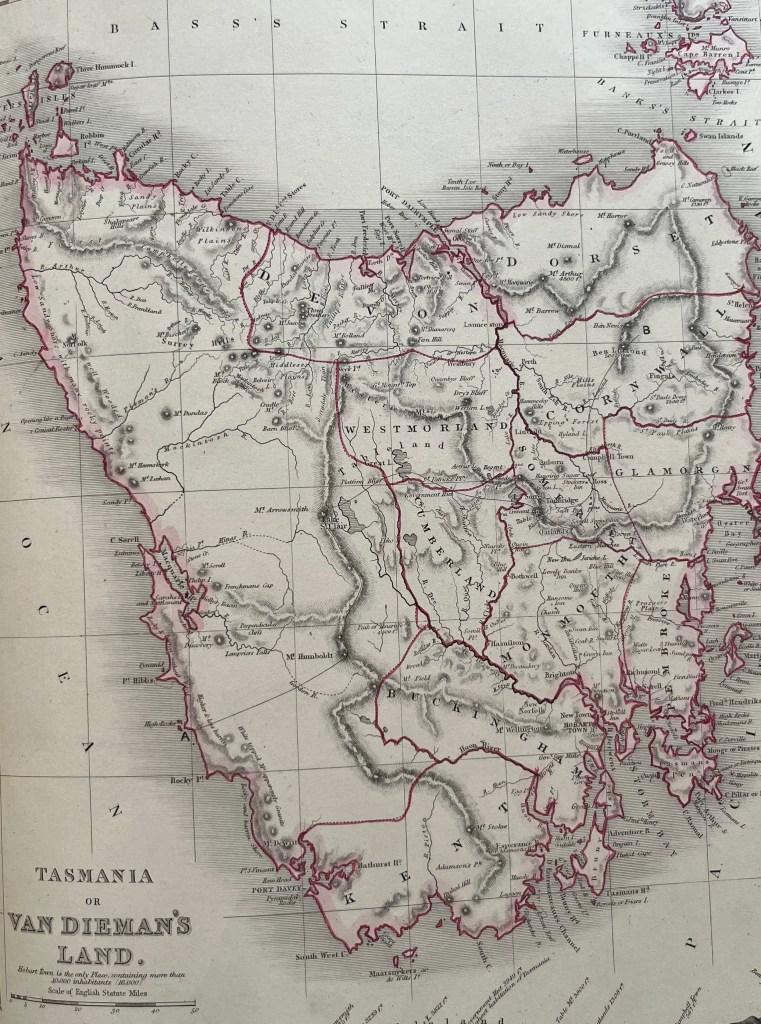
Edmund was fortunate insofar as his tenure in the prison hulk ‘YORK’ was limited to only one week.   On 2nd February 1831 Edmund was transferred to the transport ship ‘Eliza II’, bound for Van Diemen’s Lands (VDL), known today as the Australian Island State Tasmania, with a cargo of 224 male only convicts, plus Captain, Surgeon, Gaolers, and Crew.

Eliza II, described as having been built in British India in 1806, was a 511 Ton (later 538 Ton) merchant ship.    All the Australia & VDL convict ships were chartered merchant ships. None were specially commissioned convict ships.   It is not yet discovered what accommodations were on-board to house the convicts, or how many decks there were.  Some of the ships that transported convicts were notoriously over-crowded and unsanitary, and many voyages resulted in many lost lives en-route to VDL.

 After a voyage of 112 days, Eliza II arrived at VDL, landing at Hobart Town on 29th May 1831, no lives were lost on the voyage.  Hobart Town is today the capital city of Tasmania.

It is important in the context of this sketch account of Edmund Steel to provide some background to Van Diemen’s Land:-

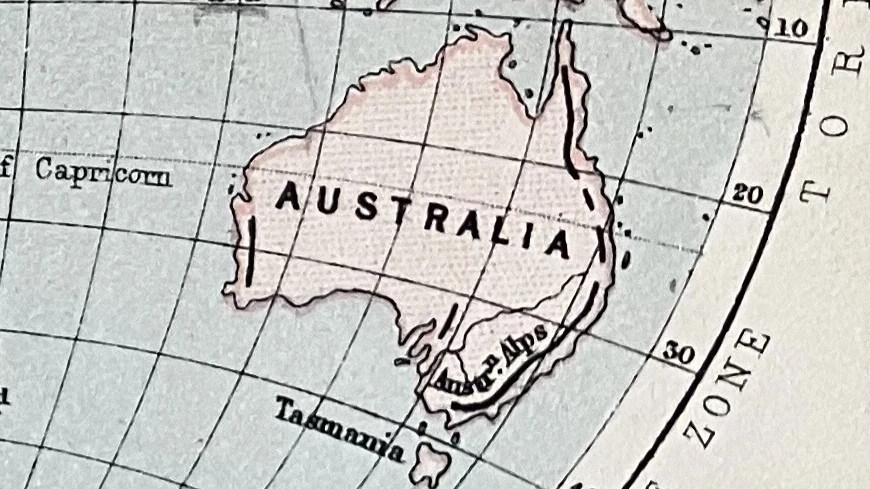
Tasmania, or Van Dieman’s Land, as shown in Milner’s Descriptive Atlas, 1849

VDL

The pre-history of VDL is that it was inhabited continuously by Indigenous Aboriginal Peoples for some 30,000 years before being ‘discovered’ by the Dutch seafarer/explorer Abel Tasman in 1642, sailing from Batavia (Jakarta, in Indonesia today) on instruction from his superior Anthony van Diemen, Governor of the Dutch Settlements in the Indian Archipelago to explore the coast of the ‘Great South Land’ as the landmass of Australia was then known.   However, VDL was not known to be an island until 1798-99 when it was first circumnavigated by Mathew Flinders and George Bass in their sloop ‘Norfolk’.

Around 1784-85 it was proposed by Henri Peyroux de la Coudreniere, a French politician, to the Spanish Government that there were advantages for the Spanish Crown to settle VDL, but there was no interest from the Spanish.   Henri later proposed the same to the French Government, but again nothing resulted.   Sealers and Whalers are recorded as having based themselves on VDL and its surrounding Islands as early as 1798.  In August 1803 the English Governor Philip King, of the settled English Colony New South Wales (Australia), sent a military party to VDL to prevent any claim to the Island from the French.

The arrival of white people (sealers and whalers, but especially later the British Colonialists) in VDL was totally disastrous for the Indigenous Aboriginal Peoples, and remains, even today, as a matter of great sadness, and heated debate.

VDL was initially governed from the remote New South Wales, but eventually, in 1856 the Colony of VDL was granted responsible free self-government with its own parliament, and the name of the Colony was changed to Tasmania.   

From the early 1800’s to the 1853 abolition of penal transportation, VDL was the primary penal colony in Australia.   A total around 73,000 convicts were transported over the years to VDL.

BACK TO EDMUND STEEL

On their arrival in VDL it was common for the convicts to be ‘assigned’ to work as labour to Free Settlers (business proprietors, farmers, households, etc), or to work in Government Gangs.  EDMUND STEEL on arrival in VDL in 1831 was fortunate to have found himself ‘assigned’ as a labourer to free Settler Robert (Rob) Taylor, Farmer, of property in the MacQuarie River District, very possibly due to Edmund’s past farm labourer work history.   The MacQuarie River District is in the Centre-North of VDL, in the Epping Forest area, below the (now city) of Launceston.  At this time Rob Taylor owned 4,000 acres of land, including his late father’s estate ‘Valleyfield,’ and rented another 2,000 acres.  It is not yet known if other convicts were already or subsequently assigned to Rob Taylor, but the isolation of the Macquarie River District from Hobart Town and other areas of mass convict habitation may have been a blessing for the future of Edmund.

1834

On 19th March 1834 Edmund, with the assistance of his ‘employer’ Rob Taylor, applied to the office of the Colonial Secretary VDL for his Kintbury family (wife Maria, and eight children – John Steel born July 1814, William Steel born June 1817, Maria Thatcher Steel born September 1819, Alfred Steel born June 1821, Sarah Steel born July 1822,  David Steel born November 1824, Edmund Steel born March 1826, Charles Steel born  April1829) to be sent to join him in VDL.   The application is endorsed by Rob Taylor, stating ‘I certify that Edmund Steel has the means of supporting his Wife and Family on their arrival in this Island, and I hereby further undertake that they shall be no expense whatever to the Government, after their arrival in this Colony.   (illegible place name) MacQuarie River 19th March 1834.    The application is numbered 497, and date at the head of the application form is September 1834, the two dates discrepancy possibly relates to the difficulty of travel and the distance from the Taylor property on Macquarie River to the Administrative Centre in Hobart Town, as much as to possibly the administrative workload for the administration clerks.

Sadly, wife Maria and her eight children did not undertake the journey to VDL, although it is suggested in historic research the application was fully supported by the Authorities but declined by Wife Maria.   Maria ultimately passed away at Kintbury on 26th November 1844, the death certificate stating cause of death as breast cancer.

At the time of writing this sketch, no material relating to Edmund’s duties in his employ with Rob Taylor have yet been discovered, but given the degree of support Rob Taylor has signified by his endorsement note to the application for Edmund’s family to join him in VDL it is probable that Edmund enjoyed a courteous and cordial relation with Rob Taylor, possibly exceeding beyond that normally expected of ‘employer’ to ‘employee’.   It is known that the Taylor Family, from patriarch George Taylor (father of Robert), a Scot who arrived with a family of eight in VDL in 1823, aged sixty two, and down through the Taylor VDL family line, were staunch Presbyterians, which may well have influenced Edmund, as he was probably housed in or on the same property as the family homestead.

As far as it is known, Edmund stayed as an assigned convict employee with Rob Taylor until at least 1837.

1837

On 24th April 1837 Edmund (and others) was granted a Free Pardon (numbered 280).  The granting of the Free Pardons was result of a change of attitude by the English Government, driven by popular opinion, to cease Convict Transportation to the Colonies.

Not much is known of Edmund’s activities immediately after his Free Pardon, but it is likely that he stayed on with Robert Taylor until about 1841, and possibly his remuneration as a free person could have been elevated to above that which he may have been ‘illegally’ receiving as an assigned convict.

On 13th November 1837 Edmund married Martha Saunders (nee Pulsford), widow, at St John’s Church of England in Launceston, VDL.   Martha was mother to two boys, and one girl, William Jr born 1820, James born 1929, and Emily (born at sea) 1832.  The marriage certificate describes Edmund as ‘free widower’ despite him actually still being married to Maria in Kintbury, so at law his new 1837 marriage to Martha was bigamous.  There seems to have been an unwritten ‘acceptance’ by authorities and churches ‘to turn a blind eye’ to circumstances such as Edmund was in, where a wife in England having declined an approval for her to join her convict husband in the colonies, ‘allowed’ the convicted husband to remarry, notwithstanding the ‘bigamy’.   Perhaps this ‘acceptance’ was also available to the wife in England?, although there is no discovered evidence of this having been the case with wife Maria.

Martha Saunders had arrived in VDL with her Husband William Saunders in 1833 as free settlers.   William was employed by the private enterprise Van Dieman’s Land Company as a blacksmith and wheelwright but died by drowning at East Bay (Circular Head, VDL) in 1835.   In late 1836 Martha subsequently set herself up in business as a Registry for Servants, and potentially also as a Retail Grocery Store, in Launceston the principal town settlement in the north of VDL, to support herself and her three children.

The marriage of Edmund and Martha produced two children, Sampson in 1838, and Martha in 1841.

1841

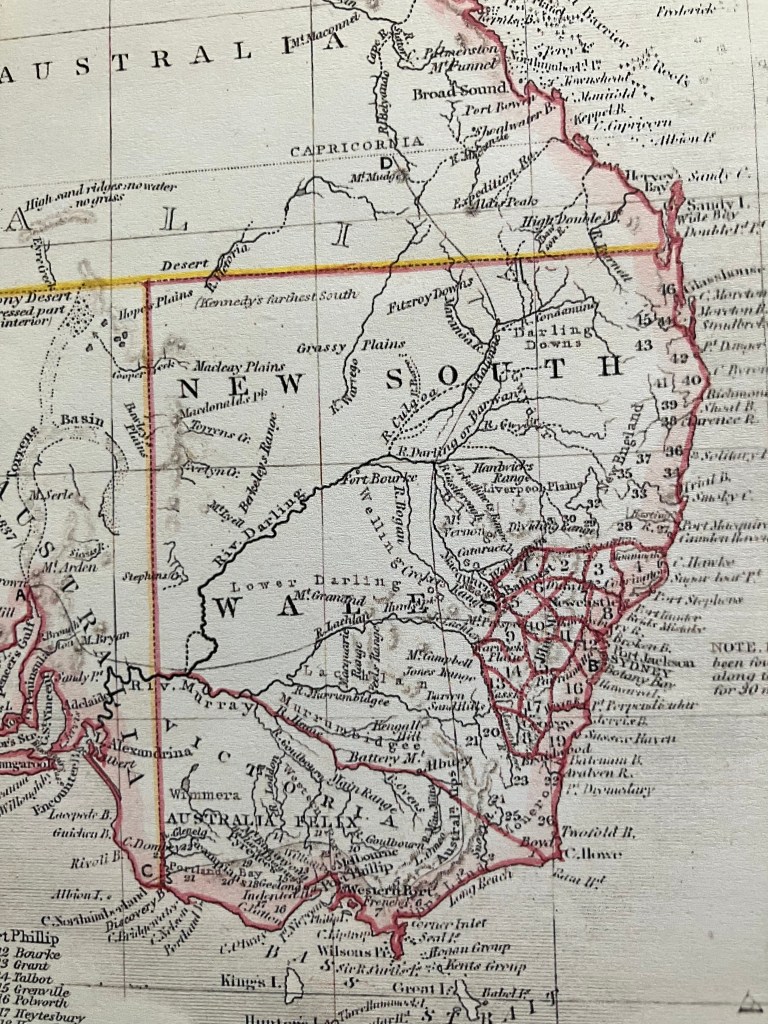
By 1841 it is recorded that Edmund, together with Martha and all 5 children, has left VDL and is now located in the Port Philip Bay colony of New South Wales (now the Australian South Eastern State of Victoria), across the Bass Strait, north of, and almost opposite, Launceston in Northern VDL.

It is not yet discovered when or how Edmund and family made this move (whether Edmund moved first and the others followed, or they all moved together) but they can only have done so by sailing ship, across the Bass Strait, being the direct route between Launceston and Port Philip Bay, and one of the ‘notoriously unpredictable’ although relatively narrow seaways of the world.  Hundreds of historic shipwrecks are recorded on the shores of both sides of the Strait.

It is reported Edmund engaged in ‘Depasturing’ in various areas of Port Philip, meaning applying for and receiving Government approval, and paying for the right to graze stock on unfenced Government land for a set period of time (often for one month), that he was also in business with William Booth for a time which he dissolved in 1842 (Booth was the father of Mary Booth who married William Jr the older son of Edmund’s wife Martha in 1841.    William Booth and his wife Eleanor had both arrived in New South Wales as convicts). Edmund was at various times through the period 1841 to 1847 the leasehold proprietor of larger government land grazing properties, including at Jan Juc, Steel’s South Beach Station, Indented Head, Steel’s Station Coriyule/Coryule on the Bellarine Peninsular, Point Henry.   It is not difficult to believe Edmund was determined, working to a plan, and intent on achieving success as quickly as possible.

1844

In 1844, James the younger son of Edmund’s wife Martha, at age 14 and situated at the time with Martha and others of the family at the Steel’s South Beach Station, was violently and brutally murdered in an encounter with indigenous aboriginals (apparently solely for the want of his clothing and his rifle) while working alone as a shepherd in charge of a flock of grazing sheep.    None of the sheep were taken.   Older brother William Jr who had been working about a mile distant noticed the sheep were returning and straying into the cattle area of the property.   Realising something was wrong, William Jr set out to find younger brother James and eventually found him in the evening, stripped naked, laying face down with multiple body wounds, including a tomahawk blow to the back of the neck which almost severed the head from the body.   The indigenous aboriginals are said to have been from the Cape Otway district (westward from the Station).  Following this sad event, Edmund is reported to have immediately removed the family from South Beach Station to a safer land holding (presumably to the East) and occupied the South Beach Station himself.

1847

On 13th March 1847 it is reported Edmund, with wife Martha and two children (the youngest two, being Sampson age 9-10, and Martha age 6-7, departed Port Philip Bay on board the ship ‘Bombay’ bound for England as Cabin Class paying passengers.  It is not yet discovered, but it seems likely the next two youngest of the VDL 5 children family, James Saunders and Martha Saunders, would have remained in Port Phillip in the care of their now married older brother William Jr Saunders.

1848

On 13th March 1848 it is recorded in the ship’s Passenger log that Edmund, with wife and children Sampson and Martha, and others of Edmund’s Kinbury family (see list following) all as ‘assisted immigrants’, are aboard the ship ‘Adelaide’ returning to Port Philip from London:- 

  • Sarah
  • David
  • Edmund++
  • Charles

Also on board are separately and individually recorded to be Steel’s:-

  • William with wife Mary, and children George age 10, Elizabeth age 6, Edmund age 4, and an un-named infant girl born on board.

Also on board, separately and individually recorded under Widowers and Widows are Steel’s:-

  • Maria Thatcher, and son James age 1 year

Not recorded as being on board Adelaid are two of the Kintbury Steel’s, being:- 

  • John – he never immigrated to Australia
  • Alfred – he did immigrate to Australia, but at a later date

++ Edmond (son of Edmund) after immigrating to Australia on the ‘Adelaide’ is recorded as having eventually journeyed to California to join the gold rush, and thereafter appears to have returned to England.

In the Passenger lists the ages of Edmund and Martha are recorded as being younger than they really were (Edmund as 50 – when actually 59 / Martha as 45 – when actually 54), presumably to enable them to travel at Government expense as ‘Assisted Immigrants’ – (had to be not older than 50 to qualify), as were the other members of the family group, but later in the voyage they are recorded as having paid the real value of their passage (presumably their subterfuge was ‘discovered’ somehow?, or their moral sense prevailed?).   They all landed at Port Philip on 22nd June 1848.

It is not yet discovered what activity each of the now extended family engaged in following their arrival in Port Philip, or how separated the family became in order for the older members to gain employment, but it is likely that the younger children would have remained with Edmund and Martha, or at least with Martha.

1851

It is recorded that Martha died on 1st June 1851, age 51, at Timboon (now known as Camperdown, in Victoria).   It is not yet discovered how Martha died, or which children she had with her. Her occupation on the death certificate is described as ‘overseer’.   It is not yet discovered where Edmund was at the time of Martha’s death.   Timboon at that time was a large and ‘newish’ agricultural district, with property owners of names that crop up regularly in the early 1841-47 years of Edmund and Matha’s start in Port Philip, so it is very possible both Edmund and Martha were both working in the same Timboon district, probably as employees of people they had previously known before 1847, rather than property owners or lease owner employers.

Martha is buried in the Eastern Cemetery, Geelong, Victoria, Australia. The gravestone is marked with her surname as Saunders not as Steel.   Sharing the grave plot with Martha are her youngest Saunders child James, his older brother William jr, and Mary the wife of William jr.

New South Wales and Victoria as shown in Milner’s Descriptive Atlas, 1849

1863

It is recorded on 6th January 1863, Martha the youngest of the children produced by Edmund and Martha is married to Samuel McWilliam, at Geelong, Victoria, Australia.   Martha subsequently becomes the Matriach of the (Australian) McWilliam Family, and from this event comes the beginning of the Australian (Iconic) McWilliam Winery, which continues strongly to this day.

1865

On 22nd June 1865 the Death of Edmund is recorded, at Richmond, Victoria.  The death certificate records the death causes as Exhaustion, Old Age, and Senile Gangrene – medical dictionary interpretation: ‘(medicine, archaic) A form of gangrene occurring particularly in old people, and usually caused by insufficient blood supply due to degeneration of the walls of the smaller arteries’.  To me it reads as though Edmund never stopped working.

The Certificate address of Edmund is given as Chapel Street, Richmond, Victoria.   The address of the ‘informant’ (of the information about Edmund) is Emma Tilbury who describes herself as a ‘friend’, and giving the same address   There is no information on the death certificate, or yet discovered, as to whether there may have been some of Edmund’s ‘children’ with him at the time of death.  The Chapel Street accommodation detail is yet to be discovered.

Edmund is buried in Church of England – section ‘S’, grave #197, Melbourne General Cemetery, Victoria, Australia.   Buried in the same grave plot with Edmund are:-

  • Sarah Maria Raymond – (not researched – a grand daughter to Edmund?)
  • Maria Thatcher – daughter
  • Sarah – daughter

Sketch Summation

I am very proud to be one of the 3 x Great Grandchildren of EDMUND STEEL, who I discovered by accident while researching the ancestry of my late Mother.   Until then I had not knowingly heard of Edmund Steel, although I can, in hindsight, recall as a child at festive gatherings of my extended family, the adults sometimes reminiscing over an ale or two, and (obviously intentional) mention of the name STEEL bringing guffawing and pointed gesturing toward my mother and her sister, being both 2 x GG children of Edmund,  their lineage to Edmund being via his son Charles.

Clearly Edmund was not a ‘bad’ man.   Post his arrest during the Swing riots everything discovered about his recorded life would suggest in fact that he was an honest hardworking man, devoted to his original family, and to his second family.  In hindsight, I suggest Edmund was likely to have been a very poor, very frustrated parent with great concern for the future welfare of his large family before and during 1830-31, and his participation in the Swing Riots was at worst a ‘poor decision’, and probably totally influenced by ‘need’, and not by greed.

It could even be hypothesised that Edmund was in fact a ‘lucky’ man, in the sense that it is likely his Swing Riots arrest was a fortunate turning point in Edmund’s life, evidenced by the sentence, originally for DEATH but ‘luckily’ commuted to TRANSPORT FOR LIFE, and the later ‘lucky’ granting of a FREE PARDON, removed him from the rather hapless age old daily dire existence of a life of day to day struggle to exist for farm labourers in Berkshire in the 1830’s, more so for those with large families such as Edmund’s, and placed him in a vastly different life in ‘new’ VDL, where ‘luck’ placed him with Robert Taylor and his Family of devout Presbyterians, possibly able to earn some modest income (although it was ‘illegal’ for assigned convicts to be paid anything by their employers, it is reported that it was not unknown for some employers to recompense their assigned convict with cash or goods), and importantly allowed him at last to exercise his intuition and learn valuable skills in animal husbandry and possibly some business management, then ‘luckily’ to finally find and marry Martha, create a new family with her, and together relocate to Port Philip where they could put their combined skills of animal husbandry and business management to good advantage, ‘luckily’ earning sufficient for them to both return to England and recover Edmund’s original eight (adult) children.

It is clear to me that as early as 1834 when Edmund applied for permission for first wife Maria and her children to join Edmund in VDL, he had realised there was an opportunity for a better life for his entire family in VDL than in Berkshire and he wanted for them to all share in that opportunity, even though at that time of 1834 he was still a Transport for Life Convict, meaning he could never personally return to England for any reason, ever, and of course, he had no inkling that he would gain a Free Pardon in 1837.

Of course there was real tragedy for Edmund, and for his original family, and his subsequent ‘second family’ throughout this entire journey, but they all prevailed, seemingly (to me) by commonalities of Personal Endurance, Perseverance, and Love, most of which are directly attributable to EDMUND.

Through his life journey Edmund produced 13 Children and (adopted?) another 3.

Following is the known birth – death record of the entire family of Edmund in age order:-

Edmund Steel 1789 – 1865 (Age approx. 76 years)

Maria (nee Thatcher) wife (approx.) 1788 – 1845 (Age approx. 57 years)

Married 1811

Children (11) of Edmund with Maria:

John (approx.) 4 July 1812, Newbury, Berkshire, England – 11 June 1896, Oakham House, Twickenham, Middlesex, England (Age approx. 83 years)

Mary Anne (approx.) 7 Nov 1813, Swallowfield, Berkshire, England (no death record discovered – suspected infant or child death – tallies with ‘eight children’ records)

William 15 Jan 1814, Newbury, Berkshire, England – 10 Jul 1894, Mount Beppo, Queensland, (Age 80 years)

Maria Thatcher (approx.) 25 Oct 1816, Kintbury, West Berkshire, England – 18 Jan 1877, Chapel Street, Richmond, Victoria, (Age approx.  60 years)
Sarah (approx.) 8 Jun 1817, Berkshire, England – Before 11 Mar 1821 (Age approx. 3 years – tallies with ‘eight children’ records)

Alfred (approx.) 25 Apr 1819, Oare, Berkshire, England – 23 Aug 1894, Newtown, New South Wales, Australia (Age approx. 75 years)

Sarah (approx.) 11 Mar 1821, Chieveley, Berkshire, England – 1880, Victoria, Australia (Age approx. 58 years)

David (approx.) 18 May 1823, Avington, Berkshire, England – 1881,Geelong, Victoria, Australia (Age approx. 57 years)

Edmund 31 Jul 1825, Kintbury, West Berkshire, England – Bef 1865, Kintbury, West Berkshire, England (Age approx. 39 years)

Mary Thatcher (approx.) 9 Mar 1828, Kintbury, West Berkshire, England – (no death record discovered – suspected infant or child death – tallies with ‘eight children’ records)

Charles (approx.) 31 May 1829, Kintbury, West Berkshire, England – 1890, Footscray, Victoria, Australia (Age approx. 60 years)

Following is the known birth – death record of the entire family of Edmund with Martha in age order:-

Edmund Steel 1789 – 1865 (Age approx. 76 years)

Martha (nee Pulsford / Saunders) Wife approx. 1794 – 1851 (Age approx. 48 years)

Married 1837

Children (3) of Martha with William Saunders:-

William Jr Saunders 1820 – 1896

James Saunders 1829 – 1844

Emily Saunders 1832 -1918

Children (2) of Martha with Edmund Steel:-

Sampson (sometimes Samuel?) Steel 1838 VDL / Tasmania (known to be alive 1848 following return from England with Edmund, Martha, and original family members, but nothing yet discovered after that time)

Martha 1841 VDL / Tasmania – 1889 Gelong, Victoria, Australia (age 48)

REFERENCES:

The sources accessed and utilised in the preparation of this sketch include (in no special order):-

  • Norman Fox’s book ‘Berkshire to Botany Bay’
  • Hungerford Virtual Museum
  • Berkshire Family History Society
  • Berkshire Overseers Papers (CD)
  • Bellarine History Society
  • Portphilippioneersgroup.org.au
  • Various Government Gazettes
  • Various Convict / Convict Transportation Registers
  • Trove
  • we4kings website
  • black-sheep-search.co.uk
  • anu.edu.au/biography/george taylor
  • Wikitionary
  • Thesis of Bruce Brown Uni Tas 2004
  • Thesis of Rebecca Rose Read Uni Tas 2019
  • Various other thesis documents and books in the public domain ex web browsing, and other on-line research sites, the details of which I lost with a catastrophic computer failure and not backed up! (Lesson now Learned!!)

My sincere apology for any source I have inadvertently overlooked in this schedule.

I accept responsibility and apologise for any errors in fact that may have occurred in my misunderstanding of researched information, or in my transposing of information.

David Hutchinson (Octogenarian)

Perth, Western Australia.   February, 2024

William Winterbourne: A Reflection by Keith Jerrome

This year Keith Jerome, a retired trade unionist, was able to join us as we remembered William Winterbourne. Keith has given us permission to reproduce here the speech he gave, reflecting on the injustices suffered by the Kintbury Martyr and his comrades.

William Smith, known as Winterbourne, has been referred to as The Kintbury Martyr. And why not? The men of Tolpuddle, the Six Men of Dorset, also achieved this title without a trip to the gallows

The document Sentences of the Prisoners tried at the Special Assizes at Reading, began December 27, ended January 4, 1831 shows that several village communities were to be deprived of many members of their agricultural workforce and, most of all, deprived of family members who were the principal breadwinners. The Swing Riotershad been acting in protest against poverty and starvation and for those families losing wage earners from January 1831 the prospect was bleak. They too would share the punishment meted out

The Kintbury men, like their comrades further to the South West, were apprehended and taken to gaol. They went to Abingdon and to Reading, leaving their homes to which they would never return

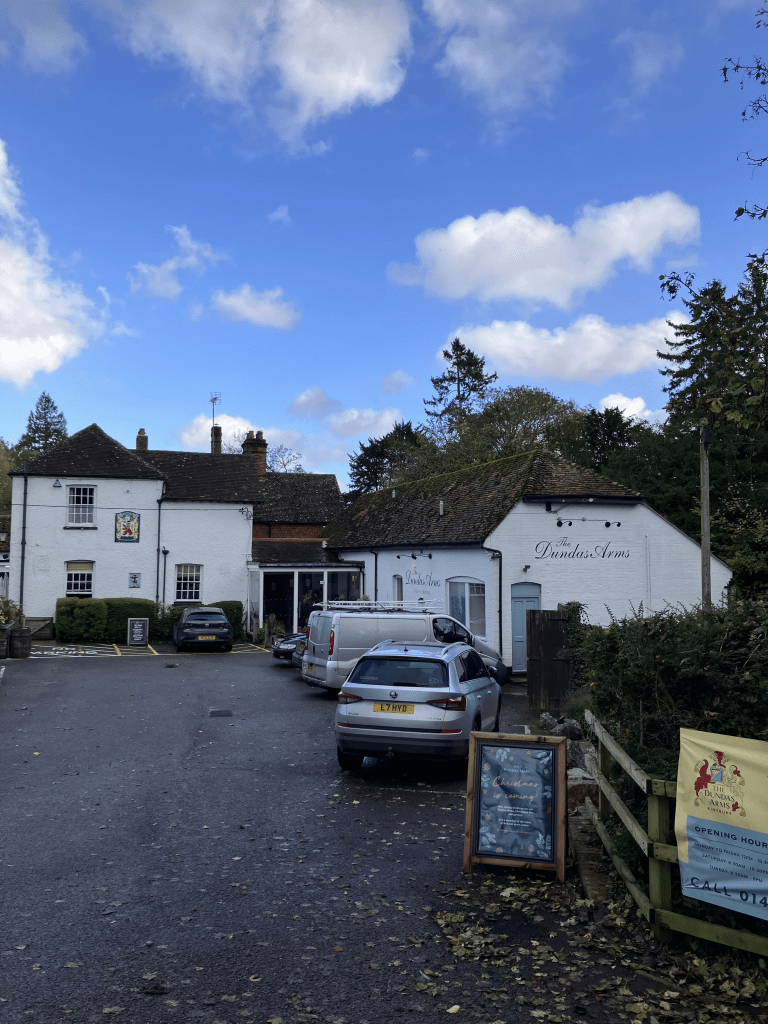
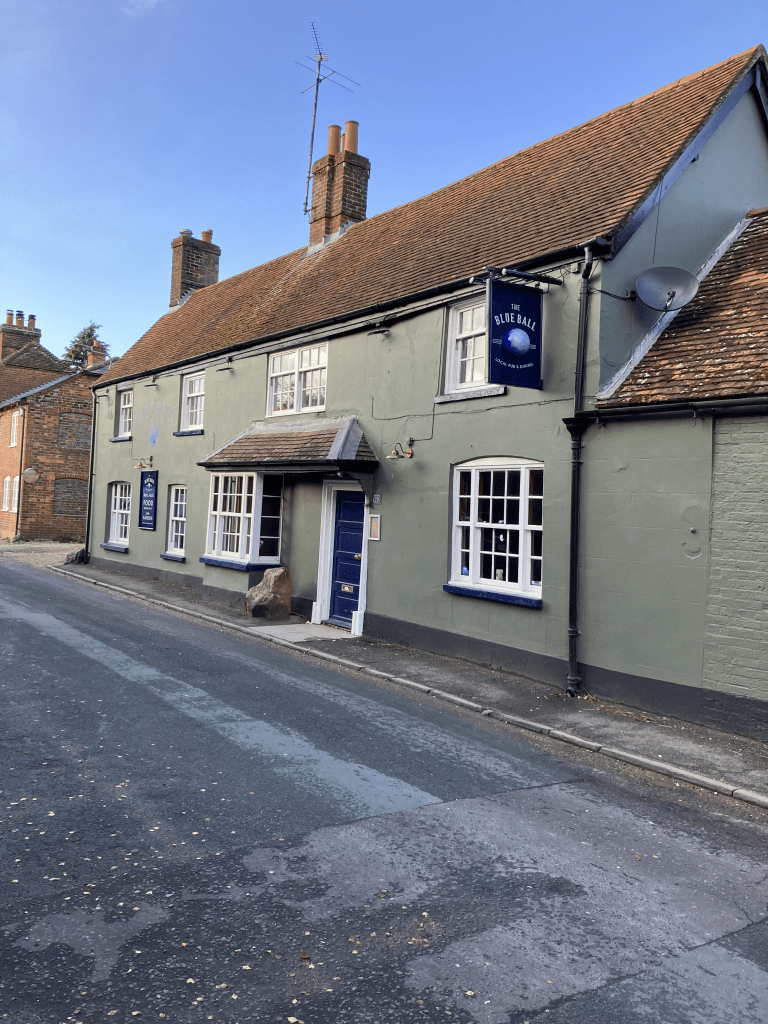
Our Kintbury Martyrs were hunted down by a posse of 300 horsemen who were on a bonus of 50 guineas for each prisoner they delivered up to Reading Gaol. They shared £600 from the County Sheriff (Probably a four figure sum in today’s money). They were led by Charles Dundas and Lord Craven and included ex Yeomanry troops plus Grenadier Guards and Special Constables. Both the Red Lion (today the Dundas Arms) and the Blue Ball were raided and many began the onward journey to Reading Gaol where they remained pending the Special Assizes. This activity was described as A good day’s sportby Mr Dundas.

Twentytwo men from Kintbury and Hungerford were sentenced to be transported, of whom fourteen were married. Six were farm labourers and the remainder were country tradesmen and all were destined for the Hulks. These were old wooden warships used as floating prisons They were utilised as a temporary measure in 1777 but were still in use 70 years later. Described as Hell on Earth, scrofula, consumption and scurvy were rife. Retired battleship the Yorkat Portsmouth to which the Berkshire men were taken held 500 prisoners. Men were held here until convict ships became available and prisoners were judged fit to sail. That could be months and Men died almost immediately from disease induced by despair and a great many died later due to despair and a deep sense of shame and desperation

Naval guards were brutal, tyrannised, cruel by consciousness of the power they possessed. Beatings, punishments and reduction in rations, together with Floggings of unspeakable severitywere inflicted on prisoners

Fortunately, the Berkshire men did not have to wait too long. The Kintbury Martyrs left Portsmouth on 19 February 1832 on the convict ship the Eleanorwhile four of them sailed on the Eliza. They sailed via Madeira and Cape Verde, round the Cape of Good Hope and on 26 June were in sight of Sydney, New South Wales while the Elizawas bound for what was then Van Diemens Land. 

Although the sentence of transportation was not for life, it was in fact a life sentence, as few had any hope of returning home. Back in Berkshire, their families were reliant on the support given by parish relief, principally to be able to feed their children and themselves

We remember William Winterbourne in 2024 as we have done for many years. We must also remember his fellow comrades and their families, who did not suffer the ultimate punishment of being deprived of life but the lives they had known were changed completely

The hope that change for the better has befallen those seeking a better life and freedom from tyranny is challenged when we recall that the concept of transportation has been promoted by the current government. However, it is faltering in its intent to use modern methods of transportation to ship refugees and so called illegalimmigrants to Rwanda. It also faces a problem of the costs of housing the increasing number of refugees in hotels

But here comes an eighteenth century solution! Buy in a hulk(from Holland), the barge now moored in Portland Harbour in Dorset. Conditions on board, while not like those of the eighteenth and nineteenth centuries, are far from ideal for providing shelter to men accused of no crime, who are merely seeking freedom and a better life

As we recall the terrible fate suffered by William Winterbourne and the life sentences to which his comrades and their families were condemned in 1831 let us recognise that the protest against the tyranny which seeks to deprive people of their freedom and their right to a better quality of life must go on

Quotes thanks to the late Norman Fox, Author Berkshire to Botany Bay. Teacher, Trades Unionist, Marxist and friend. Keith Jerrome 11 January 2024.

William Winterbourne remembered, Kintbury, January 11th 2024

The Kintbury Martyr: 3

Kintbury and Hungerford were not the only places to be affected by the events we now know as the “Swing Riots”on those dark nights in November, 1830. Other parts of West Berkshire saw similar protests and by December there were 249 prisoners being held in custody at the County Gaol, according to the newspaper. On Monday 27th December the trial opened of the labourers from Kintbury and Hungerford as well as others from the Aldermaston area – 134 men in all.

The trial begins

The Berkshire Chronicle reported that the majority were charged with “ riotously assembling and destroying threshing machines and other species of property.” These “outrages” were “accompanied by robberies of money and in a fewer number of instances, provisions were forcibly demanded and obtained.”

The report goes on to say that only 25 of the prisoners could read and write, 37 could read only and the remainder could neither read nor write. (This is not surprising considering that no formal education would have been available to them.)

On Tuesday 28th December, William Oakley, William Smith alias Winterbourne, Daniel Bates and Edmund Steel were placed at the bar, charged with robbing John Willes, Esq of five sovereigns on 22nd November in Hungerford, and also of riot, further robbery and destroying machinery. (Presumably, robbing a gentleman of five shillings was considered to be a more serious crime than the rioting and destroying machinery.) None of the men were themselves agricultural labourers. Oakley was described as being about 25 and “better dressed than is usual among members of the class of working tradesmen.”

The Berkshire Chronicle’s journalist clearly felt no need to avoid subjectivity or bias in his reporting, stating that Oakley was, “a pale sinister-looking person, as is Winterbourne.” Winterbourne was 33 but looked older. Bates was described as having, “an extremely mild, good natured expression of countenance”, whilst Steele was a “determined looking man”. Winterbourne was the only one of the four who could neither read nor write, being described as, “entirely uneducated”.

John Hill of Standon House, Hungerford, was quoted at length. He recounted that on 22nd of November he was in the company of 11 or 12 others intending to prevent the “Kintbury mob” from approaching  Mr Cherry’s house (Denford House). They met the mob, which apparently consisted of 200 to 300 men, on the Bath Road. “Some of them had large stakes and sticks in their hands.”

The mob proceeded to Hungerford where they broke windows in Mr Annings’ house. Next they broke into Mr Gibbons’ foundry. Mr Willes, Mr Pearse and others then went to the Town Hall where they met with five “deputies” from the Hungerford mob and five from the Kintbury mob. Winterbourne, Oakley, Bates and Steele were four of the Kintbury deputies and were present when the Hungerford deputies demanded 12 shillings a week wages, the destruction of the threshing machines and a reduction in house rent. Mr Pearce agreed that wages should be raised though he was not able to say anything about the rent.

Next the Kintbury deputies spoke and according to John Hill, Oakley said, “You have had a parcel of flats to deal with, but we are not to be so easily caught”. He demanded £5. Then Bates allegedly flourished a sledge hammer and, striking it on the ground, said, “We will be d—– if we don’t have the £5 or blood”.

Apparently, other witnesses could recall more of what was said: Mr Joseph Atherton recalled Oakley as having added, “We will have 2 shillings a day till Lady day and half a crown afterwards for labourers, and 3 shillings and six pence for tradesmen. And, as we are here, we will have £5 before we leave the place or we will smash it.”

According to Atherton, many of the men were armed with bludgeons, sledge hammers and iron bars.

Oakley is reported as having then addressed himself to Mr Pearce: “You gentlemen have been living long enough on the good things; now it is our time, and we will have them. You gentlemen would not speak to us now, only you are afraid and intimidated.”

Until this point there is no account of Winterbourne having spoken but then someone called Osbourne is alleged to have put a hand on his shoulder, to which he replied, “If any man put his hand upon me, I will knock him down or split his skull”.

Atherton alleged that Winterbourne was carrying an iron bar, three or four feet long in his hand, whilst Oakley had an iron bar,  Bates a sledge hammer and Steel a stick.

According to the witness, Winterbourne said to Bates, “ Brother, we have lived together and we will die together” and this was the point at which Bates struck the sledge hammer hard on the floor, saying,  “Yes, we will have it or we will have blood and down with the b—–y place”.

According to Atherton, this was the point at which Bates flourished the sledge hammer over the head of Mr Willes who responded with. “If you kill me you only shorten the days of an old man”. Mr Willes then gave five sovereigns to the prisoners, who left.

A third witness, Mr Stephen Major, recalled Mr Willes as requesting the men to leave their weapons outside the door, but that Oakley replied, “I’ll see you d—- first”.  Then he said, “Here are only five of us, but we can soon clear the room.”

The final witness whose evidence was reported, was Willes – a magistrate – himself. Willes recalled meeting with the mob on their way to Mr Cherry’s house (Denford House, on the Bath Road). He asked the men not to go to Denford House but to follow him to Hungerford Town Hall where, if they were reasonable, he would hear their grievances. He recalled trying to stop the men from breaking Mr Annings’ windows and attacking Mr Gibbons’ manufactory but without success.

Willes believed that the combined Hungerford and Kintbury mob numbered 400 and it was his request that five members from each village should come into the town hall. He alleged that the men said that they never would have come there but for he who enticed them and that they would not leave the hall without having money – £5. When he was cross examined, Willes said that the mob treated him kindly and led his horse by the bridle. Observing that Steel had a hatchet in his hand, he said to him, “My friend, that is a lethal weapon you have; it would split a man’s skull”, to which Steel replied, “Depend upon it, sir, it shall never injure yours”.

The next crime for which the men were, variously, charged was that of riotous and tumultuous assembly and destroying certain machinery employed in the manufacture of cast-iron goods. Several machines had been destroyed that night, and demands made for money or “vituals”. This included destroying the threshing machine belonging to Captain Thomas Dunn at Kintbury and also one belonging to Joseph Randall in Hampstead Marshall, where the men also demanded money or food and drink. Elizabeth Randall recalled that one man wielded a sledge hammer, others had sticks. She said that the men referred to William Winterbourne as, “Captain” which would have given the impression that he was a ring leader. He had instructed the men, she said, not to damage the farm house.

Intimidating behaviour?

It is interesting to note that the accounts of witnesses to the events of 22nd November, particularly those in Hungerford Town Hall, describe scenes which are much more intimidating and potentially violent than the impression given by Rev Fowle of his meetings with the men that day. Fowle’s account includes none of the kind of language used by Dundas in his letter to Home Secretary Melbourne of November 24th when he speaks of the, “shameful and outrageous conduct of the labourers”.  In describing his meetings with the men, Fowle’s tone would seem to be conciliatory, even sympathetic in an understated way. He is not judgemental and makes no negative or pejorative comments about their behaviour, even though it could not have been pleasant to have been woken up at four in the morning by a band of men intent upon destroying machinery. The men obviously felt he was on their side when they gave him three cheers. All the evidence available would suggest that Fowle has sympathy with the plight of these men – his parishioners.

Sentenced to death

Sympathy, however, seems to have been in short supply as far as the court was concerned.  Sentences of imprisonment, transportation and execution were available to the judges at the trials of the 138 West Berkshire men who stood accused and most were given prison sentences or sentenced to transportation of between 7 and 14 years. However, Mr Justice Park passed sentence of death on just three of the men, all of them from Kintbury. These were William Oakley, Alfred Darling and William Winterbourne.

According to the judge, William Oakley had taken an active part in acts of robbery and, in the robbery of Mr Wilkes, had been armed with dangerous weapons, refusing to lay them aside.

Alfred Darling, as a blacksmith, had no right – according to the judge – to be involved with the rioters.

William Winterbourne, he maintained, had taken an alarming part in the outrages as leader of the mob. He had acted as captain of the band, dictated what was to be done and “received money or not according to his will and pleasure.”

Mr Rigby disagrees

Many people disagreed with Mr Justice Park’s sentencing. Mr Rigby, counsel for the defence and the solicitor who had cross examined the men, was quoted in the Reading Mercury of 10th January 1831 as having said:

“It has been said, that some of the persons who perpetrated these outrages were artisans, not agriculturalists, and had not the excuse of poverty or low wages. But surely let those who advance the argument consider. What! has the poor man no feeling of commiseration for his fellow man because he has a loaf on his table for his own wife and family?”

Whilst Rigby’s sympathy and understanding would have been welcomed, there is an irony here in that the pay of artisans – ie tradesmen, for example blacksmiths or carpenters – would not have been high, either.     

The Reading Mercury reported that Oakley, Winterbourne and Darling were, “to be executed, the jury having found them guilty of encouraging unlawful meetings of the people, and by intimidation obtaining money from individuals.”

A petition to the King

A petition for mercy was swiftly organised to be sent to the king, William IV. In a day and a half it had collected 15,000 signatures. The ladies of the borough also organised a petition to be sent to Queen Adelaide.

King William IV, by Sir Martin Archer Shee - NPG 2199

King William IV

by Sir Martin Archer Shee
oil on canvas, circa 1800
NPG 2199© National Portrait Gallery, London

This was not the only petition: many County & Borough magistrates appealed to the Home Secretary, Lord Melbourne.

“Your petitioners believe….. the offence for which the prisoners have been convicted is one, which in the common opinion of uneducated men, was not considered as capital, and though ignorance of the law may be no legal defence, in all moral feeling it must and ought to have great weight; for it is possible that had these unfortunate persons been apprized of the danger they incurred, they might have stopped short of the violation of that law on account of which they have been doomed to suffer.”

Two of the grand jurors involved with the case, J.B.Monke, Esq and J.Wheble Esq, also appealed to Secretary of State, Lord Melbourne, to petition the King for mercy.

It is interesting to note that, in an age when there were so many laws on the statute books which seem to us today to be biased against the working man and woman and which did nothing but cause them hardship, the imposition of the death penalty in this case caused such strong feelings of objection. Perhaps the case of the rioters, laid out every day in the Reading newspaper reports, had caused members of the middle and upper classes to consider what life was really like for their poorer neighbours.  

For Oakley and Darling, the execution of the death sentence was respited (sic) although no such mercy was accorded to Winterbourne.

January 11th 1831

According to the Berkshire Chronicle of 15th January 1831, it was not until the morning of his execution that Winterbourne was told he would be the only man to die. “He expressed himself glad to hear that his companions were spared.” The newspaper goes on to say that Winterbourne’s wife was lying dangerously ill of typhus fever and that one of his last wishes was that she might die before he suffered or that she might not survive to be shocked by the news of his execution.

Winterbourne was led to the scaffold where, “His large muscular form seemed cramped ,- probably from the position of his arms and tightened of the bonds by which he was pinioned. He walked firmly, but his cheek was pallid, his eyes glazed, and the prayers he uttered, though fervently and audibly expressed, came from quivering lips.”

As the prison clock struck twelve on 11th January 1831, Winterbourne was executed.

Return to Kintbury

It would have been the custom for the executed prisoners to be buried at Reading Gaol. However, Rev Fowle arranged for Winterbourne’s body to be brought back to Kintbury, where he was buried in St Mary’s churchyard the following, day 12th January. Furthermore, he arranged and paid for a stone to be place on the grave – something that would have been totally beyond the reach of the labouring classes at that time, whose graves would be completely unmarked and grassed over.

According to the custom of the time, the name on the grave stone reads as “William Smith”, Smith being his mother’s name and his parents not being married at the time of his birth. Also, the grave is not tucked away in some far and distant corner of the churchyard, out of sight.

There has been for some time the persistent idea that Rev Fulwar Craven Fowle had Winterbourne’s body returned to Kintbury and the stone erected because he felt in some way guilty about what had happened to him. I have to say that, in researching this, I have found no evidence for this to be the case. The letter written by Fowle to Charles Dundas (now in the National Archives) contains none of the harsh or judgemental language used against the protestors by others. As I have described above, the men gave Fowle three cheers and obviously felt able to tell him of their plans. There is no suggestion that the men arrived at the vicarage armed or that Fowle felt intimidated. All the evidence suggests to me that they expected to be treated fairly by him, and that they were. 

It is believed that around 2,000 people were involved in the Swing Riots by the end of 1830. Five hundred were transported and 19 executed. This was four years before the men of Tolpuddle in Dorset were convicted of swearing a secret oath as members of the Friendly Society of Agricultural Labourers, and sentenced to transportation. Those involved in the Swing Riots are not as well remembered as the men of Tolpuddle, but they deserve to be remembered too, for their part in the workers’ struggle for a fairer life.

In Kintbury, William Smith, alias Winterbourne, is not forgotten.

Bibliography

Griffin, Emma, (2018), Diets, hunger & living standards during the British industrial revolution, Past & Present.

Lindert & Williamson, (1983), English workers living standards in the industrial revolution, The Economic History Review

Phillips, Daphne (1993), Berkshire: A County history, Newbury: Countryside Books   

Thompson, David (1969), England in the nineteenth century, Pelican 

Trevelyan, G.M.(1960) Illustrated English Social History:4, Pelican

Woodward, Sir Llewellyn (1962), The Age of Reform, Oxford: OUP

The Berkshire Chronicle (December1830 & January 1831)

The Berkshire Mercury (December 1830 & January 1831)

The National Archives: Letter to Rt Hon Lord Melbourne from Charles Dundas, MP, November 24th 1830

The National Archives: Anonymous letter to Rt Hon Lord Melbourne, November 24th 1830

The National Archives: Letter to Rt Hon Lord Melbourne from Charles Dundas MP & ninety other signatories, November 1830

The National Archives: Letter to Rt Hon Lord Melbourne from Lord Craven, November, 1830

The National Archives: Letter to Rt Hon Lord Melbourne from Rev Fulwar Craven Fowle, November 1830

Theresa A. Lock, Kintbury, October 17th, 2020. 

The Kintbury Martyr: 2

1830 saw rioting break out across southern England

A labouring man

William Smith, also known as William Winterbourne, was born in Kintbury in 1798. It is likely that he was the son of Rose Smith and that he was baptised in Kintbury on 9th December 1798. There is no record of William’s father: it was the custom of the time for a child of unmarried parents to take the mother’s surname, although William was also known as Winterbourne which is likely to have been the name of his father.

Whilst the name William Smith appears in the Kintbury parish registers of the early 1800s, it is difficult to know for sure if this William Smith is also the man known as William Winterbourne. However, it is likely that our William married Mary Hobbs in the parish church of St Mary’s on 27th May 1822. Unfortunately, Mary died on 27th December 1827.

St Mary’s parish marriage register records a William Smith, who is at that time a widower, marrying a Sarah Brackstone on 28th September, 1829. On 3rd January 1830, William, son of William & Sarah Smith, is baptised in the parish church.

We know that William was a labourer and that the England of 1830 was not an easy time for families such as the Smiths. Forget any idea of a rural idyll. Life for William & Sarah would have been hard.

“Captain Swing”

© The Trustees of the British Museum. Reproduced under creative commons licence: https://creativecommons.org/licenses/by-nc-sa/4.0/ https://www.britishmuseum.org/collection/image/347082001

The harvest of 1830 was particularly bad. Furthermore, unemployment was on the increase as was the resulting hunger amongst the labouring classes. For the agricultural labourers, the arrival of threshing machines on many farms meant the loss of work and therefore of an income at a time when it was most needed. Many rural workers felt desperate.

Throughout England, more and more working people began to believe that they did not have to accept their lowly position in life as inevitable: it had not been ordained by God. To what extent the labourers were influenced by the ideas of Cobbett or Hunt – or indeed by many of the other emerging radical thinkers – it is difficult to say. Perhaps the anger and resentment which had been simmering for so long finally boiled over.

Many farmers had invested in the new threshing machines and these became a focus of the agricultural labourers’ resentment and rioting broke out across the country. Many landowners received threatening letters signed by someone identifying as “Captain Swing” or simply, “Swing”. No one knows if there had ever been one particular person behind the first disturbances; it is more likely that the name “Swing” was adopted by various men instigating rebellion in different areas. Threshing machines were destroyed and fires set; perhaps it seemed to some facing destitution and starvation that the labourers were finally rising up against their oppressors.  

In West Berkshire, demonstrations for improved wages and the destruction of threshing machines began in Thatcham on 13th November 1830, moving then to other villages. In many places the gangs of protestors – commonly referred to as a “mob” – demanded money from the landowners. In some places the demonstrations were largely peaceful but by 21st and 22nd things in Hungerford and Kintbury apparently became more threatening.

The Kintbury Mob at the vicarage

The Old Vicarage in Kintbury

On November 22nd 1830, the Rev Fowle wrote to Charles Dundas, Member of Parliament and Kintbury resident, informing him that the Kintbury “mob” had been breaking threshing machines all through the previous night and that they had come to him at 4 o’clock in the morning. It seems that the men told the priest what they had been doing and which farms they intended to visit next. In the letter, Rev Fowle explains that he had consulted with one of Dundas’s men and it was agreed that, rather than destroying his threshing machine on his land at Barton Court, the men should bring it up to Kintbury and destroy it there, in the street. Presumably Fowle was trying to be conciliatory to suggest this, as the men agreed. He  says that he gave the men £2, and that other landowners did the same. The men were then intending to go on to other villages in the neighbourhood, similarly demanding £2 from each landowner.

The tone of Rev Fowle’s letter to Charles Dundas is particularly interesting in that it expresses no anger or criticism of the men and in that respect is markedly different from many other letters and newspaper reports written at the time. He writes:

“I have not heard that they have committed personal violence on anyone than forcing the labourers to join them”.

He also notes that:

“Ploughs with cast iron shears appear to be as much the object of their hatred as machines and I hear they have broken many.”

At this point in the letter, Rev Fowle writes that he has just received a message from W.Willes (the Hungerford magistrate) which informed him that the Kintbury men had later been joined by those from Hungerford, and the mob now numbered 1000 men. A deputation of ten men had spoken with some gentlemen at Hungerford (the distinction of class being particularly significant at that time) and it had been agreed that the men should receive 12 shillings a week for a man, wife and three children and the price of a gallon loaf for every child above three. Fowle says that he hopes the farmers will agree to this.

In a post script to the letter, Rev Fowle explains to Dundas that he has since met again with the men, who have returned from Hungerford:

“ I told them that as far as was in my power I would endeavour to persuade the farmers to agree with them. The men gave three cheers and expressed themselves perfectly satisfied but they also agreed that there must be no payment in bread but all in money”.

Letters to the Home Secretary

What the protesting men of Kintbury told others in the village about their meeting at the vicarage could have caused trouble for the vicar. It was not the time or place for a person such as Rev Fowle to appear to be sympathetic to the “mob”. Someone, it seems, later complained to Lord Melbourne, the Home Secretary, suggesting that Rev Fowle had encouraged the rioters. This would never do. The Home Secretary was the person to whom those in positions of authority would appeal for support when confronting disorder, so it would not look good if a local priest and magistrate had been reported as encouraging the rioters. Consequently, Charles Dundas and ninety other parishioners signed a letter to Melbourne, to ensure him that Mr Fowle had done everything he could to quiet the disturbances and prevent the destruction of property.

What the papers said

Despite  Rev Fowle’s interventions, however, it would seem that the men had not returned peaceably to work and support in suppressing the mob had been requested. According to a report in the Reading Mercury of 29th November, the previous Wednesday, November 24th, had seen a detachment of Grenadier Guards who arrived in Newbury in three stage coaches, followed by a troop of Lancers. An order was given that every householder or individual who could muster on horseback should attend the Market Place at 12 o’clock and eventually a band of men some 200 strong and including special constables made its way towards Kintbury where it met Charles Dundas in his role as Colonel of the White Horse Volunteer Cavalry. 

The Reading Mercury report stated that the mob had retreated to public houses, stables, outhouses and cottages so a detachment of horse was sent to the south and west of Kintbury to prevent any escaping. The Grenadier Guards were to guard the prisoners when they had been brought in by the horsemen. Colonel Dundas, it reports, had heard that several men were concealed at the Red Lion (now the Dundas Arms) and took a ringleader by the name of Westal. The men then went on to the Blue Ball, – described as the “chief depot”- where they met little resistance.

“Shameful & outrageous”

Later that day, Charles Dundas wrote to Home Secretary Melbourne of the “shameful and outrageous conduct of the labourers.” There had been a “most notorious gang” which had surrounded the ale houses. However, at the end of the operation, fifty five of the principal rioters had been delivered to commander of the guards, Captain Aston.

What had happened between Rev Fowle’s meeting with the protestors at four o’clock on the morning of November 22nd and the afternoon of November 24th to require a detachment of Grenadier Guards to be sent to Kintbury? Fowle’s letter of November 22nd to Dundas does not suggest that the sixty-six year old vicar felt threatened or intimidated by the labourers, although it may be that only a few of the more respectful of them had approached the vicarage. His letter says that he has spoken to them on their return from Hungerford when he assures them he will do everything in his power to persuade the farmers to agree to 12 shillings a week pay. There is no suggestion that the labourers showed signs of violent behaviour when they had arrived at Rev Fowle’s vicarage. However, it seems that other events that night were not so peaceful – with tragic outcomes.

Bibliography

Griffin, Emma, (2018), Diets, hunger & living standards during the British industrial revolution, Past & Present.

Lindert & Williamson, (1983), English workers living standards in the industrial revolution, The Economic History Review

Phillips, Daphne (1993), Berkshire: A County history, Newbury: Countryside Books   

Thompson, David (1969), England in the nineteenth century, Pelican 

Trevelyan, G.M.(1960) Illustrated English Social History:4, Pelican

Woodward, Sir Llewellyn (1962), The Age of Reform, Oxford: OUP

The Berkshire Chronicle (December1830 & January 1831)

The Berkshire Mercury (December 1830 & January 1831)

The National Archives: Letter to Rt Hon Lord Melbourne from Charles Dundas, MP, November 24th 1830

The National Archives: Anonymous letter to Rt Hon Lord Melbourne, November 24th 1830

The National Archives: Letter to Rt Hon Lord Melbourne from Charles Dundas MP & ninety other signatories, November 1830

The National Archives: Letter to Rt Hon Lord Melbourne from Lord Craven, November, 1830

The National Archives: Letter to Rt Hon Lord Melbourne from Rev Fulwar Craven Fowle, November 1830

Theresa A. Lock, Kintbury, October 17th, 2020. 

The Kintbury Martyr: 1

The late 1820s saw riots and demonstations break out in many villages and towns across southern England, including Kintbury. So what had happened to England’s green and pleasant land to cause this?

1830: A time of poverty, resentment and anger

In the early years of the nineteenth century, the industrial revolution was leading to the growth of factories and mills in the rapidly expanding towns of the north and midlands. However, counties in the south of England such as Berkshire remained predominantly agricultural. And it wasn’t just the men who worked the land: many women were employed in agriculture and even children worked on the land rather than receiving an education. As it would be another forty years before the introduction of free education for all, very many poorer people in the earlier years of the nineteenth century had no opportunity to learn to read or write.

A link to the wider world

The Kennet & Avon canal had been completed in 1810 so Kintbury people would have become used to seeing colourful barges pass through the village, manned by the itinerate families of bargees; such sights must have seemed strange and exotic to Kintburians who might never have travelled as far as Newbury. Travel for most was by foot or horse drawn vehicle, although occasionally coaches belonging to the better off would have turned off the Bath Road, down what we now know as the avenue, past the church and south through the village.

Whilst families such as those at Barton Court would have lived in comfort and luxury, home for the average agricultural labourer and his family was a very humble cottage, often little more than two or three rooms, sparsely furnished and lit by tallow candles.

Bread on the table

The war with France had ended some fifteen years previously but the peace had also brought with it a recession. Furthermore, 1830 saw the third poor harvest in succession, putting up the price of wheat and subsequently of bread. This was not good news for the agricultural labourer, whose wages for the year had dropped from £40.00 (15 shillings or 76 pence a week) in 1815 to £31 (12 shillings or 59 pence a week) in 1827.

 Labourers in other occupations fared a little better with an average pay of £43 a year (16 shillings or 82p a week ). Meanwhile, colliers in the north and midlands averaged £54 a year (slightly over the lofty sum of £1 a week ) and cotton spinners £58.50 a year  (£1 / 2 shillings or £1.10p a week ). It was no wonder that many agricultural workers in the north of England were migrating to the urban areas where work in mills and factories promised higher wages. But no such opportunities existed for the agricultural labourers of the south.

These wages were in stark contrast to the annual incomes of those in authority and positions of power. Whilst a clergyman was not considered wealthy within his class, an annual income of £254 or £4/17shillings a week must have seemed a fortune to the labourer. Meanwhile, far removed in their offices in Newbury or Reading, a solicitor could earn up to £522 a year. But this was a world away from the life of the agricultural labourer. 

A restricted diet

So how did the agricultural labourer exist on 12 shillings a week? His family’s diet would have been restricted and unvarying, consisting, for example, of bread, bacon, small amounts of cheese, butter, milk, tea, sugar and salt – all carefully rationed. There might have been small amounts of meat other than bacon and some labourers were able to keep a pig. If the cottage garden was large enough and the soil suitable, vegetables could also be grown at home. Research has suggested that 71% of the family’s income would have been spent on bread alone: not surprising as it would have been a staple and eaten at every meal. The Berkshire Chronicle of April 3rd 1829 records the latest price for a gallon loaf in Newbury to be between 1 shilling, 7 pence (1/7d) and 1 shilling, 9 pence (1/9d). Prices, however, varied according to the success or otherwise of the harvest each year.

No more rabbit pie

Whilst previous generations of country dwellers would have been able to augment their diets by catching rabbits and fowl on common land, the Enclosure Acts meant that land owners had been able to fence off vast tracts of land over which the labourers had previously been able to walk freely. It also drastically reduced the areas of land available for the poorer classes to cultivate for themselves. Furthermore, the harsh Game Laws resulted in strict penalties for anyone caught poaching. The law of 1816 imposed the penalty of seven years transportation (ie being sent to a penal colony in Australia) for anyone caught with nets to snare a rabbit, even if no rabbit had been trapped. Until 1827 it was perfectly legal for landowners to set mantraps on their land. These devices could, at best, break a man’s leg and at worst cause him a long and lingering death as a result of his injuries.

Keeping the peace

These are the years before the establishment of police forces across the country: Newbury Borough Police was not established until 1835. Instead, law and order were maintained through a system of harsh penalties designed to deter crime and the only way of dealing with more extreme disorder was to call upon the militia. The death penalty existed for over 200 crimes and for others, those convicted could be transported – a system of dealing with convicts, both men and women, until 1868.

In the towns and villages, watchmen and constables were responsible for keeping the peace and those arrested were taken before the local magistrates. These local magistrates, or Justices of the Peace, represented the face of the establishment for the villagers, and it was their business to uphold the laws enacted by parliament. In 1830, the Houses of Parliament might as well have been on the moon to the working people of England, most of whom were not able to vote until the early years of the twentieth century. One of Berkshire’s two MPs at the time, Charles Dundas, 1st Baron Amesbury, lived at Barton Court, Kintbury. The wealthier villagers, particularly the very few men who were at that time able to vote, might have felt that Dundas represented their interests. This sentiment would not have been shared by the poorer working people.

The Rev Fulwar Craven Fowle

Whilst many villagers might well have been unfamiliar with Charles Dundas other than by name and as the owner of the large and comfortable house along the avenue on the way to the Bath Road, they would have been much more familiar with the local magistrate. The Rev Fulwar Craven Fowle was vicar of Kintbury, the third generation of his family to hold the living. He was also the grandson of Lord “Governor” Craven, sometime governor of South Carolina and previous resident of Hamstead Park. Thus, Rev Fowle was several rungs up the social ladder from the labourers at the very bottom, inhabiting a world far distant from theirs. We know from the letters of Jane Austen – a family friend of the Fowles – that Fulwar Craven Fowle could be bad tempered although there is evidence that he was much loved by his parishioners. Many of the village labourers, however, may very well not have belonged to the Anglican church and are likely to have been members of one of the non-conformist churches (or chapels)  and so would not have known Rev Fowle as their priest, but as a magistrate and as a member of one of the better-off village families.

Thus Rev Fowle represented the face of an establishment which had introduced harsh and punitive laws, a system which had reduced the labourer to a life of poverty from which there was no chance of escape.

Representing the people

Charles Dundas, Baron Amesbury

by William Say, after Sir William Beechey
mezzotint, (1823)
NPG D11326

In 1830, only around 5% of the people were eligible to vote and, with the exception of a few women living in some towns, those who could vote were all men. There was much political corruption and some constituencies were always represented by certain, influential families. In Berkshire, Abingdon (then in Berkshire) returned one member of parliament, Reading two and Wallingford (also in Berkshire at that time), also returned two MPs. The rest of Berkshire – which then stretched as far north as the Thames –was represented in total by just two MPs. In 1830, these were Robert Palmer and the resident of Barton Court, Kintbury, Charles Dundas. Over the border to the west, Great Bedwyn, smaller than Hungerford, returned two MPs, and further south in Wiltshire, Old Sarum – a place with no inhabitants at all, continued to send two MPs to Westminster.

 So whilst Members of Parliament were responsible for passing the laws which severely restricted the lives of the working people, causing much hardship, those MPs were answerable to very few. And those who could vote lived their lives pretty much untouched by the kind of challenges afflicting the poor.

Know your place

There existed a very clearly defined class system in England at this time. At the top of the social ladder were the nobility such as William Lamb, 2nd Viscount Melbourne, the Home Secretary in 1830. Letters addressed to him begin, “My Lord…”.

Further down the social ladder, but still a long way from the bottom, those of the landowning classes who did not have titles have “Esq” – short for “esquire”- after their names whilst those on the next rung down are referred to as “Gentlemen”.

Newspaper reports of this time often refer to “gentlemen and farmers”, because a farmer was not necessarily also a “gentleman”. However, the farmer was several rungs above the labourers who worked for him. These labourers are not even afforded the title, “Mr” and in some reports are referred to as “the peasantry”.

The popular hymn, “All things bright and beautiful”, published in 1848, originally included the verse which read:

The rich man in his castle,
The poor man at his gate,
God made them high and lowly,
And ordered their estate.

Campaigning for change.

 It is not surprising that there was, throughout England, a growing movement advocating reform. However, many who could remember the events of the French Revolution of the 1790s, which had seen the overthrow of the monarchy and the execution of many members of the upper classes, continued to fear that something similar would happen in England. Demands such as the right for everyone to vote, equal rights before the law or the abolition of child labour – all of which seemed perfectly reasonable to many – were regarded by some members of the establishment as a threat to their way of life and a slippery slope towards a repeat in England of what had happened in France.

By contrast, the events in France had inspired others to advocate reform of parliament and the law. One such was the wealthy farmer from Wiltshire, Henry Hunt, an inspirational speaker who had been given the nick-name “Orator” Hunt.  In 1819, he had been invited to speak at a rally in Manchester which was attended by a crowd of around 60,000 people. Fearful of the effect one of Hunt’s rousing speeches would have upon the crowd, the local magistrates panicked and sent in the militia, who were armed with sabres. In the resulting massacre, up to fifteen people are believed to have been killed and hundreds injured.

Another radical thinker of the period was William Cobbett, the son of a farmer from Surrey who had become involved in political debate and the need for parliamentary reform. Cobbett was also a journalist and as well as essays and letters he published a weekly newspaper called The Political Register which soon became popular amongst the poorer classes. Not everyone was able to read Cobbett’s newspaper for themselves but it is likely that those lucky enough to be literate would have read aloud to others and so the views expressed were shared more widely than the circulation of the paper copies.

William Cobbett

possibly by George Cooke
oil on canvas, circa 1831
NPG 1549

It is very likely that that copies of The Political Register would have been shared or read aloud, perhaps in the public houses or other meeting places, around Hungerford or Kintbury such that the poor and oppressed rural labourers became aware of those who had already set out to challenge the status quo.

The Threshing Machine

The Threshing Machine , William Wilson © Estate of William Wilson OBE RSA

National Gallery of Scotland

Threshing is the process of separating the grains of wheat from the chaff. Before the introduction of threshing machines, this was a very labour intensive process done by hand using a flail. Threshing took place in the autumn after the harvest had been brought in and provided employment for hard-pressed agricultural labourers at a time in the year when there was very little other farm work available. At a time when wages were lower than ever and the price of bread increasing, what the farm labourer could earn by threshing helped to keep him and his family throughout the bleakest part of the winter.

Threshing machines required very few labourers to operate them so their introduction meant the loss of work for many men. And loss of work at such a crucial time meant, for many, the fear of starvation throughout the winter months.  

Many agricultural workers literally feared for their lives.

Bibliography

Griffin, Emma, (2018), Diets, hunger & living standards during the British industrial revolution, Past & Present.

Lindert & Williamson, (1983), English workers living standards in the industrial revolution, The Economic History Review

Phillips, Daphne (1993), Berkshire: A County history, Newbury: Countryside Books   

Thompson, David (1969), England in the nineteenth century, Pelican 

Trevelyan, G.M.(1960) Illustrated English Social History:4, Pelican

Woodward, Sir Llewellyn (1962), The Age of Reform, Oxford: OUP

Theresa A. Lock, Kintbury, October 17th, 2020.