West Woodhay: A downland village in a changing agricultural landscape

This post is in two parts. In the first part, I consider the village of West Woodhay from a changing historical perspective. For the second part, we are delighted to have a contribution from Harry Henderson  of West Woodhay Farms in which he describes the recent changes in agricultural practices which have enabled vitally important regeneration of the land.

West Woodhay 1817

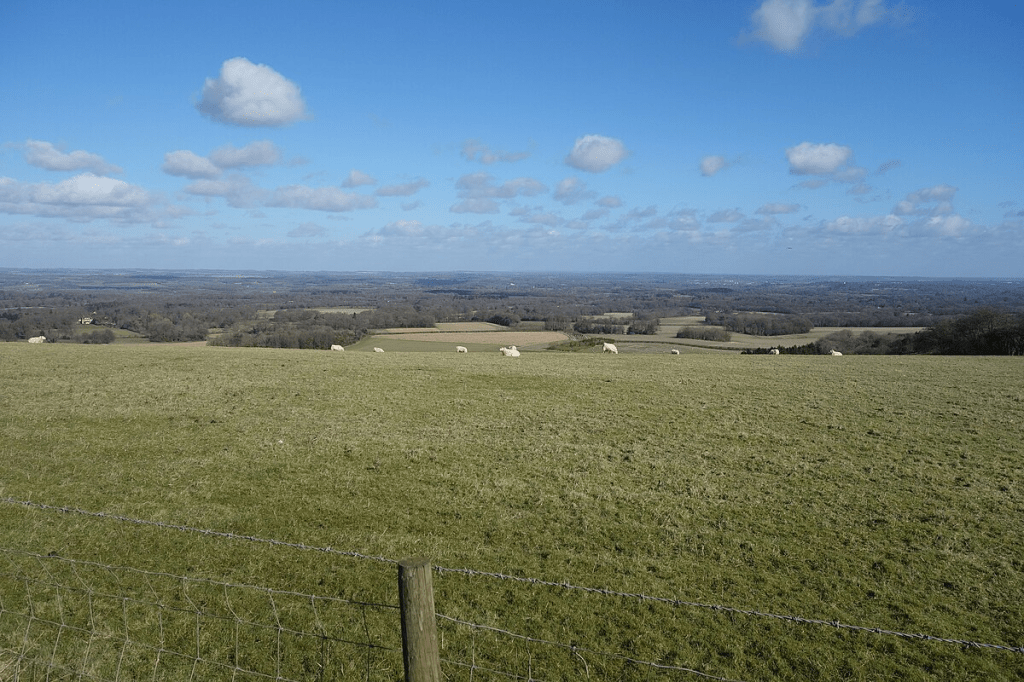
On the road to nowhere  in particular, the hamlet of West Woodhay is situated in the extreme south of West Berkshire just below the North Hampshire downs, a little over two miles south of Kintbury as the crow flies.
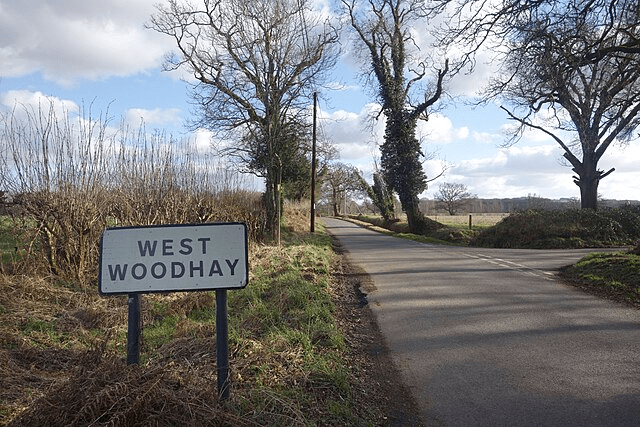
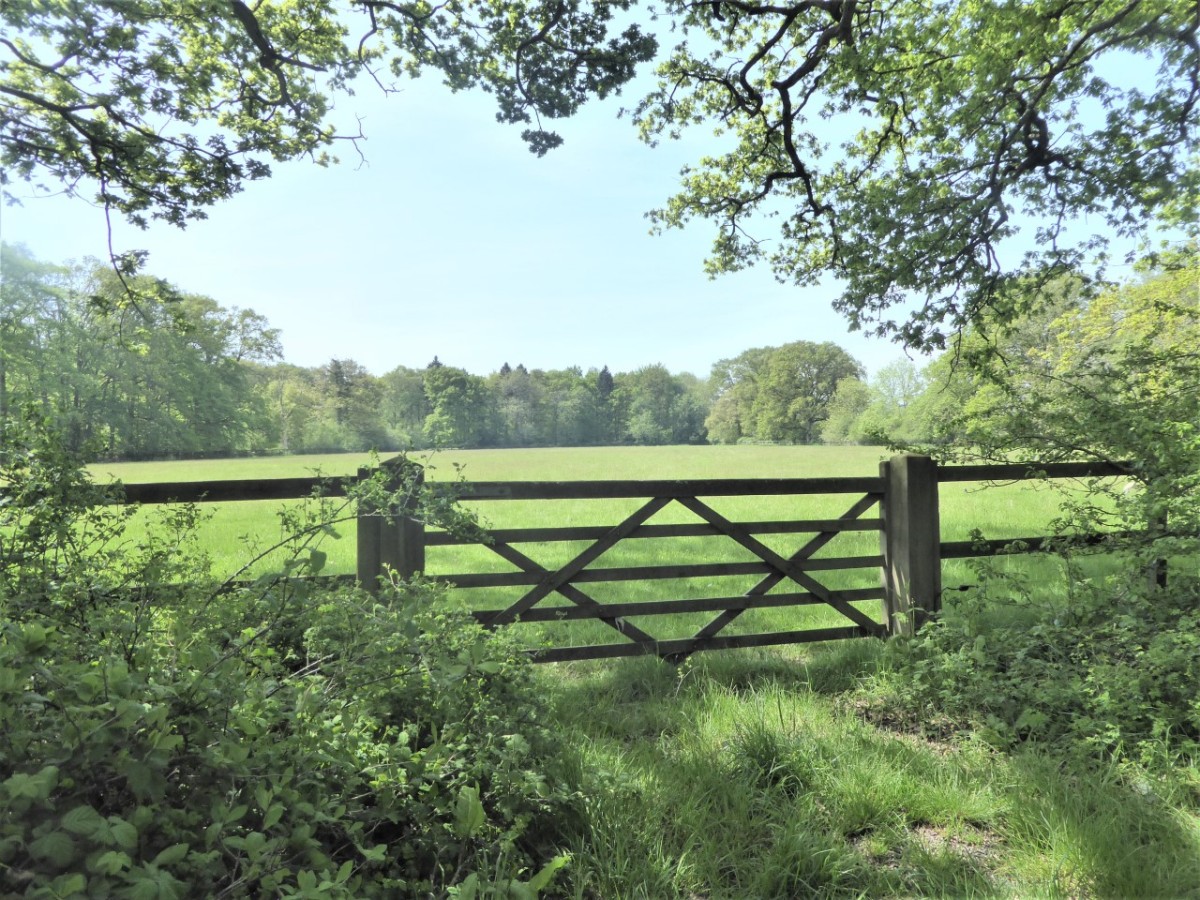
The Road to West Woodhay: Des Blenkinsop via Creative Commons

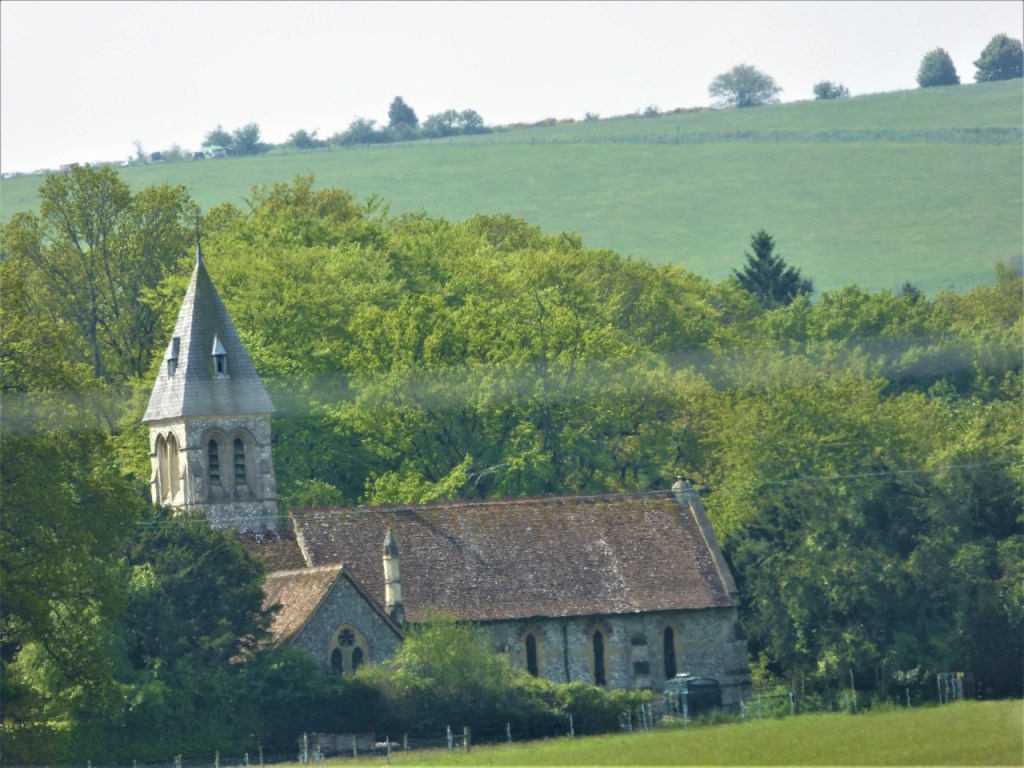
Although a motte is all that remains now of a twelfth century hunting lodge, today the village is probably best known for the elegant grade one listed West Woodhay House and also the grade two listed St Laurence’s church with windows by Morris & Co.

Early censuses show that most of the population were engaged in agriculture during the nineteenth century; early maps of the village suggest there has been little if any development, so, on the whole it might be presumed that very little of any great note has ever happened here. However, the effects of very significant changes in agricultural practices can be traced in the history of this village and the surrounding area.

The  eighteenth century saw many developments in agriculture, enabling increased food production necessary to feed the growing population. Whilst innovations in agricultural machinery, such as the horse drawn seed drill developed by Jethro Tull of Prosperous Farm, near Hungerford, made the cultivation of larger fields much easier, this had a downside for thousands of rural labourers.  

Since medieval times, many rural families had cultivated strips or patches of land, often dotted around their parishes, relying upon what they could grow to feed their families. However such a system was useless for food production on a large scale. The 1773 Inclosure Act enabled the Lords of the Manor or other land owners to enclose the diverse patches and strips of land, creating large fields each devoted to one particular crop and of the size that could be cultivated using new machinery. Whilst this might have been good news for the markets, it was devastating for many who lost their ability to grow their own food.  

The effects of the 1773 Act were not felt straight away although it was eventually to change the face of the English countryside.

The Hampshire Chronicle of July 1816 reported that an Act of Parliament had been passed for the inclosure (sic) of Woodhay Common. However, “the labouring poor in that neighbourhood have lately shewn strong symptoms of their disapprobation and at length proceeded so far as to collect in considerable numbers with the avowed intention of preventing the farmers ( to whom it had been allotted ) from breaking it up.”

Fearful of trouble, the authorities called out military back-up which arrived in the form of the “Donnington and Newbury Troop under the command of Capt. Bacon” and also “Oxford blues ( who had been sent from Maidenhead )”

It is hard to believe that anyone would have felt it necessary to employ the military to prevent any sort of a riot in such a quiet and peaceful corner of the county. It is hard to imagine troops, not just from nearby Newbury but also from Maidenhead, well over a day’s ride away, descending on the village. Insurrection is not something you would associate with West Woodhay.

However, due to the “spirited exertions of constables” the military were not required although several of those involved in the protest were bound over to appear at the Quarter Sessions.

Enclosures were not the only things to make life increasingly difficult for the rural poor. Harsh game laws meant the penalty for catching rabbits for the pot could be transportation and poor harvests in the 1820s resulted in increased prices, particularly for bread.

William Cobbett

William Cobbett was a writer and campaigner born in 1763 to a Hampshire farming family. Critical of the way new laws impacted upon the rural population, in 1821 Cobbett set out on a series of “Rural Rides” to observe for himself the situation throughout the midlands and south of England. Amongst other things, Cobbett was critical of the amount of money the country was spending on defence rather than on improved conditions for the rural poor. One of those of whom he was particularly critical was Berkshire M.P. and Kintbury resident, Charles Dundas. A prominent and influential figure, Dundas would have been well known across local towns and villages.

Although it is not always easy to work out Cobbett’s exact route through the countryside, it is clear from reading his work that he travelled across North Wiltshire and into Berkshire, stopping at Newbury on October 17th.

Whilst at a public dinner in Newbury, Cobbett took the opportunity to call out Dundas’s false accusation that he, Cobbett, was complicit in a plot to assassinate the Prime Minister and members of the cabinet. Known as the Cato Street conspiracy, those involved were eventually either executed or transported. For Dundas to accuse Cobbett of complicity was a particularly serious slur and something which reflects how polarised political views were at this time.

Later, Cobbett observed that “a good part” of the wheat offered for sale at Newbury market was wholly unfit for bread flour. Considering the importance of bread in the diet of poorer people, this must have led to severe consequences locally.

Not everything Cobbett observed as he rode through the downland was negative, however. At one point as he rode across the downs, he observed, “immense flocks of sheep which were now ( at ten o’clock ) just going from their several folds, to the downs for the day..”

The “immense flocks” aside, there was, as Cobbett noted, little to impress in the daily lives of the agricultural workers. Enclosures, the rising cost of bread and harsh laws which mitigated particularly against rural people, and changes in agricultural practices such as the introduction of mechanisation made life for the agricultural worker extremely difficult. The bad harvest of 1830 was the tipping point, leading to what became known as the “swing riots” which broke out in December of that year.

Although most of the protests in this part of West Berkshire were centred on and around Kintbury, West Woodhay did not escape the disorder. Here, Cornelius Bennett and Henry Honey were charged with robbery although both were subsequently acquitted. However, shock waves must have rippled across this part of Berkshire when it was reported that others of the rioters had been charged at Reading Assizes with several transported to Australia and one executed for his involvement.
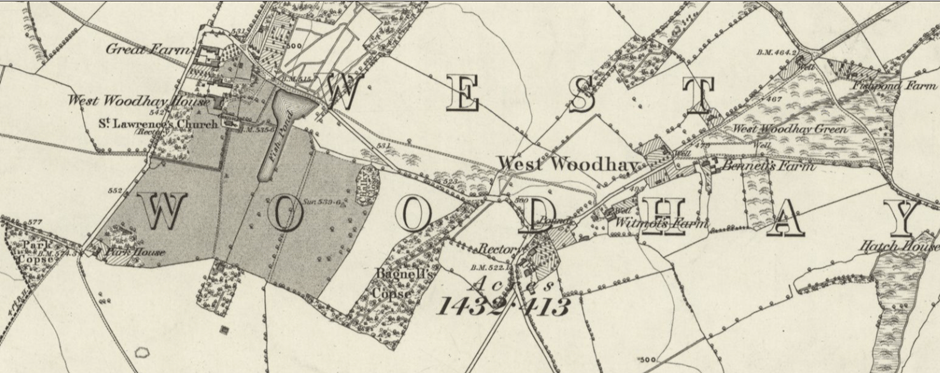
1877

In the following years, however, the agricultural industry in England generally was thriving. But this was not to last and by the 1870s it was in depression. By 1893 an anonymous contributor wrote to the Newbury Weekly News:

“There are thousands of acres not tenanted at all, and scores of landlords only too anxious to let on almost any terms.”

He continues:

“The real cause of agricultural depression is very easy to find, but very difficult to remedy. It is because the enormous development of steam navigation has brought the millions and millions of foreign acres into practical proximity to our shores and accompanied by a full market has made England a central emporium of a huge percentage of the surplus produce of the world.”

Throughout England, the numbers of people engaged in agriculture, particularly as labourers, declined as many sought better paid factory work in towns and cities. In West Woodhay, the 1851 census records William Taylor of West Woodhay farm as employing 15 labourers. By 1861 the farm has been taken by an in-comer from Buckinghamshire, Job Wooster, who employs 9 labourers. By the 1881 census, there are just 16 agricultural labourers in the whole of the village.

Throughout the early years of the 20th century, many young people from rural communities emigrated to the colonies such as Canada or Australia to try their hand at agricultural work far from home. Whilst I have not been able to discover how many pioneering young men or woman left the villages of West Berkshire in this way, it has to be likely that some, at least, would have done so.
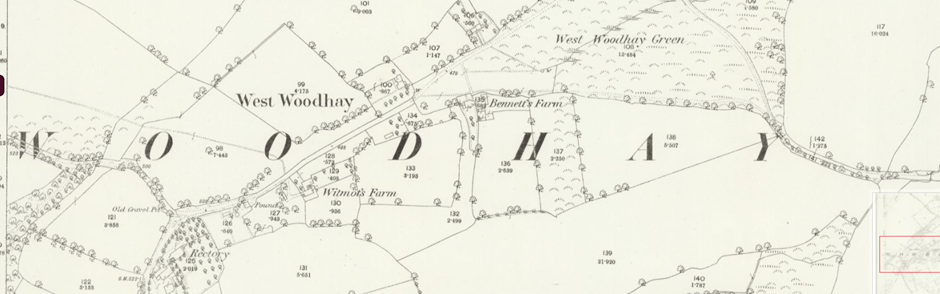
1880

The twentieth century witnessed two world wars during which thousands of agricultural workers from all over the country enlisted in the armed forces. To make up the short fall in manpower, thousands of young women joined the Women’s Land Army and were posted to rural areas throughout the UK. In July of 1918 the Reading Standard featured on its front page photographs of some of these women at work on Berkshire farms under the bold sub-headings:

THEY MILK THE COWS

AND FEED THE PIGS

               AND TRUSS THE LOADS OF HAY

most probably to the cynical and wry amusement of those rural woman who had been undertaking farm work for decades.

The 1939 Register lists 24 people engaged in agriculture in West Woodhay although it is difficult to draw an exact comparison with numbers of agricultural workers at the time of the nineteenth century censuses in part due to changing definitions of occupation. However it is true to say that the village had remained a predominantly agricultural community.

 It is now over 200 years since West Woodhay Common was enclosed and 195 years since the Swing Riots. Although the associated violence is now very much in the past, the farm lands of West Woodhay still reflect the changing agricultural practices and the need for farming to respond to changing times.

For the second part of this post we are grateful to Harry Henderson  whose family owns and runs West Woodhay Farms, an estate on the Berkshire/Hampshire border.

(C) Theresa Lock 2025
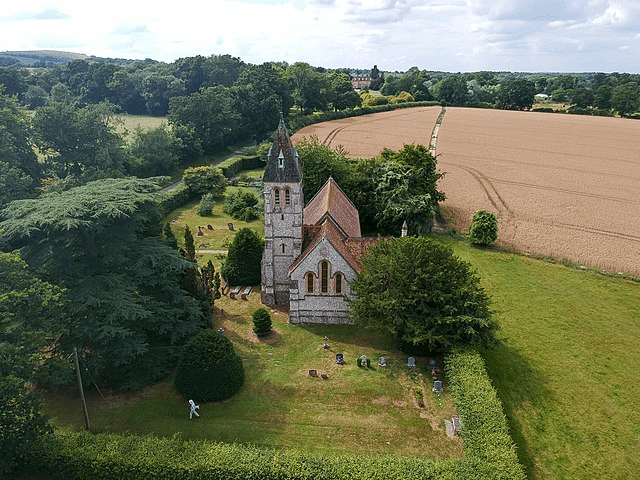
West Woodhay church: Matthew Prior via Creative Commons

Farming for the Future: Soil, Sustainability, and Success at West Woodhay

Harry Henderson

The estate spans 830 hectares of challenging land with fragile soils. Since 2008, a regenerative agricultural policy has been in place, with a focus on prioritizing soil health. The estate now follows a crop rotation system that includes herbal grass leys, flower meadows, wild bird feed areas, and very low-input cereals.

Agricultural chemicals and fertilizers have been replaced with more sustainable cultural methods. As a result, there has been a significant increase in soil biology, leading to enhanced organic matter levels and improved carbon capture.

The shift in farming practices—driven by soil health—has led to remarkable nature recovery. The planting of herbal leys and wildflower plots has created a thriving environment for insect life. Since adopting a no-insecticide policy in 2014, West Woodhay has seen a resurgence of beneficial insects such as spiders, beetles, and parasitic wasps. This has enabled the successful establishment of flea beetle-sensitive crops like stubble turnips.

The rise in insect populations has also benefited birdlife, which is supported further through the planting of wild bird plots for the leaner months. All this recovery work has been monitored and independently audited over many years, and the data clearly shows a strong link between soil health and biodiversity.

In-depth soil analyses have shown that, given time and the absence of soil disturbance, soil indices can begin to rebalance naturally, making primary nutrients more available to crops. This reinforces the estate’s approach of minimal intervention and maximum biological support.

A large sheep flock has been used to manage the land and maintain productivity. The breed of choice is the Welsh Cheviot, native to the Brecon Beacons. With West Woodhay’s highest point reaching 900 feet, this hardy breed is ideally suited to the challenging upland climate. Their thick, dense fleece protects them from January’s easterly winds and rain.

Lambing begins in late March, with all ewes lambing outdoors in a natural environment, giving mothers plenty of space and time to bond with their lambs. During the summer months, the flock grazes on the herbal leys, enriching the soil’s biodiversity. After weaning in early autumn, they are moved to higher ground to help manage the fragile downland ecosystem.

The estate’s latest and most exciting initiative is the production of cereal crops for human consumption, grown with little or no artificial fertilizers or pesticides. These crops are established using zero-tillage methods. By using legumes to naturally supply nutrients for fast-growing spring cereals, West Woodhay has successfully tapped into new opportunities through Wildfarmed contracts.

Importantly, the farming enterprise has remained consistently profitable. Without profit, nature recovery would be difficult to sustain. Savings on fertilizers, agrochemicals, fuel, finance, and labour have helped support this transition. The increase in soil organic matter has broadened the estate’s cropping options, helping to future-proof the farm for the next generation.

(C) Harry Henderson

A rich man in his castle?

Motte and bailey castles are the stuff of children’s story books: picture a mound surrounded by a ditch and topped with a wooded palisade, inside of which is a wooden or stone fortress. Perhaps knights in armour are seen approaching on horseback, or an elegant lady wearing the inevitable wimple or cone-shaped head dress. Somewhere nearby, colourful flags and banners ripple in the wind.

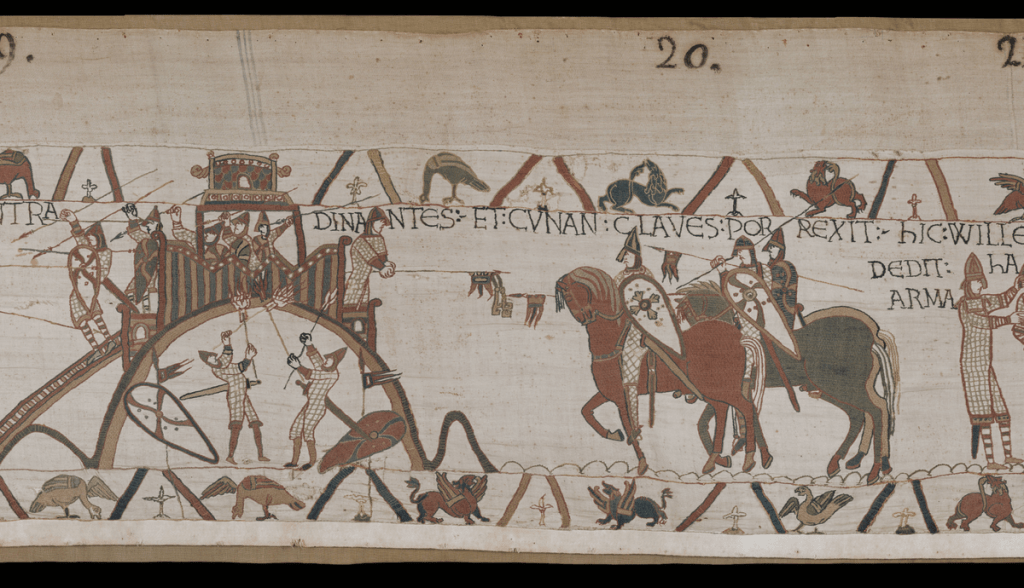
In reality, the motte and bailey castles of history were introduced by the Normans after the invasion of 1066 and an example can be seen on the Bayeaux tapestry:

Windsor Castle is an example of a motte and bailey, although over the years of its existence, the building has had much more added to it. By contrast, in Oxford only the motte survives of the original castle construction.

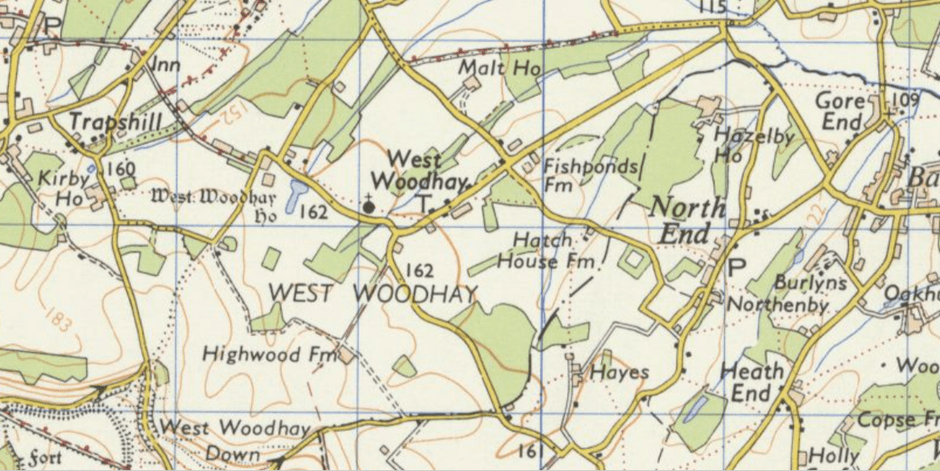
Most interestingly, the OS map of our area records a motte in the village of West Woodhay. A little way from St Laurence’s church, but on the opposite side of the road, and now surrounded by trees, most passers-by will be totally unaware of its existence. However, thanks to the work of O.G.S.Crawford (see a previous post) we can still identify the site of early medieval activity in our area as the word “motte” in a Gothic font is clearly marked on the map. But does the presence of a motte also indicate that there was once a castle, or at least some sort of defensive structure, in the now quiet and peaceful village?

There have never been extensive excavations in the West Woodhay area – perhaps I should add, as of yet. However, in the 1930s enthusiasts of the Newbury Field Club did painstakingly dig the site. Their findings were recorded by one E. Jervoise and you can read what he discovered in volume 7 of the Newbury Field Club Journal in Newbury Library.

The West Woodhay motte is of modest size – the Field Club members recorded its rise to be just 8 feet and the diameter at the top just 30 feet. These dimensions, of course, would have dispelled any expectation of a substantial building so I can forget any fanciful thoughts of a West Woodhay castle. However, red and brown roof tiles and eighty iron nails were found on the crest of the mound, suggesting some sort of construction even if quite small. Broken pottery was found on the top of the mound and in the surrounding ditch, including rims and bases of what was believed to be at least 40 cooking pots or bowls of a type in use in the twelfth century. Some of the sherds found showed traces of glaze. The excavators weighed these finds and found there to be 40lbs of them.

The diggers also recovered soes believed to have belonged to oxen. Also discovered was what Jervoise describes as a “hone” by which he must mean a stone for the sharpening of blades. It had been, “ made of fine grained silicous schist, a rock occurring in Scotland and Normandy.” Most probably a valued or valuable item, then.

Jervoise was particularly pleased by the discovery of a small bronze buckle “of fine workmanship” and having, “an unusually perfect green patina”.

He concluded that it might have been the site of an early medieval hunting lodge and it was certainly somewhere that food was prepared and eaten.

Hunting lodges were not uncommon in the medieval period – a time when a popular sport amongst the nobility was hunting for deer or boar. The lodge would have been the place where visitors, on what in later times might have been referred to as a “straightforward hunting weekend ” would stay or just return after a day’s sport for food and refreshments. With its slightly elevated position on the motte, its view towards Walbury Hill to the south west and the wide open Kennet valley to the south east, the hunting lodge might well have been built to impress.

Although the West Woodhay motte was likely never the site of a defensive structure, or indeed anything at all like a castle, I think it is quite safe to assume that the owner of this land in the twelfth century would have been a wealthy man and most likely of Norman descent, speaking Norman French. But while the nobility and upper classes generally would have spoken Norman French, it has to be likely that those preparing the food and washing the cooking pots were of humbler stock. These working people are likely to have spoken the language of the West Saxons or even Middle English – possibly a mixture of both.

Today West Woodhay is in many ways a quintessential English village – typical of many smaller settlements on the southern chalk lands. It is difficult to imagine a time when the English language, as we speak it today, would not have been understood there. Perhaps it is even more mind boggling to imagine a time when the local land owners would have conversed in Norman French!

© Theresa Lock January 2025

Celebrating Victoria’s Golden Jubilee

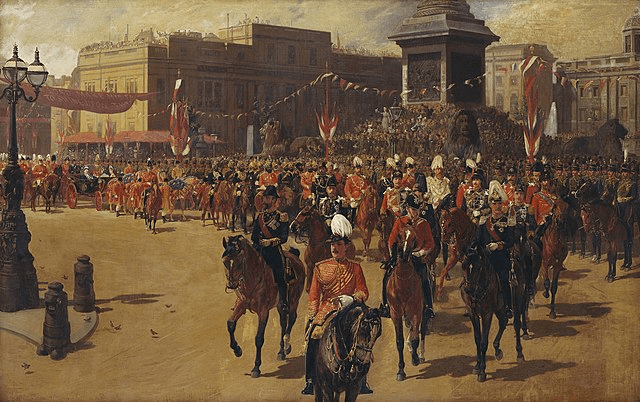
Queen Victoria came to the throne on 20th June 1837 so, by her Golden Jubilee in 1887, many people had grown up knowing no other monarch. Consequently, the fiftieth anniversary of her coronation was seen as a cause for great celebration.

Reports in the Newbury Weekly News covered three local villages: Kintbury, West Woodhay and Combe, although the other villages would certainly have held celebrations. Reading those three reports, what is most interesting, I think, is the way in which events in the two smaller villages are organised – and presumably largely funded – by the families in their respective “big houses” to whom, it is naturally expected, the villagers will demonstrate deference and appreciation.

A church service of thanksgiving was a central to the celebrations in all three villages: at Combe villagers marched behind a banner to St Swithun’s church while St Mary’s, Kintbury flew the Royal Standard and the bells were rung.

Celebrations in the two smaller villages very much revolved around the respective “big houses” with their principal families. At Combe, Mr W.H. Cole gave his workers, game keepers and labourers on the Combe estate a meal “of hot roast beef, mashed potatoes, plum pudding and beer”, all enjoyed on the village green. The villagers, “did not fail to express themselves most grateful”, but then, it would be expected to show appreciation to those you were dependent on for employment. The meal was followed by singing and dancing, “freely indulged in by the village lads and lasses” and – presumably for the men only – the, “fragrant weed, too, liberally supplied by Mr Cole, was thoroughly enjoyed.”

At West Woodhay, celebrations kicked off in sporting vein with a cricket match although presumably this was something to be enjoyed more by the men than the women. The church service was held at a quarter past five after which parishioners proceeded to the home of Mr & Mrs Cole at “the big house” (sic) for hot roast beef and plum pudding which, the report tells us, consumed in a West Woodhay fashion “cannot be beaten.” What “West Woodhay fashion” was, we are left to wonder. The meal was followed by a “Jubilee pipe” and “a good packet of Jubilee tobacco for every man”. If anything special was given to the women of the village, the NWN report does not say. I doubt it was.

The Cole’s son, Mr A.C. Cole, had returned to his parents’ home for the celebration; he gave a speech which was, apparently, well received especially as he had recently been, “in town” where he had been, “viewing Her Majesty in her world-famed  procession and at personal inconvenienced had come down to assist in making his father’s servants happy.”

So that was nice.

At 9 o’clock everyone proceeded to “our beacons” to watch bonfires and rockets.

The NWN report of the celebrations in Kintbury illustrate a village which did not revolve around one family in a “big house”, although the report mentions the names of certain influential and benevolent villagers. Celebrations commenced with a peal of church bells at 5 am so an early start was assured whether the good people of Kintbury wanted it or not! The village was decorated with bunting the like of which had never been seen before, apparently, and music was supplied by the Hungerford Town Band.

Kintbury was then, as it is now, a much bigger village than the others and this is reflected in its celebrations. A table covered with a calico cloth was placed in Dr Lidderdale’s meadow, to seat nearly one thousand people – presumably all at once! A meal of roast and boiled beef as well as boiled ham was served, accompanied by hot potatoes and plum pudding, washed down with a pint of beer or two bottles of ginger beer for each person. Somewhere referred to as “the Baths” was loaned by Mrs General Dunn for tea making. It seems no expense was spared and during the meal, children were entertained by one Professor Burssord, allegedly of London, who performed various and amusing tricks with great dexterity.

Sports and music followed the meal and about 450 children enjoyed bread and butter and cake with tea served in a Jubilee mug. I hope they were able to take the mug home with them afterwards!

Those unable to get to the event due to age or infirmity had their dinners delivered to them.

The day concluded in sports at which money prizes could be won.

What became of all that calico used as table cloths? It was later given to the local schools (interestingly, there must have been more than one either in Kintbury or the satellite hamlets) to be made into children’s garments.

Apart from the size of the village – perhaps that should be small town – the big difference between celebrations in Kintbury and the other two villages is that the event in Kintbury did not revolve around the benevolence of one particular family. The NWN report says that the celebrations were enjoyed by, “ all classes, creeds, in all conditions of life” who “evinced a desire not only to participate in the celebration but also to contribute towards the expenditure thereof.” There is no sense in which the people of Kintbury were expected to show gratitude to one particular family; there is no sense of there being forelock tugging or cap doffing to anyone in a Lord of the Manor role. The celebrations were organised – much more democratically – by a committee chaired by Mr W. H. Dunn with the vicar, Rev Edwards as vice chair. Altogether, dozens of other Kintburians contributed to making the day something to remember.

Queen Victorian lived and reigned for a further fourteen years and her Diamond Jubilee was celebrated in 1897. This , however, was a much more low key event throughout the country, perhaps because by now the aged Queen was seen very little in public – I do not know for sure. But I am sure those who celebrated in 1887 would have remembered  the roast beef, the hot potatoes, the tobacco and the beer – not forgetting the Jubilee mugs – for a very, very long time!

(C) Theresa A. Lock June 2024

Our churches: Not what they seem?

The church’s restoration,

In eighteen eighty-three,

Has left for contemplation,

Not what there used to be.

John Betjeman

Many church guide books will proudly tell you that St Whoever’s is a fine example of, say, Norman architecture. It is easy to imagine, as you sit in your pew, listening to this week’s sermon, that the church you see around you is more or less the same building that, for example, knights would have known as they stopped off on their way to the crusades, carving on the Norman pillars the familiar crosses while their horses chewed on the church yard grass outside.

Although there are very few churches which exist today just as they were when the last mason knocked off work for the last time and the building was consecrated, it was the Victorians who were responsible for the greatest changes to our much-loved buildings. By the nineteenth century, many ancient buildings might well have required building work but in their enthusiasm for what they chose to call restoration, the Victorians swept away many significant features, and at times, entire buildings.

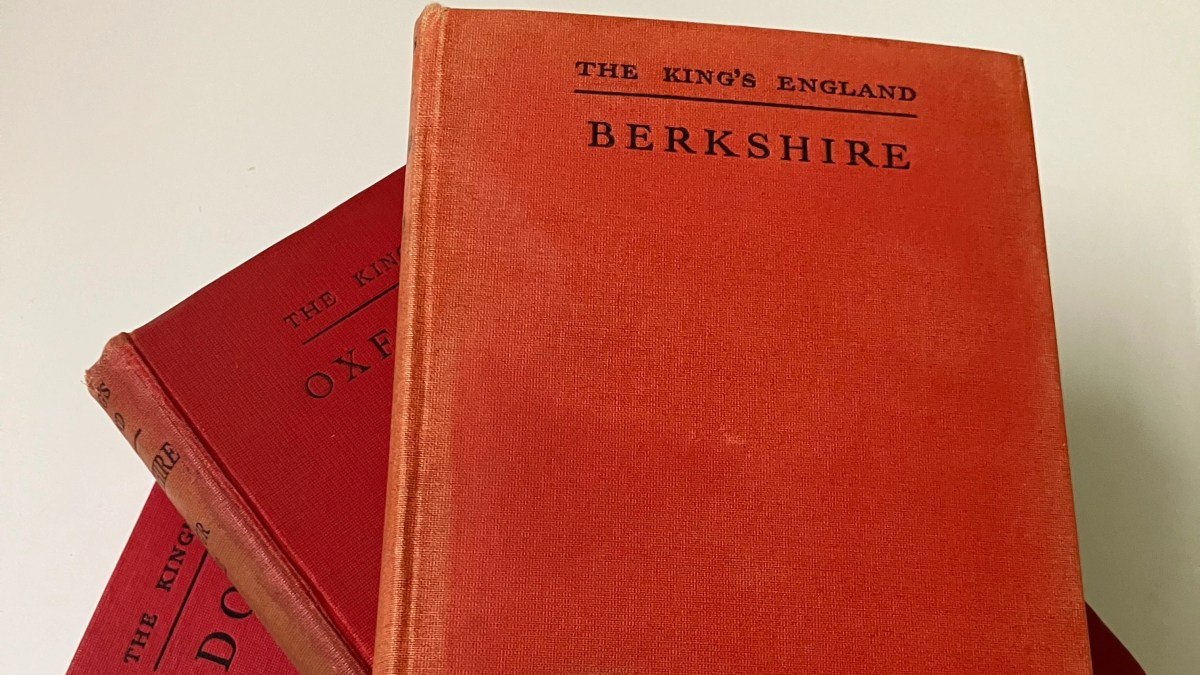
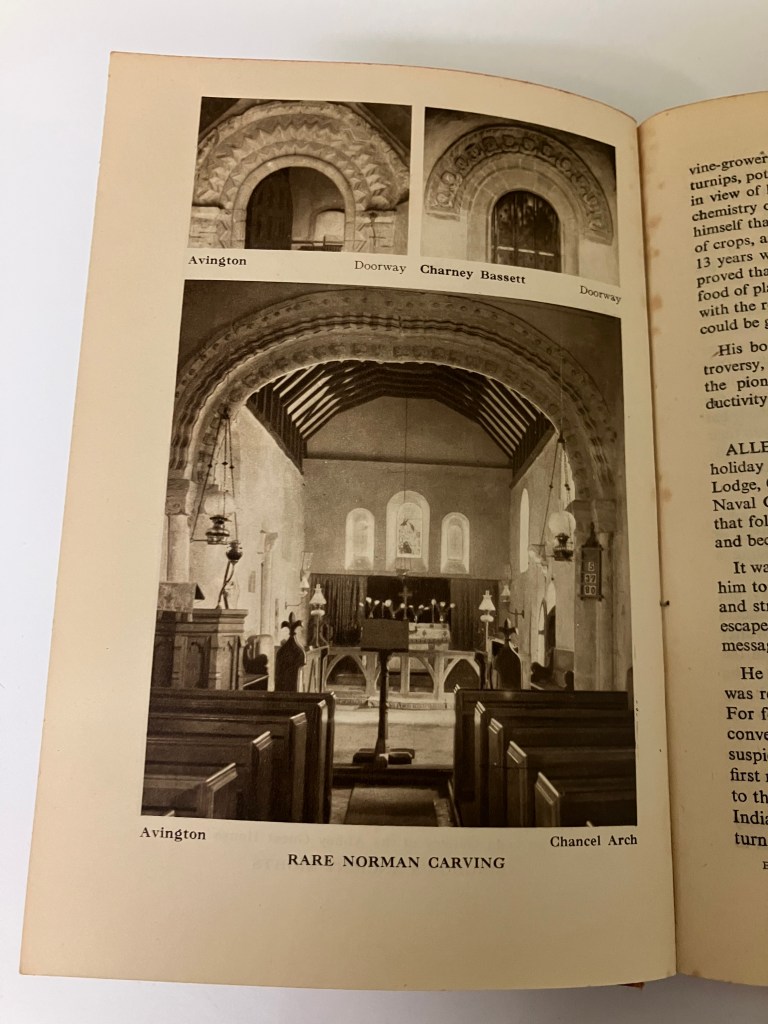
In the Berkshire volume of his series, The Buildings of England, the architecture historian Nikolaus Pevsner, describes St Mark & St Luke’s church at Avington as being, “A memorable little church … Entirely Norman …” so perhaps the crusade-bound knights of my imagination would have seen the very-same church that we see today. Except, that is, for the pulpit and pews, which are Victorian. Also the vestry. And the stained glass, of course.

So how did the other churches in our benefice fare during the nineteenth century?

St Mary’s, Hamstead Marshall seems to have survived the Victorian enthusiasm for restoration relatively unscathed, leaving earlier architectural features as they were. Pevsner says the building underwent a restoration in 1893 and another in 1929 – 30, “preserving and enhancing the C17th & C18th character of the interior.” Perhaps, therefore, the interior of this beautiful church does not look so very different as it did when the first battle of Newbury was being fought in 1643, just a few miles up the road. Perhaps a battle-weary soldier, either cavalier or roundhead, might have staggered into this church and seen before him an interior almost identical to that which we see today.

But what about the other churches?

I used to imagine Jane & Cassandra Austen would have known St Mary’s, Kintbury, just as I know it today, but this is far from the case. In 1859, the architect responsible for the now long-gone Christchurch and also the former vicarage, Thomas Talbot Bury worked on St Mary’s in what Pevsner refers to as a heavy-handed restoration. More restoration work followed 1882 – 84 by George Frederick Bodley & Thomas Garner. All three architects worked in the popular Gothic Revival style which took its inspiration from the medieval buildings much admired by the late Victorians.

In St Mary’s, many changes and remodelling included moving the Scheemakers monuments from their original position by the altar to their present one in the north transept. The gallery was repositioned to its present position under the tower and plans were proposed to enlarge the building, although this never happened. The eye-catching, brightly painted reredos is a Bodley & Garner addition, so one way and another Jane Austen’s view of the altar – in fact the church as a whole – would have been very different to ours.

Pevsner describes St Michael’s at Enborne as “an aisled Norman church” so could this delightful building really be almost exactly the same today as it was when my (imagined) knights passed through on their way to Jerusalem? Unfortunately, although Enborne church retains many Norman features, it did not escape the enthusiastic hand of the Victorians. However, it seems that there might have been a good reason for the work. The Newbury Weekly News of 12th January 1893 included an article in which the Rector of St Michael’s is quoted as saying, “The church at present is in such a dilapidated state that the less said about it the better unless it is of a view of increasing the Restoration Fund at the Newbury Bank. The plans are the result of much care and thought.”

The Reading Mercury of August 12th 1893 reported:

“The restoration of St Michael’s, Enborne is being satisfactorily carried out by Mr G. Elms of Marsh Benham under the direction of the architect Mr James H. Money.”

Apparently, the diocesan architect had recently visited the church along with James Money:

“… and has testified to the great pains being taken to render the restoration a favourable one in all aspects.”

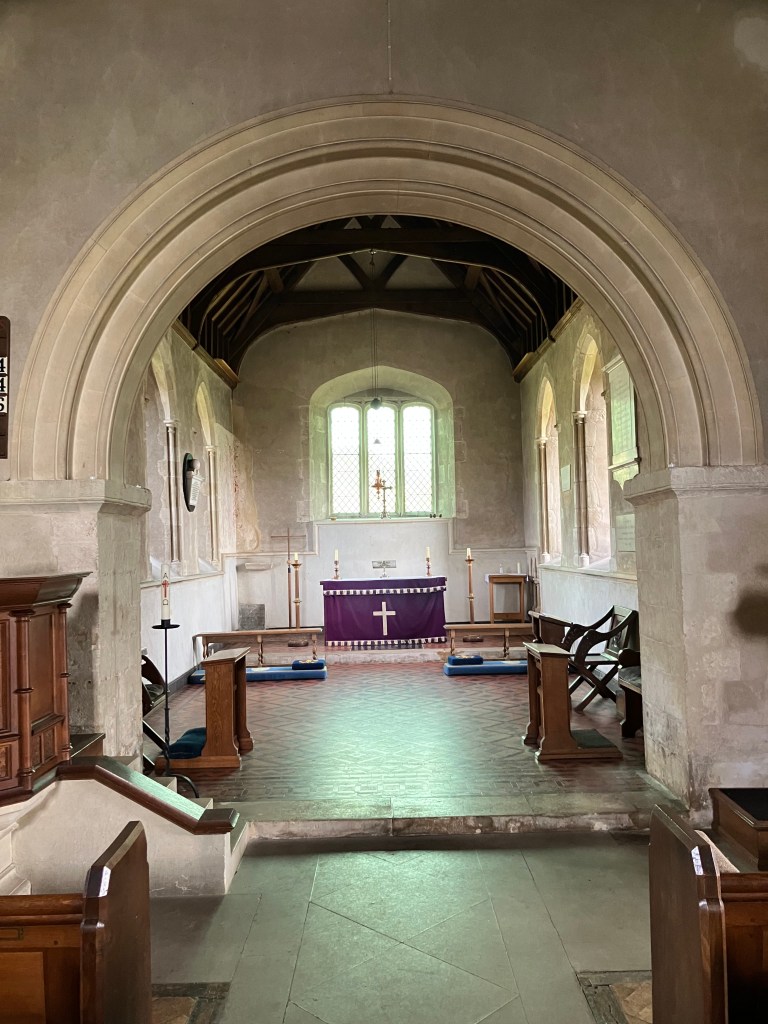
The chancel, St Michael’s, Enborne

Clearly, not everyone approved of what was being done, although there is little evidence of dissenting voices in the local papers.

On March 6th 1897, the Reading Mercury reported on the rededication of St Michael & All Angels’ church, Inkpen, it having been “in restorer’s hands” for more than a year. The rector, the Rev Henry Dobtree Butler believed it had “long fallen into a lamentable state of decay” and so the grandly named Oxford architect, Mr Clapton Crabbe Rolfe, had been engaged to carry out a restoration. And a very thorough job he did of it, too. The Reading Mercury went on to report:

“The greater part of the church has been rebuilt and a new north aisle added …

The only ancient portions of the actual fabric are the exterior walls and one west window.”

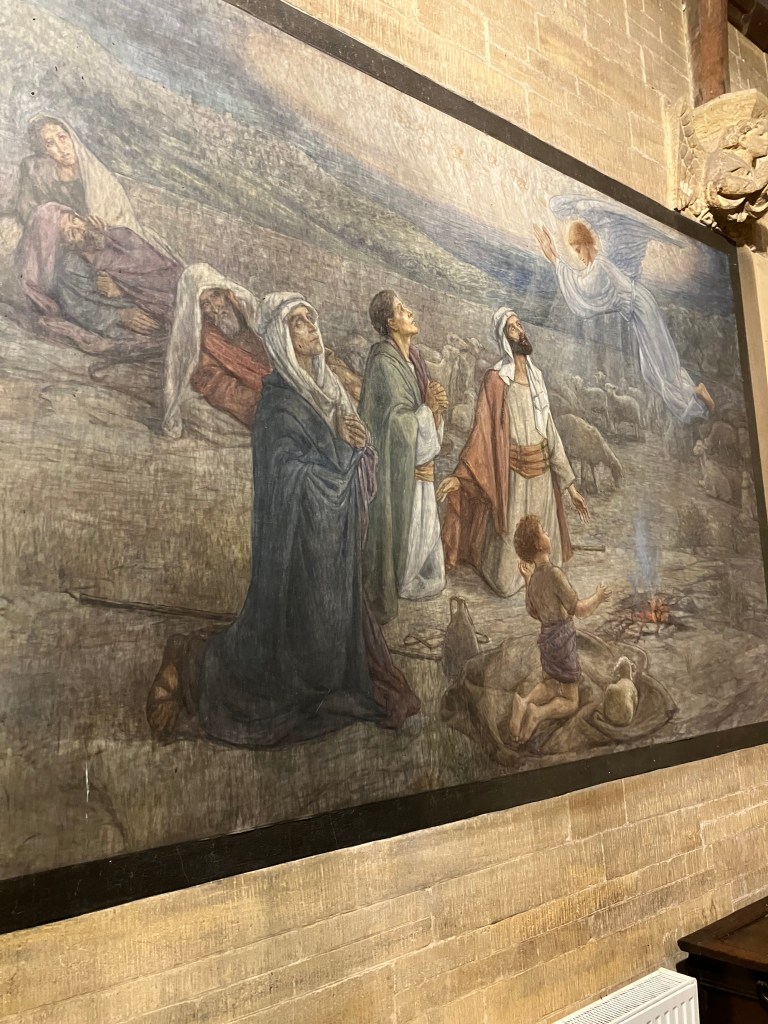
Nineteenth century mural, St Michael & All Angels, Inkpen

Whilst the tone of the Reading Mercury’s report suggests that the destruction of much of the original building was a positive thing, not everyone agreed. According to Pevsner, the recently formed Society for the Protection of Ancient Buildings had opposed the drastic restoration. Founded in 1877 by William Morris and Philip Webb, SPAB was concerned that the fashionable enthusiasm for restoration was destroying the historic fabric of many venerable buildings.

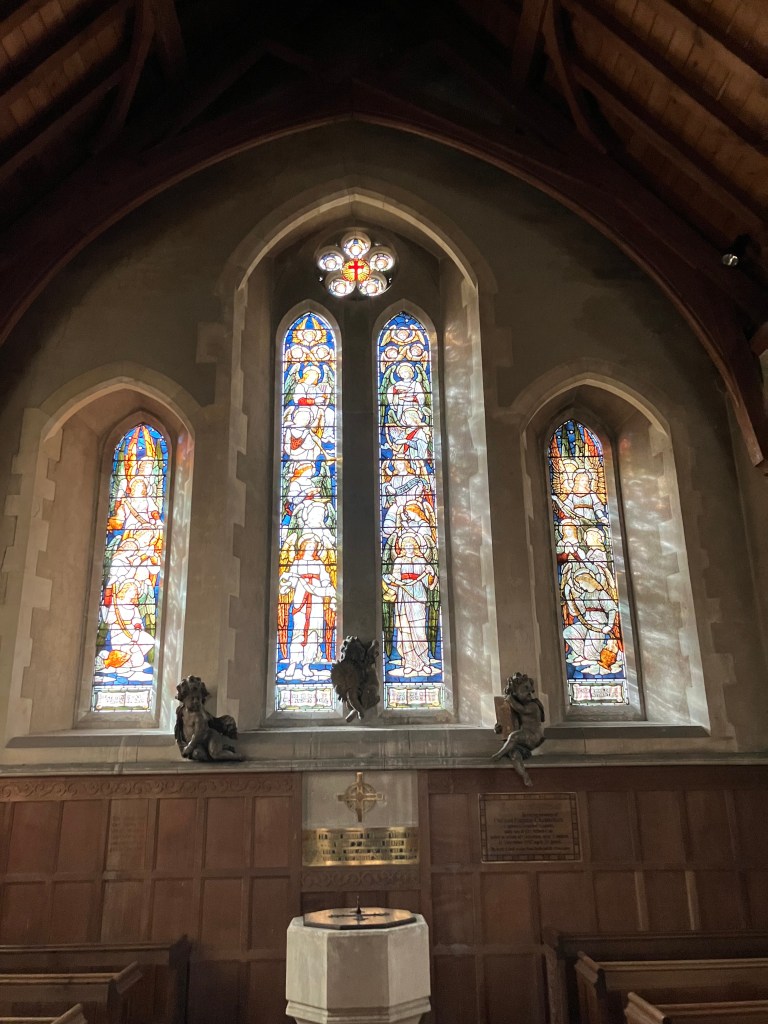
East window, St Laurence’s, West Woodhay

Despite his opposition to the fashion for extreme restoration, William Morris contributed work to many churches, including St Laurence’s, West Woodhay. Here, the red brick church which had stood next to West Woodhay House since 1716 was demolished and a church designed by Sir Arthur Blomfield built on a new site in 1882. The distinctive east window was designed by Burne Jones for Morris & Co as were the side windows of the sanctuary. On 15th April, 1882, the Hampshire Chronicle waxed lyrical in their appreciation of this new amenity:

“The inhabitants of West Woodhay … have reason to congratulate themselves upon having in their midst a resident lord of the manor whose liberality bids fair to effect a great improvement in the social position of all in the village.”

Quite how the new church would effect a great improvement in the social position of the cottagers of West Woodhay, the Hampshire Chronicle does not explain! 

West window, St Laurence’, West Woodhay

So, there is nothing ancient about St Laurence’s, West Woodhay and it remains the only church in our benefice to represent just one period of church building. But this beautiful little church demonstrates, I think, some of the very best of Victorian architecture and design. No crusade bound knight in shining armour may ever have passed through passed through its door. No weary parliamentarian would have sought sanctuary from the battle field to the north. But it is beautiful, all the same.

And I would very much like to know if William Morris or Edward Burne Jones ever visited in person!

© Theresa A. Lock 2024

Rogation Sunday

In times past Rogation was celebrated in the Benefice of Walbury Beacon by groups of people setting out from each church after a service, joining at West Woodhay and onwards to Inkpen and Combe. It was a very popular event; the countryside is glorious and Combe the highest point in the south.

In times past Rogation was celebrated in the Benefice of Walbury Beacon by groups of people setting out from each church after a service, joining at West Woodhay and onwards to Inkpen and Combe. It was a very popular event; the countryside is glorious and Combe the highest point in the south.

Today, we celebrated in the West Woodhay Memorial Garden next to the church. It was a a beautiful morning, we sang, we prayed for God’s blessing. We were joined by a robin that hopped amongst us and a cuckoo calling in the background. The service was made even more memorable when Mr. Henderson and his Estate Manager told us of their wonderful decision a few years back to dispense with pesticides, chemicals etc and bring the land back clean and productive -thus of course, promoting biodiversity. Maybe we shall once again hear the plaintive cry of the lapwing and song of the nightingale.

St Laurence’s Church, West Woodhay

After the service there was a chance to drive around the farm to see the work in action.

A great step forward in our area and one we hope that will be followed. Many thanks to Mr. Henderson for this decision and the hospitality of the day.

‘All creation is designed to work together: God made it this way to show his Glory.

Humans were created to look after everything in the world; they should not destroy it.

The world’s resources, including animals, are not to be exploited’

The Christian Assisi Declaration

Penny Fletcher