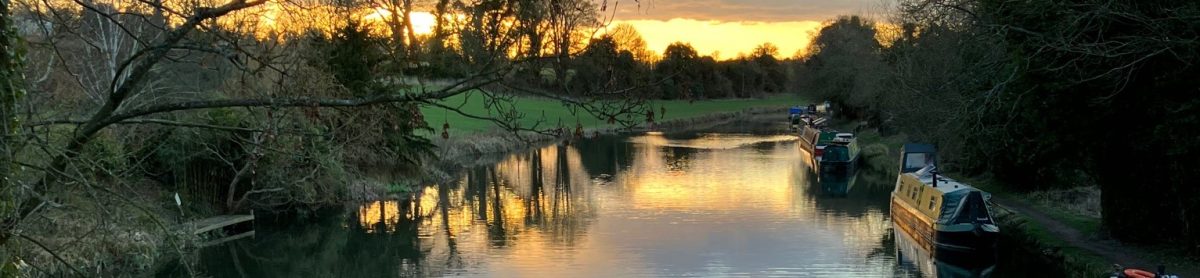

A labouring man
William Smith, also known as William Winterbourne, was born in Kintbury in 1798. It is likely that he was the son of Rose Smith and that he was baptised in Kintbury on 9th December 1798. There is no record of William’s father: it was the custom of the time for a child of unmarried parents to take the mother’s surname, although William was also known as Winterbourne which is likely to have been the name of his father.
Whilst the name William Smith appears in the Kintbury parish registers of the early 1800s, it is difficult to know for sure if this William Smith is also the man known as William Winterbourne. However, it is likely that our William married Mary Hobbs in the parish church of St Mary’s on 27th May 1822. Unfortunately, Mary died on 27th December 1827.
St Mary’s parish marriage register records a William Smith, who is at that time a widower, marrying a Sarah Brackstone on 28th September, 1829. On 3rd January 1830, William, son of William & Sarah Smith, is baptised in the parish church.
We know that William was a labourer and that the England of 1830 was not an easy time for families such as the Smiths. Forget any idea of a rural idyll. Life for William & Sarah would have been hard.
“Captain Swing”

© The Trustees of the British Museum. Reproduced under creative commons licence: https://creativecommons.org/licenses/by-nc-sa/4.0/ https://www.britishmuseum.org/collection/image/347082001
The harvest of 1830 was particularly bad. Furthermore, unemployment was on the increase as was the resulting hunger amongst the labouring classes. For the agricultural labourers, the arrival of threshing machines on many farms meant the loss of work and therefore of an income at a time when it was most needed. Many rural workers felt desperate.
Throughout England, more and more working people began to believe that they did not have to accept their lowly position in life as inevitable: it had not been ordained by God. To what extent the labourers were influenced by the ideas of Cobbett or Hunt – or indeed by many of the other emerging radical thinkers – it is difficult to say. Perhaps the anger and resentment which had been simmering for so long finally boiled over.
Many farmers had invested in the new threshing machines and these became a focus of the agricultural labourers’ resentment and rioting broke out across the country. Many landowners received threatening letters signed by someone identifying as “Captain Swing” or simply, “Swing”. No one knows if there had ever been one particular person behind the first disturbances; it is more likely that the name “Swing” was adopted by various men instigating rebellion in different areas. Threshing machines were destroyed and fires set; perhaps it seemed to some facing destitution and starvation that the labourers were finally rising up against their oppressors.
In West Berkshire, demonstrations for improved wages and the destruction of threshing machines began in Thatcham on 13th November 1830, moving then to other villages. In many places the gangs of protestors – commonly referred to as a “mob” – demanded money from the landowners. In some places the demonstrations were largely peaceful but by 21st and 22nd things in Hungerford and Kintbury apparently became more threatening.
The Kintbury Mob at the vicarage
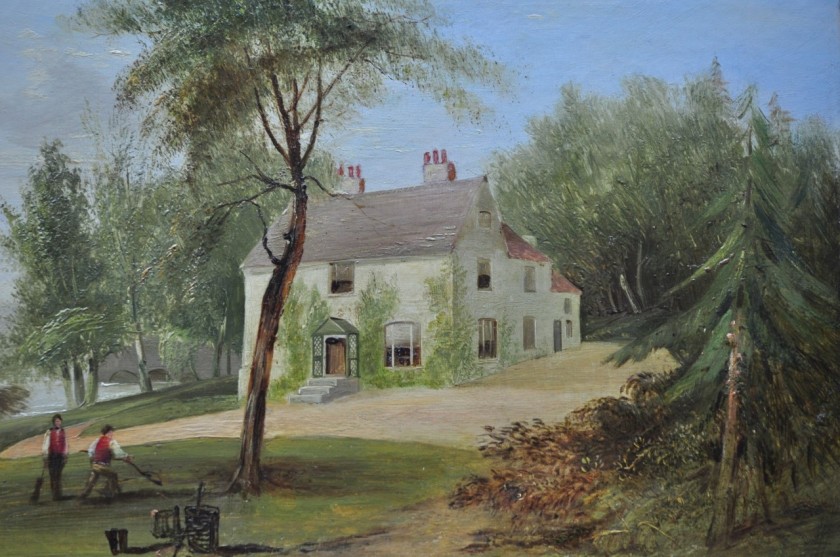
On November 22nd 1830, the Rev Fowle wrote to Charles Dundas, Member of Parliament and Kintbury resident, informing him that the Kintbury “mob” had been breaking threshing machines all through the previous night and that they had come to him at 4 o’clock in the morning. It seems that the men told the priest what they had been doing and which farms they intended to visit next. In the letter, Rev Fowle explains that he had consulted with one of Dundas’s men and it was agreed that, rather than destroying his threshing machine on his land at Barton Court, the men should bring it up to Kintbury and destroy it there, in the street. Presumably Fowle was trying to be conciliatory to suggest this, as the men agreed. He says that he gave the men £2, and that other landowners did the same. The men were then intending to go on to other villages in the neighbourhood, similarly demanding £2 from each landowner.
The tone of Rev Fowle’s letter to Charles Dundas is particularly interesting in that it expresses no anger or criticism of the men and in that respect is markedly different from many other letters and newspaper reports written at the time. He writes:
“I have not heard that they have committed personal violence on anyone than forcing the labourers to join them”.
He also notes that:
“Ploughs with cast iron shears appear to be as much the object of their hatred as machines and I hear they have broken many.”
At this point in the letter, Rev Fowle writes that he has just received a message from W.Willes (the Hungerford magistrate) which informed him that the Kintbury men had later been joined by those from Hungerford, and the mob now numbered 1000 men. A deputation of ten men had spoken with some gentlemen at Hungerford (the distinction of class being particularly significant at that time) and it had been agreed that the men should receive 12 shillings a week for a man, wife and three children and the price of a gallon loaf for every child above three. Fowle says that he hopes the farmers will agree to this.
In a post script to the letter, Rev Fowle explains to Dundas that he has since met again with the men, who have returned from Hungerford:
“ I told them that as far as was in my power I would endeavour to persuade the farmers to agree with them. The men gave three cheers and expressed themselves perfectly satisfied but they also agreed that there must be no payment in bread but all in money”.
Letters to the Home Secretary
What the protesting men of Kintbury told others in the village about their meeting at the vicarage could have caused trouble for the vicar. It was not the time or place for a person such as Rev Fowle to appear to be sympathetic to the “mob”. Someone, it seems, later complained to Lord Melbourne, the Home Secretary, suggesting that Rev Fowle had encouraged the rioters. This would never do. The Home Secretary was the person to whom those in positions of authority would appeal for support when confronting disorder, so it would not look good if a local priest and magistrate had been reported as encouraging the rioters. Consequently, Charles Dundas and ninety other parishioners signed a letter to Melbourne, to ensure him that Mr Fowle had done everything he could to quiet the disturbances and prevent the destruction of property.
What the papers said
Despite Rev Fowle’s interventions, however, it would seem that the men had not returned peaceably to work and support in suppressing the mob had been requested. According to a report in the Reading Mercury of 29th November, the previous Wednesday, November 24th, had seen a detachment of Grenadier Guards who arrived in Newbury in three stage coaches, followed by a troop of Lancers. An order was given that every householder or individual who could muster on horseback should attend the Market Place at 12 o’clock and eventually a band of men some 200 strong and including special constables made its way towards Kintbury where it met Charles Dundas in his role as Colonel of the White Horse Volunteer Cavalry.
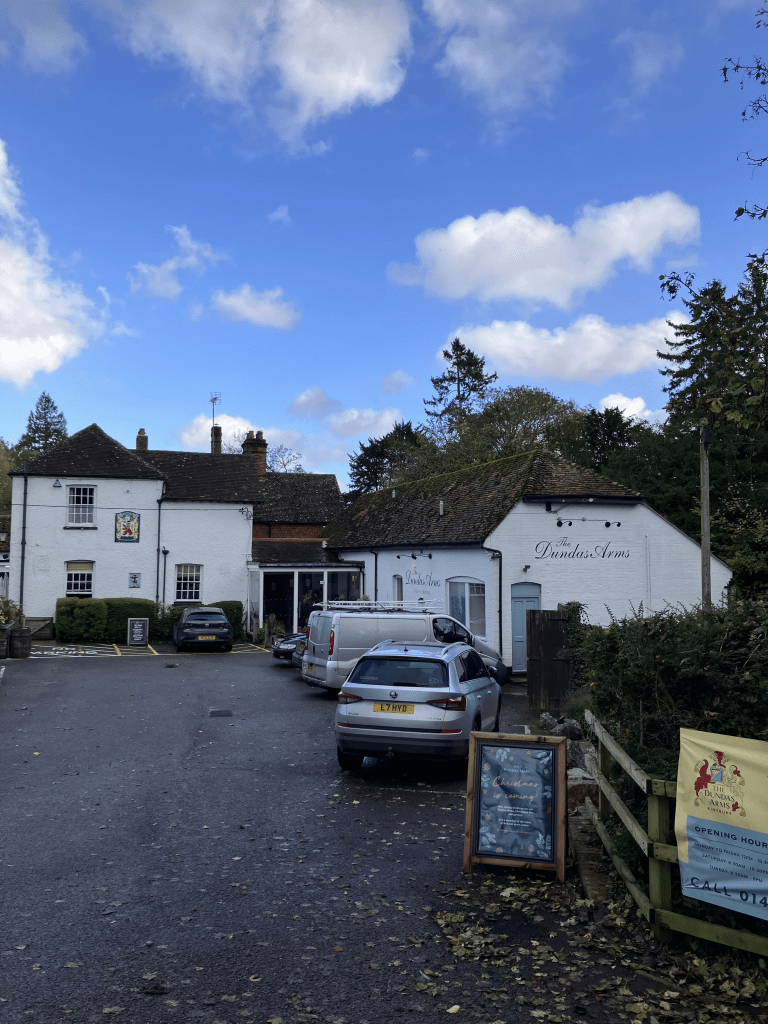
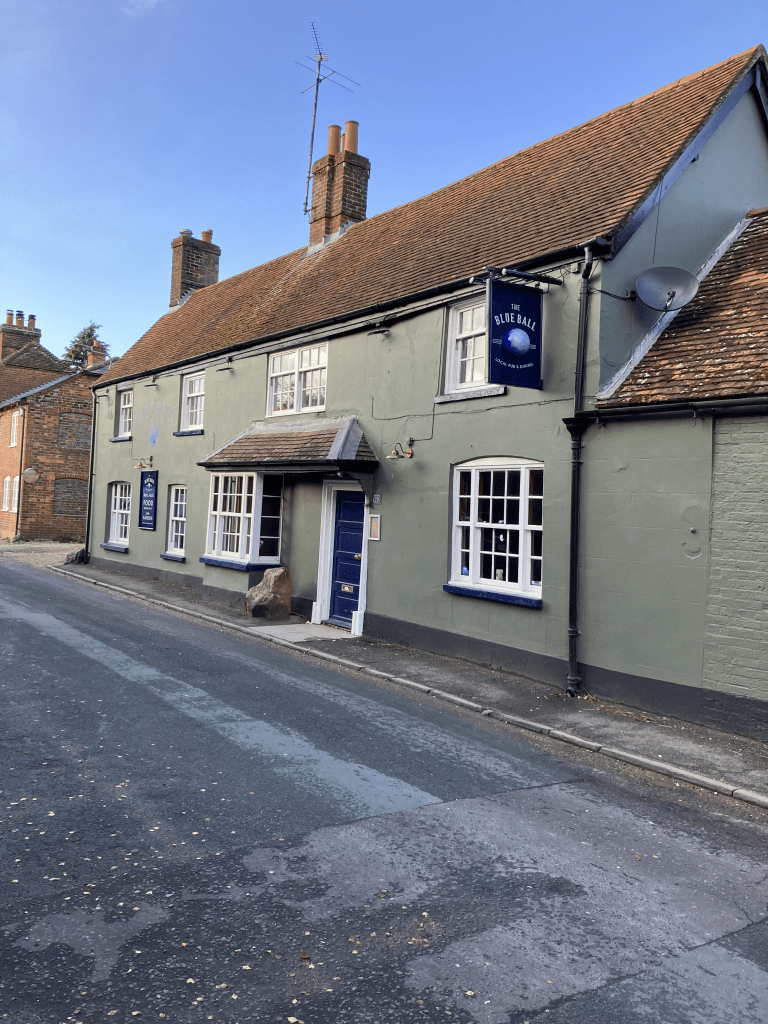
The Reading Mercury report stated that the mob had retreated to public houses, stables, outhouses and cottages so a detachment of horse was sent to the south and west of Kintbury to prevent any escaping. The Grenadier Guards were to guard the prisoners when they had been brought in by the horsemen. Colonel Dundas, it reports, had heard that several men were concealed at the Red Lion (now the Dundas Arms) and took a ringleader by the name of Westal. The men then went on to the Blue Ball, – described as the “chief depot”- where they met little resistance.
“Shameful & outrageous”
Later that day, Charles Dundas wrote to Home Secretary Melbourne of the “shameful and outrageous conduct of the labourers.” There had been a “most notorious gang” which had surrounded the ale houses. However, at the end of the operation, fifty five of the principal rioters had been delivered to commander of the guards, Captain Aston.
What had happened between Rev Fowle’s meeting with the protestors at four o’clock on the morning of November 22nd and the afternoon of November 24th to require a detachment of Grenadier Guards to be sent to Kintbury? Fowle’s letter of November 22nd to Dundas does not suggest that the sixty-six year old vicar felt threatened or intimidated by the labourers, although it may be that only a few of the more respectful of them had approached the vicarage. His letter says that he has spoken to them on their return from Hungerford when he assures them he will do everything in his power to persuade the farmers to agree to 12 shillings a week pay. There is no suggestion that the labourers showed signs of violent behaviour when they had arrived at Rev Fowle’s vicarage. However, it seems that other events that night were not so peaceful – with tragic outcomes.
Bibliography
Griffin, Emma, (2018), Diets, hunger & living standards during the British industrial revolution, Past & Present.
Lindert & Williamson, (1983), English workers living standards in the industrial revolution, The Economic History Review
Phillips, Daphne (1993), Berkshire: A County history, Newbury: Countryside Books
Thompson, David (1969), England in the nineteenth century, Pelican
Trevelyan, G.M.(1960) Illustrated English Social History:4, Pelican
Woodward, Sir Llewellyn (1962), The Age of Reform, Oxford: OUP
The Berkshire Chronicle (December1830 & January 1831)
The Berkshire Mercury (December 1830 & January 1831)
The National Archives: Letter to Rt Hon Lord Melbourne from Charles Dundas, MP, November 24th 1830
The National Archives: Anonymous letter to Rt Hon Lord Melbourne, November 24th 1830
The National Archives: Letter to Rt Hon Lord Melbourne from Charles Dundas MP & ninety other signatories, November 1830
The National Archives: Letter to Rt Hon Lord Melbourne from Lord Craven, November, 1830
The National Archives: Letter to Rt Hon Lord Melbourne from Rev Fulwar Craven Fowle, November 1830
Theresa A. Lock, Kintbury, October 17th, 2020.
 Kintbury and Beyond
KEITH JERROME KeithJerrome@phonecoop.coop Thanks for publishing my piece on, “The Kintbury Martyrs” I’m glad you liked it, but please could you give me my “2RR”s as befitting a Somerset man descended from Huguenot silk weavers who settled in Wiltshire at Chisledon in the Eighteenth Century (starting as Jerom in the 1680’s)
LikeLike
Apologies for misspelling your name, Keith. We have now corrected it. Thankyou again for allowing us to use your article – I feel it has given further depth to our work on William.
LikeLike