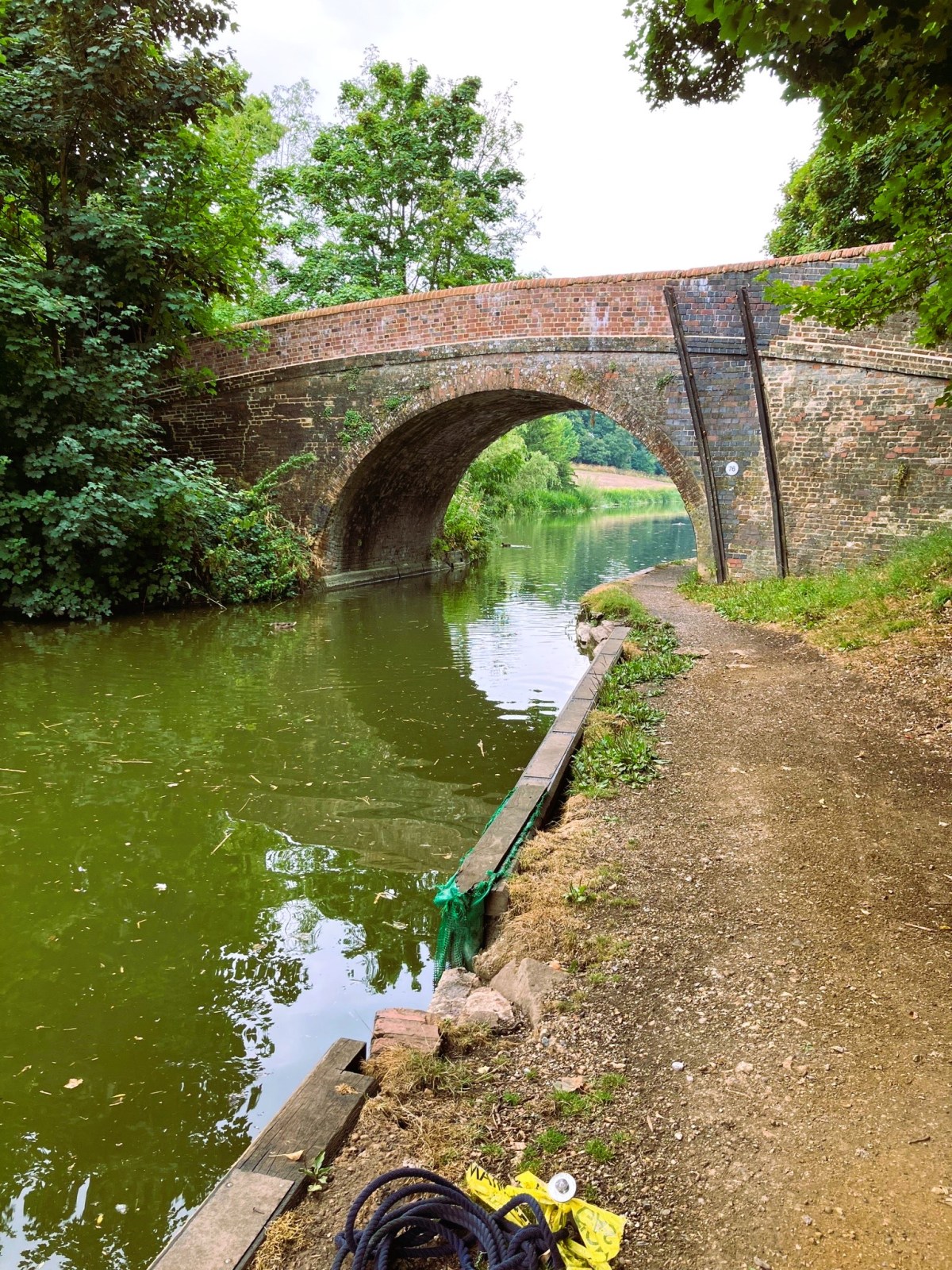
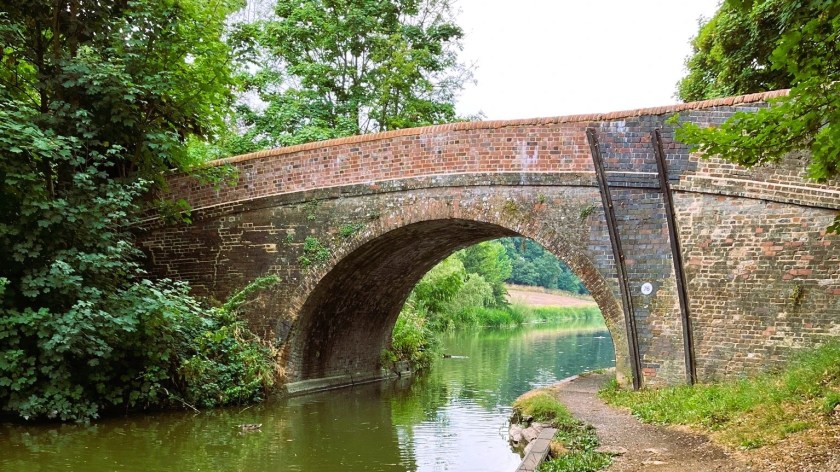
If you walk westwards along the canal tow path out of Kintbury, you pass under Vicarage Bridge. You will notice, as you approach the bridge, a pair of rails attached to the brickwork on the right hand side. You could easily mistake these rails for a pair of butresses but that was not their original purpose.
So what are those rails?
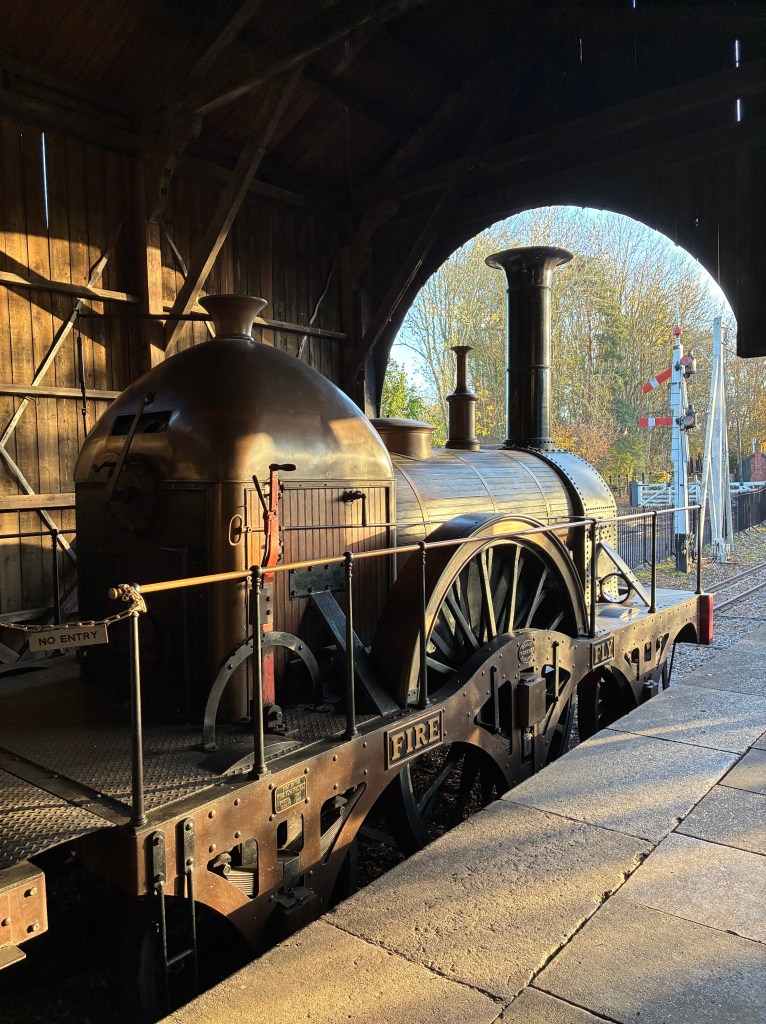
When the celebrated railway engineer, Isambard Kingdom Brunel, designed the Great Western Railway in 1838, he decided that the distance between the rails on which the engines and their carriages should run – the gauge – should be 7 feet 1⁄4 inches or 2,140 mm. This gauge, he believed, was safest for engines travelling at speeds and also offered a more comfortable ride for passengers.
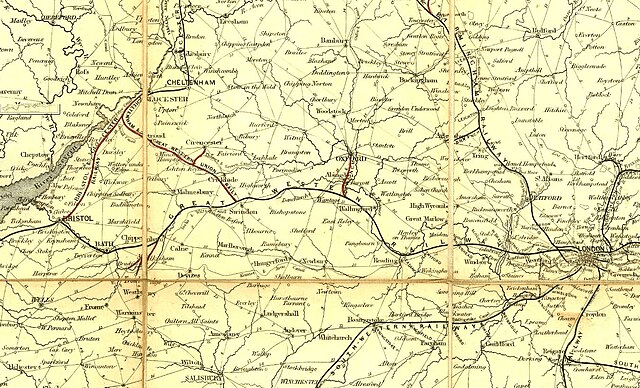
By 1841, Brunel’s Great Western Railway had opened between London and Bristol, passing through Reading and the Vale of White Horse on its way. Then, in 1845, an Act of Parliament was passed which enabled the creation of the Berks & Hants Railway Company, a branch line of the Great Western which would leave the main line at Reading, and on through the Kennet valley. On the 21st of December 1847, the line finally opened westwards with stations at Theale, Aldermaston, Woolhampton, Thatcham, Newbury, Kintbury and Hungerford. The line was, of course, what had come to be known as “broad gauge.”
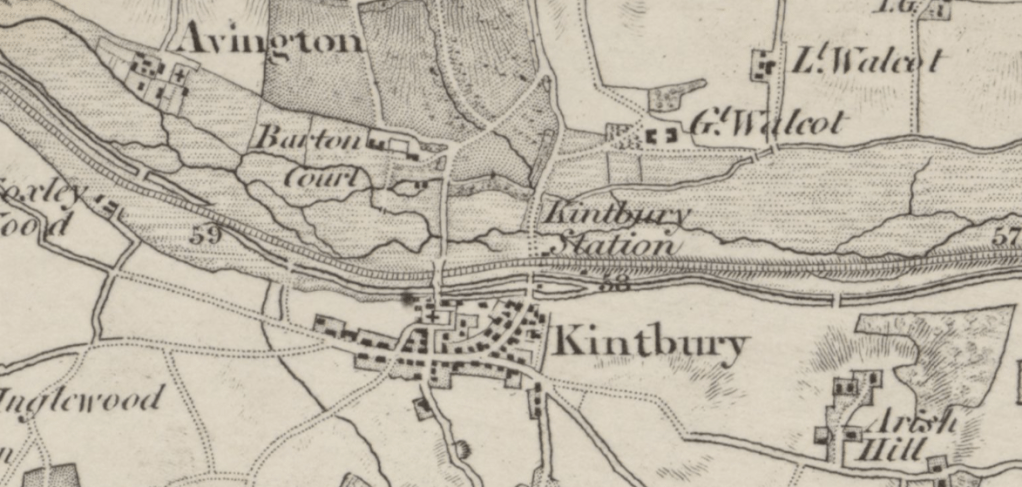
Kintbury had joined the railway age!
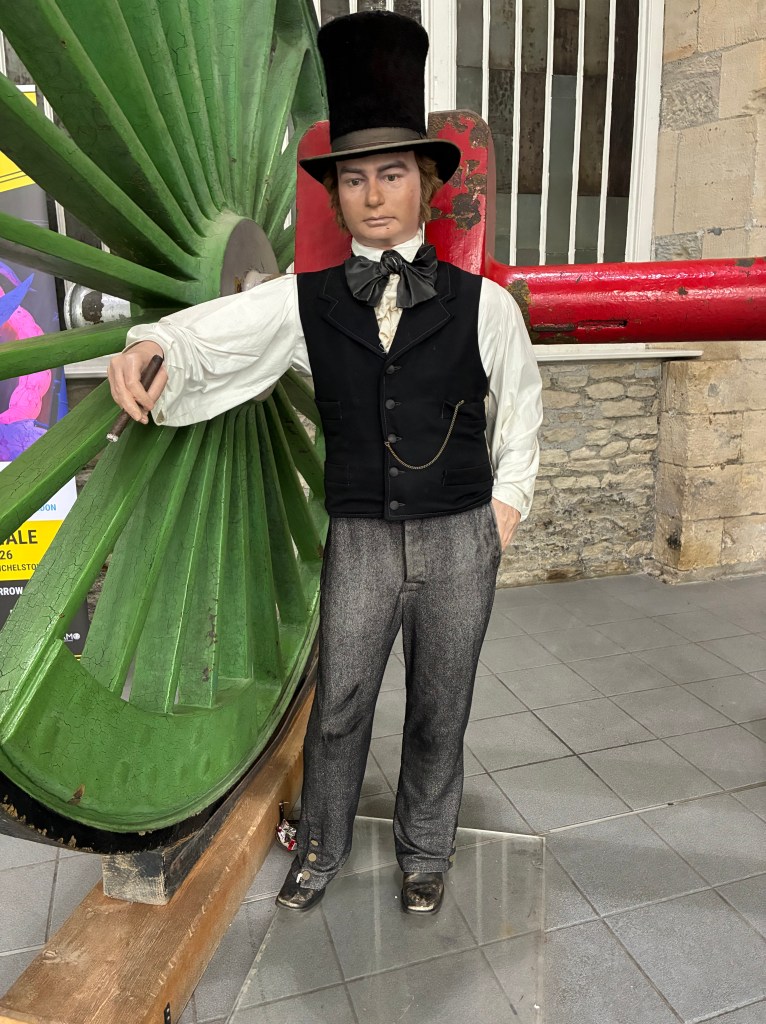
By 1855 it had become possible to leave Kintbury station at 7:17 and arrive in Reading at 8:13 – about the length of time it would take to ride into Newbury on a horse. By the 1870s it was possible for Kintburians to travel to Bristol or London with ease, or to enjoy a day out in Weymouth. That is to say, those Kintburians who could afford to do so and who could afford the time off work.
Isambard Kingdom Brunel’s Great Western Railway had proved to be one of the greatest success stories in British engineering. However, Brunel had a rival in the north of England.
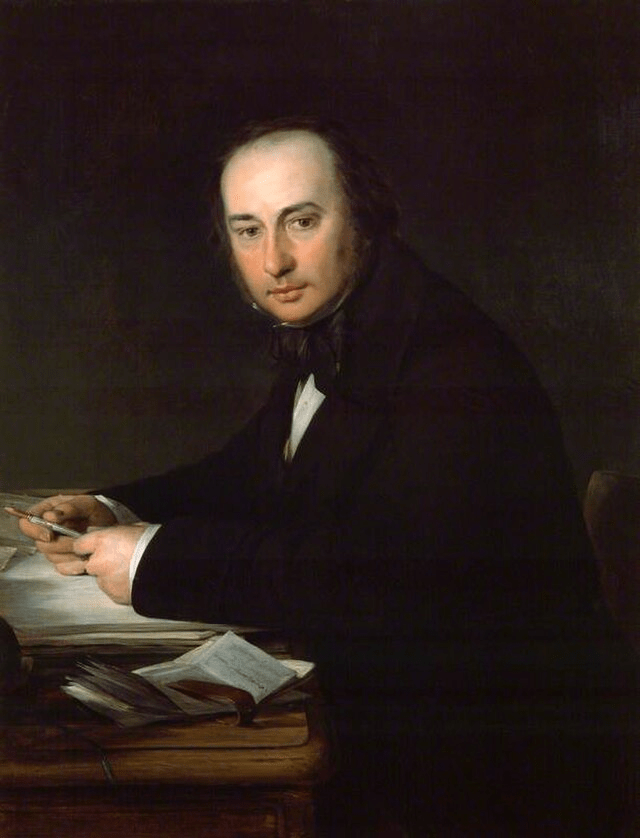
Although the railway engineer Robert Stephenson was a friend of Brunel’s, the two disagreed over the choice of gauge for the railways they designed. Robert Stephenson’s father, George, one of the earliest railway engineers, had chosen a gauge of 4ft 8½inches. This was because it was the average distance between cart wheels of those farmers who also used the early railway tracks to transport their goods, running their horsedrawn wagons along the tracks. Robert Stephenson chose to continue with this gauge which, at the time, was referred to as the “narrow” gauge and later the “standard” gauge.
Whilst Brunel’s Great Western continued to be very successful between London, Wales and the West of England, throughout the north and midlands far more lines were being built, all using the narrower or standard gauge. So although Great Western travellers may have indeed experienced a more comfortable ride, those who had to change trains on journeys northwards had the inconvenience not only of leaving one carriage for another, they had to wait while any luggage had to be transferred from one train to another. This was bad enough when it was trunks and suit cases being transferred but a potentially more serious delay when it was freight destined for markets.
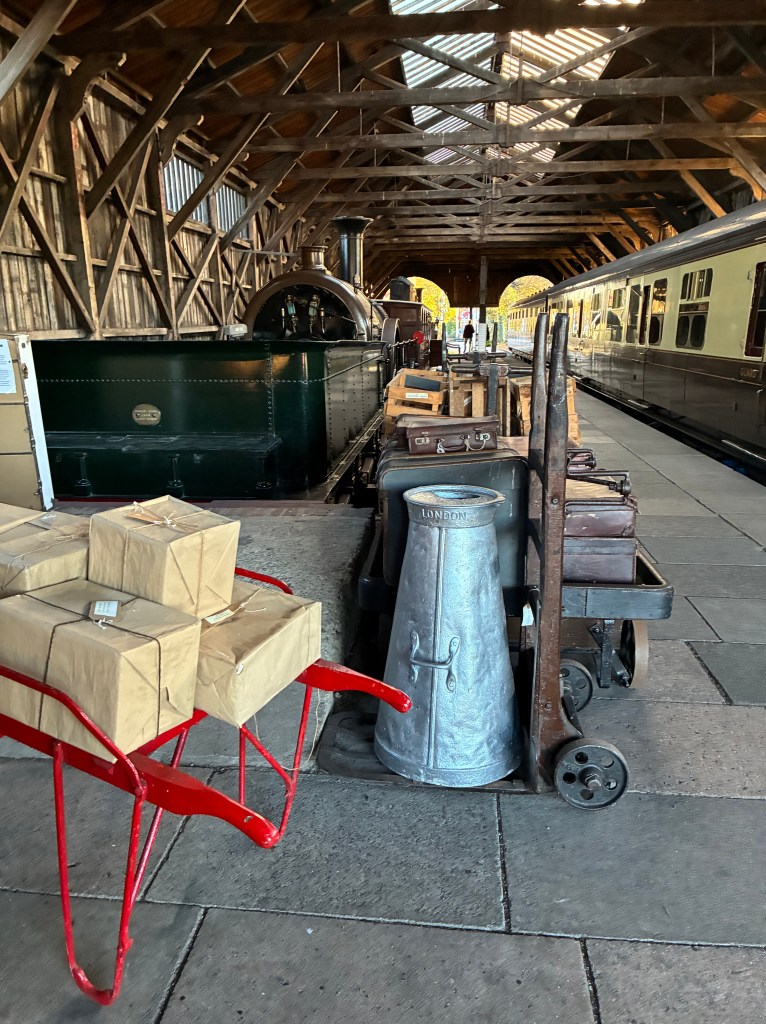
It was not until after Brunel’s death that the Railway Regulation (Gauge ) Act 1846 adopted the narrow or standard gauge for the Great Western, although it was several years before every line was converted.
On June 20th, 1872, the Newbury Weekly News carried a report critical of the Great Western’s perceived delay in converting the local line to the narrow or standard gauge. At that time, most of the coal used in the Newbury area came from the Forest of Dean coal field – an area already converted to narrow gauge by the GWR. However, as the line through Newbury had not yet been converted, the coal had to be transported to Reading for which the GWR charged an extra 3 pence per ton. To make matters even worse, there was an additional charge of 6 pence per ton to transport it to Newbury. Not surprisingly, around 95 traders petitioned the Board of Directors of the GWR and it was eventually decided that the line should be converted.
On the evening of Tuesday, June 30th 1874, the last train pulling broad gauge carriages left Newbury station at eight o’clock. It was followed half an hour later by the last train of broad gauge trucks and wagons.
According to a report in the Newbury Weekly News, conversion work on the 60 mile stretch between Reading and Holt Junction in Wiltshire began in July 1874. The work was to be undertaken by 600 men, split into gangs of 20 and commencing work on different sections of the line. Each gang had two designated cooks whose job it was to obtain the required provisions, boil water for tea or coffee, and prepare food. The labourers were allowed 1s 3d (about 7 pence) each day for rations and oatmeal was provided for the cooks to prepare into a “wholesome and strengthening beverage, any amount of which they were at liberty to have.”
Apparently, “so nutritious was the beverage that some of the men cared to eat but little solid food during the day.”
I wonder if they were saving their 1s 3d per day to spend in a local pub once the working day was over.
The labourers were accommodated in various station sheds and slept on “an abundance of clean straw”. Smoking was forbidden.
The working day was between seventeen to eighteen hours long and the work, with no mechanised equipment at all, must have been backbreaking.
For the inhabitants of those villages along the line, the arrival of gangs of strange men arriving to work on the rails, must have been daunting and perhaps worrying. But it may be that the villagers of Kintbury could feel assured as a member of the Great Western Railway Police lived in the village. Charles Giles had lived in the Kintbury for over twenty years and his presence must have been reassuring.
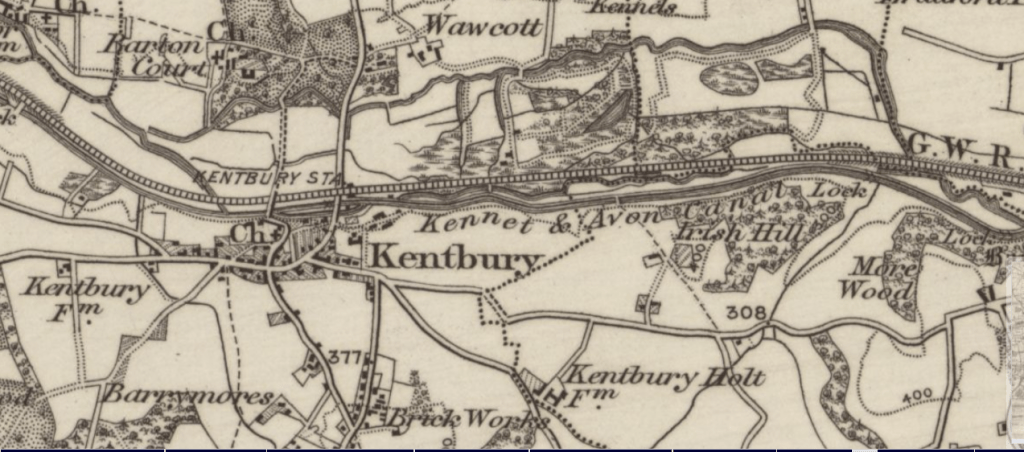
The work, however, was completed very quickly and the gangs of men left Kintbury – and the rest of the Kennet valley – in peace.
So what about those iron rails fixed to the side of Vicarage Bridge? Before being placed where they are today, those were broad gauge rails – a relic of that bygone age and of Brunel’s belief that 7 feet 1⁄4 inches was the preferable gauge for comfort and speed.
© Theresa A. Lock
24th March 2026
Sources:
Newbury Weekly News ( British Newspaper Archive )
Friends of the National Railway Museum https://www.nrmfriends.org.uk/
Didcot Railway Centre: didcotrailwaycentre.org.uk
 Kintbury and Beyond