West Woodhay: A downland village in a changing agricultural landscape

This post is in two parts. In the first part, I consider the village of West Woodhay from a changing historical perspective. For the second part, we are delighted to have a contribution from Harry Henderson  of West Woodhay Farms in which he describes the recent changes in agricultural practices which have enabled vitally important regeneration of the land.

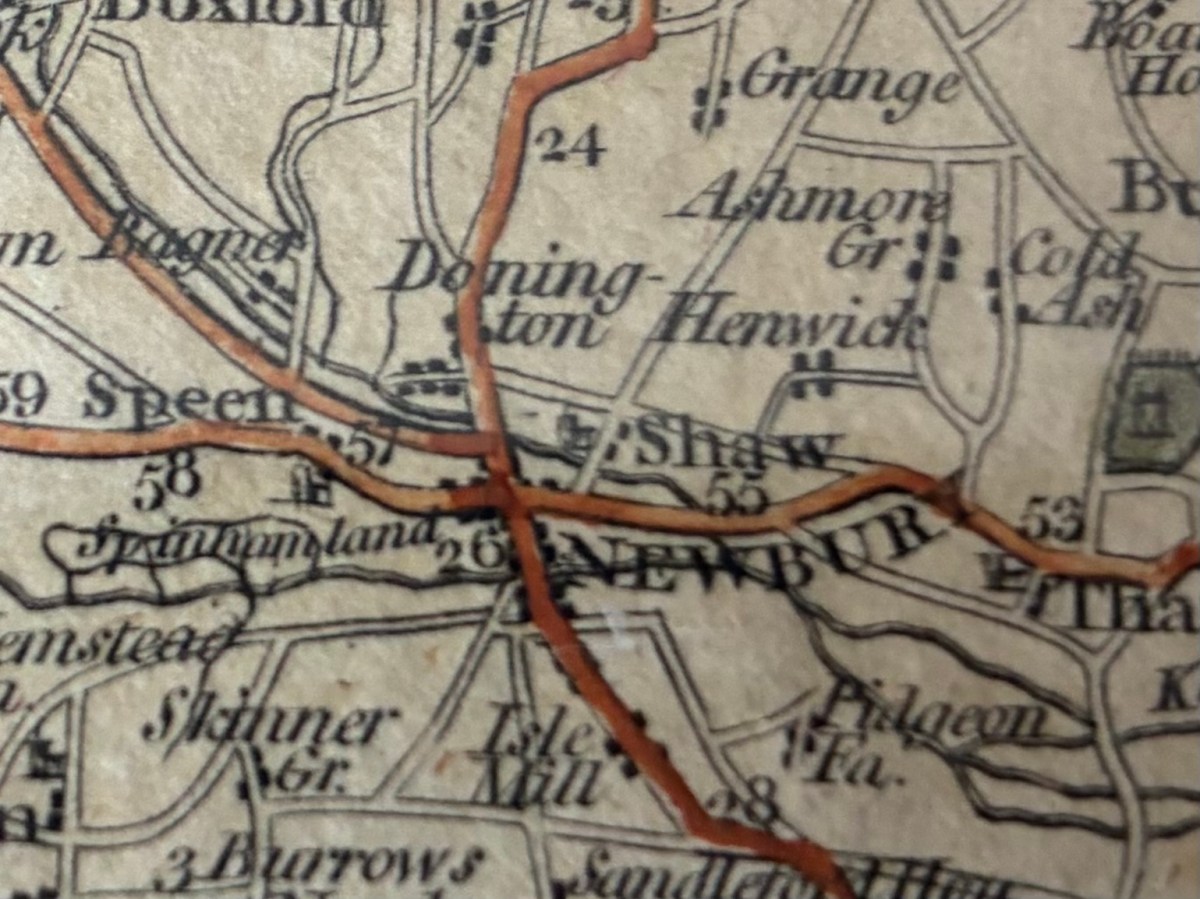
West Woodhay 1817

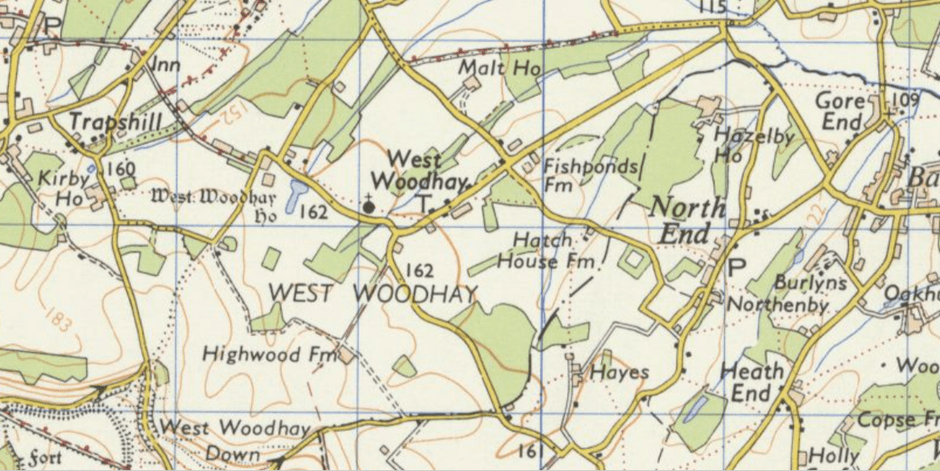
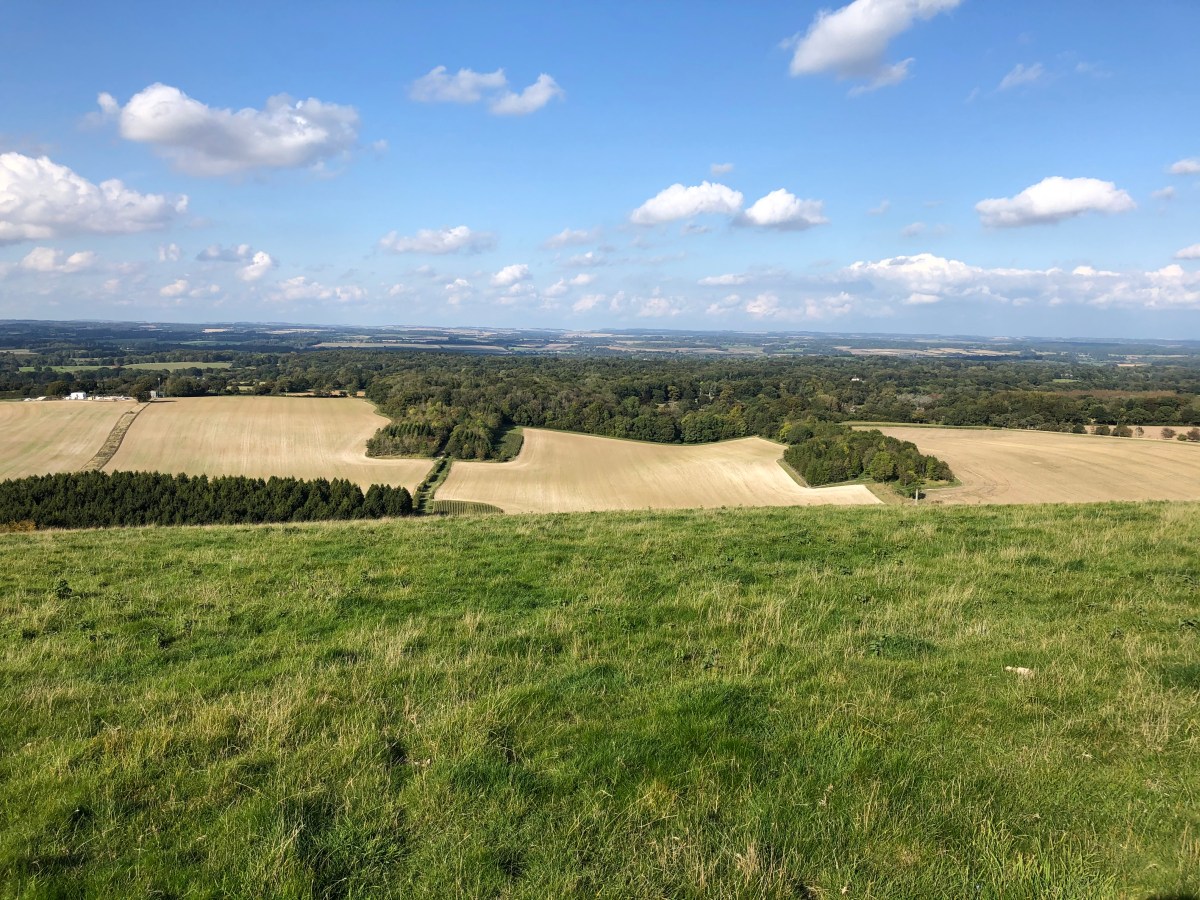
On the road to nowhere  in particular, the hamlet of West Woodhay is situated in the extreme south of West Berkshire just below the North Hampshire downs, a little over two miles south of Kintbury as the crow flies.
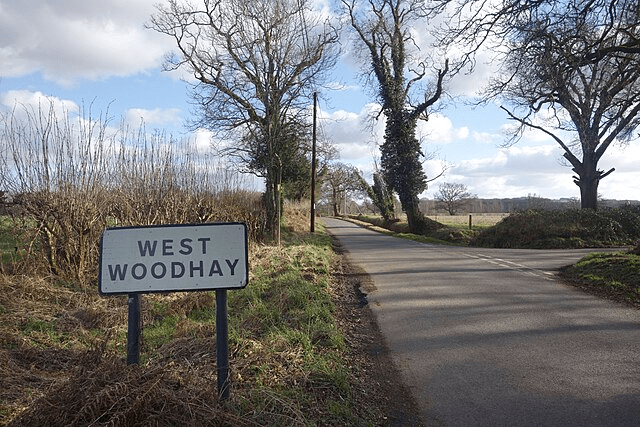
The Road to West Woodhay: Des Blenkinsop via Creative Commons

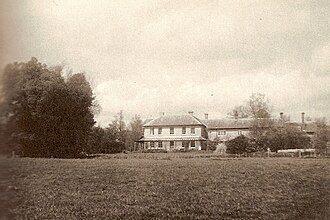
Although a motte is all that remains now of a twelfth century hunting lodge, today the village is probably best known for the elegant grade one listed West Woodhay House and also the grade two listed St Laurence’s church with windows by Morris & Co.

Early censuses show that most of the population were engaged in agriculture during the nineteenth century; early maps of the village suggest there has been little if any development, so, on the whole it might be presumed that very little of any great note has ever happened here. However, the effects of very significant changes in agricultural practices can be traced in the history of this village and the surrounding area.

The  eighteenth century saw many developments in agriculture, enabling increased food production necessary to feed the growing population. Whilst innovations in agricultural machinery, such as the horse drawn seed drill developed by Jethro Tull of Prosperous Farm, near Hungerford, made the cultivation of larger fields much easier, this had a downside for thousands of rural labourers.  

Since medieval times, many rural families had cultivated strips or patches of land, often dotted around their parishes, relying upon what they could grow to feed their families. However such a system was useless for food production on a large scale. The 1773 Inclosure Act enabled the Lords of the Manor or other land owners to enclose the diverse patches and strips of land, creating large fields each devoted to one particular crop and of the size that could be cultivated using new machinery. Whilst this might have been good news for the markets, it was devastating for many who lost their ability to grow their own food.  

The effects of the 1773 Act were not felt straight away although it was eventually to change the face of the English countryside.

The Hampshire Chronicle of July 1816 reported that an Act of Parliament had been passed for the inclosure (sic) of Woodhay Common. However, “the labouring poor in that neighbourhood have lately shewn strong symptoms of their disapprobation and at length proceeded so far as to collect in considerable numbers with the avowed intention of preventing the farmers ( to whom it had been allotted ) from breaking it up.”

Fearful of trouble, the authorities called out military back-up which arrived in the form of the “Donnington and Newbury Troop under the command of Capt. Bacon” and also “Oxford blues ( who had been sent from Maidenhead )”

It is hard to believe that anyone would have felt it necessary to employ the military to prevent any sort of a riot in such a quiet and peaceful corner of the county. It is hard to imagine troops, not just from nearby Newbury but also from Maidenhead, well over a day’s ride away, descending on the village. Insurrection is not something you would associate with West Woodhay.

However, due to the “spirited exertions of constables” the military were not required although several of those involved in the protest were bound over to appear at the Quarter Sessions.

Enclosures were not the only things to make life increasingly difficult for the rural poor. Harsh game laws meant the penalty for catching rabbits for the pot could be transportation and poor harvests in the 1820s resulted in increased prices, particularly for bread.

William Cobbett

William Cobbett was a writer and campaigner born in 1763 to a Hampshire farming family. Critical of the way new laws impacted upon the rural population, in 1821 Cobbett set out on a series of “Rural Rides” to observe for himself the situation throughout the midlands and south of England. Amongst other things, Cobbett was critical of the amount of money the country was spending on defence rather than on improved conditions for the rural poor. One of those of whom he was particularly critical was Berkshire M.P. and Kintbury resident, Charles Dundas. A prominent and influential figure, Dundas would have been well known across local towns and villages.

Although it is not always easy to work out Cobbett’s exact route through the countryside, it is clear from reading his work that he travelled across North Wiltshire and into Berkshire, stopping at Newbury on October 17th.

Whilst at a public dinner in Newbury, Cobbett took the opportunity to call out Dundas’s false accusation that he, Cobbett, was complicit in a plot to assassinate the Prime Minister and members of the cabinet. Known as the Cato Street conspiracy, those involved were eventually either executed or transported. For Dundas to accuse Cobbett of complicity was a particularly serious slur and something which reflects how polarised political views were at this time.

Later, Cobbett observed that “a good part” of the wheat offered for sale at Newbury market was wholly unfit for bread flour. Considering the importance of bread in the diet of poorer people, this must have led to severe consequences locally.

Not everything Cobbett observed as he rode through the downland was negative, however. At one point as he rode across the downs, he observed, “immense flocks of sheep which were now ( at ten o’clock ) just going from their several folds, to the downs for the day..”

The “immense flocks” aside, there was, as Cobbett noted, little to impress in the daily lives of the agricultural workers. Enclosures, the rising cost of bread and harsh laws which mitigated particularly against rural people, and changes in agricultural practices such as the introduction of mechanisation made life for the agricultural worker extremely difficult. The bad harvest of 1830 was the tipping point, leading to what became known as the “swing riots” which broke out in December of that year.

Although most of the protests in this part of West Berkshire were centred on and around Kintbury, West Woodhay did not escape the disorder. Here, Cornelius Bennett and Henry Honey were charged with robbery although both were subsequently acquitted. However, shock waves must have rippled across this part of Berkshire when it was reported that others of the rioters had been charged at Reading Assizes with several transported to Australia and one executed for his involvement.
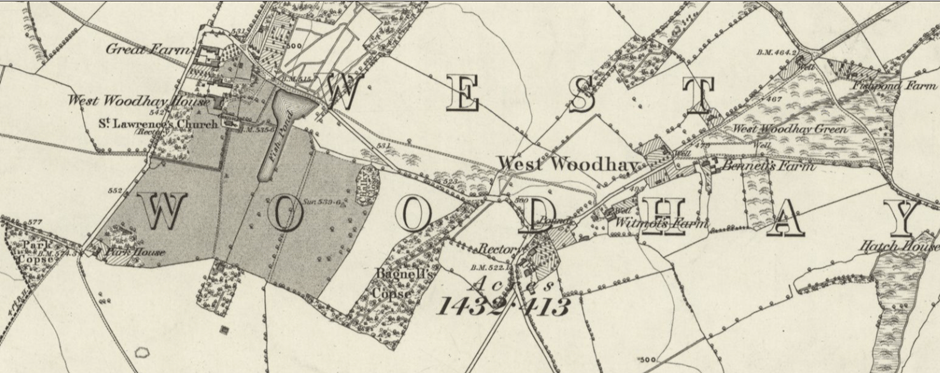
1877

In the following years, however, the agricultural industry in England generally was thriving. But this was not to last and by the 1870s it was in depression. By 1893 an anonymous contributor wrote to the Newbury Weekly News:

“There are thousands of acres not tenanted at all, and scores of landlords only too anxious to let on almost any terms.”

He continues:

“The real cause of agricultural depression is very easy to find, but very difficult to remedy. It is because the enormous development of steam navigation has brought the millions and millions of foreign acres into practical proximity to our shores and accompanied by a full market has made England a central emporium of a huge percentage of the surplus produce of the world.”

Throughout England, the numbers of people engaged in agriculture, particularly as labourers, declined as many sought better paid factory work in towns and cities. In West Woodhay, the 1851 census records William Taylor of West Woodhay farm as employing 15 labourers. By 1861 the farm has been taken by an in-comer from Buckinghamshire, Job Wooster, who employs 9 labourers. By the 1881 census, there are just 16 agricultural labourers in the whole of the village.

Throughout the early years of the 20th century, many young people from rural communities emigrated to the colonies such as Canada or Australia to try their hand at agricultural work far from home. Whilst I have not been able to discover how many pioneering young men or woman left the villages of West Berkshire in this way, it has to be likely that some, at least, would have done so.
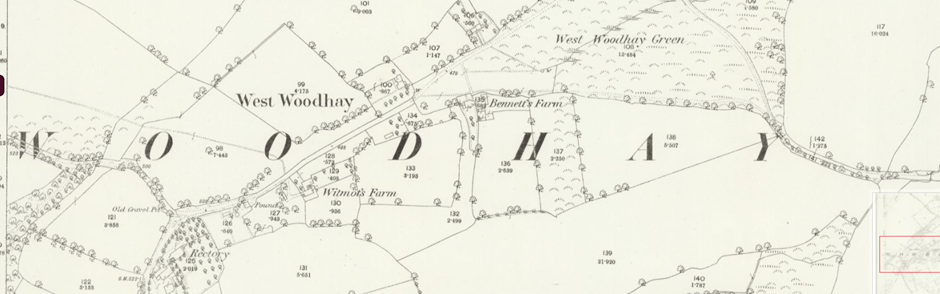
1880

The twentieth century witnessed two world wars during which thousands of agricultural workers from all over the country enlisted in the armed forces. To make up the short fall in manpower, thousands of young women joined the Women’s Land Army and were posted to rural areas throughout the UK. In July of 1918 the Reading Standard featured on its front page photographs of some of these women at work on Berkshire farms under the bold sub-headings:

THEY MILK THE COWS

AND FEED THE PIGS

               AND TRUSS THE LOADS OF HAY

most probably to the cynical and wry amusement of those rural woman who had been undertaking farm work for decades.

The 1939 Register lists 24 people engaged in agriculture in West Woodhay although it is difficult to draw an exact comparison with numbers of agricultural workers at the time of the nineteenth century censuses in part due to changing definitions of occupation. However it is true to say that the village had remained a predominantly agricultural community.

 It is now over 200 years since West Woodhay Common was enclosed and 195 years since the Swing Riots. Although the associated violence is now very much in the past, the farm lands of West Woodhay still reflect the changing agricultural practices and the need for farming to respond to changing times.

For the second part of this post we are grateful to Harry Henderson  whose family owns and runs West Woodhay Farms, an estate on the Berkshire/Hampshire border.

(C) Theresa Lock 2025
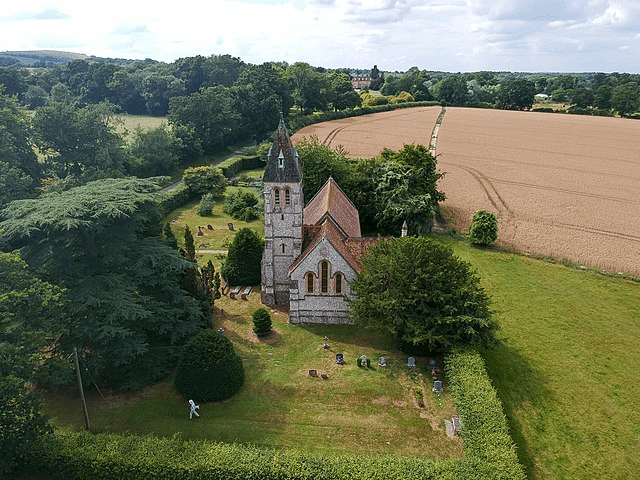
West Woodhay church: Matthew Prior via Creative Commons

Farming for the Future: Soil, Sustainability, and Success at West Woodhay

Harry Henderson

The estate spans 830 hectares of challenging land with fragile soils. Since 2008, a regenerative agricultural policy has been in place, with a focus on prioritizing soil health. The estate now follows a crop rotation system that includes herbal grass leys, flower meadows, wild bird feed areas, and very low-input cereals.

Agricultural chemicals and fertilizers have been replaced with more sustainable cultural methods. As a result, there has been a significant increase in soil biology, leading to enhanced organic matter levels and improved carbon capture.

The shift in farming practices—driven by soil health—has led to remarkable nature recovery. The planting of herbal leys and wildflower plots has created a thriving environment for insect life. Since adopting a no-insecticide policy in 2014, West Woodhay has seen a resurgence of beneficial insects such as spiders, beetles, and parasitic wasps. This has enabled the successful establishment of flea beetle-sensitive crops like stubble turnips.

The rise in insect populations has also benefited birdlife, which is supported further through the planting of wild bird plots for the leaner months. All this recovery work has been monitored and independently audited over many years, and the data clearly shows a strong link between soil health and biodiversity.

In-depth soil analyses have shown that, given time and the absence of soil disturbance, soil indices can begin to rebalance naturally, making primary nutrients more available to crops. This reinforces the estate’s approach of minimal intervention and maximum biological support.

A large sheep flock has been used to manage the land and maintain productivity. The breed of choice is the Welsh Cheviot, native to the Brecon Beacons. With West Woodhay’s highest point reaching 900 feet, this hardy breed is ideally suited to the challenging upland climate. Their thick, dense fleece protects them from January’s easterly winds and rain.

Lambing begins in late March, with all ewes lambing outdoors in a natural environment, giving mothers plenty of space and time to bond with their lambs. During the summer months, the flock grazes on the herbal leys, enriching the soil’s biodiversity. After weaning in early autumn, they are moved to higher ground to help manage the fragile downland ecosystem.

The estate’s latest and most exciting initiative is the production of cereal crops for human consumption, grown with little or no artificial fertilizers or pesticides. These crops are established using zero-tillage methods. By using legumes to naturally supply nutrients for fast-growing spring cereals, West Woodhay has successfully tapped into new opportunities through Wildfarmed contracts.

Importantly, the farming enterprise has remained consistently profitable. Without profit, nature recovery would be difficult to sustain. Savings on fertilizers, agrochemicals, fuel, finance, and labour have helped support this transition. The increase in soil organic matter has broadened the estate’s cropping options, helping to future-proof the farm for the next generation.

(C) Harry Henderson
Charles Wright & the White Horse of Inkpen

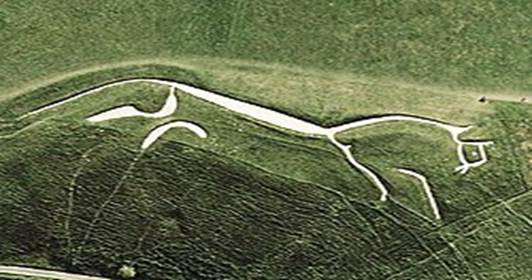
There are many hill figures cut into the chalk downland of southern Britain. The oldest and probably the most famous is the Uffington White Horse in Oxfordshire (formerly in Berkshire before 1974) cut into the scarp slope of the North Wessex Downs overlooking the Upper Thames Valley, which is over 3,000 years old.

The Uffington white horse

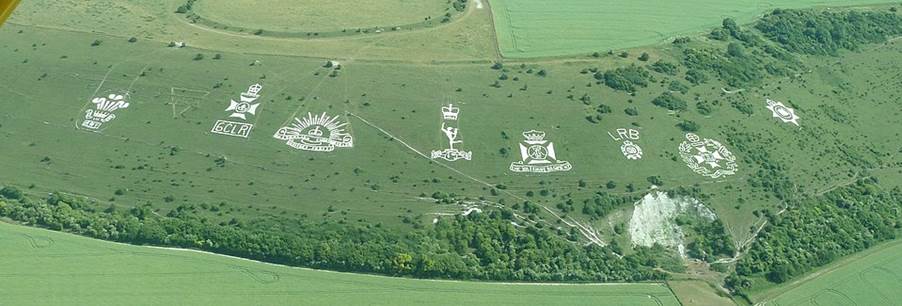
By contrast, the Fovant Badges were originally cut in the years after the First World War. These depictions of  military badges were cut to honour the hundreds of soldiers who had been training near the village of Fovant in south west Wiltshire.

Fovant badges Marchibald.fly via Creative Commons

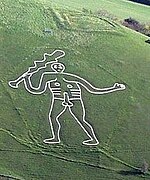
Dorset boasts two hill figures. The horse and rider on Osmington Down near Weymouth was created in 1808 in honour of George III, a frequent visitor to the town. However, no one really knows why the Cerne Abbas giant  – a figure of more likely humorous or satirical intent – was created above the village in Early Medieval times.

Humerous or satirical intent?
Pete Harlow via Creative Commons

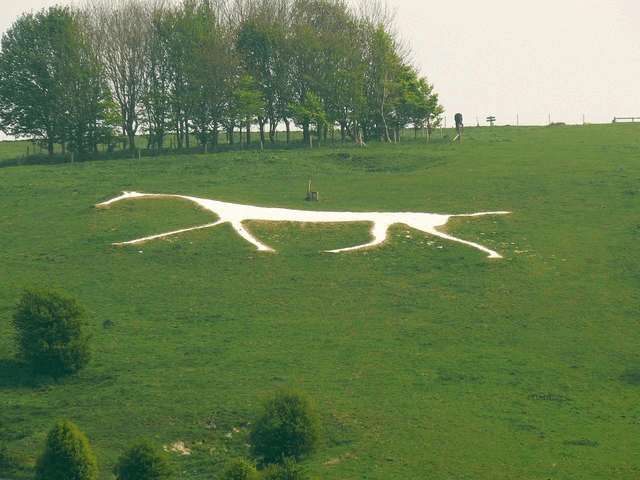
However, the majority of white horses can be found across Wiltshire. The Westbury white horse is believed to have been made sometime in the late seventeenth century which would make it the oldest figure in the county. Next comes the white horse above Cherhill, which is believed to date from 1780. Pewsey’s  horse was cut in 1785 and then in 1808, pupils at a boys’ school in Marlborough constructed the town’s white horse.

The Cherhill white horse
Brian Robert Marshall via Creative Commons

At Broad Hinton, it is believed that the parish clerk, Henry Eatwell, may have been responsible for the Hackpen Hill white horse, which was constructed in 1838 to commemorate Queen Victoria’s coronation. 

Broad Hinton white horse
Brian Robert Marshall via Creative Commons

The Devizes white horse first appeared in 1845. Then, rather later than the rest, Broad Town in 1885.  

But how many people know that, sometime in the early 1870s, Inkpen was added to this list?

The Ordnance Survey map, Berkshire, Sheet XLI, surveyed in 1873 and published in 1877, does  indeed show another white horse, situated on the north facing slope of Inkpen Hill and just over the county boundary in Wiltshire.

So, who was responsible for Inkpen’s white horse and what happened that we can no longer see it?

The Inkpen ( or Ham ) white horse was constructed on land owned as part of the Ham Spray estate, just to the east of the small village of Ham in Wiltshire and to the west of Inkpen, Berkshire. In 1869 it was bought by the then thirty year old Charles Wright. In the 1871 census, Wright is described as a farmer of 370 acres employing 8 men and 4 boys, so is clearly quite successful.

Wright had been born in 1839 in the Leicestershire village of Market Bosworth. In 1841 he is living with his grandfather, a clergyman and in 1851 he is a boarder at a grammar school in Derby. By the age of 22 he is living with his father and his older brother Thomas who is in the military.  Charles himself is described as “gent”: a very precise distinction at this socially divided time.

Ten years later, Thomas Wright has a seat of his own: Tidmington House in Worcestershire, where he lives with his wife and eight staff. Younger brother Charles has relocated to the south west.

When Charles Wright bought Ham Spray House, it was a modern building still only around thirty years old. Perhaps Charles wanted to establish his own seat, distinct and away from the family in Leicestershire.

Ham Spray House
Charles Richard Sanders via Creative Commons

Some nineteenth century landowners become high profile figures within their towns or villages and their names feature frequently in the local press. This cannot be said of Charles Wright in the time he lived at Ham Spray House. The only reference I can find to him in local papers, aside from details of the sale of his property, was when he contributed generously, along with other local gentry, to a fund for the sick.

Finding himself in a county famed for its white horses cut into the chalk downland, Wright may have wanted the distinction of adding to that number. Perhaps he wanted to impress his neighbours, or just to add to the view from his house. So, sometime in the early 1870s he had his workers cut the outline of a horse into the downs. The new white horse must have been distinctive enough for the Ordnance Survey surveyors to notice it when working in the area in 1873 and include it on the latest edition of the O.S. map, published four years later..

However, the 1877 O.S. map is the only one to include the new, Inkpen white horse. Sadly, it did not endure partly because it had been constructed by stripping away the turf with out digging and packing out trenches with compacted chalk. Further, subsequent landowners did not bother to clear away the encroaching grass.

Charles Wright died on 12th December 1876 at Ham Spray House. He was only 37.  The estate, his house and all its contents were sold. His time at Ham Spray House, like that of his newly cut white horse on the downs above Inkpen, had been brief.


Ancestry

British newspaper Archive

(C) Theresa A. Lock, 2025

“Corrupted by reading books”

The Sad Story of the Newbury Highway man

In Victorian England, local newspapers such as the Newbury Weekly News, carried national and international news as well as reporting locally. Consequently, their importance back then would have matched that of other media today, such as television, radio and online sources. However, one can imagine that it would have been the local stories that most captured the imagination of readers, particularly reports of crime and punishment.

Back then, as now, the Newbury Weekly News would carry details of the latest hearing at the magistrate court. For Kintbury readers in the 1860s, these would frequently feature a local name as G.C. Cherry, Esq, of Denford Park was chair of Magistrates in Newbury. Then, if a crime was of the severity to be heard at the assizes in Reading, it was likely that G.C.Cherry would have an involvement as a member of the jury. These were the days when only the great and the good held such positions.

One case which was of particular interest in the late 1860s was that of William Purdue, known in press reports as the Newbury Highwayman.

Purdue had been born in Newbury in 1850, the eldest son of Thomas Purdue, a tallow chandler, and his wife Maria. By the time William was 10, Maria & Thomas and their family of now seven children have relocated to Rotherfield Grays, near Henley in South Oxfordshire.

However, at some point in his early teens, William left the family home and by the time he was seventeen he was back in Newbury, living and working with his uncle, Mr Griffin, a painter living in the Enborne Road.

Unfortunately, it seems that William craved more excitement in his life than could be provided by being a house painter in Newbury, so he took to a life of crime – highway robbery, in fact.

Purdue did not ride a horse – he was a pedestrian highwayman, but with a hat pulled over his eyes, a black mask over his face and carrying a pistol, Purdue began terrorising the unsuspecting people of the town sometime in the late summer of 1868. For a while he seems to have got away with it.

 On the night of  September 12th , he accosted one Richard Griffin, a compositor, along the Shaw Road. Jumping out of the hedge and grabbing his victim by the collar, Purdue held his pistol to Griffin’s head.

“I must have all you’ve got, or I’ll blow your brains out and rob your body”, he shouted as he seized Griffin’s watch.

Griffin tried to resist and grabbed the pistol.

“If you do that, it is loaded with slugs and caps, and I’ll shoot you,” Purdue threatened as he took the victim’s purse from his pocket. It contained a sovereign, three half sovereigns and seven or eight shillings in silver.  Seemingly contented with his loot, Purdue told his victim,

“Go! Go quick; and if you give the least alarm, I’ll shoot you!”.

Griffin asked if he could retrieve his cane. Purdue told him to be quick, then added:

”If you wish to tell anyone who robbed you, you may say Captain Hawkes!”

Perhaps Purdue had become over confident following the ease with which he had been able to rob Richard Griffin, a person who walked with a cane. However, landlord of the White House, Alfred Sindle proved not such an easy victim.

At twenty to eight on the evening of October 12th, Alfred Sindle was walking towards Newbury when he spotted someone coming towards him, a hat pulled down over his eyes.

“Where are you going?” the stranger demanded as he came closer.

“What odds is that to you?” Sindle replied.

The stranger immediately raised a pistol to Sindle’s cheek, saying,

“See this you b——-”

Sindle straight away retaliated by raising his fist and knocking the stranger down, falling on him and catching the hand in which he held the pistol. There was a tussle and the pistol went off. At this, Sindle shouted, “Murder” and “Hoy! Hoy!”. His assailant, meanwhile, clearly knowing he was defeated, cried, “ I’m done. I give in”.

Back at the White House Inn, Alfred Sindle’s father, James,  had heard the sound of pistol shot and his son’s voice shouting “Murder” and “Hoy ! Hoy!” so he rushed out to help. Both father and son held on to Purdue to prevent his escape.

“I suppose you’re Captain Hawkins as you deem yourself,” James Sindle said to Purdue, recognising something of the disguise from press reports. He went on, “Just the gentleman I wanted to catch hold of. You’ve robbed two or three afore just somewhere here, and I’m glad to catch hold of you.”

The game was up for Purdue as father and son Sindle took him to the police station at Speen where he was put in the charge of Superintendent Harfield.

At the police station Harfield began a search of Purdue, who, it seems offered no resistance, drawing his pistol from his pocket himself, saying, “Here is the pistol that I used”.

He also produced from a pocket the piece of black lace he had used as a mask and explained that it enabled him to see through it whilst at the same time hiding his face. Harfield’s search also revealed 11 pistol caps, some lucifer matches, a tobacco box, a knife and the watch stolen from Griffin. 

Purdue was charged with robbery and attempted robbery, and locked up. He had built up something of a reputation in the local area and in the popular imagination was seen as a “ferocious and determined looking character.” The reality, to the surprise of those who saw him for the first time, was a slim eighteen year old with nothing of a muscular appearance.

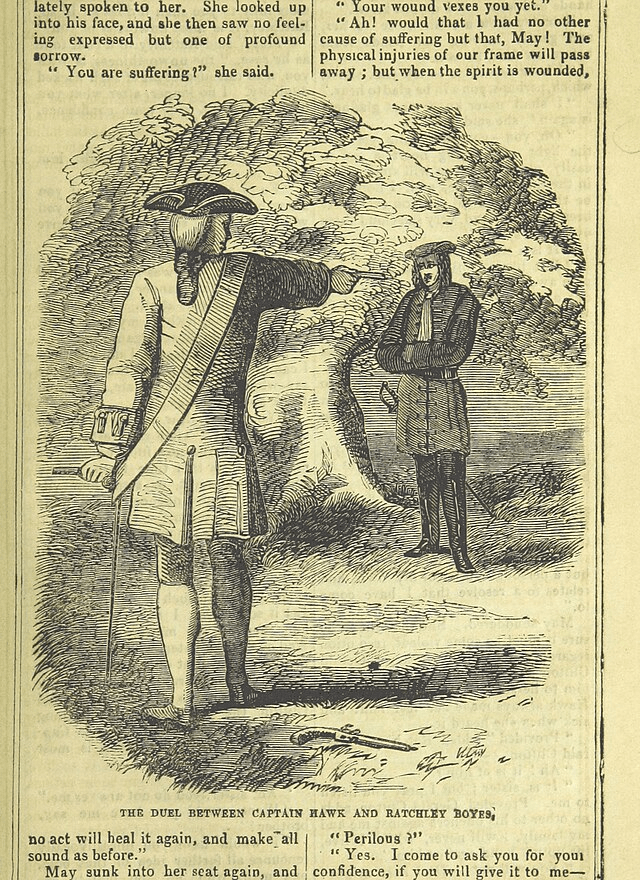
From: Captain Hawk or The Shadow of Death by J.M.Rymer. British Library via Wikimedia Commons

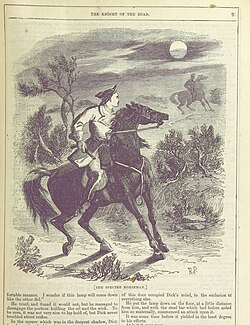
Superintendent George Deane of the Newbury police continued his investigation into the case but no further evidence was found at Purdue’s lodgings in Enborne Road. However, Deane was able to contact a young woman, in domestic service, to whom Purdue had paid some attention. The young woman had given to Deane a series of novels featuring the exploits of a fictional highwayman: “The Black Highwayman, being the second series of Black Bess, or Knight of the Road”. The novels were illustrated with coloured plates. Clearly, this was where Purdue had got his inspiration!

The following Thursday morning, William Purdue was brought before the County Magistrates, charged with being armed with an offensive weapon and attempting to rob Alfred Sindle. The case had attracted a lot of attention and a dense crowd was waiting to see the Newbury Highwayman.

At first Purdue was defiant and tried to contradict witnesses, claiming that he hadn’t sworn at Sindle but that foul language had been use against him. Sindle had not knocked him down, he argued, and that he would have got away if he had not been suffering from a cold.

Speaking in defence of his son, Thomas Purdue told the magistrates that when his son had left home six years previously he had been, “ a good useful lad”, who, “would not go to a circus or attend a theatre, and was a teetotaller.”

In other words, William Purdue had not been corrupted by exposure to popular culture!

Thomas Purdue could not believe that his son had acted on his own, and determined to find out who had assisted him. This was the only point at which William Purdue showed emotion – perhaps he was thinking of the girl who had given him the novels. 

From: Captain Hawk or The Shadow of Death by J.M.Rymer. British Library via Wikimedia Commons

Purdue was committed for trial at Berkshire Assizes and was removed to Reading Gaol.

The 1869 Lent Assizes opened in Reading and on February 25th Purdue was charged with assault whilst armed with an offensive weapon, assault while armed with a pistol, robbery and attempted robbery.

 Alfred Sindle was a witness for the prosecution and the sorry tale of Purdue’s exploits were relayed to the jury as were details of his previous good character and the fact that he was only eighteen years old. However,

“the prisoner’s mind had been corrupted by reading books about highway men, and particularly about ‘Captain Hawk’ whom he attempted to emulate.”

Sentencing was deferred until the following Friday, when the judge addressed Purdue:

“Yours is a painful case to see a youth of your age in the dock on a charge of highway robbery. I have listened to what has been said on your behalf and that you have been led into this stupid as well as wicked transaction by reading stupid and wicked literature.”

Purdue was sentenced to six months’ hard labour.

The editor of the Newbury Weekly News chose to add his own views to those expressed by Mr Justice Hannon regarding the corrupting influence of certain types of literature:

“Yet it is painful to witness the hold which these immoral and distorted narratives have upon the minds of certain classes of society; and the melancholy instance of this, which has lately become so notorious, would seem to show that such unwholesome literature produces effects upon the imaginations of certain youths, most prejudicial to themselves and to society.”

So, it seems, upper and middle class youths could read the “Captain Hawk, Highwayman”, stories with impunity, but not a lad from the lower orders such as William Purdue. 

There is no evidence to suggest that William ever returned to Newbury; by the time of the 1881 census he is married with 5 step children, living in Reading and working as a painter – his trade when he embarked on his fantasy life as a highwayman.

Purdue died in Reading in 1899. He was aged just 48.  

Black Bess; or, The knight of the road. A tale of the good old times (“Price: one penny”) By Edward Viles. Public domain: Wikimedia Commons

Sources:

Ancestry

Newbury Weekly News via British Newspaper Archive

(C) Theresa Lock, 2025

Kintbury’s Doctors Lidderdale

John Lidderdale, b.1802 & John Lidderdale, b.1839

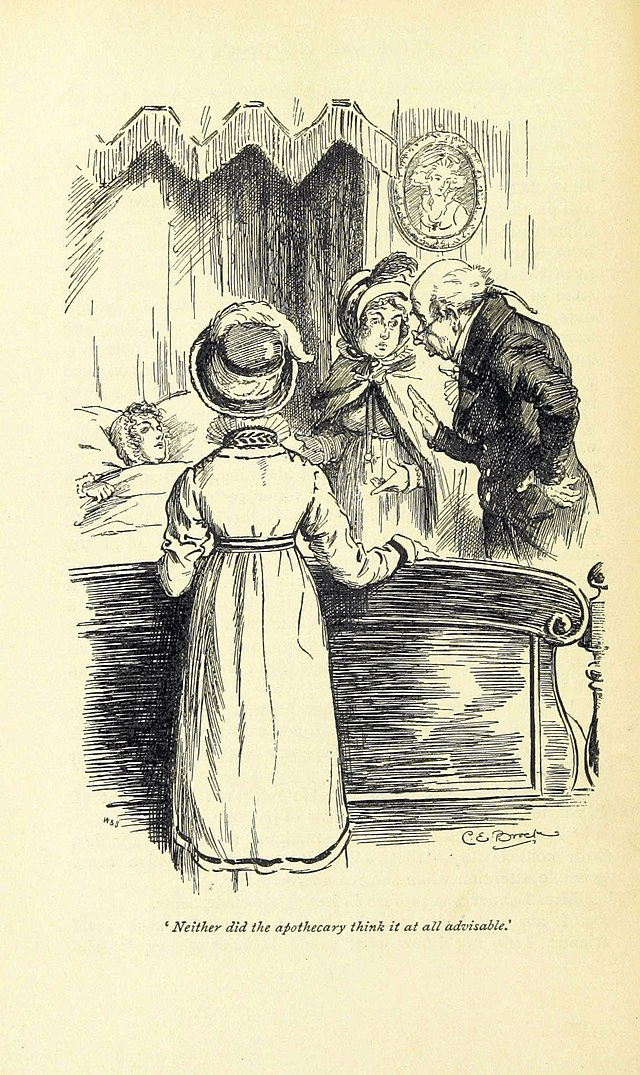
 He had been at the pains of consulting Mr. Perry, the apothecary, on the subject. Mr. Perry was an intelligent, gentlemanlike man, whose frequent visits were one of the comforts of Mr. Woodhouse’s life.

As readers of Jane Austen’s novel Emma (1816) will know, the village medic, Mr Perry, was an important figure in the life of Mr Woodhouse who was constantly in need of reassurance as regards to his health. Austen describes Mr Perry as an apothecary; however, by the 1830s the Mr Woodhouses of Kintbury might have considered themselves as more fortunate as their general practitioner could be described as “surgeon”.

So who was Kintbury’s Dr Lidderdale?

John Lidderdale I had been born in Hungerford in 1802. He was the eldest son of Captain John Lidderdale of Hungerford and his  wife, Ann, née Pearce. John senior had been a Captain in the 17th Hussars and his family had come, originally, from Dumfriesshire in Scotland. Ann was from a local family, having been born in Standen, near Hungerford.

In the 1820s John was a student at the London Hospital Medical College, at that time still a relatively new establishment, having been founded in 1785. He became LSA ( Licensed Surgical Assistant )  in 1825 then MRCS ( Member of the Royal College of Surgeons ) in 1826. Studying medicine at that time was expensive and John’s fees, board and lodgings may have cost him between £500 and £1000 – enormous amounts for the time. It was not as if he could expect to become a high earner upon qualifying, either; whilst a medic practising in a wealthy part of London, for example, might earn up to £1000 a year, a country doctor was more likely to make between £150 and £200, comparable to better-paid teachers.

By 1839, John is listed in Robson’s Directory as surgeon and registrar of births and deaths for the Kintbury district. At the time of the 1841 census, his younger brother James is living with him, most probably in the role of an apprentice as James would later go on to study medicine.

Four years later, John married Isabella Fowle, the youngest daughter of the late Fulwar Craven Fowle who had been for many years the vicar of Kintbury. Although it is impossible to say how prosperous or otherwise the Kintbury practice was proving to be, the 1851 census indicates that John has an apprentice, one Francis Owen, and three live-in servants. By 1861, he has an assistant, one Michael Cuff, and two live- in servants. The same year he was awarded the degree of MD ( Doctor of Medicine )  by the University of St Andrews – the prestigious Scottish university which at this time awarded the degree of MD without the recipients having to attend its campus on the Fife coast.

John Lidderdale died in October 1863. His obituary in the Newbury Weekly News noted,

“ Few men had so extensive a practice as the late doctor, and none worked harder for it. His kindness of manner, his skill and attention, and his patience in tedious cases, will ever be gratefully remembered”.

Large numbers of villagers filled the church for the funeral including many tradesmen who had closed their shops for the occasion. Kintbury certainly showed its respect for the late doctor.

However, where was this popular doctor in the strict social hierarchy of early nineteenth century England? Looking again at the Jane Austen quote I used at the top of this article, the respected Mr Perry is described as gentlemanlike. That last syllable carries a lot of weight: for as much as Perry was respected, he was not, within the hierarchy of the time, a gentleman.

And neither was Dr John Lidderdale.

The Kelly’s Directory of 1848 lists 19 Kintbury people as members of the Gentry which includes Mrs Lidderdale’s unmarried sister, Elizabeth Caroline Fowle and her widowed sister, Mary Jane Dexter. But the man who has achieved the recognition of an MRCS, who is trusted to take care of the villagers’ health, is regarded as being of lower status than the great and the good many of whom were most probably not qualified in anything.  

By the time of the 1871 census, Kintbury had a new doctor. Also named John Lidderdale, this young man was the son of the John Lidderdale I’s brother, William.

William Lidderdale had been born in Hungerford in 1805. It seems likely that he had an involvement with the East India Company in his younger adult years although by 1851 he was a Chief Officer with the Coast Guard Agency living in Tyneham and then Osmington Mills, Dorset where his wife Elizabeth died in 1852.

John Lidderdale II had been born in 1839 when the family were in Ilford, Essex, then educated at a boarding school in Southampton. The 1861 census shows him to be a medical student in London although there is some evidence to suggest he had been an apprentice in Kintbury before that, presumably under his uncle. In 1861 he became a Member of the Royal College of Surgeons.

In 1863, the Board of Guardians of the Hungerford Union (in other words, those responsible for the work house ) unanimously voted him Medical Officer of the Kintbury District.

John Lidderdale II served Kintbury as general practitioner for over twenty years. These were changing times: by 1869, Kelly’s Directory had dropped the category, “Gentry” in favour of “Private Residents” in which category both John Lidderdale and his uncle’s widow,  Mrs Lidderdale are included.

John Lidderdale retired in 1891 when he married Emma Louisa Mathews, the widow of a farmer from Boxford. To mark this occasion, Dr Lidderdale, “entertained to supper the whole of the adult population ( of Kintbury ), it taking two evenings to do so, and subsequently gave a tea to all juveniles aged between five and sixteen.”

To show their respect to the retiring doctor, 433 of the villagers had subscribed to the cost of a solid silver epergne  engraved with the Lidderdale crest.

Both John Lidderdales are frequently mentioned in the pages of the Newbury Weekly News with regards to the sick or injured they have attended  during their times as general practitioners in Kintbury. For as much as one can tell, neither were particularly involved in public life, however the reports of their respective funerals show that both had earned the respect and appreciation of village’s working people.

John Lidderdale II died in April 1894. According to the Newbury Weekly News he was remembered as, “ a kind neighbour, devoted friend and approachable councillor.”

Isabella Lidderdale, widow of John Lidderdale II continued to live in Kintbury until her death in 1884. Isabella had lived in Kintbury through times of great social change and also has the distinction of having been, quite probably, the very last village person to have known Jane Austen personally.

William Lidderdale, father to John Lidderdale II, died in Newbury in 1881 but was buried in Osmington, Dorset along with his wife.

Charles Lidderdale, brother of John Lidderdale I became an actuary of the Sun Life Assurance Company but died in Hungerford in 1863.

James Lidderdale, brother of John Lidderdale I, practised as a GP in Great Bedwyn, Wiltshire and died in 1882.  

Emma Louisa Lidderdale, widow of John Lidderdale II, continued to live in Kintbury until her death in 1920. The village’s long association with the Lidderdale family had come to an end.

Sources:

The origin of the general practitioner I. S. L. LOUDON, DM, FRCGP, DRCOG Wellcome Research Fellow, University of Oxford, and Honorary Archivist, Royal College of General Practitioners

Journal of the Royal College of General Practitioners, January 1983

hhtps://www.bartshealth.nhs.uk/the-royal-london-our-history

hhtps://livesonline.rcseng.ac.uk

Newbury Weekly News via British Newspapers online

Ancestry.co.uk

(C) Theresa Lock 2025

Charles Morton: A casualty of the Boer War

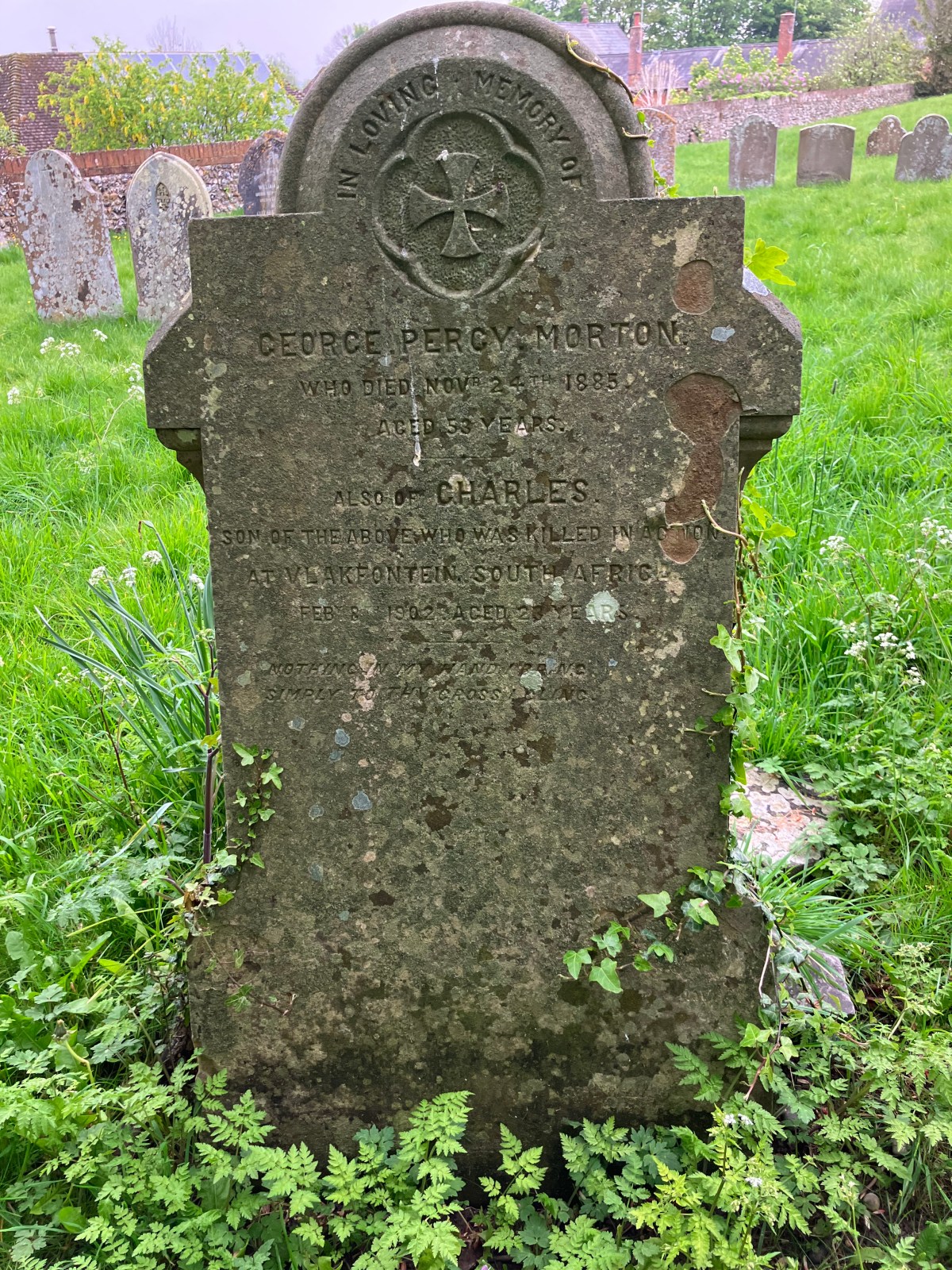
As you walk through Kintbury church yard toward the gate at the top of the path leading to the canal, pause a while to read the inscription on a stone to your right.

As you walk through Kintbury church yard toward the gate at the top of the path leading to the canal, pause a while to read the inscription on a stone to your right. The name at the top of this particular stone is that of George Morton who died on November 24th, 1885 aged 53. There is nothing particularly unusual about that – however, read on. The inscription below reads:

Also of Charles, son of the above who was killed in action at Vlakfontein, South Africa on Feb 8th, 1901 aged 23 years.

Charles Morton had been killed during the 2nd Boer War, a conflict fought from 1899 to 1902 between Britain and the South African Republic & the Orange Free State. At that time, it would have been very unusual for a soldier’s body to be returned to his homeland and closer reading of the grave’s inscription reveals that it does not say, “Here lies…”. So this gravestone commemorated Charles but does not mark his resting place.

I have tried to find out more about Charles Morton and his family. However, as so often happens when researching local history, my searching has raised far more questions than it has answered. 

Many people wrongly believe that, in years gone by, poorer families rarely ever moved far from their places of birth. Anyone who has spent time studying family history will know this is not necessarily always the case.

Charles’ father, George, named on the gravestone, was born in Daventry, Northamptonshire in 1832 where his father, William Morton, was an innkeeper. By 1851, the Morton family had left Northamptonshire for Fulham where William – presumably embracing new opportunities – was working as a conductor on a horse-drawn omnibus.

I can find no trace of William or George Morton on the 1861 or 1871 censuses but in 1881 George turns up again, far away from the increasingly urbanised streets of Middlesex where he had lived as a child. George is now married to Ellen and they are living in West Ilsley, with their three children: Frederick, who is seven, Charles, two and a baby daughter. George is working as a groom in a racing stables.

At some point in the following ten years, however, the family experienced many changes because by the census of 1891, Charles is living in Kintbury with his mother and stepfather Edward Brooks, a labourer. According to the inscription on the gravestone I mentioned earlier, Charles’ father, George Morton had died on November 24th, 1885.

Like his father before him, Charles took up work as a groom and by the 1901 census he is living in lodgings in Crowthorne, although there is no clue as to what took the young man to work as a “groom domestic” in east Berkshire when similar work would have been available nearer home.

However, by the following year, Charles was even farther away from his mother’s home in Kintbury. As the gravestone tells us, on 8th February 1902, Charles was killed on active service in South Africa.

The inscription on the stone says that Charles died on active service in Vlakfontein, which is in the Mpumalanga Province of South Africa – the site of guerrilla fighting during the Boer War. However, the Victorian Society says that Charles was a member of the South African Constabulary who was killed at Syferfontein, also in Mpumalanga Province. It is impossible to say which is correct; the Victorian Society and the gravestone both have February 2nd as the date of death. To confuse matters further, the Forces War Records list two other Charles Mortons killed in South Africa in 1902.

As research has shown, neither Charles’ father nor his step-father were wealthy or in relatively high-status occupations. Many poorer and even middle-income people at the time were buried without gravestones. That George Morton – whose last known occupation was as a groom – should have a gravestone is, I believe, quite unusual for someone of his background at that time.

All this leads me to wonder this: Did someone with the means to have a gravestone erected in Kintbury want to commemorate a young man from the village killed abroad? Whilst some of the great and the good who saw active service are commemorated on the walls inside the church, it was never the custom to put up a plaque to the lower ranks who died in the military. As I have commented above, men of the status of George Morton were very unlikely to have a marked grave. However, by erecting a stone for him, the name of his son Charles could be added below, even though the plot in Kintbury was not his final resting place.

Perhaps someone with the wherewithal to afford a gravestone knew that some seventy years earlier, the Rev Fulwar Craven Fowle had erected a gravestone to working man, William Winterbourne. Perhaps that person felt inspired to do something similar. Perhaps that person was a former soldier. We shall probably never know unless these details are recorded somewhere in the parish records held by the diocese. It would be an interesting search to find out.

I have not been able to find a record of Charles Morton having a Commonwealth War Graves Commission burial in South Africa but it is, of course, pleasing to know that he is remembered in our churchyard.

Thomas Hardy’s poem, Drummer Hodge, written in 1899, was his response to news of the death of young country men, killed, like Charles Morton, in the Boer War:

 They throw in Drummer Hodge, to rest
     Uncoffined—just as found:
His landmark is a kopje-crest
     That breaks the veldt around;
And foreign constellations west
     Each night above his mound.
 

Young Hodge the Drummer never knew—
     Fresh from his Wessex home—
The meaning of the broad Karoo,
     The Bush, the dusty loam,
And why uprose to nightly view
     Strange stars amid the gloam.

Yet portion of that unknown plain
     Will Hodge for ever be;
His homely Northern breast and brain
     Grow up a Southern tree,
And strange-eyed constellations reign
     His stars eternally.

(C) Theresa Lock 2024